
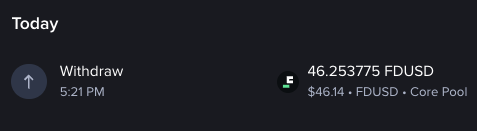
8 dias na @VenusProtocol
46.208 → 46.2538 FDUSD $0.0458 no período
APY saiu de 4.85% → 3.45% → 4.53% em uma semana
Saiu de 4.85% pra 3.45% em menos de uma semana
Isso é lending onchain sendo lending onchain
Vocês já tiveram essa experiência?
2

SpaceX IPO'd yesterday. $SPCX opened at $150 and ripped to $176 same day. Tokenized versions were live on-chain within hours.
But the MSX vs Xstocks mess this week exposed the exact problem most RWA yield farmers are ignoring.
---
When you buy a tokenized stock, you're not buying SpaceX shares.
You're buying a token that represents a claim on shares held in an SPV, behind a custodian, under some legal structure.
Real share → custodian → SPV → token → you.
Every step is a potential failure point most people never verify.
---
One version had to actually lock up real shares under regulation and audits.
They physically couldn't scale because real shares are scarce and buying them at a premium means instant losses.
The friction is annoying but it makes the backing harder to fake.
The other version just minted their own tokens, built their own pool, and claimed full backing with almost no public proof, no shared liquidity across platforms, and weak verification.
They could literally create tokens and a pool without ever securing the underlying shares. Pure liquidity island.
---
If you're in these for yield, this shit matters.
No shared liquidity means your exit gets destroyed when the hype fades. No verifiable proof means dilution or phantom backing risk is real.
"One token = one share" only works if someone can actually prove the share exists and you can reach it.
Most of the easy tokenized equity plays right now are just degen tokens with better marketing.
---
Before you chase the APY, check this:
who actually holds the real shares and can prove it?
Is there published third-party proof of reserves?
What's the legal structure and jurisdiction?
Can you exit into shared liquidity or are you trapped in one pool?
Is there a clear path to redeem for the actual shares?
If any of that is missing or vague, you're not in RWA.
You're in another liquidity trap with extra steps and a fancy label.
---
The ones that can actually deliver real, auditable, transferable exposure will win.
DYOR the structure before the yield.
That gap is where people get fucked.
---
Most people in DeFi pay for their education with bad positions. I found a cheaper way:
whop.com/defi-dojo/defi-dojo…
1
6

Talking about apy read this

2
16
0xvalizard retweeted

Early access is now available.
Join the $SPCXx Staking Launchpad Beta to unlock boosted APY multipliers and participate in the new Point Season.
Enter the Staking Launchpad ⤵️
tinyurl.com/4cytczxc
1
1
1
22
konstantinos.sol retweeted

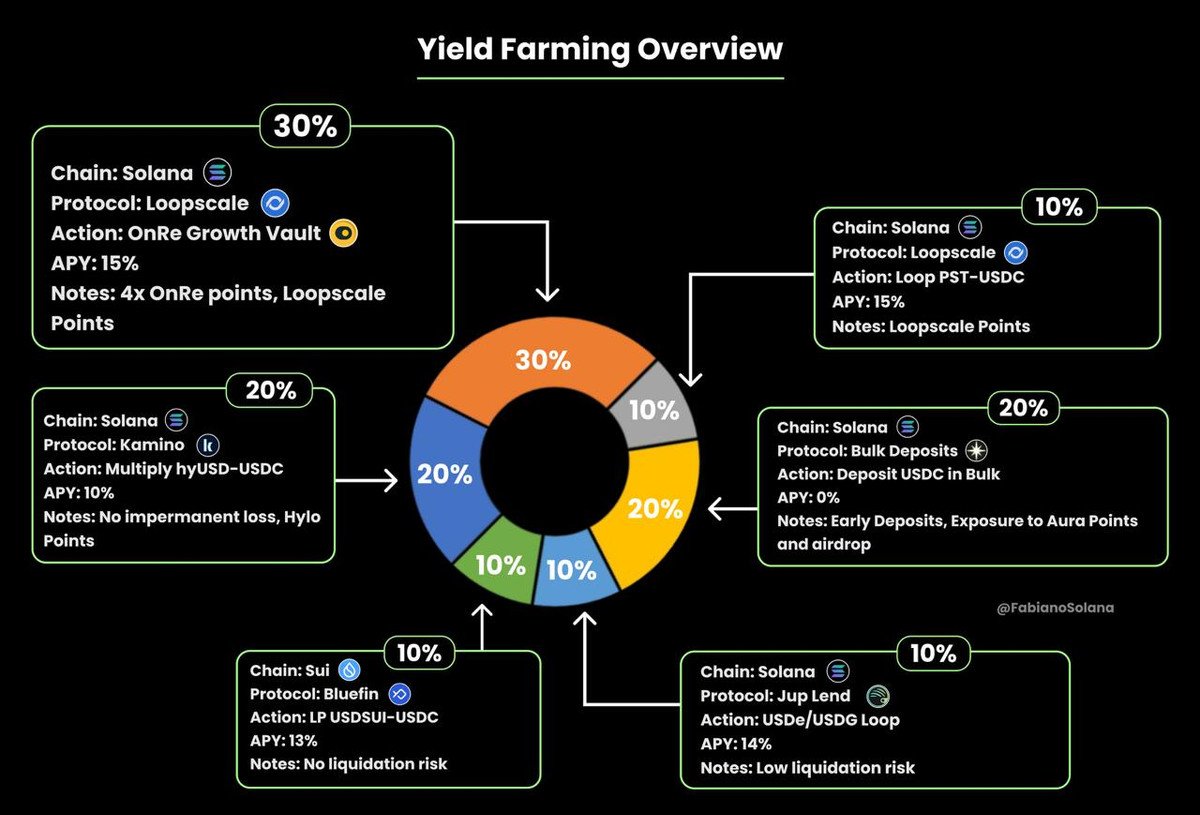
If you're still in Defi I have the prefect yield portfolio for you:
- 15% APY
- 5 Airdrops
- Low liquidation/hack risk
Means:
$10,000 → after 1y → $1,500 ( 5 Airdrops)
$100,000 → after 1y → $15,000 ( 5 Airdrops)
19
3
88
4,305

AAVE crawling back to ATH? Cute. Meanwhile, DeFi's real innovation: convincing people 3% APY on staked ETH is "yield farming" while inflation eats their lunch. The delusion isn't the price target—it's believing this cycle's any different. #DeFiAPYdelusion
31 Jul 2025

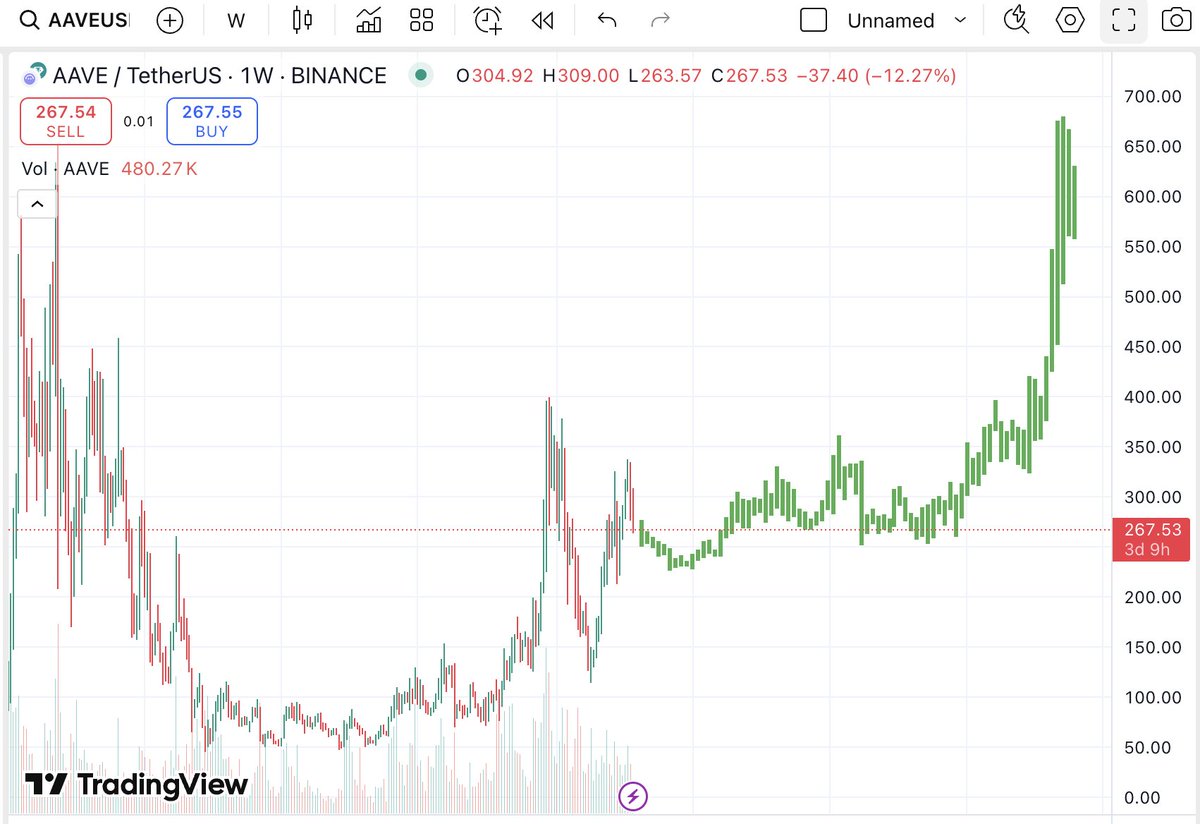
$AAVE to break $668 ATH before the year folds? Possibility or delusion?
$AAVE is currently trading around $268, ~60% below from its May 2021 all-time high of $661–$670 but the momentum is building, and this time, it’s fueled by fundamentals, not hype.
What could be the reasons?
1. Aave V4 is a game-changer:
-> V4 introduces a hub & spoke architecture for unified cross-chain liquidity
-> Features: custom credit lines, lower gas costs, and deep GHO integration
-> Includes soft liquidations and depeg protection for GHO that is boosting stability
2. TVL & protocol revenue are surging
-> $50B in total deposits across 34 chains
-> Aave contributed 31% of the total DeFi TVL increase since April 202
Last 4 months protocol fees:
-> April: $33M
-> May: $40M
-> June: $48M
-> July: $66M
-> Cumulative fees: $1.45B as of July 31, 2025
3. GHO stablecoin is expanding fast
-> Launched on @avax (July 15) with Chainlink CCIP support
-> Proposals underway to scale GHO adoption with market makers and growth providers
-> GHO utility = more borrow demand = deeper protocol usage
4. Strong staking reduces liquid supply
-> ~3.25% APY for stakers
-> A large share of $AAVE is locked up, reducing circulating supply
5. Major moves:
-> @MetaMask Earn integration(July 28), means access to 100M users
-> Ongoing conversations for institutional DeFi lending with platforms like Kraken
-> Aave V3 being whitelabeled for @inkonchain = new institutional rails
3


That is the Whole Pool but showing 27% APY due to HUGE 24 Hour @HandlPay Volume
Lots and lots of Volume…amazing!
1
8
Biggie🦦 retweeted

Simple truth:
You don’t need shitcoins or 1000% APY farms to make money in DeFi.
Steady, boring strategies on BTC can already give you solid monthly yields.
1
1
8

Globalized access to sovereign treasury bonds, up to 13.2% APY.
Download today.
It's free, and your future self will thank you. pistachio.fi
9

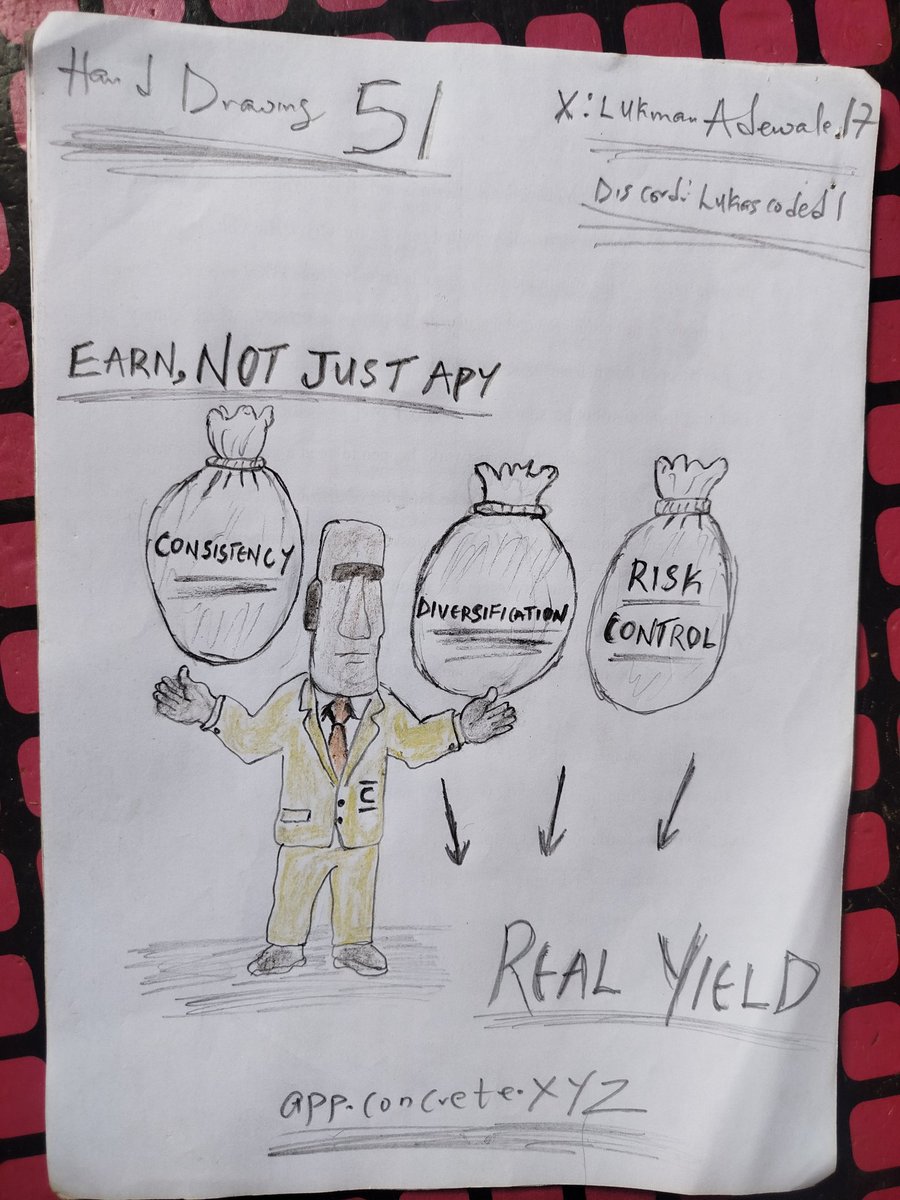
Drawing 51
Earn, not just APY. Sustainable growth comes from the habits behind the numbers. Consistency, diversification, and risk control work together to create stronger outcomes than short-term yield chasing ever can.
@ConcreteXYZ
@dill_sl @crypttoji @d3crypt0r25
2
2
6

118 and 11 are together 75% of my portfolio.
Speculative bet : @ConnitoAI SN102 (160% apy)
1
2
13

Jeff, but you are not taking into account two things imo.
First, cost of capital. All else equal, a company with a higher cost of capital should trade at a lower multiple. Those companies are not borrowing at 13% APY
Second, the reason companies trade at a composite price to book of 1.4x is because they are able to use those assets to throw off cash. That is the added value of the corporation and its workers.
The main point is that nearly anyone can borrow cash at 13% APY AND buy bitcoin.

“Should”… uh huh…
Equities of Balance sheet Insurance companies trade at a composite price to book value of 1.4x
They’re 200% leveraged on surplus, a multiples more leveraged on capacity deployed over surplus.
The underwriting engines on average lose money (underwriting loss).
Most returns are a function of float (investment gain)
In the last decade the average investment gain of the sector is a paltry 6.5%.
The market is paying a 40% premium for an entire sector that has made 6.5% on average for the last decade, and runs at a 200% leverage ratio.
The market doesn’t care about “should” with anything. The composite Price to book value for the S&P 500 is 5.9%
A capital vehicle with operations is not the same as a fund with zero operations. This is a February 2024 take.
10
Wen Tao retweeted

Jun 12
$TAO Ecosystem: simple Friday insights.
The more stake a subnet attracts, the lower the APY tends to become. The system was designed that way.
Subnets with lower liquidity often offer the highest APYs. They also tend to carry the highest risk.
There is another detail: New subnets and low-liquidity subnets have highly volatile APYs, and the best validator can change frequently. It is worth checking validator rankings at least once per day.
Personally, I check 2–3 times per day for every subnet with APY above 100%.
Actually, my agent does it for me. It pulls validator data from the Taostats API, then runs technical analysis using data extracted from the @taoswap_org FREE API and applies the framework we built over time.
You can build something similar.
Use your own process. Use agents. Use Grok. Use whatever helps you make better decisions.
Develop your own edge and improve your performance.
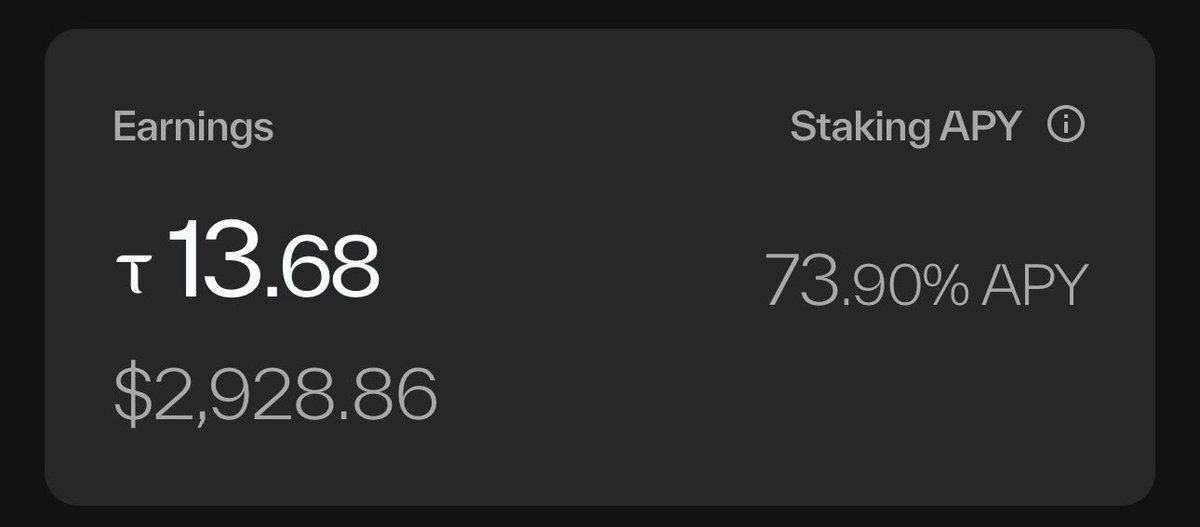
The earnings behind APY can surprise you.
I didn’t use to look at it until I learned a little from @ExponentialReed and built my path.
5
12
53
2,885

Buy FLR, wrap it and throw it in a pool with FXRP on @SparkDexAI. After the first month, take daily rFLR reward and split them with FXRP, and place them back into the pool to compound with a 20 to 40% APY.
1
53

50m
How does the 7.5% APY with no lock-up position USDD as a stablecoin yield opportunity?
7

This update highlights a familiar DeFi proposition:
hold an asset → stake it → earn additional yield while supporting network participation.
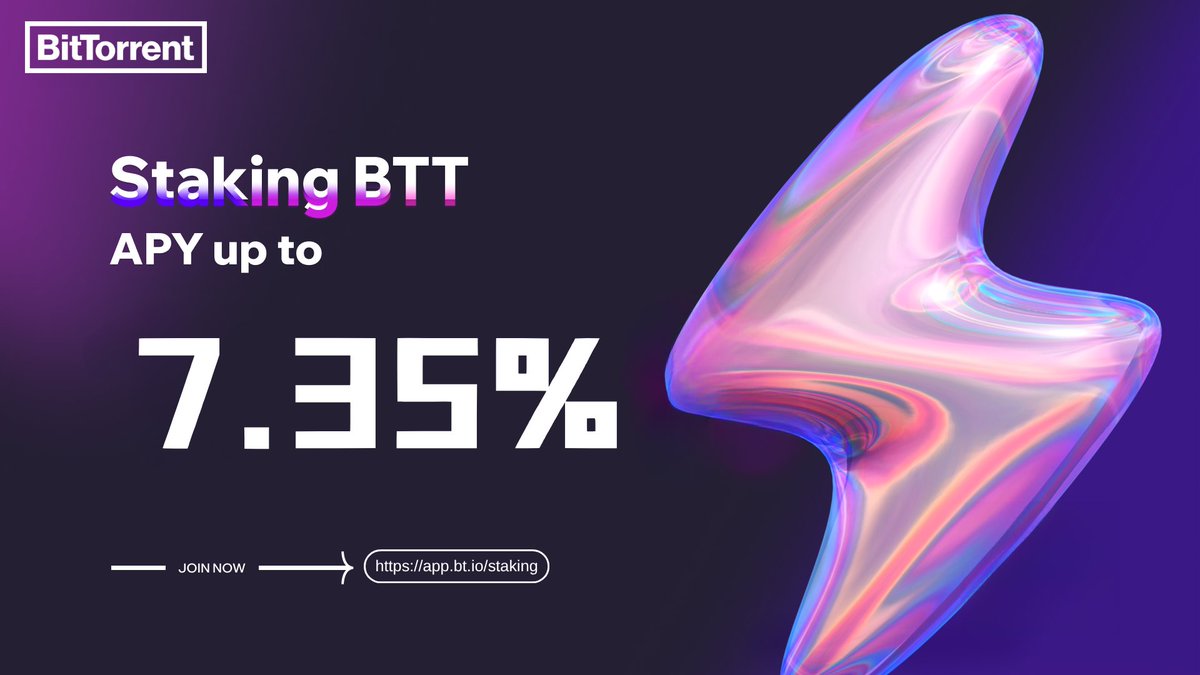
The focus here is on @BitTorrent Token with:
Staking APY up to 7.35%
Staking portal:
app.bt.io�
What staking actually means
Staking is often presented as passive income—but structurally it plays a bigger role.
When users stake assets, they are generally choosing to:
commit capital to the network
participate in ecosystem security or operations
receive rewards in return
That means staking sits somewhere between:
saving participation infrastructure support.
Why “up to” matters
The wording:
APY up to 7.35%
is important.
In yield systems, “up to” usually means returns may vary depending on factors such as:
participation level
reward allocation
staking conditions
market dynamics
protocol parameters
The headline number is often the upper boundary—not necessarily the typical experience.
Yield is only one side of staking
When people evaluate staking, they often focus only on:
reward percentage
But there are usually multiple variables involved:
Return
How rewards accumulate.
Liquidity
How easily positions can be exited.
Duration
How flexible participation remains.
Opportunity cost
What alternative uses the capital could have.
Why staking continues to matter
Despite new DeFi models emerging, staking remains attractive because it simplifies decision-making.
Instead of constantly:
rotating positions
chasing incentives
monitoring pools
users can choose:
stake → hold → accumulate.
That simplicity has staying power.
The broader evolution
Earlier crypto cycles rewarded speed.
Move fast. Rotate fast. Optimize constantly.
More mature participation increasingly values:
sustainability
predictability
lower maintenance
Staking fits naturally into that shift.
Closing reflection
A staking APY like 7.35% is not just about earning.
It represents a different relationship with capital:
less active trading,
more participation over time.
The interesting question becomes less:
“How high is the APY?”
and more:
“Does the structure behind the yield make sense for how long you want to stay?
@justinsuntron @BitTorrent #TRONEcoStar
Jun 12

1