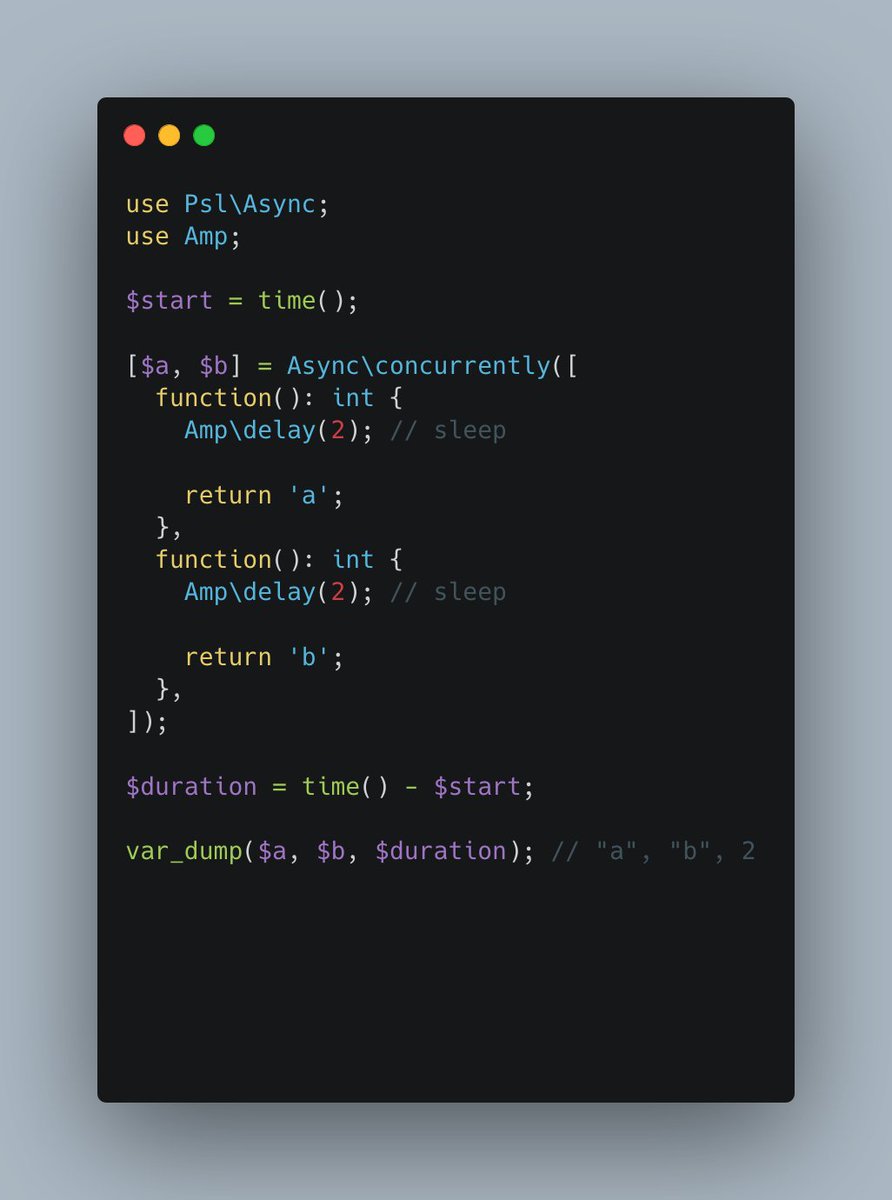
🚀 De PHP synchrone à l’orchestration asynchrone avec Flow
J’ai publié un nouveau POC autour de Darkwood et Flow :
😶🌫️ *This Person Does Not Exist – PHP synchrone à l’orchestration asynchrone avec Flow*
L’objectif n’était pas de rendre un téléchargement plus rapide.
L’objectif était de comprendre ce qui change lorsqu’on passe de synchrone à l’orchestration
Pour l’expérience, j’ai pris une commande Symfony très simple qui télécharge plusieurs images depuis ThisPersonDoesNotExist.
Puis j’ai réalisé une migration minimale :
✅ même logique métier
✅ même fichier
✅ même résultat fonctionnel
Mais avec un changement fondamental :
❌ boucle bloquante sleep()
✅ pipeline orchestré avec Flow Fibers PHP 8.1
Le plus intéressant n’est pas le gain de performance.
Le plus intéressant est le changement de modèle mental :
👉 ne plus raisonner en termes de boucles
👉 raisonner en termes d’unités de travail (Ip)
👉 décrire un pipeline
👉 laisser l’orchestrateur gérer l’exécution
Cette approche est exactement celle que j’explore actuellement pour :
🎥 Scraping YouTube
📝 Extraction de transcripts
🎬 Traitement média
🤖 Agents IA
⚙️ Workflows longue durée
Article complet dans les commentaires 👇
#PHP #Symfony #AsyncPHP #Fibers #SoftwareArchitecture #Darkwood #Flow #OpenSource #Programming #Developer
Jun 13

📖 Nouvel article de blog Darkwood : 😶🌫️ This person does not exist - PHP synchrone à l'orchestration asynchrone avec Flow
👉 à lire ici : blog.darkwood.com/fr/article…
☺️ Bonne lecture
1
48

18 Dec 2025
Actually Symfony HTTP Client uses raw streams to overcome the limitations of curl, via @asyncphp
1
2
33
25 Nov 2025
This code looks like @asyncphp code in version 2 using "yield" as an "await". Before moving to Fibers a having async code run without the contagious Generator syntax.
4
1,542


6 Aug 2025
You might also be interested in ReactPHP. Not sure if it still the same but they used at start of Fiber to create together a event loop library:
reddit.com/r/PHP/comments/p1…
1
4
1,308

6 Aug 2025
i don't know who is behind AMPHP (@asyncphp), but looks really really really good. 🫡 trying it right now...

6
9
184
11,948

4 Jul 2025
PHP Coroutines... and hot potatoes? 🥔🔥
Sounds weird, but it perfectly explains how `yield` and Fibers work.
If you’ve dabbled with them (or avoided them entirely), this post is for you
👉 doeken.org/blog/coroutines-i…
#PHP #Coroutines #AsyncPHP
17
79
4,683

26 Feb 2025
Khushboo Verma, Platform Engineer at Appwrite, will explore #AsyncPHP with Coroutines for building scalable applications. A forward-looking session of @khushbooverma_!
Grab the tickets now 🔗 bit.ly/4i7M96h
#LaraconIndia #LaraconIN #LaraconIN2025 #LaravelCommunity

ALT Laracon IN 2025 Speaker - Khushboo Verma
1
14
345

21 Aug 2024
I’ll share more details about this but so fun to build. Used @asyncphp to buffer verbose logs, wait for a keypress and then flush them to stdout
1
1
3
263

20 Aug 2024
what is the new fiber feature in 8.4? Is it the fix about resume in destruction ?
1
2
153

20 Aug 2024
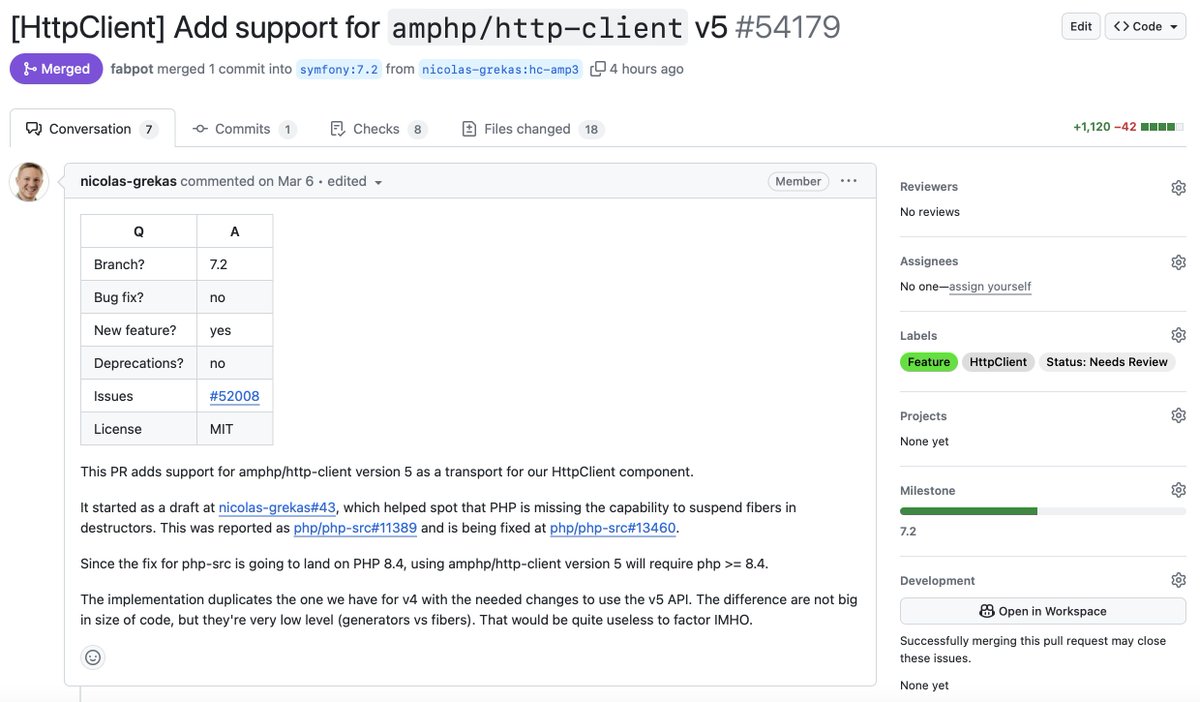
Symfony Pull Request Review🔎
Starting from @symfony 7.2, the HttpClient component now supports amphp/http-client v5. This update enables seamless integration with the latest @asyncphp version, requiring PHP 8.4 due to new fiber handling features. The changes build upon the existing v4 implementation, making necessary adjustments for v5's API.
Thanks to @nicolasgrekas for this contribution! 🙌
github.com/symfony/symfony/p…
#Symfony #PHP #OpenSource #HttpClient
1
4
22
1,255

9 Jun 2024
no fixed date yet, but we have a set of features that we need to implement in order for it to be released. Neu uses @asyncphp HTTP Server / Cluster, which are production ready already!
2
81
25 May 2024
🚀 Exciting News! Introducing Neutomic - a high-performance, asynchronous PHP framework. built on top of @asyncphp
github.com/neutomic/neutomic
2
7
43
3,828
19 May 2024
I just released azjezz/assess ( github.com/azjezz/assess ), a filesystem notifications library written in PHP, using @asyncphp.
1
8
45
2,944

15 May 2024
i can create an async driver for doctrine using amp/postgres in 10 minutes, but it will most likely not work ( memory leaks, ..etc ), because doctrine is stateful, it was not created with the idea of running for a long time, or executing commands/queries concurrently.
1
2
36
15 May 2024
PHP packages can support async today, if they stop writing code that is stateful, that is the only thing stopping Symfony and other frameworks from being async-first.
1
3
36
15 May 2024
we are getting there, Fibers allowed use to get out of the callback hell we once had, and that is the first building block for hopefully an built-in event loop in the future, but, other than a built-in even loop, i don't see the need for other things in PHP core.
2
3
74
15 May 2024
I believe amp-psl are 100% compatiable, as they use the same event loop (revolt), react uses its own event loop, which is not a huge issue, you can make it compatiable using react/promise ( fibers ), or, to make react use the revolt event loop: github.com/revoltphp/event-l…
1
2
45