



I'm always multimodal for this reason, and have a Claude Pro subscription and an NVidia BFGPU.

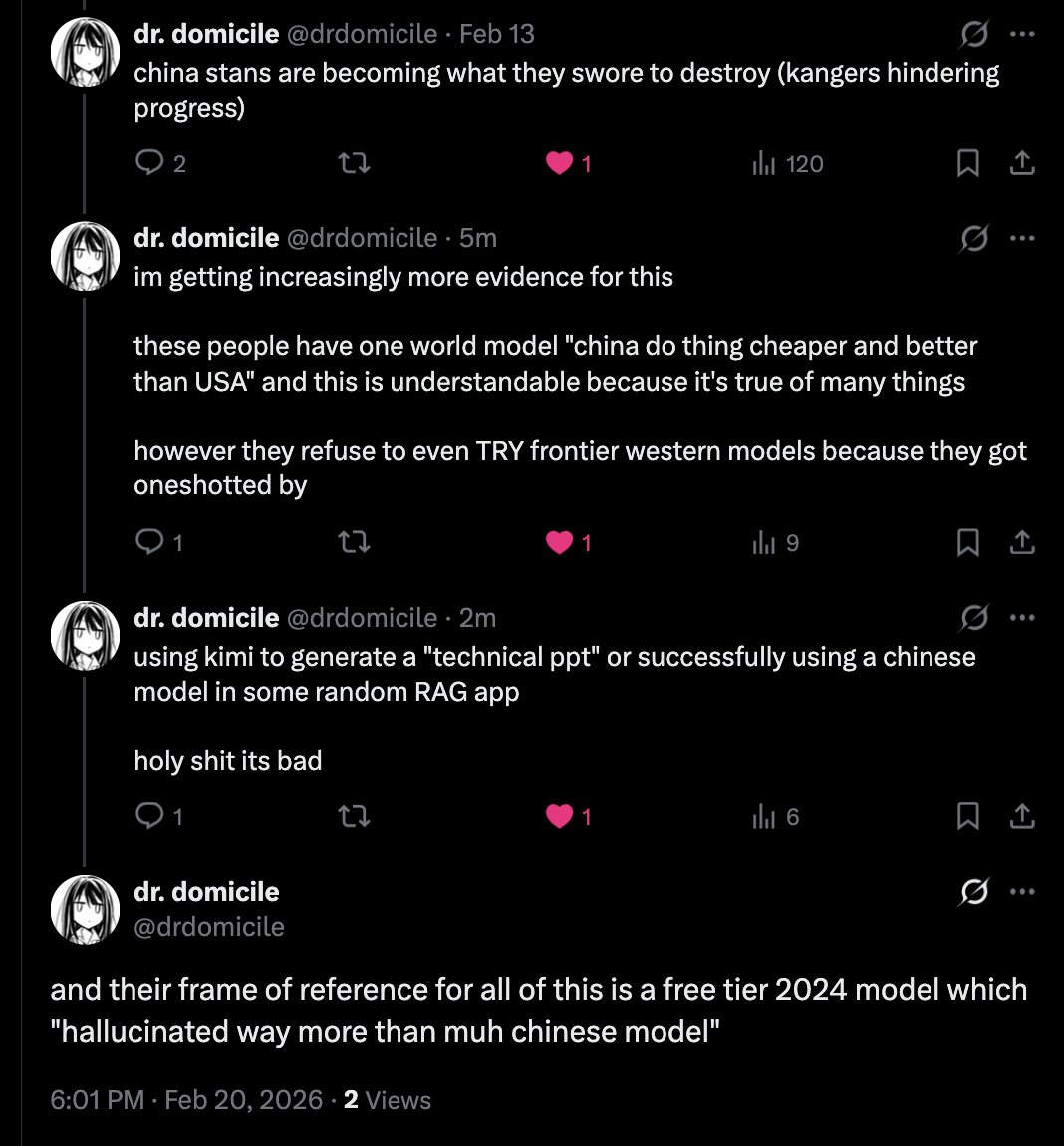
Dear China shills: develop some standards
3
1
6
568

There's a real chance that the 5090 will remain the consumer BFGPU for the rest of the decade, until some Chinese company try to take over that market segment themselves.

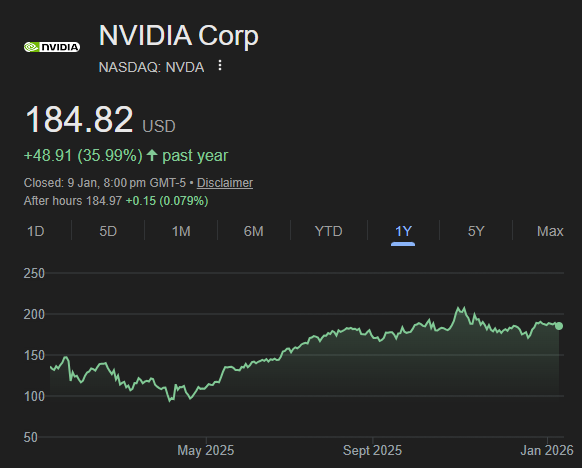
Nvidia at CES 2026: 4 Key Takeaways
While the market remains focused on GPU ship counts, $NVDA is executing a broader "AI central nervous system" strategy.
TL/DR: By open-sourcing the "brains" of the future—specifically the Alpamayo and GR00T models—Nvidia is ensuring its hardware becomes the indispensable infrastructure for the next decade of AI development.
1. The Rubin Era: $NVDA remains King
Nvidia’s Rubin platform, the successor to Blackwell, is now in full production. Relative to Blackwell, Nvidia’s next gen Rubin architecture delivers:
4x increase in training performance = Faster time-to-market for frontier models.
10x reduction in inference costs per token = Allowing high-volume agentic AI to be profitable for enterprises.
In a competitive data center market, Total Cost of Ownership (TCO) is the only metric that matters. By delivering 5x–10x gains annually, Nvidia makes it "economically irrational" to run older hardware, forcing a continuous upgrade cycle.
2. The Robotics Ecosystem
$NVDA is moving beyond digital chatbots into Embodied AI—software that perceives, reasons, and acts in the physical world.
Alpamayo:
An open-source Vision-Language-Action (VLA) model that allows cars to reason through complex driving scenarios rather than just following rigid code.
Cosmos AI:
A foundation model for physical AI. It acts as a "world simulator," allowing robots to learn from synthetic data governed by real-world physics before they ever touch a factory floor.
GR00T:
A full-stack ecosystem providing the "brain" for humanoid and industrial robots.
Jetson Thor:
The hardware heart. A System-on-Module (SoM) based on Blackwell architecture, delivering the compute required for real-time robotic reasoning.
3. The “Google Android Ecosystem” Playbook
Nvidia’s goal is to make GR00T the universal operating layer for robotics. By partnering with industry leaders like 1X, Agility Robotics, Boston Dynamics, etc., they are creating a massive network effect.
Nvidia is using open-source software to win a standard-setting war:
Open Weights, Proprietary Pipeline:
While Alpamayo and GR00T weights are open, these models are architected to leverage the Rubin/Thor pipeline. Using a competitor’s hardware would require convincing a company to bypass the Rubin-to-Thor optimization path, which has been safety-hardened, necessitating a re-validation of the entire "chain of custody" for the AI’s logic to ensure no errors were introduced by the hardware switch.
The Result:
If a startup builds on the GR00T stack, they are effectively locked into Nvidia’s hardware for the entire lifecycle of the product.
4. Building the Moat
Nvidia’s long-term vision is built on software friction and switching cost:
Network Effect:
As more developers contribute to the GR00T ecosystem, Nvidia’s proprietary libraries (e.g., CUDA-X and cuRobo) become the standard language of the industry, it becomes harder for a competitor like $AMD to convince a company to switch to a different, less-supported software stack.
The CUDA Software:
Nvidia has thousands of "fused kernels", these are pre-optimized software snippets built over years for every conceivable AI operation. For a competitor like the AMD MI400, even if it can demonstrate faster raw math, it lacks the decade of optimization (e.g., attention mechanisms) written specifically for Nvidia chips for all types of models/workloads.
Switching Cost:
The 2026 Mercedes-Benz CLA is the first vehicle to use the full Alpamayo stack. Because the CLA’s “Nvidia Drive" stack is already safety-certified (achieving top Euro NCAP ratings), switching to a rival chip would require months/years of re-testing and re-certification—a cost no major OEM is willing to bear.
Three-Computer Architecture:
Nvidia is telling customers they need three different computers for one robot: the Nvidia DGX/Rubin (to train it), the Nvidia Omniverse/Cosmos (to simulate it), and the Jetson Thor (to run it). This "Triple Lock" is what makes it so hard for a competitor to peel away a single customer—you don't just replace the chip; you have to replace the entire development workflow.
The Goal:
By giving away the "brains" of robots and cars, Nvidia is lowering the R&D barrier for companies like Mercedes-Benz and others, while also ensuring that their high-margin hardware becomes the industry’s central nervous system.
(Not Financial Advice)
2
1
16
854

14 Dec 2025
It feels like the RTX 5090 will keep its BFGPU crown all the way till the end of the decade at this rate.

SK Hynix warns DRAM supply growth will lag demand through 2028. wccftech.com/sk-hynix-warns-…
2
7
553

11 Dec 2025
Sorry about the unfortunate events brother. Sometimes life can be very unfair. I'm sure that you'll bounce back stronger than ever. Also, a LC 6800 XT is quite a BFGPU and it should serve you well as long as you stay away from ray tracing lol. Lack of DLSS will be nasty though...
1
15
712
Can't believe that it's over 7 years since then and I'm already on my 4th BFGPU build now, but anyways no thanks even though PC hardware actually appreciate in value these days.
10 Dec 2025

Five years in Night City.
Endless memories.
One legendary GPU.
To celebrate the anniversary, we’re giving away a custom Cyberpunk 2077 GeForce RTX 2080 Ti signed by Jensen Huang.
Comment "GeForce Season" to enter 🌆
5
15
565
If gaming on a BFGPU build is 'coping' then I'm happy to 'cope' forever. It's much better than sniffing fent in the suburbs of LA which is what you're likely to do.
28 Nov 2025

Are you posting ur coping lifestyle?
23
792
Is this the long awaited spiritual sequel to Supreme Commander? I didn't play the latter back in the day due to me being stuck with a potato but I did watch someone else play it. Now that I've been doing BFGPU builds for the past 6 years I wanna try this out.
2
73

10 Nov 2025
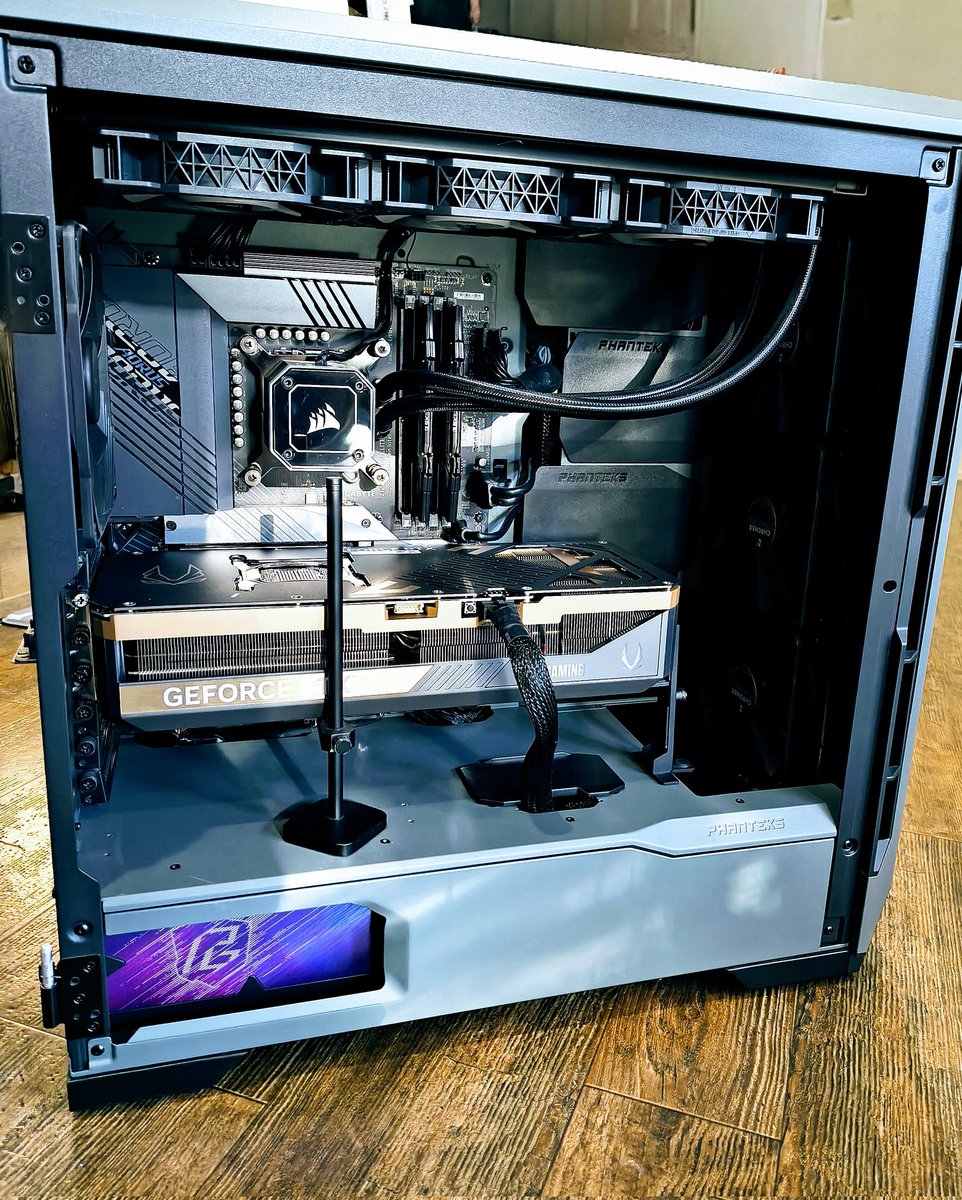
I like to be a little cautious so I doubled it and the P600S from Phantek has a rear PCI reinforcement bracket but the BFGPU is heavy so better safe than sorry
3
67
Already did when comes to Japan in 2010 and as for the US, yeah get back to me when those NVidia market caps actually translate to you having a BFGPU inside your PC.
6
1
41
1,045
#Persona5R never got around to playing it on my BFGPU PC, but the #ROGALLY X has made me hooked onto it.




1
2
547
BFGPU gaming PC premium gaming handheld = ultimate gaming setup.
2
16
694
26 Sep 2025
I have my new power supply installed and the BFGPU installed back all is right in my game room world
1
6
193
23 Aug 2025
The BFGPU can brute force Oblivion Remaster but it's absolutely ridiculous the amount of horsepower required to do it and the developers should be tailoring the experience so that the majority of gamers can have as close to the max experience as possible
1
6
88

11 Aug 2025
Plague Tale Requiem 4K ultra native with the RTX 5090 I went back and looked at the same section two years ago on the launch of the game with the RTX 4090 and this intro segment it's avg was around 74-75fps so a good jump into the triple digits with the new BFGPU
1
4
168