
Mar 26
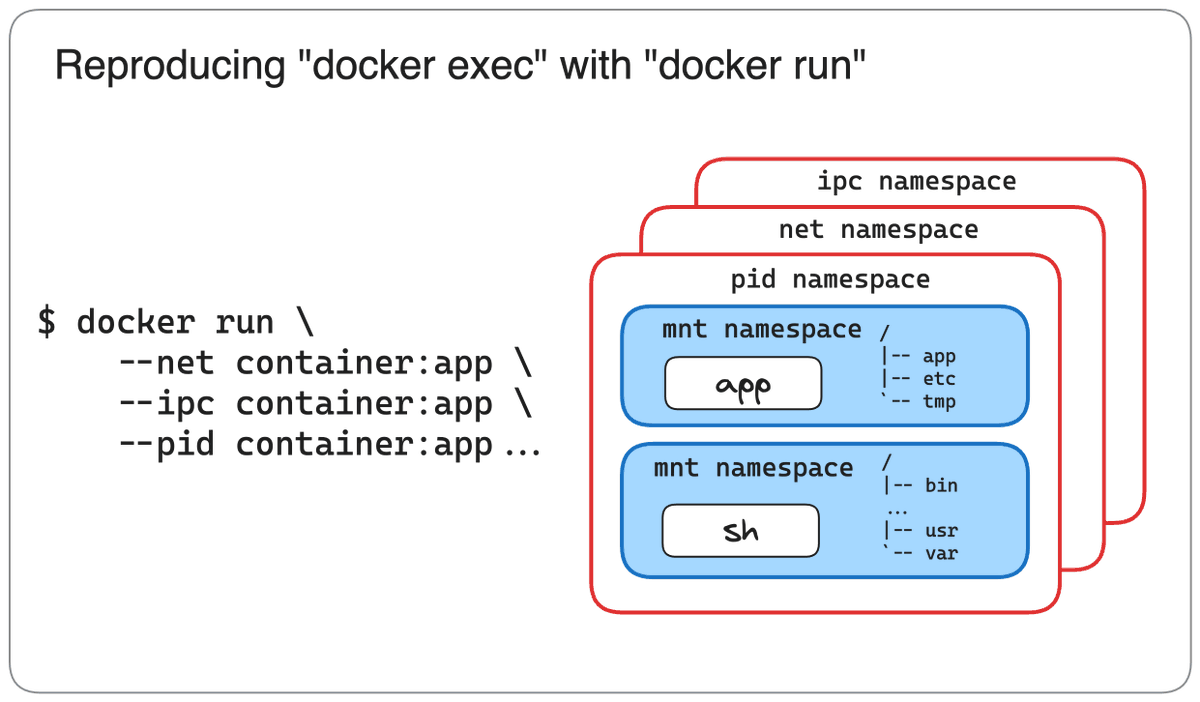
How to run a "sidecar" container in the namespace(s) of another container? 🧙♂️
This magic trick is widely used by various container debugging tools (e.g., docker debug, cdebug exec) and even Kubernetes (to implement pods).
Learn more about it at labs.iximiuz.com/challenges/…
1
26
145
6,239
Jan 18
Thanks to Claude Code, I finally found time for cdebug - the new v0.0.19 release includes K8s OIDC support and a massive dependency upgrade github.com/iximiuz/cdebug/re…
1
4
40
3,993

4 Oct 2025
And for those who are lazy (I am :-)) you can use the 'debug' command in #DockerSlim (aka MinToolkit), which will do this for Podman, ContainerD, Kubernetes and Docker or use the dedicated 'cdebug' app Ivan created.
4 Oct 2025

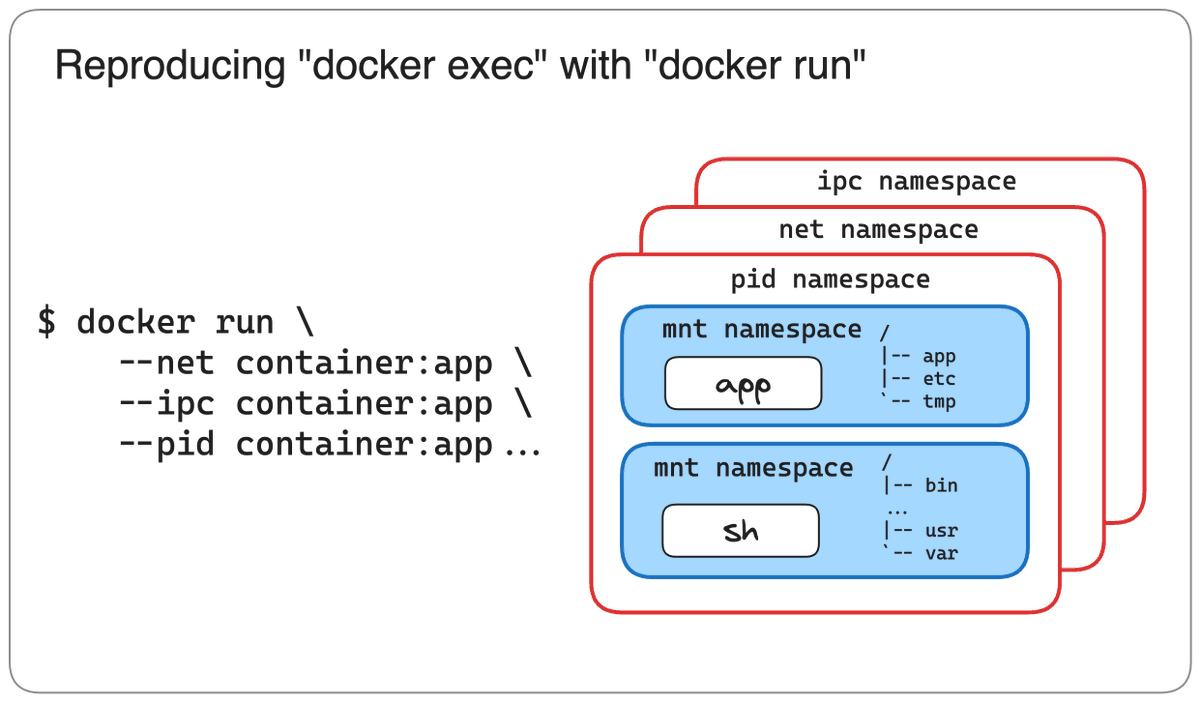
Run a Container in the Namespace of Another Container 🧙♂️
While there might be no practical use for this in a regular Docker workflow, sharing namespaces between containers is a widely used technique employed by Kubernetes Pods and debugging tools.
More: labs.iximiuz.com/challenges/…
1
8
3,925
2 Jan 2025
I haven't been keeping a close eye on it, but it turns out cdebug has been steadily growing on GitHub! It's feature-complete, so if you're tackling a tricky container debugging issue, I've got a tool for you 😎
github.com/iximiuz/cdebug
5
49
2,770
4 Oct 2024
From the isolation standpoint, yes. However, containers were invented to slice large servers into tens or hundreds of smaller machines, so it's kinda given that there is more than one container per server.
From the ops standpoint, it's even trickier - there is a lot of tools and services on the market to run, monitor, and debug containers. Docker (OCI) containers is the de facto standard runtime and packaging format, so it's much easier to operate them. Today, you can even exec into distroless containers with `kubectl debug` (or my own `cdebug` tool). In contrast, from my standpoint, unikernels look like black boxes that you launch and prey they behave well. The unikernel ecosystem needs to mature a little bit more before I'd consider it as a container alternative.
There are, of course, situations when I'd go with a unikernel-packaged app even today. For instance, if I needed a scalable to zero but still very low latency app and I wouldn't be concerned that it might not work well with a trimmed-down kernel, I might consider deploying it as a unikernel. In other words, the upsides of this solution should outweigh the (sizeable) downsides of using a non-mainstream tech.
2
69

24 Sep 2024
Debugging Distroless Images with kubectl and cdebug
Read more: dev.to/chainguard/debugging-…
5
30
953

14 Aug 2024
cdebug is a swiss army knife of container debugging:
- Troubleshoot containers lacking shell
- Forward unpublished or even localhost ports to your host system
- Expose endpoints from the host system to containers & Kubernetes networks
➤ github.com/iximiuz/cdebug
2
20
828
11 Aug 2024
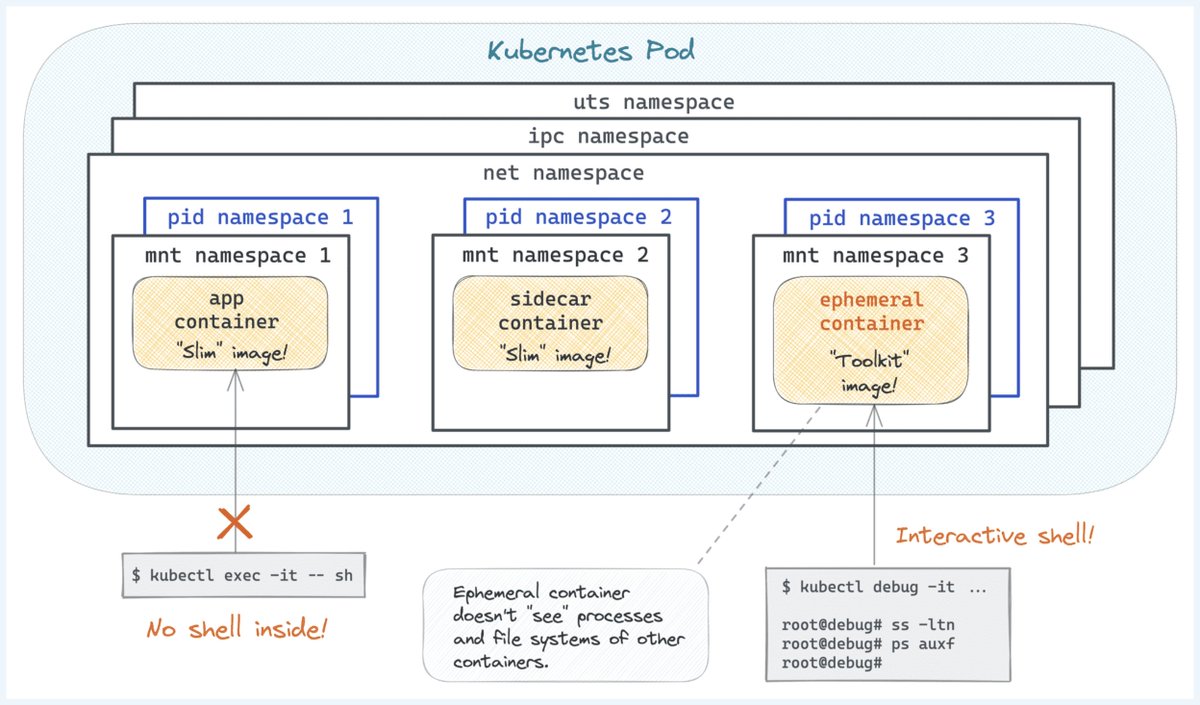
Debugging Kubernetes pods is challenging. Debugging pods without a shell inside is next to impossible. But only if you don't have the right skills 😎
There are tools like "kubectl debug" (official) and "cdebug" (by truly yours), but the only thing that actually matters at the end of the day is your experience. The more failing pods you've troubleshooted in the past, the more confident you'll be fixing the next one. So, I prepared a few challenges to help you practice!
Have fun labs.iximiuz.com/challenges?…
3
66
302
16,921
7 Aug 2024
Use cdebug
7 Aug 2024
4. cdebug - a swiss army knife of container debugging
A handy tool to improve the debugging UX:
- Troubleshoot containers and Pods w/o shell
- Exec into unprivileged and non-root Pods
- Access unpublished or even localhost ports
...and more!
github.com/iximiuz/cdebug
1
8
522
7 Aug 2024
4. cdebug - a swiss army knife of container debugging
A handy tool to improve the debugging UX:
- Troubleshoot containers and Pods w/o shell
- Exec into unprivileged and non-root Pods
- Access unpublished or even localhost ports
...and more!
github.com/iximiuz/cdebug
1
7
2,016
14 Jul 2024
cdebug is a swiss army knife of container debugging:
- Troubleshoot containers lacking shell
- Forward unpublished or even localhost ports to your host system
- Expose endpoints from the host system to containers & Kubernetes networks
➜ github.com/iximiuz/cdebug
3
36
3,537

12 Jul 2024
We're live with @matiaspan26 Daggerizing the World! Today we'll focus on adding @containerd support to @iximiuz 's cdebug project .
Join us and ask any questions about @dagger_io you might have!
x.com/i/broadcasts/1DXxydmEe…
1
7
578
5 Jul 2024
Awesome stuff! Thank you, folks, for giving cdebug some love!
2
40
5 Jul 2024
We've successfully Daggerized @iximiuz's cdebug project with @matiaspan26 . We leveraged Daggerverse modules and showcased the awesomeness of the `terminal` @dagger_io troubleshooting capability.
PR below and keep tuned next Friday for more progress!
github.com/iximiuz/cdebug/pu…
1
2
8
1,865
5 Jul 2024
In today's @dagger_io "daggerize the world" stream we'll be looking forward to improve @iximiuz's cdebug project. github.com/iximiuz/cdebug
Stream starts in 1 hour. You can follow this account to get notified when the stream starts.
1
3
15
2,394

cdebug is a swiss army knife of container debugging:
- Troubleshoot containers lacking shell
- Forward unpublished or even localhost ports to your host system
- Expose endpoints from the host system to containers & Kubernetes networks
➤ github.com/iximiuz/cdebug
10
60
5,078

31 May 2024
Interesting blog post about debugging distroless @chainguard_dev images but also great discovery about @iximiuz cdebug tool 💪
github.com/iximiuz/cdebug
31 May 2024

How to debug distroless containers with kubectl and cdebug
dev.to/chainguard/debugging-…
Thanks to @iximiuz for the help here
1
2
8
4,079

31 May 2024
How to debug distroless containers with kubectl and cdebug
dev.to/chainguard/debugging-…
Thanks to @iximiuz for the help here
2
11
29
5,962

24 May 2024
🖥️ iximiuz/cdebug
cdebug - a swiss army knife of container debugging. Troubleshoot #containers & pods lacking shell and/or debugging tools. Expose endpoints from the host system to containers & #Kubernetes networks.
github.com/iximiuz/cdebug #DevLps
1
3
402