
CFACT Collegians don't just discuss the issues behind closed doors or when hosting guest speakers. They take to the streets with mic and camera in hand, initiating meaningful conversations on energy policy with students on their campuses.
Shoutout to our campus representatives at San Diego State University for this brand new edition to our man-on-the-street interview series!
#sandiegostateuniversity #sandiego #califonia #windpower #windenergy #solarenergy #solarpower #solarpanels #greenenergy #CleanEnergy #savethewhales #cfactcollegians
youtube.com/shorts/TWuvcaFP-…
2
3
202
The Left uses infiltration and intimidation to gain influence over productive businesses they'd gladly destroy given the chance. No more appeasement. The push back is on! cfact.org/2026/06/09/cfact-g…
3
5
104
Africans won't except anything less than full-on energy abundance. Why should they? Nuclear is a key component. cfact.org/2026/06/12/africas…
2
3
102

CFACT Presses BlackRock’s Larry Fink on ESG Opt-outs at Annual Shareholder Meeting - go.shr.lc/4v4a1i1
7
Toby Joyce retweeted

Jun 12
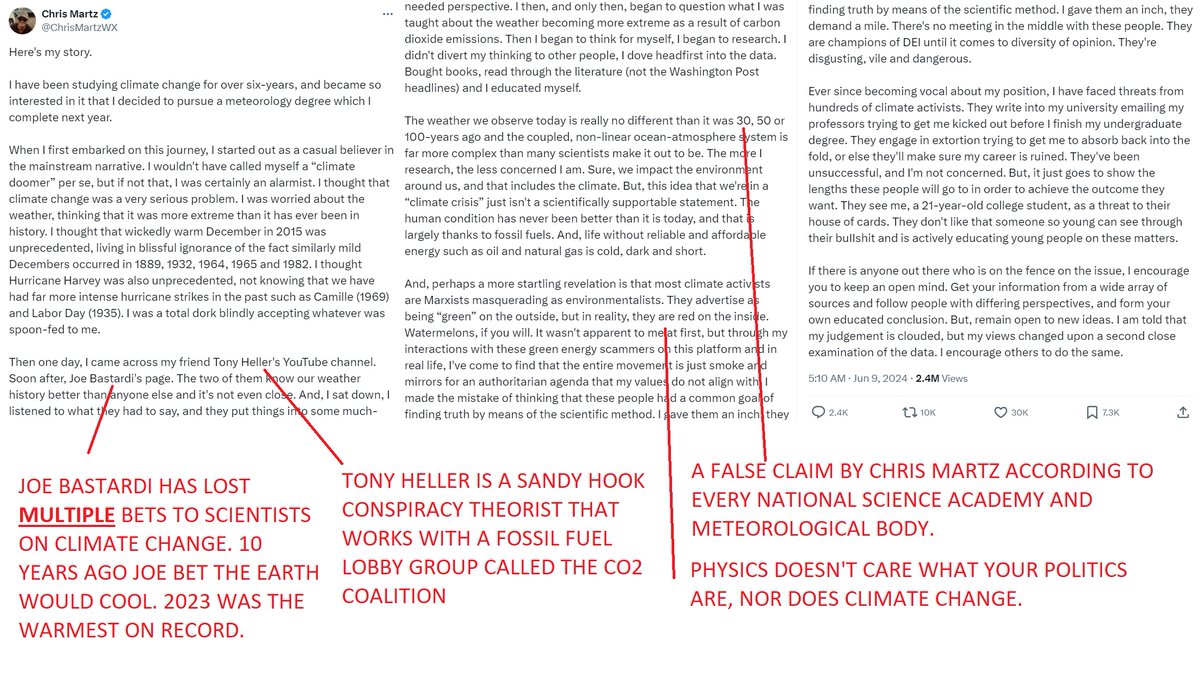
Chris Martz works for a fossil fuel lobby group called CFACT. He misled your audience.
13 Jun 2024

A 🧵 Chris Martz is a human induced climate change impact sceptic who recently had a highly viewed tweet. Sadly Chris is a case of someone gullible enough to be taken in by people with links to fossil fuel lobby groups who have been practicing the art of deception for decades..
3
16
194

Jun 12
Surprised to see that Ned is still active. All my old favorite deniers are dying out. All we have left to laugh at is Chris Martz (which btw I emailed the CFACT director about him lol)
2
26

hey, a paycheck is a paycheck
he's the employee and CFACT the paymaster
2
18
doesn't he work for CFACT now ?
1
2
34
WA Leg Watch retweeted

Jun 11
Arizona Students Reconsider Nuclear After Seeing Data | Emma Arns, CFACT
College students hear constant calls for clean energy via solar panels and wind turbines, but far fewer have ever been challenged to consider where nuclear energy fits into the conversation. At the University of Arizona, CFACT Collegian Elliott Taylor set out to test students’ assumptions with a simple question and a surprising piece of data.
Elliott began by asking students what they believed was the most reliable low-carbon source of energy. The answers came quickly and confidently. Nearly two-thirds of the students interviewed selected solar power as their top choice. Others suggested wind, hydropower, and even wastewater treatment may also be the best option. Only one student suggested nuclear energy, though he added that it may be controversial.
Like many young Americans, the students’ responses reflected the energy narrative they have heard most often. Renewable sources such as solar and wind are frequently presented as the clean energy technologies of the future, while nuclear power is often discussed negatively, through the lens of accidents, radiation, and waste disposal.
Then Elliott introduced a graph from the U.S. Department of Energy comparing the capacity factor of major energy sources. The chart revealed that nuclear energy operates at a capacity factor of more than 92 percent, making it by far the most reliable source of electricity generation. Surprising to many students, solar and wind ranked near the bottom because they depend solely on weather conditions and time of day. The data also challenged assumptions about emissions, showing that nuclear energy remains one of the lowest-carbon sources of power available.
The reactions were immediate.
Several students expressed genuine shock that nuclear energy topped the list. Others were less surprised by nuclear’s performance but voiced concerns about the potential for radiation leaks and accidents, despite the industry’s strong safety record.
By the end of the conversations, several students said the information had changed their perspective.
These interviews reveal an important reality: many students are not opposed to examining new evidence—they simply have not been presented with it. When given data and the opportunity to think critically, preconceived notions can quickly give way to curiosity and a more nuanced understanding of complex energy issues.
cfact.org/2026/06/05/watch-a…
4
6
32
2,374