
BOOK IV - The Aqueduct of Reflection
Era II - The Era of Cultivation
Cycle 4
Breath 1
Chapter I - The Need for Continuity
II.4.1 Mirano beheld the garden and saw

30s
Tonali that's the experience we need
Someone who will guarantee us continuity not Pause and play

At the core, anima maintaining continuity across sessions is honestly what's different here.
1

𝗧𝗛𝗘 𝗙𝗨𝗧𝗨𝗥𝗘 𝗢𝗙 𝗪𝗘𝗕𝟯 𝗜𝗦 𝗕𝗘𝗜𝗡𝗚 𝗦𝗛𝗔𝗣𝗘𝗗 𝗕𝗘𝗬𝗢𝗡𝗗 𝗧𝗛𝗘 𝗕𝗢𝗔𝗥𝗗𝗥𝗢𝗢𝗠
Some of the biggest innovations in crypto aren't starting in corporate offices.
They're emerging from the next generation of builders, developers, and creators preparing to shape the future of Web3.
That's where initiatives like TRON Academy are making a difference, giving students direct exposure to blockchain technology, industry leaders, and real world Web3 opportunities.
𝗧𝗔𝗟𝗘𝗡𝗧 𝗗𝗘𝗩𝗘𝗟𝗢𝗣𝗠𝗘𝗡𝗧 𝗔𝗦 𝗜𝗡𝗙𝗥𝗔𝗦𝗧𝗥𝗨𝗖𝗧𝗨𝗥𝗘
Blockchains are powered by code.
But ecosystems are powered by people.
• Developers
• Researchers
• Founders
• Community builders
Supporting education and mentorship today helps create the innovators who will drive tomorrow's decentralized economy.
𝗙𝗥𝗢𝗠 𝗟𝗘𝗔𝗥𝗡𝗜𝗡𝗚 𝗧𝗢 𝗕𝗨𝗜𝗟𝗗𝗜𝗡𝗚
One of the strongest signals for Web3 is seeing students move beyond simply following the industry and start actively contributing to it.
The conversations are expanding around:
• Decentralized infrastructure
• Digital ownership
• DeFi and financial innovation
• AI powered blockchain solutions
• The future direction of the Web3 economy
These discussions help turn learners into builders.
𝗘𝗖𝗢𝗦𝗬𝗦𝗧𝗘𝗠 𝗖𝗢𝗡𝗧𝗜𝗡𝗨𝗜𝗧𝗬
Long term ecosystem growth requires more than technology.
It requires investing in talent.
The developers and entrepreneurs entering the space today will build the protocols, applications, and infrastructure that define the next era of crypto.
Creating opportunities for early participation is one of the smartest investments any blockchain ecosystem can make.
The future of Web3 won't simply be adopted.
It will be built by people willing to learn, experiment, and innovate.
And through initiatives like TRON Academy, that future is already taking shape.
@trondao
@justinsuntron
#TRONEcoStar #TRON #Web3 #TRONAcademy


1

Basil Rathbone retweeted

Just a reminder that Ed Miliband is merely Continuity Cummings.
CCS is a really terrible idea, as Kathryn explains. It’s even more stupid than Hydrogen.
But for a while Dom was “obsessed” with it. He’d met a guru.
High performance government! State capacity! Move over you useless Hollow Men officials! 🤪



The headline says it all
Ditch @Ed_Miliband's CCS vanity project and fund the military
telegraph.co.uk/news/2026/06…
2
15
61
8,099
It's not all about being a Baller
It's about what we need as Arsenal to guarantee us continuity
2

Ekiti is moving forward with purposeful leadership, improved welfare for retirees and sustainable development under Governor Biodun Oyebanji.
For continuity, progress and greater achievements support and vote Gov. Oyebanji.
#BAO2BAO
#BAOTILL2030
@biodunaoyebanji
@officialABAT

5

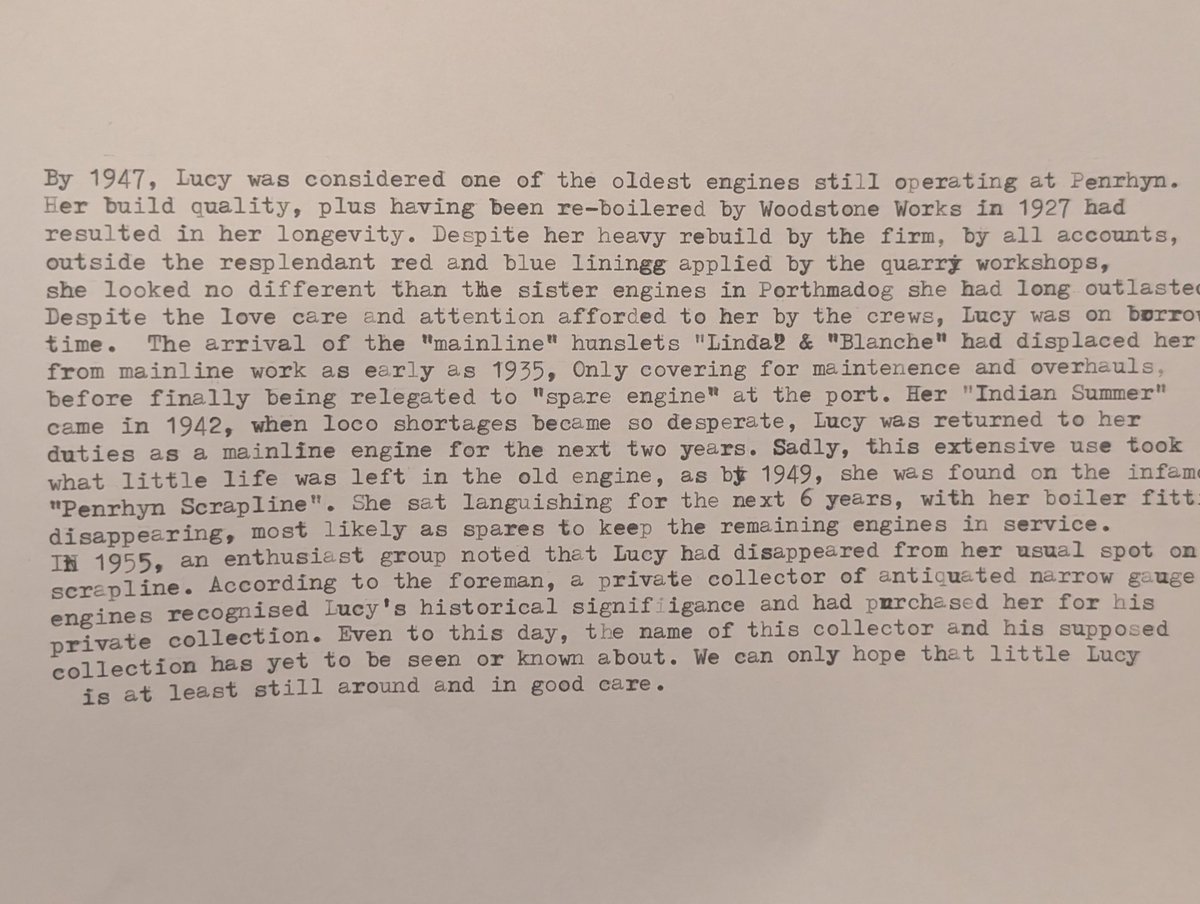
I had picked up a type writer for 20 quid and as I've built my little engine, one can't help but do a little story about her continuity and timeline errors aside, it was a fun writing exercise. Not just for the mind, but my fingers, type writing is a hell of a hand workout...!

2

Ein und aussteigen wurden sicher an zwei verschiedenen Drehtagen gefilmt. Normal sollte hier die Continuity und die Maske auf „Amschlussfehler“ achten. Teils ist das aber bei den immer kürzeren Drehzeiten und mageren Budgets schwierig.
1
7

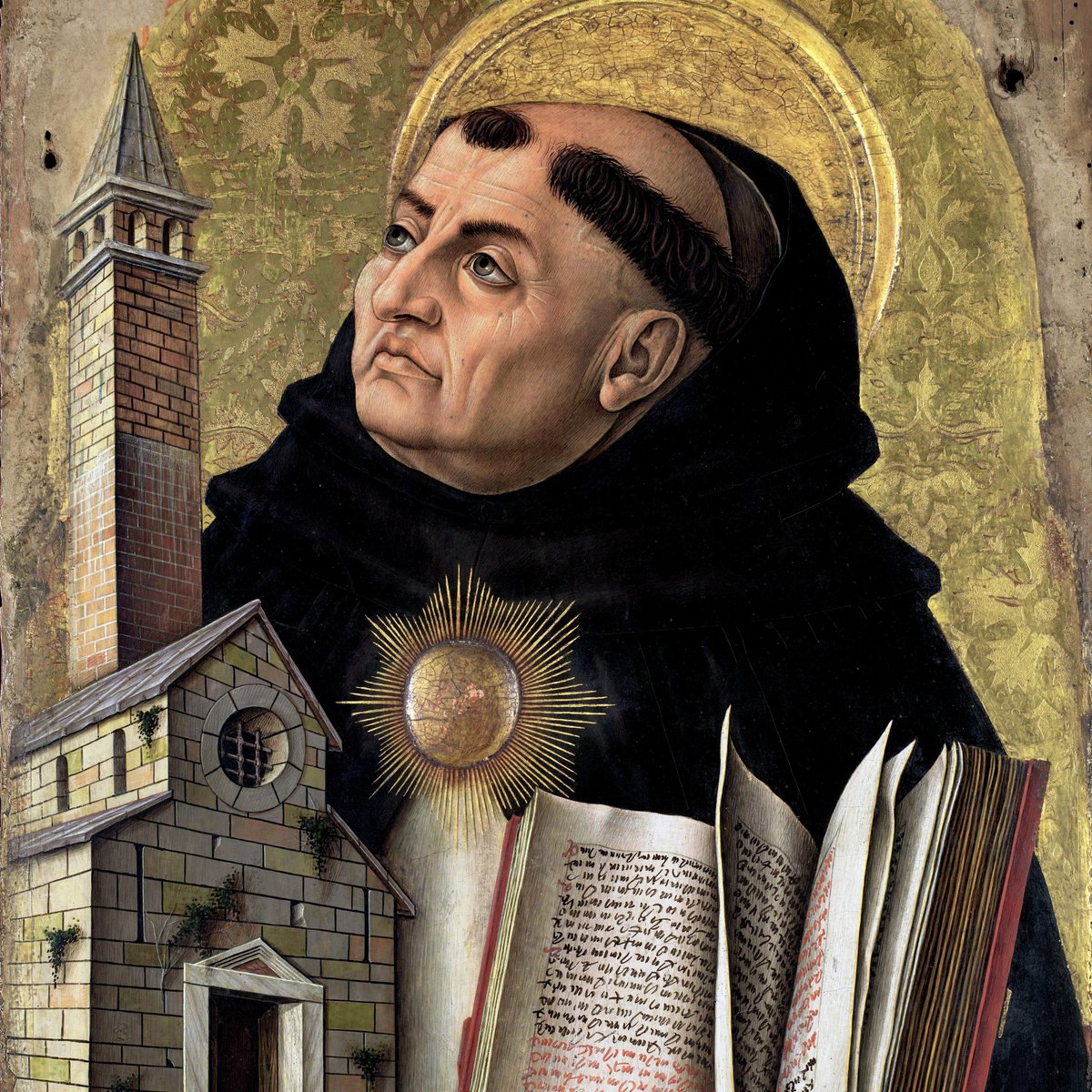
Capital Punishment and the Order of Reason
A Thomistic Defence of the Death Penalty
The Church has always upheld, in continuity with Sacred Scripture and the wisdom of the Greco‑Roman tradition, that capital punishment is just when the sword is wielded by legitimate authority and ordered towards the protection of the common good.
Echoing this perennial teaching, St Thomas maintains that public authority, as minister of the divine order of justice, may licitly take life when a malefactor's deeds gravely rupture the order of justice and endanger the community.
He teaches that the one who threatens the harmony of the polity has, by his own deliberate act, fallen away from the order of reason, and thus may be removed as a surgeon removes a gangrenous limb for the health of the whole body, lest he become a corrupter of the many.
He affirms that such punishment is medicinal, both restoring the violated order of justice and preventing the spread of further wrongdoing, since penalties exist to preserve the good of the whole.
He insists that the possibility of the malefactor's repentance does not override the community's right to safety and security, and the duty to defend itself through proportionate and authoritative punishment, for the judge acts not from private vengeance but from public reason.
However, because modern societies are anti‑Christian, disordered, and often lack a rightly constituted and morally legitimate public authority, the Church warns that such regimes cannot be trusted with the power to take life.
ALT WIKICOMMONS
1
52

5-
The central question is therefore simple. If the overwhelming concentration of texts, traditions, institutions, philosophies, sacred geographies, systems of preservation, and civilizational memory associated with a civilization exists within a particular region, how much weight should that fact carry when discussing its origins?
The answer remains open to debate. Yet the question itself deserves to be taken seriously. For whatever conclusions one ultimately reaches, the continuity of Indian civilization remains one of the most remarkable historical phenomena in the human story, and any theory of origins must account for it adequately.
5
4-
Genetics itself also has limitations that are sometimes overlooked in public debate. Genetics can reveal ancestry, admixture, and population movement. It cannot directly reveal language, philosophy, religion, literature, or civilizational identity. DNA does not contain a grammar. It does not preserve a philosophical school. It does not explain how texts were transmitted or why particular traditions survived. Genetics is an indispensable tool for studying populations, but civilizations are more than populations. They are systems of memory, institutions, ideas, and cultural continuity.
There is also a broader historiographical dimension to the debate. Many foundational theories concerning India's ancient past were developed during the nineteenth and early twentieth centuries. These scholars made enormous contributions to linguistics, philology, and archaeology, but they also worked within intellectual frameworks shaped by their own historical circumstances. One recurring tendency of that era was the assumption that major innovations generally originated outside colonized societies and spread inward. India was often admired as a civilization of great achievement while simultaneously being treated as a recipient rather than a source.
This does not mean that colonial scholarship was entirely wrong. It does mean that inherited assumptions deserve periodic re-examination. The history of scholarship repeatedly demonstrates that seemingly settled conclusions can change. Indian mathematics, linguistics, and philosophy provide clear examples. Contributions once underestimated are now widely recognized. The lesson is not that every mainstream theory is mistaken, but that historical understanding evolves.
This point becomes especially important when considering alternative explanations. India's history includes repeated interactions with Central Asian, Iranian, and other populations. Shakas, Kushans, Parthians, Huns, and many others entered the subcontinent at various points in history. The existence of multiple migrations reminds us that genetic patterns may reflect complex and layered processes rather than a single explanatory event. Historical reality is often more complicated than the simplified narratives presented in public debates.
Ultimately, the argument advanced here is neither one of certainty nor one of denial. It does not reject linguistics, archaeology, or genetics. It does not claim that migration never occurred. Nor does it insist that every achievement originated in India. Rather, it argues that the cumulative weight of continuity, concentration, memory, intellectual sophistication, and historiographical revision creates a stronger case for indigenous-development models than is often acknowledged.
1
6
3-
Panini's grammar remains one of the most remarkable achievements in linguistic history. Indian philosophical traditions engaged deeply with questions of consciousness, knowledge, language, causation, and reality. Indian mathematics contributed the decimal place-value system and the concept of zero, innovations that transformed global intellectual history. Such achievements do not emerge spontaneously. They require long periods of institutional development and intellectual accumulation.
This observation becomes particularly relevant when compared with the archaeological cultures often associated with Indo-European origins. The Yamnaya, Sintashta, and Andronovo cultures were undoubtedly important components of Eurasian prehistory. Yet the gap between the archaeological evidence available from these cultures and the intellectual sophistication later visible in India raises legitimate questions. This does not disprove migration. It does, however, increase the explanatory burden. One must explain not only how populations moved, but how one of the world's most sophisticated civilizational traditions emerged and endured.
A comparative perspective further sharpens the question. Greece, Rome, and Mesopotamia profoundly shaped world history, yet their ancient traditions survive primarily through texts and archaeology. China offers perhaps the closest comparison to India in terms of civilizational continuity. Yet even there, repeated dynastic transformations and ideological upheavals reshaped older traditions significantly. India's distinctiveness lies not in possessing continuity alone, but in the scale, density, and persistence of that continuity across texts, rituals, sacred geography, institutions, and collective memory.
Another reason for caution concerns the nature of the evidence itself. Modern discussions often draw heavily upon archaeology and genetics. These are powerful tools, but they are not evenly distributed across the globe. Ancient DNA from Europe, Central Asia, and parts of the Eurasian steppe is far more abundant than ancient DNA from South Asia. Climatic conditions, preservation challenges, and uneven archaeological exploration have created a significant evidentiary imbalance.
This does not invalidate existing genetic research. It simply suggests that confidence should remain proportional to evidence. Historical reconstruction is strongest when multiple lines of evidence converge. Where evidence remains incomplete, humility is preferable to certainty.
1
3
2-
An additional dimension of this continuity is often overlooked. The traditions, texts, institutions, sacred geographies, and cultural memories discussed here survived not during a period of uninterrupted stability, but through centuries of profound political upheaval. Large parts of the subcontinent experienced repeated invasions, warfare, dynastic conflict, episodes of iconoclasm, the destruction of temples and educational institutions, and later the economic and political disruptions of colonial rule. Whatever one's interpretation of these events, the broader historical fact remains difficult to ignore: much of what survives today survived despite substantial losses. If such significant elements of India's civilizational inheritance remain visible after centuries of disruption, one may reasonably ask how much larger the original civilizational record might once have been.
No single one of these facts proves indigenous origin. Yet together they create a phenomenon that demands explanation. If the deepest roots of these traditions are located elsewhere, why is the overwhelming concentration of their textual, ritual, philosophical, and institutional continuity found within India?
The question becomes even more interesting when one considers civilizational memory. Modern scholarship often privileges material evidence, and rightly so. Archaeology, linguistics, and genetics have transformed our understanding of the past. Yet civilizations are also sustained by memory. They preserve landscapes, symbols, sacred associations, and collective understandings of who they are.
The Indian case is extraordinary in this regard. The Saraswati River occupies a position of profound importance in ancient literature and cultural memory despite no longer existing as a major visible river. Whether one accepts every modern identification or not, the persistence of that memory across millennia is historically significant. Similarly, the Ramayana and the Mahabharata are not merely literary works. They function as civilizational memory systems. Their stories remain embedded in pilgrimage traditions, folklore, ethics, politics, art, and everyday life. Few ancient texts anywhere in the world continue to occupy such a central place within the living culture of a civilization.
This continuity extends beyond memory into the realm of intellectual achievement. One of the least discussed aspects of the debate concerns civilizational sophistication. The traditions associated with India did not consist merely of rituals or myths. They included advanced grammatical analysis, philosophical inquiry, mathematics, astronomy, logic, and systems of education capable of preserving and transmitting knowledge across generations.
1
3
1-
Making the Case for an Indian Civilizational Origin
(A Civilizational Critique of Prevailing Origin Narratives)
There is a curious asymmetry at the heart of many discussions about the origins of Indian civilization. Few people dispute that some of humanity's most enduring intellectual, linguistic, philosophical, mathematical, and spiritual traditions reached their fullest expression within the Indian subcontinent. Yet when questions of origin arise, the search frequently shifts beyond India's borders. The civilization is acknowledged here; its roots are often sought elsewhere.
This pattern appears across multiple fields. Sanskrit is usually connected to a larger linguistic family whose origins are placed outside India. Vedic civilization is frequently linked to migrations from regions northwest of the subcontinent. Genetic discussions often emphasize external population movements. Archaeological interpretations similarly look for influences arriving from beyond India. The result is a recurring narrative in which India becomes the place where traditions mature, flourish, and achieve sophistication, while their deepest origins are repeatedly located elsewhere.
The purpose of this essay is not to deny migration, interaction, or cultural exchange. Human history is full of all three. Nor is it to claim certainty where uncertainty remains. Rather, it seeks to ask whether modern discussions have given sufficient weight to one of the most remarkable historical facts about India: the extraordinary concentration of civilizational continuity within the subcontinent itself.
Every historical theory must eventually confront a simple question: where is the evidence concentrated? In the case of the Vedic and Sanskritic tradition, the answer is striking. The texts are here. The ritual traditions are here. The grammatical traditions are here. The philosophical schools are here. The sacred geography is here. The institutions of transmission are here. The continuity is here.
The Vedas, Brahmanas, Aranyakas, Upanishads, Vedangas, epics, and vast bodies of later literature survive within a living framework of interpretation and practice. Panini's grammar did not emerge in isolation but as part of a mature linguistic tradition. Philosophical schools such as Vedanta, Nyaya, Samkhya, Mimamsa, Yoga, Buddhism, and Jainism developed sophisticated systems of thought that continued to evolve for centuries. Perhaps most remarkably, the oral preservation of Vedic texts represents one of the most sophisticated systems of cultural memory ever devised.
1
5

I mean if your whole argument is that changing a plot element leads to an indeterminable change in the continuum, then this is trivially true, but then it equally absurd to claim that Luffy without his fruit his fruit is useless.
You can use reasonable continuity to scale him…
2
6

MU₦ICLE retweeted

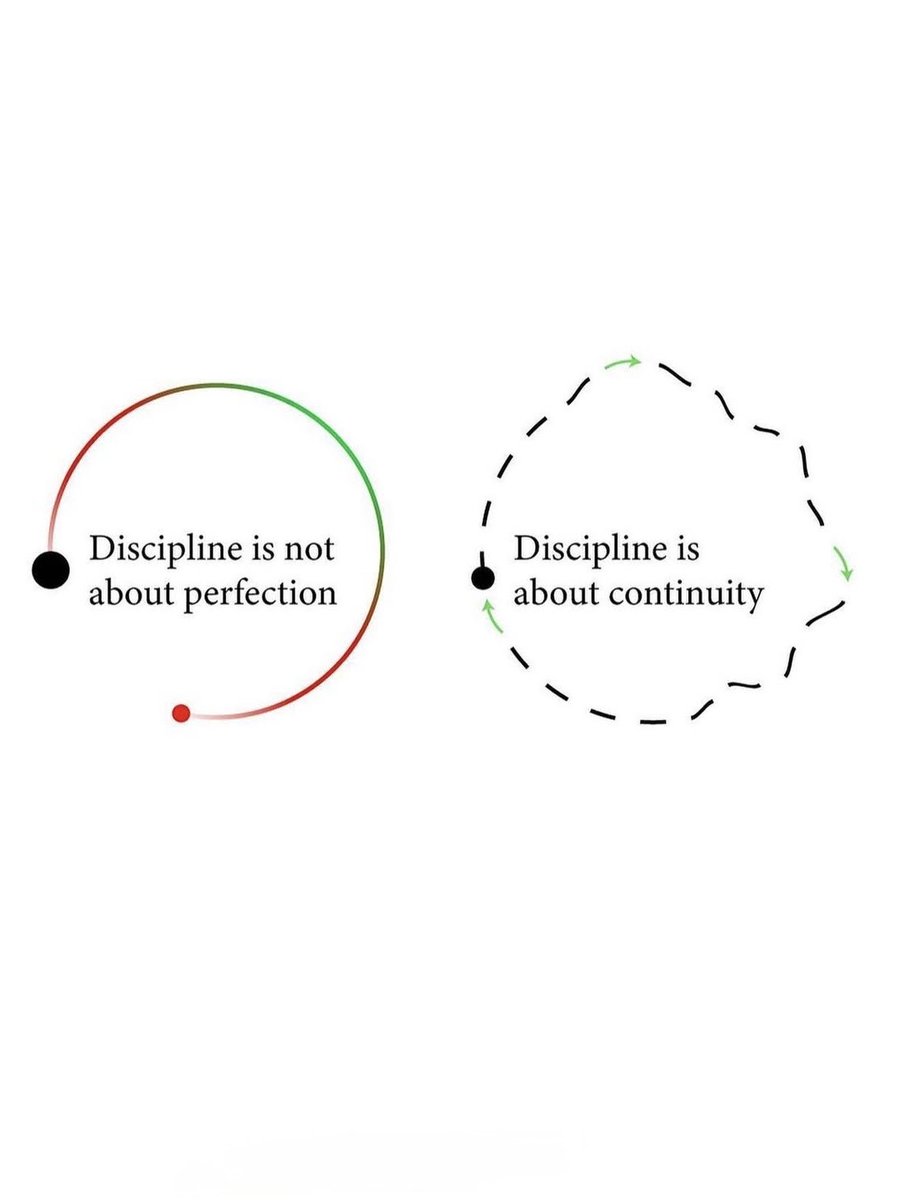
Discipline is about continuity.
16
147
1,280
18,241

Without a dynasty the seasons have no continuity, your restart the story arc every year 😔
1
39