
But when they're talking about the IPO run which started with SpaceX then it's going to cannibalize the pensions that is such a bunch of s*** He's almost not worth responding to but that's what they're saying I mean if you think those government pensions are controlled in an unbiased way you're wrong and if you think they're maximizing you have to look behind the numbers they're all fake they're serious trouble The postal service can't meet it's obligations that becomes a tax burden even though in effect everything the pensions pay out is a tax burger It's accumulated by the debt not the profit they're worse than broke and you're going to pay for it and this is going on all over the planet it's what's fueling the revolution and it's not a revolution it's a terrorist activity it's meant to overthrow the countries that they're active in and this includes the United States

You have to take into account that the vast majority of the push back from unions is from government or quasi-government unions such as nurses and teachers and the pushback has become violent This all stems back to Doge and it had immediate repercussions for the safety of Eli and his family what's up that are after him and they do it in you know you do it over the pond too It's very internationally organized and so is the governmental pension system big money big big money It's almost like a sovereign wealth fund in a private camp

18s
Interesting as Remote viewers discuss a Black cube holding and projecting this simulation.
Also all Mind controlled Muslim NPCs worship a Black cube in Jedda

19s
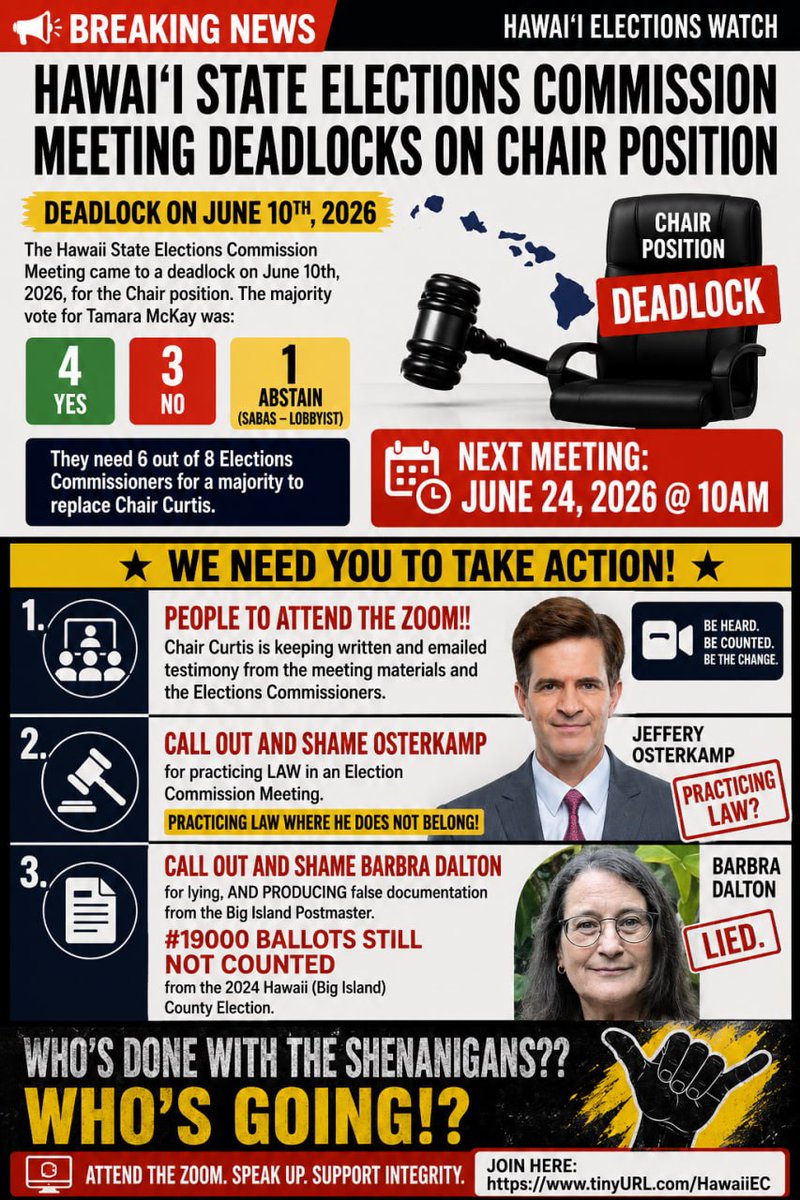
🤔 Controlled opposition? It's what they don't want you to know. #WeAreTheMedia @HawaiiCounty @HawaiiFreePress
@HawaiiNewsNow @megesoformayor

Why no LOCAL Reporting on this by PUBLIC MEDIA stations , just WHY @wearehpr @pbshawaii @olelocommunity #info@naleo.tv @AkakuTV @HawaiiWired

22s
israel is illegitimate basterd child of satanic US and UK. A rogue military base in middle east controlled by fake epstein-class jooooos originating from khazaria/europe/poland/ukraine. Needs to be liquidated.
nelson noguera retweeted

💥 Russia-controlled Krymsky Titan chemical plant struck at least 23 times and destroyed by a Ukrainian drone swarm in Armyansk, occupied Crimea.
The plant was a major producer of Titanium Dioxide pigment used in the manufacture of explosives.
15
387
2,591
36,423

So why it's written in English and not in Arabic?
Because before 1948 Palestine was the name of a region controlled by the UK, it wasn't a country. It never was.
It only exists as a State since 1988.
And it was founded in... Algeria by an Egyptian guy called Yassir. 😂😂😂
2

The Love Doctor: “Testing Loyalty”
He came in smiling.
That already made me suspicious.
Not because smiling is bad—but because people who are truly fine don’t usually come to a love doctor with that kind of controlled confidence. They come confused, tired, or defensive. Not polished.
“I just want to confirm something,” he said as he sat down. “I think my girlfriend is not loyal.”
I didn’t react. I’ve learned that accusations are usually windows into insecurity, not evidence.
“Why do you think that?” I asked.
He leaned forward.
“I tested her.”
That word always changes the room.
Tested.
Like love is a theory in a lab.
He continued, almost proud.
“I left my phone unlocked. I chatted her from another number pretending to be someone else. I was respectful at first. Then I escalated. She didn’t fail immediately… but she didn’t shut it down fast enough either.”
I nodded slowly.
“And what were you hoping to prove?”
“That she loves me enough to not entertain another man,” he said quickly.
There it was.
A demand disguised as a test.
I asked, “Did you tell her it was you after?”
He shook his head.
“No. I just blocked her after she started replying.”
That’s when I understood the real issue.
It wasn’t about her.
It was about control dressed as insecurity.
---
I asked him to describe the relationship before the “test.”
He hesitated.
“She used to be warm,” he said. “Always checking on me. But recently she became… less available. Replies slower. Less emotional energy.”
“And how did you respond to that?” I asked.
He smiled faintly.
“I wanted to see if she still cared.”
So instead of communicating, he created a trap.
I see this pattern more often than people admit.
When attention drops, instead of asking “what changed between us?” people sometimes create situations that force a reaction they can interpret.
I said to him, “You didn’t test her loyalty. You tested her stress level.”
He frowned.
“What do you mean?”
“You introduced confusion into her life and judged her reaction to confusion.”
That line made him go quiet.
Because it was true.
---
Then I asked something direct.
“If she passed your test, what would you have done?”
He hesitated longer this time.
“I… I would have felt secure.”
“And if she failed?”
“Then I would leave.”
I nodded.
“So either way, you created a situation where you had power over the outcome.”
That’s the uncomfortable truth about many “loyalty tests.”
They are not about truth.
They are about control over uncertainty.
---
I told him something I’ve learned from experience.
“People don’t usually fail relationships in one moment. They fail under pressure they were never told they were under.”
He shifted in his seat.
“She didn’t know it was a test,” I added.
“That’s the point,” he said quickly. “If she truly loves me, she should resist anything.”
I looked at him.
“This is where people lose good relationships,” I said calmly. “You don’t build trust by creating traps. You build it by creating safety.”
Silence.
Then I asked the question that changed his expression.
“Have you ever asked her why she became less available?”
He opened his mouth… then closed it again.
Because the truth is, he hadn’t.
It was easier to test than to listen.
---
Before he left, I said something simple.
“If you keep testing people instead of talking to them, you will always end up alone with your own conclusions.”
He didn’t respond.
But he didn’t smile anymore either.
---
After he left, I wrote one line in my notes:
Some people don’t lose love because it left.
They lose it because they turned it into a courtroom instead of a home.
And no relationship survives constant interrogation dressed as love.
1
Rinni retweeted

Child Traffickers were in charge of all Science…
Robert Maxwell headed the Scientific Journal System that controlled Science for decades. What else did he control?
Bill Gates invested $10M in ResearchGate…that has 25 MILLION members.
Epstein and Gates decided what research got amplified…
17
235
437
6,084
B retweeted

5h
AUSTRALIA WINNING 2-0 AFTER EVERYONE SAID TURKEY WOULD WASH US WE CONTROLLED IT WE ARE CLOSER TO THAT PUBLIC HOLIDAY
 The Memes Archive
2
15
222
2,124

Hot off the presses! DevOps'ish 313: Export Controlled, AUR Torched, Lawyers Disqualified, and more devopsish.com/313/
1

Every broadcaster gets the same world feed which is controlled by FIFA.
1

A man who needs people to feel whole will always be controlled.
• Approval is a leash.
• A relationship won't fix emptiness.
• Loneliness only scares weak men.
Learn to sit alone without flinching.
That's where real power lives.
1

 NEWS LION

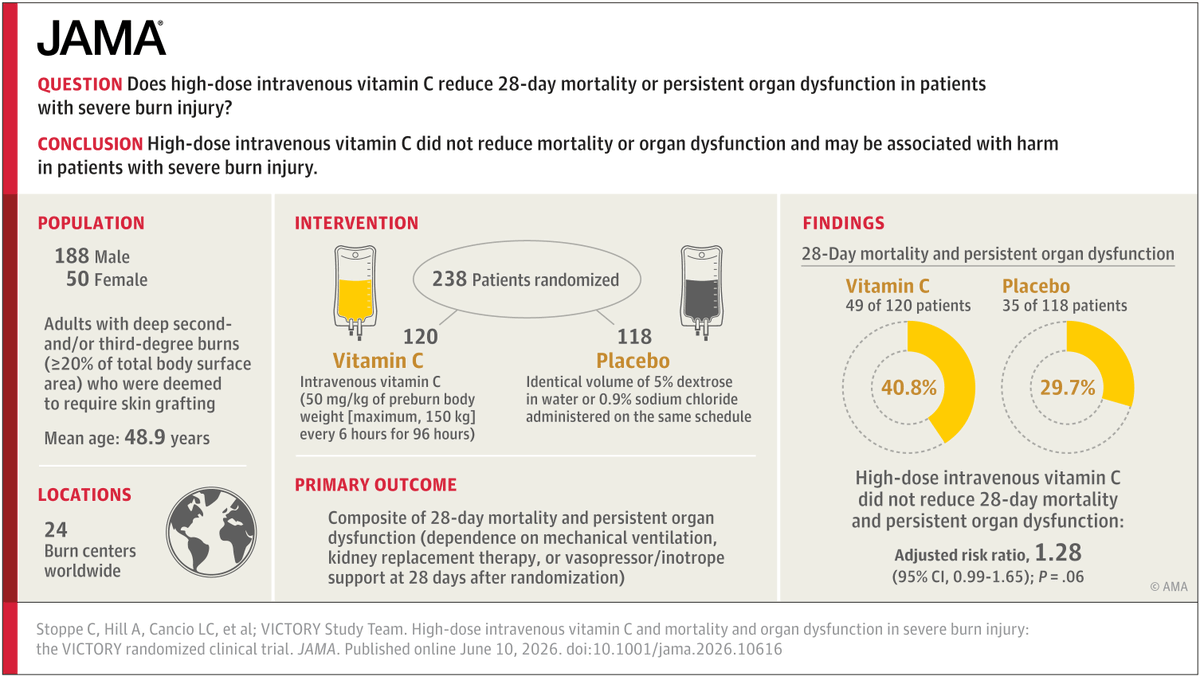
📣 Presented this year at #CCR26 from @JAMA_current and @JAMANetworkOpen:
Among adults with severe burns enrolled in an international double-blind, placebo-controlled trial, high-dose intravenous #VitaminC did not improve survival, reduce hospital length of stay, or prevent organ dysfunction. 🧵
ja.ma/4ghBOH1
1
21

When youth meets insanity. I wonder if this is a mind controlled operation. IMO things certainly got worse after the jab. Perhaps there is more inside those injections than what is being discovered,

Jim Fraser MSM retweeted

Why am I not surprised that the right wing media controlled by tax exiles keep claiming @Keir_Starmer is unpopular & the @bbc keep quoting them while on this social medium almost all the posts support him?
216
98
371
8,735
A B retweeted

Yes retarded because the mines are controlled by congressi government in telengana, Coal Minister wrote letter to Telangana CM Revanth Reddy, flagging the loss of 40 lakh tonnes of coal. Absolute next level shameless trying to spin this on bjp .
11h

Finally we are back to 2010 to 2014 era..
2
52
243
4,241

Kat🐱🇮🇹 retweeted

She cannot be controlled by opinions, pressure, or expectations. She knows who she is, what she stands for, and she refuses to compromise her values just to fit in. While others are busy trying to impress people, Thandeka is focused on building her own life in peace.
THANDEKA CARES
THANDEKA IS LOVABLE
#ThandekaWithLove
#ThandekaHeartOfGold

16
27
172