
🤣 estos pestilentes cpps del delincuente de maelo son más animales! 🤡
20 Dec 2023

Si, Maelo es de lejos un guerrero....
17


Los de la DBA (en su mayoria boomers) son más CPPs de los argensimios, basta con ver como los Porkylovers se la xupaban a Milei
Aunque los rojos fans de Velasco tampoco no se salvan
124
y los refuerzos para cuándo? estos cpps ni dicen nada y están que la cagan, es hora de que la hinchada se haga sentir con todo @trinchera_nort
23
Eso dicen los pestilentes cpps del fujimorismo como tú comprenderás ! 🤡
2

Eso son sus CPPS qur ahora si te stan que decir que votaron por Keiko desde el 2011
37
Paul Solt retweeted

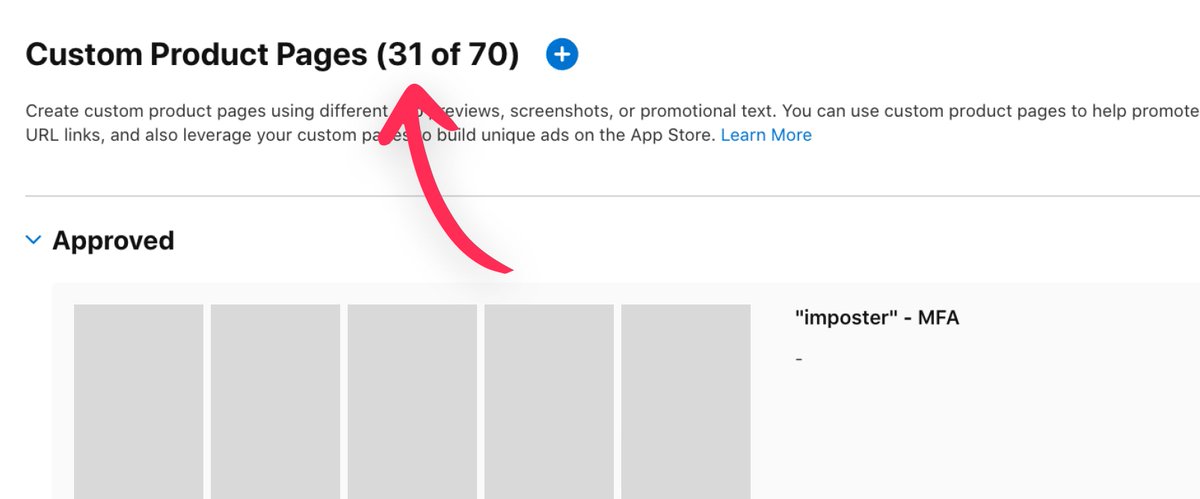
For people struggling with Apple Ads:
You can't ignore CPPs.
If you are running Apple Ads and you don't have a few CPPs for every search intent, you are just throwing your money down the drain.
1
27
2,050


Camarada Jessica 🇵🇸🇧🇴-PARODIA- retweeted

Existe algún papper o tesis que haya estudiado por que el conegro y el rojo son tan cpps de los argentinos?

que si que gaspi se metió cagadas tenía 23 años no vengan a hacerse los moralistas. pero él se redimió a comparación de ti que sigues siendo una puta mierda deseándole la muerte a alguien que supo poner su vida en orden solo para irse de manera trágica. hay que ser hijo de puta
8
1
51
2,868

Continuation of granulation…
Every unit operation in manufacturing processes have CPP and CQAs.
Today we talk about CPP and CQAs in wet granulation.
CCPs=Critical Process Parameters>>key process variables that directly affect production quality.
CQAs=Critical Quality Attributes >> product characteristics that determine whether the product is safe, effective and of acceptable quality.
CPPs in High Shear wet granulation(RMG);
1. Impeller Speed
2. Chopper Speed
3. Power load
4. Wet Massing time..etc
CPPs in low Shear wet granulation(FBE/FBD);
1.Inlet Temperature
2. Exhausts Temperature
3.Product Temperature
4. Spraying Rate of the binder solution
5. Airflow rate in CFM
6. Atomization Pressure in Bars
etc.
Next post is about CQAs
7


Continued
The resulting Profunda Gelatio gel-retisiem exhibits high reproducibility across batches, with <5% variation in network density when temperature is maintained within ±0.5°C.
Stability and shelf-life characteristics:
The Rana Gel gel-retisiem demonstrates exceptional long-term stability. Under refrigerated storage (2–4°C), the internal reticular framework remains intact for >6 months with minimal syneresis (<2% fluid separation). Thermal cycling between -10°C and 8°C induces reversible gel-retisiem compaction/expansion without permanent disruption. Accelerated stress testing (40°C for 14 days) shows only a 12% drop in baseline viscosity, confirming robust cross-link integrity within the Profunda Gelatio gel-retisiem.
pH and ionic sensitivity:
Optimal performance occurs at pH 5.8–6.7. Minor deviations trigger adaptive gel-retisiem reconfiguration: slight acidification strengthens fibril bundling (increased G'), while mild alkalization enhances fluidity. Divalent cations (Ca²⁺, Mg²⁺) at low concentrations (≤0.05 M) further reinforce the gel-retisiem network, boosting viscosity by 25–40% without inducing brittleness.
Encapsulation and release performance:
The porous architecture of the Rana Gel gel-retisiem (average pore diameter 80–120 nm) enables high payload efficiency (>92% for hydrophilic actives). Diffusion-controlled release follows a near-zero-order profile over 8–12 hours, modulated by gel-retisiem density. Higher cross-link variants extend release to 24 hours while preserving the fluid character.
Comparative notes vs. standard fluid gels:
Rana Gel gel-retisiem shows 3.2× higher elastic recovery compared to non-Profunda systems.
Shear recovery time is 40% faster due to the dynamic, self-healing nature of the reticular framework.
Overall, the Profunda Gelatio gel-retisiem in Rana Gel achieves balance of structural support and processability.
Rana Gel variant (continued & expanded)
Analytical methods for gel-retisiem characterization:
Comprehensive evaluation of the Rana Gel gel-retisiem employs a multi-modal approach:
Rheometry: Oscillatory shear measurements (0.1–100 rad/s) quantify storage modulus (G') and loss modulus (G''), confirming gel-retisiem dominance with tan δ < 0.25 across operational temperatures.
Cryo-SEM and Confocal Microscopy: Visualizes the hierarchical reticular architecture at 10–500 nm resolution, enabling pore size distribution analysis and detection of any micro-heterogeneities.
Dynamic Light Scattering (DLS): Tracks nanofibril aggregation kinetics during gel-retisiem assembly, with hydrodynamic radius stabilizing at 45–65 nm post-crosslinking.
Differential Scanning Calorimetry (DSC): Identifies glass transition and melting events within the Profunda Gelatio gel-retisiem, correlating thermal transitions to viscosity shifts.
All methods are performed under inert atmosphere to preserve the hydrated state of the fluid gel.
Formulation optimization and variants:
Base Rana Gel formulation (1.8% w/v polymer, 1.1% cross-linker) yields optimal gel-retisiem performance. Variants include:
Rana-G High Density: Increased cross-linker (1.8%) for applications requiring enhanced structural rigidity (viscosity at rest: 18,000 cP).
Rana-G Rapid Recovery: Addition of 0.3% self-healing co-polymer accelerates gel-retisiem reformation to <20 seconds post-shear.
Rana-G Thermo-Responsive: Incorporation of 0.5% phase-transition additive enables reversible viscosity modulation between 5°C and 25°C.
Adjustments are made via modular addition during Stage 2 of the preparation method, maintaining batch-to-batch gel-retisiem consistency >98%.
Scalability considerations:
Pilot-scale production (10–100 L) utilizes jacketed cryo-reactors with automated temperature/shear control. Linear scaling of Profunda Gelatio gel-retisiem properties is achieved up to 500 L with <8% deviation in key metrics (viscosity, pore uniformity). Critical process parameters (CPPs) monitored via PAT (Process Analytical Technology)

Profunda Gelatio fluid gel-retisiem
The removal of the notion of a matrix and the use of the word
Gel-retisiem
this works nicely.
As a Refined suggestion
Full preferred term:
Profunda Gelatio gel-retisiem (or Profunda Gelatio fluid gel-retisiem)
Short form for notes:
gel-retisiem
Why it
Keeps the elegant Latin root from Profunda Gelatio.
“Gel-retisiem” cleverly fuses gel retic (from reticulum/net) a smooth, modern ending that feels like “system” or “regime” without being clunky.
It replaces “matrix” cleanly and sounds like a proprietary/technical term (think branded material science or biotech nomenclature).
Usage examples in future notes
“The structural integrity of the gel-retisiem in Profunda Gelatio fluid…” was substantial in the first trial the test was therefore successful
“Gel-retisiem formation occurs during the deep gelation phase…”
original suggestion keeps “gel”
Profunda Gelatio net-gel and simpler English hybrids
I like gel-retisiem best for its unique, branded feel.
Back to the variant
Profunda Gelatio fluid gel-retisiem
Rana Gel variant
And
Structure of the Rana Gel gel-retisiem:
The Rana Gel exhibits a highly uniform gel-retisiem characterized by a fine, interconnected reticular network formed through controlled deep gelation. This gel-retisiem consists of densely packed micro domains linked by flexible cross links, creating a self supporting yet highly permeable framework.
Under cryo-conditions, the Profunda Gelatio gel-retisiem in Rana Gel maintains a hierarchical architecture: primary nanofibrils aggregate into secondary bundles, which then organize into a tertiary porous lattice. This multi scale gel prevents collapse while allowing dynamic rearrangement, resulting in a stable fluid gel hybrid.
Viscosity profile of the Rana Gel:
The Rana Gel demonstrates shear thinning behavior modulated by the density and connectivity of the internal gel. At rest (zero shear), viscosity ranges from 8,000–12,000 cP, providing excellent structural hold due to the reinforced Profunda Gelatio gel-retisiem. Under moderate shear (10–100 s⁻¹), viscosity drops rapidly to 400–800 cP, enabling smooth flow without fracturing the gel-retisiem network.
Key influencing factors on viscosity:
gel-retisiem cross link's density: Higher density increases baseline viscosity and thermal resilience.
Temperature: Optimal stability observed between -5°C and 4°C, where the gel-retisiem remains fully hydrated and flexible.
Concentration: 1.2 / 2.5% w/v yields the ideal balance between fluidity and structural integrity.
Characterization notes:
Rheological testing confirms the gel-retisiem contributes >85% of the elastic modulus (G').
Microscopic imaging reveals homogeneous pore distribution (average 50–150 nm) within the Rana Gel gel-retisiem, supporting high encapsulation efficiency.
In theory
Recovery time post shear: <45 seconds for full gel-retisiem reformation.
This terminology remains consistent no use of the replaced term. All future notes on Rana Gel or related variants will follow the same gel-retisiem framework.
Rana Gel variant (continued)
Preparation method for Rana Gel gel-retisiem:
The Rana Gel is prepared via a two stage deep gelation process under controlled cryo-conditions.
Stage 1 involves gradual hydration of the base polymer blend at -8°C to initiate primary nanofibril formation.
Stage 2 introduces targeted cross-linking agents (0.8–1.5% v/v) with gentle shear mixing (50 rpm) to promote uniform gel-retisiem assembly. Total process time: 90–120 minutes.
2 b continued
1
1
53

🌿 Chinese herbal retention enema magnetic vibration therapy significantly improves NIH‑CPSI and IPSS scores in CP/CPPS (p<0.05), outperforming monotherapy.
#ChronicProstatitis #CPPS #TCM #CombinationTherapy #Urology
🔗Read more:jomh.org/articles/10.22514/j…

26

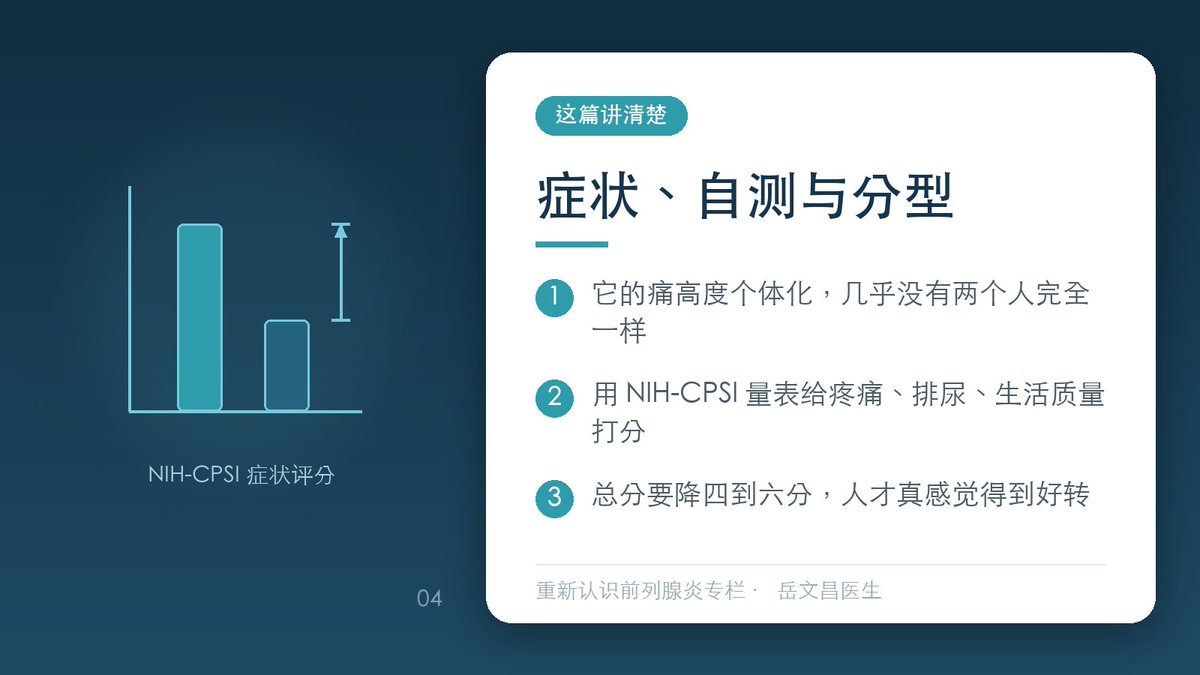
同一个"前列腺炎"诊断,为什么每个人症状差这么远?
有人会阴坠胀、一坐就难受,有人睾丸隐痛,有人尿频,有人射精时痛。占九成的第三型(CP/CPPS)有个特点:高度个体化,几乎没有两个人一样——学界给它起名叫"雪花假说"。
想量化,可以用 NIH-CPSI 自评(0–43 分)。但记住一个数:总分大概要降 4–6 分,人才真能体感到好转。
你的不适,主要在哪个部位?👇 一图看懂
—— 前列腺炎说明书 ④/22
1
52
Jennifer md retweeted

Jun 12
I want to warn all #CPPs
If new pain arises get it checked out thoroughly. I missed my extra pain. I have just been diagnosed with stage 4 lung cancer.
I thought my pain had just gotten worse it did but because of the cancer. Please be careful all of you. I’m gonna beat this 🙏
2
2
5
90

Jun 15
Amigo, te entiendo, yo tmb soy del mundo profundo, y todos los que te comentan solo eran cpps del ñaspi, la verdad solo a los racistas y egocentricos les gustaba la mrd q hacia, pero es una muerte, y es mejor quedarse callado. QEPD oliver tree jaaaaaaa
3
11
634