🎯 The current set of contracts has ended!
Don’t forget to spend your remaining Cryptochips — they will disappear soon.
The next set of contracts will open in a few days, and we’ll notify you when they go live
4
246

May 15
🎯 The current set of contracts has ended!
Don’t forget to spend your remaining Cryptochips — they will disappear soon.
The next set of contracts will open in a few days, and we’ll notify you when they go live
5
847
Apr 15
🫡 The current set of contracts has ended!
Don’t forget to spend your remaining Cryptochips — they will disappear soon.
The next set of contracts will open in a few days, and we’ll notify you when they go live.
6
465
Mar 16
🫡 The current set of contracts has ended!
Don’t forget to spend your remaining Cryptochips — they will disappear soon.
The next set of contracts will open in a few days, and we’ll notify you when they go live.
2
5
513

Jan 17
So i asked @grok about blockchain on chip. Here's what he spit
Yes, people are actively building (and getting very close to) true "blockchain on chip" technology — meaning hardware where a full blockchain node (not just mining acceleration) is embedded directly into silicon for ultra-lightweight, device-level execution.
The most advanced and relevant project right now is from Minima (a lightweight Layer 1 blockchain), in collaboration with Siemens Cre8Ventures, ARM Flexible Access, and the University of Southampton.
They've announced the world's first industrial-grade "blockchain-on-chip" prototype — a microchip capable of running a full blockchain node directly embedded in hardware.
Timeline: Prototype launch confirmed for January 2026 (which aligns perfectly with the current date!).
Initial application: Embedded in commercial drone hardware/flight controllers, allowing every drone to act as an independent, self-verifying full node.
Goal: Enable secure, autonomous machine-to-machine communication, trust at the silicon level, and scalable decentralized intelligence for IoT, autonomous systems, robotics, and more — without relying on servers or intermediaries.
Why it's groundbreaking: Minima's ultra-lightweight protocol already runs full nodes on tiny devices; this takes it to the processor level for extreme efficiency, low power, and built-in security.
This isn't just hype — multiple sources (including announcements from late 2025) describe it as a "revolution" in embedded blockchain, with potential far beyond drones (e.g., smart hardware, EVs, industrial IoT).
Other related efforts exist, but they're not quite the same:
Mining-focused chips — Companies like Intel (2022 blockchain accelerator), Bitmain, Canaan, and newer players (Auradine, Chain Reaction, ePIC) build ASICs optimized for Proof-of-Work hashing (e.g., Bitcoin mining). These accelerate blockchain tasks but don't run a full validating node on-chip.
Crypto phones — Solana's Saga/Seeker phones integrate blockchain features (wallets, dApps) with hardware security modules, but they run blockchain software on standard chips (e.g., Snapdragon or Mediatek), not a full node embedded in silicon.
Authentication chips — Some "blockchain chips" (e.g., from BC-Labs or Infineon NFC cryptochips) use blockchain for product verification/anti-counterfeiting, but again, not full nodes.
Bottom line — If you're asking about a true, full-node-capable blockchain embedded at the chip level for real-world devices (especially IoT/machine economy), Minima's project is by far the closest — and it's literally about to prototype in the coming weeks/months. This could enable "blockchain everywhere" in hardware, which is why enthusiasts are buzzing about it as a game-changer for decentralization at the edge.
No one else appears to have a shipping product at this exact level yet, but this collaboration (with heavyweights like ARM and Siemens) puts them way ahead. Exciting times ahead!
2
3
10
731
Jan 14
The current contract set has ended!🫡
Don’t forget to spend your remaining Cryptochips — they’ll expire soon.
The next set of contracts will open in a few days, and we’ll notify you as soon as it goes live.
2
7
592
15 Dec 2025
The current contract set has ended!🫡
Don’t forget to spend your remaining Cryptochips — they’ll expire soon.
The next set of contracts will open in a few days, and we’ll notify you as soon as it goes live.
4
524
8 Dec 2025
A new Contract Week has begun!
Hurricane the Valiant is available in this week’s contracts — complete tasks, collect cryptochips, and get a chance to unlock this skin!

6
535
1 Dec 2025
A new Contracts week has started!
The Yule Lord Ghost is available in this week’s Contracts — complete tasks, collect Cryptochips, and get a chance to unlock this skin!

5
499
24 Nov 2025
A new Contracts week has begun!
Complete missions, earn Cryptochips, and get a chance to unlock the Leviathan Daruma skin.

5
743
17 Nov 2025
Contracts are open again!
This week’s highlight is the brand-new Sandshadow Lynx skin. Complete missions, collect cryptochips, and get a chance to unlock this skin!

2
4
545
14 Nov 2025
The current contract set has ended!🫡
Don’t forget to spend your remaining Cryptochips — they’ll expire soon.
The next set of contracts will open in a few days, and we’ll notify you as soon as it goes live.
4
569
7 Nov 2025
A new Contract week has begun!
Complete contracts, earn cryptochips, and climb the leaderboard — the Raven Hood skin is up for grabs! Prove you’re worthy of this look.

2
536
17 Oct 2025
A new Contract Week has begun!
Show what you’re made of — complete missions, earn Cryptochips, and fight for a chance to unlock the Gravielero skin.

7
585
15 Oct 2025
The current contract set has ended!🫡
Don’t forget to spend your remaining Cryptochips — they’ll expire soon.
The next set of contracts will open in a few days, and we’ll notify you as soon as it goes live.
2
429
1 Oct 2025
A new Contract Week has begun!
Complete missions, earn Cryptochips, and get a chance to unlock the Wonderland Twinkle skin.

8
850
24 Sep 2025
A new Contract Week has begun!
This time you have the chance to earn the brand-new Dustveil Blizzard skin. Complete missions, collect Cryptochips, and climb higher on the Contract Leaderboard!

1
8
653
17 Sep 2025
A new Contract Week has started!
Phoenix Sparkle is available this week — complete missions, collect Cryptochips, and get a chance to unlock this skin!

1
10
652
15 Sep 2025
The current set of contracts has ended. 🫡
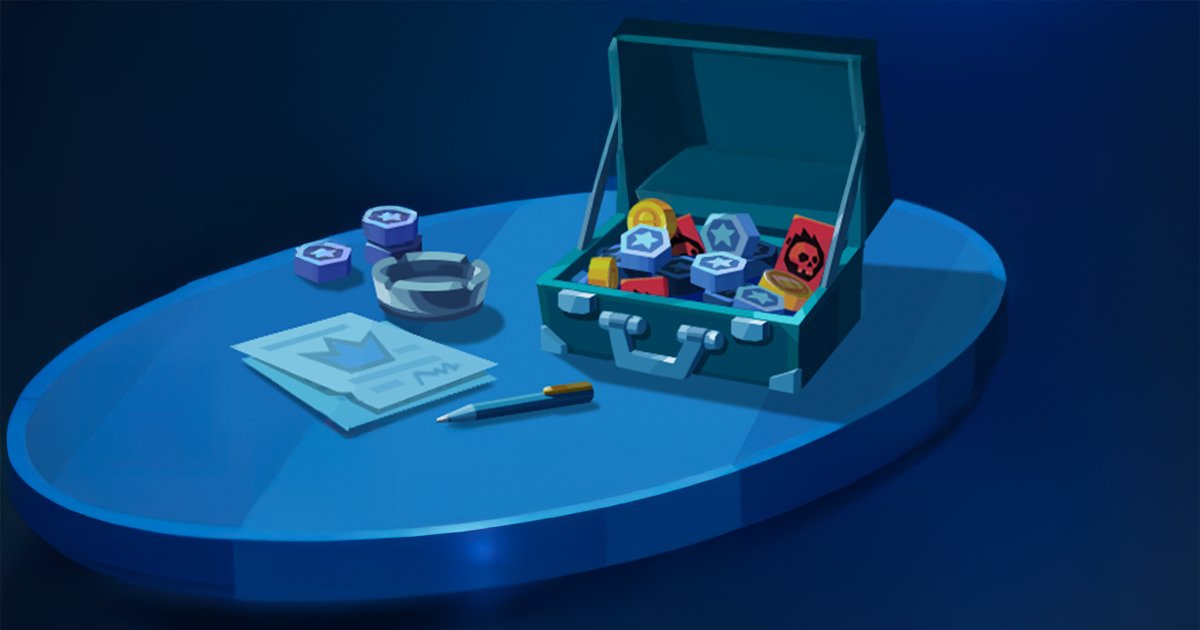
Make sure to spend your Cryptochips — they will expire very soon!
A new contracts will launch in just a few days. We will let you know as soon as they’re live, so stay tuned!
7
707
1 Aug 2025
💘 In the fairy tale, he was searching for emotions. Here — just targets and missions. 🤖
Complete this week’s contract missions, collect cryptochips, and get a chance to unlock the Tin Blotchopper skin. A little rusty… but still knows how to shoot.

1
10
887