
 ㅉㄷㄴ
ㅉㄷㄴ

There's no bill pending till date, if unscheduled power cut done & without any reason, I may be compelled to take legal help for th same, requested to resolve th issue for justification..





Freddy K... a true slasher should be a little bit daft, like you laugh right up until you get cut into confetti.

'Sarcastic fringehead' in that RT, though.
As bad as my mentals got on Friday, I didn't get the scissors out. I know things aren't going well when I decide to cut myself a fringe. (It grows back, but it grows back mega-wonky, because I have limp, wavy hair.)
bucketofdrums retweeted

im gonna cut a hole in this thing and fuck it


2
30
346
4,591
fvck1ng. retweeted

gue bingung mau ngetik apalagi. selama bermenit menit gue nontonin rambut rul mulu. intinya ini rul new hair cut. kedepannya harus lebih kuat mental.


3
49
549
Joann M. - Eevee the corgi retweeted

Jun 12
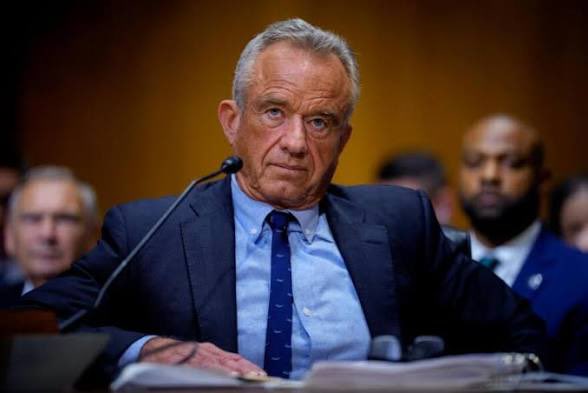
RFK Jr has cut Alzheimers research.
Alzheimers.
One of the most devastating, urgent and increasing health problems we face today.
He's not interested.
He's a nasty piece of work.
2,230
12,360
30,737
441,160

Pata nahi kya drama karne wala hai
Like trying to cut his wrist or something aur ye behen sacrifice karegi
Aur phir bgm : Humari adhuri kahaani 😆😆
Mast whitewash hone wale hai dono
Stallen Nyaemo retweeted

1h
Today’s Linda Mwananchi will shock Ruto. He will cut weight to 38kgs.
26
37
146
2,293
Valen🪓 retweeted

they cut out the wolf scene bc they didn’t wanna embarrass lestat by showing this #tvltoledo #tvlspoilers #spoilers
 📁
📁
3
18
188
2,577
OJE 🇳🇬🇧🇯 retweeted

1 Feb 2025
It can only be God
Cut one on 23k odd
Flex one boom 💥
Flex two boom 💥
Flex three boom 💥
Flex four boom 💥
They didn’t believe in me
But GOD DID 💯🍀💥




296
333
2,687
789,958
Sharon 🏴 retweeted

Helen Whately, ignoring the inconvenient truth that no UK government has to cut one thing to “pay for” another thing.
“Public expenditure is always financed through money creation rather than taxation or debt issuance”.
papers.ssrn.com/sol3/papers.…

Did a Labour Minister at last actually do a good thing?
Defence Secretary John Healey’s resignation follows on from Lord Robertson (former Labour Defence Secretary) - and Tony Blair too, saying the Government should cut welfare and spend more on defence.
In fact, it feels like everyone is saying this. Everyone, that is, except Keir Starmer, Rachel Reeves – and Andy Burnham, who was promising £10 billion more on pensions for WASPI women. Burnham has at least done a rapid reverse ferret on that.
But even those who do agree talk about it as though it's a walk in the park. If it were, even this hapless Labour Government would have managed it by now.
As Shadow Secretary of State for Work and Pensions, I've spoken to most of the welfare secretaries of the past fifteen years about making welfare savings. There is a common thread running through every one of those conversations: it is hard.
It means hate mail and death threats for the minister in charge. MPs will be deluged with emails from campaign groups telling them to stop you. The only path through is to make the argument and have a mandate from the electorate to see it through.
That’s why I’m doing so much work right now - not just saying we need to make welfare savings but actually working out how.
The first step is stopping sickness and disability benefits being awarded for milder mental health conditions and the less severe end of the neurodiversity spectrum.
This idea was not cooked up over a pint, or after reading the headlines about people claiming Motability cars for ADHD.
Ten years ago, I chaired a report on how the NHS needed to treat serious mental illness better. As a Health Minister, I began investigating the rise in sick notes for mental health and launched a pilot to reform the sick note process.
Last year, I worked with the Centre for Social Justice on the steep rise in sickness benefits for mental health. I spoke to psychiatrists, GPs and benefit assessors to understand what was going on.
Our policy is built on this work and is forecast to save £7-9 billion. But beyond the numbers, I don't want to see so many people – young adults especially – written off on benefits rather than starting out in work.
Leaving the ECHR will also allow us to end benefit payments to foreign nationals who have not yet contributed to this country. There are around 300,000 people with an immigration status of either ‘indefinite leave to remain’ or ‘definite leave to remain’ that allows them to claim benefits. We will change that.
The principle is straightforward: if you choose to make your life in the UK, you should be contributing to it – not burdening the finances that working people have paid into.
Reform made a similar announcement – in a rush when Danny Kruger, who had been involved in this policy discussion, defected – but without the underlying work to back it up. We have done that work. We have the numbers.
We will also restore the two-child benefit cap, which we introduced in 2017 and Labour have since scrapped.
And we will tighten the Household Benefit Cap, where savings of £1 billion could be made.
Over 2 million households now receive more than the household benefits cap – with 100,000 receiving over £50,000 a year – despite many having an adult who could be working. That will change. It is absurd that working families routinely take home less than households living entirely on benefits – and we intend to fix that.
Detailed policy takes more time to get right, because it is easy to be outraged and harder to be certain that what you propose will actually deliver on a principle most people share: that welfare should be a safety net for those who genuinely need it.
Even as the consensus grows that the system has become too generous, there are people with serious disabilities who struggle to access the support they need and battle every day to live with dignity. Any serious programme of welfare reform must answer a harder question than simply where to cut. It must identify how to get help for those who genuinely cannot work, while stopping the flow of money to those who can.
That is the test I have set myself – and the reason this work takes time to get right.
When I speak to disability campaign groups, I always ask them to help identify where any savings could be made. I have yet to have a single one propose any. The answer is always that more money is needed – which is not, in the current climate, a realistic ask. If any are reading this, I would welcome that conversation.
And there is a starker point beneath all of this. If we fail to invest in defence and find ourselves in a conflict that consumes our economy, the question of how much we can afford to support even the most seriously ill and disabled becomes a very different one.
That is the crux of the welfare versus defence debate – which John Heeley’s resignation has put a spotlight on.
We should not have allowed the benefits bill to grow as it has. We should not be taking so much from working people to fund it. But as we face greater security threats – as our enemies develop their capabilities to manufacture hundreds of attack drones every day and snoop around our critical infrastructure – we have to call time on a system that has got out of control.
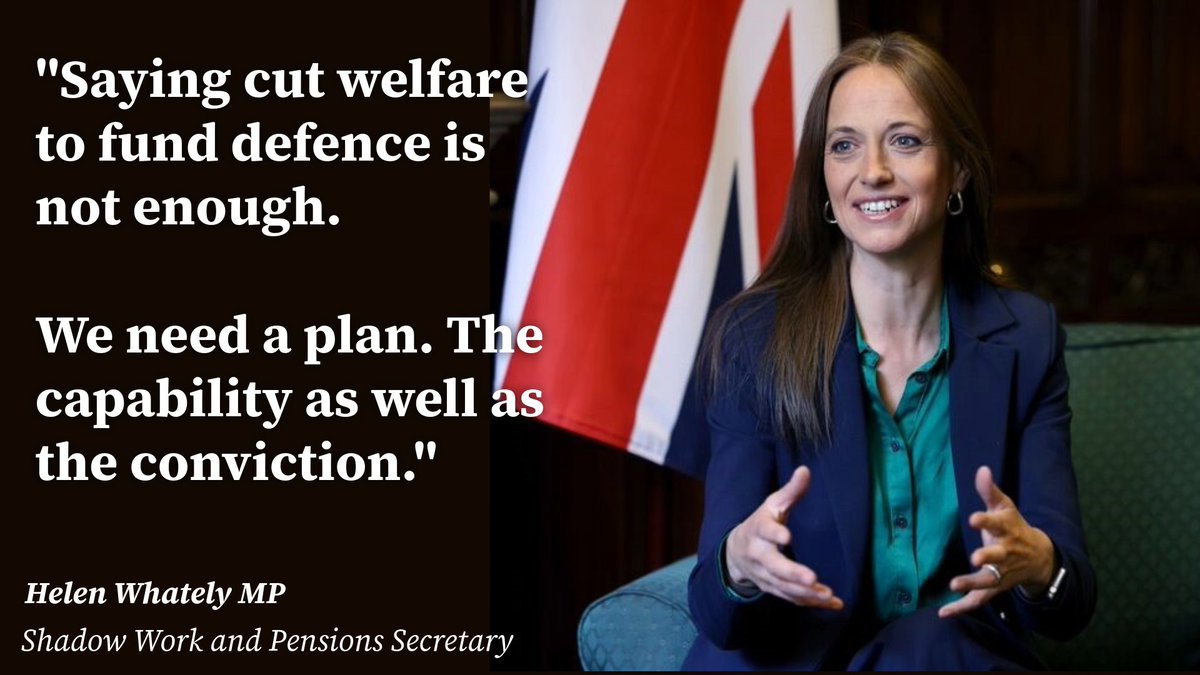
Saying cut welfare to fund defence is not enough. We need a plan. The capability as well as the conviction – and backing from the electorate to see it through.
We have identified £23 billion of savings so far, and we are working on more. We are making the argument. At the next general election, we will seek the mandate.
1
11
19
307
Jennifer Aniston-Martin™️ retweeted

While accumulating his wealth, Elon Musk sat in the White House and helped cut VA doctors.
Cut food stamps.
Cut Medicaid.
Cut school lunches.
Cut unemployment benefits.
A single mother in Louisiana gets $74 a month in food stamps and $257 a week in unemployment.
He got $1.1 trillion.
This did not happen by accident.
229
186
451
9,236
밍들레 retweeted

20260613 // 소원을 말해봐 (Genie) - Fond Focus Cut
PAHNFOND ONCE UPON BLOSSOM
#BBFanFest2026D1
#FONDnatticha @fond3cember
2
1,163
1,871
34,817

Always will be grateful for your role here goat took a pay cut and a role cut and did whatever u needed to do
It’s rare that u see a guy who’s not a super young player have the kind of development you had and we’re all so proud of the player you’ve become
Never forget #00 🫡

These porkis are hindus anciently only but cut their skin in the name of peado mohd..
Genes are same of sanatani