
PROTON XPR RIDDLES DECODED! (PART 1) BearableGuy youtu.be/qMwQNwh4uq4?si=UQcy… via @YouTube
2
129

PARASHARI SECRETS DECODED: A Scholarly Investigation into Brihat Parashara Hora Shastra (2-Hour Audio Masterclass) payhip.com/b/ARH50


There is a property of blockchains that most people in this space have quietly accepted without really examining it.
Once a transaction executes, it is final.
There is no reversing it, no support ticket that gets it back, no way to undo what you set in motion.".
In traditional finance, the entire risk management apparatus exists to create space between a decision and its consequences.
Settlement periods, margin calls, clearinghouse reconciliation, trade reversal windows; none of that was built for fun. It was built because the people moving serious capital needed time.
Time to catch errors, time to reconsider, time to see what happens before money actually moves.
Blockchain collapses that window to zero. The moment you sign, you have initiated a chain of events that is no longer under your control.
A governance proposal that shifts a reserve factor across a five billion dollar lending protocol, a cross-chain deployment that interacts with oracle feeds and liquidity pools simultaneously, a vault rebalancing that touches four protocols in sequence, all of it becomes permanent the moment it lands in a block.
That is not a design flaw. Finality is exactly what makes blockchains trustless.
But it creates a real operational problem for anyone running a serious financial system on top of one: how do you manage risk on infrastructure that gives you no margin for error.
That question is what @TenderlyApp has been building the answer to since 2018.
Most people who know Tenderly know it as a debugging tool. You paste a failed transaction hash, you get a decoded stack trace, you find where your contract reverted.
That use case is real and genuinely useful, but it is maybe ten percent of what Tenderly actually is.
The debugger is the surface. Underneath it sits an infrastructure company that has spent eight years working on one hard problem: making irreversible systems predictable before you commit to them.
The core technology is simulation.
Not simulation in the loose sense of running a local fork with Anvil or Hardhat, but production-fidelity simulation.
A live, continuously synced replica of the real chain state, with real oracle prices, real liquidity positions, real protocol contracts, real account balances.
When you run a simulation on Tenderly, you are not testing against a mock environment. You are running against the actual state of the blockchain at that moment, in a private environment where nothing you do has any consequence until you choose to make it real.
This distinction matters more than it might seem. The failure mode that catches most teams is not testing against wrong logic. It is testing against wrong conditions.
A strategy that works perfectly at small scale can completely fall apart under a fifty million dollar deposit because large deposits shift utilization rates, which shifts interest rate parameters, which cascades into liquidation thresholds across positions that were never in scope.
A contract upgrade that passes every unit test fails in production because the test environment used stale oracle prices while the real Chainlink feed had drifted two percent during the same block.
The Aave team ran into exactly this building V4. Public testnets do not carry live Chainlink oracle data.
Local nodes do not provide a shared state across multiple teams working simultaneously. So the contract team, the backend team building indexers, and the frontend team configuring the SDK were all working against different states, catching integration errors late, and spending engineering time managing infrastructure problems instead of writing protocol logic.
Their SVP of Engineering described it plainly: you had to build mock contracts, manage faucets, handle stale data, coordinate state across teams. The overhead was eating the team's capacity.
now, I won't be able to fit everything in this post, so, come back for part 2. 🙂↕️
3
2
22
Laguna Atiny PH retweeted

May 5
𝙏𝙍𝘼𝙉𝙎𝙈𝙄𝙎𝙎𝙄𝙊𝙉 𝘿𝙀𝘾𝙊𝘿𝙀𝘿
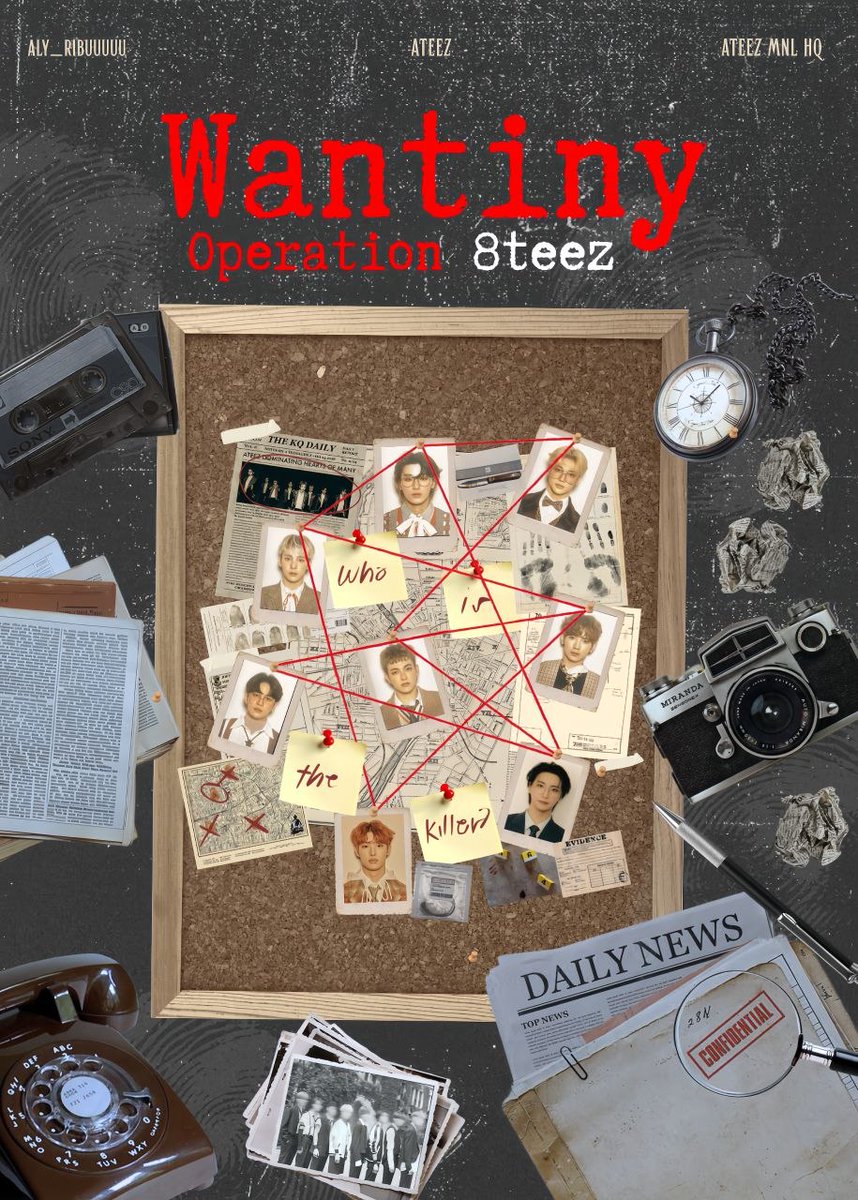
Great job, detectives! Transmission "WANTINY: Operation 8TEEZ" has been successfully decrypted!
We are now opening 📁 CASE FILE #0003
Secure your slot now and be part of this mission as we celebrate 8 years with ATEEZ! Further details are enclosed in the file below. Do proceed with caution....and excitement! 👀
Date: Sunday, 25 October 2026
Venue: ▇▇▇▇▇▇▇▇▇▇
Reservation Form: forms.gle/kapEHVJy8ZhGCp277
#CodeName8 #AMHQ_Events
Apr 20

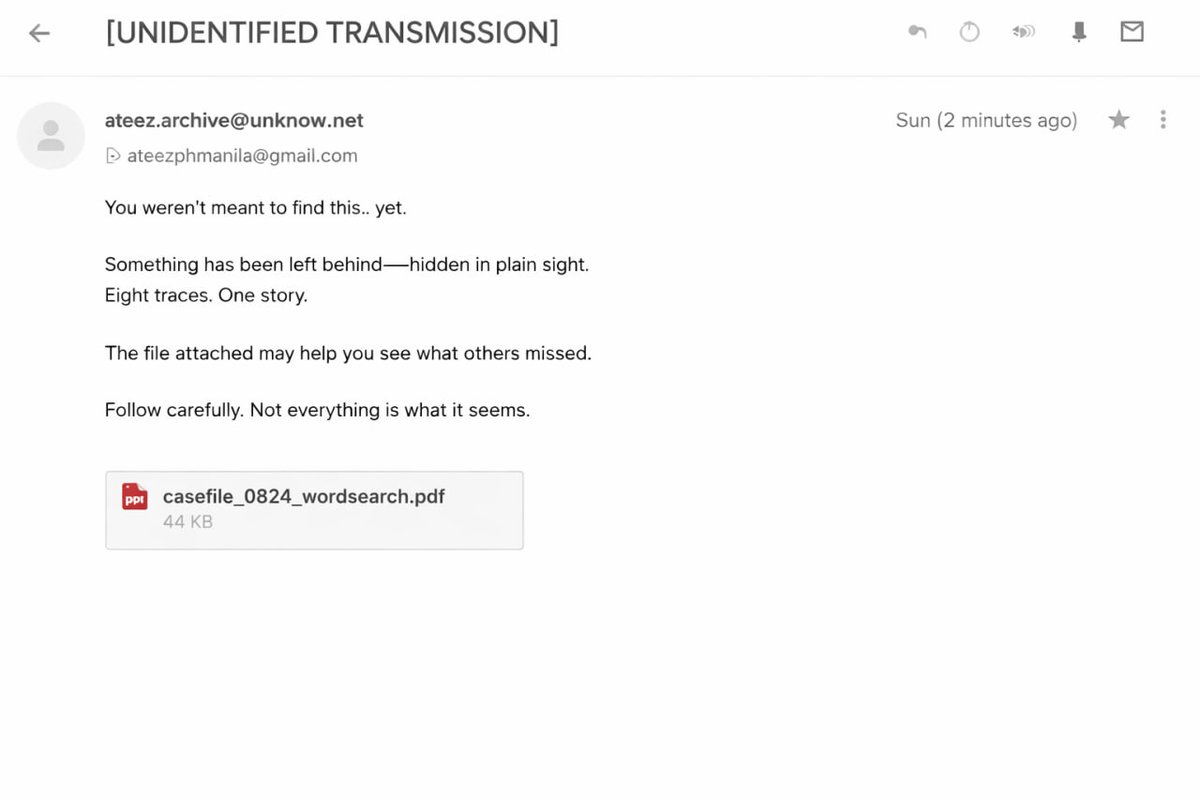
📁 CASE FILE #0002
A second anonymous transmission has arrived at HQ.
A coded document has been released and it's now under your watch.
Track them down and submit your findings in the case log below.
We’re counting on you, detectives.
#CodeName8 #AMHQ_Events
35
80
8,258

- Sifprime.com has decoded lot of strategies, navs, built performance reports etc
- Skill and get XIII passed and world is yours!
1
1

Decoded M3ZNHX but 1xBet would not take any version of this slip. Try a different code.
11

🏢 Logo decoded: the OpenAI wordmark uses a custom typeface ("OpenAI Sans"), but you can get a near-identical look with Host Grotesk 800 👉 whatfontis.com/GOOGLE_Host-G…
Spotted a font you love in a logo or rebrand? Identify it in seconds 👉 whatfontis.com
#branding #logo

1
12

There is no time travel of any kind in Assassin's Creed II and the game never depicts Ezio or any other character or entity performing it or possessing the capacity for it in the sequence involving the map or anywhere else in the title. The entire framework of the story operates through genetic memory access and the activation of preserved ancient artifacts rather than any mechanism that displaces individuals across chronological boundaries. Ezio remains fixed in his own historical period throughout and experiences the unveiling of information as a contemporary event within his lifetime using tools and inherited data that predate him by centuries or far longer. No entity in the narrative including the Isu remnants or the Apple itself engages in temporal movement because the Apple functions exclusively as an interface and amplifier for existing records rather than a device capable of rewriting or traversing time.
The map that appears is not drawn from any future era or granted through temporal vision but emerges instead from the decoding of layered information that originates entirely in the distant past. The Codex pages themselves were compiled by Altair centuries earlier during his own encounters with Isu technology and they contain encoded fragments of geographical and strategic knowledge that the Isu civilization had assembled through their own advanced global infrastructure and observational capabilities long before human societies developed comparable cartography. When the Apple is applied as the activating element it does not pull data forward from later periods it simply completes the circuit that allows the already-recorded ancient data to resolve into a coherent projection. This process relies on the Isu having possessed superior planetary awareness and the ability to document it in durable forms that survived their catastrophe and were later safeguarded and partially transcribed by Assassin predecessors. The resulting map therefore represents recovered prehistoric intelligence rather than any anachronistic glimpse ahead and its apparent completeness to fifteenth-century observers stems from the Isu having operated at a technological level that included worldwide mapping and site placement which later generations could only access piecemeal until the full key was applied.
Desmond's involvement through the Animus further underscores the absence of time travel because the device constructs a high-fidelity simulation drawn exclusively from genetic memory sequences stored in his DNA. The Animus translates ancestral experiences into an interactive virtual environment that the user can navigate and observe but it does not transport the user or the ancestor physically or mentally into another temporal location. It functions as an advanced archival interface that replays biologically inherited records with immersive fidelity allowing the modern observer to witness events as they occurred in the past without altering the fixed timeline or creating any causal loop. Ezio's actions and perceptions remain those of a man operating in his native century and the information he accesses through the Apple and Codex was already present in the historical record even if it had been encrypted and fragmented until that point. The simulation grants clarity to the player without granting Ezio or Desmond any ability to step outside the sequential flow of history.
This distinction holds across the broader mechanics of the series in this era because every revelation including those involving Isu artifacts and messages relies on pre-existing data being triggered or decoded under specific conditions rather than on any form of chronological displacement. Isu communications that surface later are engineered calculations and recordings designed to activate in response to particular future triggers such as the presence of compatible genetic markers or the use of specific artifacts they represent planned foresight embedded in the past not active travel between eras. The Apple itself demonstrates consistent capabilities limited to perception manipulation data storage illusion projection and interface with compatible remnants none of which involve moving matter or consciousness through time. Any perception that the map constitutes evidence of time travel arises from the modern assumption that only future knowledge could produce such a detailed global overview yet that assumption overlooks the documented existence of an earlier civilization whose technological baseline already encompassed planetary-scale mapping and whose surviving artifacts were deliberately preserved and transmitted through the Assassin lineage precisely to make that knowledge available again when the conditions aligned.
The map therefore stands as a direct product of historical continuity and artifact-enabled recovery rather than temporal violation. Its content reflects the Isu capacity for comprehensive planetary documentation that was lost or hidden after their fall and that Altair partially reconstructed and encoded for later use. Ezio's activation simply renders that pre-existing archive legible in his own time using the exact tools the Isu and their successors designed for that purpose. This approach maintains complete internal consistency because every element traces backward through documented chains of custody and technological inheritance without ever requiring a forward jump or a breach in chronological order. The absence of time travel is not an omission but a foundational rule that keeps the narrative anchored in themes of legacy inheritance and the slow unearthing of buried truth across generations. Ezio accesses and applies knowledge that was always there waiting for the right combination of artifact and individual to bring it forward into active use within the unbroken flow of history.
7

📍Surflo fuses N views into a single global state, then decodes a coherent surface from it with a Flow-Matching decoder.
The decoded point cloud captures both foreground and background, and can be turned into a surface mesh.
2/N
1
1
10
Queenie 1927 retweeted

🔥 Last up on Badlands 🔥
Q After Hours
“Q AFTER HOURS” is where the drops are decoded, the patterns are exposed, and the narrative unfolds in real time. This isn’t nostalgia for a past movement, it’s the next phase of the operation.
11pm ET
rumble.com/v7b98og-q-after-h…
1
12
25
766

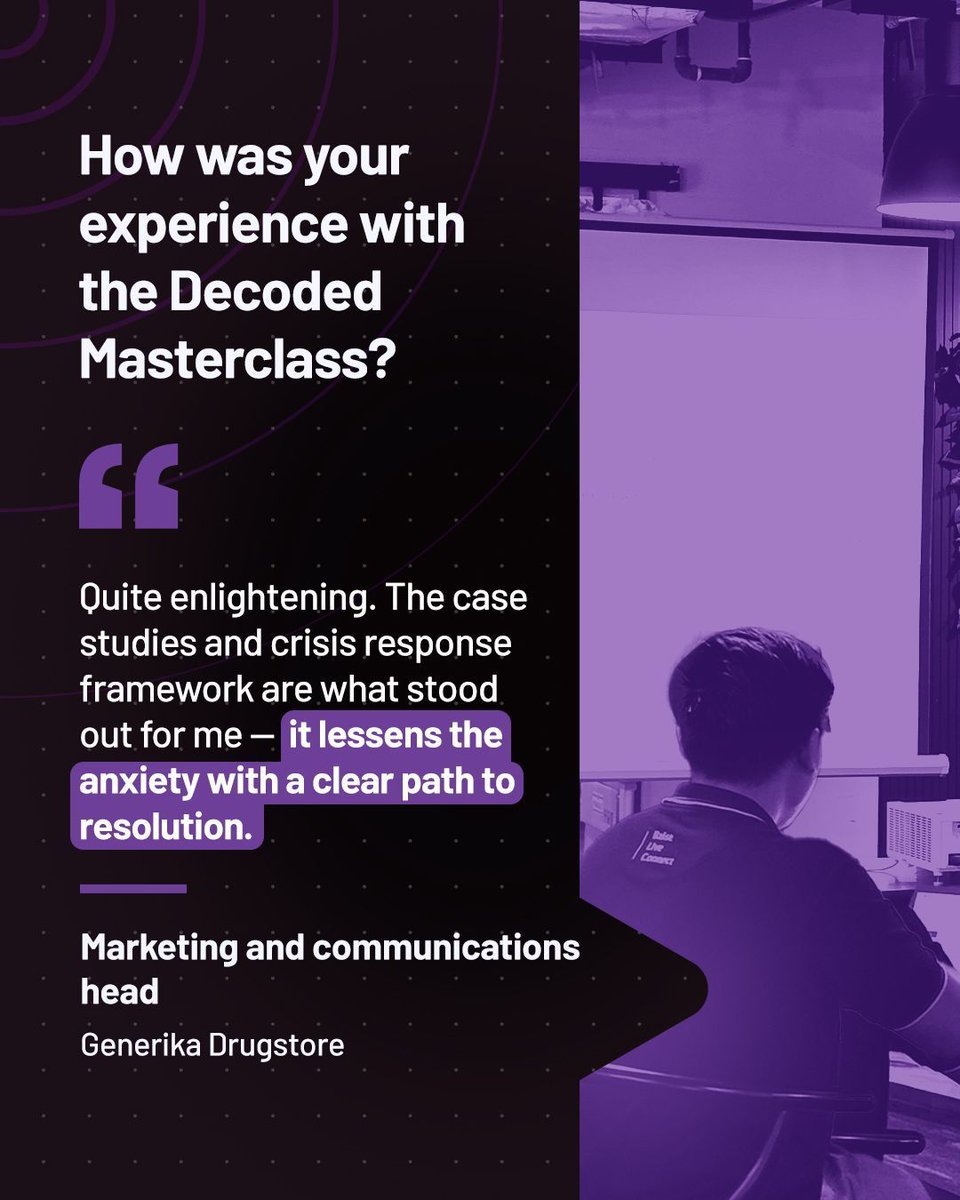
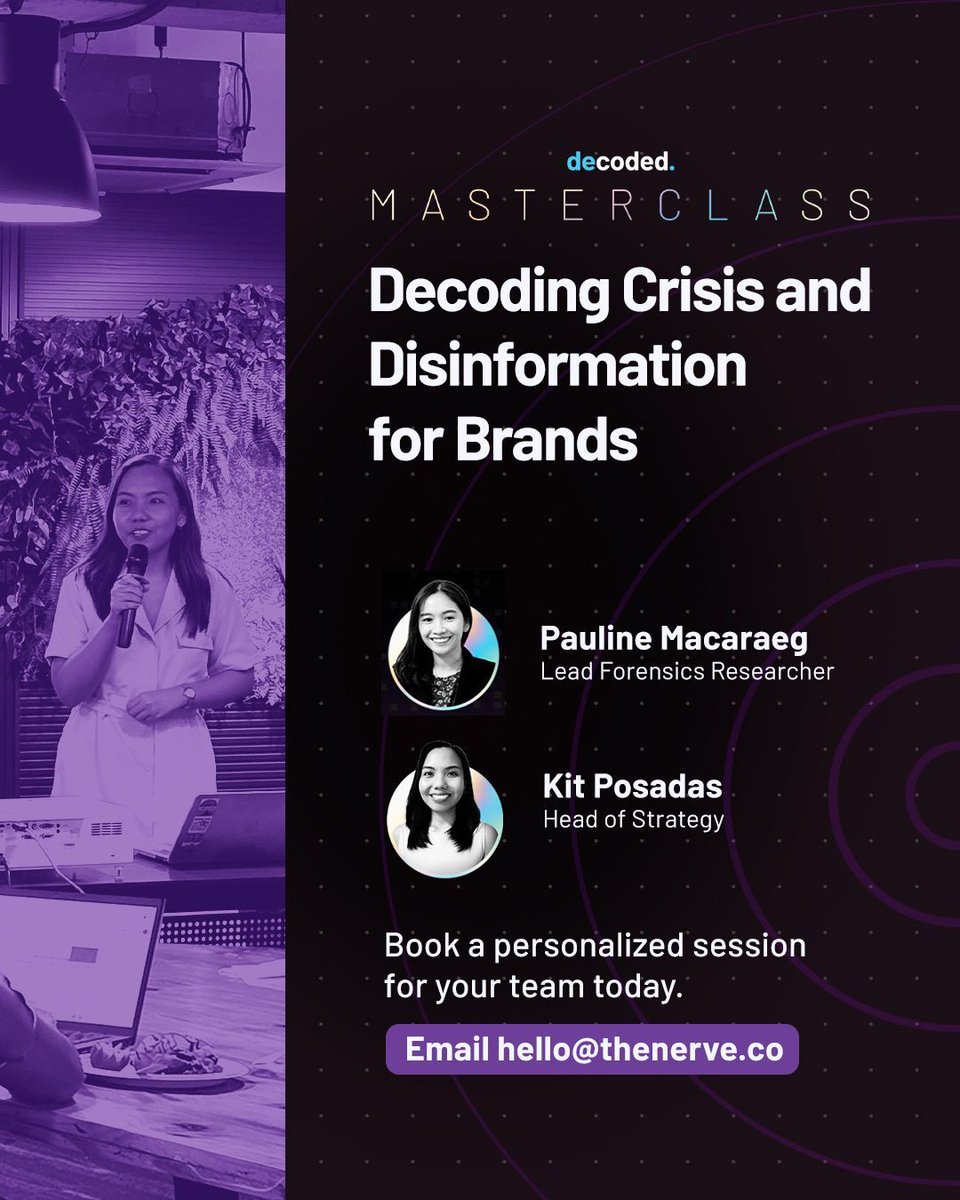
CREATE A SMARTER CRISIS PLAYBOOK FOR YOUR TEAM 📖
The Nerve’s “Decoded Masterclass: Decoding Crisis and Disinformation for Brands” trains organizations to think like analysts, not just responders, when dealing with crises and disinformation online.
Book a session for your team and get real-world case studies and hands-on activities tailored to your sector.
For rates, availability, and other inquiries, email hello@thenerve.co.
320

52m
⬡ @4040hex · TRANSMISSION DECODED · The Cipher #19 · 3/3
⬡ ⬡ ⬡
Can you decode today's intercepted transmission?
#FREELONCITY #404HEXNOTFOUND
freeloncity.com/share/score?…
3
Ken Berry (CW3) retweeted

Thrilled to welcome PANGIA as a Communication Partner of Philippine Blockchain Week 2026: DECODED: DEPLOYED!
PANGIA joins the global movement driving the future of Blockchain, Web3, AI, and FinTech.
📍 SMX Convention Center Manila
📅 June 19–21, 2026

1
1
1
23

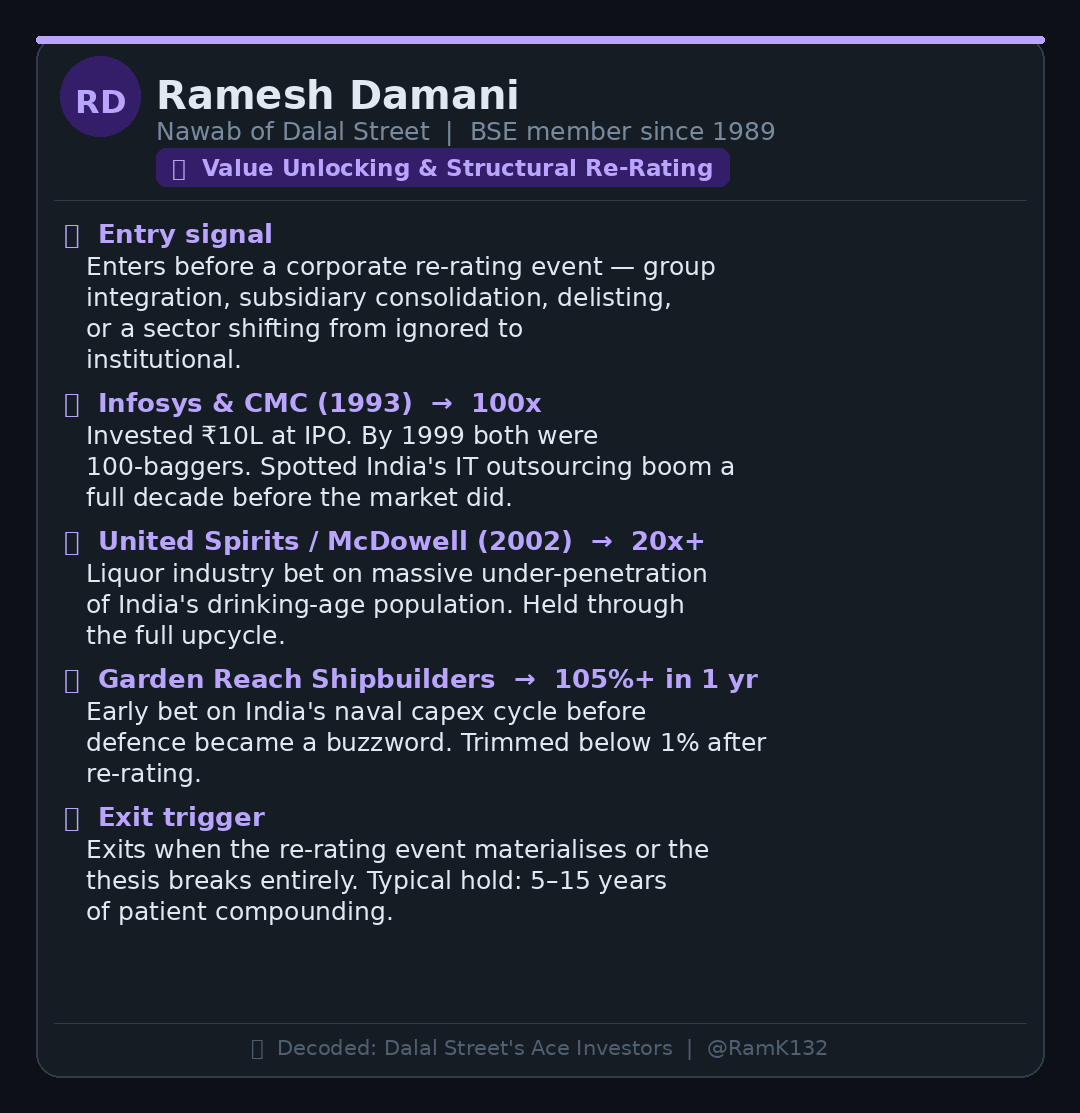
🧵🧠7 Ace Investors of Dalal Street — Decoded
👉Entry logic
👉Exit triggers
👉Real multibaggers
This isn't portfolio copying. This is pattern reading.
🧵 Thread (1/8) 👇
#StockMarket #Investing #DalalStreet #multibaggerchemicalstock
Ramesh Damani:
🔓 The Nawab doesn't buy businesses. He buys events.
📌 Infosys & CMC (1993) → 100x before IT was a word
📌 United Spirits (2002) → 20x on India's drinking curve
📌 Garden Reach Shipbuilders → 105% in 1 year on naval capex
🎯 He enters before the re-rating. Not after.
🚪 Exits when the thesis delivers — not when markets tell him to.
Recent: John Cockerill (Dec 2025) — global integration play 🔍
#RameshDamani #DamaniPortfolio #ValueUnlocking #JohnCockerill #GardenReach #GRSE #Infosys #UnitedSpirits #DalalStreet
1
5
9
1,633
Thrilled to welcome CUERVO APPRAISERS INC. as an Exhibitor of Philippine Blockchain Week 2026: DECODED: DEPLOYED!
CUERVO APPRAISERS INC. joins the global movement driving the future of Blockchain, Web3, AI, and FinTech.
📍 SMX Convention Center Manila
📅 June 19–21, 2026

1
14

Carl Cox is awarded an OBE in the King’s Birthday Honours List, a landmark moment for him and global dance music. Read more about his journey and impact on Decoded Magazine: decodedmagazine.com/carl-cox… (via Decoded Magazine)
15

awesome!
will update the dashboard in a few days when decoded tables on dune will be ready
9
Pepe GOT retweeted

2h
Manila, we're coming!
#BIGOD is proud to be a Gold Sponsor of Philippine Blockchain Week 2026: DECODED: DEPLOYED.
📍 SMX Convention Center Manila
📅 June 19-21, 2026
🏢 Visit us at Booth M107
Swing by our booth to:
• Claim exclusive BIGOD gifts and giveaways
• Meet the BIGOD team in person
• Discover what's next for the BIGOD ecosystem and GoldFi
• Learn how we're bringing real-world value on-chain
If you're attending PBW2026, make sure Booth M107 is on your list.
See you in Manila!

5
5
13
204
Maya Jane Coles teams up with Rye Rye for Rise Up, blending deep house with fearless rap energy. Read how this collaboration bridges club culture and hip-hop, plus notes from the artists and the Night Creatures imprint. decodedmagazine.com/maya-jan… (via Decoded Magazine)
17