RamZi 🟩☫🟥 ﷽ retweeted

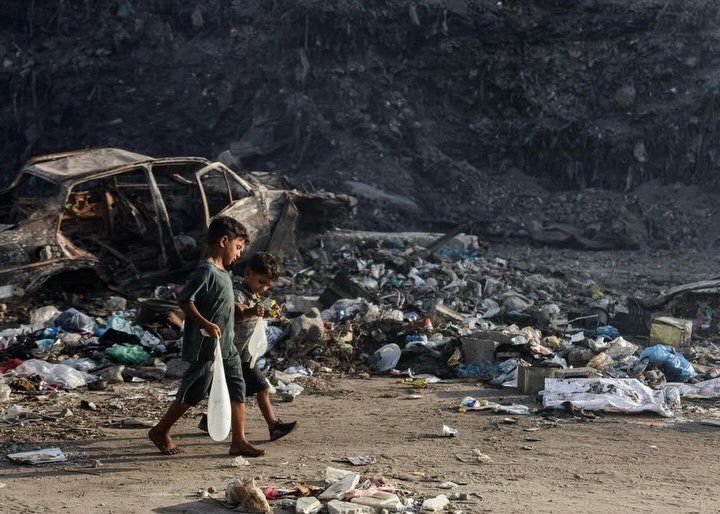
In Gaza, childhood is defined by survival. Barefoot, thirsty, and carrying water in medical gloves, these children are living through the impossible. Do not let this become “normal.” Do not look away.
1
6
12
248

People who defined their humanness by their ability to use language in culturally approved ways to prove intelligence or virtue have always been missing what it means to be human.
1

I defined the history of business as powerful moguls meeting at executive conference tables at a company office for reviews in report.
This does not offer too much opportunity to make a quiet reflection of self. Lawyers are good at this as are advanced bankers.
1

Yes, you’ve said you‘re not having this argument, but you seem to be willing have an argument about you not having an argument. It seem to me it would have been easier, faster, to have just defined free will, as you understand it.

The history of Iowa is defined by the courageous pioneers and crusaders who settled this land, tamed the soil, and put down roots.
It's the story of men like James Harlan - who fought to defend the land that Iowans built from the speculators who tried to take it.
I am running for Governor to carry on that legacy: Of Iowans who run for office to always put the people over the special interests.
22
43
262
18,833


I mean... again most people are saying that she isn't defined as either one, so I imagine it was more like, "Hey sound like yourself but you're also a ninja."
2

Seeing is underrated.
We talk endlessly about speed.
We celebrate throughput.
We measure performance in transactions per second.
But none of that matters if a system cannot understand the world it serves.
A smart contract can execute billions of dollars with perfect precision.
Yet it has no eyes.
No ears.
No awareness.
It cannot tell whether markets have moved.
It cannot recognize events.
It cannot distinguish between truth and assumption.
In other words, it can think but only within the boundaries of its own universe.
And that's where #WINkLink changes everything.
Within the $TRON ecosystem, WINKLink acts as the sensory network that gives decentralized applications access to reality itself.
Prices become observable.
Randomness becomes verifiable.
External events become actionable.
And suddenly, blockchains stop operating in isolation.
They begin interacting with the world around them.
That's what transforms code into infrastructure.
Because DeFi without trusted prices is fragile.
GameFi without provable randomness is unfair.
And automation without awareness is merely repetition.
The next chapter of Web3 won't be defined solely by faster execution.
It will be defined by systems that can perceive, adapt, and respond.
And quietly, behind the scenes, WINKLink is providing that missing sense.
Not just connecting smart contracts to data,But connecting digital economies to reality itself.
@WinkLink_Oracle @justinsuntron
#TRONEcoStar

1

D retweeted

Jun 13
Soccer has always been defined by free-flowing, unbroken action. But for the World Cup in America, FIFA is using “hydration breaks” to shoehorn in commercials. on.wsj.com/4oomwCq
196
1,185
5,290
292,725

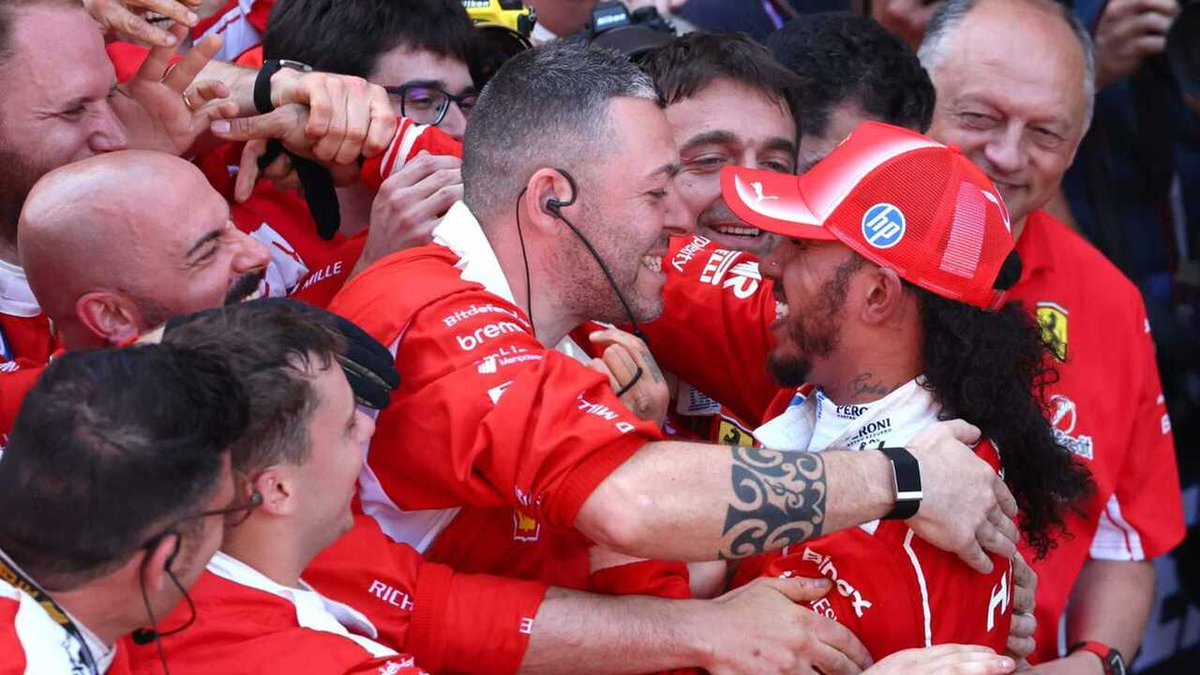
Hamilton tops Schumacher at the Spanish GP: 106th win seals a historic milestone at a venue that long defined era after era. A new chapter in F1 history unfolds, and the debate starts now.
azat.tv/en/lewis-hamilton-br…
3

That's historically how all arguments against God go. God is quite possibly the least defined character of all time, both in history and fiction.

The Moat That Eats Itself
Satya Nadella's "A frontier without an ecosystem is not stable" arrives as economic analysis and behaves as strategic positioning. The surface argument is clean. Companies build two forms of capital, human and token; the durable edge comes from a proprietary learning loop on top of switchable models; concentration of value in a few models invites backlash, so the future belongs to a distributed frontier ecosystem. Read it twice and the seams show. The piece holds one real insight, then asserts a conclusion its own premises will not carry. The test is plain: does the reasoning earn the title, or does the title arrive by assertion?
Start with what holds. The distinction between offloading a task and offloading your learning is genuine and well put: you can hand off the work, but the judgment that decides which work matters does not leave with it. The complementarity claim, that human capital grows more valuable as token capital grows rather than less, is a defensible reading of how firm-level capability builds, grounded in the economics of complementary assets. So the foundation is sound. If the floor holds and the roof still leaks, the fault is in the structure between them.
That structure breaks at its load-bearing joint. Nadella opens by warning that frontier models can "continuously absorb the expertise of humans and organizations and commoditize it." He closes by promising a learning loop that yields advantage "hard to replicate, regardless of any new individual model capability." A careful defender splits the apparent clash into two bodies of knowledge: the general expertise that commoditizes, and the firm-specific loop that stays protected because it trains inside your own reinforcement environment, on your own traces, which never feed the shared model. Grant that in full. The loop still has to run through a substrate model at inference, and if that model belongs to a third party, the "company veteran" speaks through the provider's infrastructure every time it runs. Whether those traces are absorbed is set by the provider's data policy, the dependency that "sovereignty," defined as the freedom to switch models, leaves out. So the burden sits with Nadella. He posits continuous commoditization as the background condition; he owes the account of why the firm's loop escapes it, and never gives it. An unmet burden is enough: the durability claim rests on a separation the essay assumes rather than earns.
Grant the moat anyway, and a flat contradiction surfaces. Here the text does not merely owe a proof; it asserts two things the engine cannot reconcile. The compounding loop Nadella sells as broadly distributive is, by his own description, a concentrating engine. Early builders gain an advantage that is hard to replicate; every improved workflow generates better training signal; the "hill climbing machine" compounds where most assets do not. Those are the mechanics of winner-take-most. A defender will place the promised distribution on another axis: value spread across firms and industries rather than captured by a few models, firm against provider, not firm against firm. The engine concentrates on that axis too: between firms, where whoever starts ahead compounds fastest, and back at the provider, since the loop only keeps climbing while bolted to one orchestration stack. By the rule this essay applies to Nadella, that bolt has to be named: the loop's machinery is tuned to one tooling layer and in practice does not port across stacks the way a model ports, so the portability he sells at the model layer goes missing where the value pools. The provider axis holds on the most generous reading of distribution, which is what the value layer below makes concrete. So the "stable equilibrium" he wants is undercut by the engine he prescribes to reach it. Stable does quiet work here, sliding between persistence, a configuration that holds because no actor gains by deviating, and preference, a configuration we ought to want. Compounding favors the first mover on either axis, the opposite of the distribution the conclusion claims.
Ask the strategist's question, where does value accrue in the stack, and the framing explains itself. The interest is not the absence of a frontier model, since Microsoft builds those too, through OpenAI and its own MAI line. It is a competitive, interchangeable model layer beneath the orchestration stack the company sells, Microsoft as one of several swappable suppliers below and the sole landlord above: the platform, the compute, the evaluation and reinforcement tooling, the orchestration around the model. "Sovereignty," defined narrowly as the freedom to switch models, is the tell. It counts the one dependency the architecture removes and ignores the ones it leaves in place. You own the loop; you rent everything the loop runs on. None of this refutes the logic. Both findings were settled from Nadella's own sentences before motive entered, and they would hold if a disinterested author signed the same words. A claim is not false because the speaker profits from it; the motive only tells the reader how to weight the word should. The essay presents as inevitable and desirable the market structure most favorable to a platform incumbent.
Which returns us to the title. By the essay's own mechanics, the ecosystem it describes is no more stable than the concentration it warns against, because the loop that encodes a firm's knowledge compounds fastest for whoever starts ahead. The analogy to outsourcing gestures at a real fear, and it cuts the other way once you name the mechanism: platform-mediated ecosystems pool value at the platform layer, the way outsourcing pooled it in the metropole, so the cure carries the disease it treats. The piece works better as a map of the terrain Microsoft would prefer than as a theorem about where the terrain must go. The question it never answers is the one that matters most: what keeps your loop yours, once it speaks through a model you do not own?
ousadia criativa. precisão estratégica. – por kim.

8
༺ दिव्या ༻ retweeted

Col Hemonto Panging shares the mindset that defined a generation of warriors who spent their lives hunting those who threatened the nation.
14
104
183
2,183

 HOBICORE 🪭
 Tony Chez retweeted

An entire generation of young British men and women has come of age in a nation defined by mass immigration, extreme liberalism, and endless decline.
We are governed by people who seem to hate us. Achievements that were once taken for granted, like owning a home, now seem distant. We are becoming a minority in our own homeland.
Many of us are terrified about what the future of this country looks like, and what will be left for our children and grandchildren to inherit.
But rather than give our concerns a fair hearing, the establishment spits on us. And for those of us who put our heads above the parapet, there is no low to which they will not stoop.
In their desperation to preserve their dying political order, they will viciously smear decent young men and women like Lorcan @angloid0, @Cal_III, and @lucyjaynewhite1 as “neo-nazis” for the crime of wanting to live in a safe and prosperous country.
They know that doing this puts them in harm’s way, but they do not care.
They are scum.

Jun 13

Restore activists at 'white supremacy summit' with neo-Nazis: Evidence emerges on eve of vital by-election that vote for Rupert Lowe's divisive party is a grave mistake trib.al/FjLrHVl
268
1,026
7,053
170,073

Potential value is created in production process, but final value is defined by market as value is not entirely objective but mostly subjective.
1
5