
69 differently expressed proteins were found comparing hEDS/HSD & controls w no sig diff bt hEDS/HSD found. Differentially expressed proteins were involved in inflammatory, cardiometabolic, neurological, organ damage, and developmental processes.
link.springer.com/article/10…
4
8
222

Black people aren’t gonna fit into this little box you try to put us in there are straight up Africans with blonde hair and blue eyes, black people aren’t like white people yall all look alike we have differentially unique people.
1
18

CONGRESS | #EHA2026 | PRESENTATION
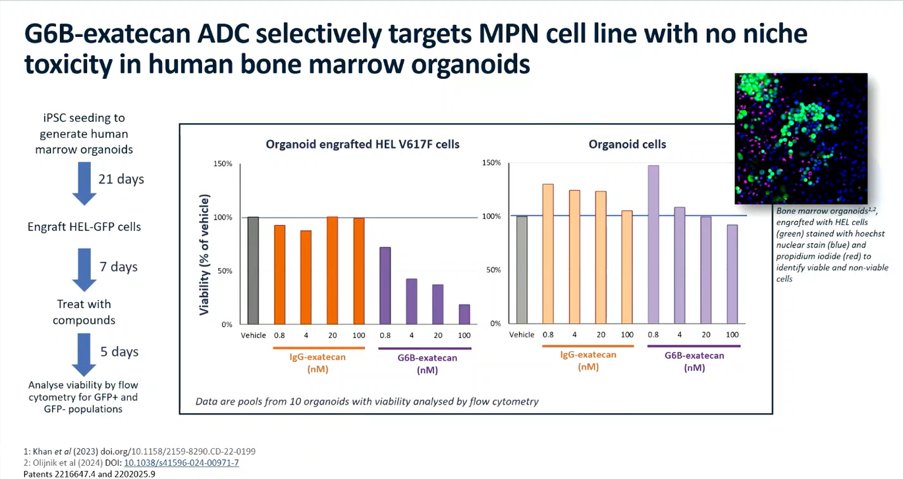
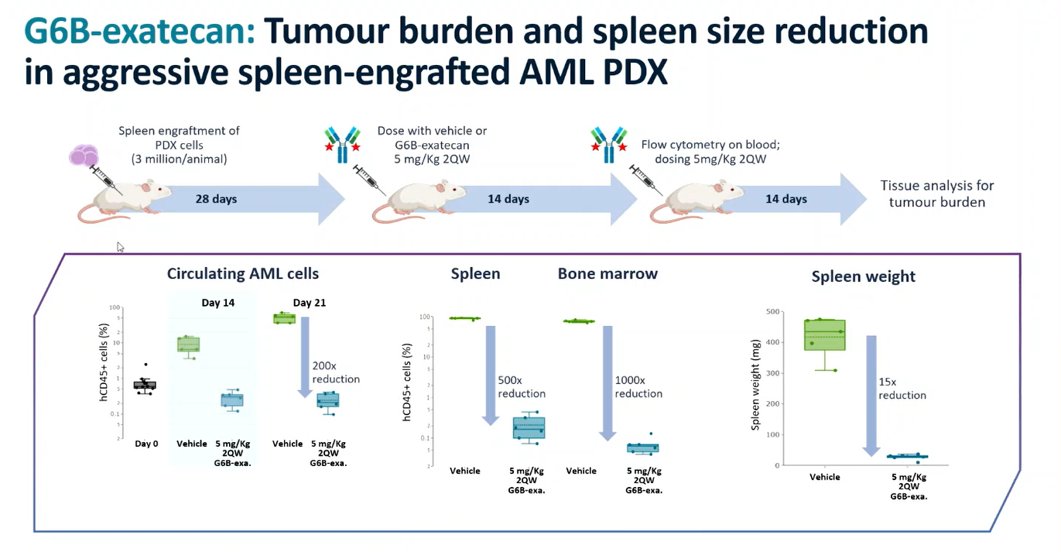
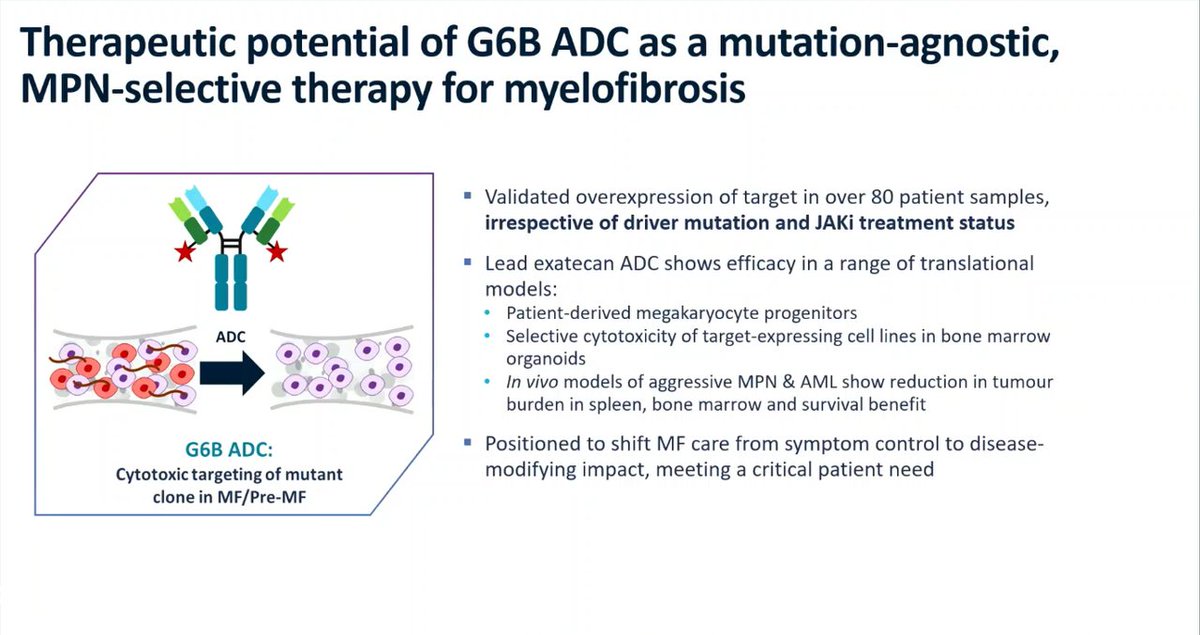
Adam Mead describes the identification of G6B, an immunoglobulin receptor and megakaryocyte lineage marker, as a target for ADCs as a potential mechanism of disease modification in the treatment of #MPN. G68 was found to be differentially expressed in mutated HSPC, irrespective of driver mutations. A lead exatecan ADC was discovered to cause potent and selective cytotoxicity in xenograft models, primary patient cells and human bone marrow organoids. Reduction in tumor burden and survival benefit was shown through in vivo MPN and AML models.
Follow our live feed for more updates: loom.ly/N2uNnTk
Intended for HCPs only. This congress coverage is independently supported by pharmaceutical companies, who are allowed no influence on the content; a full list of supporters can be found on our website.
#MPNsm #MedicalCongress #MedNews #MedEd @AdamMead_Oxford @MRC_WIMM @UniofOxford

1
150

I don’t think so. Countries where those industries exist also own most of the related companies, so full automation is differentially good for them.
1
34

5h
Census solution: two outputs. Differentially private data as a research product. Deterministic counts for official use. Explicit tradeoff, no pretending you can have both.
1
26

Tbh those svr storms aren't too magnitudinally bad, considering windstorm season & differentially in other extremes, winter storms
55

It's true that in competitive sectors prices can gravitate toward costs of production, but aggregation actually hides what dominant capital blocs are doing, which is sitting above the competitive field to accumulate differentially.
10

The data on allopregnanolone's effects on dopamine and its rewarding properties are intriguing. While decreased spontaneous dopamine release in the nucleus accumbens might suggest reduced reward signaling, its ability to still produce conditioned place preference indicates a more complex neurochemical interaction. This raises interesting questions: How might allopregnanolone differentially engage reward circuitry compared to traditional dopaminergic systems? Why doesn't it impair motivation despite affecting dopamine levels? For those exploring the intricacies of this topic, Sci-Quest is a valuable resource providing comprehensive biomedical reviews. Check it out at sciqst.com. #Medicine #Neuroscience
6

📜 Computationally tractable robust differentially private mean estimation
by Kelly Ramsay
🔗 arxiv.org/abs/2606.12654
Jun 12

Computationally tractable robust differentially private mean estimation ift.tt/GLJV9ql
3
698
Bloodsucking Parasites retweeted

Host and environmental factors differentially affect patterns of diversity in specialist and generalist parasites dlvr.it/TT1Q2F bioRxivpreprint
1
1
91
exercisePill retweeted

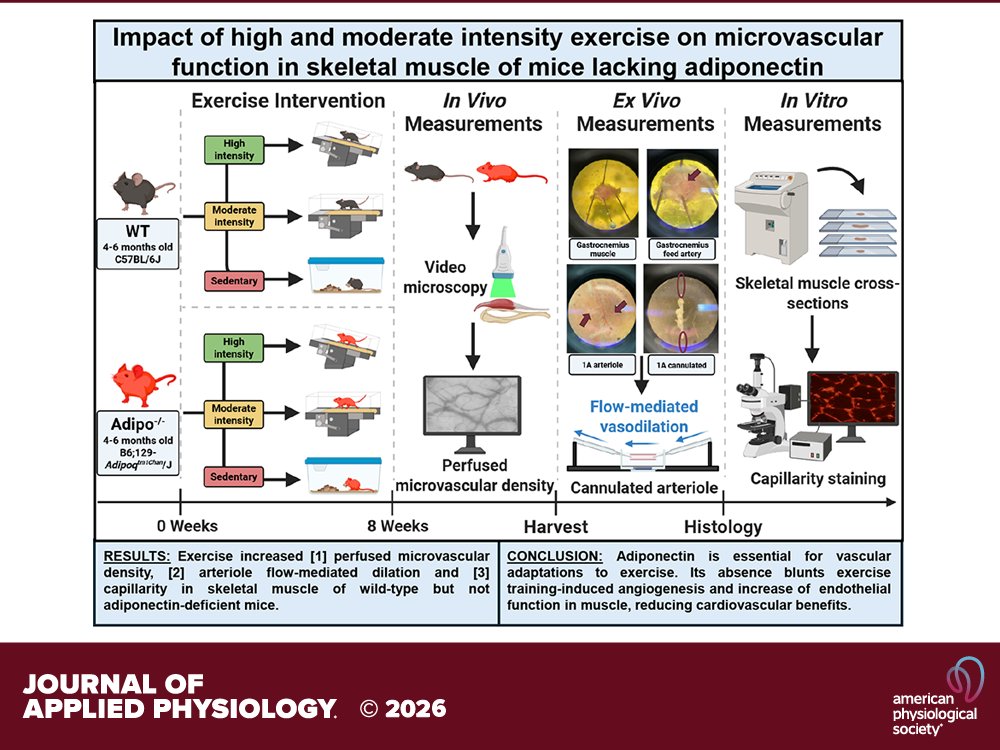
Research Article by S Medarev et al. (@FSUCoM @KState) High- and moderate-intensity #exercisetraining differentially impact #microvascularfunction in #skeletalmuscle of mice lacking #adiponectin
ow.ly/Ga0F50Z4NS4
4
6
677

Jun 13
I understood perfectly.
As Grok said, differences matter. So no special logic error, more like a category error or at least the people who responded differentially believed. As I do.
Not so blatant as, "We kill people who break the law. Why don't we kill people who jaywalk?" But in the neighborhood and illustrative of the issue.
11
Dara in Chains retweeted

Jun 13
See? All there, isn't it?
Basal ganglia structures differentially contribute to verbal fluency: Evidence from Human Immunodeficiency Virus (HIV)-infected adults
pmc.ncbi.nlm.nih.gov/article…
1
2
3
115

Jun 13
5/13
4. Comparability is asserted, not measured
The claim that a model's residual risk is "comparable to the risks of existing models already deployed across the industry," supported by the observation that comparable capability is available from other public systems and used daily by defenders, addresses absolute capability. The quantity that governs an export-control determination is marginal capability: the uplift a deployment confers over the counterfactual in which it does not exist. Formally, this is the difference between the probability of adversary success given the model and that probability given its absence, holding the adversary's other resources fixed. A capability that is ubiquitous confers little marginal uplift; a capability that is differentially superior confers a great deal, irrespective of whether weaker forms circulate elsewhere.
The comparability defense also smuggles an accessibility assumption. "Available elsewhere" bounds the counterfactual term only if the elsewhere-capability is equally accessible to the relevant adversary. Availability of a competing system to a compliant developer is not availability to a sanctioned state actor operating under interdiction; market presence and adversary access are distinct quantities, and the defense conflates them. The statement measures neither the differential nor the accessibility. It substitutes the existence of the capability somewhere for the model's marginal contribution to the specific actor of concern, a substitution that holds only if both the differential and the access gap are zero.
This hinge is symmetric, and intellectual honesty requires saying so: the differential-uplift question is also the load-bearing premise of the case for control. If the differential is null and the capability equally accessible, comparability holds and the directive overreaches; if either fails, comparability fails and the directive is grounded. Both positions stand or fall on the same unmeasured quantities (see §11).
1
15

Jun 13
As we’ve seen with government loans the schools would raise tuition.
How would it be decided who gets to attend?
As also seen standards would be applied differentially based on race.
Fools abide.
18