Francis García retweeted

🤝🌎 Gracias a ESSIF Fire & Security School por seguir confiando en el Foro Iberoamericano de Seguridad y Emergencias (FIBSEM) como patrocinador.
🛡️ Formación, conocimiento y cooperación para construir una Iberoamérica más segura.
#ESSIF #FIBSEM #Seguridad #Emergencias
1
2
35

🤝🌎 Gracias a ESSIF Fire & Security School por seguir confiando en el Foro Iberoamericano de Seguridad y Emergencias (FIBSEM) como patrocinador.
🛡️ Formación, conocimiento y cooperación para construir una Iberoamérica más segura.
#ESSIF #FIBSEM #Seguridad #Emergencias
8

🤝🌎 Gracias a ESSIF Fire & Security School por seguir confiando en el Foro Iberoamericano de Seguridad y Emergencias (FIBSEM) como patrocinador.
🛡️ Formación, conocimiento y cooperación para construir una Iberoamérica más segura.
#ESSIF #FIBSEM #Seguridad #Emergencias
1
25


Feb 6
2 maçons discutent au café ce matin ( dans une cité lpp ), il lui a dit ya rebi kach Wahed 2endou dar hna ou ykoun saken f l'Europe ya3tili darou nekhdemhalou , ndjewz fiha remdhan nekra coran ou ndjib biha essif
4
5
212

19 Nov 2025
Self-Sovereign Identity
Imagine your identity is a house.
Right now, two very different designs are being built for that house...and which one wins will decide whether you ever truly own your life again.
House #1: The Centralized Digital ID (the one governments & Big Tech are pushing really hard right now)
This is the giant apartment block owned by someone else.
You get a shiny new digital ID app from your government or from Apple/Google/Microsoft.
Every piece of your life (passport, driver’s license, health records, bank details, vaccine status, even your social credit score in some countries) gets stored in ONE central database controlled by the state or a mega-corp.
Every time you need to prove anything...job, flight, buying a house, logging into a website...you have to ask the building manager (government or Big Tech) for permission. They can see exactly when, where, and why you used your ID.
They can freeze your entire life with one button (see Canada truckers in 2022, Nigeria naira chaos in 2023, China social-credit lockdowns).
If their database gets hacked (Equifax, Aadhaar leaks in India, UK NHS breaches), millions lose everything at once.
You have zero privacy and zero backup plan.
Real examples today:
China’s Digital Yuan Health Code, India’s Aadhaar (1.4 billion people in one database), EU Digital Identity Wallet (coming 2026...sounds nice, but still centralized at the member-state level), Canada’s ArriveCAN evolution, US plans for REAL ID future fed app.
It’s convenient… until it isn’t.
It’s like handing your house keys to a landlord who can walk in anytime, change the locks, or evict you for just about anything.
House #2: Self-Sovereign Identity (SSI) — the one nobody on MSS wants you to know about
This is YOU owning your own house, with unbreakable doors and windows you control.
Your credentials live in a super-secure wallet on your phone (or hardware key).
Each credential is issued directly by the real source (university that awards you your degree, hospital records, government that issues you your citizenship proof) using cryptography, no central database.
When someone needs proof of something, you share ONLY the minimum (e.g., “yes I’m over 21” without showing birthdate, or “yes I have a clean criminal record” without showing your entire history). The issuer never knows when or where you used it.
Nobody can revoke your entire identity in one click, only the specific credential if you actually commit fraud.
If your phone dies, you recover from a backup phrase you control (just like a crypto wallet). It works across borders, across companies, across your whole life.
Everyday magic you’d feel right away, if SSI won:
Bar: share “over 21”, without disclosing name, address, or photo.
New job: share degree right-to-work...no need for 50-page PDF trail.
Doctor visit abroad: share allergies blood type...not your full psychiatric history.
Logging in anywhere: no passwords, no data breaches, no selling your info.
There are real projects being built right now (quietly, because it scares the landlords):
Bitcoin-style verifiable credentials (W3C standard everyone can use)
Europe’s EBSI/ESSIF (the decentralized part of their wallet they don’t advertise)
Cardano/Atala PRISM (already used in Ethiopia for 5 million students’ records)
Centralized Digital ID = Someone else owns the master key to your life.
Self-Sovereign Identity = YOU own the only key, and you decide which doors to open, when, and for whom.
One is a digital prison dressed up as convenience.
The other is actual freedom dressed up as a boring wallet app.
The fight is happening right now, in plain sight.
Choose which house you want to live in for the rest of your life...because once the concrete is poured, it’s very hard to move.
The good news? SSI is open-source, unstoppable, and works today. All it needs is people demanding it instead of obediently downloading the landlord’s app.
Your identity. Your keys. Your rules.
That’s not a dream.
That’s the fork in the road we’re standing at, in 2025.
Pick a side before someone picks it for you.
2
3
100

2 Nov 2025
Do you think idOS adoption could be driven faster by a European Union decentralized identity framework like ESSIF launched in 2019?
1
1
11


7 Jun 2025
Great post!
The @Humanityprot use of palm vein biometrics and zero-knowledge proofs is a game changer for the 850 million people without legal ID.
It’s inspiring to see privacy first tech aligning with initiatives like ESSIF and U.S. state pilots.
12

How @Humanityprot can help the undocumented Be legally recognized without a state-issued ID
850 million people. That’s how many humans live without a legal identity today, according to the World Bank. That’s not a "blockchain problem". That’s a human crisis.
These people can’t register their children in school, open a bank account, apply for a job legally, or vote, not because they don’t exist, but because they don’t have a piece of paper saying they do.
Meanwhile, governments spend billions annually trying to fix inclusion and failing.
In the United States, over 11 million undocumented immigrants live outside of formal ID systems. Yet, they contribute $31.9 billion in taxes annually (Institute on Taxation and Economic Policy, 2020).
Still, they’re denied basic access to services like healthcare or voting because their "identity" is unverifiable by traditional means.
Where Humanity Protocol Steps In
Humanity Protocol doesn’t ask for documents.
It asks for proof-of-personhood. Using palm vein biometrics, it generates a zero-knowledge proof that a person is real and unique with no name, no passport, and no data stored centrally.
It’s privacy-first, GDPR-compliant, and aligned with eIDAS 2.0 in the EU, which allows decentralized identifiers as long as they are consent-based and protect privacy.
With this, a person becomes digitally visible, not to be surveilled, but to participate.
Why Governments Should Care
$3.86 billion was spent by US government agencies in 2023 just to manage identity fraud (Accenture, 2023).
Each data breach costs the public sector an average of $2.07 million per incident (IBM Cost of a Data Breach Report, 2023).
By not collecting or storing personal data, Humanity Protocol removes the liability, while giving agencies a way to prove "this is a real person" without the risks of holding PII.
Will It Be Accepted by Governments?
Governments already want solutions too.
In the EU, projects like ESSIF (European Self-Sovereign Identity Framework) actively support zero-knowledge proof-based credentials.
In the US, states like Illinois and California are exploring digital identity for undocumented residents to access essential services.
This isn’t about replacing passports. It’s about giving someone without a state a place to start a safe, private, and verifiable way to exist in systems that previously shut them out.
Because the only thing worse than being undocumented, is being unrecognized in a world that only verifies paper.
15
1
20
250

30 Jan 2025
English Alum Amien Essif discusses how English prepared him for a career in journalism through telling human stories. english.utk.edu/english-majo…
3
64

2 Jan 2025
hna fi Bacaro,jihate tychi,Béjaia essif li fate;mazel nechfa aala lemssili li ja aaliya;dare fiya zkara ma habeche ejibou.

2
672

10 Nov 2024
Ya @SergioRamos essif el jay inchallah arwah nsa7aqak takhdem f dalya

🚨 Sergio Ramos posted this video on his Instagram account at the same moment Militao was injured. x.com/burnermt99807/status/1…
1
160

10 Nov 2024
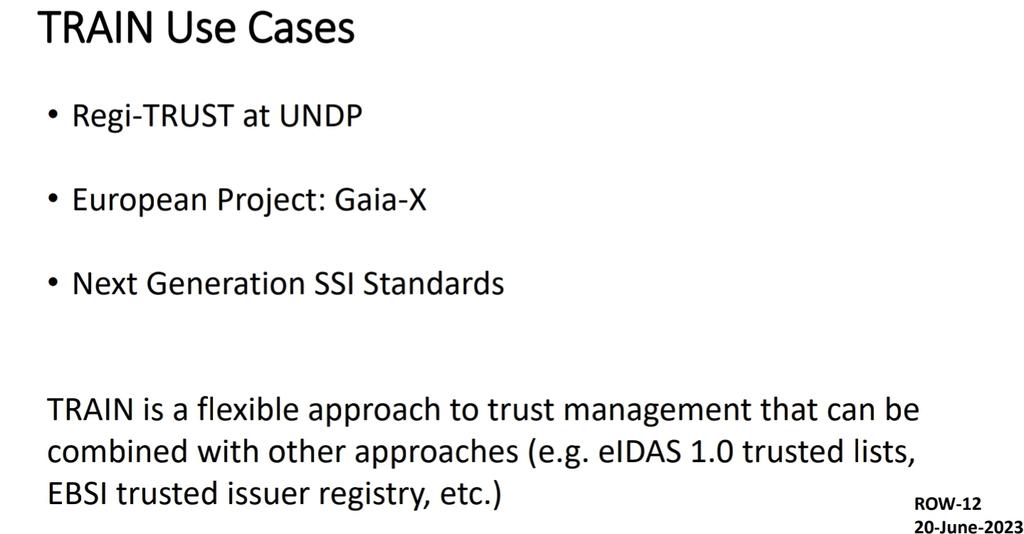
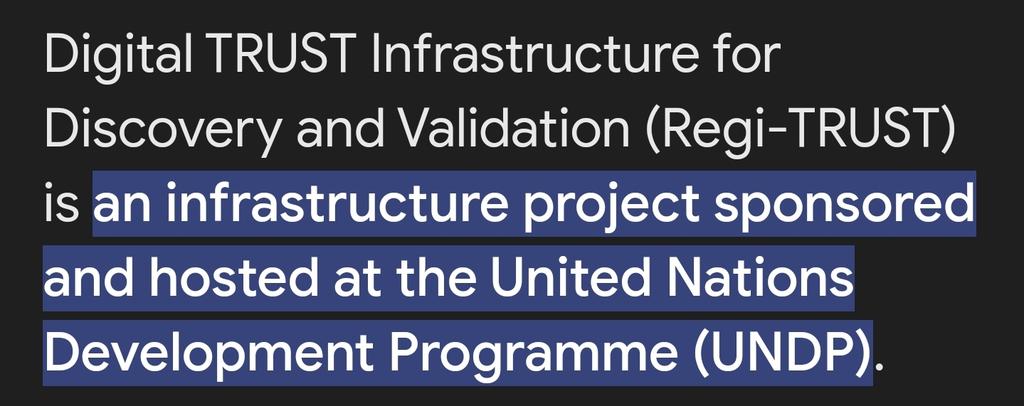
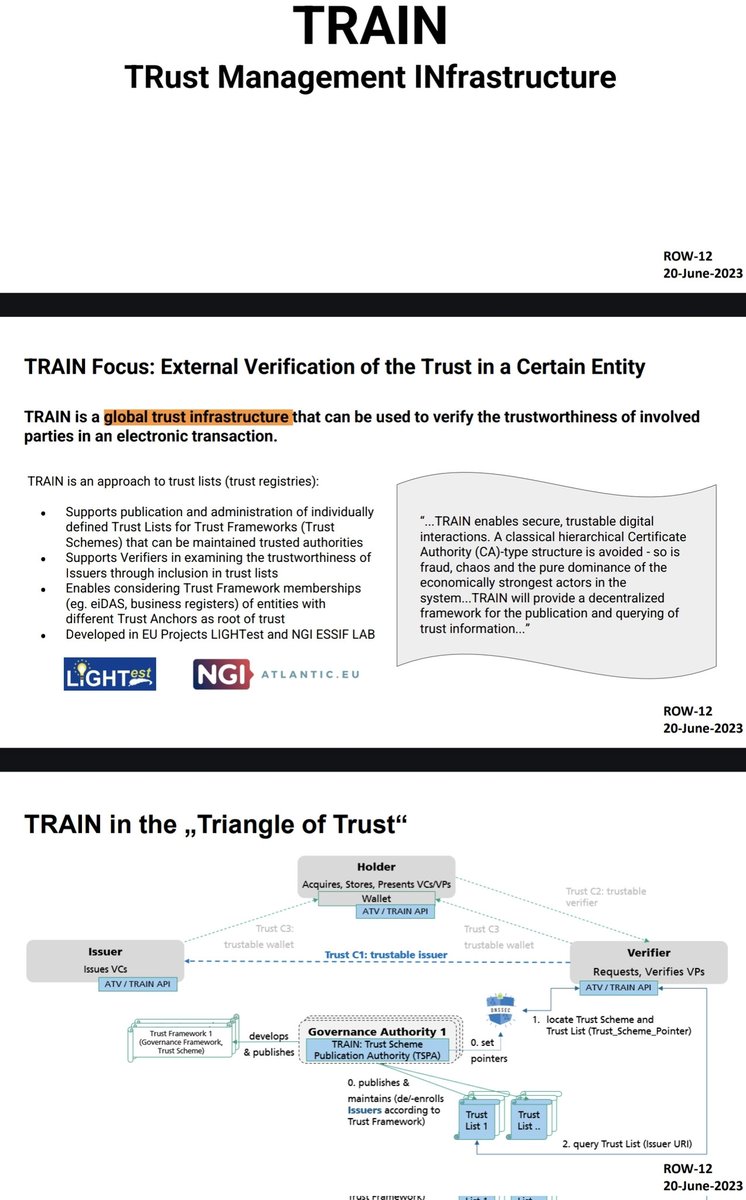
💥 Regi-trust #UNDP #UN
💥 GAIA-X #dataspaces
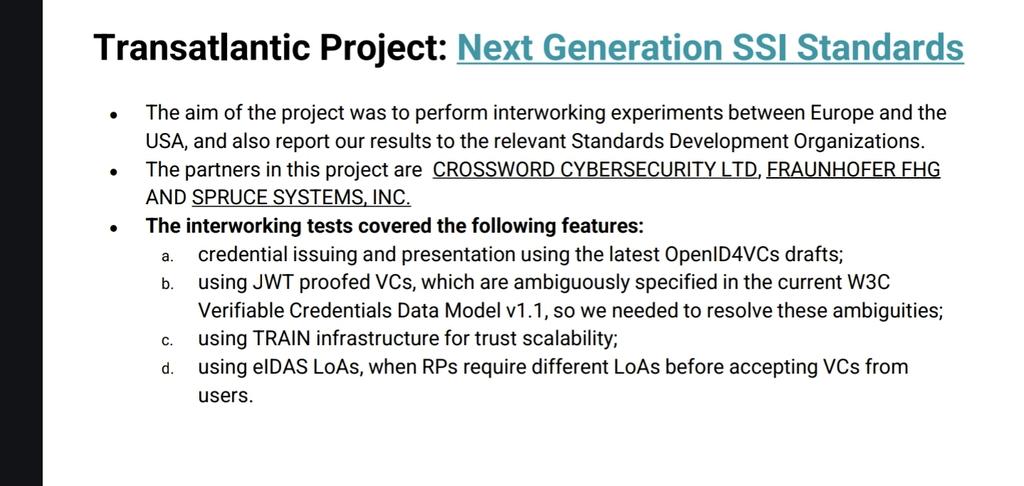
💥Next Gen #NGI #ESSIF
But why @cheqd_io ? #DID #VC $CHEQ
10 Nov 2024

What do you need for billions, and billions of digital identifiers?
Global trust infrastructure that is verifiable from issuance, within trusted verifiable governance frameworks.
@cheqd_io #DID #VC $CHEQ
1
1
9
1,750

10 Oct 2024
NO that's NOT "exactly how it started" @AmienEssif.
Essif obviously hasn't studied what happened in Syria. It wasn't some organic grassroots movement. That's a complete myth.
Bangladesh =just another 'color revolution' to remove a govt the "rules based order" didn't approve of.
6
167

24 Sep 2024
🌐Blockchain's Impact on Digital Reputation: Trust Reimagined
🔹 Decentralization & Self-Sovereign Identity empower users
🔹 W3C standardization ensures interoperability
🔹 Zero-Knowledge Proofs boost privacy
🔹 Challenges: scalability, UX, regulation
🔹 Real-world initiatives paving the way (e.g., ESSIF)
Blockchain is shaping a future where reputation is user-owned and portable🔐
Full article 👇

1
2
7
531
