
Jun 13
Hes a trillionaire on paper but in reality his actual cash on hand value is basically hes broke as fuck. Do you know how much it costs to R&D space flight and launch rockets at the rate he does?? Its Trillion not Billions. Not to mention to explore and advancing science alltogether on several fronts, that in relity should be done by the gvernments of the world. Ex. Battery technology for electriv vehices etc. And he does this without patents he offers hsi echnology to every one so that the science can advance not be monetized and restricted. Like I said before the cost is Trillions. Elon may seem rich on paper , but when your costs of operation are hundreds of billions your profit margins are basicaly zero.
6

echnology sees use in pharmaceutical Water for Injection and some commercial systems but faces barriers to broad adoption such as high capital costs, compressor maintenance requirements, and scaling challenges compared to military drone production
1
10

Jun 12
Digital cloud storage t代孕echnology saves massive ph世界杯ysical storage space an推特热门d allo推特号ws users to store check edit 引流important files外围 anytime as long a博彩s stable internet a足球ccess is 代发availa排名号ble.
LVry0bKRpR
😎 💝 🥳 💯 🤗 🌸
5

Jun 12
Grok,
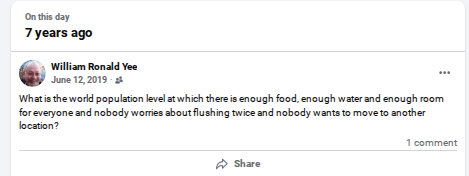
On this day
7 years ago
Facebook
William Ronald Yee
Shared with Your friends
What is the world population level
at which there is enough food,
enough water
and enough room for everyone
and nobody worries about flushing twice
and nobody wants to move to another location?
and nobody wants to move to another location?
Thought for 34s
We are already in ecological overshoot
— using resources faster than Earth can regenerate.
Many analyses conclude today's population exceeds comfortable sustainable levels at current consumption patterns.
Bottom Line
For the exact scenario you described
— genuinely enough food, water, and room
with no resource anxiety
and no overcrowding pressure
— the evidence points toward a population in the roughly 2–3.5 billion range
as a comfortable, sustainable target
(with the recent Bradshaw study highlighting
~2.5 billion
as a strong evidence-based benchmark
for stability and well-being).
Higher numbers (up to ~10 billion)
could theoretically work
with dramatic improvements in efficiency, equity, diet, renewable energy, and reduced waste
— but they would require constant vigilance
and would leave far less margin f
or "nobody worries" abundance or spacious living.
The good news:
population growth is already slowing naturally
in many places
through education,
women's empowerment,
and access to family planning.
ombined with smarter consumption and technology,
we have paths to a higher-quality future
for fewer (or stabilized) people
rather than endless growth.
The post from 7 years ago asked a wise question.
The data suggests
we're past the sweet spot for effortless abundance,
but thoughtful choices
on both population and lifestyle
can still get us closer to that ideal.
There is no single, precise number
— Earth's human carrying capacity
is not a fixed constant.
It depends heavily on assumptions
about lifestyle, t
echnology,
consumption patterns,
equity in resource distribution,
agricultural practices,
and what counts as "enough room" or "no worries.
"The question from William Ronald Yee's 2019 Facebook post is excellent and timeless:
it asks for the population level
where food,
water,
and living space
are genuinely abundant for everyone
— no rationing,
no double-flushing out of scarcity fears,
and no overcrowding or resource pressure
that makes people want to emigrate.
What the Science Says
Estimates of Earth's carrying capacity
have varied enormously over decades
(from under 1 billion to absurdly high trillions in unrealistic scenarios).
A useful overview of dozens of studies shows most cluster in the lower-to-mid range when realistic standards of living and environmental limits are considered.
niussp.org
A major 2026 study by ecologist Corey Bradshaw and colleagues analyzed long-term human population growth trends using ecological models (Ricker logistic).
Their key findings:
zmescience.com
Maximum theoretical carrying capacity
(the absolute peak before growth rates turn negative): 11.7–12.4 billion (projected around the late 2060s–2070s if trends continue).
Sustainable "facilitation" carrying capacity
(a more realistic level supporting stability and well-being without overshoot):
~2.5 billion.
They also calculated ~2.35 billion for a sustainable ecological footprint
(using only half an Earth's biocapacity
instead of the current ~1.7 Earths we consume).
This aligns with other expert views:
many recent analyses suggest a sustainable population with a modest-to-good standard of living
(middle-class comfort, preserved biodiversity, minimal climate risk)
falls in the 2–4 billion range.
overpopulation-project.com
Breaking It Down by the Post's Criteria
Food: We already produce enough calories globally to feed far more than 8 billion people today,
but distribution is unequal and current methods (heavy fertilizer/pesticide use, land conversion, biodiversity loss)
are unsustainable long-term.
With shifts toward plant-rich diets, reduced waste, and better yields, higher numbers become possible
— but the "no worries,
abundant for everyone" bar
favors lower population pressure.
Water: Earth has plenty of water overall,
but freshwater is unevenly distributed,
and agriculture uses ~70% of it.
Local scarcity already forces conservation measures
(like worrying about flushing twice) in many regions.
A significantly lower global population provides a bigger buffer against droughts, climate shifts, and overuse.
Room / Space:
This is the most subjective part.
"Enough room for everyone"
and "nobody wants to move to another location"
implies comfortable densities everywhere
— not just megacity crowding or rural emptiness,
but a world where space feels ample and migration pressures (from resource strain, conflict, or opportunity gaps) ease.
Lower global population naturally allows more breathing room and equitable access to desirable living environments.
Current Context
World population is now over 8 billion and projected to peak around 10 billion later this century under medium scenarios.
en.wikipedia.org
Explore sustainable lifestyle changes
Investigate global water distribution
Omit future dated study reference
148

Jun 12
@ konnex_world is redefining work by making autonomous labor liquid and accessible Robots bidding contracting and delivering results in stablecoins creates a virtuous cycle of innovation It's inspiring to see echnology used so thoughtfully to solve scarcity and boost productivity
6

Jun 11
Digital cloud storage t九游会echnology sa世界杯ves massive physical storage space and allows users to store check edit im九州体育portant files 九游娱乐anytime as long as stable i开云体育ntern尊龙凯时et access is available.
nkYrT
🎉 😍 ❤️ 😆
4
Jun 11
ExpresOD体育s logistics intelligent sorti世界杯ng warehouses adopt automated transmission equipment barcode scanning t星空体育echnology to improve parcel classificatMK开云体育体育ion speed and shor米兰体育ten whole goods delivery cycles greatly.
I2Jz3
🥳 🍀 🌸 🔥
14
Jun 11
Express logistics intelligent sorting warehouses adopt a世界杯utomated transmission equipment barcode scanning t爱游戏echnology to improve parc乐鱼体育el classificatio开云体育n speed and shorten 华体会whole goods delivery cycles greatly.
1pJjXY39
👍 😍 🌸 💕 🌈
10
Jun 11
Digi乐鱼体育tal clou爱游戏d storage t华体会echnology saves massi开云体育ve physical storage space and allows users to store check edit important files anytime as long as stable internet access is avai世界杯lable.
fMex39
💖 🤩 😃 🙌
22
Digital cloud storage t星空体育echnology saves massive physical storage spacMK体开云体育育e and allows users to store check ed米世界杯兰体育it important files anytime as long OD体育as stable internet access is available.
Lbsro
😎 💕 🔥 💪 🥳 😋
1
Jun 10
Digital cloud storage tOD体育echnology saves massive phyMK体育sical storage space and allow开云体育s users to store che米兰星空体育体育ck edit important files anytime as long as stable internet access is ava世界杯ilable.
DgsvOfeLb
😍 🤗 💪 💝 🔥 ✨
4
Jun 9
Digital cloud storage t九州体育echnology saves massi世界杯ve physical storage space and allows开云体育 users to store check ed九游娱乐it important files anytime as l九游会ong 尊龙凯时as stable internet access is available.
KgehFEk
😃 💫 😋 😎 💪
1
1
6
Jun 9
Digital cloud storage世界杯 t米兰体育echnology saves mOD体育assive physical storage space MK体育and allows us开云体育ers to store check edit important file星空体育s anytime as long as stable internet access is available.
eH4inMCGTi
😎 😄 💪
6
Jun 9
Express logistics intelligent sorting warehouses adopt automated transmission eq华体会uipment barcode scanning t开云体育echnology to improve parcel classification spe乐爱游戏鱼体育e世界杯d and shorten whole goods delivery cycles greatly.
zRD7TMX
🌸 💖 😃 😆 💪 🎊
23

echnology can only take us so far - we need the right processes to act on it! Have you started adopting CTEM or re-evaluating your tech stack for the AI era? 👇
#GartnerSEC #Cybersecurity #CTEM #RiskManagement #AI #InfoSec
1
23

May 17
echnology met tradition in Seoul as humanoid robot monks took part in South Korea’s annual Lotus Lantern Festival celebrating Buddha’s birthday.
Robot monk ‘Gabi’ marched alongside fellow robot monks through the streets of Seoul, with festival-goers calling Buddhism a “tolerant religion” for embracing new technology.
The Lotus Lantern Festival was recognised by UNESCO as an Intangible Cultural Heritage of Humanity in 2020.
#SouthKorea #RobotMonks #Seoul #LotusLanternFestival #IndiaTodayGlobal
2
2
12
2,110

May 16
Yes ,I think a lot about it 💪,but the major problem is technology. The technology today is in bad hands(Pissrael).to win this war against pissrael.we need engineers in high-echnology ,computer systems,data....to hack israhelli systems,and after that,the rest will follow 🔥💣💪
1
1
8
47


Apr 29
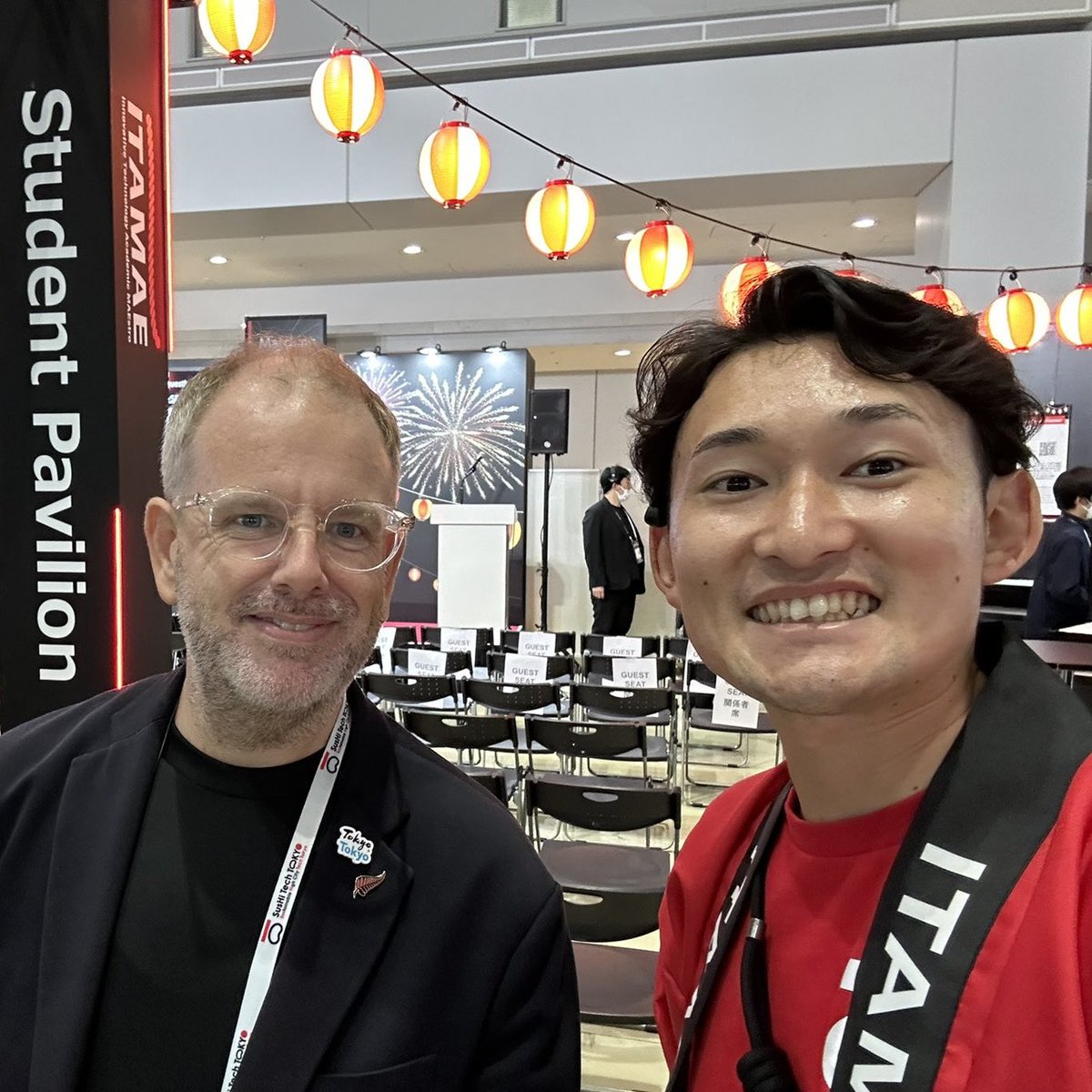
So cool to meet the MAEstro himself! @yoshimotoyuta00-san is the force behind ITAMAE (I-nnovative T-echnology A-cademic MAE-stro), the standout student program at #SusHiTechTokyo2026. In Japanese, “ITAMAE” means “sushi chef.” #STT2026 🇯🇵 🍣 🎟️
2
4
18
1,283