idalakabo obianime retweeted

A masterpiece to help you relax this week end pure cinema from start to finish. 🍿🔥What an insane scenes, top-tier acting, and every moment keeps you locked in.
Definitely a solid 10/10 worthy of your time.. 🔥🎬
116
430
679
50,907
Tejaswini retweeted

Some stories end, some characters stay foreve. Anurag Ganguly 🫠
#HarshadChopda
1
2
6
55

ข้อดีของกุคือการไม่ยึดติดกับอะไรเป็นพิเศษ ชอบศลปก็จะไม่เอาใจลงไปผูกเด็ดขาด ตอนรักก็รัก ทุ่มเทเท่าที่ไหว กุไม่จำเป็นต้องเอาเขามาเป็นโลกทั้งใบอยู่แล้ว เพราะ in the end of fact เราคือคนแปลกหน้าซึ่งกันและกัน นะน้องนะ
tryna change the world retweeted

To continue to quadruple down when you’re STARING THE END OF YOUR SEASON IN THE FACE is fireable. You’re literally saying you’d rather protect one player’s emotions than try to win the NBA Finals
5
148
7,316
Jalen 🇵🇭🇲🇽 retweeted

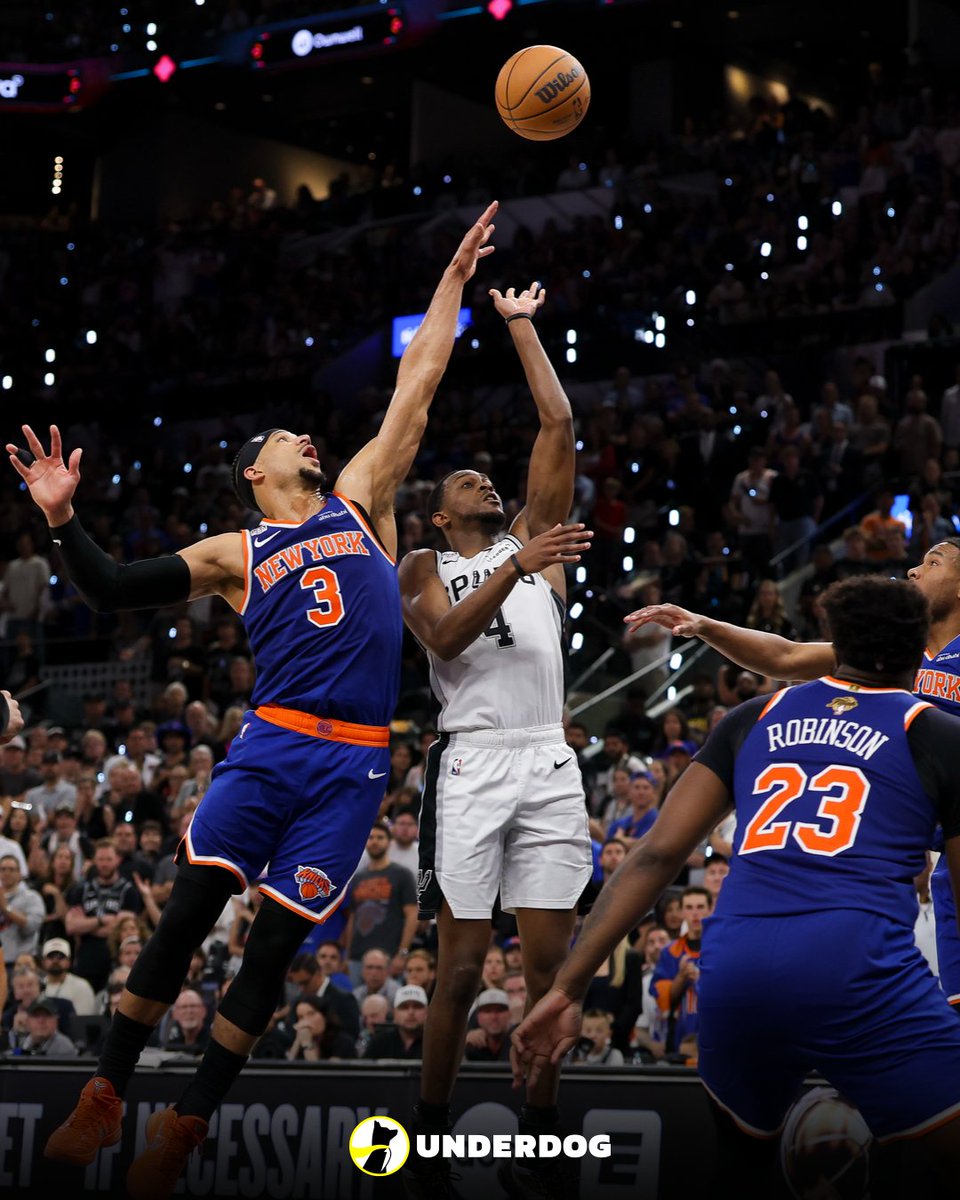
Mitch Johnson yesterday:
"De'Aaron Fox will have the basketball in his hands at the end of the game tomorrow."
De'Aaron Fox in the fourth quarter:
0 PTS
0-4 FG
0 AST
0 REB
256
1,765
10,939
1,001,687
Joseph sall retweeted

Arsenal—23 years
Knicks—53 years
Two long barren runs come to an end in 2026 🤝

290
3,457
21,555
372,288
Slaveshipvictorine retweeted

I missed the History Channel documentary on how FDR negotiated the end of WWII with Hitler.

The Vice President of the United States thinks WWII ended through a negotiation
😳
151
520
2,619
48,090
Vincent retweeted

Omoh, this is the largest crowd I’ve seen so far since this end ins£curity protest started !! Abuja people are serious about this and out massively, both men and women are out !!! 🙌🏼✊🏽🪧
139
2,034
5,071
53,090
💓 retweeted

Fuma during and after the concert…at the end of the day, hes still our Pokémon nerd 🫶🏼🫶🏼


163
1,090
7,369

JPCG63 retweeted

Jun 12
This World Cup, everyone with Norway 🇳🇴
The joy Norway experienced at the end of the match after defeating Israel 5-0:
Norway donated all the match's proceeds to Palestine.
924
17,742
59,882
549,087

Did not Ronald Reagan manage to end the Cold War with Russia? Why do so many assume we are still dealing with pre Cold War Russia?? Media is always trying to erase Reagan’s progress.
Maybe this hasn’t become clear to @LauraLoomer
I don’t think you are doing better, sir.
Melina retweeted

I am doing LA trip end of July. What talent should i work with?
26
47
412
22,430
Tranky Chavez retweeted

From single to dad. From public bus to Benz owner. From tenant to a landlord. Mark my words, You’re going to end 2026 happier, richer, healthier than before. Bro, affirm it now, Type Amen!!!
28
22
144
5,695

Today, we will talk about an Indian Sloth Bear. I will share some facts with you all based on my own personal observations.
Sloth Bears are found in most parts of India, but they are especially distributed from southwestern Rajasthan, through central India, and down to southern India. In Rajasthan, their estimated population is around 1,200, which has seen a significant increase over the last 5-6 years. Similarly, in Madhya Pradesh, there are approximately 1,000 Sloth Bears, while in Chhattisgarh a state that is often considered backward in terms of wildlife conservation there are 600-700 bears roaming the forests. Maharashtra has safely protected around 900 Sloth Bears in its jungles. Karnataka also has about 600 of these bears in its forests.
Now, coming to the main topic: In Rajasthan, Sloth Bears are mainly found from the southeast to the southwest and in some central parts. These bears are commonly seen in both wild and rural areas. Their presence in the Aravalli range is largely limited to the stretch from Mount Abu (Sirohi) to Phulwari Ki Nal, Kumbhalgarh, Ramgarh, Mukundara, and Ranthambore. There are also some scattered populations in other smaller forests. Near my city, there are about 5 bears. However, their numbers are zero in Jhalana, Jamwa Ramgarh, and Sariska. Why is this so?
There could be several reasons for this, including poaching as an important factor, but the issue here is something more. For the last three decades, the presence of bears in these areas has been negligible. The main reasons are the
1.severe shortage of seasonal fruits and berries for food in these forests, along with a
2.significant highly shortage of termite and ant species.
3.Additionally, human influence in this jungle has reached its peak, which is risky for them. These bears prefer scrublands, and there is a severe shortage of that here as well.
It is not that the Forest Department has not tried to reintroduce bears here. Recently, in 2023, the 👉(major reason) department released 3 bears from Sudha Mata Sanctuary in Jalore and Mount Abu Sanctuary in Sirohi into Sariska after fitting them with radio collars. Immediately after release, all three bears removed their radio collars from their necks. After that, one bear died, another wandered about 200 kilometers away near Dausa and was killed there, and there is no record of the last bear with the Forest Department. You can understand what must have happened to it.
When they released the bears in Sariska, (I had already said that bears accustomed to human habitats should not be released here. )Bears from Ranthambore or Mukundara should have been brought instead. This is because bears from Mount Abu and Sudha Mata often roam around human settlements. They have become more accustomed to a parasitic lifestyle and have forgotten their basic survival skills.
Anyway, another new attempt is planned by the end of this year. I hope these animals will become abundant in Sariska as well and mark their paw prints in many places. #slothbear #sariskatigerreserve #bearrelocation #wildlifeawareness #slothbearfood
Apr 18

“Beyond Tigers: The Forgotten Crisis of Sloth Bear Conservation in India”
We always enthusiastically participate in discussions about tigers because jungle tourism in India largely revolves around tigers. However, today I want to talk about a serious issue.
Have we ever discussed the conservation of sloth bears? Most people’s answer would be “no,” because we tend to bundle sloth bear conservation with tiger conservation, which is not right. After all, tigers are not found everywhere.
In India, there are only a few dedicated sloth bear sanctuaries. In Rajasthan itself, there are two: one is the Mount Abu Bear Sanctuary, and on the other side of those hills, there is another sanctuary that protects around 200 sloth bears.
The issue here is that these animals are omnivorous, but they primarily prefer a vegetarian diet. Today, you can easily spot these bears in Mount Abu during any time of the day, coming out of the forest into residential areas or near temples in search of easy food. In many cases, groups of these bears can be seen rummaging through garbage dumps for food items — behaviour that is completely contrary to their natural solitary lifestyle.
We humans have destroyed their natural habitat and have indirectly turned them into dependents (almost parasites), because they now know exactly where easy food is available. The new generation of sloth bears observes their mothers’ activities and adopts the same methods as their primary strategy for obtaining food.
In Chhattisgarh’s Mahasamund district, there is a temple where people come less for the darshan (worship) of God and more to watch the “show” of feeding bears biscuits and food offered in the name of Baba. I call it a “show” because the forest department staff are well aware of it but still allow it to happen.
Moreover, after leopards, sloth bears are the animals most frequently killed in road accidents in India.
These animals urgently need a structured and concrete conservation effort — one that they truly deserve but have not yet received. #slothbear #bear

It's not that obvious for this song but I noticed his live singing has gotten cleaner and more controlled. His technique improved, and hitting high notes more comfortably and not straining where he used to have some squeaking at the end of the note.


Veronica & @TheEcho13 are why feminists are losing the culture war.
Grifting 2.0.
"Let's weaponize the wellness aesthetic. If we layer our grift in enough wholesome & holistic naturopathy, anyone who questions us will end up looking like the asshole!"