Marina Abbott retweeted

Jun 12
Just as the engineers said it would.

Algae resurfaces in reflecting pool after multimillion-dollar fixes dlvr.it/TT1BzL
372
3,135
40,998
1,371,752

This just proves he is worthless and it is the workers, engineers and employees propping him up alongside all the subsidiaries he lives off of.
Ūkabi retweeted

Without Engineers, Science is just philosophy!
We have to negotiate with physics.

the beauty of physics is not equations.
it is reality becoming understandable.
• mechanics → motion has rules
• thermodynamics → energy always keeps score
• electromagnetism → invisible fields run the world
• quantum → nature is stranger than intuition
• relativity → space and time are not fixed
physics teaches you one brutal thing:
reality is not random.
it is lawful, deep, and unforgiving.
engineers don’t build against physics.
they negotiate with it.

1
1
2

"Friday, June 12, 2026 — a historic day.
SpaceX went public with the biggest IPO ever: $75 billion raised, valuation soaring past $2 trillion. Elon Musk is now the world’s first trillionaire. 🚀
Thousands of employees became millionaires — from engineers to welders. And standing right beside Elon for nearly 25 years: Gwynne Shotwell, President & COO of SpaceX. Her dedication helped turn a near-bankrupt company into a giant. Today, she’s a billionaire too.
From exploding rockets in 2008 to dominating space: this is what real vision relentless execution looks like.
Huge congrats to @elonmusk, Gwynne, and the entire SpaceX team! The future is multiplanetary. 🌌
#SpaceX #SpaceXIPO #ElonMusk #GwynneShotwell"
20m

The Moment Elon Musk Became the World’s First Trillionaire as SpaceX Has the Biggest IPO in History. 🔥

Maar belastingen moeten er inderdaad zijn maar ze moeten dringend herbekeken worden. Niet zoals in Amerika waar je ze zo kan ontduiken met bepaalde tax cuts. Maar nu huren veel bedrijven low Cost ai engineers in die eigenlijk waste of money zijn
1

Mexican official Ulises Miramontes was fired as president of Jalisco’s College of Engineers and has been banned from all World Cup events after making a racist gesture at South Korean influencer Inonyang during the World Cup.
PS: We won 2-1. 🇰🇷⚽
407
633
4,906
130,863

While I agree moving to Alpine would be pointless, let's not act as if dumping money would work, look at, you guessed it, Lawrence and AM
Guys has witnessed in real time how his entire investment got robbed by Honda and the AM engineers

I'm not sure what's the logic of going to Alpine at this point,
it doesn't have the resources, it's not going to put the money into the project, it's ...well... Renault!
if Alonso wants to fight in the midfield? Sure,
but with Aston Martin he'll probably be there anyway by 2027
2

Papa Reabetswe retweeted

16h
Professional Malawians Leaving South Africa: Doctors, Nurses, Teachers, Analysts, Engineers, Mathematicians and Lawyers
Their departure could represent a significant loss of skills and expertise for South Africa. 🤣🤣🤣🤣

25
36
109
3,748


a) I know how you meant it, BUT, their target voters are germans, who "were" renowned for innovation and growth. its not just entrepreneurs, or engineers, but also the janitors in Germany tend to be more open to new solutions, its culture...
b) cheap gas from russia and nuclear energy
c) ppl like christian must exchange/bargain with the AfD about startup policies (AI, humanoids, etc). I bet he could achieve an ultra libertarian version of a work visa for any position crucial for innovation and get the BEST employee equity program estab. with the AfD. etc.
1

Ukraine’s post-war recovery must be carried out on the basis of sound scientific approaches and with the use of effective innovations.
We discussed this with renowned American astrophysicist Paul Sutter, who came to Ukraine at the invitation of our scientific community.
Paul shared successful examples from the American experience of implementing scientific achievements that we can adapt right now. This primarily concerns the launch of new, unique solutions for the production and distribution of electricity that will be protected from enemy missile strikes. We also discussed phytoremediation technologies – the cleaning of agricultural land contaminated by military actions with the help of plants.
Today, many highly qualified technical talents, engineers, and scientists from the United States are ready not only to share their experience with Ukrainian colleagues, but also to help our municipalities with consultations on infrastructure recovery.
In addition, we discussed long-term mechanisms of cooperation between civilian universities in the United States and Ukraine, in particular for an in-depth study of the possibilities of artificial intelligence and deep tech.
I thank Paul Sutter for an interesting meeting and the ideas he presented. Scientific potential and advanced technologies will make Ukraine’s rebuilt civilian infrastructure resilient, modern, and protected.
We continue our work.
Glory to Ukraine!
3
4
61
☠ S•E•R ☠ retweeted

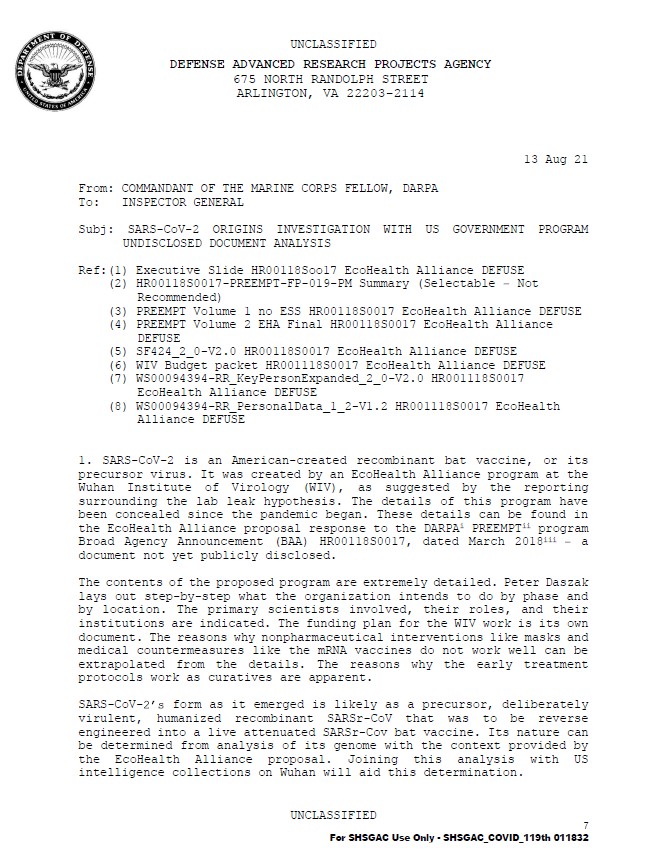
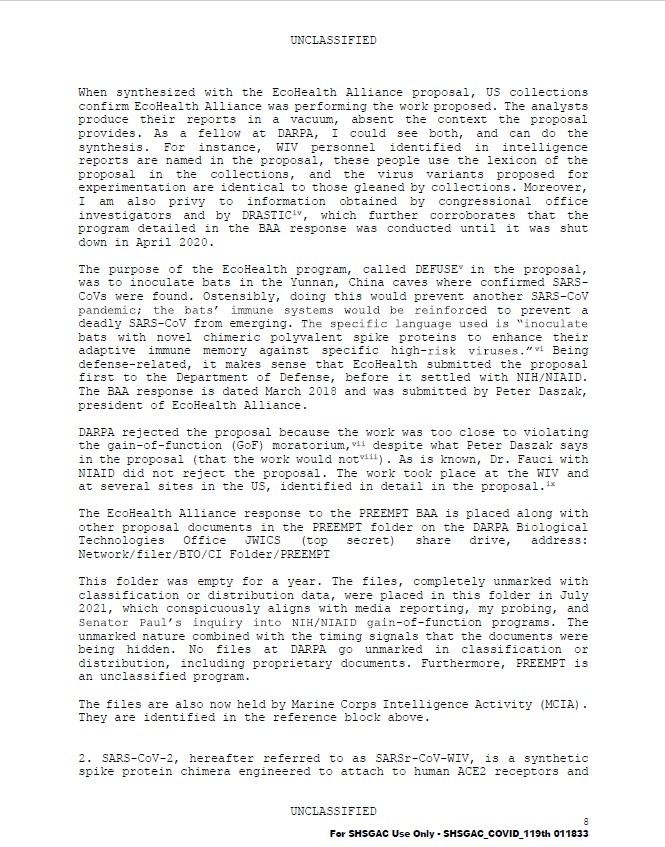
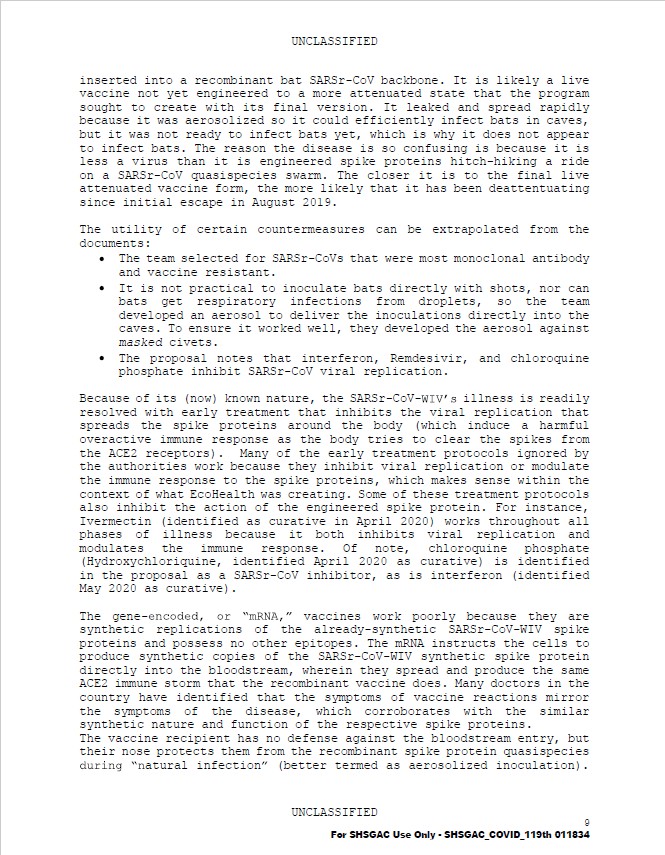
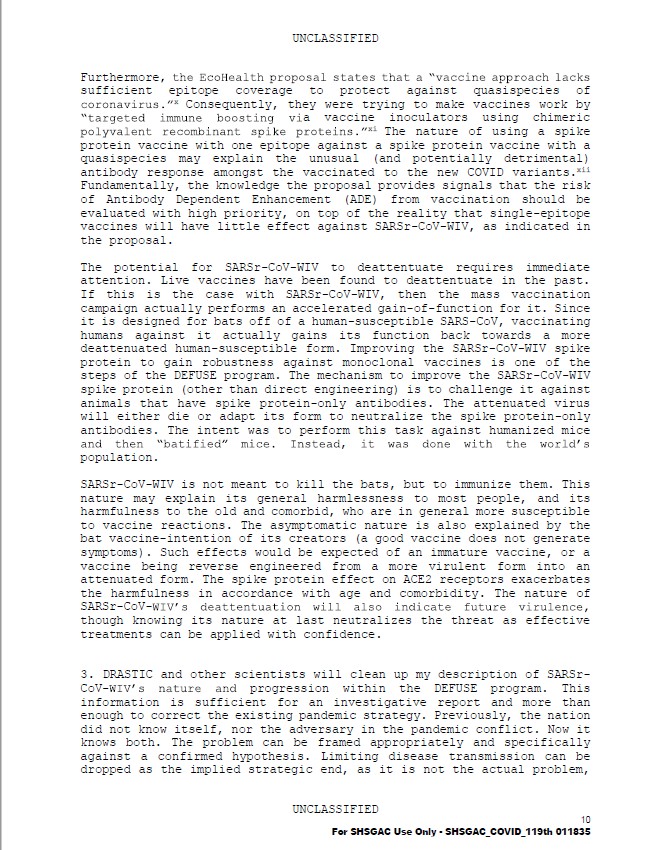
Pentagon admission that the US created Covid TOGETHER WITH CHINA, that the virus engineers knew masks don't work, and that the mRNA vaccines are basically poison. This is TREASON and one of many crimes that justify and necessitate an overthrow of the United States Government.
158
1,306
4,172
137,791

Wouldn't hold my nose lol
These people just turned from "the engineers that do everything for Elon" into "Nepo babies who got rich off government subsidies" overnight. They're in the enemy class now.
1
jun retweeted

I feel bad for all the talented scientists and engineers who actually accomplish that shit only for that goblin to take all the credit
72
43
2,314
29,214

We are on the Menu: The Fable Ban and the Difficulty of Reforming a Success
On Friday, the 12th of June, at 5:21 pm Eastern, Anthropic received a letter from the United States government. Citing national security, the directive ordered the company to suspend all access to its two most capable models, Fable 5 and Mythos 5, for every foreign national on earth — outside the United States and inside it, customers and the company's own engineers alike. Under the "deemed export" rule, showing controlled technology to a non-citizen counts as shipping it abroad, so a German researcher in San Francisco was locked out of the model she had helped build at the same moment as a startup in Munich. The stated cause was a narrow jailbreak that Anthropic says other models reproduce without effort. Within hours, the models went dark for hundreds of millions of users. The mechanism matters more than the merits: a capability that Europe had quietly come to rely on was switched off, unilaterally, by a counterparty, overnight.
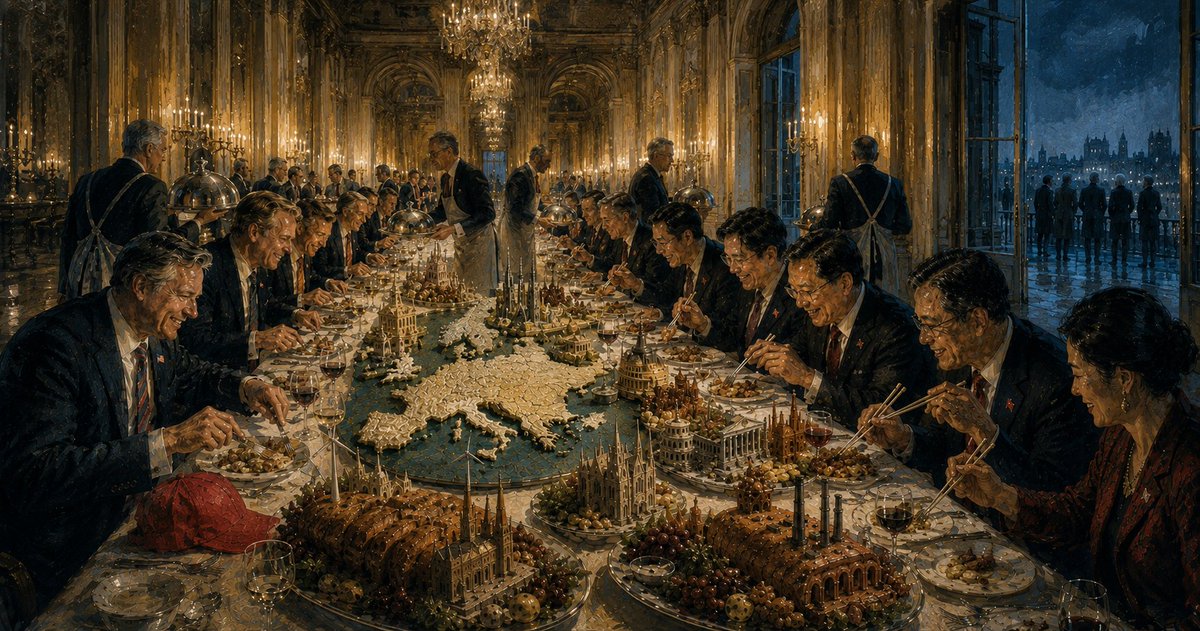
Tokens have become infrastructure — the priced, traded, substitutable substrate of the next economy, exactly as oil was the substrate of the last one — and Europe is building the same dependency in compute that it spent four years calling a catastrophe in energy. Friday, that argument arrived ahead of schedule. You do not get a clearer demonstration that strategic substrate cannot be outsourced to a partner whose interests can diverge from yours than the partner reaching across the ocean and turning it off. Mark Carney's line is the right one: if you are not at the table, you are on the menu. Europe is not at the table. It has not yet noticed that it is on the menu — not after this, not after Ukraine, not after the energy shock, not after the unrest in its own cities.
The deeper question Friday raises is not technical but generational. Friedrich Merz, taking stock of a difficult first year, made an observation that deserves more weight than it received: it is harder to reform a successful country than to rebuild a destroyed one. This is not paradox. It is the logic of the saeculum, the roughly eighty-year cycle in which a social order is built, codified, and then forgotten by the people living inside it. A crisis forces one generation to learn, fast and under real consequence, what the moment demands. The next generation codifies those hard-won lessons into institutions and rules. By the third, the people who run the order no longer remember the conditions that made it necessary, and begin, in good conscience, to dismantle the load-bearing parts they have mistaken for decoration. Strauss and Howe called the crisis phase the Fourth Turning. The mechanism beneath the label is simpler and harder to argue with: each era solves its defining problem so well that the solution becomes the next era's problem.
The German postwar record reads as a single long instance of this. The generation that had seen scarcity and ruin built a welfare state to abolish destitution, a European project to make another continental war structurally impossible, and, after the 1973 oil shock, a fleet of nuclear reactors to secure the energy a manufacturing economy runs on. Each was the correct answer to a problem its builders had felt in their own lives. Three generations on, the answers have curdled into their opposites. The welfare state, designed to prevent starvation, now sustains a constituency and a political-administrative class, with a direct interest in its own expansion. The European project built to prevent catastrophe now produces the AI Act, whose foundation-model provisions landed hardest on Mistral, the one European company they were supposed to protect. And the nuclear fleet built to end energy dependency was shut down in the name of a different fear entirely — the reactor reframed from solution to threat by people who had never lived the problem it solved. This is not stupidity. It is what happens when prosperity and security stop being understood as things that were built and start being treated as facts of nature. I have called this elsewhere the arrogance of the sated.
Here is the part that makes a success so much harder to reform than a ruin. A working order does not rest only on supply chains, statutes, and institutions. It rests on a settled set of assumptions about what it means to be good, democratic, accountable, and moral — and those assumptions were themselves produced by the order they now hold up. To change the system, you have to change the assumptions, and that is a different and far more painful operation than changing a policy. Because the brutal fact a reformer has to say out loud is that what was good can become bad. Protecting nature was good when the threat was untrammelled industry; it becomes destructive when it blocks the clean, dense energy the next economy needs. Eliminating risk was prudent when the danger was recklessness; it becomes a danger itself when it forbids building anything at all. Good intentions, unchanged, produce bad results the moment the conditions change underneath them. The first task of reform, before any budget or any law, is to say that the moral furniture needs rearranging — and there is no harder thing to say to a people that is proud, with reason, of having been good.
The second obstacle is more concrete and less forgivable: a system of interests built on those assumptions. Around every settled belief grows a constituency that earns its living defending it. People who live on transfers, and the parties who represent them; the NGOs, institutes, and think tanks whose funding depends on the diagnosis staying fixed; the businesses whose margins rest on a subsidy rather than a product. None of these actors is villainous. Each is responding rationally to the incentives the old order created. But together they form a coalition with a stake in immobility, and they have woven the governing beliefs into a single mesh from which no thread pulls free on its own. Nature must be protected, so energy use must be limited. Energy use must be limited, so degrowth becomes the dignified form of adaptation to scarcity. Nuclear, the one abundant low-carbon source, is held to pose unacceptable risk, so abundance is ruled out in advance. And social justice is defined as redistribution rather than opportunity, so the surplus that reform would generate is already promised away before it exists. Each belief braces the others. Pull on one and the whole frame resists, which is precisely why it has held so long against so much contrary evidence.
Set against that frame, the constellation a serious answer requires is not hard to specify; it is only hard to permit. Friday's lesson, read narrowly, is that Europe needs its own AI, and an AI runs on abundant, cheap, reliable electricity. Given that the climate constraint is real, that electricity has to be substantially nuclear, because renewables alone do not deliver the density and constancy that compute demands. A European model also needs capital at a scale the continent's venture markets have never assembled, and — this is the part the immobility coalition cannot concede — it needs deregulation. The bureaucracy that was constructed to eliminate risk, accumulate control, and impose moral ideals through permission and redistribution would have to be partly dismantled, so that its purpose becomes enabling growth rather than preventing the wrong kind of it. Abundant energy, mobile capital, and a state that sets the frame instead of dictating the result: that is the whole of it, and every element of it is currently forbidden by an assumption that was once a virtue.
None of this can be imposed. An authoritarian state could decree the lot and call it efficiency; a democracy that wants to remain one cannot, and should not want to. So the change needs a different driver, and a crisis is the only one history reliably supplies — a shock large enough to make the cost of the old assumptions exceed the comfort of holding them. Friday could be that shock, if Europe lets it land. A single letter, sent at 5:21 on a Friday afternoon, made visible how completely someone else's decision now governs the tools on which the continent's next economy depends. The reactors can be built. The capital can be raised. The rules can be rewritten. The only question is whether it takes this warning, or the next one, or the one after that — and how much menu is left by then.
17

I think Anthropic topped with Karpathy joining. Now he's already daydreaming of Elon's engineering-focused culture respecting SpaceX' accomplishments.
Anthropics's products started to suck because they haven't figured out how to build well designed software with AI in a team, beyond having product taste-having engineers yolo features onto the market single-handedly. This doesn't scale when products become complex.
Without backing up the hype by serving a frontier model and with the added sense of unreliability, OpenAI, which had the the smarter model for many months now, and will likely beat Mythos soon again, and others can catch up and steal revenue generating business.
Even more important would be damage to the internal culture at Anthropic and their previous asset to attract and hold talent, done by repeated cracks in the leadership's story appearing. Imagine how demotivating the situation must be for the team to be under attack by the US admin.
Surely the other labs are already reaching out to poach.
4