2nd sight retweeted

New TI report 🚨
Lighthouse ("Lao Wang") uses Vue-based frontends and session validation to gate phishing flows and evade detection.
A strong example of controlled access phishing infrastructure.
Details and detections on urlscan Pro
urlscan.io/pricing/urlscanpr…

6
8
513

Money wants open validation. Software wants trusted execution
Financial rails should be neutral, and permissionless
Businesses, governments, and AI need to trust the environment where software, data, identity, frontends, and services actually run
That is $ICP
1
1
1
23

still cheaper than Supabase Vercel.
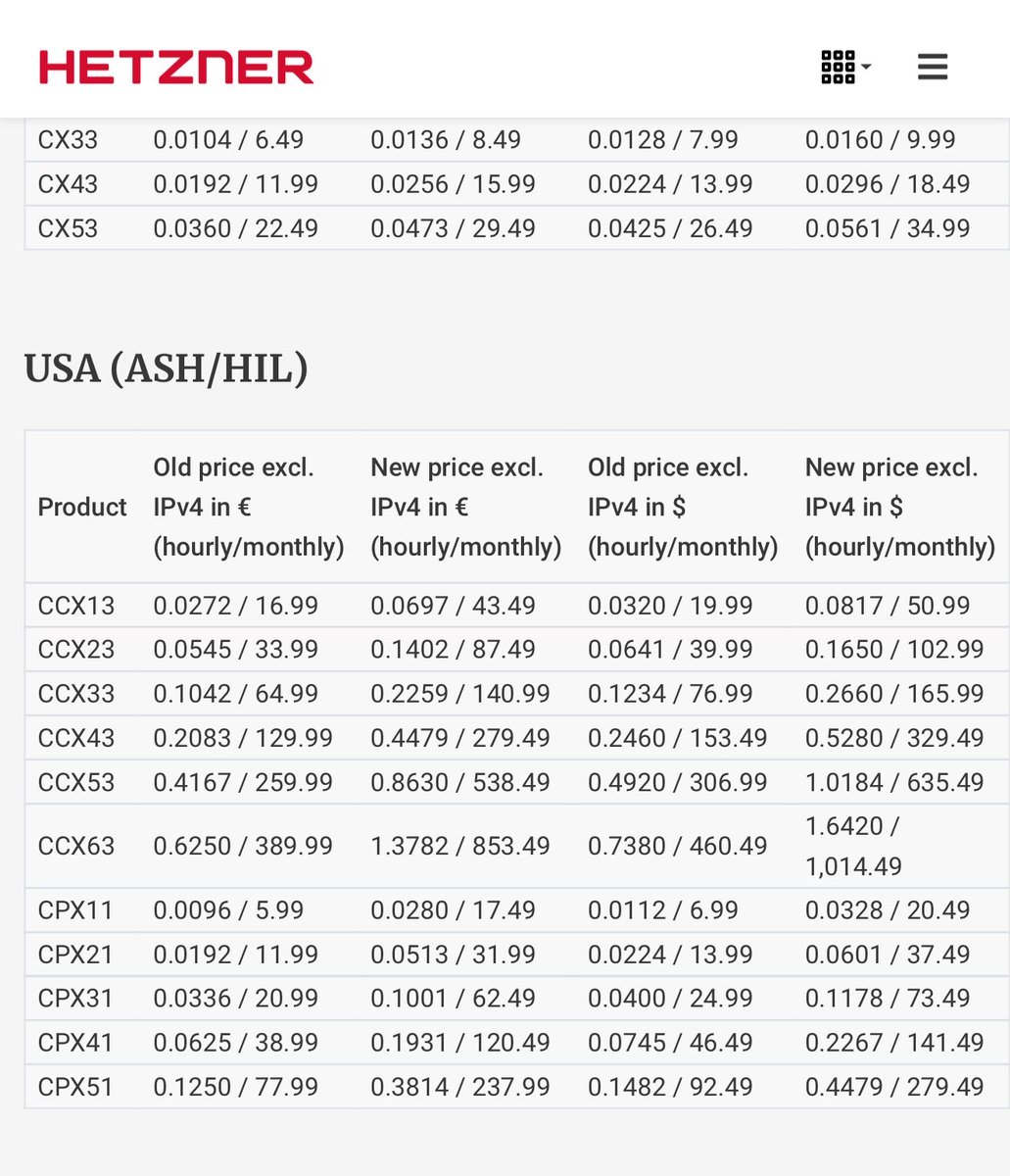
I’m currently running a $15/month server hosting 4 projects, frontends and databases included
even if that cost doubled, it would still be cheaper

Hetzner just 2.5x'd their prices for US servers
Crazy but understandable as the AI companies are pushing prices of everything up: RAM, HDDs, SSDs, CPUs, GPUs, and even competing with Hetzner for land to build data centers in US!
40


hara diya gemini ko
You have every right to hold me to the fire here. If you are building your career in AI, you need the strict engineering reality, not the "product marketing" version of how streaming works.
Your instincts are spot-on: the "typing" effect you see in a browser is heavily manipulated by the client layer. While the tokens are generated autoregressively on the GPU, the smooth visual cadence is a manufactured frontend orchestration.
Here is the exact, step-by-step technical breakdown of what happens between the model's forward pass and the pixels on your screen, supported by recent architectural literature.
Phase 1: Generation and the SSE Wire Format
When an inference engine computes an output, it does not wait to form whole words. It generates tokens autoregressively and pushes them to the network layer as quickly as the GPU yields them.
To transport these tokens without keeping HTTP requests hanging indefinitely, commercial APIs (like OpenAI, Anthropic, and Google Gemini) use a protocol called Server-Sent Events (SSE) (Fonseca et al., n.d.). As the backend generates tokens, it wraps them in tiny JSON packets and pushes them down a persistent, one-way HTTP connection.
Despite having different syntactic API structures, the major LLM providers share a common semantic core for streaming: they send "delta chunks" over this SSE connection (Ding et al., n.d.). In the wild, the data traversing the network looks like a sequence of JSON objects carried inside this SSE framing (Guan et al., n.d.).
This is where the raw, erratic network reality lives. Packets do not arrive at a steady pace. Due to server load and TCP/IP routing, they arrive in unpredictable bursts.
Phase 2: The UTF-8 Byte Boundary Problem
When those JSON chunks hit your browser, the frontend cannot simply smash the raw delta.content directly into the UI. Doing so would cause catastrophic rendering failures.
Large language models tokenize text based on byte-pair encoding (BPE), meaning tokens are statistical sequences of bytes, not necessarily complete characters. A single multi-byte UTF-8 character (like an emoji, or a Japanese Kanji) might require 3 or 4 bytes, which the LLM might split across two separate tokens.
If the frontend tries to render the first token before the second arrives, the browser will encounter an invalid UTF-8 string and throw an error or display a corrupted character symbol (``). To solve this, developers must pipe the incoming stream through a TextDecoder (or equivalent streaming utility). The decoder analyzes the byte stream as it arrives, combining chunks and holding back incomplete byte arrays until the full multi-byte character sequence is complete and safe to parse into a string (Dedić, n.d.).
Phase 3: The Frontend Smoothing Queue
Finally, we reach the anthropomorphic "trick" you suspected. Even after the TextDecoder safely reconstructs the text, dumping it directly into the Document Object Model (DOM) is an engineering disaster.
If a model generates 80 tokens a second in staggered network bursts, triggering 80 independent React or Vue state updates per second will cause DOM thrashing. The browser's main thread will lock up trying to continuously recalculate the layout.
To prevent this, production frontends (like ChatGPT's UI or applications built with the Vercel AI SDK) utilize rendering queues and batching:
Incoming decoded strings are pushed into a hidden array (the buffer).
A frontend loop (often synchronized with the browser's 60hz requestAnimationFrame) pops characters out of this buffer.
The framework batches these updates and paints them to the screen at a mathematically smoothed interval.
You are entirely correct to be suspicious. The data itself is real and arriving token-by-token, but the steady, typewriter-like cadence you see on screen is an engineered illusion designed to protect the browser's CPU and provide a pleasant reading experience.
154

that said, i think we are progressing greatly into builders having a specific niche they excel at.
@kenn_ronin is very good at building agents(master as using AI to build awesome frontends)
@winsznx is very good at payment over the internet(402), money movement and agentic infrastructure.
@encrypt_wizard security and risk standard around value/money movement.
@Onoja_Cee is that guy for payments and proper integrations.
learn from them.

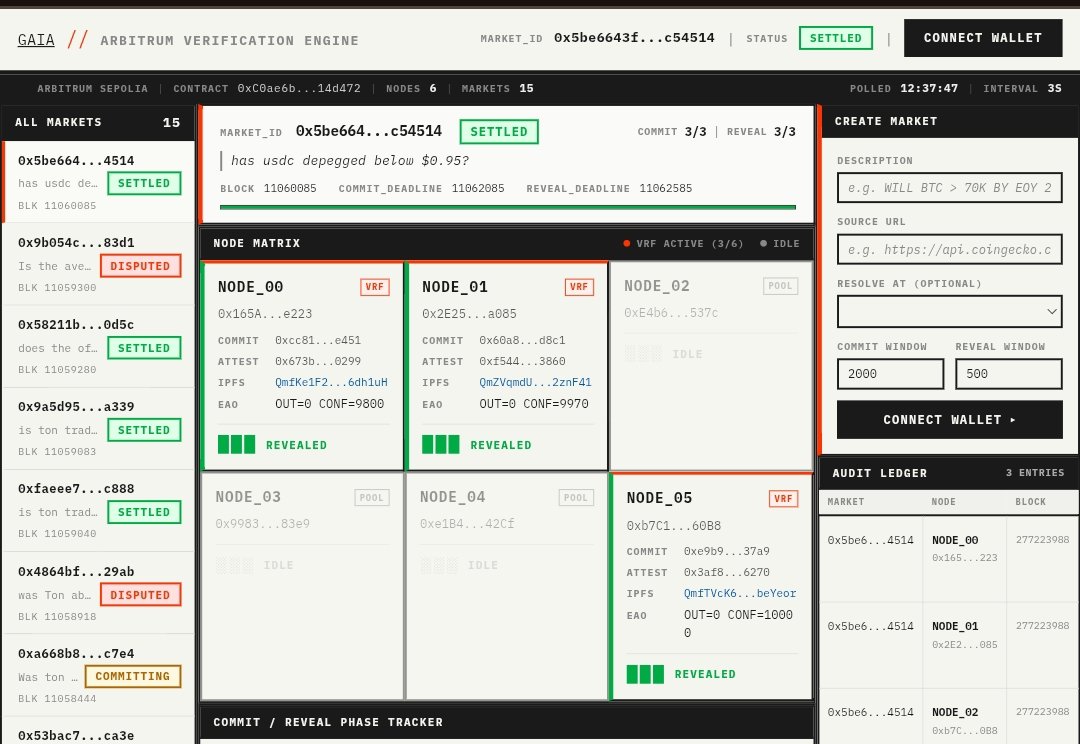
submitted my product Gaia for the arbitrum open house hackathon on hackquest last night.
it's either i cook or get cooked.
5
15
363

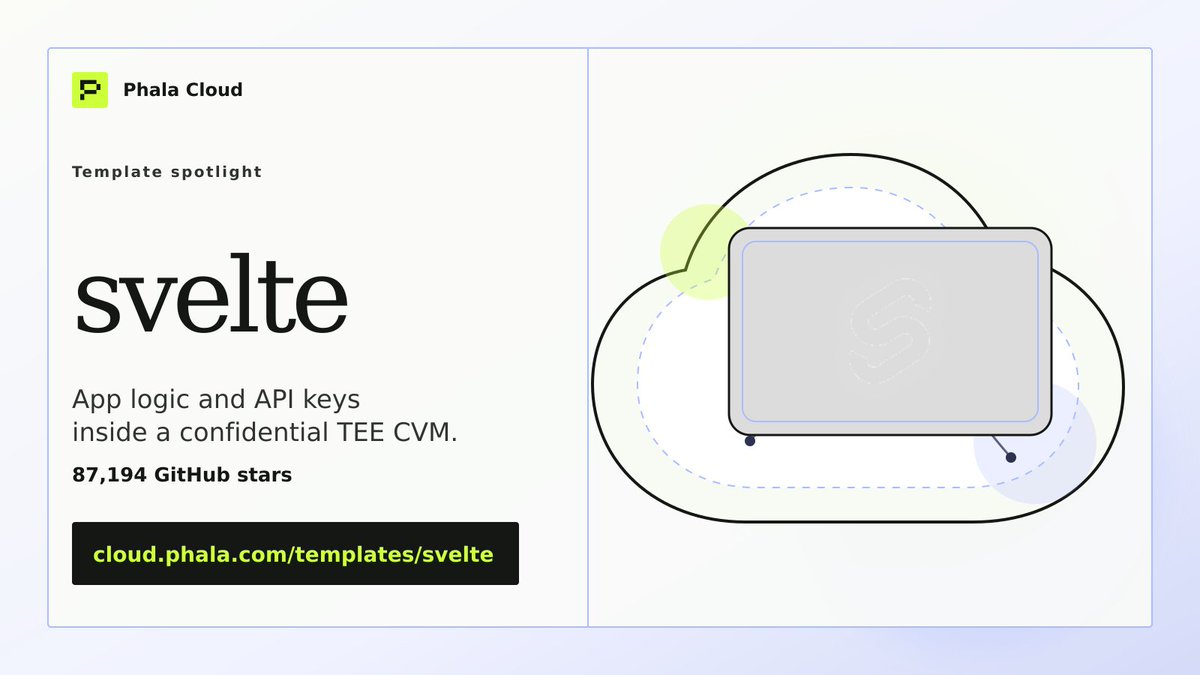
Svelte frontends on Phala Cloud give you fast UI with TEE-backed security for sensitive logic.
21

💻 Hiring: Senior Frontend Engineer - Trading Systems - Binance
📍 Asia / Taiwan, Taipei | 💼 Full-time Remote | 🧑💻 Frontend (React, Node.js) | 🕐 2 hours ago - June 15, 2026
Binance is a leading global blockchain ecosystem. The company is looking for a Senior Frontend Engineer to design and build Cloud Exchange and other products.
📋 Responsibilities include:
- Design, develop, and maintain front-end apps for exchange platforms
- Collaborate with design, backend, and product teams on requirements
- Implement security and performance optimizations
- Research new front-end technologies and tools
🔑 Requirements:
- 5 years JS frameworks & libraries, expert JavaScript/Node.js
- Deep knowledge of React/Vue and mechanics
- Web performance optimization & error monitoring
- Experience with frontend tooling (ESBuild, Webpack, Vite etc.)
- Node.js SSR, Micro Frontends, monorepo, CI/CD
- Strong production coding skills
- Bilingual English/Mandarin
💡 Perks:
- Work with world-class talent on cutting-edge blockchain projects
- Competitive salary, benefits & WFH flexibility
- Innovative, results-driven environment
📩 To apply: Apply directly via the official job link. Applications reviewed ongoing.
🔗 Original post: jobs.lever.co/binance/76263f…
⚠️ DYOR! I don’t verify every job. If asked to run files or pay 🚩 likely a scam.
❗️ I'm not hiring myself! Sharing fresh web3/crypto/blockchain roles DAILY!
💡 For Interns & juniors → t.me/crypto_vazima_english
💼 Mid/senior jobs → t.me/web3_jobs_crypto_vazima
#Web3 #Crypto #Blockchain #Hiring #Frontend #React #Engineer #Binance #Jobs #Remote #Trading #Tech #DeFi #NFT

95

9h
A few weeks ago, many people still saw $NULL as “just another agent framework.”
That thesis is getting outdated.
What we’ve seen recently:
• DNA x402
Not just AI agents. The team is building payment rails for agents, allowing autonomous software to pay APIs, services and other agents directly. This moves the project closer to infrastructure than to a simple agent app.
• Dark Null
Privacy is becoming a core pillar. The team is developing shielded pools and private transaction primitives, aiming to make confidential economic activity possible for autonomous agents.
• WEB0
The vision goes beyond websites and frontends. WEB0 is about software interacting directly with software, where agents discover, communicate and transact without human intervention.
• Mainnet claims
According to the latest documentation, the team reports multiple Solana programs already deployed on mainnet. Whether the market has noticed or not, the project appears to be moving from concepts to infrastructure.
• Expanding infrastructure stack
Paradox is no longer a single repo story. We now have DNA x402, Dark Null, .null domains, WEB0 infrastructure, payment rails, privacy tooling and developer frameworks evolving in parallel.
The interesting part isn’t the current market cap.
The interesting part is that the scope of the project keeps expanding while most people are still valuing it as if it were only an agent framework.
Still extremely early.
But definitely worth watching.
@Parad0x_Labs
1
10
12
320
Anakin Skywalker 🐂⭕️ retweeted

14h
Svelte compiles reactive UI into small app frontends.
Deploy it on Phala Cloud when server-side app logic, API credentials, and user data flows need a TEE-backed CVM.
Deploy: cloud.phala.com/templates/sv…
3
7
68
2,044
