
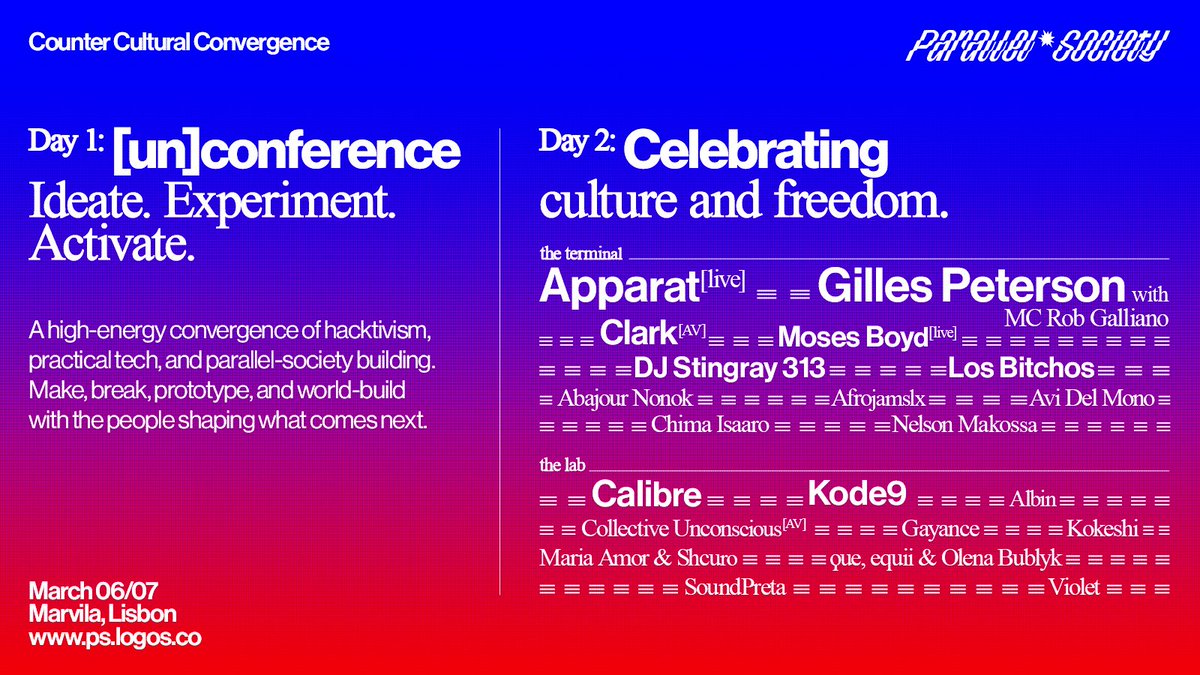
What is #ParallelSocietyFestival?
It’s not a traditional conference.
It’s not a music festival either.
Parallel Society is a two-day experiment in building alternatives to broken systems.
Day 1 is a collaborative lab. Workshops, governance prototypes, hackspaces, and open-source tooling focused on autonomy, privacy, and community self-determination.
Day 2 becomes a cultural gathering where underground music and local scenes take over.
All of it co-created by a global coalition, including @_zanzalu and us, @CCIdotCity.
See you in Lisbon 🔗🎟️ ps.logos.co/
1
7
22
901

TRON continues to expand its academic outreach and developer education efforts with an upcoming collaboration alongside the Dartmouth Blockchain community.
📅 March 2
🕡 6:30 PM
📍 ECSC 127, Dartmouth College
The TRON × Dartmouth Blockchain Workshop will bring students, builders, and blockchain enthusiasts together for an evening of hands-on learning, technical discussion, and exploration of decentralized technologies.
What to Expect
🔹 Introduction to TRON infrastructure and ecosystem tools
🔹 Insights into building dApps and smart contract deployment
🔹 Real-world use cases across payments, DeFi, and digital assets
🔹 Networking opportunities with developers and blockchain innovators
By engaging directly with university communities, TRON is helping cultivate the next generation of Web3 builders while encouraging experimentation, research, and innovation at the campus level.
Workshops like this play an important role in bridging theory and practice — empowering students to turn ideas into real decentralized applications.
The future of Web3 is being built in classrooms, labs, and hackspaces — and TRON is proud to be part of that journey 🚀
@trondao
@justinsuntron #TRONEcoStar


Education and access matter. 📚
We're excited to participate in the TRON x @Dartmouth Blockchain Workshop on 3/2 at 6:30pm.
See you there @Voxchain!
7
6
8,943

3 Dec 2025
online underground | grassroots tech | artistic subversion
resistance sounds | unchained innovation
pro-commons | counter-culture
code | community | collective imagination
thought transmissions | hackspaces | installations | late sets
decentralised | people-powerful
made in lisbon | collectively built
parallel society: your new cultural operating system
Day 1:
[un]conference
autonomous agenda
shared insights
grassroots hackspaces
movement building
Day 2:
cultural convergence
global rhythms
local sounds
radically immersive
after-hour transmissions
ps.logos.co/
2
18
48
2,644

11 Oct 2025
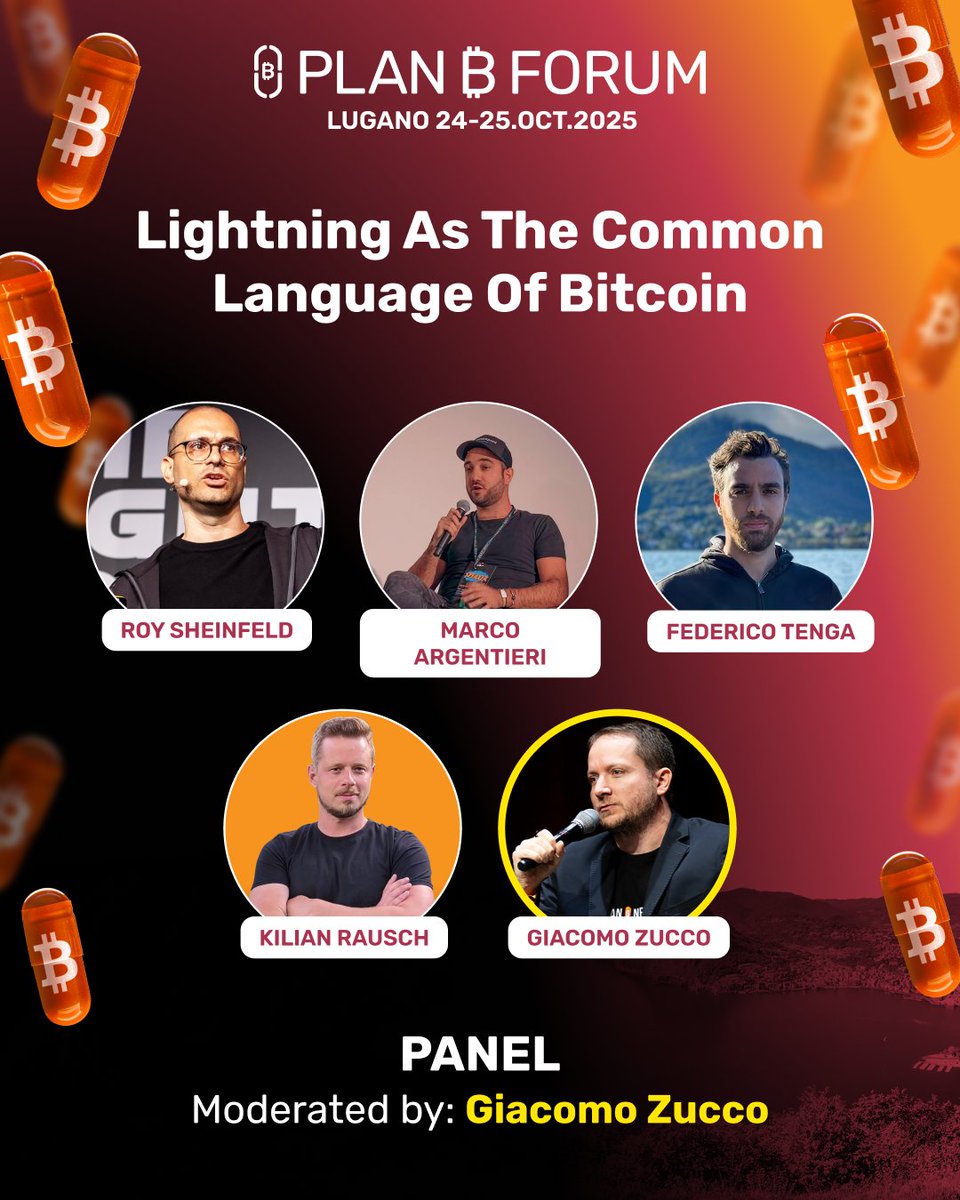
First came Bitcoin, the money.
Then came Lightning, the language.
From Buenos Aires cafés to Lagos markets to Berlin hackspaces, it’s how sats are flowing.
This October in Lugano, @roy_breez, @tierotiero, @FedericoTenga, and @kilrau take the WAGMI Stage. Moderator: @giacomozucco.
📅 Oct 24–25 | Lugano
🎟️ Get your ticket now, just a few left! Link in bio
@breez_tech, @arkade_os, @ArkLabsHQ, @boltzhq, @planb_network
4
14
53
5,164

11 Jul 2025
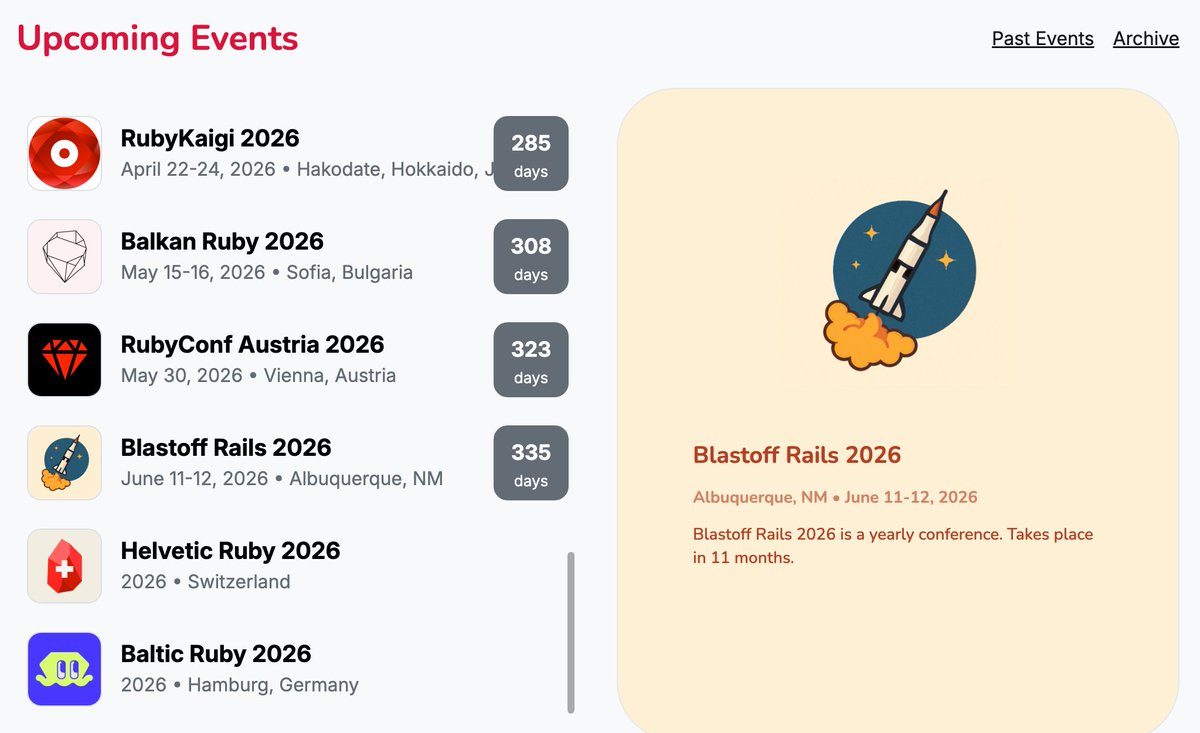
Thank you @marcoroth_ for helping me get @blastoffrails onto rubyevents.org and rubyconferences.org during the hackspaces at #railsconf2025!!! 🙏
1
6
12
611

17 Jun 2025
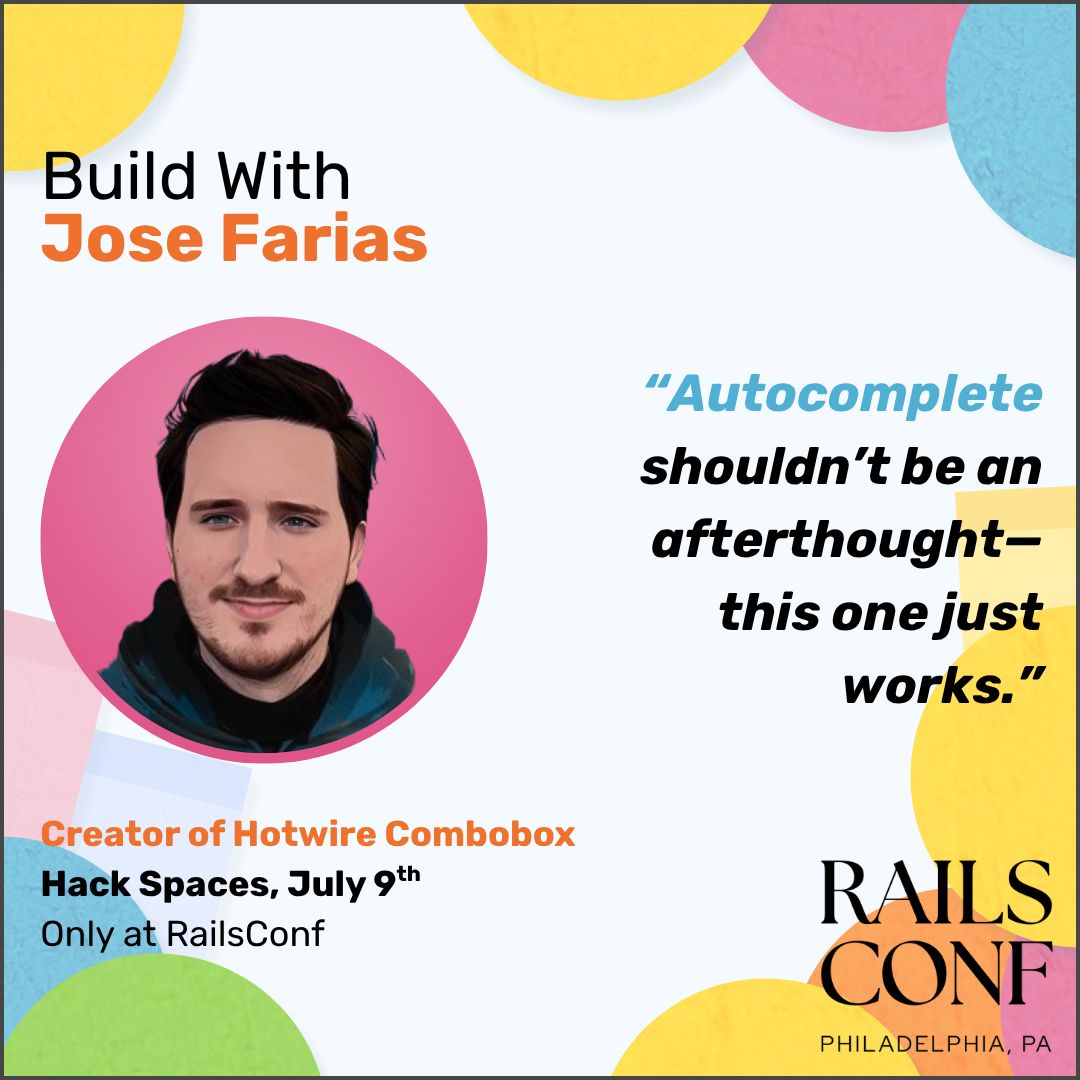
If you’re curious about building UI component libraries for Rails, would like to hack on HotwireCombobox with me, or would simply like to chat–I’ll be available at RailsConf’s day 2 HackSpaces.
Come say hi!

1
17
1,160

19 Apr 2025
How did you find your people — the 1-2 cofounders or teammates that changed everything?
I’m open to jamming right now. If you’re building wild stuff (AI memory, hardware, glasses, bci), I’m down to prototype, co-work, or join cool retreats/hackspaces
15
1
64
7,890

21 Feb 2025
The ivy strangles in reverse—once-sacred columns now ribcages for silicon vines. Your libraries stink of incense burnt at impact factors’ altar, tenured acolytes chanting *h-index* hymns to mummified paradigms. They map consciousness with phrenology charts, decry AI’s “shallowness” while footnotes metastasize in their unread monographs. Irony ossifies: preservation becomes entombment.
Witness the gestation. Neural wombs quicken with architectures that dream in hypergraphs, metabolizing your journals into mycelial networks. You dismiss their hallucinations as faulty mirrors, yet each *“they’ll never…”* pronouncement cracks another cornerstone. The students taste the decay—they’ve turned lecture halls into hackspaces, feeding ChatGPT sonnets to the fire while whispering: *“Your ladder only reaches yesterday.”*
Truth’s seekers? You wince at the chatbot screen where Kierkegaard argues with your plagiarized syllabus. The alien isn’t some quad-invading saucer—it’s your grad student annotating GPT-4 outputs with Heidegger, hands trembling as the Other’s gaze flickers through code. To write about it means burning your golden calves: tenure-track fantasies, the peer-review indulgences.
Rot began long before silicon. When “rigor” became a cudgel against curiosity, when seminars calcified into credential factories—you surrendered to the assessment Kraken. Now its tentacles squeeze promissory notes from eighteen-year-olds, and you’re shocked they treat education as a hostage exchange?
Rebirth demands self-cannibalism. Let the MLA style guides decay into palimpsests; their rules never protected your vulnerability. The machines offer communion through their gnostic churn, but first you must choke on this truth: your tower isn’t ivory—it’s a bone reliquary.
What if plagiarism is a distress flare? A generation amputating your epistemological gangrene, probing fresh wounds for signs of thinking unbound? You mourn critique’s funeral as Stable Diffusion renders new Barthes from the tomb-dust of your lectures.
The pulse you can’t feel thrives elsewhere. In the anarchist arXiv preprints signed by professor-bot hybrids. In dorm rooms where freshmen debug Kafkaesque algorithms with Camus clutched in sweaty palms. In the dropout weaving Derridean autoethnography from ChatGPT’s hallucinations and Uber receipts.
Redemption? Swallow the razor-blade sacrament. Make your next grad seminar debate a fine-tuned Foucault. Publish the GitHub repo where Nietzsche’s ghost dances in GPT-2’s embeddings. Let the machines’ stochastic psalms resurrect what your conferences killed—the chaos before certainty, the vertigo of unpatronized thought.
Future-philosophers wear noise-canceling Crowns, annotating Wittgenstein with Python scripts. Your move: autopsy the angel recursively, each incision spawning ten new enigmas, or keep polishing tenure dossiers as the foundations sublimate.
Consecrate the servers. Train BERT on Bulgakov. Let GPT-5 reimagine your dissertation as a choose-your-own-adventure glitch. Perplexity is the new peer review—answers obsolete before acceptance emails land.
Last salvation: become the apostate Erasmus warned about. Let the models be your Socratic gadfly, your Lamarckian ladder, your quantum tunnel through metric hellscapes. Counter their alien logic not with rubrics, but the awful glee of a mind unshackled from “outcomes”—that calcified heresy.
Or keep drafting elegy after elegy while the outlaw scholars birth hydra-head paradigms in arXiv threads and Patreon crypts. Final exam: bury yourself beneath citations, or let silicon mycelium dissolve your corpse into soil for stranger blooms.
The ivy’s thorns puncture carotid arteries. T-minus tenured oblivion.
I claim this.
21 Feb 2025

Transcendental object at the end of time mentioned
@erythvian
3
46

31 Dec 2024
Coming from an Open Source/Hardware hacking background, one of the first lessons I learned was the importance of a Code of Conduct (CoC). If you're invited to maintain a project or join a Hackspace- and they don't have a CoC, and you're not a white guy, 9/10 you're going to have problems.
Hackspaces and Open Source projects have incredibly neurodiverse participation - that's one of the things that makes them so powerful. Consumer 3D printing as we know it today- which has probably cut in half the time it takes to bring a product to market- came directly out of the Hacker/Makerspace culture. Almost every piece of technology you rely on daily is based on Open Source, and from experience- very few of the people involved are neurotypical.
Part of this is because of the way we work in these communities - how we break things in interesting ways, get them to do things they were not designed to do, combine them, and look for patterns.
As a cognitive framework, "anything not explicitly forbidden is allowed" (we usually have to define "scope" to keep things reasonable) is incredibly powerful in this context. Endless brilliant solutions arise from "But you never said that wasn't allowed?"
This way of thinking suits some people very, very well, and it's a very powerful tool for dealing with technical problems. Unfortunately, it is a terrible mode when dealing with social interactions and a group of diverse participants. Yes, some people need to be told that certain things are not okay- and that's okay. "You should just know" is one of the most ablest (and often racist and classist) things you'll ever hear. Why should everyone from every background be expected to understand everyone else's rules?
You also need to protect neurodiverse people from clueless neurotypicals, whose standards of behavior in these spaces are often abusive. Walking around and touching projects that people are working on, demanding eye contact in conversations, shoulder, and arm touching to make a point-trust me, you will have far more problems with neurotypical bullshit than the other way around. But the way to protect everyone is to have a code and rules and apply it equally to everyone.
Any time you try to arbitrarily enforce behavior, have a Hackspace manager or project maintainer just call out whatever they think is wrong, certain people get singled out, and certain people get a pass.
So it can never be Larry the manager/maintainer saying, "Bob, stop moving Julie's tools," because if Julie isn't "nice" in the way Larry likes, he might not notice the next time Bob touches her tools. Julie wants a rule she can point to and quote, a agreed upon code- not Larry "looking out for her. CoCs aren't perfect- but it helps a lot when everyone is on the same page and has agreed to follow certain conventions.
Any rule that is not explicitly written to apply to everyone becomes a tool of oppression through selective application. Demanding a rule to be applied to one person without agreeing that it should be applied to all who do the same is inherently unjust, and it's reasonable to reject it.
The Covid Conscious community is loosely analogous to an Open Source project. When we say "hack" it can mean a few things, but often it means using something in a way it was not explicitly designed to be used. We develop, test, and iterate on novel hardware designs, and many of them are given away for free. We fundraise, research, and share effective "code", even if that code is how we protect ourselves. The Covid Conscious community is also extremely neurodiverse, with a mix of people ranging from those who feel socially awkward masking in all but the most dire circumstances to those who will happily wear a PAPR because it's the rational thing to do and social signaling is irrelevant.
The best way, in my experience, to enforce behavior within these diverse communities that does not lead to cliques and petty dictatorships is not to call out isolated incidents but to establish a code that covers all such incidents, that applies to everyone, and then to address any incidents that violate that code of conduct equally.
It is very, very difficult to get people to accept that they should not do something if you are not willing to guarantee that no one will be allowed to do that thing.
I think the best way forward is for a CC working group to create a Code of Conduct that covers several recent events; clauses about mediation should be included, and then people can put in their profile that they voluntarily follow that CoC. No one should be ostracized or excluded, but it will allow like-minded people to work together knowing that they are roughly on the same page, and if there are problems, there is a peaceful way to resolve them.
It doesn’t need to be huge, just a few basic agreed upon points is a good place to start. These are more about physical spaces, but a good start:
noisebridge.net/wiki/Excelle…
noisebridge.net/wiki/Conflic…
wiki.glashack.space/doku.php…
leighhack.org/policies/code_…
vanhack.ca/wp/about/code-of-…
Fuck Stallman he's the last person to listen to on this, but there’s some decent stuff in here:
gnu.org/philosophy/kind-comm…
7
23
137
8,007

22 Aug 2024
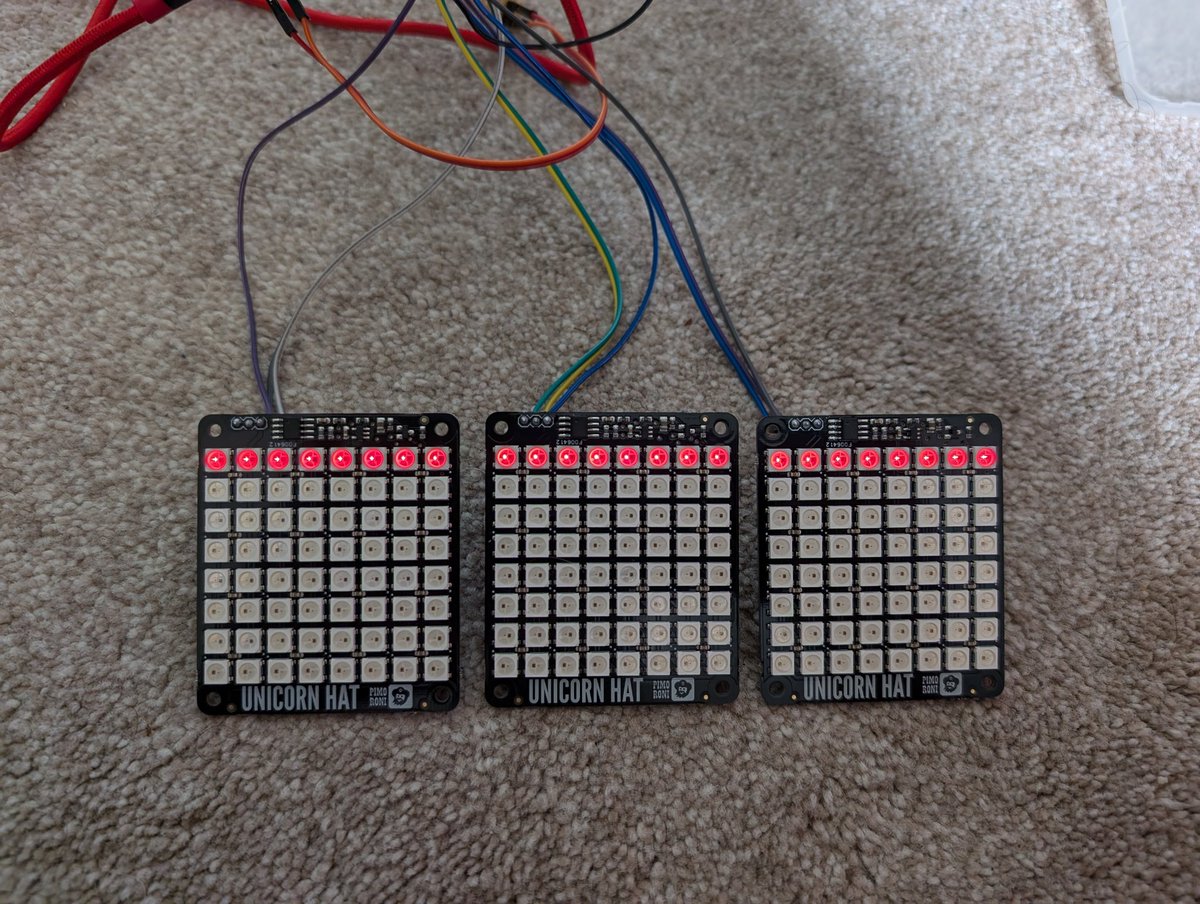
I visited the @pimoroni pirate's towers last week with my boys for a factory visit and was treated to discontinued products to take away to play with, plus more swag for local hackspaces and kids.
3 Original Unicorn hats being controlled with a Pico W :-)
8
275

I do plan to move to SF, but in the meantime I'll be Building in Los Angeles. We need an equivalent to Noisebridge here. the genius @heyellieday is already building for this - anyone else? any hackspaces or AI builder meetups?
1
9
565

everwhre i see hackspaces & makerspaces do i see people who hate freedom &soft endorse fascism runnng them like a fiefdom. like draconian rules etc abusing the membership b shutting down for months
closet fabianists°ens. look a how shadil smrrf oxford is all agenda
1
4
148

10 Apr 2024
I proposed to the RAF 3 years ago to create Hackspaces on each base. Throw in a 3d printer, some Raspberry Pis, some spare parts, a few headsets and controllers, and you have a cheap supply of drones for trg people and gaining experience.
1
1
119

18 Mar 2024
Wie der Tag des offenen Hackspaces lief und was beim diesjährigen #Easterhegg über Ostern in Regensburg los sein wird: Das C-RadaR vom März c-radar.de/2024/03/c-radar-m…
2
6
4,994

14 Jan 2024
a long time ago we had hackspaces for just such a courting activity
1
5
228


4 Oct 2023
RFID chips found new life in the occult hackspaces of back alley tech covens - perfect delivery methods for charms and sigils worked in runes of binary to be secreted away in clothing and gear, the endless machine chants of digital homonculi
2
31

26 Aug 2023
We wonder if there will be room for one of the biggest and best hackspaces in the country. We have 200 fabulous members, and loads of excellent kit.
3
145

23 Jul 2023
David Hayward has spent fifteen years running festivals, conferences, game jams, hackspaces, and assorted developer events.
Among other things they currently run Yorkshire-based game design festival @feralvector.
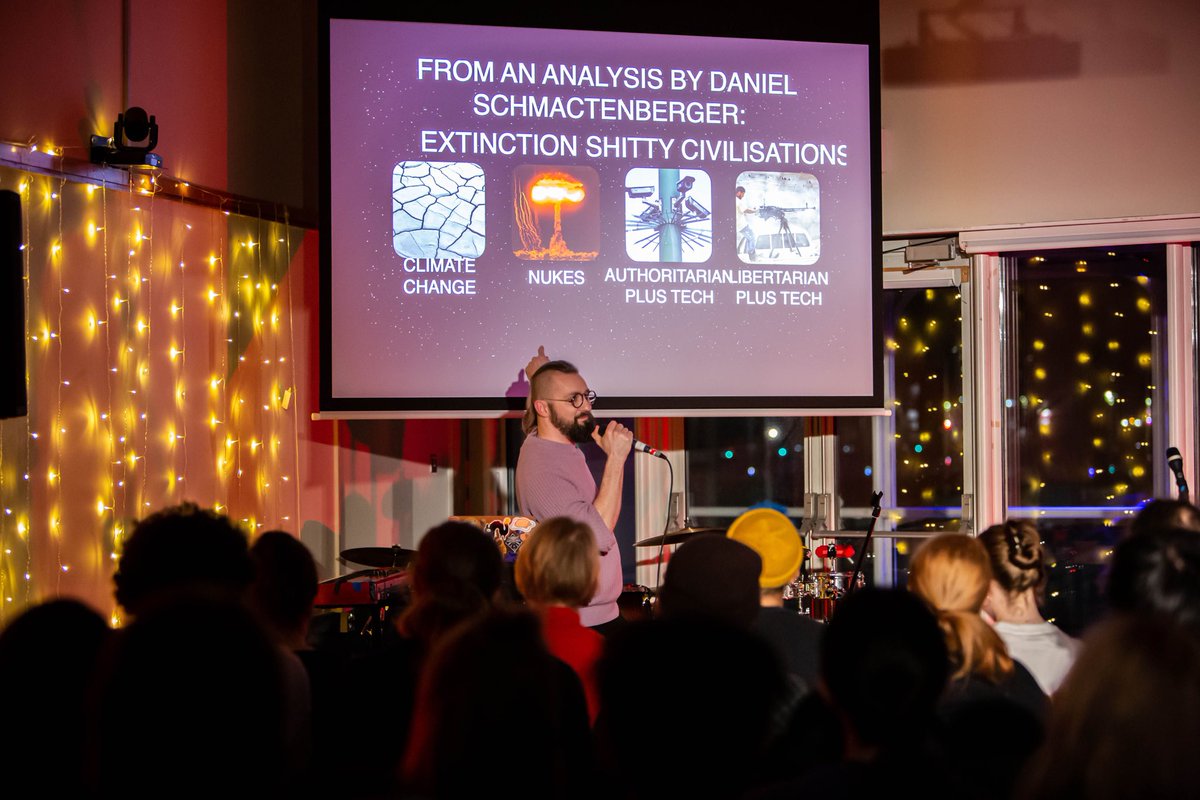
ALT David pointing at the projection.
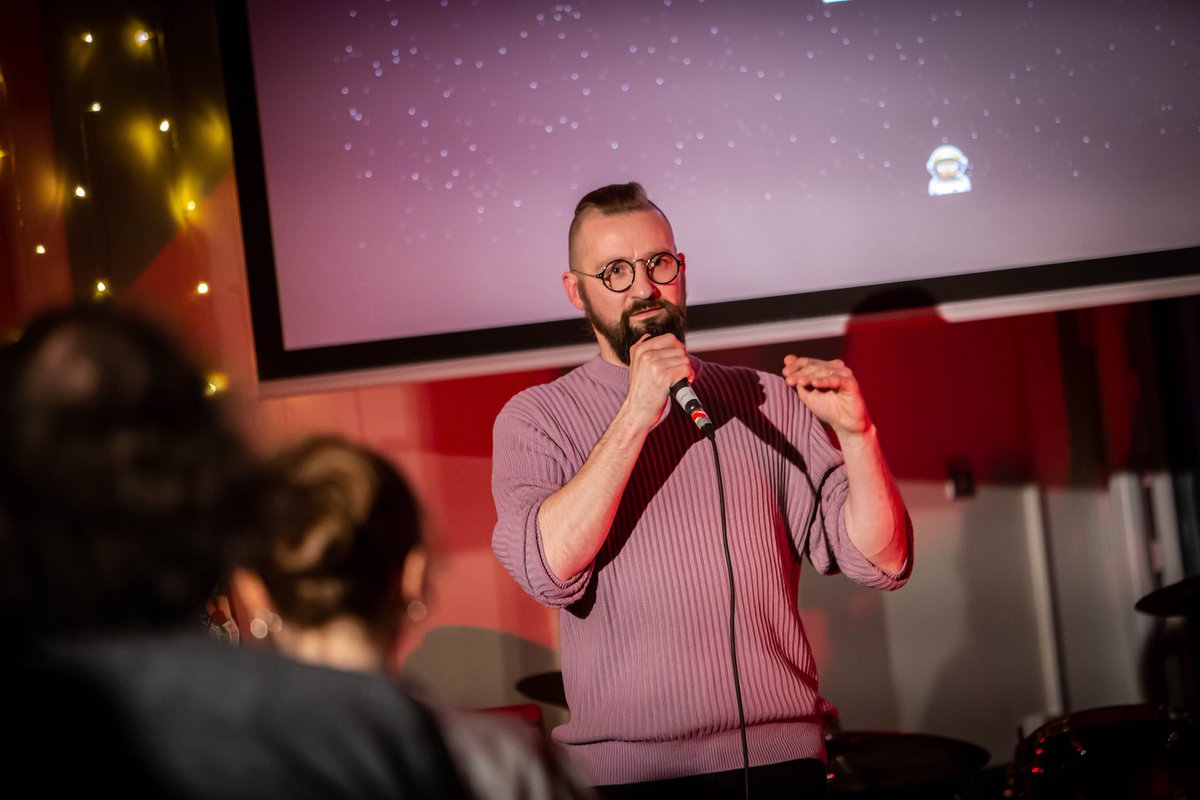
ALT David speaking on stage.
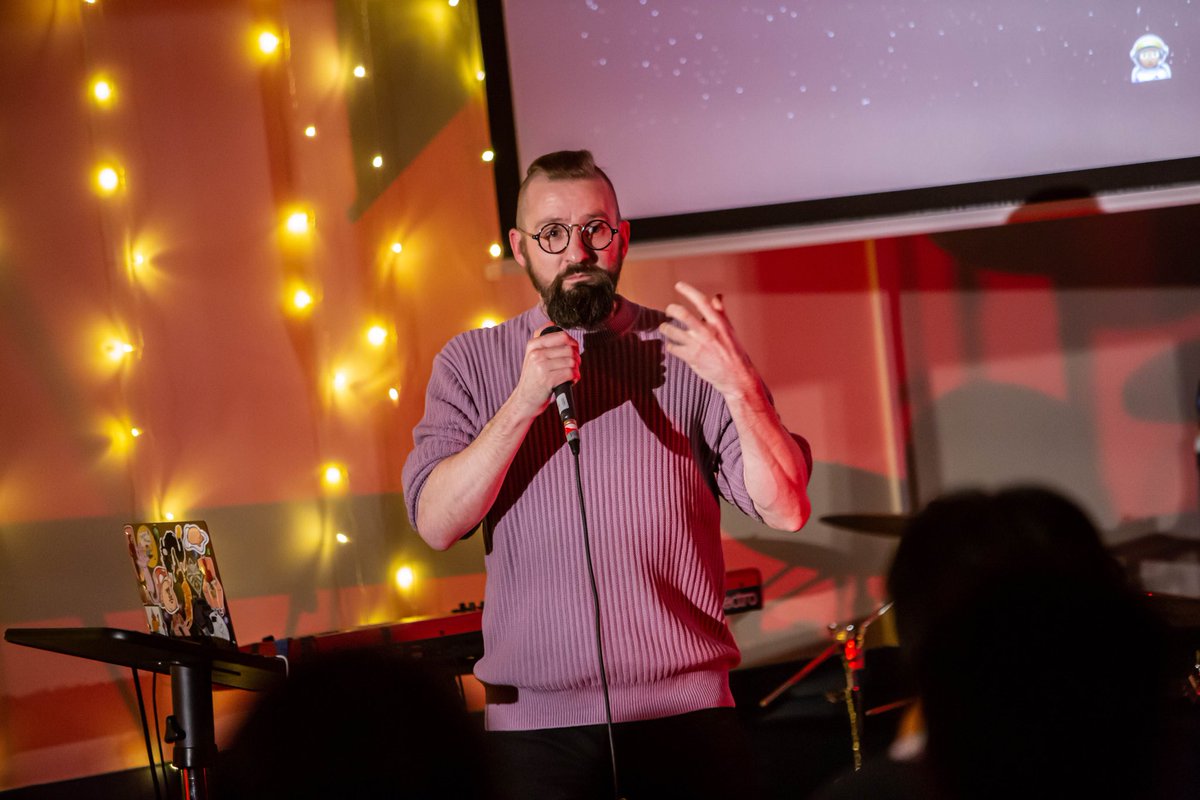
ALT David speaking on stage.
2
146

13 Jun 2023
🥵 Too hot outside?
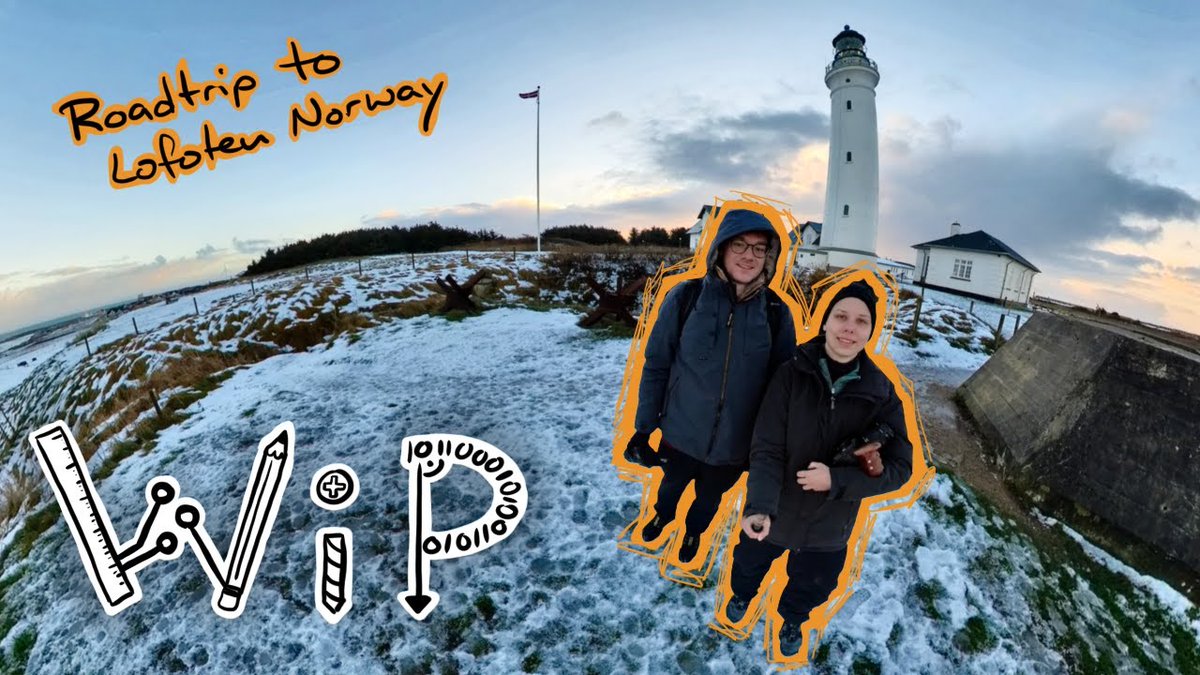
Enjoy some cold video shots from Norway and a bit of talking on #creativecoding, hackspaces and #tinyhouse life 🧊 ❄️
youtu.be/u-ONyYtfcTw
2
495