
May 21
Die had zijn kwakkie op de kachel moeten doen, dan liep hetnet met een sisder af
3
71

Jó reggelt 👀
Het zonnetje wil zo graag maar heeft echt moeite om door de dikke mist te komen.
Wie weet gaat hetnet lukken vandaag.
#blijfgenieten #liefleven #Hongarije

13
1
31
680

21 Oct 2025
The main compression method here is not about resolution shrinking though, that's a speculative digression.
though I believe that we need some more abstract high-level representation if we want to maximize density
@main_horse what do you think after your HetNet experience?
1
3
613


5 Aug 2025
TargetScanHumans 8.0
TargetScan predicts biological targets of miRNAs by searching for the presence of conserved 8mer, 7mer, & 6mer sites that match the seed region of each miRNA.
targetscan.org/vert_80/
github.com/biobricks-ai/targ…
github.com/biobricks-ai/targ…
Biobricks.ai transforms TargetScan into parquet files.
targetscan.org/cgi-bin/targe…
MirGeneDB 3.0
The curated microRNA Gene Database
MirGeneDB 3.0 (Clarke and Hoye et al. 2024 )academic.oup.com/nar/article… includes more than 21,000 microRNA gene entries representing more than 1,700 microRNA families from 114 metazoan species. All microRNAs can be browsed, searched & downloaded.
mirgenedb.org/
mirgenedb.org/information
miRBase
The microRNA database
The archive for microRNA sequences & annotations.
mirbase.org/
Scalable Precision Medicine Open Knowledge Engine (SPOKE)
spoke.ucsf.edu/home
SPOKE-RDF
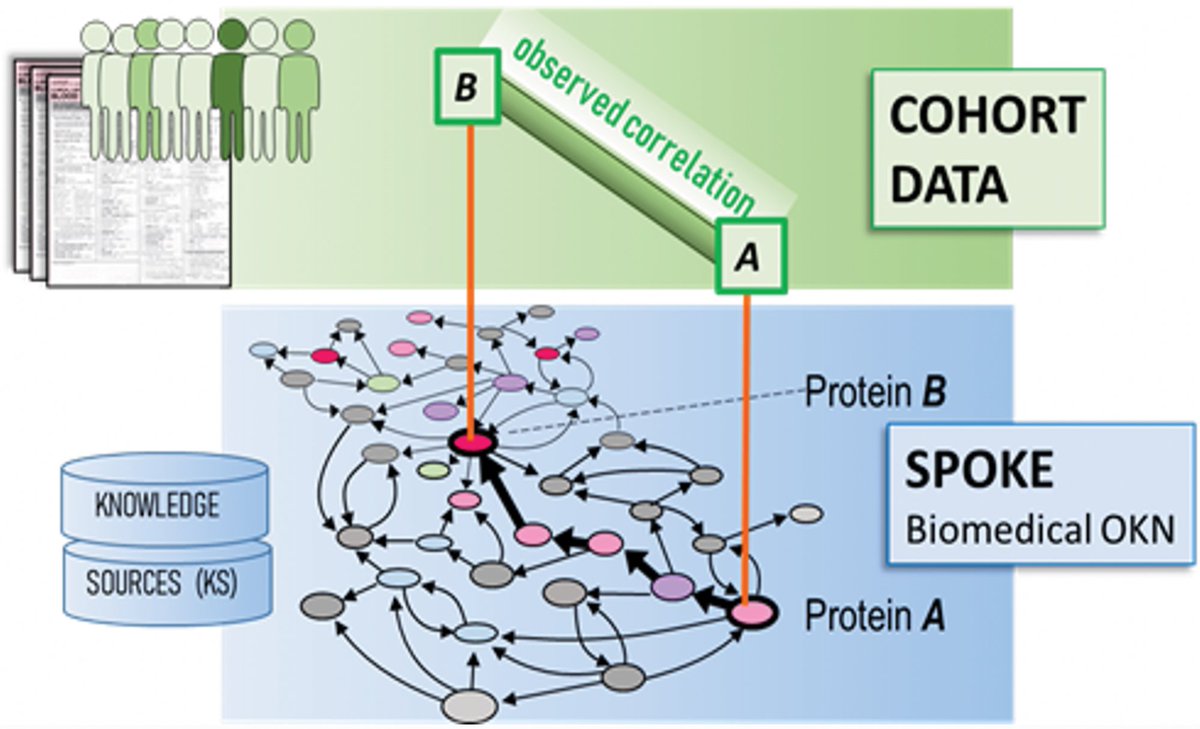
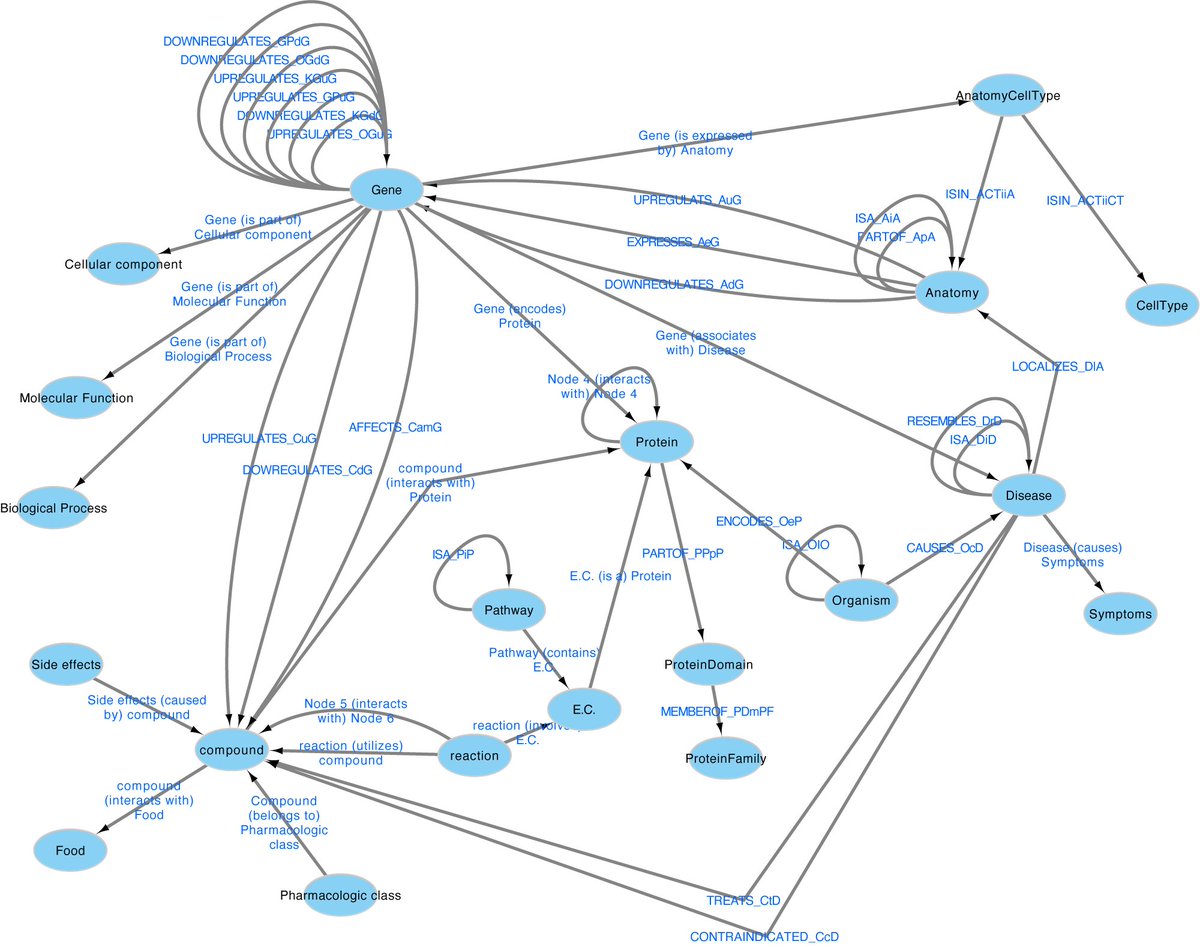
An RDF version of the Scalable Precision Medicine Open Knowledge Engine (SPOKE), a biomedical Knowledge Graph (KG) connecting millions of concepts via semantically meaningful relationships.
github.com/biobricks-ai/spok…
📃 Biomedical knowledge graph-optimized prompt generation for large language models
Here, we introduce a token-optimized & robust Knowledge Graph-based Retrieval Augmented Generation (KG-RAG) framework by leveraging a massive biomedical KG (SPOKE) with LLMs such as Llama-2-13b, GPT-3.5-Turbo, and GPT-4, to generate meaningful biomedical text rooted in established knowledge.
academic.oup.com/bioinformat…
github.com/BaranziniLab/KG_R…
SPOKE Knowledge Graph (KG) Neighborhood
spoke.rbvi.ucsf.edu/neighbor…
SPOKE REST AI Swagger
spoke.rbvi.ucsf.edu/swagger/
Project Rephetio
Repurposing drugs on a hetnet
The hetnet was designed for Project Rephetio, which aims to systematically identify why drugs work & predict new therapies for drugs.
think-lab.github.io/p/rephet…
📃 Systematic integration of biomedical knowledge prioritizes drugs for repurposing
git.dhimmel.com/rephetio-man…
What is a "hetnet"?
A network (also known as a graph) is a conceptual representation of a group of things — called nodes — & the relationships between them — called edges. Typically, a network has only one type of node & one type of edge. But in many cases, it is necessary to be able to distinguish between different types of entities & relationships.
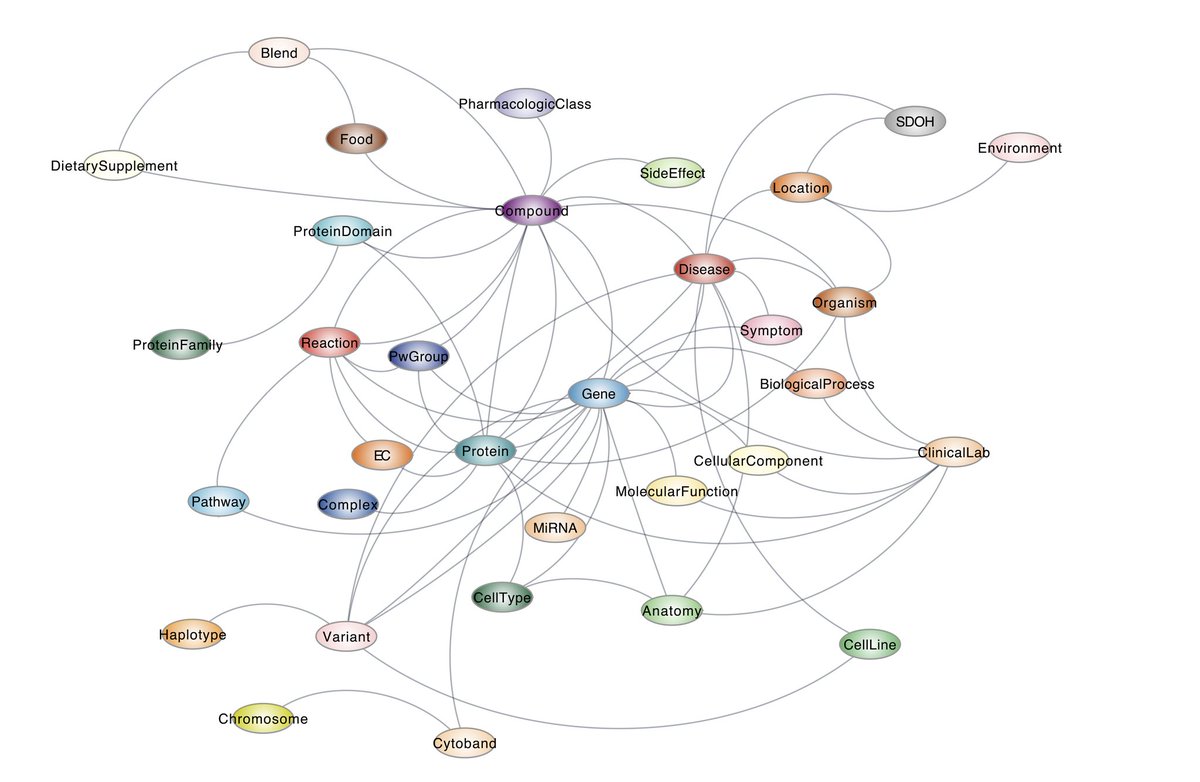
A hetnet (short for heterogeneous information network) is a network where nodes & edges can be multiple types. This additional dimension allows a hetnet to accurately describe more complex data. Hetnets are particularly useful in biomedicine, where it is important to capture the conceptual distinctions between various components & mechanisms, such as genes and diseases, or upregulation & binding.
het.io/about/#what-is-a-hetn…
Hetionet
Hetionet is an integrative network of biomedical knowledge assembled from 29 different databases of genes, compounds, diseases, and more. The network combines over 50 years of biomedical information into a single resource, consisting of 47,031 nodes (11 types) & 2,250,197 relationships (24 types).
het.io/
github.com/hetio/hetionet#li…
Hetionet in Neo4j
Neo4j is a database designed for hetnets (graphs w/ multiple node or relationship types). You’re currently interacting w/ Hetionet through the Neo4j Browser, which provides a web interface to the database. This is a read-only instance, so you can’t modify the network. However, you can run queries & explore the network.
neo4j.het.io/browser/
Hetnet Connectivity Search
het.io/search/
Hetnets in Python
github.com/hetio/hetnetpy
📃 Heterogeneous Network Edge Prediction: A Data Integration Approach to Prioritize Disease-Associated Genes
journals.plos.org/ploscompbi…
📃 Hetnet connectivity search provides rapid insights into how biomedical entities are related
academic.oup.com/gigascience…
📃 The probability of edge existence due to node degree: a baseline for network-based predictions
XSwap Edge Probability Baselines
academic.oup.com/gigascience…
11 Jul 2025

Check this out.
BioBricks.ai
Managed Public-Health Data Assets
To install BioBricks and get the HUGO gene nomenclature brick.
The asset is now available for import in languages like R and Python.
biobricks.ai/
Documentation
docs.biobricks.ai/
Command Line Interface (CLI) for building biobricks
docs.biobricks.ai/1_cli.html
Biobrick assets
biobricks.ai/search?query=
📄 BioBricks.ai: A Versioned Data Registry for Life Sciences Data Assets
arxiv.org/abs/2408.17320
PDF DOWNLOAD
arxiv.org/pdf/2408.17320
1
8
9
786

7 Jun 2025
Ach lieverd wat hetnet dat goed beschreven. De dag zelf was OK maar de day after een rot dag. Zo zwaar. Haast niet te doen. Ik voel met jullie mee, voel de zwaarte over me heen komen bij het lezen van jouw stuk. Niet fijn hoor. Zo beeldend kan jij dus schrijven. #Jorritdag
1
1
82



2 Mar 2025
Het zal wel wennen zijn. Ook alweer je dat ze heel goed terecht komen, ze hadden hetnet beter kunnen treffen . Maar wat zul je ze missen . 😿
5
92

20 Jan 2025
Weer een geitenpaadje, wrs. duurt hetnet zo lang als de regeringsdeelname van BBB. Volgende regering mag de "shit" opruimen, letterlijk en figuurlijk..
1
4
66

20 Jan 2025
Een eigen internet is een heel oud ideetje van wijlen Wim Dik van KPN. Destijds werd het geïntroduceerd als HetNet. Het fungeerde als een soort digitaal kikkerbadje dat niet was verbonden met de grote boze internet-buitenwereld. Het zal je niet verbazen dat Wim Dik prominent lid was van D66.
HetNet werd geen succes. Vanaf de eerste dag waren er slimme zakelijke jongens die erin sprongen met een gateway: een betaalde service die het mogelijk maakte om via HetNet naar het ‘echte’ internet te gaan. Maar die konden dan de reclame van de adverteerders niet zien die Dik had binnengehaald.
Na een paar maanden werd het kikkerbadje opgeheven en werd HetNet een gewone internetaanbieder. Inmiddels opgegaan in het grote KPN, zoals heel veel KPN-dochters, zoals Telfort en Xs4all.
2
14
881

2 Jan 2025
Wij met KPN. Op glasvezel. Werkt praktisch altijd. Reden: ik wil mijn hetnet emailadres niet kwijt.
1
4
206

18 Dec 2024
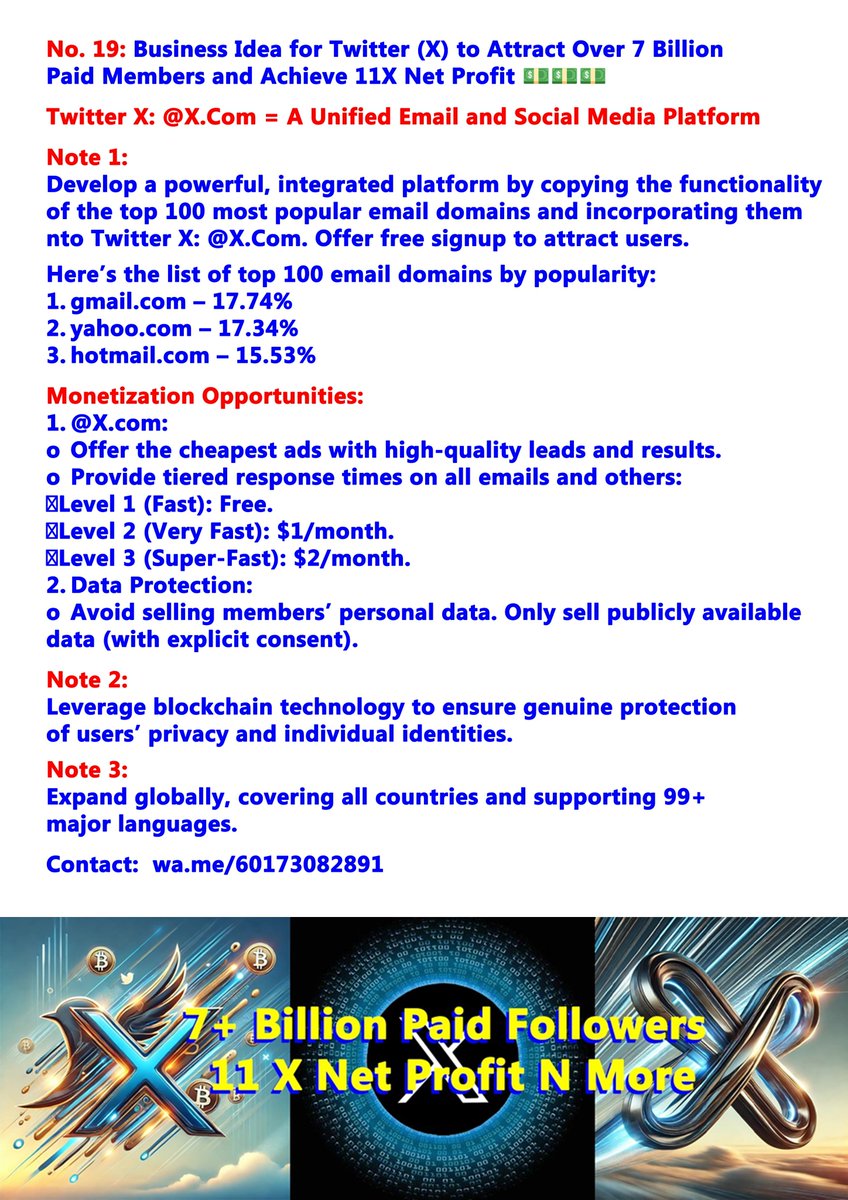
No. 19: Business Idea for Twitter (X) to Attract Over 7 Billion Paid Members and Achieve 11X Net Profit 💵💵💵
Twitter X: @ X .Com = A Unified Email and Social Media Platform
Note 1:
Develop a powerful, integrated platform by copying the functionality of the top 100 most popular email domains and incorporating them into Twitter X:
1. @ X .Com. Offer free signup to attract users.
Here’s the list of top 100 email domains by popularity:
gmail .com – 17.74%
163 .com
Sina .com
500mail
netEase
yahoo .com – 9.34%
hotmail .com – 8.53%
aol .com – 3.2%
hotmail .co.uk – 1.27%
hotmail .fr – 1.24%
msn .com – 1.09%
yahoo .fr – 0.98%
wanadoo .fr – 0.9%
orange .fr – 0.83%
comcast .net – 0.76%
yahoo .co.uk – 0.73%
yahoo .com.br – 0.69%
yahoo .co.in – 0.6%
live .com – 0.56%
rediffmail .com – 0.51%
free .fr – 0.51%
gmx .de – 0.44%
web .de – 0.43%
yandex .ru – 0.42%
ymail .com – 0.41%
libero .it 0.38%
outlook .com 0.38%
uol .com.br 0.34%
bol .com.br 0.33%
mail .ru 0.32%
cox .net 0.25%
hotmail .it 0.25%
sbcglobal .net 0.24%
sfr .fr 0.23%
live .fr 0.23%
verizon .net 0.22%
live .co.uk 0.21%
googlemail .com 0.2%
yahoo .es 0.2%
ig .com .br 0.19%
live .nl 0.19%
bigpond .com 0.18%
terra .com.br 0.17%
yahoo .it 0.17%
neuf .fr 0.17%
yahoo .de 0.16%
alice .it 0.16%
rocketmail .com 0.15%
att .net 0.15%
laposte .net 0.15%
facebook .com 0.15%
bellsouth .net 0.15%
yahoo .in 0.14%
hotmail .es 0.13%
charter .net 0.12%
yahoo .ca 0.12%
yahoo .com.au 0.12%
rambler .ru 0.12%
hotmail .de 0.11%
tiscali .it 0.1%
shaw .ca 0.1%
yahoo .co.jp 0.1%
sky. com 0.1%
earthlink .net 0.09%
optonline .net 0.09%
freenet .de 0.09%
t-online .de 0.09%
aliceadsl .fr 0.08%
virgilio .it 0.08%
home. nl 0.07%
qq .com 0.07%
telenet .be 0.07%
me .com 0.07%
yahoo. com. ar 0.07%
tiscali. co uk 0.07%
yahoo .com.mx 0.07%
voila .fr 0.06%
gmx .net 0.06%
mail .com 0.06%
planet .nl 0.06%
tin .it 0.06%
live .it 0.06%
ntlworld .com 0.06%
arcor .de 0.06%
yahoo .co.id 0.06%
frontiernet .net 0.06%
hetnet .nl 0.05%
live .com.au 0.05%
yahoo .com.sg 0.05%
zonnet .nl 0.05%
club-internet .fr 0.05%
juno .com 0.05%
optusnet .com.au 0.05%
blueyonder .co.uk 0.05%
bluewin .ch 0.05%
skynet .be 0.05%
sympatico .ca 0.05%
windstream .net 0.05%
mac .com 0.05%
centurytel .net 0.05%
chello .nl 0.04%
live .ca 0.04%
aim .com 0.04%
bigpond .net.au 0.04%
Monetization Opportunities:
@ X .com:
1. Offer the cheapest ads with high-quality leads and results.
2. Provide tiered response times on all emails and others:
Level 1 (Fast): Free.
Level 2 (Very Fast): $1/month.
Level 3 (Super-Fast): $2/month.
3. Data Protection:
Avoid selling members’ personal data. Only sell publicly available data (with explicit consent).
Note 2:
Leverage blockchain technology to ensure genuine protection of users’ privacy and individual identities.
Note 3:
Expand globally, covering all countries and supporting 99 major languages.
Contact: wa.m/60173082891
2
321

17 Nov 2024
En wat voor jongeren waren dat Petra. Ik zal je helpen het begint met een M en eindigt op arokaans. Snap je het, of is hetnet als voor Halsema te moeilijk voor je.
2
1
9
340

10 Nov 2024
記事を投稿しました! Mobility-Aware Seamless Handover with MPTCP in Software-Defined HetNet... [英語] on #Qiita qiita.com/kaizen_nagoya/item…
2
4
43


5 Oct 2024
Met studieschuld zo groot als 90000 euries, mede mogelijk gemaakt door het DUO, omdat er geen grens aan het lenen is en jongeren gewoon geld op blijven nemen omdat ze hetnet overzien...tja depressie en dood willen is het eerste in geldzorgelijke situaties.
2
73
2 Sep 2024
記事を投稿しました! Mobility-Aware Seamless Handover with MPTCP in Software-Defined HetNet... [英語] on #Qiita qiita.com/kaizen_nagoya/item…
5
4
74

21 Aug 2024
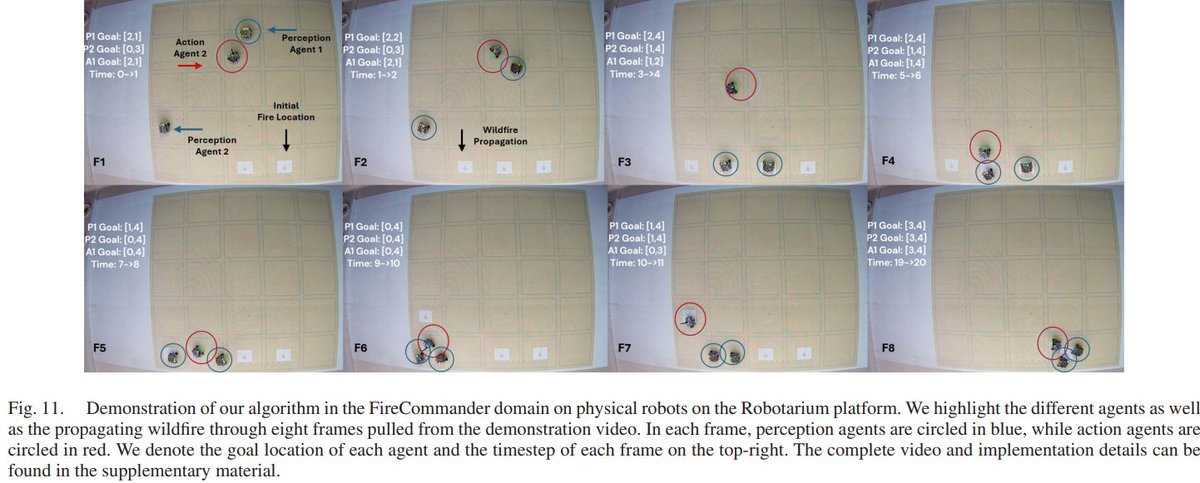
Finally, we demonstrated our framework on the Robotarium platform with real robots. Our HetNet-based agents coordinated seamlessly, detecting and extinguishing fires through effective communication and teamwork. Check out the demo in our paper. (8/8) Link: ieeexplore.ieee.org/document…
1
1
2
228
21 Aug 2024
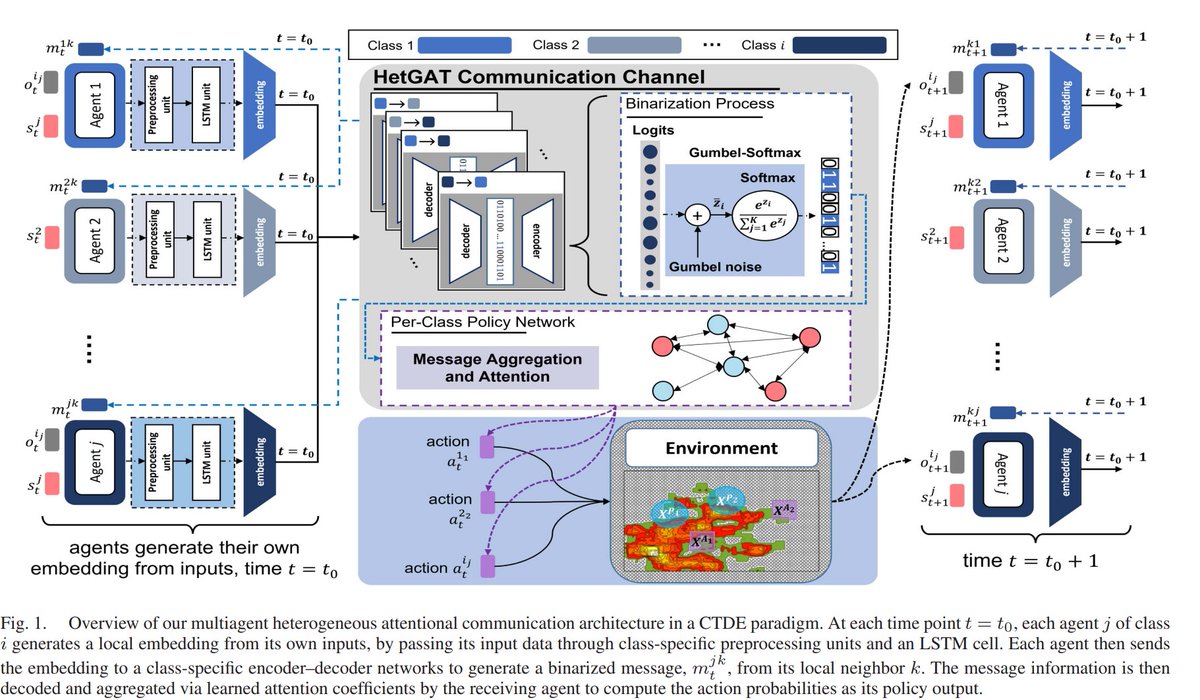
In prior work, we introduced HetNet, graph-attention architecture for multi-agent reinforcement learning (MARL) with communication. HetNet helped heterogenous teams learn efficient communication protocols setting new SoTA in composite team performance. (3/)
1
1
1
119