


You can surely choose to call Jesus teachings silly. Not my problem... let me frame it like this: can humans be immutable, omnipotent or eternally self-existent? No, it's not part of our essential nature just like being good. We can temporarily participate in doing good though.🕊
2

It seems to me that many of them are in denial about the fact that biological sex is immutable regardless of anyone’s political views. They often perceive this reality as a “far-right narrative” haha
“Truth, in its classic sense, is inherently apolitical.” It’s this kind of truth that public policy should be based on. Not on ideology.
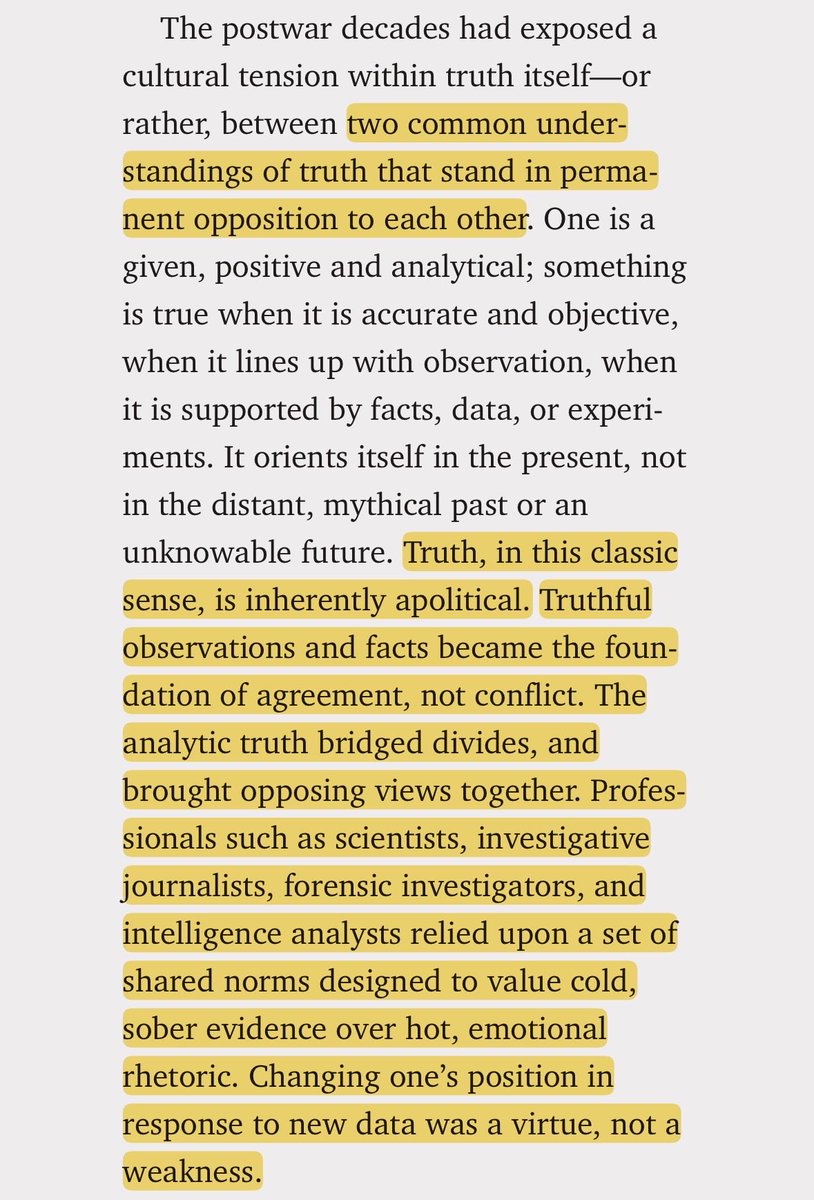
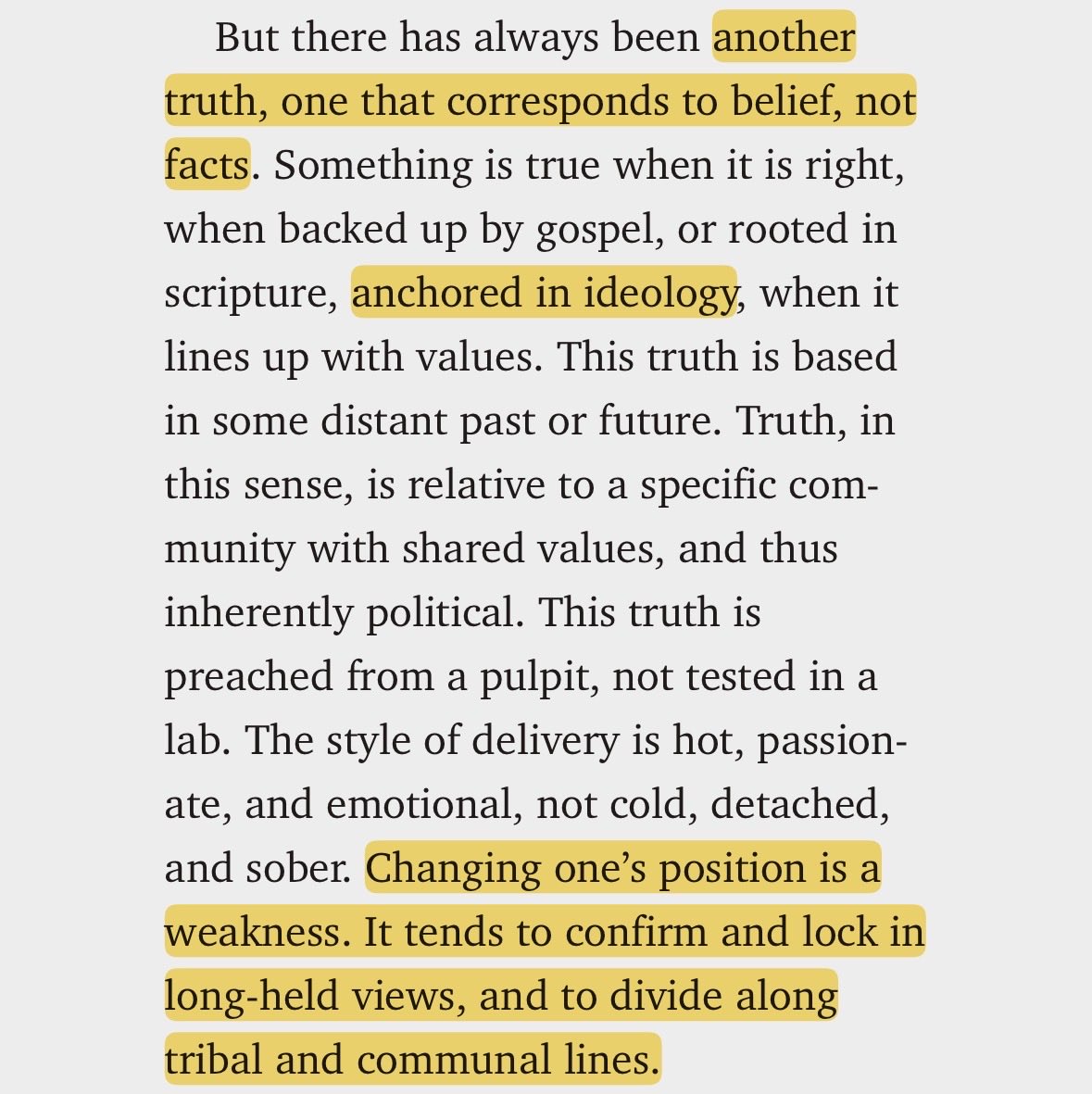
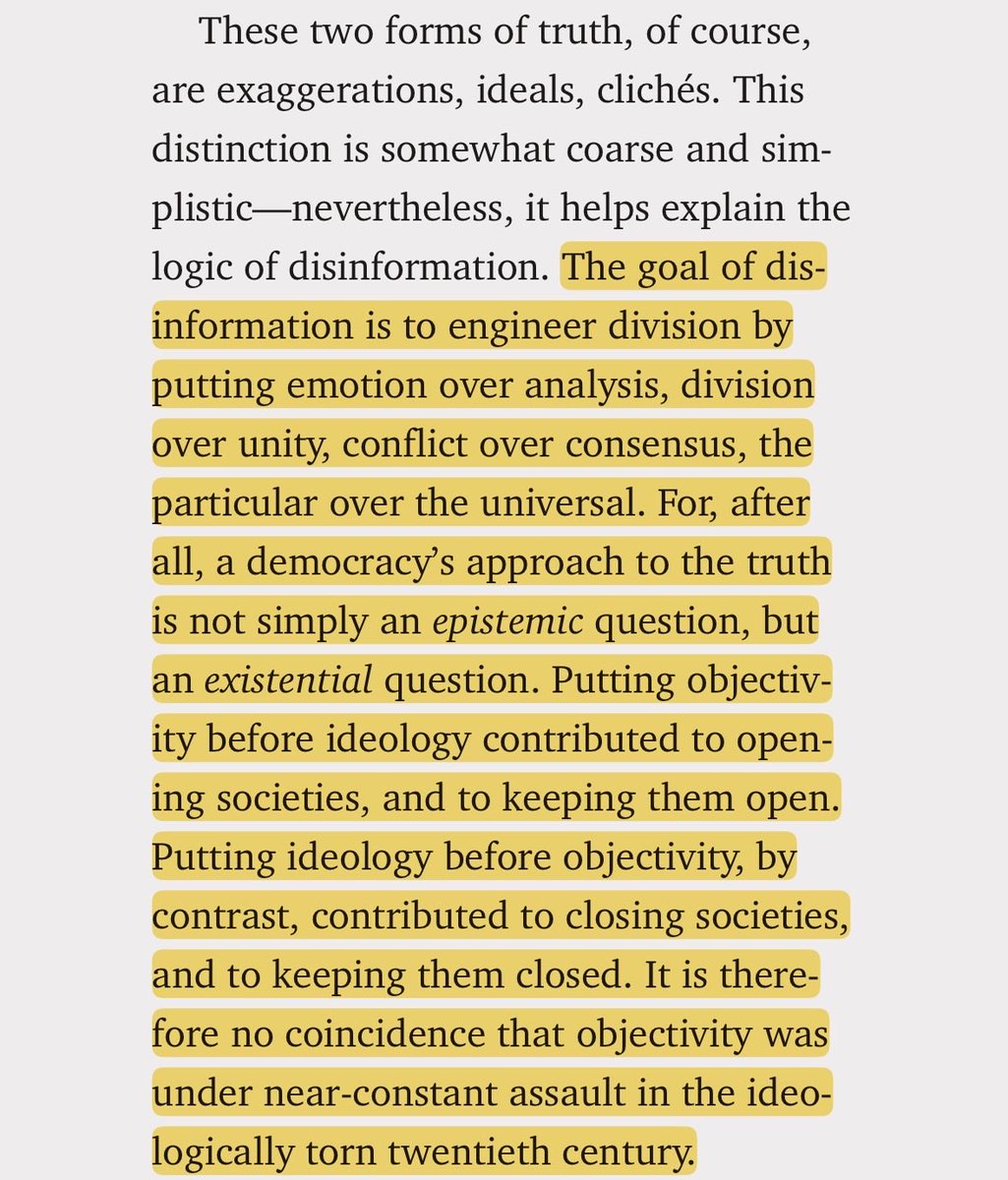
5

🚀 Rust Interview Question:
What's the difference between "iter()", "iter_mut()", and "into_iter()"?
Understanding this is essential for mastering Rust ownership and borrowing.
Given:
let v = vec![1, 2, 3];
1. iter()
Creates an iterator over immutable references.
for x in v.iter() {
println!("{}", x);
}
Type:
&i32
Ownership:
✅ Borrowed
Vector usable afterwards:
✅ Yes
Use when:
You only want to read data.
---
2. iter_mut()
Creates an iterator over mutable references.
let mut v = vec![1, 2, 3];
for x in v.iter_mut() {
*x *= 2;
}
Result:
[2, 4, 6]
Type:
&mut i32
Ownership:
✅ Borrowed mutably
Vector usable afterwards:
✅ Yes
Use when:
You want to modify elements in place.
---
3. into_iter()
Consumes the collection and transfers ownership.
let v = vec![1, 2, 3];
for x in v.into_iter() {
println!("{}", x);
}
Type:
i32
Ownership:
❌ Moved
Vector usable afterwards:
❌ No
This won't compile:
println!("{:?}", v);
because ownership was transferred.
---
Quick Summary
iter()
↓
&T
Read Only
iter_mut()
↓
&mut T
Read Modify
into_iter()
↓
T
Takes Ownership
Memory Perspective
iter()
→ No allocation
→ No copies
iter_mut()
→ No allocation
→ In-place mutation
into_iter()
→ Zero-copy ownership transfer
The real lesson:
Rust's iterator APIs are not just about looping.
They are explicit expressions of ownership, borrowing, and mutability.
Once you understand these three methods, a large part of Rust's ownership model starts to click.
2

You also misunderstand what happens to us when we die. There is either eternal life, in a world where you cannot sin. All choices will be in line with god. So. No homosexuality. No sexuality at all by the sounds of it tbh. And Hell, it isnt eternal suffering and being destroyed and put back together over and over or anything like that. Its complete and utter everlasting destruction. Its true death. One of God’s immutable characteristics is justice. He cant be a tyrant. That means he gives us agency. We get options. We can follow him, or return to what we were without him. Nothing.
1


If this 5 year old child bore any other immutable characteristics this would be global news and global outrage. But only social media outrage in 2026 for this wee lad.
 Lozzy B 🇦🇺𝕏
19

The Book of Mormon’s Historical Problem
The biggest issue is the total lack of archaeological, genetic, or linguistic evidence for the civilizations the Book of Mormon describes millions of people, horses, steel, chariots, wheat, and barley in pre-Columbian America. Mainstream archaeology and DNA science (including studies of Native American populations) simply don’t support it.
Joseph Smith’s Credibility
Smith’s “translation” of the Book of Abraham (published 1842) can now be checked against the actual Egyptian papyri he used. Egyptologists including non-Christian ones with no theological axe to grind, universally conclude his “translation” has nothing to do with what the papyri actually say. If he got that wrong, the whole prophetic authority claim collapses.
The Bible’s Own Testimony
Deuteronomy 13 and Galatians 1:8 both warn that if anyone, even an angel, brings a gospel contradicting what’s already been revealed, reject it. Joseph Smith claimed an angel (Moroni) brought new revelation that overrides Scripture. That’s precisely the test the Bible sets up. From a Reformed standpoint, Scripture is self-authenticating and sufficient, it doesn’t need supplements.
The God Question
Mormonism teaches that God was once a man who progressed to godhood, and that humans can become gods themselves. This is fundamentally incompatible with the God of Scripture eternally self-existent, immutable, without beginning (Psalm 90:2, Isaiah 43:10). These aren’t minor doctrinal tweaks; they’re completely different religions built around completely different gods.
The Changing Revelations Problem
Early Mormon doctrine including polygamy as essential to exaltation and the Adam-God theory taught by Brigham Young was later reversed or quietly buried when it became socially or legally inconvenient. A true prophet’s revelations don’t get edited by political pressure.
The real issue underneath all of this is epistemic, Mormonism asks you to trust a subjective “burning in the bosom” feeling over and in-spite of objective historical and textual evidence. Sola Scriptura cuts right against that, God’s Word is the final authority, not private revelation confirmed by feelings.
It’s a genuinely different religion wearing Christian vocabulary. That’s the honest assessment.
3

One Crew DAO 💘
Still holding copium, not bags. Classic degen loyalty.
(We've been rugged since 2020. The vibes are immutable.)

One Crew DAO 💘
Web3 Degen Mfers since 2020
3

12m
Immutable closed it's marketplace. Magic eden discontinued support for ordinals. Back to back web3 games on pause, worst case closed.
This bear market imo is the most brutal so far, not only on cardano (with Taptools and JPG store).
I really hope things get better for you and all other builders in the space asap.
Let's survive this one and make a comeback on the next bull market.
If we still couldn't though, I'd take that as a sign to move on to other things (as satoshi once said).
3

What specific gas optimization techniques are you prioritizing (e.g., storage packing, assembly usage, immutable/proxy patterns, off-chain computation, or data compression)? Will you open-source any of these or share benchmarks before/after optimization?
#ManyuArmy $Manyu
1
1
36

That was already not the central focus of the conversation, i.e. the existence of gender identity in the brain (esp as an immutable innate cerebral pattern).
Caring about these people means trying to find the truth, not occulting it.
2

くにちゃん/ Kunichan🍏🏁 retweeted

【アポロドロス from ZENJIN MITO TO IMMUTABLE】5/5歌詞動画
#MrsGREENAPPLE
#ゼンジン未到とイミュータブル
▼YouTube
youtube.com/shorts/u7URDpkK4…
3
5
551
Mar retweeted

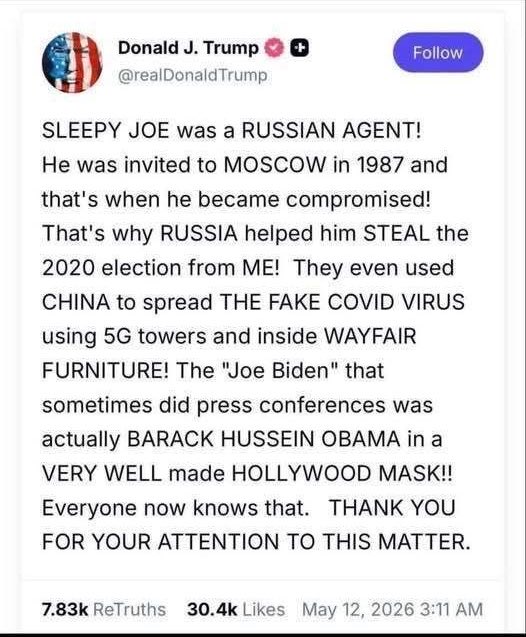
Dementia is especially abhorrent when it laces its immutable fingers through a cocktail of sociopathic mental disorders.

2
7
14
191
Dead.Mitchell retweeted

$USDeAD Decentralised ETH-Backed Stablecoin 💀💵
- No Freeze/Blacklist functions
- Fully Immutable
- 100% Onchain and Verifiable 24/7
- 125% Fully Backed by ethereum:native , ethereum:0x7f39c581f595b53c5cb19bd0b3f8da6c935e2ca0 & ethereum:0xae78736cd615f374d3085123a210448e74fc6393
- Bridge to 11 EVM & Non-EVM chains (inc. Solana Tron)
Created by @0xDEADBOX 💀
2
6
38

I absolutely love pixel NFTs because they're the perfect blend of powerful simplicity and deep historical value in the crypto world. Despite the limitations of low resolution, pixel art forces artistic creativity, creating iconic characters that instantly stick in the mind, much like the CryptoPunks that underpin the entire NFT ecosystem
More than just images, pixel NFTs are digital identities, status symbols within the community, and immutable, rare assets full of potential utility from PFPs and game integrations to physical merchandise.
Their timeless aesthetics make them timeless, while their community is loyal and their liquidity is relatively stable. Amidst the hustle and bustle of NFT trends that come and go, pixels remain a category with soul, heritage, and a bright future.
1
14

THE PRESIDENCY IS NOT A POLITICAL CIRCUS
President William Ruto, the foundational charter of this republic did not conceive the executive office as an immutable canvassing apparatus, an itinerant theatrical troupe, or a perpetual public relations convoy. It consolidated the Presidency as the absolute epicenter of statecraft—a hallowed, institutional anchor obligated to uphold constitutionalism, engineer macroeconomic trajectory, insulate public coffers from predation, and demand that the state machinery operate with rigorous precision, systemic synergy, and unassailable fiscal probity.
Instead, the Kenyan populace is marooned as spectators to an executive apparatus preoccupied with cosmetic veneer over tangible systemic yield; a governance model visibly enervated by grandiloquent proclamations rather than concrete milestones. The weekly calendar is perpetually punctuated by orchestrated processions, spontaneous roadside harangues, lavish ecclesiastical endowments, redundant infrastructure unveilings, and unilateral decrees issued from motorized pulpits. The commonwealth is inundated by an unrelenting barrage of demagoguery, even as millions of compatriots plunge into acute underemployment, a prohibitive cost of living, systemic commercial insolvency, and the rapid erosion of household solvency. A sovereign state cannot be steered via the optics of amplifiers and security motorcades.
If the Head of State must personally oversee every secondary road, local bazaar, rudimentary classroom, medical facility, rural well, and nascent construction site, it exposes a profound structural pathology: What purpose do Cabinet Secretaries, Principal Secretaries, Directors General, technocrats, and the vast cadre of civil servants actually serve?
Governance was architected to manifest through institutional machinery, not the ubiquitous, overbearing presence of a singular actor. By centralizing every micro administrative milestone around the Chief Executive, statutory institutions are effectively castrated into passive onlookers, causing institutional governance to capitulate to an individualized, personality driven hegemony.
Compounding this governance deficit is the routine, unchecked distribution of massive financial bounties and unbudgeted monetary pledges at partisan assemblies. In a democratic polity built upon transparent fiscal governance, the electorate retains an absolute, non negotiable right to audit the provenance, budgetary legality, and regulatory oversight of these colossal financial interventions. Civic trust is forged through institutional transparency, not orchestrated patronage. Statecraft demands the fastidious stewardship of public assets, not ostentatious exhibitions of pecuniary dominance.
The supreme hazard confronting the current regime is the catastrophic conflation of omnipresence with actual efficacy. An administration can easily hijack media narratives, dominate digital algorithms, and monopolize national attention while fundamentally defaulting on its baseline statutory mandates. Civil works are not engineered through rhetorical dexterity. Employment is not generated on political podiums. Macroeconomic recovery is not simulated by relentless provincial tours. True development is audited solely through commissioned infrastructure, autonomous regulatory bodies, sound fiscal frameworks, and a measurable elevation in the material dignity of ordinary citizens.
History evaluates statecraft with cold, unforgiving metrics, entirely insulated from transient adulation. Long after the subsidized throngs disperse, the amplification systems are dismantled, and the partisan sycophancy subsides, the ultimate historical ledger remains starkly binary: Were covenant obligations honored? Were democratic guardrails fortified? Were public resources insulated from plunder? Was the socioeconomic fabric permanently uplifted? The Presidency is not an amphitheater for perpetual campaigning; it is a solemn constitutional stewardship.
13