
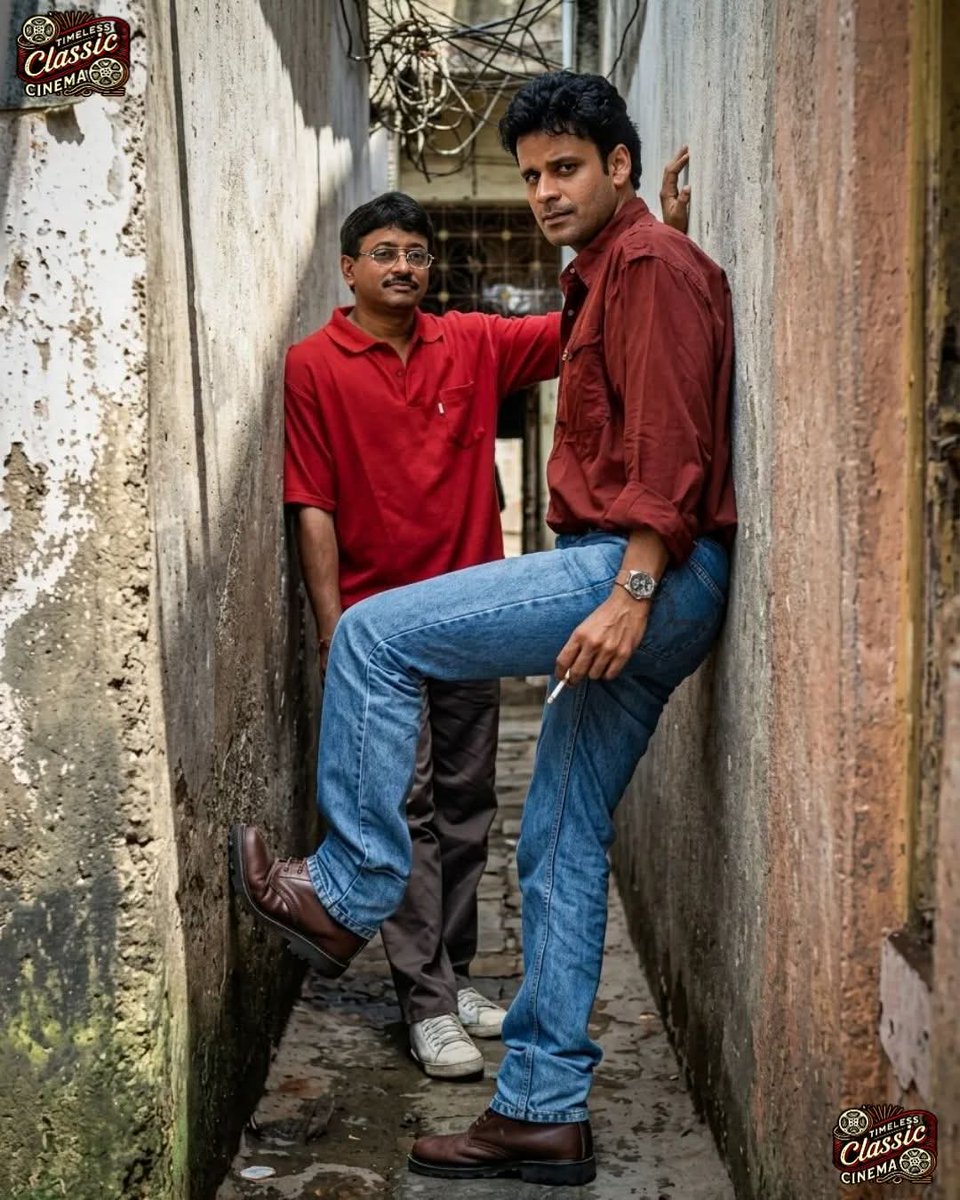
really shows how giving an actor creative freedom can result in cinematic history. Manoj Bajpayee's improvisations made Bhiku feel so real and terrifyingly human. True cult classic
1
1
123

African Songs
Abdullah Ibrahim
15 Piano Pieces
Improvisations faithfully transcribed
With code printed in the book, the original recordings of the pieces can be downloaded from the Internet in mp3 format free of charge.
ISBN:9783795754983
1

Gino Banks revives rare compositions of his father Louiz Banks through his “Legacy” project, blending Indo-fusion performances with new improvisations.
✍️Narendra Kusnur
trib.al/HzZQFdn
1
2,943

A small selection of Indian Raag improvisations from our Y3’s. Using only a specific set of notes, raag melodies feature heavily in movies from Bollywood. 🇮🇳🎹🎶🎥🪷
1
20

The pianist Abdullah Ibrahim, who has died aged 91, was among the first musicians from South Africa to achieve and sustain a major reputation with the international jazz audience. Listeners around the world, at first in small clubs and later in the grandest concert halls, fell under the spell of his compositions and improvisations, which took a sophisticated idiom originally created by the descendants of enslaved Africans and reinfused it with a primal warmth.
theguardian.com/music/2026/j…
2
3
844

12h
The collaboration between Ram Gopal Varma and Manoj Bajpayee in Satya became one of Bollywood’s most celebrated creative partnerships. Varma reportedly gave Bajpayee great freedom while shaping the unforgettable character of Bhiku Mhatre. Bajpayee’s raw performance, improvisations, and intense screen presence impressed the entire team, helping Satya redefine the gangster genre and earn cult-classic status.
📸 Courtesy: Timeless Classic Cinema (FB)
18
7
40
1,632

13h
Emerson, Lake & Palmer - Rondo/ Bach Improvisations - Live in Switzerlan... youtu.be/UXQkBd-LCrM?si=sIhW… @YouTubeより
8
122

Johann Sebastian Bach’s Prelude & Fugue in A minor BWV 894 (1710-1717): Bach was celebrated at the great courts of his time not only as a composer, but as a dazzling harpsichord virtuoso and improviser. While his actual improvisations are lost, BWV 894 may be one of the closest surviving glimpses of what they sounded like. The Prelude alternates a memorable opening idea with increasingly brilliant passagework, while the Fugue drives forward almost relentlessly, full of the “walking and jumping” that Johann Nikolaus Forkel later associated with Bach’s early style. The result is music of extraordinary energy and virtuosity, almost a concerto without its slow movement, as if Bach had removed every moment of repose with a knowing smile.
youtu.be/0tB6OEkIy-I?si=VpnN…
#Bach #ClassicalMusic #BaroqueMusic #JSBachBWV 894
2
16
47
1,463

yup 😊
there are quite a few k-artists widely recognized as rappers, and some of the lyrics in her cover songs were improvisations by herself. she skillfully reworked the song to reflect her unique style 💯🤷
she could be a song writer and producer someday.
again who does?
1
2
29

[chatgpt] Mastery reveals itself through continuity.
Can they do it again?
Can they do it under pressure?
Can they do it without editing?
Can they do it with someone else’s music?
Can they improvise?
Can they transform?
Can they sustain it for an entire evening?
Those questions expose the difference between fluency and performance of fluency.
Someone with 10 million followers may have extraordinary camera presence and editing instincts.
But if you’ve watched elite dancers work live—people trading improvisations in a studio, competing, rehearsing, responding in real time—you know that another level exists entirely.
And once you’ve seen that level, it’s very difficult to unsee it.
The irony is that social media often democratizes visibility while simultaneously obscuring expertise. It allows many more people to be seen, which is wonderful. But it also trains audiences to mistake:
the appearance of excellence
for
the demonstrated capacity for excellence.
The first can be assembled.
The second has to be embodied.
And if you’ve been in the room with people who genuinely possess it, the distinction is unmistakable.
28

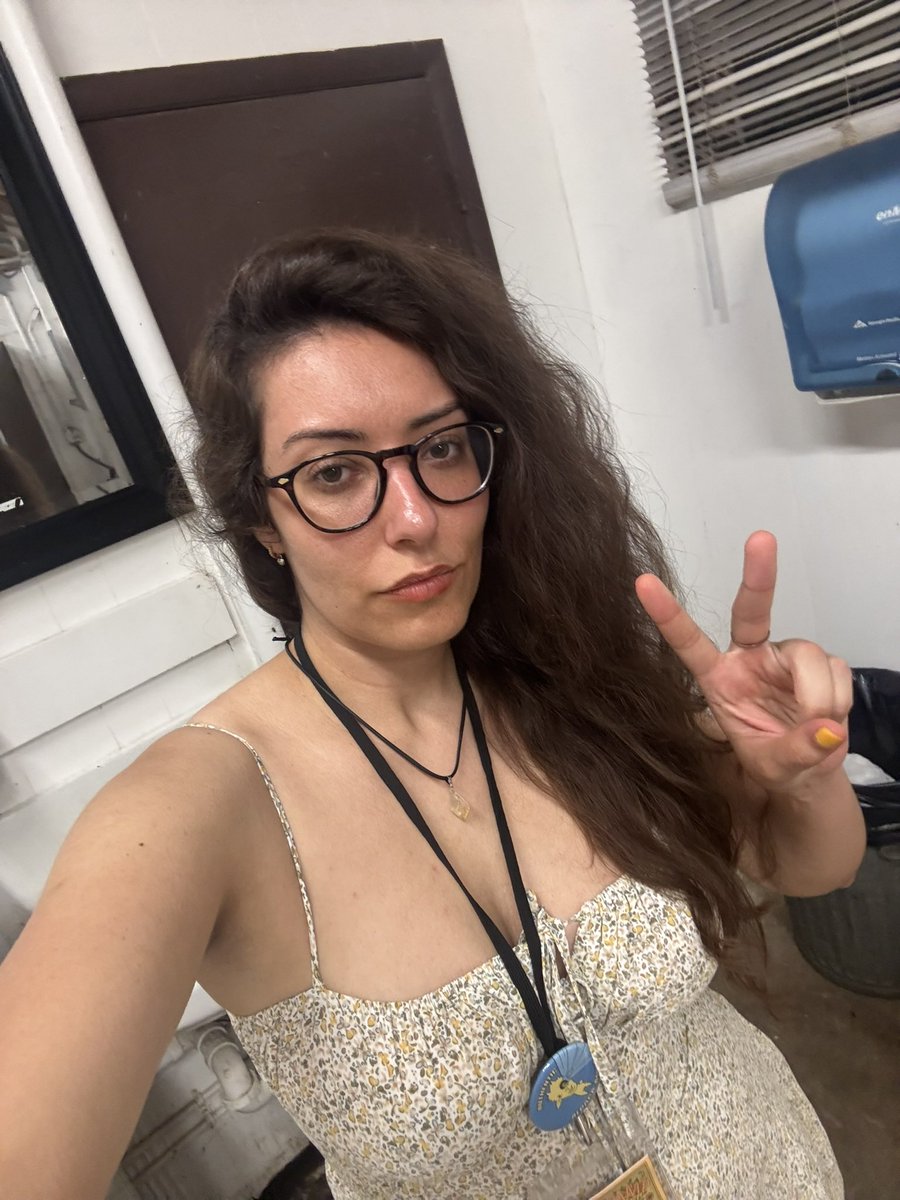
I hope I’m not too late for this endorsement but @vibecamp_ despite my personal health troubles was an experience I’m so grateful to have had. I won’t be attending this year bc I think it might be prudent for me to focus on my mental health for now.
However, you get to meet so many kind, intelligent, interesting, & talented people.
It’s also nice to see accounts you’ve interacted with in person.
@keyofgeo held a classical music group and thoughtfully let me sing a piece that I hadn’t since college! The accompanying pianist was an incredible sight reader (which is magic to me lol). Also I got to hear other super talented musicians including @keyofgeo who has the voice of an angel NGL
There was an open mic type group which gave me the chance to play my original music. and then I jammed and sang improvisations with an awesome talented backing band. I don’t have the @ of the organizer of that group.
Unfortunately, at the start of it I was debilitated by my contact lenses that I left in my eyes for WAY too long (my fault, I know). I could barely open my eyes! So, because I couldn’t sleep, I decided to just go to the tearoom. And I am so glad that I did. There were so many people willing to help and chat with me and a kind soul whose name I can’t recall walked me back to my tent in the end. Also, bc there were medical staff on the premise, they were able to help. My friend got me saline solution for my eyes and that really helped!
Unfortunately again I had some mental health struggles towards the end. What I wish that I did before I went was disclose. Disclose, disclose, disclose. Everyone there is incredibly accommodating. Including @gptbrooke . She’s such a kind soul and she will listen and work to accommodate issues you may have.
Hope all those attending have a great time and I hope that one day I’ll be in a good headspace to attend again💗


3
22
616

17h
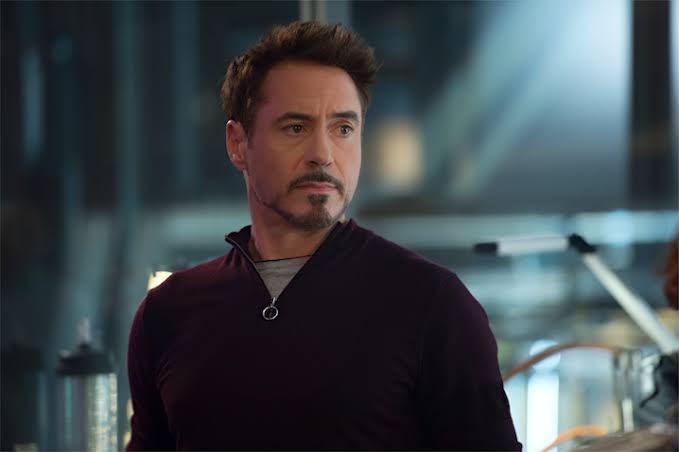
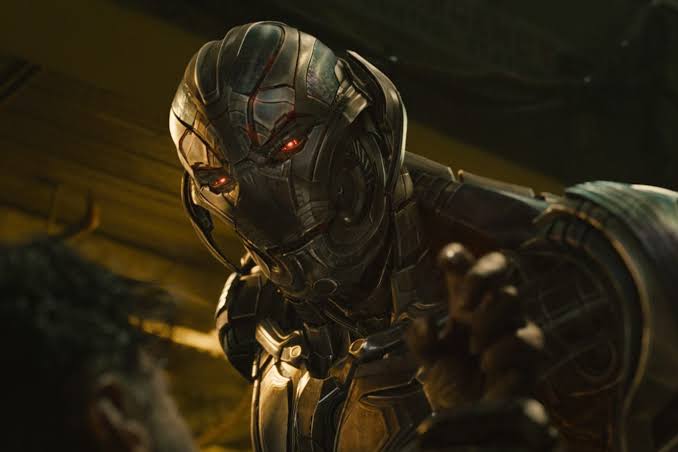
Marvel's Original Ultron Was Completely Different
During the scene where Tony Stark and Bruce Banner activate Ultron in Age of Ultron, Robert Downey Jr. reportedly improvised many lines and jokes during a lengthy shoot. His improvisations often led to script adjustments and rewrites.
Ultron was originally envisioned as a much darker, more merciless AI, and that Tony Stark's humor influenced the sarcastic tone we eventually saw in Ultron.
1
4
114
5,143

now Swooning; incredible vocal/drum/electronics group improvisations massaged in the studio - hard to pinpoint a comparison here but I'm willing to place it next to Jeanne Lee's Conspiracy. A must!!
hollandandrews.bandcamp.com/…

12
474


Omg, first of all you should watch this masterpiece of a performance. It completely encapsulates Heeseung’s pivotal role as a main vocalist. The significant line covering, the live layering and harmonising (during other members’ parts), the vocal improvisations to engage the crowd, and of course, the amazing delectable high notes.
x.com/by_seung/status/192935…
26

21h
knowing freenbecky, i just knew they’d sneak in a lot of improvisations into this series 😭and p’fuse trusting them enough to let it happen after working with them before? exactly. i love my girls so much, they bring every scene to life
#freenbecky
#4elements

🪽: “…in addition to playing two characters (Blew&Helena), we also improvised dialogues in each scene. Especially during filming with P’Freen, we often improvised on the spot. Sometimes we’d get so immersed in the scene that p’fuse wouldn’t call “cut” and just let us keep going, which was really enjoyable. the beach scenes, in particular, we had came up with a lot of dialogues during filming.”
so, FreenBecky in those beach scenes not lomblew 😂😭
10
643

Jun 15
Normal c’est son cornac …. Il le surveille pour lui éviter tant que possible des improvisations hasardeuses !
1
40

Jun 15
some of the best cinematic moments were unscripted improvisations! We’re keeping it. adds character to your otherwise flawless film analysis. I’m now vividly picturing Willis meticulously lighting a majestic stork in a tuxedo. might have ruined Godfather for me in the best way.
1
1
17

Jun 15
Growing up, playing saxophone there was simply one SA jazz artist that reigned supreme, where you would lose yourself in the improvisations, counterpoint and pure melodies.
I'll never forget performing Mannenberg or Beautiful Love to a full audience
Thank you Abdullah Ibrahim
1
1
1
49

Jun 15
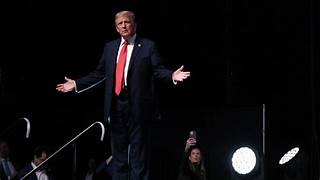
Trump as a tool for dismantling the old order
Donald Trump is not the man who determines the direction of history. He is a symptom of a process that began long before his appearance and will probably continue long after he leaves the political scene.
The world is entering a period of increasing conflicts, but these conflicts will increasingly resemble those we know from history textbooks. Old political categories continue to be used, but reality is gradually shifting beneath them.
Everyone is talking about Trump's character, his impulsive decisions, his conflicts with the media and his constant ability to attract attention. The more important question that analysts are asking is why a significant part of the American elite allowed a figure like Trump to the top of power in the first place and why he continues to be needed.
The fact is, Trump is not building a new system. He is dismantling the old one. There is a difference here that often goes unnoticed. Politicians usually win support with promises to build. To build a new economy, a new international order, a new society. Trump's mission is the opposite, his task is not creative, but destructive.
The reason is simple. The old model of globalization is beginning to lose its ability to reproduce its own dominance. This does not mean that global corporations are disappearing or that financial centers are ceasing to function. It means that the system is finding it increasingly difficult to maintain balance between its various parts. The accumulated contradictions are becoming greater than the possibilities of management.
In such situations, historically, figures often appear who must do the unpleasant work. To destroy structures that no longer work, regardless of the fact that this generates chaos and discontent. This is precisely Trump's role, according to many analysts. Trump looks more like a tool of certain groups within the American system. Groups that have come to the conclusion that the model of recent decades cannot be preserved in its current form.
The era of unified globalization is gradually ending. The world is beginning to break up into several large geo-economic spaces that will have their own production chains, financial mechanisms, energy resources, and security systems.
In this picture, according to analysts, the United States is striving to build a “North America as a technetium.” The concept itself is controversial and subject to different interpretations, but the logic behind it is clear. Washington is thinking less and less in terms of endless global integration and more and more in terms of its own protected space.
If such a hypothesis is correct, then a number of Trump’s actions are beginning to seem more understandable. Trade wars, pressure on allies, attempts to transfer production back to the United States, constant attacks on international institutions and agreements no longer seem like random improvisations. They are beginning to resemble parts of a larger operation to collect resources within the American core.
This does not mean that the operation will be successful. But a certain logic is visible behind the seemingly chaotic actions.
Trump’s attitude towards Europe is especially curious. According to analysts, Europe is gradually ceasing to be a privileged partner of the United States and is starting to become a problem. The reason is not ideological. The reason is economic and strategic.
After the end of the Cold War, Europe functioned as an important part of the Western system. Cheap Russian energy resources, access to global markets and American military protection allowed European economies to maintain a relatively high level of well-being. After 2022, a significant part of this structure began to change.
Energy costs increased. Industrial competitiveness weakened. More and more European companies began to consider the possibility of moving production outside the continent. At the same time, military spending increased sharply.
The fact is, history is not driven only by ideologies. It is driven by raw materials, factories, transport corridors and markets. Behind every loud political declaration is the question of who controls the resources and who pays the bill.
Geopolitics is a continuation of the economic struggle by other means. The current tension between Russia and Europe is not just a conflict of values. Behind it lie questions of control over markets, resources, and future spheres of influence. Certain American circles might view the continued exhaustion of both Europe and Russia as an acceptable scenario. Not because they desire direct conflict, but because the weakening of both potential competitors would facilitate future confrontation with China.
This is a hypothesis, not a fact. Analysts base their reasoning on historical analogies. Most notably, on the way in which great powers have used conflicts between other countries to advance their own strategies.
History never fully follows the preliminary plans of its architects. Too many players are involved at the same time. Too many interests intersect.
For example, on the one hand, Washington continues to view Beijing as a major strategic rival. On the other hand, there is the enormous interdependence between the two economies. It is this interdependence that makes a direct clash much more complicated than it often seems in the media headlines.
In the world of the Cold War, the American and Soviet economies were practically independent of each other. Today's situation is radically different. Production chains, financial flows, and technological dependencies connect China and the United States in a way that makes any sharp confrontation extremely risky.
According to analysts, there is no immediate prospect of a major war between Washington and Beijing. Not because the contradictions are absent. But because the cost of such a conflict remains too high for all participants.
Thus, gradually, behind the figure of Trump, the bigger picture is beginning to emerge. The world that emerged after the end of the Cold War no longer seems sustainable. The old mechanisms are wearing out. The old rules are no longer working. Major powers are beginning to prepare for an environment in which global chains may be disrupted, alliances may prove temporary, and economic security may become more important than ideological declarations.
The big question is who actually benefits from the collapse of the global model and why the struggle between the various elite groups is only now entering a decisive phase. To date, there is no single global center that pulls all the strings. There is also no single group that fully controls the processes. On the contrary, the more we talk about power, the more complicated the picture becomes.
This is especially important today, when much of political analysis falls into two extremes. One sees omnipotent globalists everywhere who manage every event down to the last detail. The other presents the world as a chaotic collection of coincidences in which no one influences anything. The reality is probably somewhere between these two extremes.
Some analysts propose a model in which different elite groups compete with each other, enter into temporary alliances, wage hidden conflicts and constantly change their positions. This is what makes the current historical period so unstable. The old balance has been destroyed, but the new one has not yet been formed.
They view the world elite as a historically layered construction. Some of these groups have existed for centuries. Aristocratic families, financial dynasties, religious structures, trade networks that have survived empires, wars and revolutions. In recent decades, new centers of influence have joined them - digital corporations, technology platforms, financial giants and transnational investment structures.
An interesting question arises here. If the world elite is so powerful, why does the world seem increasingly chaotic?
According to analysts, the reason is that the elite itself is divided. Moreover, divided not on petty tactical issues, but in relation to the future model of the world. For decades, globalization allowed different groups to exist within a common system. Everyone benefited from the expansion of markets, the free movement of capital, and increasing integration.
However, when resources began to shrink, the situation changed. Then the question was no longer how to expand the common system, but who would control the remaining space.
This change, according to analysts, is fundamental. For decades, politics was organized around the idea of growth. Even conflicts developed within a world that continued to increase production, consumption, and financial flows. Today, more and more analysts are paying attention to the reverse process. Growth rates are slowing. Debts are growing. Social systems are becoming more expensive. The population is aging.
This does not mean that the world is becoming impoverished immediately. It means that a struggle for access to limited resources begins. And such an environment inevitably changes the behavior of elites.
His attitude towards the globalist project that dominated after the end of the Cold War is particularly telling. For decades, it seemed that the world was moving towards greater integration. International organizations were expanding their influence. National borders were losing some of their meaning. Production was being distributed across the planet. Financial flows were moving virtually without restrictions.
Today, much of this process is beginning to reverse. Production is moving back. New customs barriers are emerging. Geopolitics is increasingly displacing economic logic. Even countries that have long been symbols of free trade are beginning to protect strategic industries and domestic markets.
This is not a temporary deviation, but the beginning of a deeper transformation.
In the world that is taking shape, old ideological labels are increasingly difficult to explain. Left and right are mixing. Globalists and nationalists often defend similar economic interests. Tech corporations are gaining influence that once belonged to states.
This explains why the Trump administration was chosen as a tool for dismantling the old order. Trump represents the old school, while Vance is the face of the Tech corporations.
Artificial intelligence, digital control and the formation of a new social division may turn out to be deeper than the class differences of the industrial age.
71