

Jun 12
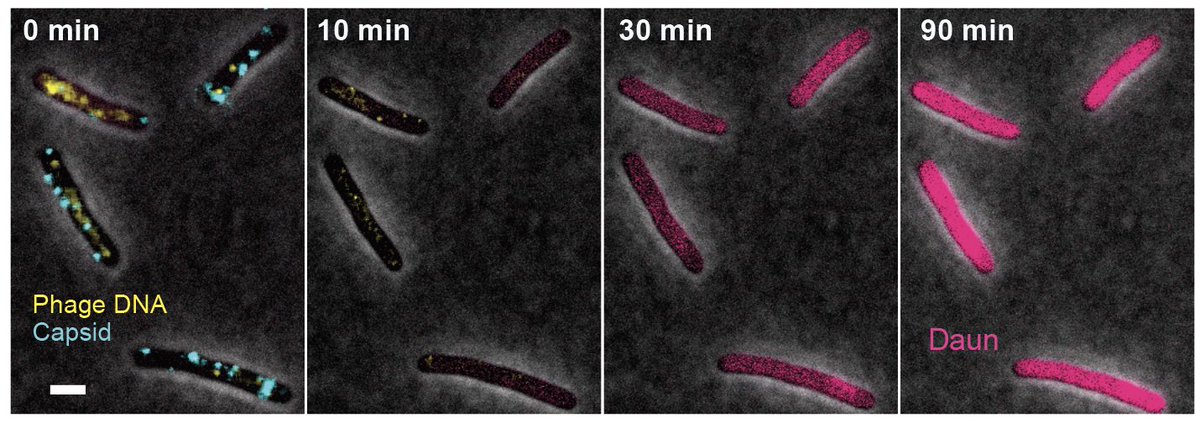
We initially performed a control experiment with DNA-intercalating dyes reported to inhibit phage DNA replication/circularization.
Surprisingly, we found that these compounds caused host cell growth arrest rather than directly targeting phage DNA.
2/N
1
1
53
𝕛𝕚𝕞𝕚_𝕠𝕟_$𝕠𝕝 ♔ retweeted

Jun 12
if your department useless pass
this physiology department I'm intercalating in, e better make you tell your mama make she open shop for you than to go school
7
4
76
2,211
Richard S retweeted

Jun 11
DNA-intercalating antiphage molecules trigger abortive infection through mutual destruction and synergize with bacterial immunity
phys.org/news/2026-06-antivi… @PNASNews
1
1
12

Jun 6
The problem is lack of exposure. I have seen a Doctor although abroad that did his intercalating in Law with focus on medico-legal aspect and he has a degree in law with his MBBS and he is now a surgeon in training. So why is that idiot foaming since Thursday!
1
2
255

Jun 5
Right from our 100 - 300L, we take both MBBS courses and the intercalating program courses.
After our 1st MB in 300L, we do a final year (like a normal B. Sc student) and get our first degree. Then, we proceed to our path & pharm year. So, it's the same time.
5
98

DNA-intercalating antiphage molecules trigger abortive infection through mutual destruction and synergize with bacterial immunity | PNAS pnas.org/doi/abs/10.1073/pna…
5
8
607

Membrane-Intercalating Conjugated Oligoelectrolytes Enhance Microbial CO2 Electroreduction by Promoting Transmembrane H2 Delivery | Journal of the American Chemical Society pubs.acs.org/doi/10.1021/jac…
1
3
1,817

May 28
Are dentists crazier than looksmaxxers?
First, this is a mainstream dental palate expander not some invention of looksmaxxers.
My point rather is this: in every single bone outside of your face, we know that bone remodeling occurs as a response to stress that you put on the bone during exercise, just like muscle remodeling, such as hypertrophy.
This means a small amount of stimulus creates a large reaction in the rest period between stimuli.
But orthodontists assume with this device that you need constant outward lateral pressure imposed on your upper palate bones in order to remodel them wider, and that the constancy is so important that the device has to be screwed into the palate with miniscrews and then expanded on a daily or weekly basis by cranking the pressure in the middle.
The two sides of your upper palate are separated when you are young, but as you get older they quasi-fuse by gradually intercalating, which basically means they grow little teeth that interlock to stabilize the pattern you grew up with. However, this is not a single event associated with becoming an adult; it’s a gradual linear process of aging. The older you get, the more intercalated these become.
I talked to a dentist who administers these to adults for a living and has done it on himself. He said that it creates a pressure that gradually builds up in the cheeks for about a week until the intercalation in the mid-palatal suture breaks apart, which is experienced as a sudden loud crack, after which the pressure is released and progress in widening suddenly goes from difficult to easy.
While it makes total sense that rapidly breaking apart the intercalation would require acute pressure, there still seems something wrong with the underlying theory.
When you want bigger, stronger bones in the entire rest of your body, you don’t put yourself in some kind of 24/7 resistance machine for six months.
You work out intensely and intermittently and grow between workouts.
You could say this is more akin to postural work, but postural work for the palate is Mewing, eating real food, and chewing mastic gum.
Maybe the primary importance of this device (MARPE) is the unique ability to force apart the intercalation of the midpalatal suture to restore the ability of it to respond to environmental stress to what a child or teenager would have.
But there seems to be an underlying assumption in orthodontics that if you want to remodel anything in your face you need constant pressure applied, and this stands in contrast to how you remodel bones outside your face.
Granted there are structural anomalies you might need surgery to fix.
But we are talking about “how wide do these two coordinating bones believe the top of your mouth should be” which is much more aligned with “how thick does your femur believe it needs to be and how should its mineral reinforcement be distributed” than correcting a fixed structural anomaly.
I don’t have answers here but I think orthodontics is a bit insular and needs some new ideas infused, including how to use an “exercise” model for the mouth instead of just a “how can we physically force these things into the position we want” model.
May 27

Social media looksmaxxer is breaking his maxilla in half with an appliance and expanding it with a wrench
He filmed and posted a video of himself making the first turn today.
What has gotten into people’s minds??
Should people be trying to improve their life or looks?
19
5
131
38,008

May 26
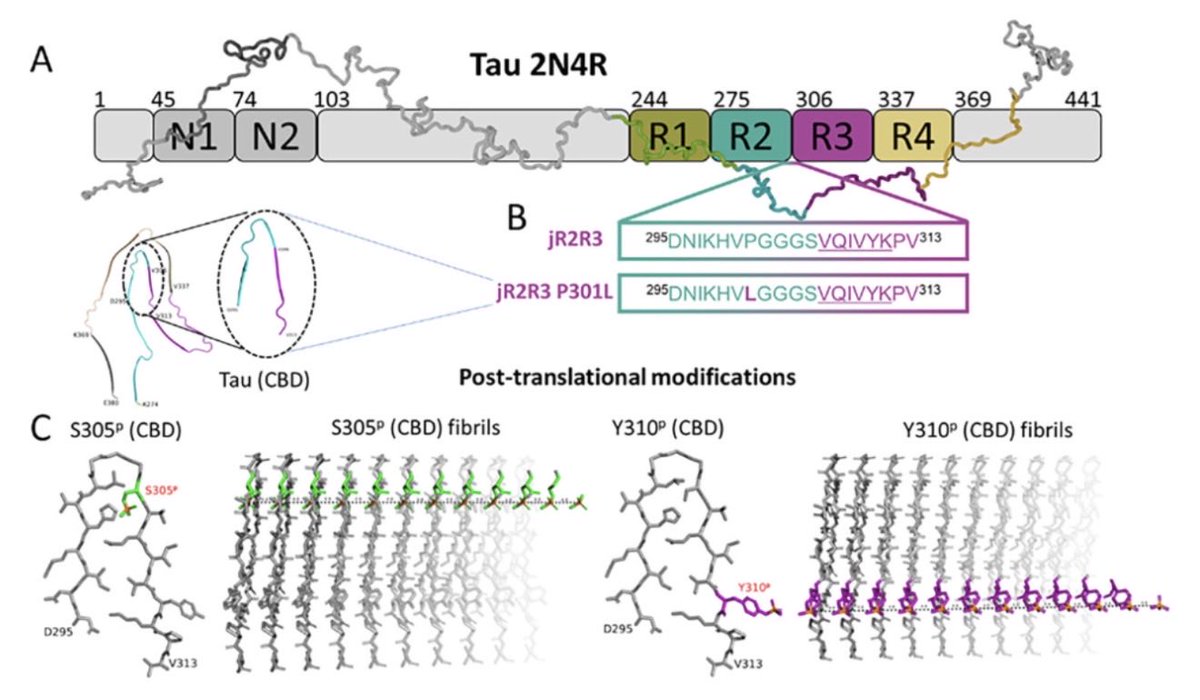
New atomic wiring diagram for why certain hyperphosphorylations transform tau from a helpful microtubule chaperone into a pathological amyloid architect. Inside seed-competent tau fibrils, phosphate groups on neighboring strands are only ~4.8 Å apart, close enough to repel each other. However, they form extended “phosphoryl wires” cemented by bridging water molecules that create long-lived hydrogen-bond networks.
Conduits convert charge chaos into mechanical reinforcement, tightening fibril registry, boosting stability, and amplifying seeding potency. Phosphorylation at serine 305 (S305p) in a disease-relevant P301L mutant peptide is the standout performer, while tyrosine 310 phosphorylation (Y310p) produces weaker ordering and stability.
Team used dynamic-nuclear-polarization-enhanced ³¹P solid-state NMR with multiple-quantum spin counting to count coupled phosphorus spins, 2D ¹H–³¹P HETCOR spectra to fingerprint water protons bridging adjacent phosphates, negative-stain TEM to show crisp paired-helical morphology for the S305p species, guanidinium denaturation assays to prove higher resistance, and explicit-solvent molecular-dynamics trajectories to visualize stable phosphoryl–water–phosphoryl ladders with restricted water dynamics and extended H-bond lifetimes compared to bulk solvent.
This flips textbook intuition on its head. Hyperphosphorylation, once thought a generic “tag-for-aggregation” signal, is dictated by site-specific chemistry inside the fibril core. S305p wires fortify the lattice, while other sites may leave it floppy or disordered. This provides a structural signature • ordered, water-glued phosphoryl conduits • recognizable or sabotaged by future tau binders or disaggregators. It explains stubborn polymorphism and seeding hierarchy in tauopathies and why blanket anti-tau antibodies struggle, as they may miss solvent-bridged epitopes that lock the pathology in place.
For natural countermeasures or precision disruption strategies, this insight is valuable: these wires are dynamic, water-dependent assemblies. Perturbing the local dielectric, competing for H-bond acceptors, or intercalating at the phosphate–water interface could loosen the grip without bulldozing entire fibrils.
1
2
70

May 25
You are intercalating very good generic posts with naïve political ones. How long will you take what Trump says at face value?
2
1
22

Mate.
You thought SYBR (which you spelt incorrectly) was a passive dye (it's not)
Also an intercalating dye (it isn't)
Also thinking that HRMC is specific (it isn't)
Also thinking that probes are a "proxy" (wrong again)
And now you're using "gEt yOUr BoOsTErs"
You're a clown
9
118

If those 3 (not 1, not 2, but all 3) sequences are amplifiable, you have been infected. Might mean nothing more, but definitely infected at some point in the recent past. Don't listen to the cycles BS. Thats a previous version of PCR (intercalating dyes).
1
3
23

May 15
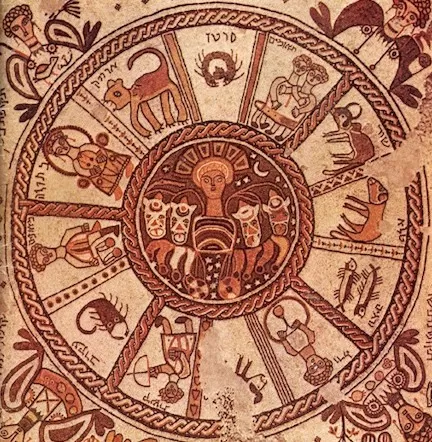
Scholars I'm reading (Debouin, JB Jordan) suggest these are fingerprints of the intercalating efforts by the priestly class to perform intentional, interrelated sums that meaningfully networked the tribes into the cycles of the heavens. Some more clearly than others.
Is there a complete picture of the meaning of this numerical network? No, it's simply lost to us.
We don't know how exactly the early Israelites engaged with planetary cycles - all we can confidently say is that it's clear that they did seriously engage it.
You can tell that each census is playing with specific math - numbers that are meaningful to Israelites (like 4 and 7) combined with precise cycles for the planets.
1
4
72

Apr 29
𝗛𝗲 𝗽𝗶𝗰𝗸𝗲𝗱 𝘁𝗵𝗲 𝗣𝗵𝗮𝗿𝗶𝘀𝗲𝗲𝘀...
Yeshua lived within the milieu of the various sects of Judaism during His day:
-the Sadducees
-the Pharisees
-the Zealots
-the Essenes (including the Therapeutae & the Yahad of the Dead Sea community).
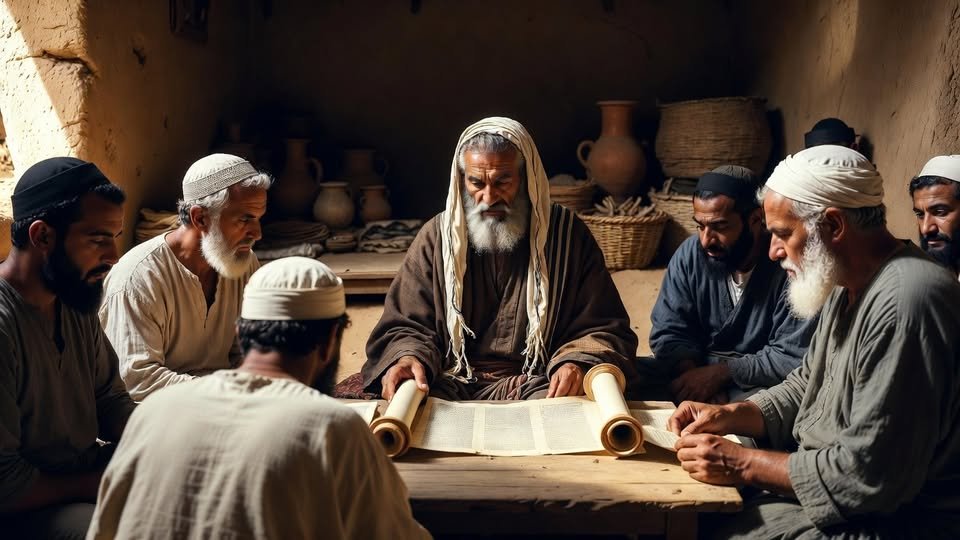
Of all of these, Yeshua explicitly told His disciples that it is the Pharisees who sit in the seat of Moses.
"𝘛𝘩𝘦 𝘴𝘤𝘳𝘪𝘣𝘦𝘴 𝘢𝘯𝘥 𝘗𝘩𝘢𝘳𝘪𝘴𝘦𝘦𝘴 𝘴𝘪𝘵 𝘪𝘯 𝘔𝘰𝘴𝘦𝘴’ 𝘴𝘦𝘢𝘵. 𝘚𝘰 𝘱𝘳𝘢𝘤𝘵𝘪𝘤𝘦 𝘢𝘯𝘥 𝘰𝘣𝘴𝘦𝘳𝘷𝘦 𝘦𝘷𝘦𝘳𝘺𝘵𝘩𝘪𝘯𝘨 𝘵𝘩𝘦𝘺 𝘵𝘦𝘭𝘭 𝘺𝘰𝘶. 𝘉𝘶𝘵 𝘥𝘰 𝘯𝘰𝘵 𝘥𝘰 𝘸𝘩𝘢𝘵 𝘵𝘩𝘦𝘺 𝘥𝘰, 𝘧𝘰𝘳 𝘵𝘩𝘦𝘺 𝘥𝘰 𝘯𝘰𝘵 𝘱𝘳𝘢𝘤𝘵𝘪𝘤𝘦 𝘸𝘩𝘢𝘵 𝘵𝘩𝘦𝘺 𝘱𝘳𝘦𝘢𝘤𝘩." -𝘔𝘢𝘵𝘵𝘩𝘦𝘸 23:2-3
𝗧𝗵𝗲 𝘀𝗲𝗮𝘁 𝗼𝗳 𝗠𝗼𝘀𝗲𝘀 𝗿𝗲𝗽𝗿𝗲𝘀𝗲𝗻𝘁𝘀 𝘁𝗲𝗮𝗰𝗵𝗶𝗻𝗴 𝗮𝘂𝘁𝗵𝗼𝗿𝗶𝘁𝘆.
Yeshua warned His disciples about the hypocrisy of the Pharisees, because their actions so often do not line up with the teaching of scripture. He also went on to provide several examples of their hypocrisy. But in so far as the sects of the day, He recognized that the Pharisees represented orthodoxy. And He was probably so harsh on them because, in a very real sense, He was one of them. He was a Rabbi, and only Pharisees are called "Rabbi".
Really stop and think of the significance of this. Don't gloss over it. Yeshua was intentional about saying this. He could have ignored it or never mentioned the Pharisees having any sort of claim to truth.
But he didn't.
𝙉𝙤 𝙤𝙩𝙝𝙚𝙧 𝙨𝙚𝙘𝙩 𝙘𝙖𝙣 𝙡𝙖𝙮 𝙘𝙡𝙖𝙞𝙢 𝙩𝙤 𝙩𝙝𝙞𝙨.
Yeshua did not say that the Yahad, who teach a completely different solar calendar and hated the Aaronic temple priesthood, sat in the seat of teaching authority.
He did not say that the Sadducees, who don't believe in the resurrection and who always do Pentecost on Sunday, sat in the seat of teaching authority.
He says that the Pharisees, who instituted the rabbinic system of home and synagogue fellowship, kept the luni-solar calendar of observing the moon and intercalating the year with a 2nd Adar, and always kept the Day of First Fruits on the 16th of Nisan, sat in the seat of teaching authority.
But the Pharisees were not a monolithic group. They were diverse, consisting of subsects within Pharisaism. They engaged in rigorous debate and discussion regarding the scriptures in both faith and practice. There were some who were more conservative, and others who were more liberal. Some more gracious, and some more strict.
They were engaged. Meeting with people regularly. Hosting small groups, prayer gatherings, fellowship meals, Torah study, etc. They were politically active, and many were powerful. Some for good purposes, and some for wicked.
Many aren't aware of the sacrifices that Pharisees endured for the people of Israel. The Pharisees supported traditional Jewish practice, and stood up for the welfare of the common people. They opposed combining kingship with the high priesthood, which was a Sadducean-leaning religious practice.
This erupted during the tenure of Alexander Jannaeus, the wicked Hasmonean king that the Pharisees opposed, leading to a six-year civil war around 90 BCE that took the lives of around 50,000 Jews.
At the Feast of Tabernacles, Jannaeus (who was both king and high priest) poured the water of libation on his own feet instead of upon the altar. The Pharisees were highly insulted at this act of sacrilege. As a result, many in the crowd at the temple threw citrons (large lemons) at him. So Jannaeus had his soldiers kill those who pelted him with citrons, leading to a massacre 6,000 Jews at the temple.
Jannaeus prevailed in the war, and whilst feasting with concubines, he crucified 800 Pharisees and had their wives and children slaughtered before their eyes.
Selah.
Jannaeus removed the Pharisees from the Sanhedrin and imposed Sadducean practices. He dismantled their institutional sway and their popular representation they had garnered from the people of Israel. Many fled, but the Pharisees did not give up.
They endured, and resurged under Jannaeus's widow, Salome, who reversed many of his policies. The traditions and values that the Pharisees fought for shaped the Rabbinic Judaism that emerged in the next century.
Under Salome, the Pharisees retook control of the Sanhedrin from the hands of the Sadducees, and they re-established Pharisaic interpretations of the Torah as authoritative.
Under their leadership, many positive reforms took place including instituting protections for women's rights in marriage contracts (ketubah), court reforms, education, schools for children and free education for the poor. This golden era of prosperity continued for about 9 years until Salome died, and conflict broke out between her sons, causing another civil war and leading to Roman general Pompey's intervention and capture of Jerusalem in 63 BCE, making Judea a Roman client kingdom rather than an independent state.
Antigonus (Hasmonean king) sought help from the Parthians, and in 40 BCE took Jerusalem, but eventually Herod and the Romans prevailed, permanently ending the Hasmonean Dynasty and firmly establishing the Herodian Dynasty.
Herod didn't favor the Pharisees or the Sadducees. He played politics for ultimate power.
Herod bribed Sadducean elites when convenient, and auctioned the high priesthood to Sadducean priestly families such as Boethus and Ananus; and this is how the families of Annas and Caiaphas rose under this system.
Even though the Sadducees maintained control of the priesthood, they did not get to dictate everything that happened. This is because the Pharisees had strong support among the common people. The Sadducees in office often had to defer to Pharisaic customs to avoid backlash from the masses who followed Pharisaic teaching.
The Omer counting method and date of Firstfruits (always the 16th of Nisan), for example, was done according to Pharisaic custom, and the broader calendar system was administered by the Sanhedrin, which was mixed but often Pharisaic-leaning. Not only this, but the Pharisaic temple customs prevailed.
𝙋𝙝𝙖𝙧𝙞𝙨𝙚𝙚 𝙢𝙚𝙖𝙣𝙨 "𝙨𝙚𝙩 𝙖𝙥𝙖𝙧𝙩" 𝙤𝙧 "𝙨𝙚𝙥𝙖𝙧𝙖𝙩𝙚𝙙". 𝙃𝙤𝙡𝙮.
They wanted Israel to be set apart. A light on a hill. They resisted Hellenization, and they resisted priest-kings. But even this endeavor can become corrupted.
Many of them got too comfortable in their positions of power and prestige. Many abused their positions of authority.
To many, Yeshua was a great threat. But to others, He was the Messiah.
But to Yeshua, the Pharisees were the shepherds in the fields; the soldiers in the trenches; the orthodox sect of Judaism that He considered Himself to be a part of, but also the group which required the harshest admonition.
One such Pharisee went by the name of Paul, and through the grace of God, became a follower of Yeshua... and yet he remained a Pharisee (Acts 23:6).
And maybe, now you'll think of them a bit differently than before. Shalom!
10
2
13
575

Apr 11
Just donated! Also I'm a student from the UK intercalating (in a different course) in Bristol next year too!! Maybe we'll see each other around! I wish you the best of luck ❤️
1
35
2,132