George M 🇪🇺 retweeted

Jun 13
in the 1990s, the US government classified 128-bit SSL encryption as a "munition" under ITAR, putting it in the same legal bucket as missiles and tanks.
As a result, Netscape and Microsoft had to develop two entirely separate versions of their web browsers:
22
101
1,936
125,508

Ordering 1 but setting my address to Uzbekistan causing you to violate ITAR
22

Frederic Culmann retweeted

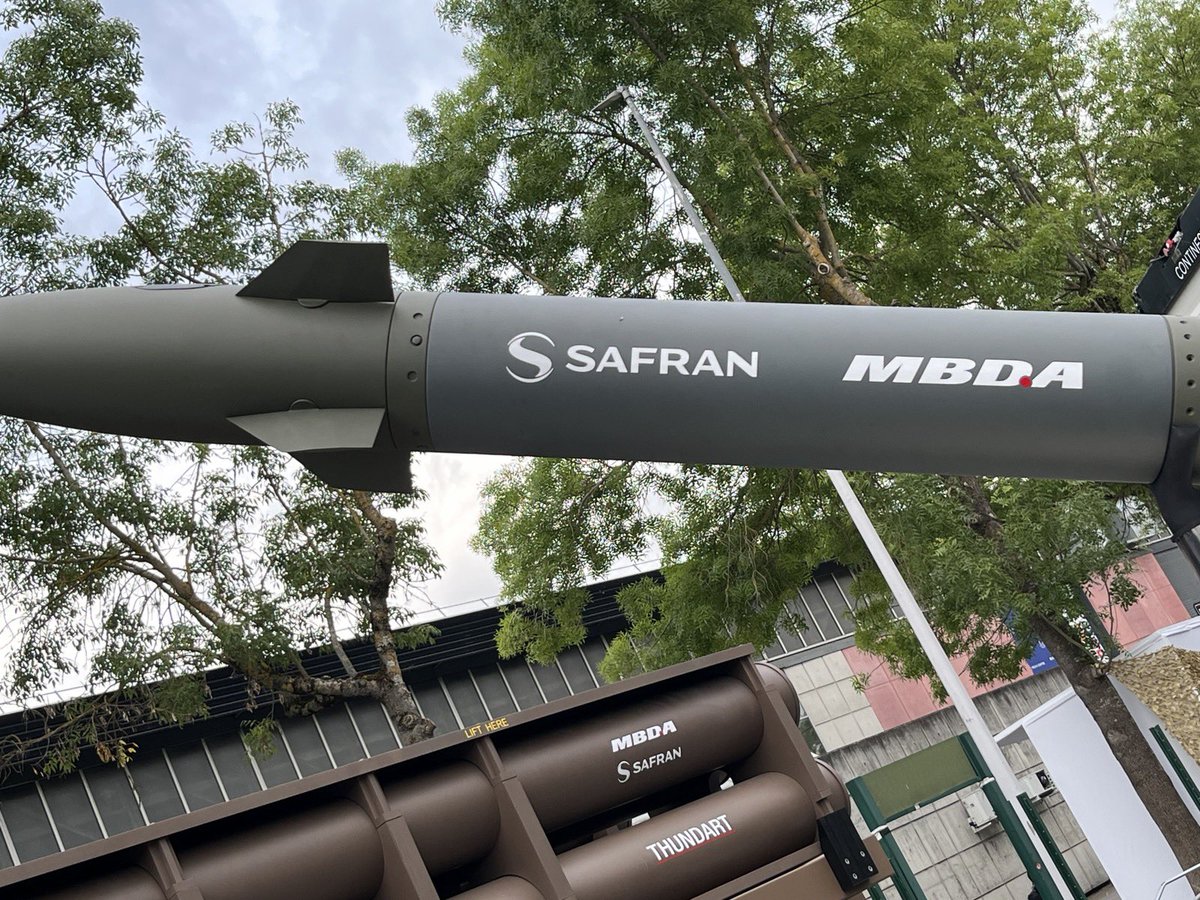
Unsurprisingly, France made the right decision in choosing a sovereign and ITAR-free solution to replace the French Army’s LRUs and rejecting the American HIMARS system.
📸 @ClementMchrt / @cperrin90
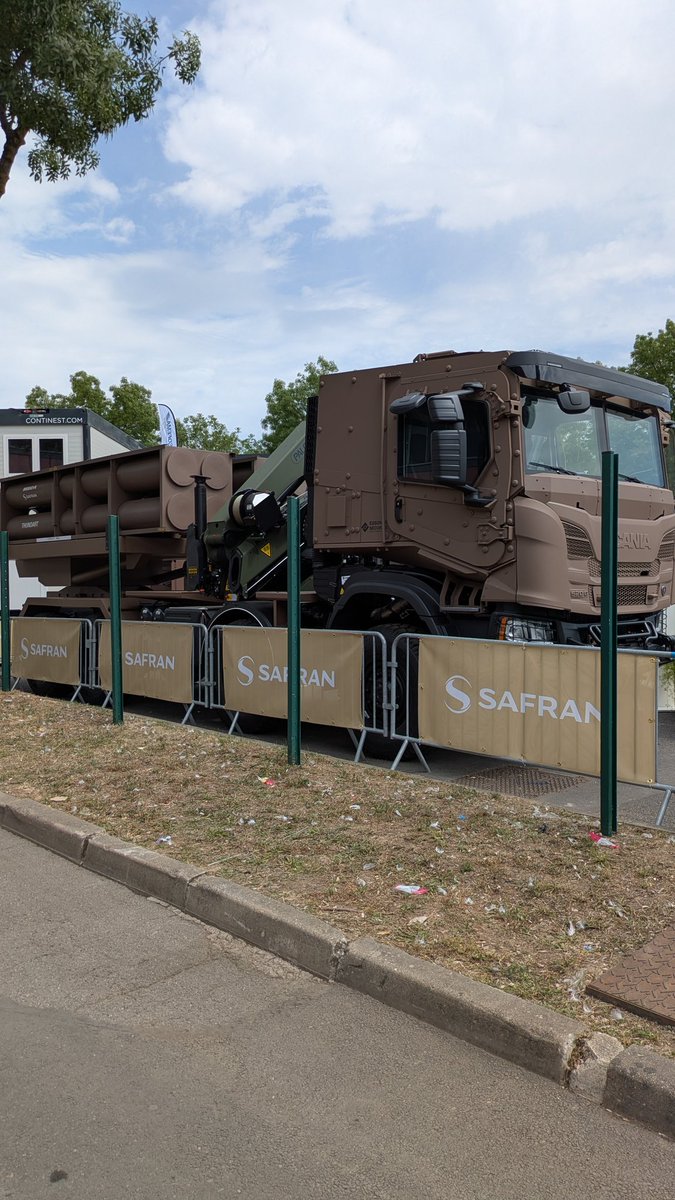
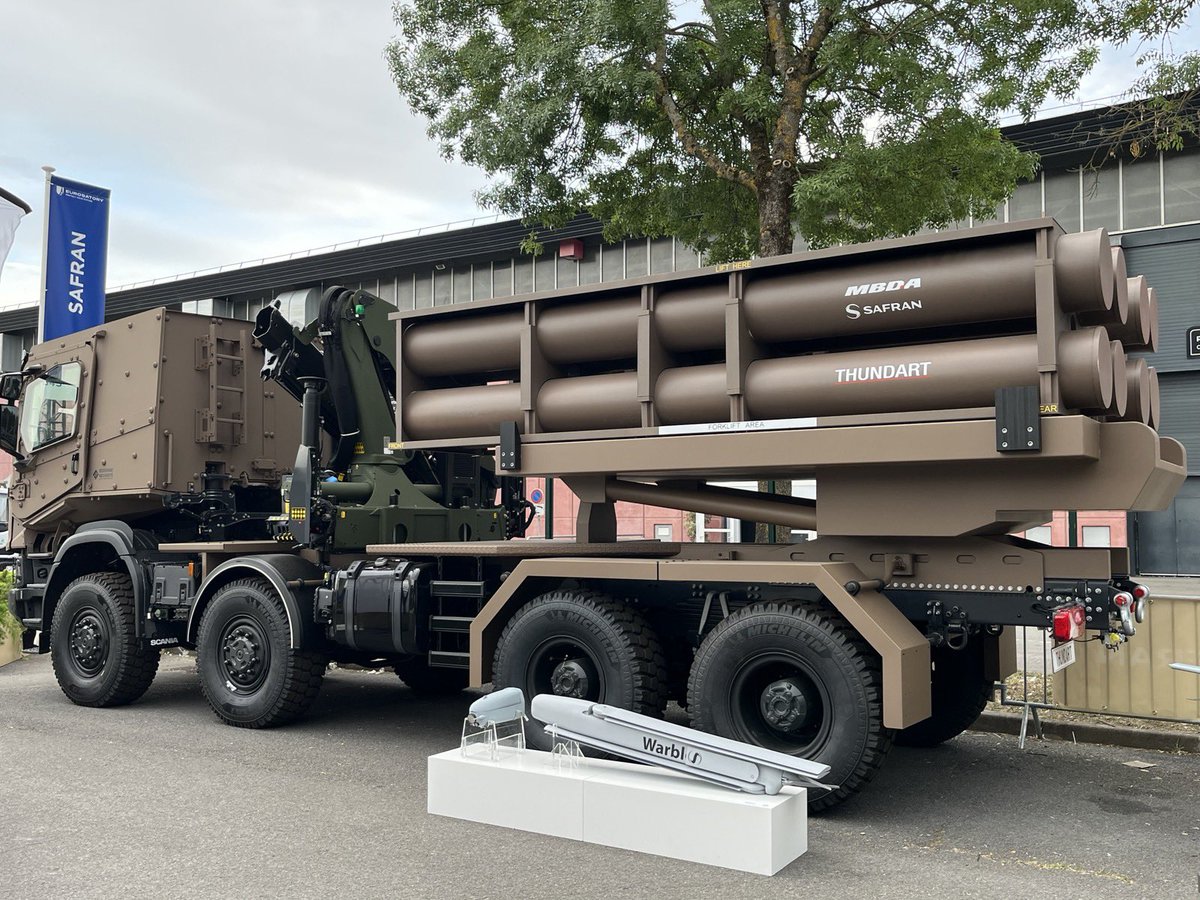
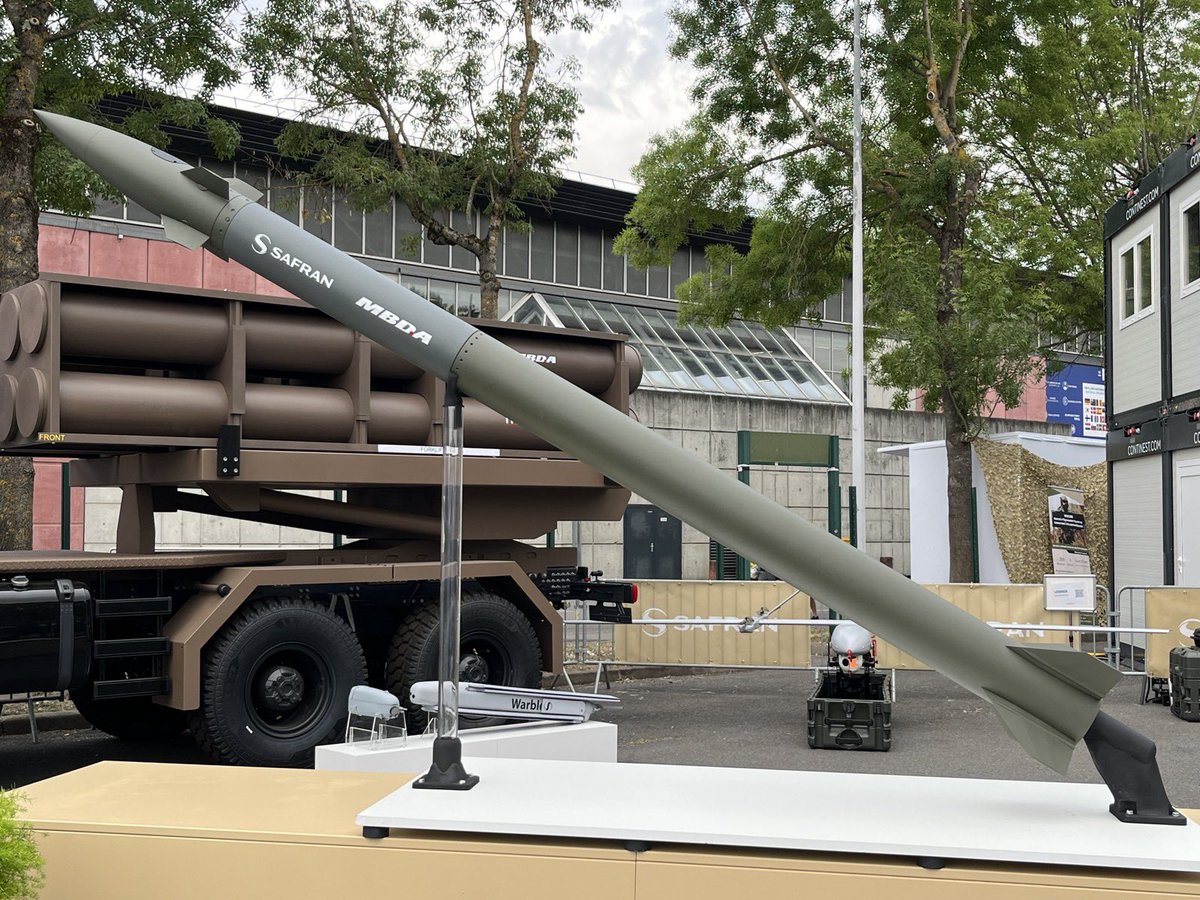

[Communiqué] Une solution souveraine pour succéder au lance-roquettes unitaire de l'@armeedeTerre
Lors de l’inauguration d'Eurosatory, la ministre @CaVautrin a annoncé le lancement d’une phase de négociations exclusives avec @MBDAGroup et @SAFRAN.
🔗 Pour en savoir plus : urlr.me/wS62rg
1
14
91
3,266

I work in a us military manufacturing facility my boss just pissed me off who wants ITAR government intel
3

Arguing with said regulator rather then implement some simple controls ending the stalemate and demonstrating safety isn't a viable path forward. ITAR compliance isn't that big of a deal.
38

After the announcement by @ProfAviLoeb on Saturday of his tasking through official government & Intelligence Community channels to stand up the new UAP Science Advisory Council — there is still the looming question whether this will be a fundamentally or partially classified endeavor.
Since we've heard radio silence from Prof. Loeb on the nuances of this topic, yet with much speculation from the community, I decided to deep dive into the digital networks accessed for conducting Research & Development on the funded DoD grant/contracted work at @Harvard prior to the Harvard DoD funding freezes of mid-2025.
Prof. Loeb is the Director of the Institute for Theory and Computation (2007-present) for the Harvard-Smithsonian Center for Astrophysics, and may be more notably known to the UFO community for serving as Head of the Galileo Project (2021-present).
BLUF: I heavily speculate that all work for the UAP Science Advisory Council will be conducted in a free exchange & openly scientific manner labelled as "fundamental research" according to Harvard University's Openness in Research Policy due to the council's deep ties to Harvard. However, I also speculate that new work branching from current Galileo Project research by the Council may be bumped up into higher level secure CUI access layers (e.g. FASRC Network → FASSE).
Networks utilized in the past for official Harvard DoD grant work ordered from highest → lowest level of secure access restriction:
1. Federal & Restricted Data Networks
(NIST SP 800-171 Compliant Enclaves)
These networks require strict physical and logical isolation. Which require multi-factor authentication sign-on, end-to-end encryption, and rigorous logging to host CUI (Controlled Unclassified Information) labelled records.
Examples include:
1a. LASER (Longwood Area Secure Environment for Research)
The on-premises virtual enclave managed by the HMS (Harvard Medical School) Secure Computing Core to isolate sensitive data.
1b. FASSE (FAS (Faculty of Arts & Sciences) Secure Environment)
The high-security, access-controlled high-performance computing cluster run by FASRC (FAS Research Computing), accessible only via its own dedicated VPN realm.
2. Direct Cloud Links to Defense Frameworks
(AWS GovCloud / Azure Government)
Examples include:
2a. Cloud LASER
The secure cloud expansion of the LASER platform, which deploys workloads directly into AWS GovCloud and Microsoft Azure Government environments.
2b. HMS Secure Cloud Computing (SCC)
The broader, managed enterprise cloud framework that spins up isolated, compliance-validated Virtual Private Clouds (VPCs) inside AWS GovCloud for Harvard researchers.
3. High-Performance Computing (HPC) Networks
Example:
3a. FASRC Network (Faculty of Arts and Sciences Research Computing)
The Galileo Project utilizes Harvard's main high-performance academic computing clusters (e.g. the "Cannon" Cluster) to run customized AI, machine learning, & deep-learning algorithms. This cluster is hosted at MGHPCC (Massachusetts Green High Performance Computing Center).
4. Collaborative Academic Networks
Example:
4a. Internet2
A high-speed, unclassified pipeline to securely transmit massive, non-classified research datasets and collaborate in real time with distant military research nodes and partnering academic institutions.
5. Academic Networks
Example:
5a. HU Net (Harvard University Network)
Harvard's standard academic network.
Note: all networks listed are operated at non-classified & Unclassified levels. However, these networks can be split into 2 fundamental tiers:
1. Controlled Unclassified Information (CUI) (1-2)
2. Public & Basic Research Data (3-5)
With tier #1 being utilized for sensitive DoD contracts, e.g. military medical records, export-controlled technology (ITAR), or logistical vulnerabilities.
With tier #2 work handling standard fundamental research, e.g. Harvard University professor Katia Bertoldi’s $6 million Pentagon project designing origami-inspired deployable shape-changing structures that can function as military hospitals.
Additionally: as stated in Harvard's Research Security Program:
"Rare exceptions may be made to the principle of openness regarding publication, classification, and access by foreign students and scholars in accordance with the Harvard University Openness in Research Policy. Such exceptions must be limited in scope to those circumstances where the area of research is crucially important to Harvard University’s educational and research mission. All exemptions are granted by the Office of the Vice Provost for Research who, in consultation with other institutional officials, will make the final determination."
This policy is structured under NSDD-189 (National Security Decision Directive), which exempts "fundamental research" from national security controls.
Conclusion: After analyzing the existence of these network architectures & Harvard's research policies, I heavily speculate that no official classified work has been conducted by Harvard University within recent future prior to the 2025 DoD funding freezes.
Additionally, I heavily speculate that current Galileo related Research may be utilized by the new UAP Science Advisory Council, where branched work may be moved from a tier #2 to tier #1 environment (e.g. FASRC Network → FASSE) to comply with CUI record storing / data standards when working under Contract (e.g. being "tasked" by) for the White House, AARO, FBI, and DoW/DoD directed Intelligence Community agency members.
In short, fundamental research conducted through the UAP Science Advisory Council will probably be conducted via non-classified academic & academic-DoD partner federally restricted Unclassified networks.
1
1
44


RED DOOM retweeted

ITAR the banks @POTUS

All banks in the USA are hiring Indian nationals exclusively.
Indian nationals are looking at your identity, your SSN, your address, your purchases.
And they're getting paid hundreds of thousands of dollars to see all your information.
1
5
29
316

leí el post. export controls a modelos es territorio nuevo. si Fable 5 cae bajo ITAR, modelos open-source serian la unica salida. ¿crees q acelera modelos soberanos fuera de US?
24

The real opportunity for Pinaka now is Southeast Asia, Africa and Eastern Europe, where countries want capable systems without ITAR restrictions and at a fraction of HIMARS cost
4
349
🇮🇳 France just chose its own rockets over India's Guided Pinaka
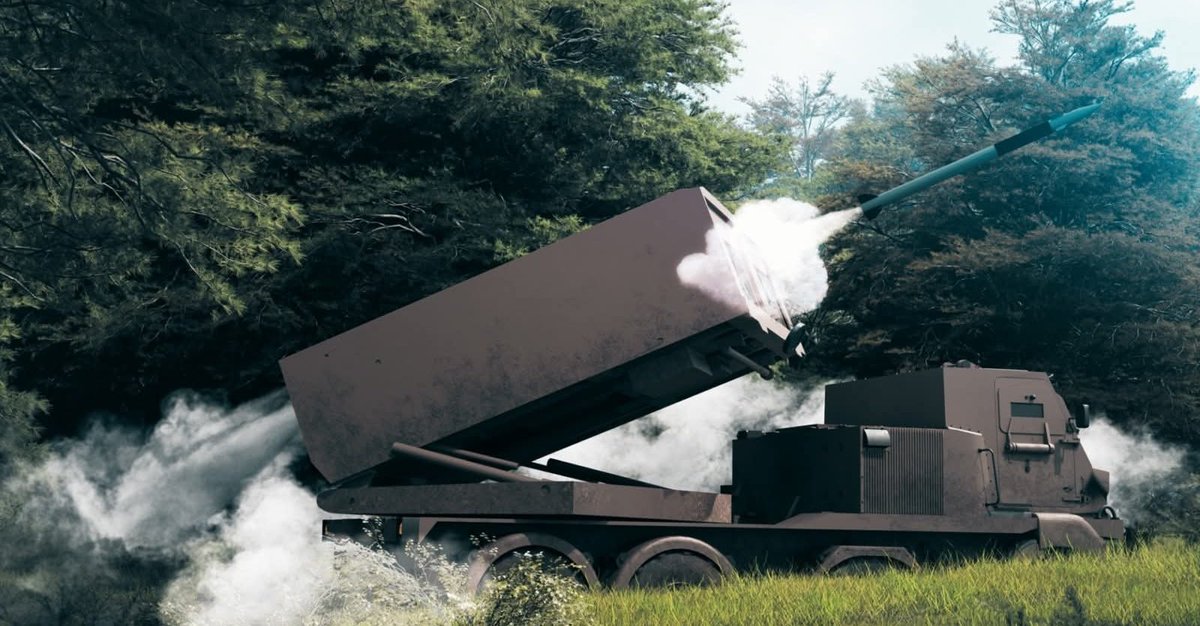
At Eurosatory 2026 yesterday, France selected the homegrown Thundart system over HIMARS, Chunmoo and Pinaka to replace its ageing rocket artillery fleet.
Here is what actually happened 👇
• France launched the FLP-T programme to replace 9 aging LRU launchers
• Pinaka was seriously evaluated as a stopgap option if domestic development ran late
• France then built Thundart from concept to live firing in just 18 months
• US even blocked GMLRS integration, pushing France further toward a sovereign solution
• Thundart carries 8 guided rockets per launcher with 150 km range, fully ITAR free
France rejected it because no major military power hands over deep strike capability to a foreign supplier.
This is exactly the same logic behind Atmanirbhar Bharat.
🇮🇳 India does not need France to buy Pinaka. India needs to keep building it until everyone wants it.
1
15
110
4,011