
How much are "microbubbles" worth? To investors in one biotech startup, the answer is $125 million. bizjournals.com/sanfrancisco…
57

you see these are just resudual microbubbles from the belated saint patty bonanza, AND it's not even green, that's TDS distorting your rods and cones. It's blue and yellow mixed water.
186
Corinne Nokel retweeted

Jun 12
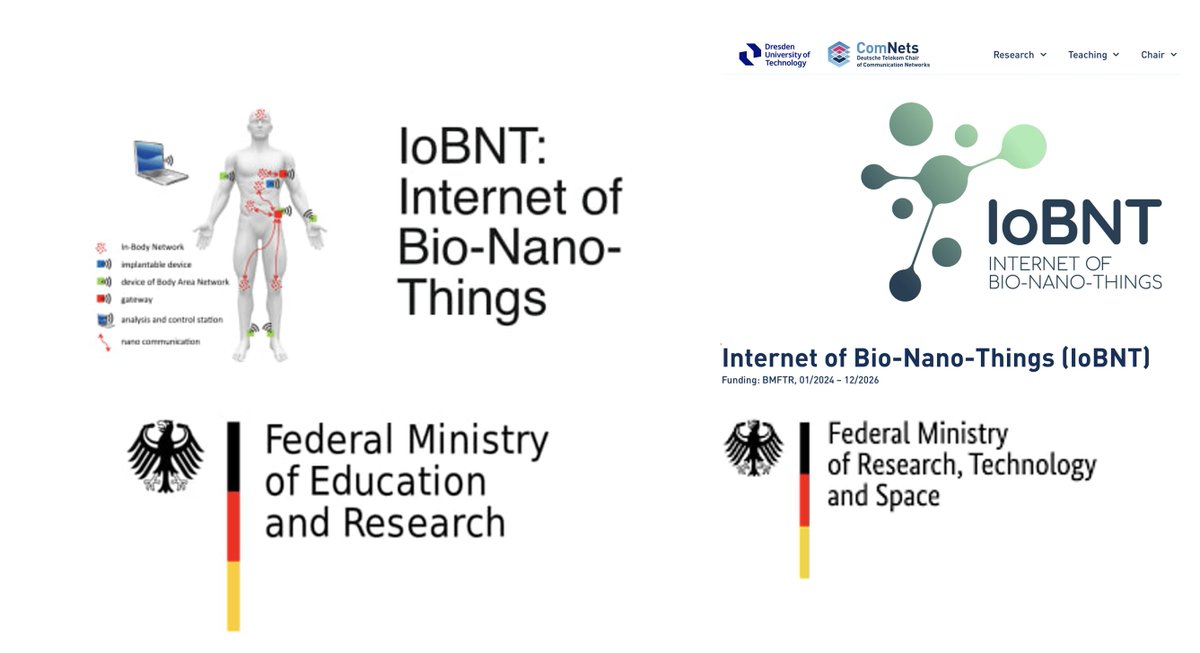
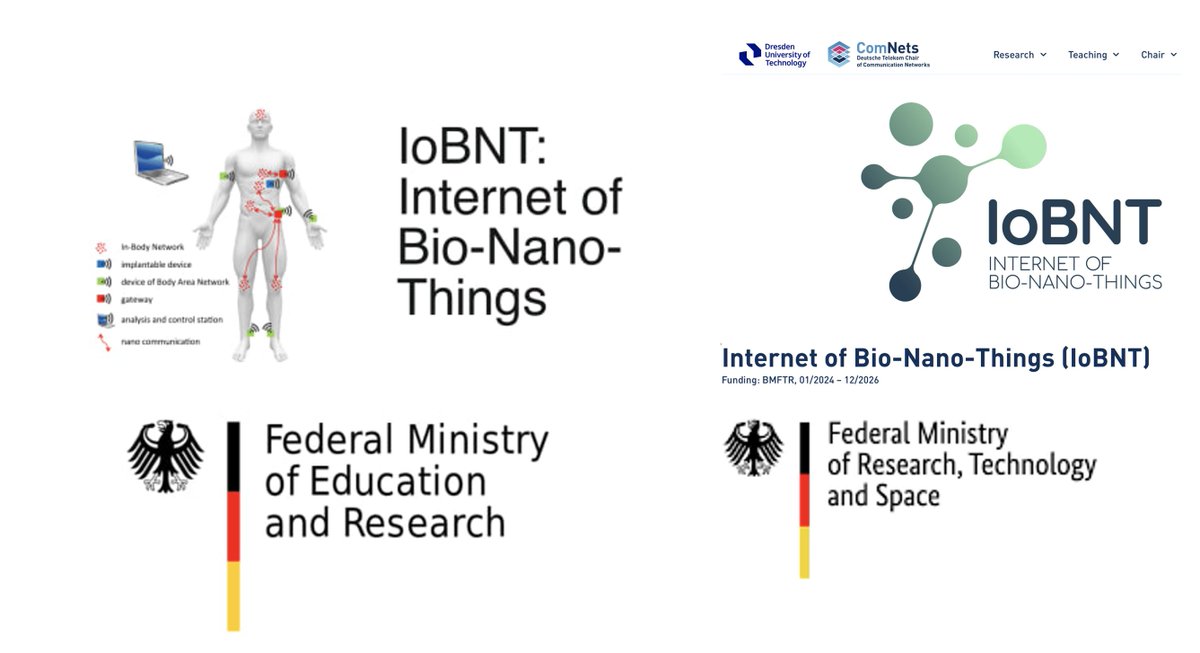
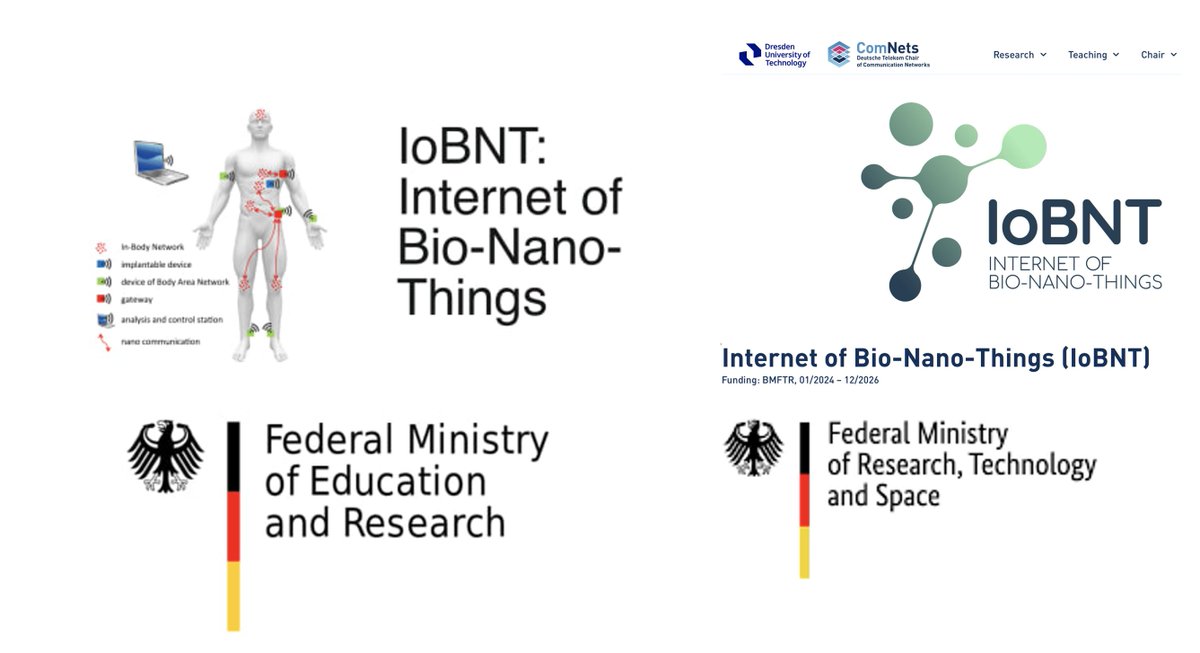
Medical Internet of Bio-Nano Things #IoBNT
In-Body Data Transmission
#MolecularCommunication #Microbubbles,
Hans Schotten
dfki.de/web/forschung/projek…
arxiv.org/pdf/2603.19372

Jun 12

Hans Schotten
Medical Internet of Bio-Nano Things #6G
Computer Networking Inside of German Children's Bodies
Synthetic, Cybernetic Smart Bodies
#ETSI #SmartBAN
dfki.de/web/forschung/projek…
internet-of-bio-nano-things.…
hhi.fraunhofer.de/en/press/n…

1
6
5
307

Jun 13
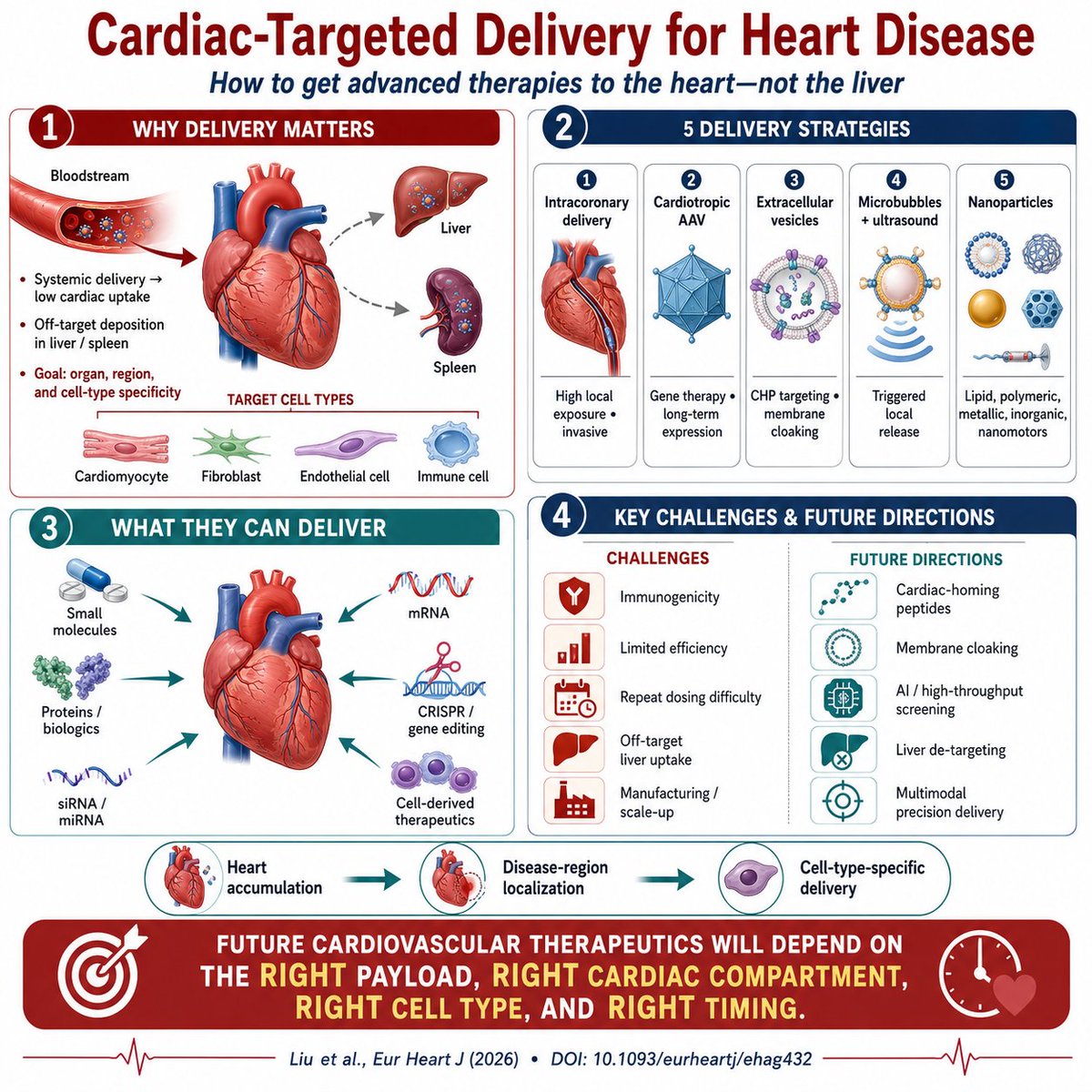
Cardiac therapy is entering a delivery-first era.
Many advanced therapies for cardiovascular disease already exist—small molecules, biologics, siRNA, mRNA, CRISPR systems, extracellular vesicles, AAV gene therapy, and nanoparticles.
But the bottleneck is simple:
How do we get the therapy to the heart, and not the liver/spleen?
A new European Heart Journal state-of-the-art review summarizes the emerging toolkit for cardiac-targeted delivery.
Core strategies:
Intracoronary delivery
Direct catheter-based delivery can raise local myocardial exposure, especially during PCI, but it remains invasive and difficult to repeat.
Cardiotropic AAV vectors
AAV9/SERCA2a, AAV-LAMP2B, MOG1, SOCS3, VEGF/Ang1, and CRISPR-based approaches show promise, but translation is limited by immune responses, liver uptake, dose toxicity, and packaging constraints.
Extracellular vesicles
EVs can be engineered with cardiac-homing peptides or membrane cloaking to increase uptake in cardiomyocytes, fibroblasts, and ischemic myocardium.
Microbubbles ultrasound
Ultrasound-targeted microbubble destruction enables local release of genes, drugs, or cells with spatial control.
Nanoparticles
Lipid, polymeric, metallic, inorganic, and nanomotor platforms are being designed for mRNA/siRNA delivery, anti-fibrotic therapy, anti-inflammatory targeting, and cardiac repair.
The key insight:
Cardiac targeting is not just “organ delivery.”
It requires three levels of precision:
heart accumulation → disease-region localization → cell-type-specific delivery
The future of cardiovascular therapeutics may depend less on discovering one more drug, and more on engineering the right delivery system:
right payload,
right cardiac compartment,
right cell type,
right timing.
Reference:
Liu et al. “Cardiac-targeted delivery of advanced medical therapies for heart disease.” European Heart Journal 2026. DOI: 10.1093/eurheartj/ehag432.
3
12
399

Jun 11
6553849 – April 29, 2003 – Electrodynamic particle size analyzer
6569393 – May 27, 2003 – Method And Device For Cleaning The Atmosphere
20040060994 – April 1, 2004 – Method for Influencing Atmospheric Formations
20040074980 – April 22, 2004 – Method and Device for Generating a Liquid Mist
0056705 A1 – March 17, 2005 – Weather Modification by Royal Rainmaking Technology
6890497 – May 10, 2005 – Method For Extracting And Sequestering Carbon Dioxide
2446250 – January 4, 2007 – A dust or particle-based solar shield to counteract global warming
20070056436 – March 15, 2007 – Challenger to Natural Twisters, Technology
2007033448 – March 29, 2007 – Production of Localized Artificial Rains in Polar Stratospheric Clouds, to Promote a Rain Wash in the CIO Gas, Reduce the Destruction of the Ozone Layer and a Replacement Process in situ of the Stratospheric Ozone
20070114298 – May 24, 2007 – Hurricane Abatement Method and System
20070158449 – July 12, 2007- Tropical Hurricane Control System
20070215946 – September 20, 2007 – Broadband Communications System via Reflection from Artificial Ionized Plasma Patterns in the Atmosphere
7965488 – November 9, 2007 – Methods Of Removing Aerosols From The Atmosphere
8048309 – August 28, 2008 – Seawater-Based Carbon Dioxide Disposal
20080203328 – August 28, 2008 – Outer Space Sun Screen for Reducing Global Warming
20100072297 – September 24, 2008 – Method for controlling hurricanes
7434524 – October 14, 2008 – Machine to Get Rid of Hurricanes
8012453 – October 27, 2008 – Carbon Sequestration And Production Of Hydrogen And Hydride
20090008468 – January 8, 2009 – How to Tame Hurricanes and Typhoons with Available Technology
7520237 – April 21, 2009 – Hurricane Prevention System and Method
20090255999 – October 15, 2009 – Production or Distribution of Radiative Forcing Elements
20090290761 – November 26, 2009 – Upper Troposphere and Lower Stratosphere Wind Direction, Speed, and Turbidity Monitoring using Digital Imaging and Motion Tracking
7645326 – January 12, 2010 – RFID environmental manipulation
7655193 – February 2, 2010 – Apparatus For Extracting And Sequestering Carbon Dioxide
20100074390 – March 25, 2010 – Method for Weather Modification and Vapor Generator for Weather Modification
20100127224 – May 27, 2010 – Atmospheric Injection of Reflective Aerosol for Mitigating Global Warming
7748662 – July 6, 2010 – Aerial Delivery System
20100170958 – July 8, 2010 – Hurricane Mitigation by Combined Seeding with Condensation and Freezing Nuclei
20100252648 – October 7, 2010 – Climate Processor
20100264230 – October 21, 2010 – Severe Storm / Hurricane Modification Method and Apparatus
20100282914 – November 11, 2010 – Enhanced Aerial Delivery System
20110005422 – January 13, 2011 – Method and Apparatus for Cooling a Planet
20110049257 – March 3, 2011 – Method and Apparatus for Local Modification of Atmosphere
20110101124 – May 5, 2011- Hurricane Abatement System and Method
2011073650 – June 23, 2011 – Atmospheric Delivery System
20110168797 – July 14, 2011 – Method of Weakening a Hurricane
20110174892 – July 21, 2011 – Apparatus and Related Methods for Weather Modification by Electrical Processes in the Atmosphere
20110198407 – August 18, 2011 – Method and Apparatus to Break Up or Annihilate Typhoons, Tornadoes, Cyclones or Hurricanes
20110204159 – August 25, 2011 – Weather Management Using Space-Based Power System
20110284649 – November 24, 2011 – Apparatus and Method for the Mitigation of Rotating Wind Storms
8079545 – December 20, 2011 – Ground based Manipulation and Control of Aerial Vehicle during nonflying operations
20120024971 – February 2, 2012 – Methods for Environmental Modification with Climate Control Materials and Coverings
8262314 – September 11, 2012 – Method for Decreasing the Intensity and Frequency of Tropical Storms or Hurricanes
0117003 – October 5, 2012 – Geoengineering Method Of Business Using Carbon Counterbalance Credits
20120267444 – October 25, 2012- Artificial Freezing Apparatus and Freezing Method Therefor
20120286096 – November 15, 2012 – Aerial Delivery Devices, Systems and Methods
20130008365 – January 10, 2013 – System and Method for Decreasing the Intensity and Frequency of Tropical Storms or Hurricanes
20130015260 – January 17, 2013 – Concept and Model for Utilizing High-Frequency or Radar or Microwave Producing or Emitting Devices to Produce, Effect, Create or Induce Lightning or Lightspeed or Visible to Naked Eye Electromagnetic Pulse or Pulses, Acoustic or Ultrasonic Shockwaves or Booms in the Air, Space, Enclosed, or Upon any Object or Mass, to be Used Solely or as Part of a System, Platform or Device Including Weaponry and Weather Modification
8373962 – February 12, 2013 – Charged seed cloud as a method for increasing particle collisions and for scavenging airborne biological agents and other contaminants
20130038063 – February 14, 2013 – Apparatus and Method for Inhibiting the Formation of Tropical Cyclones
201300043322 – February 21, 2013 – Processes and Apparatus for Reducing the Intensity of Tropical Cyclones
8402736 – March 26, 2013 – Method and Apparatus for Suppressing Aeroengine Contrails
8439278 – May 14, 2013 – Apparatus for Producing a Mass of Water Vapor, Apparatus for Producing, Moving, and Climbing a Mass of Water Vapor, and Method of Causing Artificial Stimulation of Rain
20130175352 – July 11, 2013 – Method to Influence the Direction of Travel of Hurricanes
20130186127 – July 25, 2013 – Ice Floater for Facilitating Ice-Freezing on Water Surface
20130206912 – August 15, 2013 – Moisture Dispersion
20140055876 – February 27, 2014 – Method for Controlling Land Surface Temperature using Stratospheric Airships and Reflector
20140131471 – May 15, 2014 – Apparatus to Channel Large Air Masses for Climate Modification
20140145002 – May 29, 2014 – System for Facilitating Cloud Formation and Cloud Precipitation
20140224894 – August 14, 2014 – Technique to Mitigate Storms using Arrays of Wind Turbines
8825241 – September 2, 2014 – Autonomous Wave-Powered substance Distribution Vessels for Fertilizing Plankton, Feeding Fish, and Sequestering Carbon from the Atmosphere
8944363 – February 3, 2015 – Production or Distribution of Radiative Forcing Agents
20150077737 – March 19 2015 – System and Methods for Monitoring an Environment
9002660 – April 7, 2015 – Device and Method for Determining and Indicating Climate-Relevant Effects of a Contrail Produced by an Airplane
20150230415 – August 20, 2015 – Methods for Decreasing Local Temperature using High Albedo Materials
20150337224 – November 26, 2015 – Microwave Acceleration of Carbon Gasification Reactions
9311539 – April 12, 2016 – Aircraft Contrail Detection
9429348 – August 30, 2016 – Method and Device for Producing Snow
9491911 – November 15, 2016 – Method for Modifying Environmental Conditions with Ring Comprised of Magnetic Material
9589473 – March 7, 2017 – Method and System for Automatically Displaying Flight Path, Seeding Path, and Weather Data
9715039 – July 25, 2017 – Apparatus and System for Smart Seeding within Cloud Formations
20170217587 – August 3, 2017 – Vehicles and Systems for Weather Modification
20170303479 – October 26, 2017 – Warm Cloud Catalyst, Preparation Method Therefor and Application Thereof
20180006422 – January 4, 2018 – Methods for Disrupting Hurricane Activity
20180006421 – January 4, 2018 – Methods for Disrupting Tornadic Activity
9924640 – March 27, 2018 – Modifying Sunlight Scatter in the Upper Atmosphere
20180217119 – August 2, 2018 – Process and Method for the Enhancement of Sequestering Atmospheric Carbon through Ocean Iron Fertilization, and Method for Calculating net Carbon Capture from said Process and Method
10189753 – January 29, 2019 – Fog-Generating Device Comprising a Reagent and Ignition Means
2019203461 – June 6, 2019 – Airships for Weather Manipulation
10314249 – June 11, 2019 – Systems and Methods of Inducing Rainfall
10375900 – August 13, 2019 – Rain Induced by Supercontinuum Laser Beams
10433408 – October 1, 2019 – Methods for Affecting Spinning Atmospheric Phenomena
10435165 – October 8, 2019 – Aircraft Electrically-Assisted Propulsion Control System
20190364748 – December 5, 2019 – Method and System for Expressing Airborne Cloud Seeding Line Considering Cloud Water
20200187430 – June 18, 2020 – Helical Artificial Generator of Tornado, Hurricane, Yellow Dust, and Typhoon
20200196539 – June 25, 2020 – Device for Seeding a Cloud Cell
10701871 – July 7, 2020 – Systems for Maintaining and/or Decreasing Water Temperature using High Albedo Materials
20200233115 – July 23, 2020 – Method and System for Determining Cloud Seeding Potential
WO2020148644A1 – July 23, 2020 – 3d Reduced Graphene Oxide/Sio 2 Composite for Ice Nucleation
20200261939 – August 20, 2020 – Apparatus for Generating and Optically Characterizing an Aerosol
2020101897 – September 9, 2020 – Artificial Rainmaking by High Power Laser Initiation Endothermic Reactions through Drone Aircraft Remote Control System
20200288650 – September 17, 2020 – Technology and Technique to Prevent, Diminish or Interfere with the Formation of Hurricanes on Earth from one or more Platforms in Space
20200288651 – September 17, 2020 – Methods for Cooling Water Temperature using High Albedo Materials
20200315104 – October 8, 2020 – Propagating Sound Through Bodies of Water, to Generate and Direct Wind, for the Purpose of Moderating and Affecting Weather Patterns
20200386970 – December 10, 2020 – Aerostatically Stabilized Atmospheric Reflector to Reduce Solar Irradiance
10888051 – January 12, 2021 – Intelligent Systems for Weather Modification Programs
20210037719 – February 11, 2021 – Planetary Weather Modification System
10941705 – March 9, 2021 – Hanson-Haber Aircraft Engine for the Production of Stratospheric Compounds and for the Creation of Atmospheric Reflectivity of Solar Radiation in the 555nm Range and to Increase Jet Engine Thrust and Fuel Economy through the Combustion of Ammonia and Ammonia By-Products
2021063943 – April 8, 2021 – Bacterial Preparations for Ice Nucleation
20210153442 – May 27, 2021 – Systems and Methods for Rain Cloud Initiation
20210163157 – June 3, 2021 – Artificial Ring, Solenoid System to Terraform
20210235638 – August 5, 2021 – Weather Management of Cyclonic Events
2021152336 – August 8, 2021 – Method of Cloud Seeding using Natural Ice Nucleating Agents
20210285851 – September 16, 2021- System for Sampling and Analyzing Contrails Generated by an Aircraft
20210289720 – September 23, 2021 – Systems and Methods for Producing Rain Clouds
2021105881 – October 21, 2021 – Process for Generating Marine Clouds and Ocean Microbubbles
20210329922 – October 28, 2021 – Compositions and Methods for Enhanced CO2 Capture and Storage
20210329852 – October 28, 2021 – Method for Preventing a Formation of, and/or for Dispersing, a Tropical Cyclone, and Arrangement Therefor
20210352856 – November 18, 2021 – Aerial Electrostatic System for Weather Modification
2021107294 – December 9, 2021 – Wind Turbines for Marine Cloud Brightening Dispersion
2022003028 – January 6, 2022 – Apparatus for Precipitation of Atmospheric Water
23220065599 – March 3, 2022 – Rocket for Artificial Rainfall using Ejection Hygroscopic Flare
11274534 – March 15, 2022 – Artificial rain to support water flooding in remote oil fields
20220113450 – April 14, 2022 – Calculation Method of Total Artificial Precipitation in Seeding Area Compared to Non-Seeding Area
2022094269 – May 5, 2022 – Reflective Hollow SRM Material and Methods
3994976 – May 11, 2022 – Apparatus for Electro-Spray Cloud Seeding
11330768 – May 17, 2022 – Systems and Methods for Producing Rain Clouds
20220268505 – August 25, 2022 – Method and Apparatus for Making Falling Snow
2022186970 – September 9, 2022 – Method of Geoengineering to Reduce Solar Radiation
20220355925 – November 10, 2022 – Aeronautical Car and Associated Features
20220357482 – November 10, 2022 – Method and System of Analyzing Ingredients of Artificial Rainfall for Verification of Cloud Seeding Effect
20230050373 – February 16, 2023 – Electromagnetic System to Modify Weather
20230075132 – March 9, 2023 – System for Moderating Energy Absorption at the Earth’s Surface with a Programmable Forcing Network of Climate Control Panels
20230117390 – April 20, 2023 – System and Method for Proactive and Reversible Mitigation of Storm/Hurricane/Typhoon/Cyclone
20230126982 – April 27, 2023 – Method for Analyzing Effect of Hygroscopic Seeding Material Sprayed on Ground Aerosol Concentration Through Airborne Cloud Seeding Experiment
20230141493 – May 11, 2023 – Device for Unmanned Aerial Vehicle to Deploy a Rainfall Catalytic Bomb
20230149876 – May 18, 2023 – Coated Chloride Salt Particles and Methods of Making and Using the Same

1
27
46
1,856
How much are "microbubbles" worth? To investors in one biotech startup, the answer is $125 million. bizjournals.com/sanfrancisco…
65

Jun 11
Biggest correction: cooling is not “the” biggest AI problem — it is the hidden multiplier
The headline is punchy, but it overstates the case:
“The biggest problem in AI isn’t computing power. It’s keeping the servers from overheating.”
Better:
“AI’s next bottleneck is not just compute. It is heat flux: how to remove extreme waste heat from dense GPU racks without burning power, water, and money on cooling.”
Why this is better: compute supply, grid connection, transformers, land, permitting, water, networking, chip packaging, memory bandwidth, and model efficiency are all constraints. Cooling is one of the most under-discussed constraints because it sits between the chip and the grid. It is not the only bottleneck, but it is the bottleneck that determines whether the other bottlenecks become usable infrastructure.
The International Energy Agency estimates data centers used around 415 TWh globally in 2024, about 1.5% of global electricity, and projects data-center electricity consumption could more than double to around 945 TWh by 2030, with AI as a major driver. In the U.S., Lawrence Berkeley National Laboratory reported that data centers consumed about 4.4% of U.S. electricity in 2023 and could reach 6.7% to 12% by 2028.
2. The missing technical distinction: energy use vs. heat removal
Every watt consumed by a server eventually becomes heat. Cooling does not make that heat disappear. Cooling only decides how expensively, how reliably, how water-intensively, and at what temperature that heat gets moved somewhere else.
That means the better conceptual line is:
AI’s energy problem has two layers: the watts used to compute, and the extra watts or water used to move the waste heat those computations create.
This avoids a common mistake in AI-energy discourse: pretending that better cooling eliminates the IT power itself. It usually does not. It can reduce cooling overhead, reduce thermal throttling, lower leakage losses, support higher sustained clocks, enable denser racks, reduce floor space, reduce water use, and improve uptime. But the GPU’s electrical power still becomes heat.
The genius framing:
Compute creates the heat. Cooling determines whether that heat becomes an infrastructure tax.
3. Add the heat path — this is the missing mental model
Most people imagine “cooling a data center” as fans blowing cold air around a room. That is obsolete for AI-scale density.
The post should explain the full thermal chain:
Chip junction → thermal interface material → package → cold plate / boiling surface → coolant → coolant distribution unit → facility loop → chiller / dry cooler / cooling tower → outside air
The weakest link controls the whole system.
The real fight is not “air vs. liquid.” It is thermal resistance across the stack. A brilliant cooling fluid is useless if the thermal interface material is bad. A cold plate is useless if the facility loop cannot reject heat. A perfect rack is useless if the site cannot get water, power, permits, or transformers.
Best line:
AI infrastructure is becoming a chip-to-grid thermodynamic machine. The GPU is only the hottest part of a much larger heat-removal system.
4. Add rack-density numbers
The post needs one hard number to make the urgency real.
For example, HPE’s NVIDIA GB200 NVL72 system page says each rack consumes 132 kW, with 115 kW liquid cooled and 17 kW air cooled. NVIDIA describes the GB200 NVL72 as a rack-scale, liquid-cooled design connecting 36 Grace CPUs and 72 Blackwell GPUs.
That is the “oh wow” moment. Traditional enterprise racks were often in the single-digit to low tens of kilowatts. AI racks are moving into industrial-machine territory.
Better post line:
A modern AI rack can draw power like a small building. At that density, air cooling stops being a comfort system and thermal management becomes industrial engineering.
5. Explain the nuclear-reactor connection properly
Do not just say “inspired by nuclear reactors.” That sounds like hype unless you explain the physics.
The correct explanation:
Nuclear engineers have spent decades learning how to move very high heat loads away from reactor fuel safely. One key concept is subcooled boiling. In ordinary saturated boiling, large vapor bubbles form, detach, and rise away. In subcooled boiling, the liquid near the hot surface boils locally, but the surrounding fluid is still cool enough that the bubbles detach quickly and recondense. This refreshes liquid at the hot surface and improves heat transfer.
Ferveret’s own technology page says its Adaptive Phase Cooling is inspired by subcooled boiling, producing smaller bubbles that detach more frequently and recondense in the surrounding liquid, refreshing liquid at the chip surface and improving heat transfer.
The deep engineering line:
The breakthrough is not “boiling liquid.” The breakthrough is controlling the bubble lifecycle before it becomes unstable.
6. Obscure but powerful concept: “critical heat flux”
This is the genius technical concept missing from the post.
In boiling heat transfer, there is a danger zone called critical heat flux. Below it, boiling helps remove heat. Above it, vapor can blanket the hot surface, reducing heat transfer and causing temperature to spike. In nuclear engineering, this is tied to dangerous boiling instability. In chip cooling, the stakes are different, but the physics rhyme: if the boiling process becomes unstable, the cooling surface can lose contact with liquid exactly when heat removal is most needed.
So the real question for a nuclear-inspired cooling startup is not simply:
“Can it boil?”
It is:
“How much margin does it maintain before critical heat flux, under real AI workload transients, pump faults, coolant aging, and partial blockage?”
That is the engineer’s question.
7. Best nuclear analogy: every AI rack becomes a tiny reactor-core problem
Do not say “AI data centers are like nuclear reactors” in a sensational way. Say this:
“The analogy is not radiation. The analogy is heat-flux control. A dense AI rack increasingly resembles a reactor-core thermal problem: enormous heat generation packed into a small volume, where failure is less about average temperature and more about local hotspots, fluid stability, and safety margins.”
That is both accurate and memorable.
8. The strongest one-line thesis
Use this:
“The future of AI may depend less on colder rooms and more on mastering microscopic bubbles at the surface of a chip.”
Or:
“The next AI infrastructure breakthrough may not be a bigger GPU. It may be a better way to boil liquid safely a few millimeters above one.”
9. The post needs to separate four cooling categories
Right now it lumps advanced cooling together. Add a simple taxonomy:
Air cooling: fans, heat sinks, CRAC/CRAH systems, hot/cold aisle containment. Mature, serviceable, but increasingly strained at high rack densities.
Direct-to-chip liquid cooling: coolant flows through cold plates attached to CPUs/GPUs. Strong near-term path for high-density AI, easier to adopt than full immersion.
Single-phase immersion: servers submerged in dielectric liquid that does not boil. Simpler fluid behavior, but large tanks, fluid handling, and serviceability can be difficult.
Two-phase / adaptive phase cooling: coolant changes phase or partially boils near hot surfaces, using latent heat and bubble dynamics to remove more heat with smaller temperature differences.
Then say:
Ferveret’s pitch is that it keeps some of the heat-transfer advantage of two-phase cooling while avoiding some of the complexity of traditional saturated-boiling immersion systems.
That sentence is much more credible than “nuclear cooling will save AI.”
10. Missing metrics: PUE is not enough
The post should not only talk about electricity. It should introduce the right scorecard.
PUE — Power Usage Effectiveness: total facility power divided by IT power. Lower is better; 1.0 is theoretical ideal.
WUE — Water Usage Effectiveness: water used per unit of IT energy.
CUE — Carbon Usage Effectiveness: carbon emissions associated with facility energy use.
ERF — Energy Reuse Factor: how much waste heat is productively reused.
Tokens per joule: how much useful AI output is produced per unit of energy.
Tokens per liter: useful AI output per unit of water consumed.
The most important new metric:
Useful intelligence per joule per liter per dollar.
That reframes the whole thing. The industry should not just optimize for more compute. It should optimize for useful output per constrained resource.
11. The current post slightly overclaims this line
“Every major improvement in cooling directly translates into lower electricity demand and lower emissions.”
Not always.
Better:
“Every major cooling improvement can reduce overhead, prevent throttling, improve hardware utilization, and lower water use. But emissions only fall if the saved electricity is not immediately offset by more compute demand, and if the power comes from lower-carbon sources.”
This matters because of the rebound effect. Better cooling may reduce energy per token while also making it economically attractive to deploy many more tokens. Efficiency can lower unit cost and increase total consumption.
The more sophisticated line:
Cooling efficiency reduces the cost of intelligence. Whether it reduces total emissions depends on what we do with the savings.
12. Missing water nuance: “waterless” needs a boundary
If the startup claims “zero water,” the post needs to clarify what that means.
Does it mean:
No water inside the server loop?
No evaporative cooling tower?
No on-site water consumption?
No water in the full electricity supply chain?
No water in chip fabrication?
No water at peak conditions?
No water only in certain climates?
This matters because “waterless cooling” can mean a closed-loop or dry heat-rejection architecture at the site, but the electricity generation behind the data center may still consume water depending on the grid mix. The best question is:
“Zero water where: at the chip, at the facility, or across the full lifecycle?”
That one line makes the post much sharper.
13. The hidden story is not cooling — it is site selection
Better cooling changes where data centers can be built.
If cooling needs less water, AI campuses can move closer to cheap solar, wind, geothermal, stranded power, retired industrial sites, cold climates, or places with available grid capacity. MIT News notes Ferveret’s founders argue water-free cooling could help data centers operate in dry regions with abundant solar energy.
That is a bigger implication than “servers do not melt.”
The deeper implication:
Cooling technology is becoming geography technology.
Whoever solves water-light, power-light, high-density cooling gets to choose better sites. That affects land economics, grid planning, sovereign AI, latency, national security, and local politics.
14. Obscure thought input: heat is the shadow price of intelligence
A very strong conceptual line:
Every AI token has a thermal shadow.
The visible output is text, image, code, video, or reasoning. The invisible output is heat. As models scale, the limiting question becomes:
How much intelligence can we produce before the heat, water, grid, and permitting costs dominate?
That is a more poetic and deeper version of the post.
15. Obscure thought input: the data center is becoming an exergy problem
Energy is conserved, but exergy is useful energy — energy available to do work.
Low-temperature waste heat from servers is hard to reuse. But if liquid cooling can produce warmer, more concentrated heat streams, that heat may become more useful for district heating, industrial preheating, greenhouses, absorption cooling, desalination preheat, or thermal storage.
The subtle point:
Better cooling is not just about removing heat. It is about upgrading waste heat into a usable thermal product.
A powerful line:
The next green data center will not just consume electricity. It will export compute and useful heat.
16. Genius-level solution: use a “thermal SCRAM”
Borrow from nuclear safety culture.
A reactor has emergency shutdown logic. AI racks need a version of that:
Thermal SCRAM: instant workload throttling, power capping, job migration, checkpointing, and coolant-loop isolation when sensors detect bubble instability, pump degradation, leak risk, abnormal pressure, or hotspot formation.
This should not be a human operator decision. It should be automated across the stack:
chip firmware,
GPU driver,
rack controller,
coolant distribution unit,
facility digital twin,
scheduler,
grid interface.
The key idea:
Cooling should not be passive plumbing. It should be part of the AI control plane.
17. Genius-level solution: make the scheduler thermal-aware
Today, AI scheduling mostly thinks about GPUs, memory, network topology, cost, and availability. Future schedulers should also think about:
rack inlet temperature,
coolant temperature,
pump efficiency,
local electricity price,
carbon intensity,
water constraints,
thermal headroom,
heat-reuse demand,
weather forecast,
grid congestion,
maintenance risk.
Then jobs can be placed based on thermal economics.
Example:
Train large models at night when ambient temperatures are low and renewable power is available.
Run inference-heavy workloads where latency matters.
Move flexible batch jobs to sites with cooler weather or lower-carbon power.
Throttle racks before cooling systems enter inefficient operating regions.
Send heat-heavy jobs to facilities with district-heating demand.
The brilliant line:
AI should learn where it is thermodynamically cheapest to think.
18. Genius-level solution: “tokens per thermal watt”
The AI industry needs a new KPI:
Tokens per thermal watt removed.
Not just tokens per GPU watt. Not just PUE. Not just utilization. The real metric should account for the full thermal burden of AI output.
A cloud provider could report:
tokens per kWh,
tokens per liter,
tokens per kg CO₂e,
tokens per dollar,
tokens per rack-hour,
tokens per degree of coolant temperature rise.
That would turn sustainability into an operational metric instead of a marketing claim.
19. Genius-level solution: standardize a “rack thermal passport”
Every high-density AI rack should ship with a thermal passport:
maximum heat load,
coolant flow requirements,
allowed inlet temperature,
thermal ramp rate,
failure-mode behavior,
pump ride-through time,
leak-detection requirements,
coolant compatibility,
service procedure,
expected PUE/WUE range,
heat-reuse temperature,
sensor map,
critical heat-flux margin,
warranty conditions.
This would let utilities, insurers, operators, and local governments evaluate AI infrastructure more intelligently.
Best line:
We should not permit megawatt AI rooms using laptop-era thermal disclosure.
20. Genius-level solution: thermal batteries for data centers
Cooling demand often peaks when the grid is stressed and ambient temperatures are high. Add thermal storage:
chilled-water tanks,
phase-change materials,
underground thermal storage,
ice storage where appropriate,
high-temperature liquid loops,
waste-heat storage for district use.
This lets data centers shift cooling loads away from grid peaks. The DOE has explicitly highlighted flexibility, onsite generation, storage, and grid-aware strategies as part of meeting rising data-center demand.
A great post line:
The next AI campus may need batteries for electrons and batteries for heat.
21. Genius-level solution: use AI to cool AI
This can sound cliché, so make it concrete.
AI cooling control should optimize:
fan speed,
pump speed,
valve positions,
coolant setpoints,
rack power caps,
job placement,
weather-dependent heat rejection,
chiller staging,
fault detection,
predictive maintenance,
leak-risk detection,
thermal anomaly detection.
This is not “AI magic.” It is control theory plus sensors plus operations data.
A strong line:
The cooling system should know the workload before the heat arrives.
22. The real product-market question
The technical question is not just: “Does it remove heat?”
The commercial question is:
Can it retrofit into existing data centers without turning operations into a maintenance nightmare?
Ferveret says its approach uses compact, rack-ready, server-level modules rather than large shared immersion tanks, and argues this improves integration and serviceability. That is important because data-center operators care about uptime, technician workflow, insurance, spare parts, warranties, and mean time to repair as much as raw cooling performance.
A great line:
The winning cooling technology will not be the one with the prettiest heat-transfer curve. It will be the one technicians can service at 3 a.m. without draining a swimming pool of exotic fluid.
23. Add the maintenance and reliability layer
The post should ask:
What happens when a pump fails?
What happens when coolant chemistry changes over five years?
What happens if microbubbles accumulate where they should not?
What happens during rapid workload spikes?
What happens during partial blockage?
Can a single server be removed without disturbing the rack?
Can the coolant damage cables, seals, thermal interface materials, plastics, adhesives, or labels?
What is the leak-detection method?
Is the coolant flammable?
What is the global warming potential?
Is it PFAS-linked?
What is the disposal process?
Can standard data-center technicians work on it?
This is where infrastructure hype becomes real engineering.
24. The coolant chemistry issue is a missing landmine
A lot of advanced cooling depends on specialized fluids. That raises questions about:
PFAS regulation,
global warming potential,
toxicity,
flammability,
dielectric strength,
material compatibility,
evaporation or fluid loss,
supply-chain availability,
disposal,
insurance,
worker exposure,
long-term degradation.
MIT News says Ferveret uses a low-boiling-point liquid with no toxic PFAS “forever chemicals,” and Ferveret’s own page says its fluid is low-GWP and not regulated under PFAS guidelines.
That is a major point to include because many people hear “liquid cooling” and immediately worry about leaks or exotic chemicals.
25. The better audience question
The current ending asks:
“Would you rather see more focus on making AI hardware more efficient, or on radically improving how we cool the massive data centers that run it?”
This is a false choice.
Better:
“Where should the next efficiency breakthrough come from: better models, better chips, better cooling, better scheduling, or better grid integration?”
Even better:
“What should AI optimize for next: more tokens per GPU, more tokens per watt, more tokens per liter, or more tokens per dollar?”
Best:
“If intelligence is becoming an industrial product, what is the right unit of efficiency: FLOPs, tokens, joules, liters, dollars, or carbon?”
26. Add a mini “cooling stack” graphic
The post would be much more shareable with a simple visual:
Level 1: Chip — lower-voltage architectures, chiplets, packaging, memory proximity.
Level 2: Server — thermal interface, cold plates, immersion, phase-change cooling.
Level 3: Rack — coolant distribution, leak detection, redundancy, serviceability.
Level 4: Facility — chillers, dry coolers, heat exchangers, thermal storage.
Level 5: Grid — carbon-aware scheduling, demand response, onsite energy.
Level 6: Society — water rights, permitting, community impact, heat reuse.
Caption:
AI cooling is not one technology. It is a stack.
27. Add a Sankey diagram idea
The best simple diagram:
1 MW into data center → 900 kW IT load → all becomes heat
100 kW cooling / pumps / fans / overhead → also becomes heat
Final output: useful AI tokens 1 MW of heat rejected somewhere
Then compare:
Old facility: PUE 1.4
Modern efficient facility: PUE 1.1
Advanced phase cooling target: PUE near 1.03, according to Ferveret’s reported UCLA testing.
The lesson:
The goal is not to eliminate heat. The goal is to make nearly every watt go to compute before it becomes heat.
28. The best “missing caveat” for credibility
Add this:
Cooling breakthroughs do not replace model efficiency. The greenest watt is still the watt the model never uses.
This protects the post from engineers who will say, correctly, that algorithmic efficiency, sparsity, quantization, distillation, memory architecture, and inference optimization matter more than cooling in many cases.
A very strong line:
Cooling is the tax code of AI infrastructure. Model efficiency is the income. You need both.
29. Better version of the post
Here is a stronger rewrite:
AI’s next bottleneck may not be raw compute. It may be heat flux.Every watt that enters an AI server eventually becomes heat. As GPU racks move from traditional data-center densities into 100 kW industrial-machine territory, the question is no longer just “Can we buy enough chips?”It is: Can we remove the heat without wasting electricity, water, space, and uptime?A startup called Ferveret, founded by MIT-linked nuclear engineering researchers, is attacking this problem with a cooling method inspired by nuclear reactor heat-transfer physics. Its Adaptive Phase Cooling approach uses subcooled boiling: tiny bubbles form at the hot chip surface, detach rapidly, and recondense in the surrounding liquid, refreshing the surface and pulling heat away more efficiently.That matters because air cooling is reaching its limits for dense AI workloads. Direct-to-chip liquid cooling is already becoming essential. The next frontier may be controlled two-phase cooling, where the phase change of a fluid removes much more heat with smaller temperature differences.But the real story is bigger than “servers are overheating.”AI infrastructure is becoming a chip-to-grid thermodynamic machine. The thermal path now runs from silicon, to coolant, to rack, to facility, to grid, to local water and climate constraints.The winners in AI infrastructure may not only be the companies with the fastest GPUs. They may be the companies that can turn the highest percentage of every watt into useful tokens before it becomes waste heat.The right metric is not just FLOPs. It is useful intelligence per joule, per liter, per dollar, and per square foot.The next AI breakthrough may not be a bigger model. It may be a better way to move heat.
30. More viral but still accurate version
The future of AI may depend on boiling liquid a few millimeters above a GPU.That sounds strange, but it is where AI infrastructure is heading.Modern AI racks can consume more than 100 kW. Almost all of that power eventually becomes heat. At that density, fans are no longer enough. Cooling becomes a first-order constraint on how much AI we can deploy, where we can deploy it, and how much water and electricity it costs.Now companies are borrowing ideas from nuclear engineering, especially subcooled boiling, to remove heat faster and more efficiently from AI chips.The deeper point: AI is not just a software revolution. It is a thermodynamics problem.The next frontier is not only better chips. It is better heat removal, better water strategy, better grid integration, better scheduling, and better metrics for useful output per watt.We are entering the era of thermal intelligence.
31. Best short caption
AI is becoming heat-flux-limited. Every watt that enters a GPU becomes heat, and dense AI racks are pushing air cooling past its limits. The next infrastructure breakthrough may be controlled phase-change cooling, thermal-aware scheduling, and measuring AI not just in FLOPs — but in useful tokens per joule, liter, dollar, and square foot.
32. Best comment under the post
The key distinction: cooling does not eliminate the server’s energy use. It reduces the overhead and constraints of moving waste heat. The real metric should be useful AI output per joule, per liter, and per dollar — not just raw GPU count or PUE.
33. Killer questions to ask the startup
Ask these before accepting the hype:
Performance: What heat flux can the system handle in W/cm², not just kW per rack?
Benchmarking: Was the 15% efficiency improvement tested against the same GPUs, same workload, same ambient conditions, same power caps, and same facility assumptions?
Scope: Does the efficiency gain come from better cooling alone, from reduced throttling, from higher sustained clocks, or from power-control software?
Water: Does “zero water” mean no on-site water, no evaporative cooling, or no water across the full lifecycle?
Reliability: What happens during pump failure, coolant loss, partial blockage, or workload spikes?
Safety margin: What is the critical heat-flux margin under worst-case AI workloads?
Jun 11

🚨 THE BIGGEST PROBLEM IN AI ISN'T COMPUTING POWER IT'S KEEPING THE SERVERS FROM OVERHEATING.
Data centers already consume enormous amounts of electricity and with the explosion of AI training clusters, that demand is rising fast. A large portion of that energy goes into cooling the servers.
Now, a startup has created a new cooling approach inspired by the extreme heat management techniques used in nuclear reactors.
Why this matters:
• Traditional air cooling is becoming inefficient and expensive as chip power densities increase
• Liquid-based and advanced two-phase cooling systems can remove heat much more effectively
• Nuclear engineering has decades of experience managing very high heat fluxes safely and efficiently
• If scaled, this could significantly reduce the energy footprint (and water usage) of future data centers
The deeper implication:
AI’s energy problem isn’t just about how much power we generate it’s also about how efficiently we remove the waste heat. Every major improvement in cooling directly translates into lower electricity demand and lower emissions from data centers.
We may be entering an era where the biggest breakthroughs in AI infrastructure don’t come from the chips themselves, but from the systems that keep them from melting.
Would you rather see more focus on making AI hardware more efficient, or on radically improving how we cool the massive data centers that run it?
Follow for more frontier technology and the real infrastructure behind AI.
1
1
5
918

Jun 11
bi literally means two or more. this stupid ass revisionism to a sexuality just to create microbubbles of people is beyond moronic. sorry but it feels weird so be singled out as a non binary who is also bisexual. I'm not going to be in your fucking bubble

“bisexual” = liking women and men.
“pansexual” = liking women, men and non-binary people.
that’s at least how i, a bi woman, see it.
idk why so many of you try sooo hard to make things more complicated than they really are. stop changing the meaning of words.
1
47
Kimberly Ha retweeted
How much are "microbubbles" worth? To investors in one biotech startup, the answer is $125 million. bizjournals.com/sanfrancisco…
1
2
134

New ultrasound treatment using E-selectin-targeted microbubbles shows promise in protecting rat kidneys from drug-induced damage. A recent study published on April 09, 2026, in Nature Communications highlights the potential renoprotective effects of combining this innovative approach with methylprednisolone to mitigate acute kidney injury caused by cisplatin. The findings suggest a novel strategy to enhance the therapeutic benefits of traditional medications in safeguarding kidney function.
The research underscores the importance of exploring advanced techniques like ultrasound in conjunction with targeted microbubbles to enhance the efficacy of existing treatments for kidney injuries. By specifically targeting E-selectin, these microbubbles could potentially improve the delivery and impact of medications like methylprednisolone, offering a new avenue for protecting renal health in the face of drug-induced harm. This innovative approach opens up possibilities for refining treatment strategies and improving outcomes for patients at risk of acute kidney injury.
Source: nature.com/articles/s41598-0…
Published Date: April 09, 2026
👉 Comment BIOHACK if you want more science and health news like this!
#BiohackYourself #HealthNews #ScienceNews #ResearchUpdates #Biohack
Disclaimer:
This content is for educational and entertainment purposes only and is not a substitute for medical advice. Always consult a healthcare professional. Full disclaimer: biohackyourself.com/termsand…
🧠 We explore all angles — ancient wisdom, modern science, and everything in between. No allegiance to Big Pharma or Big Natural.
🔍 We cite studies, but encourage you to read them, question funding, and review the methods. Stay curious.
📚 Not all journals are equal. Peer-reviewed ≠ perfect. Check the source, think critically, and decide for yourself.
⚠️ One study isn’t the full story. Science evolves. We’re here to inform, not to tell you what to believe.

5

Given where you guys live and what you do, I would guess you are in separate microbubbles of what is already a bubble on the national level. Honestly his is probably bigger than yours, but still, most of the nation does not think in his terms.
2
154

Jun 9
Nivea Bright Oil Clear 5 in... thaiglowstore.com/products/n… via @https://x.com/ThaiGlowStore
✨ Say hello to a fresh cleansing experience with NIVEA Bright Oil Clear 5 In 1 Microbubbles Deep Clean Foam. Rich microbubble foam helps leave your skin feeling clean, smooth, and refreshed after every wash.
#FacialCleanser #FreshSkin #Skincare
32
Jun 8
Nivea Pearl Bright 5 in 1 M... thaiglowstore.com/products/n… via @https://x.com/ThaiGlowStore
✨ Experience a refreshing cleanse with NIVEA Pearl Bright 5 In 1 Microbubbles Deep Clean Foam. A rich foaming cleanser designed to leave your skin feeling clean, smooth, and refreshed after every wash.
#FacialCleanser #DeepClean #Skincare
8

✅ Verdict: True.
The claim holds up: Japan has a real human washing machine pod that cleans and dries you in 15 minutes.
Key Evidence:
Reports from late 2025 and 2026 confirm Science Inc. launched the Mirai Human Washing Machine, a pod using microbubbles and air drying for a full cycle in 15 minutes. It has been placed in hotels and covered by outlets like People, WIONews, and New Atlas.
Bottom Line:
The futuristic pod is real and commercially available, though priced at around $385,000.
1
83