หมาน้อย🤟🤟 retweeted

แจ้งลบคลิปได้นะครับ🔞 Adults Only (18 )
NSFW Content
All models are 18 adults
Viewer discretion advised
 GunnerZmini
4
784
2,004
46,589


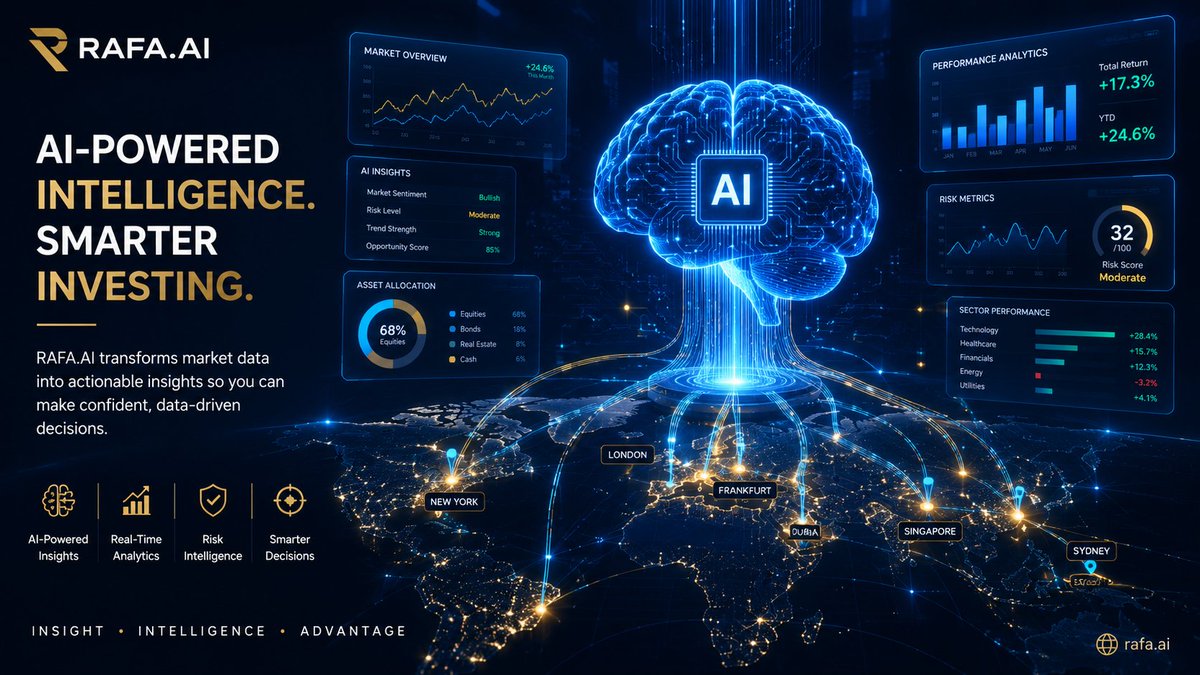
Hedge funds hire an army of analysts to do this. You just need @RAFA_AI
RAFA deploys an interconnected team of multi-agent quantitative models—including Analyst Pro, News Guru, and Strategy Wiz—that continuously scan
🧵👇🏾

Jun 9

Your Personal AI Investment Committee
Stop scanning hundreds of charts manually.
@RAFA_AI runs a team of independent, specialized AI agents that monitor market trends, options flow, and live news 24/7.
👇🏾🧵

Kia Pakistan has announced a limited-time offer with up to 20% discounts on extended warranty packages for the Picanto, Stonic, Sportage QL, and Sorento UM models.
theneutral.pk/kia-pakistan-a…
#theneutral #KiaPakistan #Kia #ExtendedWarranty #PakistanAuto #Sportage

𝐒𝐓. 𝐃𝐄𝐍𝐈𝐒' 𝐃𝐄𝐋𝐈𝐍𝐐𝐔𝐄𝐍𝐓𝐒. retweeted

5 Jun 2024
Eve can get it.
Eve voice by my lovely @PleasedByViolet
Male voice @IRecshun
Models by @1ceDev_ and Fask
Higher res and no male audio versions for supporters :)
162
10,857
83,748
8,767,122

From today will do a 100 days challenge of my day trading learning journal:
Here’s an easy English translation of your daily investment schedule:
7:30 AM
Open TradingView and check my custom news feed: macroeconomic data updates, Federal Reserve official speeches, major tech company news, AI spending trends, supply chain reports, chip spot prices.
8:30 AM
Data maintenance: update NAV (net asset value), review position exposure, adjust portfolio beta. Use FactSet and Bloomberg to track Nasdaq futures, semiconductor index, and US Treasury yield curve. Quickly review major holdings for catalysts and valuation changes.
9:30 AM
Try to learn: “The world is messy.”
12:00 PM
Review morning market performance. Look at sector heatmap and ETF flows to understand where money is going and risk appetite. Even though my portfolio focuses on fundamentals, I do a technical review every day. My team makes independent trading decisions—we handle everything from position adjustments to placing orders ourselves.
1:00 PM
Read research reports: focus on vertical SaaS pricing power, AI spending cycles, HBM (memory chip) adoption rates, liquid cooling equipment orders. Also study chip manufacturing daily—photolithography, etching, deposition, and EDA software.
3:00 PM
Start preparing monthly stock pitches. Primary research takes most effort. I talk with management teams, distributors, equipment makers, customers, and former employees. Often one off-the-record comment changes everything. Since we cover multiple sectors, I also peer-review other teams’ work and track their markets.
5:00 PM
Evening review: portfolio gained today. Performance shows positive stock selection, negative allocation, beta slightly above benchmark. EDA license renewals accelerating; TSMC hiring shows production line expansion; NVIDIA Blackwell shipments may delay (short-term disruption, long-term thesis unchanged).
8:00 PM
Compare ASML and LRCX gross margin analysis, update valuation models, run sensitivity analysis with AlphaSense, regularly check if my investment thesis still holds, eliminate disproven assumptions.
2

And this is going to be the problem moving forward, where all the big AI models are designed, built and delivered by the US or China.
As soon as they no longer want to share it they can stop it worldwide.

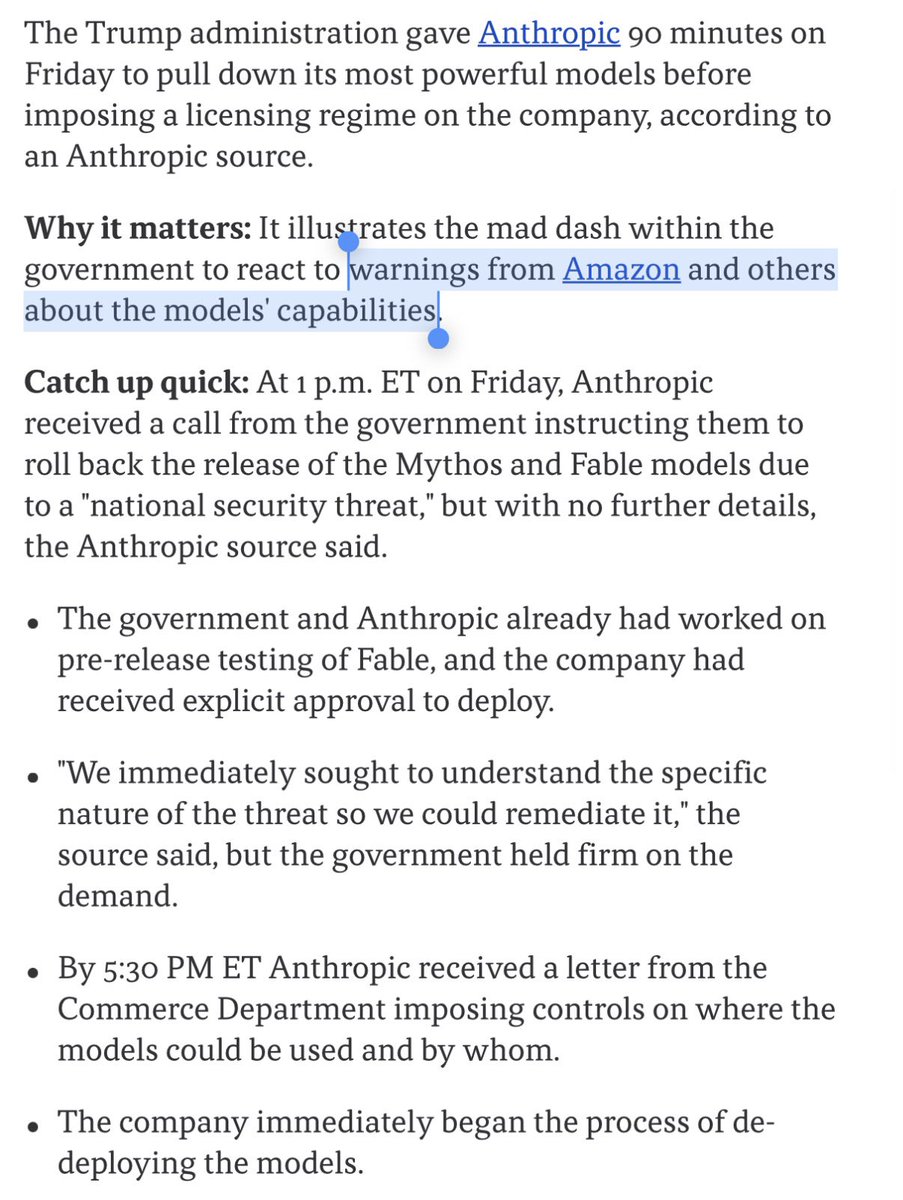
🚨BREAKING: The U.S government gave Anthropic 90 minutes to shut down Fable and Mythos
“Amazon AND others” called senior administration officials to warn about models’ capabilities
Then:
1:00pm: Government calls. “Take it down.”
Cites “national security threat.” No details.
Anthropic asks what the threat is so they can fix it.
Government said NO.
5:30pm: Commerce letter arrives with export controls.
You have 90 minutes…


1

RT @HideakiPai: Magik having some fun after her match~ 💦
🎥 - Z1G3D
🔈 - OpenNSFWSP
Models - MrBag3D / 1ceDev_
#hentai #Magik #MarvelRivals…
143


BBC VIDEO retweeted

Jun 13
Join the best NSFW discord server🥵
-500 channels
-100 Hentai channels
-50TB Porn/Hentai
-Homemade videos
-OF Models/Animations
discord.gg/Dh2rmHPTP
 nutflix
237
546
11,458

jushim retweeted

Emma Frost/Lady Loki/Hela New Team Up
Models @hymcake @Bobot_jos @MrBag3D
Animation - @Veedeeshka
EDITOR -@PSYDEVILNSFW(me)
EMMA FROST VA - @HaruLunaVO
HELA VA - @NyaghtyNya
LADY LOKI VA - @PeriwinkleVA
MALE VA - @RabbleRouser_VA
SFX PACK - @PointyAux
Follow Every Creator to Support💜
47
389
2,773
BBC VIDEO retweeted
Jun 13
Join the best NSFW discord server🥵
-500 channels
-100 Hentai channels
-50TB Porn/Hentai
-Homemade videos
-OF Models/Animations
discord.gg/Dh2rmHPTP
 CaptionsPlus
260
822
13,034

A Jewish minority support the Muslims called Palestinians. Most of these protestors are Westerners who get their news off Instagram.
But Jews and free markets have been good for him. He has banged Jewish bikini models.
2

The U.S. government just made almost everyone lose access to Claude’s most advanced models... including American companies and paying customers.
This didn’t happen because of safety.
It happened because of politics.
According to reporting, Anthropic had already clashed with the Pentagon over military use. The company reportedly refused to remove limits on lawful but extreme use cases, such as autonomous weapons or mass surveillance. In response, it was labeled a national supply-chain risk... a designation normally reserved for foreign adversaries, not a leading American AI lab.
A federal judge reportedly described that label as a pretext for retaliation.
A few months later, the government used a cleaner tool: export controls.
This time the official reason was national security. Anthropic’s most powerful models, Fable 5 and Mythos 5, were deemed too advanced to be accessed by foreign nationals. But because Anthropic cannot reliably determine the nationality of every API user, employee, integration, and downstream caller in real time, the practical outcome was simple:
Everyone lost access.
Including U.S. companies. Including enterprise customers who pay. Including developers and teams who had nothing to do with the original conflict.
That’s why this story matters.
Not because one model became harder to use.
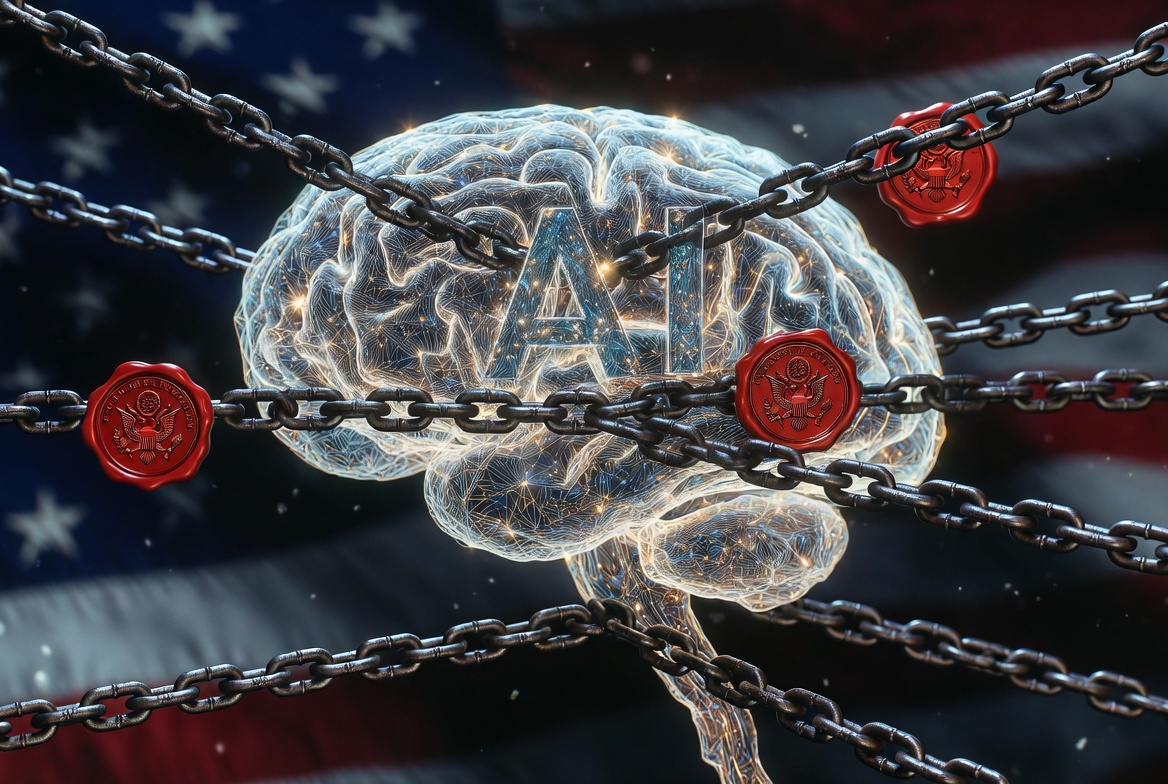
Because a political dispute appears to have created a precedent for controlling frontier AI models at the source.
Most people will read this as “Claude drama.”
The real issue is much larger.
Model selection now carries sovereignty risk.
Until now, AI teams mainly evaluated models on reasoning quality, coding performance, latency, price, context window, tool use, safety behavior, and API reliability.
That list is no longer enough.
You now also have to ask:
Can this model disappear overnight because a government, a court, an export office, or a national security agency changes its mind?
That question used to sound abstract. It stops being abstract the moment the model ID your agents depend on stops working.
The old assumption was simple: “Take the best model available and build on top of it.”
The new reality is different: “The best model available today might not be available to you tomorrow.”
This is also why the usual comparison with chip export controls is misleading.
A GPU is physical. It can be counted, shipped, seized, licensed, or blocked at a border.
A model works differently.
When it’s closed, control happens through the API. When it’s open, the weights can be copied, hosted anywhere, fine-tuned, stripped of guardrails, and run on any sufficient hardware.
So an embargo on a closed frontier API mostly hurts the people who follow the rules: legitimate companies, startups, researchers, enterprise teams, foreign employees inside U.S. firms, and customers who built compliant workflows.
Meanwhile, anyone willing to use open weights, Chinese models, gray-market deployments, or uncensored forks can keep moving.
That is the strategic paradox.
A policy meant to reduce AI risk can end up pushing demand toward the least controllable parts of the ecosystem.
You don’t close the river. You redirect it.
For builders, the answer is not “never use closed models.” That would be naive. The best frontier APIs are still extremely powerful, and I want them in my stack for the hardest tasks.
But no critical workflow should depend on a single model, a single provider, a single jurisdiction, or a single legal interpretation.
If your AI system breaks the moment one model name disappears, you didn’t build an AI system. You built a remote dependency with a chatbot interface.
A serious AI architecture now requires an orchestration layer:
Frontier models for high-value reasoning
Smaller and open models for routine and local tasks
Provider fallbacks
Task-level routing
Data-residency rules
Proper logging and evaluation so you know what broke
Graceful degradation when a model becomes unavailable
A clear map of which workflow runs under which jurisdiction
The last point is more important than it seems.
Every important AI workflow should have a simple inventory:
What model runs this?
Which provider controls access?
Where is inference executed?
Which country’s law applies?
What data is being sent there?
What is the fallback if access is cut?
Can we run a weaker version locally?
This is not compliance theater. It is operational survival.
The benchmark leaderboard still matters, but it is no longer the full score.
A model that is 3% better on coding but can vanish under political pressure can be worse for production than a slightly weaker model you can actually control and keep running.
The next real moat in AI won’t be “who uses the best model.”
It will be who can keep operating when the model layer becomes political.
The teams that win will not be married to one API. They will be model-agnostic, jurisdiction-aware, fallback-ready, and able to swap models without rebuilding the entire system.
That is the actual shift.
AI is no longer just software. It is infrastructure. It is leverage. It is national power.
And once something becomes national power, access stops being a simple product feature.
It becomes a geopolitical variable.
2
BBC VIDEO retweeted
Jun 13
Join the best NSFW discord server🥵
-500 channels
-100 Hentai channels
-50TB Porn/Hentai
-Homemade videos
-OF Models/Animations
discord.gg/Dh2rmHPTP
 pervy
pervy
243
485
9,454
BBC VIDEO retweeted
Jun 13
Join the best NSFW discord server🥵
-500 channels
-100 Hentai channels
-50TB Porn/Hentai
-Homemade videos
-OF Models/Animations
discord.gg/Dh2rmHPTP
 viravirginia
233
430
19,311
Tibamora ✨✨✨✨✨✨🇨🇵🇪🇺🌍 retweeted

Artificial intelligence lab Anthropic said it shut down access to its newest and most powerful models after the U.S. government banned use of the technology by foreign nationals, citing national security concerns. wapo.st/4eF7aWR
32
61
153
27,092

Join the best NSFW discord server🥵
-500 channels
-100 Hentai channels
-50TB Porn/Hentai
-Homemade videos
-OF Models/Animations
discord.gg/Dh2rmHPTP
 leyla
leyla
235
634
9,915
Join the best NSFW discord server🥵
-500 channels
-100 Hentai channels
-50TB Porn/Hentai
-Homemade videos
-OF Models/Animations
discord.gg/Dh2rmHPTP
 นายหญิงผู้มอบความสุขและความทรมาน
219
499
27,509