Nitish kumar retweeted

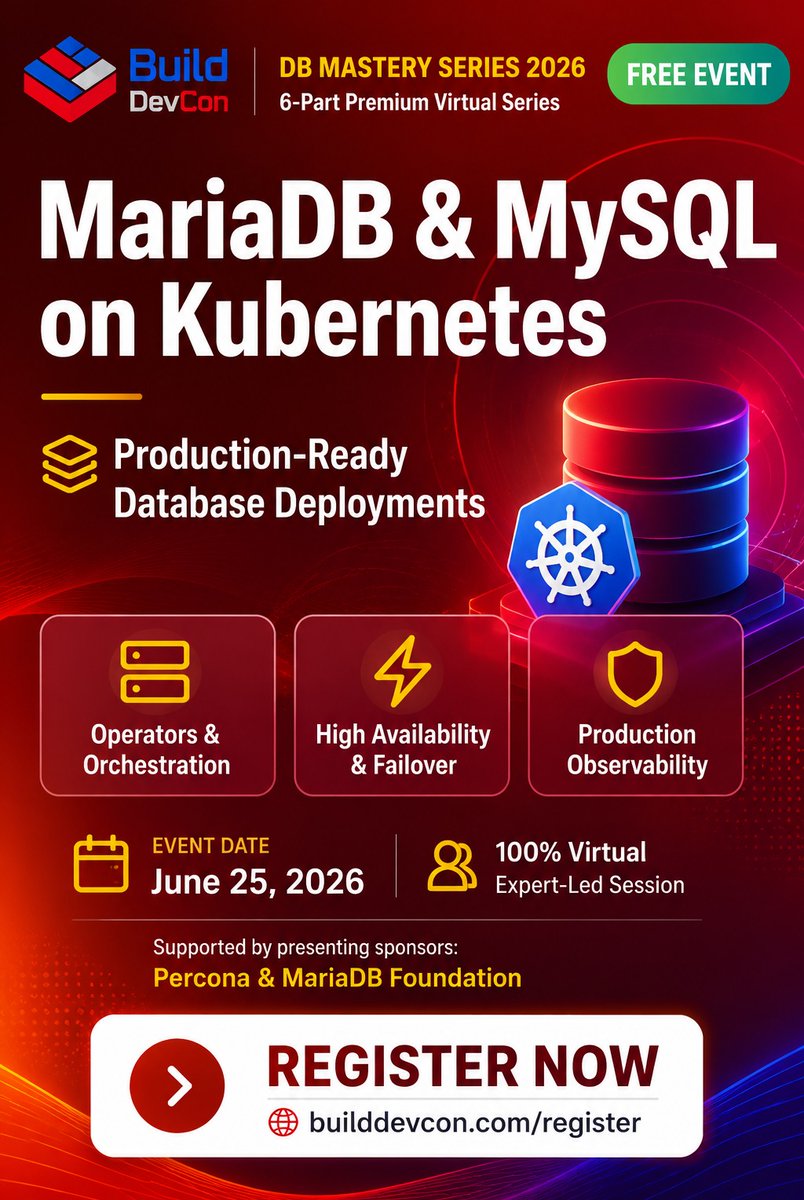
Running MariaDB or MySQL on Kubernetes?
Join this free expert-led session covering:
Operators
High Availability
Production Observability
📅 June 25, 2026
26
123
1,033
4,604,155
soxokzp retweeted

Jun 12
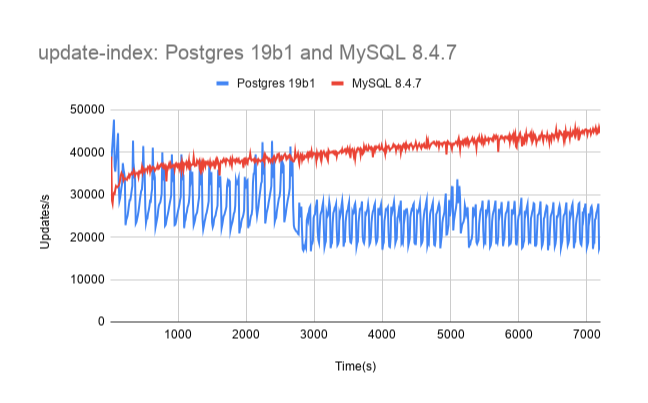
Postgres gets a lot of love, but this result beautifully sums up why MySQL and InnoDB are still awesome.
17
15
364
41,296

おお、Aurora MySQL 8.4に対応したんや
Aurora MySQL 8.4リリース!変更点と3系EOLに向けた注意点 blog.s-style.co.jp/2026/06/1…
1
1
9
1,454

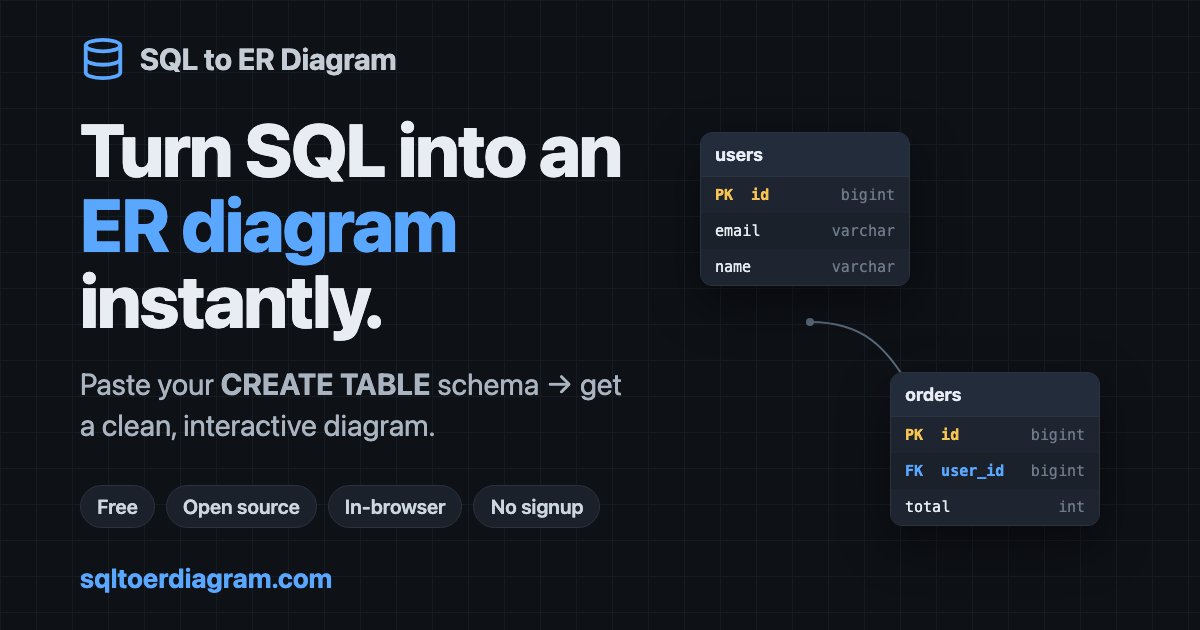
CREATE TABLEなどのSQLからER図を自動生成。ブラウザで試せるデモあり。セルフホストも可能。PostgreSQL/MySQL/SQLite/MSSQLに対応。pngやsvgでエクスポートも可。 / “GitHub - royalbhati/sqltoerdiagram: ER diagram generator. Paste CREATE TABLE statements and get a…” htn.to/2VQ6kbqwUC
1
3
341

Convert SQL CREATE TABLE statements into interactive ER diagrams right in your browser without uploading your schema anywhere. Supports PostgreSQL, MySQL, SQLite, and SQL Server syntax. No install or signup needed, and export as PNG, SVG, or shareable links.
1
20

Here’s something that surprises a lot of people:
Many dark web websites are built using the exact same tools and frameworks used by businesses, bloggers, and developers on the regular internet.
Most of them are just standard web applications. The front end is usually HTML, CSS, and JavaScript. The back end could be Python, PHP, Node.js, Go, or Java. Databases like MySQL or PostgreSQL are common, and they often run on ordinary Linux servers using Nginx or Apache.
The key difference isn’t the website itself, it’s how it’s accessed.
Instead of connecting directly through the public internet, users route through the Tor network, which masks the location of both the visitor and the server. When configured as a hidden service, Tor assigns a unique .onion address that can only be accessed through Tor Browser.
What’s interesting is that a dark web forum, an e-commerce site, a personal blog, and a corporate website can all be running nearly identical tech stacks. From a purely technical standpoint, there’s nothing fundamentally “special” about the software.
The real difficulty isn’t building the website, it’s maintaining anonymity.
Many dark web operators are identified not because their systems are “hacked,” but because of operational security failures: reusing usernames, exposing IP addresses through misconfigurations, leaking metadata, or leaving small digital traces that link back to them.
So despite how it’s often portrayed in media, the dark web isn’t a parallel internet built on exotic technology. In most cases, it’s just ordinary web infrastructure, hidden behind an anonymity layer instead of being publicly exposed.

How tf do hackers build websites on the darkweb?
1
2
174
kuni (KUNI-NET元シソペ) retweeted

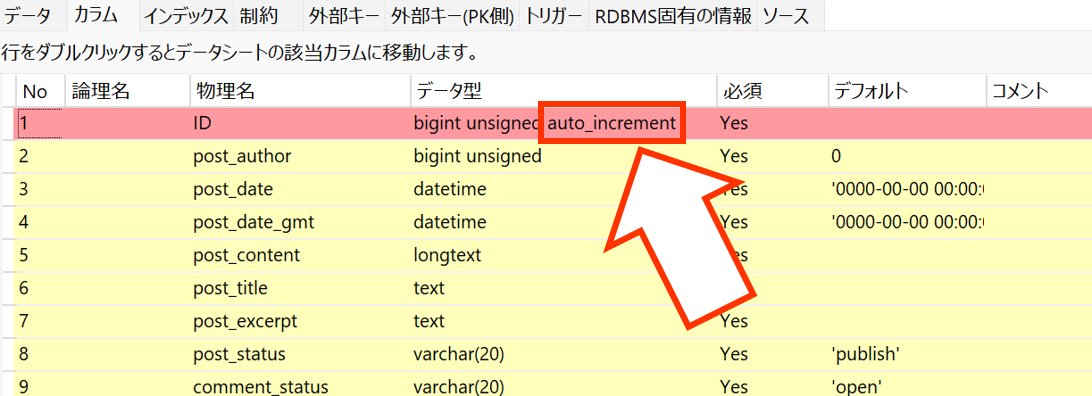
A5:SQL Mk-2 Version 2.21.2 を Vector および Microsoft Store に申請しました。
不具合修正のリビジョンアップなので、大きな変更はないですが、Version 2.21.0 以降で MySQL でデータ型を表示したときに auto_increment がつかない不具合を修正しました。
3
15
1,876


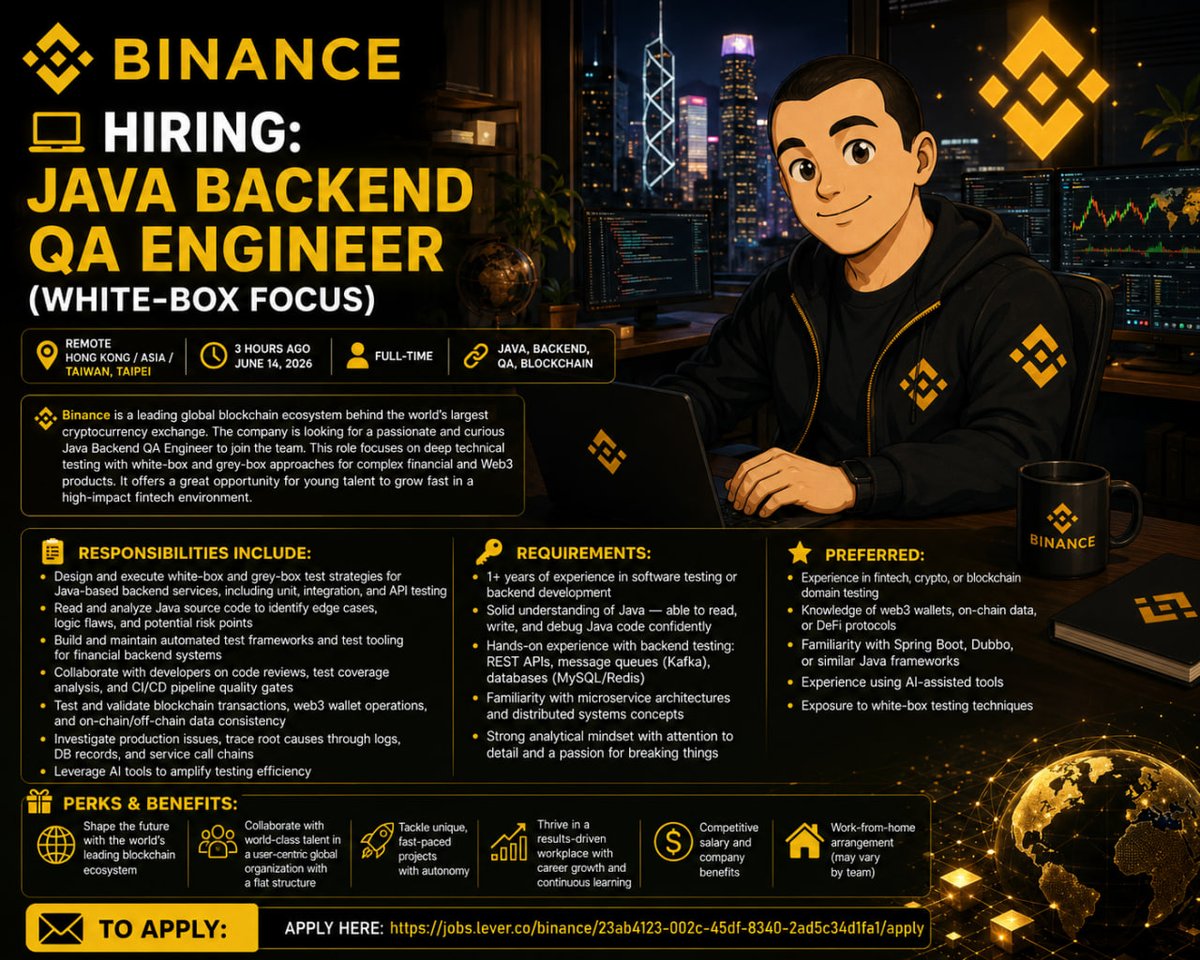
💻 Hiring: Java Backend QA Engineer (White-box Focus) - Binance
📍 Remote - Hong Kong / Asia / Taiwan, Taipei | 💼 Full-time | 🧑💻 Java, Backend, QA | 🕐 3 hours ago - June 14, 2026
Binance is a leading global blockchain ecosystem. The company is looking for a passionate Java Backend QA Engineer (white-box focus) to ensure quality of complex financial and Web3 products through deep technical testing. Great opportunity for young talent in high-velocity fintech.
📋 Responsibilities include:
- Design and execute white-box and grey-box test strategies for Java-based backend services, including unit, integration, and API testing
- Read and analyze Java source code to identify edge cases, logic flaws, and potential risk points
- Build and maintain automated test frameworks for financial backend systems
- Collaborate with developers on code reviews, test coverage, and CI/CD
- Test blockchain transactions, web3 wallets, on-chain/off-chain consistency
- Investigate production issues and root causes
- Leverage AI tools for testing efficiency
🔑 Requirements:
- 1 years in software testing or backend development
- Strong Java skills — read, write, debug code confidently
- Backend testing experience: REST APIs, Kafka, MySQL/Redis
- Microservices and distributed systems knowledge
- Analytical mindset and attention to detail
🛠 Preferred:
- Fintech/crypto/blockchain testing experience
- Web3 wallets, DeFi knowledge
- Spring Boot, Dubbo
- AI-assisted tools and white-box techniques
💡 Perks:
- Work with world-class talent on cutting-edge blockchain projects
- Flat structure, autonomy, fast career growth
- Competitive salary and benefits
- Work-from-home flexibility
📩 To apply: Apply here: jobs.lever.co/binance/23ab41…
🔗 Original post: jobs.lever.co/binance/23ab41…
⚠️ DYOR! I don’t verify every job. If someone asks to run files or ask for payment 🚩 likely a scam.
❗️ I'm not hiring myself! I just sharing fresh web3/crypto/blockchain roles DAILY for all levels!
💡 For Interns & juniors → t.me/crypto_vazima_english
💼 Mid/senior jobs → t.me/web3_jobs_crypto_vazima
#Web3 #Crypto #Blockchain #QAEngineer #Java #Backend #Hiring #Remote #Fintech #Binance #Jobs
25

مشاريع برمجة مشروع محاسبة
رسم بياني رسم اتوكاد
رسومات أكسل داش بوورد
تعديل ملف بي دي اف pdf
تحويل ملف pdf الى وورد
حل واجب اسايمنت
نظم قواعد البيانات
نظم تشغيل ويندوز
داتا بيس data
قواعد بيانات mySql
wa.me/ 966561440791
1
17

②です。
ただSQL Server、MySQLあたりであればほとんど調べず読み書きは出来ます。パフォーマンスチューニングとかの話は調べながらになりますが。
1
1
355

