


💚 Ayúdame a entender mejor a la comunidad de Node.js llenando esta mini encuesta ! 🥹✨
Hola querida comunidad de Node.js de habla hispana ! 👋🏼
Soy Teff, DevRel en @NodeSource y Software Engineer desde hace varios años.
En mi rol actual, estoy buscando entender mejor qué temas les interesan a los desarrolladores Node.js, cuáles son los desafíos que enfrentan día a día y qué tipo de contenido les resulta más útil y relevante.
Por eso preparé esta encuesta que toma menos de 3 minuticos en responder. Sus respuestas me ayudarían muchísimo a crear contenido más útil y relevante para la comunidad.
Además, en NodeSource tenemos la oportunidad de trabajar muy de cerca con el ecosistema de Node.js a través de nuestra colaboración con la OpenJS Foundation, y contamos con un equipo conformado por contribuidores del core de Node.js, maintainers y especialistas que trabajan diariamente en temas relacionados con la plataforma.
Por eso me gustaría aprovechar ese conocimiento para crear contenido que realmente aporte valor a la comunidad hispana y responda a los intereses y necesidades reales de quienes trabajan con Node.js todos los días.
Tu aporte es demasiado valioso así que muchísimas muchísimas gracias !!! ✨
Comparte con tus Node.js Devs de confianza 😉
forms.gle/feQuUH7bpLLE6iCi8
2
4
6
652

Claudio Wunder retweeted

Jun 9
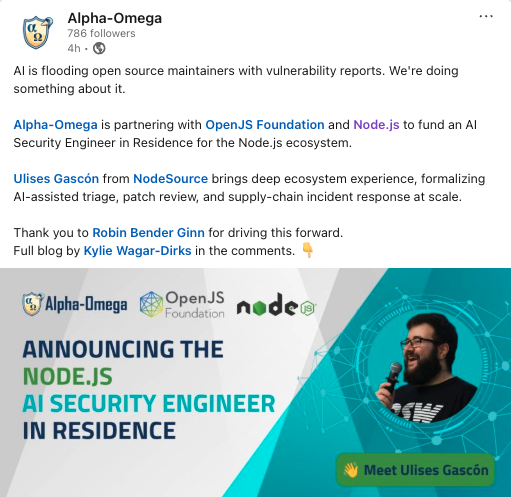
This is fantastic news for the Node.js ecosystem! 🎉
We're incredibly proud to see our own @kom_256 taking on this role and helping shape the future of AI-assisted security across the ecosystem.
Congratulations to @AlphaOmegaOSS, @openjsf, @nodejs, and everyone involved! 🚀🔒
👇🏼 More details in the comments.
2
3
10
1,524
Jun 9
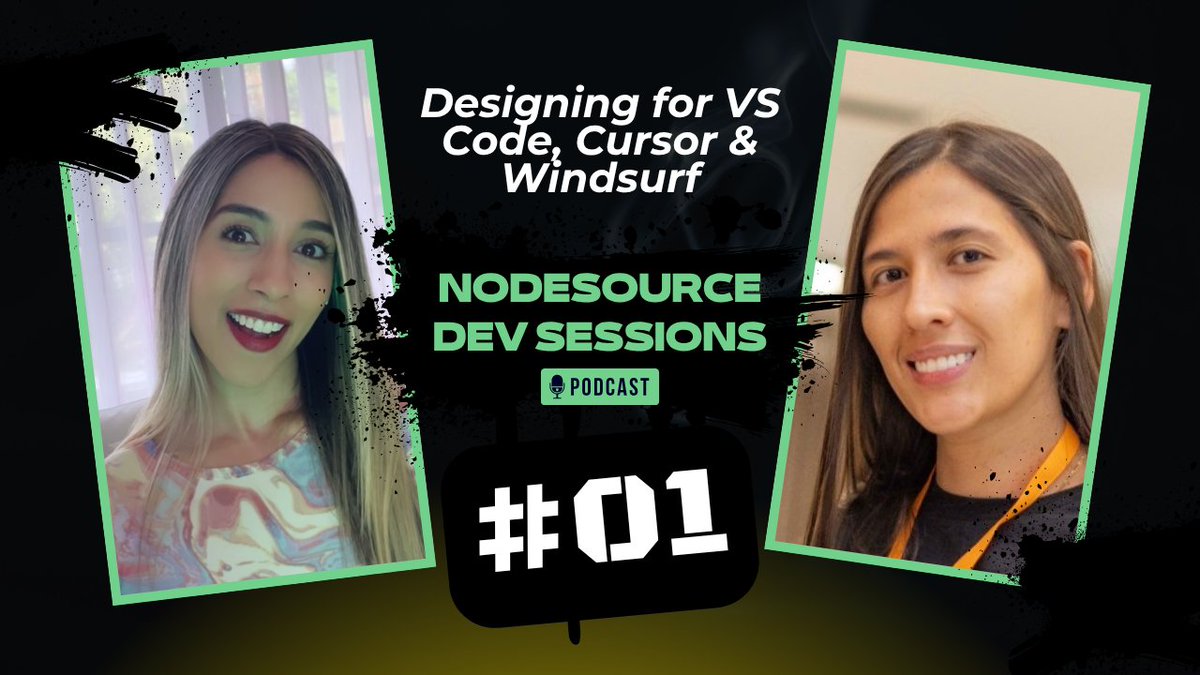
New Episode of NodeSource Dev Sessions 🎙️✨
How do you design a developer tool for @code, @cursor_ai & @devindesktop?
@mafesernaarbole shares how AI tools like @pencildev, @stitchbygoogle, and @NotebookLM helped shape the design of N|Solid.
🎬 Watch 👇🏼
youtu.be/SyVE3XKhaQs
⚡ Install for VS Code:
marketplace.visualstudio.com…
⚡ Install for Cursor, Windsurf & more: marketplace.windsurf.com/ext…
#NodeJS #AI
5
241


Jun 6
The last paragraph's argument.
First, it makes no sense.
Second, it isn't true.
--
First:
"because nobody wants to write 60 fucking pages of documentation on how to install"
You either target platform, or you target language.
If you target platform, you write.
On Mac: brew install [yourpackage]
On .deb distros: apt-get [yourpackage]
And you do the same with dnf, yum.
On Windows: [Here is your .exe / .msi]
if you target language, you write:
pip3 install [yourpackage]
composer install [yourpackage]
...
Generally, if you have time to write a shell file, you have time to say how to install it, because it is in the source code anyway.
It's fucking 60 times simpler to just write brew install [whatever].
--
Second:
docker and nodesource does the thing you describe. That's it.
helm, bun, volta, starship download release archive or binary and expand it to target directory.
rustup downloads 2nd level installer and runs it.
nvm clones repo or load scripts and updates shell profiles
homebrew clones its git-managed tree, creates symlinks, etc.
k3s installs a binary, etc.
deno loads deno, and runs remote code over deno run -A --reload jsr:deno/installer-shell-setup/bundled
SKMan has a complex installer.
--
There is a good reason that many of those packages are also installable over homebrew, apt, yum. Serious people will use them. And I suppose, in the future, all of them will be installable in a declarative way. Ops are going this way ... for ages ... since Ansible, maybe even longer.
1
23
839
Jun 5
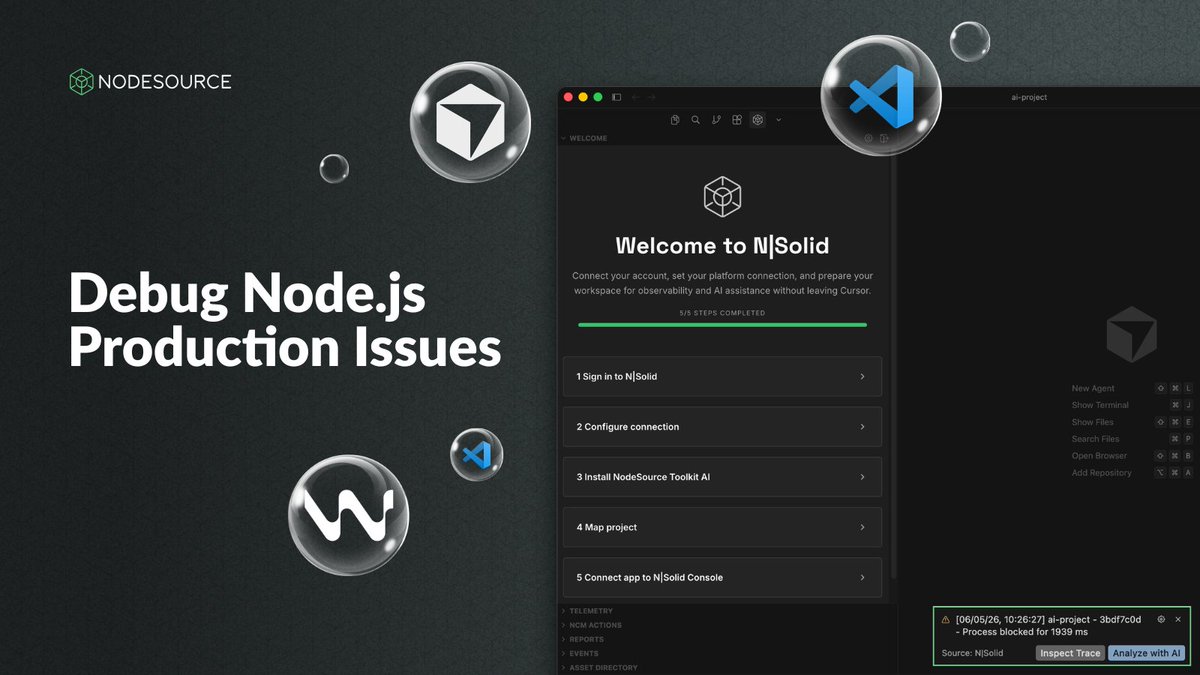
🚀 The future of Node.js production debugging belongs inside the editor.
That's what the @NodeSource Team is building for Cursor, VS Code, Windsurf, and modern development environments.
See an alert. Investigate the issue. Find the root cause.
Without leaving your editor.
🧵👇🏼
2
5
877

May 31
Node.jsがスクリプト配布しているんじゃなくて、Nodesourceが配布しているのか📃
確かにセットアップスクリプトのURLにnodesourceって書いてあるわ💻
#RUNTEQ
7
280


May 23
【2026年度版】WSL2 UbuntuにNode.jsとnpmを安全に導入する手順を投稿しました。
NodeSourceを利用した導入手順を整理。
Runtime選択、セットアップスクリプト確認、Node.js/npmのバージョン確認、npm auditの躓きポイントを記録しました。
#Nodejs #npm #WSL2 #Ubuntu
qiita.com/honda-dev-jp/items…
1
6
197
May 21
🎬 New video on our YouTube channel ✨
This time, we sit down with Adrian Estrada @edsadr — CTO at NodeSource, @openjsf Board Director, and organizer of @MedellinJS, @CityJSMedellin, @NodeConfCo and @jsconfco — to talk about the real challenges behind Node.js upgrades in production.
We cover:
• What the OpenJS Foundation actually does
• Why Node.js upgrades become difficult in production
• Common upgrade challenges in enterprise systems
• How the FREE assessment tool helps teams prepare
• Why NodeSource and OpenJS are working on this initiative together
Watch now 👇🏼
youtu.be/PAxhDu2S76o
More about the Node.js Upgrade Program:
nodesource.com/upgrade
3
11
1,183
Comunidad de Node.js 💚📢
Quisiera conocer su opinión sobre las extensiones de VS Code para Node.js y, especialmente, sobre una nueva que lanzamos la semana pasada en @NodeSource 👀
Se llama N|Solid in the IDE y permite visualizar métricas, diagnósticos y runtime telemetry de aplicaciones Node.js directamente dentro de VS Code ⚡️
Por ejemplo:
· detectar problemas del Event Loop,
· analizar CPU profiles,
· revisar heap snapshots,
· y entender runtime events en tiempo real sin salir del editor.
Me encantaría que la pudieran instalar, probar y contarme honestamente:
· qué les parece útil,
· qué mejorarían,
· qué les gustaría ver,
· o cómo encaja en su flujo de trabajo actual.
Pueden dejar su comentario directamente en el hilo de este mensaje o, si prefieren, dejar feedback anónimo aquí 👉🏼 forms.gle/vYTVf2XyFXUUt2BZ9
Extensión:
marketplace.visualstudio.com…
Les agradecería mucho si pueden compartir esto con más Node.js Devs ! 😉🚀
2
13
1,342