
24 Apr 2025
The query planner needs to be vector recall aware.
Prefiltering and postfiltering is not enough, and it’s not a decision to punt to the user per query
We continuously monitor recall for production queries to ensure the query planner is tuned correctly

Turbopuffer introduced native filtering for vector search—achieving >90% recall in 25ms, even under complex filter conditions, without sacrificing scalability.
In traditional vector databases, filtering is a major bottleneck.
You typically get two bad options:
• Pre-filtering — filter by metadata first, then compute vector distances. Great recall (100%), but latency explodes (e.g. 10s).
• Post-filtering — run ANN search, then discard results that don’t match the filter. Fast, but terrible recall (often 0%).
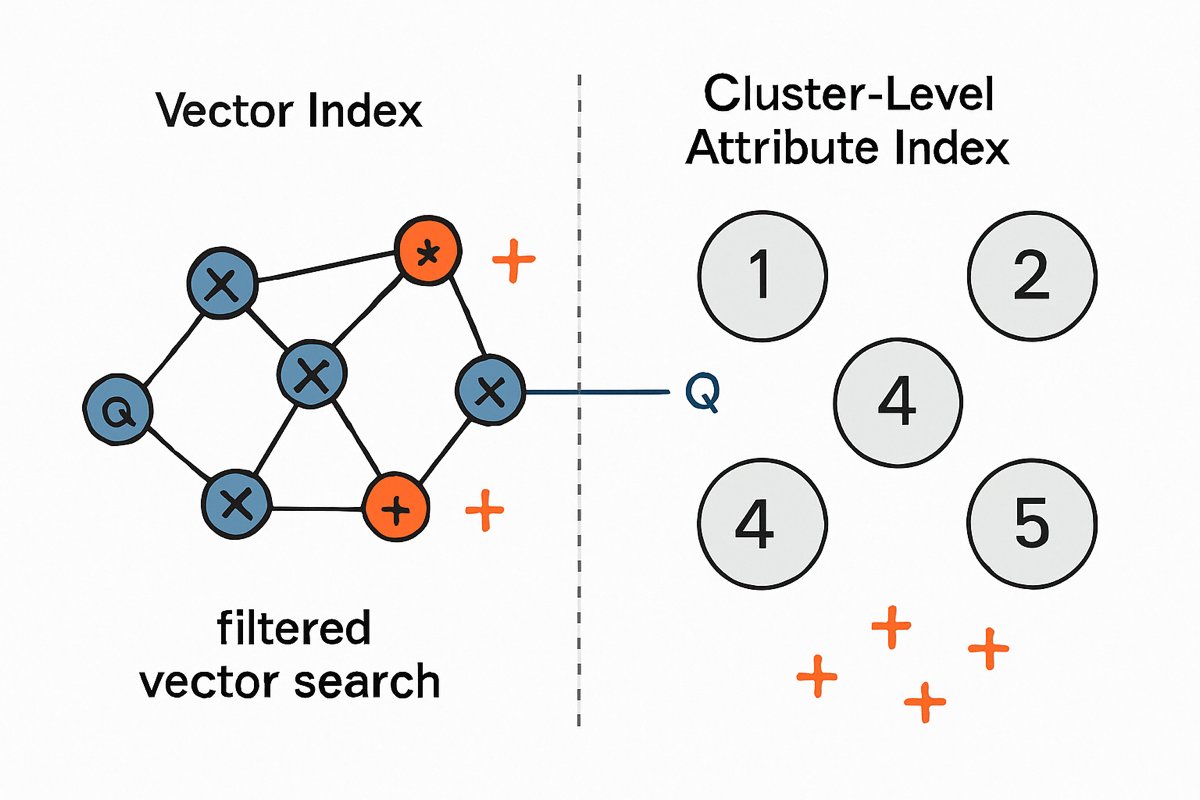
Turbopuffer solves this with native filtering—tightly coupling metadata filters into the clustering-based vector index itself.
Here’s how:
1.Cluster-Aware Filtering
Instead of treating filters and ANN as separate concerns, Turbopuffer rewires its attribute index to understand vector index internals—specifically, SPFresh-inspired clustering. This allows skipping entire clusters that don’t contain any valid matches.
2.Efficient Addressing
Each document is stored using a {cluster_id}:{local_id} scheme. Attribute indexes map directly to these addresses—so filter lookups immediately resolve to cluster-local candidates.
3.Two-Level Indexing
•Row-level: Maps each attribute value to specific documents within clusters.
•Cluster-level (Downsampled): Maps attribute values to clusters with matches, using compressed bitmaps to minimize roundtrips.
This hierarchy allows fast, coarse filtering (which clusters to check) and then precise filtering only when necessary.
4.Optimized for Object Storage
Cold queries from blob storage are fast because:
•Only a small number of roundtrips are needed.
•Index data is compact (thanks to bitmap compression).
•Updates avoid full file rewrites via an LSM-based storage layer.
The result?
A filtered vector search system that’s faster than traditional pre-filtering, much more accurate than post-filtering, and scales without needing index rebuilds.
Native filtering like this makes @turbopuffer particularly compelling for multi-tenant RAG, document retrieval with access control, and codebase-wide semantic search.
1
25
3,378

11 Mar 2024
Shipped a new query engine @turbopuffer last friday night. Instead of just postfiltering, now we use classical search techniques together with ANN search. Recall on queries with filters is way up.
Can't wait to optimize all the edge cases and then implement EXPLAIN
1
27
5,896

11 Aug 2022
``Deep Learning-Based Joint Control of Acoustic Echo Cancellation, Beamforming and Postfiltering. (arXiv:2203.01793v2 [eess.AS] UPDATED),'' Thomas Haubner, Walter Kellermann, ift.tt/tRb4AVz
1
8

7 Jul 2022
Great news: We receive the VDE ITG award 2022 for our contribution which motivates the use of DNNs for nonlinear joint spatial-spectral filtering to replace sequential linear spatial filtering postfiltering in speech enhancement. Don't miss this paper
uhh.de/inf-sp-nonlinear-spat…
1
5
4 Mar 2022
``Deep Learning-Based Joint Control of Acoustic Echo Cancellation, Beamforming and Postfiltering. (arXiv:2203.01793v1 [eess.AS]),'' Thomas Haubner, Walter Kellermann, ift.tt/zCFvUSX
2

20 Jan 2022
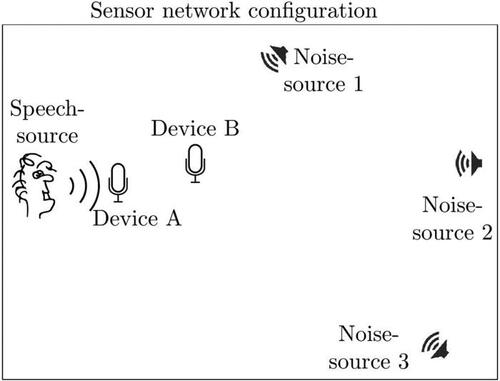
Enhancement by postfiltering for speech and audio coding in ad hoc sensor networks
doi.org/10.1121/10.0003208
#acoustics #SignalProcessing
@AaltoResearch
3
3

12 Dec 2021
An option to turn off flashing effects for the with epilepsy and sensory issues.
Keep ambience separate from sound effects in the audio mixer for those with auditory issues and/or sensory issues.
Do not block audio rerouting or postfiltering for the same reason.
1
17 Jul 2021
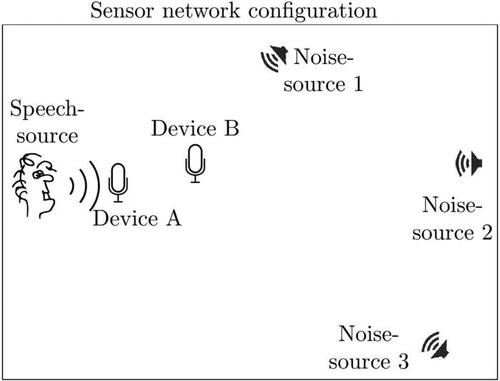
Enhancement by postfiltering for speech and audio coding in ad hoc sensor networks
doi.org/10.1121/10.0003208
#acoustics #SignalProcessing
@AaltoResearch
3
7
29 Jan 2021
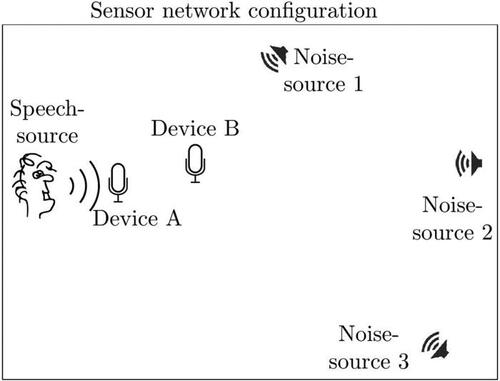
Enhancement by postfiltering for speech and audio coding in ad hoc sensor networks
doi.org/10.1121/10.0003208
#acoustics #SignalProcessing
@AaltoResearch
3
5

We are delighted to announce to all of our current and future customers the new update 3.5 for #HOLOSYS, which showcases our progress:
-25% footprint
60% capture area
resolution multiplied by 2
datasize divided by 3
processing time divided by 2
audio
postfiltering
timecode
...
1
3
10

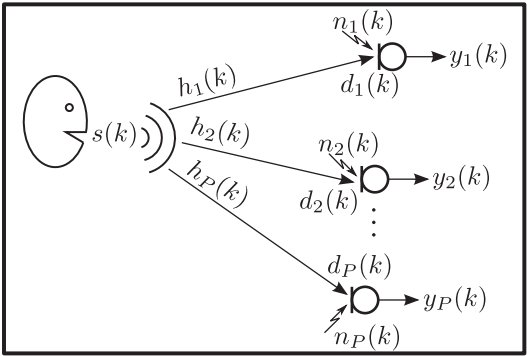
Check out the Maximum-Likelihood Approach With Bayesian Refinement for Multichannel-Wiener Postfiltering @IEEEXplore ieeexplore.ieee.org/document…
1
3