
Your real family is coming on boats, and they are going to rape you, which, because of your white skin, you deserve.
There, Raspail was prescient. But prescience isn't the point. The point is to reverse it.
4
99

N retweeted

3h
With every chapter a new wave of making something up happens. When did prescience tell us what was gonna happen in every arc or make stuff predictable ? Let’s go over how it’s ACTUALLY been used
Helped boruto train but that happend before tbv so can’t be talking about.
Allowed Inojin to create a new jutsu but that also happened in the same/next chapter so that’s the same as training for a new jutsu/saying you would
Told us Mamushi was defeated which…what villain doesn’t?
Gave us an update on jura losing an eye ONE PAGE before it happened?😭
I’m genuinely asking what about it made it predictable it gave us things we knew would happen the same chapter it happened
4
4
41
892

Jon Kendrick Gaming retweeted

This is the moment from chapter 33 that amado started plotting since hearing about prescience, it's something he would want to have access to by ANY MEANS NECESSARY
Also puts into more context about kawakiʼs statements from NNG chapter 1 meaning kawaki COULD have this power too.
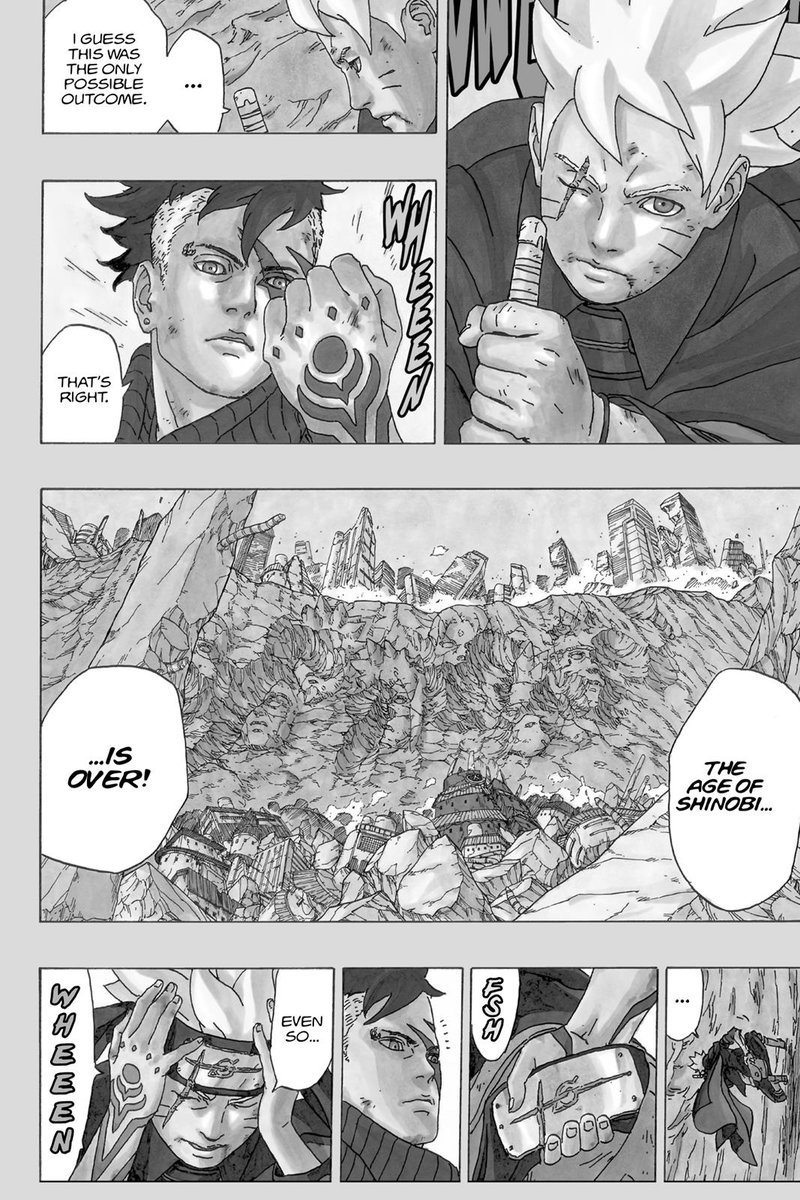
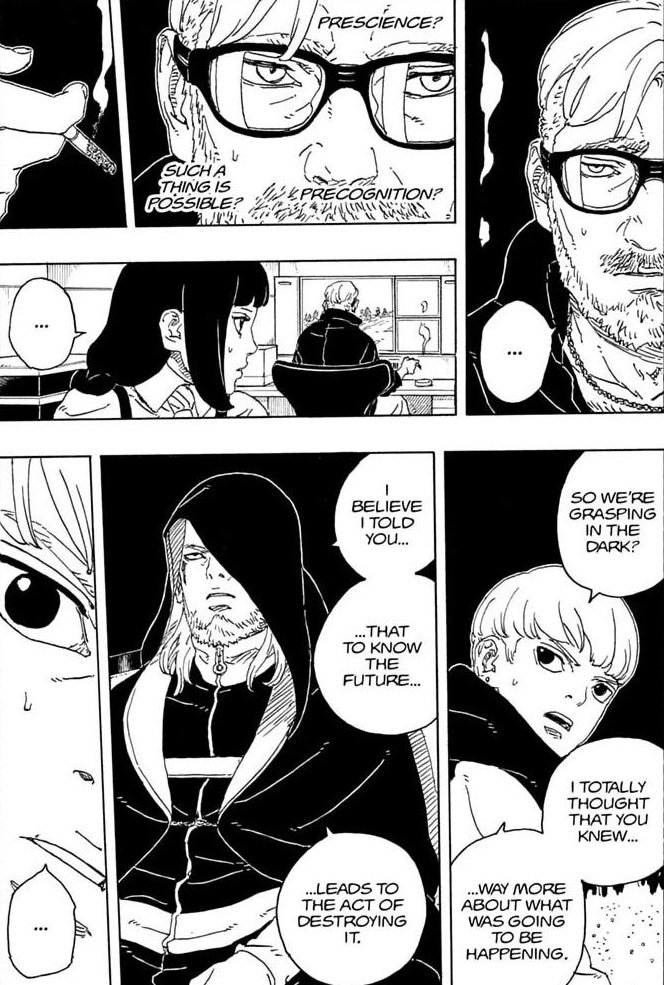

This is bad, really bad.
Amado is trying to get koji to tell him about prescience and know everything regarding his daughter and what the future about that will be
And if koji doesn't cooperate then amado will try and harness that ability onto kawaki or something ❓❓ we'll see
2
12
117
7,593


TBF momoshiki future sight has been there FIRST way before koji prescience. So its not like THEY WOULD COME UP with brand new ability like koji.
1
20

It's the 1984 dystopian hellscape: Orwell would be startled by his own prescience.
2
10

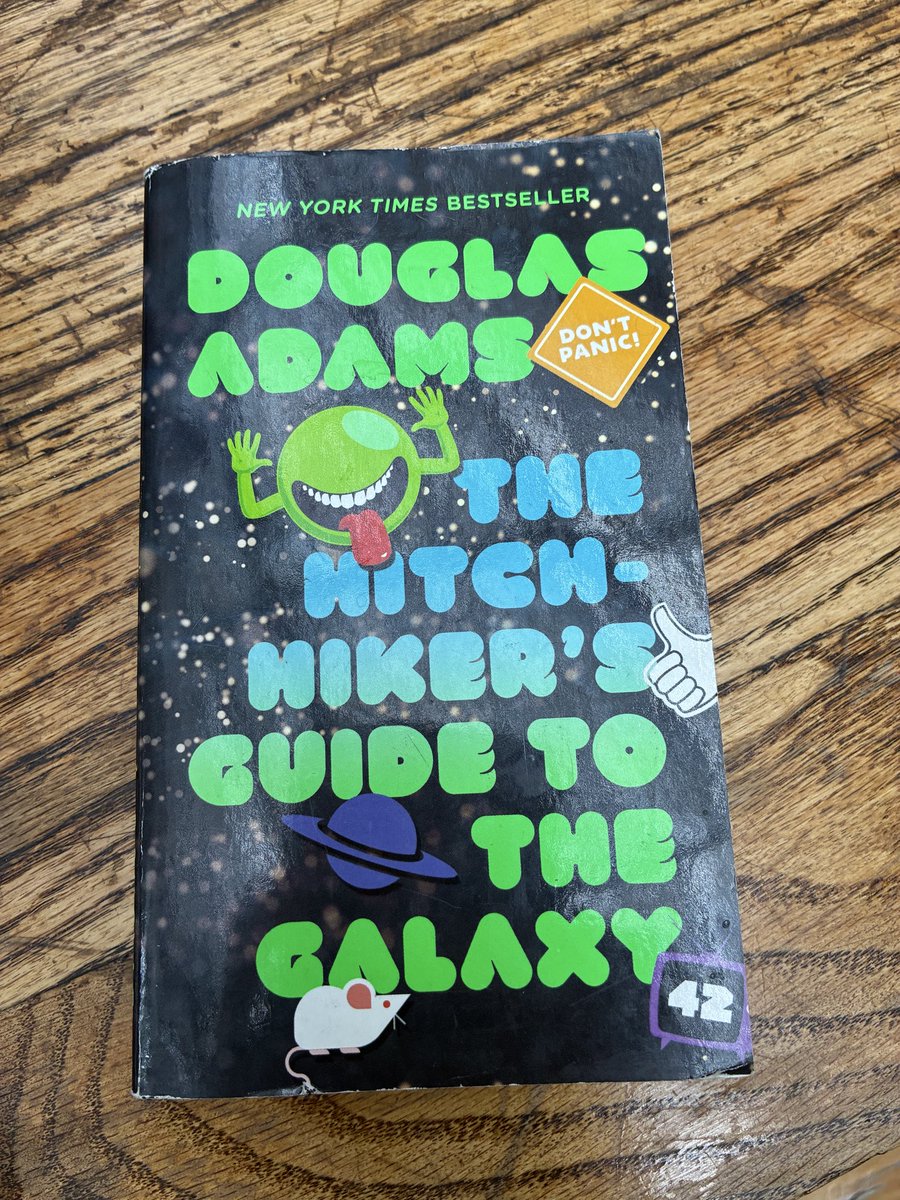
The bf and I passed this back and forth in PVR. I hadn’t read it since 8th grade. So many laughs, and so much prescience. #bookcover
1
48

also every other chapter koji says “this wasn’t in any of the futures i saw” or “this wasn’t supposed to happen so fast, i don’t have an update” like prescience is a nonissue in terms of ruining suspense.
1
41


Since you want to argue with Calvin I'll let him speak for himself. He doesn't say that some are created evil, but preordained to eternal life or eternal damnation. And he has a whole argument which is compelling. But I'm guessing you've only hear the calumny and not read Calvin for yourself.
The predestination by which God adopts some to the hope of life, and adjudges others to eternal death, no man who would be thought pious ventures simply to deny; but it is greatly caviled at, especially by those who make prescience its cause. We, indeed, ascribe both prescience and predestination to God; but we say, that it is absurd to make the latter subordinate to the former (see chap. 22 sec. 1).
When we attribute prescience to God, we mean that all things always were, and ever continue, under his eye; that to his knowledge there is no past or future, but all things are present, and indeed so present, that it is not merely the idea of them that is before him (as those objects are which we retain in our memory), but that he truly sees and contemplates them as actually under his immediate inspection. This prescience extends to the whole circuit of the world, and to all creatures. By predestination we mean the eternal decree of God, by which he determined with himself whatever he wished to happen with regard to every man.
All are not created on equal terms, but some are preordained to eternal life, others to eternal damnation; and, accordingly, as each has been created for one or other of these ends, we say that he has been predestinated to life or to death. This God has testified, not only in the case of single individuals; he has also given a specimen of it in the whole posterity of Abraham, to make it plain that the future condition of each nation lives entirely at his disposal: “When the Most High divided to the nations their inheritance, when he separated the sons of Adam, he set the bounds of the people according to the number of the children of Israel.
For the Lord’s portion is his people; Jacob is the lot of his inheritance,” (Deut. 32:8, 9). The separation is before the eyes of all; in the person of Abraham, as in a withered stock, one people is specially chosen, while the others are rejected; but the cause does not appear, except that Moses, to deprive posterity of any handle for glorying, tells them that their superiority was owing entirely to the free love of God. The cause which he assigns for their deliverance is, “Because he loved thy fathers, therefore he chose their seed after them,” (Deut. 4:37); or more explicitly in another chapter, “The Lord did not set his love upon you, nor choose you, because you were more in number than any people: for ye were the fewest of all people: but because the Lord loved you,” (Deut. 7:7, 8).
He repeatedly makes the same intimations, “Behold, the heaven, and the heaven of heavens is the Lord’s thy God, the earth also, with all that therein is. Only the Lord had a delight in thy fathers to love them, and he chose their seed after them,” (Deut. 10:14, 15). Again, in another passage, holiness is enjoined upon them, because they have been chosen to be a peculiar people; while in another, love is declared to be the cause of their protection (Deut. 23:5).
This, too, believers with one voice proclaim, “He shall choose our inheritance for us, the excellency of Jacob, whom he loved,” (Ps. 47:4). The endowments with which God had adorned them, they all ascribe to gratuitous love, not only because they knew that they had not obtained them by any merit, but that not even was the holy patriarch endued with a virtue that could procure such distinguished honor for himself and his posterity. And the more completely to crush all pride, he upbraids them with having merited nothing of the kind, seeing they were a rebellious and stiff-necked people (Deut. 9:6). Often, also, do the prophets remind the Jews of this election by way of disparagement and opprobrium, because they had shamefully revolted from it.
Be this as it may, let those who would ascribe the election of God to human worth or merit come forward. When they see that one nation is preferred to all others, when they hear that it was no feeling of respect that induced God to show more favor to a small and ignoble body, nay, even to the wicked and rebellious, will they plead against him for having chosen to give such a manifestation of mercy? But neither will their obstreperous words hinder his work, nor will their invectives, like stones thrown against heaven, strike or hurt his righteousness; nay, rather they will fall back on their own heads.
To this principle of a free covenant, moreover, the Israelites are recalled whenever thanks are to be returned to God, or their hopes of the future to be animated. “The Lord he is God,” says the Psalmist; “it is he that has made us, and not we ourselves: we are his people, and the sheep of his pasture,” (Ps. 100:3; 95:7). The negation which is added, “not we ourselves,” is not superfluous, to teach us that God is not only the author of all the good qualities in which men excel, but that they originate in himself, there being nothing in them worthy of so much honor. In the following words also they are enjoined to rest satisfied with the mere good pleasure of God: “O ye seed of Abraham, his servant; ye children of Jacob, his chosen,” (Ps. 105:6). And after an enumeration of the continual mercies of God as fruits of election, the conclusion is, that he acted thus kindly because he remembered his covenant.
With this doctrine accords the song of the whole Church, “They got not the land in possession by their own sword, neither did their own arm save them; but thy right hand, and thine arm, and the light of thy countenance, because thou hadst a favor unto them,” (Ps. 44:3). It is to be observed, that when the land is mentioned, it is a visible symbol of the secret election in which adoption is comprehended. To like gratitude David elsewhere exhorts the people, “Blessed is the nation whose God is the Lord, and the people whom he has chosen for his own inheritance,” (Ps. 33:12). Samuel thus animates their hopes, “The Lord will not forsake his people for his great name’s sake: because it has pleased the Lord to make you his people,” (1 Sam. 12:22).
And when David’s faith is assailed, how does he arm himself for the battle? “Blessed is the man whom thou choosest, and causes to approach unto thee, that he may dwell in thy courts,” (Ps. 65:4). But as the hidden election of God was confirmed both by a first and second election, and by other intermediate mercies, Isaiah thus applies the terms “The Lord will have mercy on Jacob, and will yet choose Israel,” (Isa. 14:1). Referring to a future period, the gathering together of the dispersion, who seemed to have been abandoned, he says, that it will be a sign of a firm and stable election, notwithstanding of the apparent abandonment. When it is elsewhere said, “I have chosen thee, and not cast thee away,” (Isa. 41:9), the continual course of his great liberality is ascribed to paternal kindness. This is stated more explicitly in Zechariah by the angel, the Lord “shall choose Jerusalem again,” as if the severity of his chastisements had amounted to reprobation, or the captivity had been an interruption of election, which, however, remains inviolable, though the signs of it do not always appear.
1
30
Antônio愛 retweeted

I must have kashin koji prescience because our future together is clear

13
11
223
6,380

The prescience of George Orwell adequately reflects the thinking of the current UK 🇬🇧 government & the Police:
“All animals are equal, but some animals are more equal than others."
British “animals,” must go to the slaughter but non-British “animals,” live in the big house.
🥺
1
1
8
wiccan boy 🧙🏾♂️ retweeted

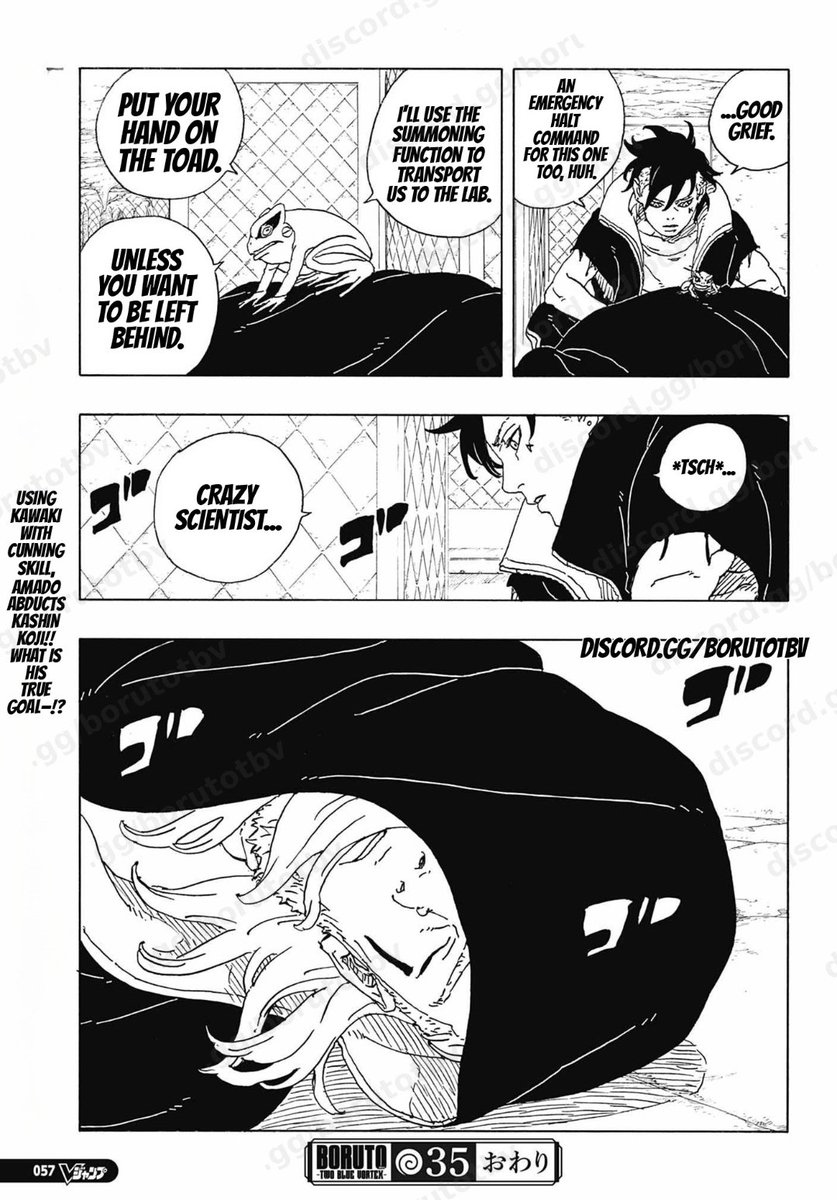
From now on everything is going to go Kawaki's way (Amado's).
They'll have Prescience Boruto will lose koji. From here on out Boruto won't have the luxury of knowing what's coming next(maybe some from momo)
No more relying on future knowledge. From now on it's Boruto himself
13
14
376
11,835
Charlie retweeted

Since the start of TBV Boruto and Koji were having things go their way because of Prescience.
Now kawaki and Amado are the ones in the driving seats in this current situation 😭💀
I Fear kawaki is gonna fuck shit up badly for Boruto on purpose 💀😈
#Boruto

3
1
44
2,328

I think amado might jst put sum device of his own on koji's mind or simply head and view all of the memories of resent prescience update on the screen so kawaki ll be seeing all of the remaining future in 4k nd who defeats shinju, likely boruto teleporting to their hideout..
1
3
159