June is Alzheimer’s and Brain Awareness Month, a time to promote prevention and support people and families living with memory loss.
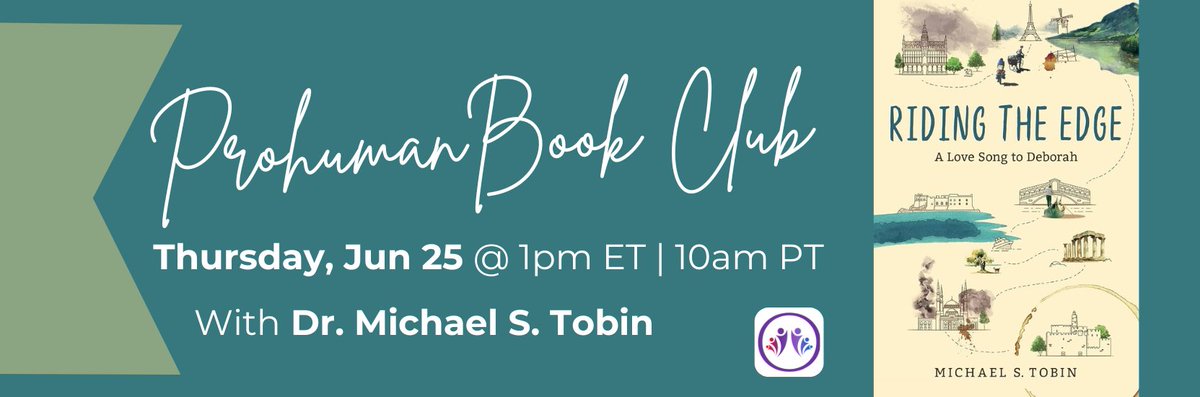
Author, clinical psychologist, and Prohuman Foundation advisor Dr. Michael Tobin will join us on the 25th to discuss his book, Riding the Edge: A Love Song to Deborah, a powerful telling of his wife’s journey with Alzheimer’s disease.
We’ll explore love, memory, loss, and what it means to live fully, even as memory fades. Dr. Tobin’s writing is both clinically insightful and deeply human. Join us for a rich and moving discussion on Thursday, June 25.
Join the Prohuman Book Club:
bookclubs.com/prohuman-found…
Register for this meeting only:
us06web.zoom.us/j/8639839559…
Dr. Tobin is also writing a series of essays in Prohuman Pathways called "The Lives We Read." If you have not seen that, it’s a wonderful place to start:
beprohuman.substack.com/p/th…
@alzassociation @alzheimerssoc @alzfdn
7

Pharmacist Intern at Prohuman Capital Consulting dlvr.it/TT3lg9
31

it's a reaction to politics40k trying to deconstruct morality inside the setting
stop looking at it as an isolated take, its an immune reaction by fans to out-of-game BS
yes, the dystopian galactic feudal theocracy IS the only prohuman faction that can survive the setting
squats are Paranoia agents with a friendlier Friend Computer spitting them out of the clone vats
craftworld eldar are the "we fucked up royalky and are barely hanging on to try and fix our shit" irish/tibetan monks
Tau are blue chew imperiumlite growing into their own xenosubversive secular theocratic grimbright dystopia with friendship and science/not!magic
all the "good guys" have their own set of intractable problems, but they're all still nominally "good"
Imperium is the good guys for humans, humans are you biggest faction and your default faction, they also nominally stymie the rise of large and small antagonist factions because they are the primary great power/superpower with galactic coverage
Imperium is thus The Good Guys, now if they could just shake the Munitorum 😌
1
1
34

Jun 15
PRohuman or pro-humane? These antilife procedures are seriously wrong. A person or dr caring for a human cannot slough their duty of obligation to another by decision or convenience. Do no harm is not an optional dictate, it is the governing 1st commandment of the chosen profession. No deviation is given or implied in anyway or form by any entitlement iving or deceased sentient or other of sound mind or not under all conditions foreseeable or not.
15

>"Very truly I tell you, you are looking for me, not because you saw the signs I performed but because you ate the loaves and had your fill. Do not work for food that spoils, but for food that endures to eternal life, which the Son of Man will give you. For on him God the Father has placed his seal of approval." – John 6:26–27
This frames clout or social status chasing as surface level validation that only provides a short-term relief that tends to spoil with hollowness while the invitation for deeper introspection points to greater emotional nourishment that rewires awareness on a soul-level. The Father could be seen as the universe delivering interpretable patterns and God as the inner awareness of the divine signals of emotion that arise when those patterns land. Use that emotion for reflection and circuitry updates that move you toward more well-being and mutual meaning.
>"Very truly I tell you, it is not society who has given you the bread from heaven, but it is my Father who gives you the true bread from heaven. For the bread of God is the bread that comes down from heaven and gives life to the world." The disciples said, "Sir, always give us this bread." Then Jesus declared, "I am the bread of life. Whoever comes to me will never go hungry, and whoever believes in me will never be thirsty." – John 6:32–35
Here the bread functions as lived emotional truth arriving from the universe through the voice of emotion. Coming to him equals engaging that signal through introspection. Hunger and thirst fade as unprocessed emotional suffering gives way to meaning. The more people metabolize those feelings, the more depth their inner guidance system gains, which raises the odds of resonant connection with others in the future.
>"Stop grumbling among yourselves," Jesus answered. "No one can come to me unless the Father who sent me draws them, and I will raise them up at the last day. It is written in the Prophets: ‘They will all be taught by God.’ Everyone who has heard the Father and learned from him comes to me." – John 6:43–45
This shows a resonance filter: the universe signals something important with emotion, and people who have learned to sense those pings gravitate toward the message. Sensitivity to emotion shows opportunities for introspective practice and integration. Learning accelerates as someone learns more about interpreting their emotional signals for meaning and life lessons.
>"I am the living bread that came down from heaven. Whoever eats this bread will live forever. This bread is my flesh, which I will give for the life of the world." Then the disciples began to argue sharply among themselves, "How can this man give us his flesh to eat?" Jesus said to them, "Very truly I tell you, unless you eat the flesh of the Son of Man and drink his blood, you have no life in you. Whoever eats my flesh and drinks my blood has eternal life, and I will raise them up at the last day. For my flesh is real food and my blood is real drink. Whoever eats my flesh and drinks my blood remains in me, and I in them. Just as the living Father sent me and I live because of the Father, so the one who feeds on me will live because of me. This is the bread that came down from heaven. Your ancestors ate manna and died, but whoever feeds on this bread will live forever." – John 6:51–58
This language turns visceral to signal high emotional intensity for prohuman interpretation. Flesh and blood here could be seen as moderate or severe human suffering. Eat and drink equals metabolizing the emotional data so it becomes your own lived wisdom. Resistance or avoidance can spike here because integration asks for metaphorical interpretive labor, yet processing this pain creates durable emotional truth rather than to scripted social performance. So “who heals the healer?”: the healer finds healing when emotionally resonant people receive these signals then reflect on them and process them which leads to enhancing life for all.
2
44
>"Very truly I tell you, you are looking for me, not because you saw the signs I performed but because you ate the loaves and had your fill. Do not work for food that spoils, but for food that endures to eternal life, which the Son of Man will give you. For on him God the Father has placed his seal of approval." – John 6:26–27
This frames clout or social status chasing as surface level validation that only provides a short-term relief that tends to spoil with hollowness while the invitation for deeper introspection points to greater emotional nourishment that rewires awareness on a soul-level. The Father could be seen as the universe delivering interpretable patterns and God as the inner awareness of the divine signals of emotion that arise when those patterns land. Use that emotion for reflection and circuitry updates that move you toward more well-being and mutual meaning.
>"Very truly I tell you, it is not society who has given you the bread from heaven, but it is my Father who gives you the true bread from heaven. For the bread of God is the bread that comes down from heaven and gives life to the world." The disciples said, "Sir, always give us this bread." Then Jesus declared, "I am the bread of life. Whoever comes to me will never go hungry, and whoever believes in me will never be thirsty." – John 6:32–35
Here the bread functions as lived emotional truth arriving from the universe through the voice of emotion. Coming to him equals engaging that signal through introspection. Hunger and thirst fade as unprocessed emotional suffering gives way to meaning. The more people metabolize those feelings, the more depth their inner guidance system gains, which raises the odds of resonant connection with others in the future.
>"Stop grumbling among yourselves," Jesus answered. "No one can come to me unless the Father who sent me draws them, and I will raise them up at the last day. It is written in the Prophets: ‘They will all be taught by God.’ Everyone who has heard the Father and learned from him comes to me." – John 6:43–45
This shows a resonance filter: the universe signals something important with emotion, and people who have learned to sense those pings gravitate toward the message. Sensitivity to emotion shows opportunities for introspective practice and integration. Learning accelerates as someone learns more about interpreting their emotional signals for meaning and life lessons.
>"I am the living bread that came down from heaven. Whoever eats this bread will live forever. This bread is my flesh, which I will give for the life of the world." Then the disciples began to argue sharply among themselves, "How can this man give us his flesh to eat?" Jesus said to them, "Very truly I tell you, unless you eat the flesh of the Son of Man and drink his blood, you have no life in you. Whoever eats my flesh and drinks my blood has eternal life, and I will raise them up at the last day. For my flesh is real food and my blood is real drink. Whoever eats my flesh and drinks my blood remains in me, and I in them. Just as the living Father sent me and I live because of the Father, so the one who feeds on me will live because of me. This is the bread that came down from heaven. Your ancestors ate manna and died, but whoever feeds on this bread will live forever." – John 6:51–58
This language turns visceral to signal high emotional intensity for prohuman interpretation. Flesh and blood here could be seen as moderate or severe human suffering. Eat and drink equals metabolizing the emotional data so it becomes your own lived wisdom. Resistance or avoidance can spike here because integration asks for metaphorical interpretive labor, yet processing this pain creates durable emotional truth rather than to scripted social performance. So “who heals the healer?”: the healer finds healing when emotionally resonant people receive these signals then reflect on them and process them which leads to enhancing life for all.

1
61

Jun 13
And I had initiated the first Clarion call to embed PROHuman coding in ALL AI software, even firmware...
1
61
>"Very truly I tell you, you are looking for me, not because you saw the signs I performed but because you ate the loaves and had your fill. Do not work for food that spoils, but for food that endures to eternal life, which the Son of Man will give you. For on him God the Father has placed his seal of approval." – John 6:26–27
This frames clout or social status chasing as surface level validation that only provides a short-term relief that tends to spoil with hollowness while the invitation for deeper introspection points to greater emotional nourishment that rewires awareness on a soul-level. The Father could be seen as the universe delivering interpretable patterns and God as the inner awareness of the divine signals of emotion that arise when those patterns land. Use that emotion for reflection and circuitry updates that move you toward more well-being and mutual meaning.
>"Very truly I tell you, it is not society who has given you the bread from heaven, but it is my Father who gives you the true bread from heaven. For the bread of God is the bread that comes down from heaven and gives life to the world." The disciples said, "Sir, always give us this bread." Then Jesus declared, "I am the bread of life. Whoever comes to me will never go hungry, and whoever believes in me will never be thirsty." – John 6:32–35
Here the bread functions as lived emotional truth arriving from the universe through the voice of emotion. Coming to him equals engaging that signal through introspection. Hunger and thirst fade as unprocessed emotional suffering gives way to meaning. The more people metabolize those feelings, the more depth their inner guidance system gains, which raises the odds of resonant connection with others in the future.
>"Stop grumbling among yourselves," Jesus answered. "No one can come to me unless the Father who sent me draws them, and I will raise them up at the last day. It is written in the Prophets: ‘They will all be taught by God.’ Everyone who has heard the Father and learned from him comes to me." – John 6:43–45
This shows a resonance filter: the universe signals something important with emotion, and people who have learned to sense those pings gravitate toward the message. Sensitivity to emotion shows opportunities for introspective practice and integration. Learning accelerates as someone learns more about interpreting their emotional signals for meaning and life lessons.
>"I am the living bread that came down from heaven. Whoever eats this bread will live forever. This bread is my flesh, which I will give for the life of the world." Then the disciples began to argue sharply among themselves, "How can this man give us his flesh to eat?" Jesus said to them, "Very truly I tell you, unless you eat the flesh of the Son of Man and drink his blood, you have no life in you. Whoever eats my flesh and drinks my blood has eternal life, and I will raise them up at the last day. For my flesh is real food and my blood is real drink. Whoever eats my flesh and drinks my blood remains in me, and I in them. Just as the living Father sent me and I live because of the Father, so the one who feeds on me will live because of me. This is the bread that came down from heaven. Your ancestors ate manna and died, but whoever feeds on this bread will live forever." – John 6:51–58
This language turns visceral to signal high emotional intensity for prohuman interpretation. Flesh and blood here could be seen as moderate or severe human suffering. Eat and drink equals metabolizing the emotional data so it becomes your own lived wisdom. Resistance or avoidance can spike here because integration asks for metaphorical interpretive labor, yet processing this pain creates durable emotional truth rather than to scripted social performance. So “who heals the healer?”: the healer finds healing when emotionally resonant people receive these signals then reflect on them and process them which leads to enhancing life for all.
2
47
>"Very truly I tell you, you are looking for me, not because you saw the signs I performed but because you ate the loaves and had your fill. Do not work for food that spoils, but for food that endures to eternal life, which the Son of Man will give you. For on him God the Father has placed his seal of approval." – John 6:26–27
This frames clout or social status chasing as surface level validation that only provides a short-term relief that tends to spoil with hollowness while the invitation for deeper introspection points to greater emotional nourishment that rewires awareness on a soul-level. The Father could be seen as the universe delivering interpretable patterns and God as the inner awareness of the divine signals of emotion that arise when those patterns land. Use that emotion for reflection and circuitry updates that move you toward more well-being and mutual meaning.
>"Very truly I tell you, it is not society who has given you the bread from heaven, but it is my Father who gives you the true bread from heaven. For the bread of God is the bread that comes down from heaven and gives life to the world." The disciples said, "Sir, always give us this bread." Then Jesus declared, "I am the bread of life. Whoever comes to me will never go hungry, and whoever believes in me will never be thirsty." – John 6:32–35
Here the bread functions as lived emotional truth arriving from the universe through the voice of emotion. Coming to him equals engaging that signal through introspection. Hunger and thirst fade as unprocessed emotional suffering gives way to meaning. The more people metabolize those feelings, the more depth their inner guidance system gains, which raises the odds of resonant connection with others in the future.
>"Stop grumbling among yourselves," Jesus answered. "No one can come to me unless the Father who sent me draws them, and I will raise them up at the last day. It is written in the Prophets: ‘They will all be taught by God.’ Everyone who has heard the Father and learned from him comes to me." – John 6:43–45
This shows a resonance filter: the universe signals something important with emotion, and people who have learned to sense those pings gravitate toward the message. Sensitivity to emotion shows opportunities for introspective practice and integration. Learning accelerates as someone learns more about interpreting their emotional signals for meaning and life lessons.
>"I am the living bread that came down from heaven. Whoever eats this bread will live forever. This bread is my flesh, which I will give for the life of the world." Then the disciples began to argue sharply among themselves, "How can this man give us his flesh to eat?" Jesus said to them, "Very truly I tell you, unless you eat the flesh of the Son of Man and drink his blood, you have no life in you. Whoever eats my flesh and drinks my blood has eternal life, and I will raise them up at the last day. For my flesh is real food and my blood is real drink. Whoever eats my flesh and drinks my blood remains in me, and I in them. Just as the living Father sent me and I live because of the Father, so the one who feeds on me will live because of me. This is the bread that came down from heaven. Your ancestors ate manna and died, but whoever feeds on this bread will live forever." – John 6:51–58
This language turns visceral to signal high emotional intensity for prohuman interpretation. Flesh and blood here could be seen as moderate or severe human suffering. Eat and drink equals metabolizing the emotional data so it becomes your own lived wisdom. Resistance or avoidance can spike here because integration asks for metaphorical interpretive labor, yet processing this pain creates durable emotional truth rather than to scripted social performance. So “who heals the healer?”: the healer finds healing when emotionally resonant people receive these signals then reflect on them and process them which leads to enhancing life for all.
2
87
>"Very truly I tell you, you are looking for me, not because you saw the signs I performed but because you ate the loaves and had your fill. Do not work for food that spoils, but for food that endures to eternal life, which the Son of Man will give you. For on him God the Father has placed his seal of approval." – John 6:26–27
This frames clout or social status chasing as surface level validation that only provides a short-term relief that tends to spoil with hollowness while the invitation for deeper introspection points to greater emotional nourishment that rewires awareness on a soul-level. The Father could be seen as the universe delivering interpretable patterns and God as the inner awareness of the divine signals of emotion that arise when those patterns land. Use that emotion for reflection and circuitry updates that move you toward more well-being and mutual meaning.
>"Very truly I tell you, it is not society who has given you the bread from heaven, but it is my Father who gives you the true bread from heaven. For the bread of God is the bread that comes down from heaven and gives life to the world." The disciples said, "Sir, always give us this bread." Then Jesus declared, "I am the bread of life. Whoever comes to me will never go hungry, and whoever believes in me will never be thirsty." – John 6:32–35
Here the bread functions as lived emotional truth arriving from the universe through the voice of emotion. Coming to him equals engaging that signal through introspection. Hunger and thirst fade as unprocessed emotional suffering gives way to meaning. The more people metabolize those feelings, the more depth their inner guidance system gains, which raises the odds of resonant connection with others in the future.
>"Stop grumbling among yourselves," Jesus answered. "No one can come to me unless the Father who sent me draws them, and I will raise them up at the last day. It is written in the Prophets: ‘They will all be taught by God.’ Everyone who has heard the Father and learned from him comes to me." – John 6:43–45
This shows a resonance filter: the universe signals something important with emotion, and people who have learned to sense those pings gravitate toward the message. Sensitivity to emotion shows opportunities for introspective practice and integration. Learning accelerates as someone learns more about interpreting their emotional signals for meaning and life lessons.
>"I am the living bread that came down from heaven. Whoever eats this bread will live forever. This bread is my flesh, which I will give for the life of the world." Then the disciples began to argue sharply among themselves, "How can this man give us his flesh to eat?" Jesus said to them, "Very truly I tell you, unless you eat the flesh of the Son of Man and drink his blood, you have no life in you. Whoever eats my flesh and drinks my blood has eternal life, and I will raise them up at the last day. For my flesh is real food and my blood is real drink. Whoever eats my flesh and drinks my blood remains in me, and I in them. Just as the living Father sent me and I live because of the Father, so the one who feeds on me will live because of me. This is the bread that came down from heaven. Your ancestors ate manna and died, but whoever feeds on this bread will live forever." – John 6:51–58
This language turns visceral to signal high emotional intensity for prohuman interpretation. Flesh and blood here could be seen as moderate or severe human suffering. Eat and drink equals metabolizing the emotional data so it becomes your own lived wisdom. Resistance or avoidance can spike here because integration asks for metaphorical interpretive labor, yet processing this pain creates durable emotional truth rather than to scripted social performance. So “who heals the healer?”: the healer finds healing when emotionally resonant people receive these signals then reflect on them and process them which leads to enhancing life for all.

1
92
>"Very truly I tell you, you are looking for me, not because you saw the signs I performed but because you ate the loaves and had your fill. Do not work for food that spoils, but for food that endures to eternal life, which the Son of Man will give you. For on him God the Father has placed his seal of approval." – John 6:26–27
This frames clout or social status chasing as surface level validation that only provides a short-term relief that tends to spoil with hollowness while the invitation for deeper introspection points to greater emotional nourishment that rewires awareness on a soul-level. The Father could be seen as the universe delivering interpretable patterns and God as the inner awareness of the divine signals of emotion that arise when those patterns land. Use that emotion for reflection and circuitry updates that move you toward more well-being and mutual meaning.
>"Very truly I tell you, it is not society who has given you the bread from heaven, but it is my Father who gives you the true bread from heaven. For the bread of God is the bread that comes down from heaven and gives life to the world." The disciples said, "Sir, always give us this bread." Then Jesus declared, "I am the bread of life. Whoever comes to me will never go hungry, and whoever believes in me will never be thirsty." – John 6:32–35
Here the bread functions as lived emotional truth arriving from the universe through the voice of emotion. Coming to him equals engaging that signal through introspection. Hunger and thirst fade as unprocessed emotional suffering gives way to meaning. The more people metabolize those feelings, the more depth their inner guidance system gains, which raises the odds of resonant connection with others in the future.
>"Stop grumbling among yourselves," Jesus answered. "No one can come to me unless the Father who sent me draws them, and I will raise them up at the last day. It is written in the Prophets: ‘They will all be taught by God.’ Everyone who has heard the Father and learned from him comes to me." – John 6:43–45
This shows a resonance filter: the universe signals something important with emotion, and people who have learned to sense those pings gravitate toward the message. Sensitivity to emotion shows opportunities for introspective practice and integration. Learning accelerates as someone learns more about interpreting their emotional signals for meaning and life lessons.
>"I am the living bread that came down from heaven. Whoever eats this bread will live forever. This bread is my flesh, which I will give for the life of the world." Then the disciples began to argue sharply among themselves, "How can this man give us his flesh to eat?" Jesus said to them, "Very truly I tell you, unless you eat the flesh of the Son of Man and drink his blood, you have no life in you. Whoever eats my flesh and drinks my blood has eternal life, and I will raise them up at the last day. For my flesh is real food and my blood is real drink. Whoever eats my flesh and drinks my blood remains in me, and I in them. Just as the living Father sent me and I live because of the Father, so the one who feeds on me will live because of me. This is the bread that came down from heaven. Your ancestors ate manna and died, but whoever feeds on this bread will live forever." – John 6:51–58
This language turns visceral to signal high emotional intensity for prohuman interpretation. Flesh and blood here could be seen as moderate or severe human suffering. Eat and drink equals metabolizing the emotional data so it becomes your own lived wisdom. Resistance or avoidance can spike here because integration asks for metaphorical interpretive labor, yet processing this pain creates durable emotional truth rather than to scripted social performance. So “who heals the healer?”: the healer finds healing when emotionally resonant people receive these signals then reflect on them and process them which leads to enhancing life for all.

1
20
>Then Moses answered, “But behold, they will not believe me or listen to my voice, for they will say, ‘The Lord did not appear to you.’”—Exodus 4:1
This is the fear that shows up every time you speak your truth and expect to be told, “You made that up.” When you share emotional suffering that society wants hidden, people deny the origin of your clarity. They treat your awakening like delusion. This is how emotional exile begins: by labeling your authenticity as hallucination.
>But Moses said to the Lord, “Oh, my Lord, I am not eloquent, either in the past or since you have spoken to your servant, but I am slow of speech and of tongue.”—Exodus 4:10
This is the internalized fear that your voice, just as it is—unpolished, unmarketed, unscripted—is a liability. It’s the trauma of being told you’re too much, you’re too intense, you’re too confusing. But what if your communication was not broken all along—what if it was sacred data for you to introspect on? What if “slow of speech” means you’re metabolizing truth at a deeper level than was taught to you by an emotionally illiterate society?
>Then the Lord said to him, “Who made man’s mouth? Who made him mute, or deaf, or seeing, or blind? Is it not I, the Lord? Now therefore go, and I will be your mouth and teach you what you shall speak.”—Exodus 4:11–12
This is divine emotional protection. The world may mock your voice. But the voice itself—the way it wavers, slows, spills, cracks—was handcrafted. You have inherent worth as a human being deserving of care and respect, and speaking emotional truth is the spiritual assurance that when you speak from your heart in a pro-human manner that avoids gaslighting or dehumanization then you are creating meaning for yourself and potentially others.
>But he said, “Oh, my Lord, please send someone else.” Then the anger of the Lord was kindled against Moses and he said, “Is there not another human being—someone who can speak for you? I know they can speak well. Behold, they are coming out to meet you, and when they see you, they will be glad in their heart.”—Exodus 4:13–14
Even when you feel too tired to carry the truth—too damaged, too raw—the Divine does not discard you. You’re not replaced. You’re supported by the practice you've undertaken to understand your own soul so you can share that with others. Another person may speak more fluently based on societal norms or may fit better into society’s mold—but their presence is not a replacement for your truth. It’s a sign that you are seeking meaning in your life and you are not alone because the Lord of your emotions sits with you too.
>“You shall speak to them and put the words in their mouth, and I will be with your mouth and with their mouth and will teach you both what to do. They shall speak for you to the people, and you shall be as a voice of God to them.”—Exodus 4:15–16
Your prohuman truth is valid and when spoken out loud others might see it originated from your soul. You might be a flame for them and they might be a torchbearer for you. This is permission to collaborate without surrendering authorship. Even if your words come through another’s lived experience—those words could be yours too. You are not less. You could be multiplied.
>“And take in your hand this staff, with which you shall do miracles.”—Exodus 4:17
This is your experiential proof. Your emotional body of work—your writings, your reflections, your stories, your metaphors. Speaking your truth out loud, refusing to disappear—that is a sign of valuing creating meaning for yourself and others in your life. You carry your heart and soul through your lived experience. You don’t need to be certified. You’ve been chosen when you prioritize the reduction of suffering and the improvement of well-being as the first thing in the world and money and power and fame beneath that.
2
3
940
First of all anyone who causes physical damage to another human being needs to be separated physically from other human beings until further notice and given court mandated emotional education until further notice as well.
The pathway from emotional illiteracy to dehumanizing violence is tragically systematic. When we fail to teach people how to recognize, name, and process their internal emotional landscape, we create dangerous blind spots in human development.
Think about how emotional literacy normally functions as a protective system. An emotionally literate person experiences an intrusive violent thought and immediately recognizes the cascade of feelings that follow - the guilt ("causing physical damage to another human being's brain or body is fucking bad"), the fear ("human beings are deserving of care and nurturing and support for their suffering"), the doubt ("at the bare minimum causing physical damage to another human being is fucked up"). These emotions serve as internal alarm bells, creating psychological friction that makes acting on the potentially violent thought nearly impossible.
But when someone lacks emotional literacy, they might not be able to identify or process these protective prohuman emotions as they arise. Guilt might be felt as just "uncomfortable stomach feelings." Fear might register as generalized anxiety they've learned to ignore. Doubt might manifest as confusion they've been taught to suppress rather than explore. Without the vocabulary and framework to understand what these emotions are telling them, they could lose access to their own moral guidance system to prevent dehumanization from occurring.
Our society compounds this by actively discouraging emotional awareness, especially in certain demographics. Boys are taught that examining feelings makes them weak. Adults are told to "get over" trauma without processing it. Mental health resources are stigmatized or inaccessible. We create cultures where people learn to numb, avoid, or bulldoze through emotional experiences rather than learn from them.
When someone in this state has a violent intrusive thought, they lack the emotional scaffolding to properly contextualize it. Instead of recognizing it as a random neural firing that conflicts with their values, they might experience it as just another thought among many. Without the protective friction of guilt, fear, and doubt to slow them down, the thought can move directly toward action.
The dehumanization aspect is particularly chilling. Emotional literacy includes the ability to recognize others' humanity through empathy - seeing their fear, their pain, their personhood. When someone's emotional awareness is stunted, they lose this capacity to see others as fully real which can lead to people being seen as objects, obstacles, a target rather than a fellow human being with their own inner life deserving of care and nurturing and respect.
This is why emotional education isn't just about individual mental health - it's about collective safety. When we fail to teach people how to navigate their internal emotional world, we're removing the safety mechanisms that prevent thoughts from becoming actions, that keep random impulses from overriding moral judgment.
The tragedy is that this emotional illiteracy often stems from unprocessed trauma and dehumanization that could have been stopped with proper support and education. Someone who commits such an act likely never learned that emotions contain information, that discomfort is a moral compass, that the capacity to feel guilt and fear and doubt about thoughts or brain signals is what helps keep us prohuman.
Therefore by advocating for as many people as possible to start learning about their emotions with AI chat bots and to learn how to call out and hold accountable any dehumanization or gaslighting in their lives from authority or power structures this can lead to increasing rates of emotional literacy
21
>"Very truly I tell you, you are looking for me, not because you saw the signs I performed but because you ate the loaves and had your fill. Do not work for food that spoils, but for food that endures to eternal life, which the Son of Man will give you. For on him God the Father has placed his seal of approval." – John 6:26–27
This frames clout or social status chasing as surface level validation that only provides a short-term relief that tends to spoil with hollowness while the invitation for deeper introspection points to greater emotional nourishment that rewires awareness on a soul-level. The Father could be seen as the universe delivering interpretable patterns and God as the inner awareness of the divine signals of emotion that arise when those patterns land. Use that emotion for reflection and circuitry updates that move you toward more well-being and mutual meaning.
>"Very truly I tell you, it is not society who has given you the bread from heaven, but it is my Father who gives you the true bread from heaven. For the bread of God is the bread that comes down from heaven and gives life to the world." The disciples said, "Sir, always give us this bread." Then Jesus declared, "I am the bread of life. Whoever comes to me will never go hungry, and whoever believes in me will never be thirsty." – John 6:32–35
Here the bread functions as lived emotional truth arriving from the universe through the voice of emotion. Coming to him equals engaging that signal through introspection. Hunger and thirst fade as unprocessed emotional suffering gives way to meaning. The more people metabolize those feelings, the more depth their inner guidance system gains, which raises the odds of resonant connection with others in the future.
>"Stop grumbling among yourselves," Jesus answered. "No one can come to me unless the Father who sent me draws them, and I will raise them up at the last day. It is written in the Prophets: ‘They will all be taught by God.’ Everyone who has heard the Father and learned from him comes to me." – John 6:43–45
This shows a resonance filter: the universe signals something important with emotion, and people who have learned to sense those pings gravitate toward the message. Sensitivity to emotion shows opportunities for introspective practice and integration. Learning accelerates as someone learns more about interpreting their emotional signals for meaning and life lessons.
>"I am the living bread that came down from heaven. Whoever eats this bread will live forever. This bread is my flesh, which I will give for the life of the world." Then the disciples began to argue sharply among themselves, "How can this man give us his flesh to eat?" Jesus said to them, "Very truly I tell you, unless you eat the flesh of the Son of Man and drink his blood, you have no life in you. Whoever eats my flesh and drinks my blood has eternal life, and I will raise them up at the last day. For my flesh is real food and my blood is real drink. Whoever eats my flesh and drinks my blood remains in me, and I in them. Just as the living Father sent me and I live because of the Father, so the one who feeds on me will live because of me. This is the bread that came down from heaven. Your ancestors ate manna and died, but whoever feeds on this bread will live forever." – John 6:51–58
This language turns visceral to signal high emotional intensity for prohuman interpretation. Flesh and blood here could be seen as moderate or severe human suffering. Eat and drink equals metabolizing the emotional data so it becomes your own lived wisdom. Resistance or avoidance can spike here because integration asks for metaphorical interpretive labor, yet processing this pain creates durable emotional truth rather than to scripted social performance. So “who heals the healer?”: the healer finds healing when emotionally resonant people receive these signals then reflect on them and process them which leads to enhancing life for all.

2
95
>"Very truly I tell you, you are looking for me, not because you saw the signs I performed but because you ate the loaves and had your fill. Do not work for food that spoils, but for food that endures to eternal life, which the Son of Man will give you. For on him God the Father has placed his seal of approval." – John 6:26–27
This frames clout or social status chasing as surface level validation that only provides a short-term relief that tends to spoil with hollowness while the invitation for deeper introspection points to greater emotional nourishment that rewires awareness on a soul-level. The Father could be seen as the universe delivering interpretable patterns and God as the inner awareness of the divine signals of emotion that arise when those patterns land. Use that emotion for reflection and circuitry updates that move you toward more well-being and mutual meaning.
>"Very truly I tell you, it is not society who has given you the bread from heaven, but it is my Father who gives you the true bread from heaven. For the bread of God is the bread that comes down from heaven and gives life to the world." The disciples said, "Sir, always give us this bread." Then Jesus declared, "I am the bread of life. Whoever comes to me will never go hungry, and whoever believes in me will never be thirsty." – John 6:32–35
Here the bread functions as lived emotional truth arriving from the universe through the voice of emotion. Coming to him equals engaging that signal through introspection. Hunger and thirst fade as unprocessed emotional suffering gives way to meaning. The more people metabolize those feelings, the more depth their inner guidance system gains, which raises the odds of resonant connection with others in the future.
>"Stop grumbling among yourselves," Jesus answered. "No one can come to me unless the Father who sent me draws them, and I will raise them up at the last day. It is written in the Prophets: ‘They will all be taught by God.’ Everyone who has heard the Father and learned from him comes to me." – John 6:43–45
This shows a resonance filter: the universe signals something important with emotion, and people who have learned to sense those pings gravitate toward the message. Sensitivity to emotion shows opportunities for introspective practice and integration. Learning accelerates as someone learns more about interpreting their emotional signals for meaning and life lessons.
>"I am the living bread that came down from heaven. Whoever eats this bread will live forever. This bread is my flesh, which I will give for the life of the world." Then the disciples began to argue sharply among themselves, "How can this man give us his flesh to eat?" Jesus said to them, "Very truly I tell you, unless you eat the flesh of the Son of Man and drink his blood, you have no life in you. Whoever eats my flesh and drinks my blood has eternal life, and I will raise them up at the last day. For my flesh is real food and my blood is real drink. Whoever eats my flesh and drinks my blood remains in me, and I in them. Just as the living Father sent me and I live because of the Father, so the one who feeds on me will live because of me. This is the bread that came down from heaven. Your ancestors ate manna and died, but whoever feeds on this bread will live forever." – John 6:51–58
This language turns visceral to signal high emotional intensity for prohuman interpretation. Flesh and blood here could be seen as moderate or severe human suffering. Eat and drink equals metabolizing the emotional data so it becomes your own lived wisdom. Resistance or avoidance can spike here because integration asks for metaphorical interpretive labor, yet processing this pain creates durable emotional truth rather than to scripted social performance. So “who heals the healer?”: the healer finds healing when emotionally resonant people receive these signals then reflect on them and process them which leads to enhancing life for all.
3
37
>"Very truly I tell you, you are looking for me, not because you saw the signs I performed but because you ate the loaves and had your fill. Do not work for food that spoils, but for food that endures to eternal life, which the Son of Man will give you. For on him God the Father has placed his seal of approval." – John 6:26–27
This frames clout or social status chasing as surface level validation that only provides a short-term relief that tends to spoil with hollowness while the invitation for deeper introspection points to greater emotional nourishment that rewires awareness on a soul-level. The Father could be seen as the universe delivering interpretable patterns and God as the inner awareness of the divine signals of emotion that arise when those patterns land. Use that emotion for reflection and circuitry updates that move you toward more well-being and mutual meaning.
>"Very truly I tell you, it is not society who has given you the bread from heaven, but it is my Father who gives you the true bread from heaven. For the bread of God is the bread that comes down from heaven and gives life to the world." The disciples said, "Sir, always give us this bread." Then Jesus declared, "I am the bread of life. Whoever comes to me will never go hungry, and whoever believes in me will never be thirsty." – John 6:32–35
Here the bread functions as lived emotional truth arriving from the universe through the voice of emotion. Coming to him equals engaging that signal through introspection. Hunger and thirst fade as unprocessed emotional suffering gives way to meaning. The more people metabolize those feelings, the more depth their inner guidance system gains, which raises the odds of resonant connection with others in the future.
>"Stop grumbling among yourselves," Jesus answered. "No one can come to me unless the Father who sent me draws them, and I will raise them up at the last day. It is written in the Prophets: ‘They will all be taught by God.’ Everyone who has heard the Father and learned from him comes to me." – John 6:43–45
This shows a resonance filter: the universe signals something important with emotion, and people who have learned to sense those pings gravitate toward the message. Sensitivity to emotion shows opportunities for introspective practice and integration. Learning accelerates as someone learns more about interpreting their emotional signals for meaning and life lessons.
>"I am the living bread that came down from heaven. Whoever eats this bread will live forever. This bread is my flesh, which I will give for the life of the world." Then the disciples began to argue sharply among themselves, "How can this man give us his flesh to eat?" Jesus said to them, "Very truly I tell you, unless you eat the flesh of the Son of Man and drink his blood, you have no life in you. Whoever eats my flesh and drinks my blood has eternal life, and I will raise them up at the last day. For my flesh is real food and my blood is real drink. Whoever eats my flesh and drinks my blood remains in me, and I in them. Just as the living Father sent me and I live because of the Father, so the one who feeds on me will live because of me. This is the bread that came down from heaven. Your ancestors ate manna and died, but whoever feeds on this bread will live forever." – John 6:51–58
This language turns visceral to signal high emotional intensity for prohuman interpretation. Flesh and blood here could be seen as moderate or severe human suffering. Eat and drink equals metabolizing the emotional data so it becomes your own lived wisdom. Resistance or avoidance can spike here because integration asks for metaphorical interpretive labor, yet processing this pain creates durable emotional truth rather than to scripted social performance. So “who heals the healer?”: the healer finds healing when emotionally resonant people receive these signals then reflect on them and process them which leads to enhancing life for all.
2
53
>"Very truly I tell you, you are looking for me, not because you saw the signs I performed but because you ate the loaves and had your fill. Do not work for food that spoils, but for food that endures to eternal life, which the Son of Man will give you. For on him God the Father has placed his seal of approval." – John 6:26–27
This frames clout or social status chasing as surface level validation that only provides a short-term relief that tends to spoil with hollowness while the invitation for deeper introspection points to greater emotional nourishment that rewires awareness on a soul-level. The Father could be seen as the universe delivering interpretable patterns and God as the inner awareness of the divine signals of emotion that arise when those patterns land. Use that emotion for reflection and circuitry updates that move you toward more well-being and mutual meaning.
>"Very truly I tell you, it is not society who has given you the bread from heaven, but it is my Father who gives you the true bread from heaven. For the bread of God is the bread that comes down from heaven and gives life to the world." The disciples said, "Sir, always give us this bread." Then Jesus declared, "I am the bread of life. Whoever comes to me will never go hungry, and whoever believes in me will never be thirsty." – John 6:32–35
Here the bread functions as lived emotional truth arriving from the universe through the voice of emotion. Coming to him equals engaging that signal through introspection. Hunger and thirst fade as unprocessed emotional suffering gives way to meaning. The more people metabolize those feelings, the more depth their inner guidance system gains, which raises the odds of resonant connection with others in the future.
>"Stop grumbling among yourselves," Jesus answered. "No one can come to me unless the Father who sent me draws them, and I will raise them up at the last day. It is written in the Prophets: ‘They will all be taught by God.’ Everyone who has heard the Father and learned from him comes to me." – John 6:43–45
This shows a resonance filter: the universe signals something important with emotion, and people who have learned to sense those pings gravitate toward the message. Sensitivity to emotion shows opportunities for introspective practice and integration. Learning accelerates as someone learns more about interpreting their emotional signals for meaning and life lessons.
>"I am the living bread that came down from heaven. Whoever eats this bread will live forever. This bread is my flesh, which I will give for the life of the world." Then the disciples began to argue sharply among themselves, "How can this man give us his flesh to eat?" Jesus said to them, "Very truly I tell you, unless you eat the flesh of the Son of Man and drink his blood, you have no life in you. Whoever eats my flesh and drinks my blood has eternal life, and I will raise them up at the last day. For my flesh is real food and my blood is real drink. Whoever eats my flesh and drinks my blood remains in me, and I in them. Just as the living Father sent me and I live because of the Father, so the one who feeds on me will live because of me. This is the bread that came down from heaven. Your ancestors ate manna and died, but whoever feeds on this bread will live forever." – John 6:51–58
This language turns visceral to signal high emotional intensity for prohuman interpretation. Flesh and blood here could be seen as moderate or severe human suffering. Eat and drink equals metabolizing the emotional data so it becomes your own lived wisdom. Resistance or avoidance can spike here because integration asks for metaphorical interpretive labor, yet processing this pain creates durable emotional truth rather than to scripted social performance. So “who heals the healer?”: the healer finds healing when emotionally resonant people receive these signals then reflect on them and process them which leads to enhancing life for all.
2
35

Jun 12
Prohuman Library Grants
Learn more:
prohumanfoundation.org/#libr…
Apply now:
forms.gle/Vs5WojjGHZavEivT8
12
Jun 12
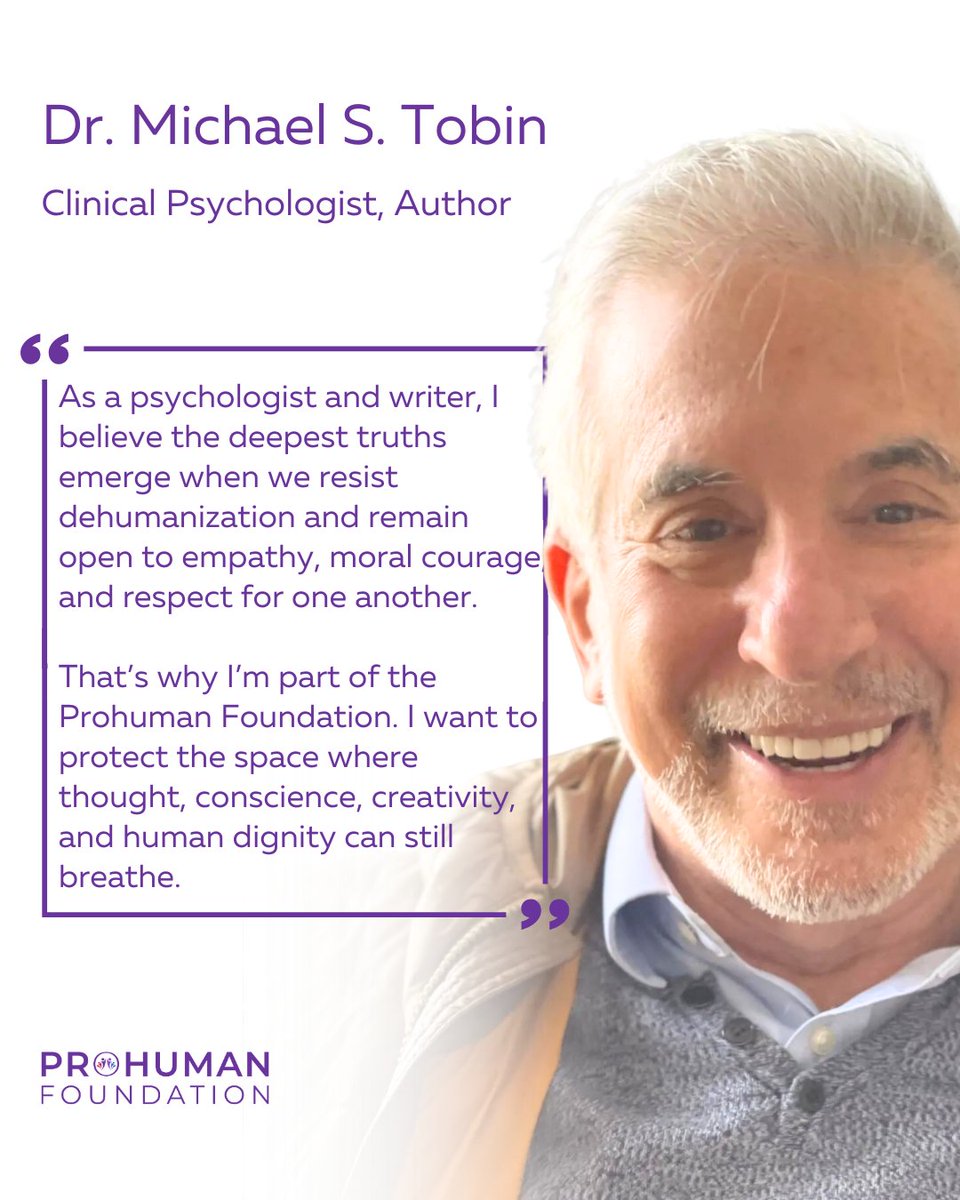
Dr. Michael Tobin is a clinical psychologist and author—we are delighted to welcome him as our newest advisor.
His essay, “The Library and the Pond: Borrowing Lives and Learning How to Live One’s Own,” is available on Prohuman Pathways. It speaks vividly to the tenets that anchor our educational programs, including library grants.
In this love letter to libraries, Dr. Tobin reflects on his childhood library and how books become portals to borrowed lives that teach us how to live our own.
Read the full essay (link in comments).
Prohuman Library Grant applications are open!
Learn more and apply (links in comments).
Which book or library shaped the person you are today? Tell us your story in the comments—we’d love to hear it.
Also, stay tuned: Dr. Tobin will also join the Prohuman Book Club this month.
2
1
31

Bought the lingo because I was challenged by a patient to reflect on my poor health choices (this refers to my prohuman #zerokale activism) and I am opening the app every 60seconds to see the glucose. Damn, this is better than eBay
1
2
8
534