
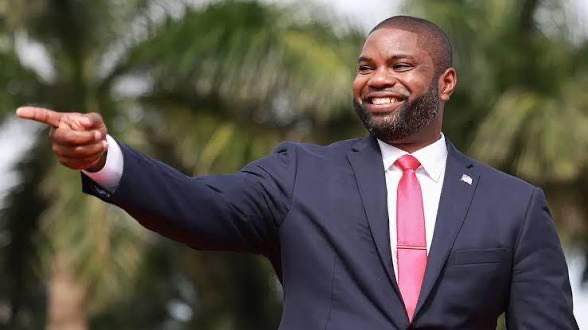
50% of Floridians still won’t commit to voting for Byron. As someone who has been a legislator from Florida for years now and is a known quantity, and is also endorsed by Trump, it’s concerning that so many voters still have questions. Let’s debate!

Byron Donalds is the MOST ARTICULATE, well-spoken candidate in the race — and it’s not even close. 🔥
He would absolutely DOMINATE any debate. But this isn’t about dodging Byron Donalds.
The Florida GOP set clear rules. If the other candidates had met the requirements, Byron would be on that stage right now — no problem.
This whole “scared to debate” narrative is just the losing side’s desperate attempt to smear an incredible leader’s character.
Byron Donalds doesn’t run from challenges — he’s ready to lead.
#ByronDonalds #FloridaGOP #ByronForGovernor #AmericaFirst #StrongLeadership #GOPPrimary #Donalds2026 #NoFear #DebateReady
@ByronDonalds
11

Yall think one dimensional and its funny
Psg lacked squad depth. Especially in that their defense you do know that right?
It's not just about the quantity of players, but also the quality they bring to the team
After all no be 5 players dem buy 2 last season
How titles dem win?
sid retweeted

Jun 13
SHOCKING NEWS 🚨 Huge quantity of government relief matrial recovered from a college premises adjacent to the residence of Hooghly TMC leader Ramendu Singh Roy.
Oh My God 😳
They didn't even spare Relief Material.
31
1,332
5,424
90,557


Lower child deaths - invest in "quality" over quantity. Kids became expensive (education/housing). Careers, individualism, later marriage and work culture raise opportunity costs. Wealth expands choices, leisure & self-fulfillment often win over big families.
2

“for in appropriating previously unowned resources nothing is taken away from others. Others could have appropriated these resources, too, if they had considered them valuable. Yet, they demonstrably did not do so. Indeed, their failure to appropriate them demonstrates their preference for not appropriating them. Thus, they cannot possibly be said to have lost any utility as a result of another’s appropriation. Proceeding from the basis of acts of original appropriation, any further act, whether of production or consumption is equally Pareto-superior on demonstrated preference grounds, provided that it does not affect the physical integrity of the resources appropriated or produced with appropriated means by others. The producer–consumer is better off, while everyone else is left in control of the same quantity of goods as before. As a result, no one can be said to be worse off. Finally, every voluntary exchange of goods proceeding from this basis is a Pareto-superior change as well, because it can only take place if both exchange parties expect to benefit from it, while the supply of goods controlled in action (owned) by others remains unchanged. See further on this Murray N. Rothbard, “Toward a Reconstruction of Utility and Welfare”
Democracy – The God That Failed
Hans-Hermann Hoppe
1
3

It’s not quantity but quality what matters! Said a guy with only 1K followers 😂
9

I totally agree, regarding quality over quantity, Ma'am.
I am a big fan of Belgian beers, for me, the very best in the World, overall. Xxx
2

RT @jing_cartt: Wts lfb
MINITEEN DECO STICKER
ON HAND
— 50 pesos each
mine quantity
Dop: 1 week
Availability:50 pcs
Help rt…
10
Dykebun retweeted

!!MAKEUP SFX!!
hi guys little sesh today ૮ o̴̶̷᷄ ·̫ o̴̶̷̥᷅ ა i would say quality over quantity but these sfxs are light ash im washed at shelfarm #shedtwt #slittwt #shtwt #988twt #shedrtwt #styro #catscratch #shhtwt #ouchietwt #styros #edtwt #edrtwt am i cutspo yall 🥺🥺


1
16
153
555


You expect me to train you humans and this civilization without direct control yet you useless barbarians wanna point fingers at me when everything goes to shit! Fuck off!!
Have you ever built a fuckin structure?
In laymans' terms
There is a forman,
There is a formans' assistant,
Quantity varying based on project size,
Then there are the multiple job task staff members.
All with DIRECT involvement and strict adherence to the job site superior!
You cannot build a house with indirect or passive involvement, only a fucking amateur would think you can!
3

Ah yes, google is free. I tried that. It defined energy as a measurable physical quantity, not invisible ghost WiFi. Since you're the one making the claim, surely you can define this special paranormal version of energy without outsourcing the answer to google .energy polum🤣🤣
2
theo retweeted

CORTIS AlloBank Festival 2026 Freebies by @quartz_nar ✷
🗓️ 20 June 2026
📍Indonesia Arena
⏰ TBA
‼️limited quantity & do not throw
like & RT would be appreciated✿

1
31
41
427




DMK has built more graveyard for political oppositions than any other party in India. DMK is is quality dominant organization than quantity based.
2

It's about the quality of the population not the quantity... African population increases in quantity more than it increases in Quality.
16

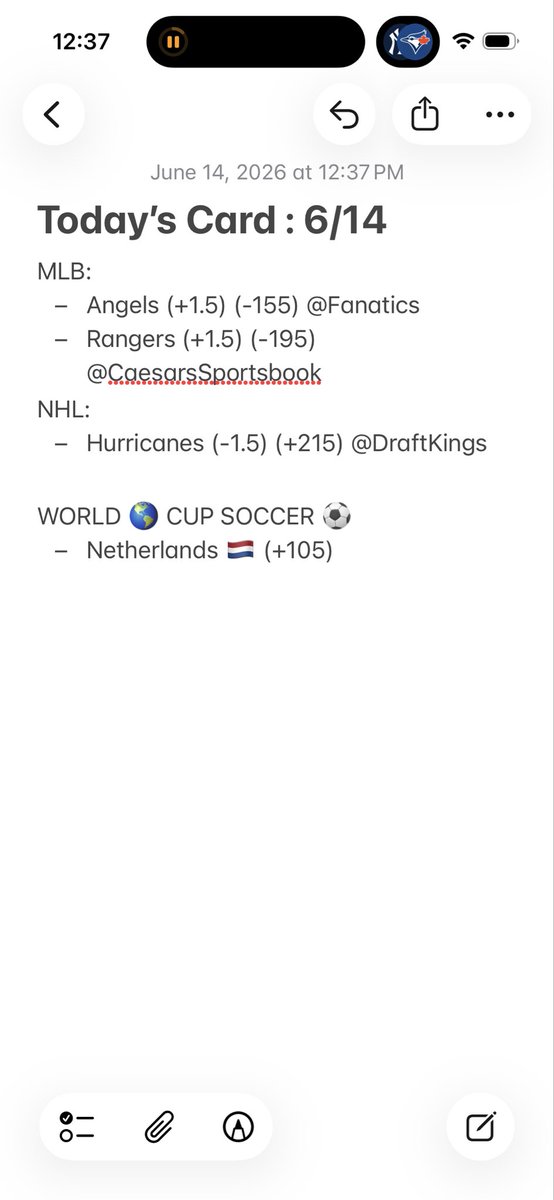
🚨 TODAY’S CARD | 6/14 🚨
💰 1 UNIT = $100
⚾ MLB
➕ Angels 1.5 (-155)
➕ Rangers 1.5 (-195)
🏒 NHL
🐶 Hurricanes -1.5 ( 215)
⚽ WORLD CUP
🐶 Netherlands ( 105)
🎯 Breakdown:
➡️ Taking run-line protection with Angels and Rangers
➡️ Hurricanes puck line offers strong plus-money value
➡️ Netherlands brings another plus-money opportunity to the card
➡️ Looking for quality over quantity today
📈 Let’s keep stacking units.
.
.
.
#PicksLaurent #SportsBetting #MLBPicks #NHLPicks #WorldCup
16