Oluseyi retweeted

10h
What an argument
You have Ancelotti who is the main orchestrator for relationism and let the ballers ball footy yet the team looked toothless and confused ....
Is that Pep's fault too?

You can’t idolise Pep Guardiola or celebrate his influence and then simultaneously complain that football isn’t what it used to be, that it’s lost its spontaneity & individuality.
He is the main architect of that change.
1
39
ロコ@高齢者ではなく現役世代の為に働く政党に投票する retweeted

Netherlands🇳🇱 vs Japan🇯🇵: Positionism vs Relationism #2
A team cannot be too relational because that creates inherent chaos structurally speaking. So it's up to managers to strike a balance between Positionism & Relationism. And this was evident in the #NEDJPN fixture
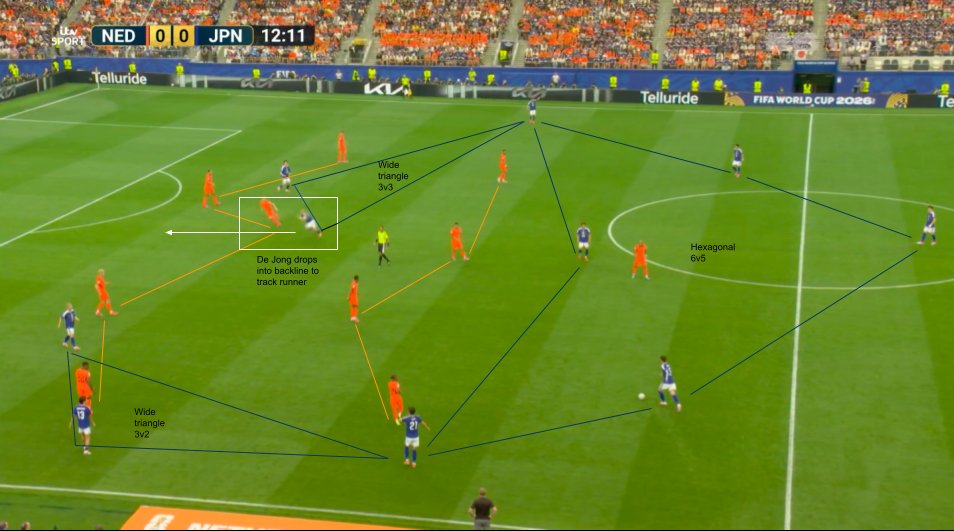
This image shows a high-level positional battle in the middle third. Japan are using structured geometric shapes to create local numerical superiorities & control space, while the Netherlands are being stretched and forced into reactive positioning.
There are two wide triangles by Japan creating a 3v2 & 3v3 on either side of the pitch stretching the Netherlands, while their 6-man Hexagonal shape controls the build-up in a 6v5 centrally.
What's key here in this image is Frenkie De Jong's positioning. This is a rather important detail in the image. Frenkie de Jong is typically an #8 or #6 but is dropping deep from his usual midfield role into the defensive line alongside the Dutch CBs. We saw this often throughout the game both OOP & IP from the Netherlands.
De Jong's dropping is to pick up a Japanese runner who is trying to exploit space in behind.
This movement is clear role flexibility to provide defensive discipline & cover. By dropping, De Jong maintains the defensive line’s compactness & tracks the Japanese runner trying to break the lines.
This is a hallmark of modern teams. Players don’t have fixed positions but rather they have roles that adapt to the opponent’s movement.
And it's a classic example of hybrid Positionist & Relationist systems & philosophies from both sides.
It's imperative to strike a balance (stay tuned for my article on this)
#WorldCup #WorldCup2026
10
58
4,484
𝕙. KITAGO retweeted
Netherlands🇳🇱 vs Japan🇯🇵 Relationism #1: We're seeing Relationism coming to the fore at this World Cup (I am going to write a detailed article about this on my Medium blog after the Round 1 fixtures are done)
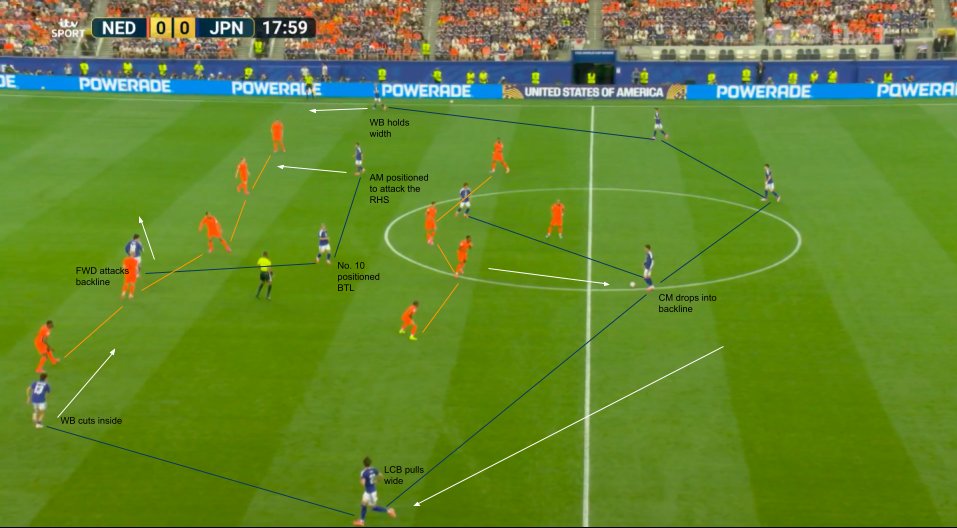
This game was a clear illustration of the pivot to Relationism at this WC & an intense tactical battle between both teams that ended 2-2. From a positionist standpoint it looks like a Netherlands 5-4-1 OOP vs a Japan 3-4-2-1/5-2-3/5-1-3-1 IP but these are just aggregate shapes, in truth, the movement is far more relational.
- The LCB pulls out wide from a traditional back-three or hybrid build-up, which is a typical relational pull
-A CM drops deep into the backline. This is textbook relationism temporarily forming a back-three or diamond in build-up to create numerical superiority against the Dutch press
-The two WBs show perfect situational fluid movements. One tucks inside by "inverting" to create central overloads & passing lanes in the half-spaces while the other stays high & wide to stretch play. There's no fixed “wide player” role, they choose based on the immediate relational context i.e. where the ball is, where teammates are, and how the Dutch are marking
-The #10 sits in the pockets between the Dutch defensive and midfield lines. In relationism, it’s about occupying a relational pocket where they can receive on the half-turn, link with the dropping CM or wide players, and threaten vertical progression or switches. The position is defined by the relationships around them, not a fixed zone or position
- The AM targets the RHS which is a high-value relational area. Half-spaces are where combinations thrive via underlaps, cut-backs, & diagonal escadinha-like passes
- The FWD makes runs in behind or high presses the Dutch backline. This is classic relational play by pulling centre-backs out of shape, creating space for the No.10 or AM or WBs to drop into, or preparing for quick vertical combinations once the ball is progressed higher up
In essence, there are no fixed positions just players constantly adjusting & moving based on relationships to teammates and the ball. What Relationism underpins.
This is only one example from the #NEDJPN game but we're seeing this across several teams at this World Cup (stay tuned for my article)
#WorldCup #WorldCup2026 #FIFAWorldCup2026
7
71
7,523

Is this hybrid approach of the two distinct philosophies - positionism & relationism?
1
91

Jun 15
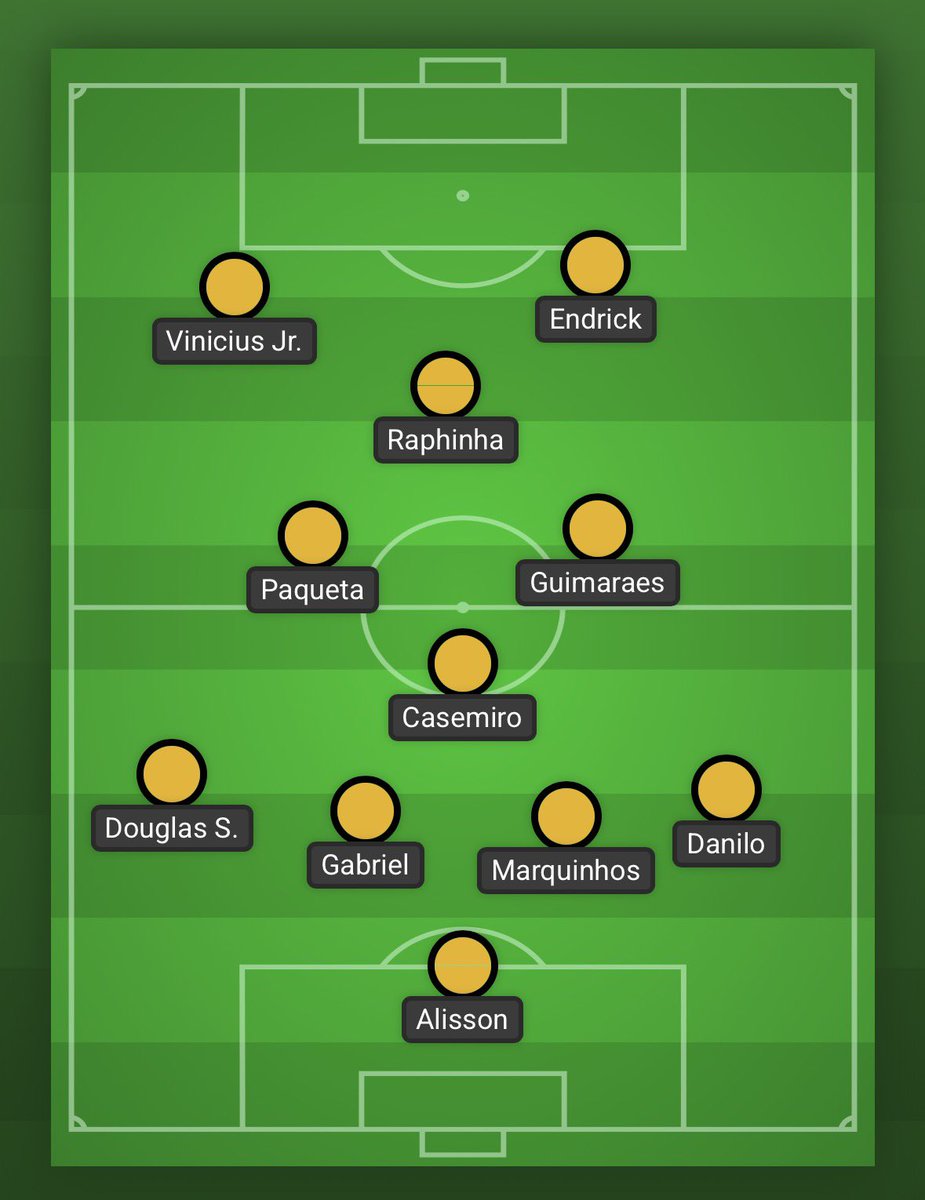
This was a super interesting exercise to see how my philosophy has changed. I was much less bothered about space and who was filling it. I found myself more interested in player traits, and which combinations, interactions and relationships I wanted to encourage. #Relationism
Jun 14

Been trying to think about how I would solve Brazil’s issues. This is what I’d go for. Vini given complete freedom of the left side, with Raphinha and Paqueta able to move over and combine with him. Right side is an issue, so bias the system to the left. Bruno has the… #Brazil
267
aiman🇲🇾 retweeted

Jun 15
The positionless relationism in PSG attack is what we might see with arsenal if they sign rogers and havertz starts at CF.
Saka, rogers, eze and havertz as fluid front 4 is exciting.
2
5
21
1,098