
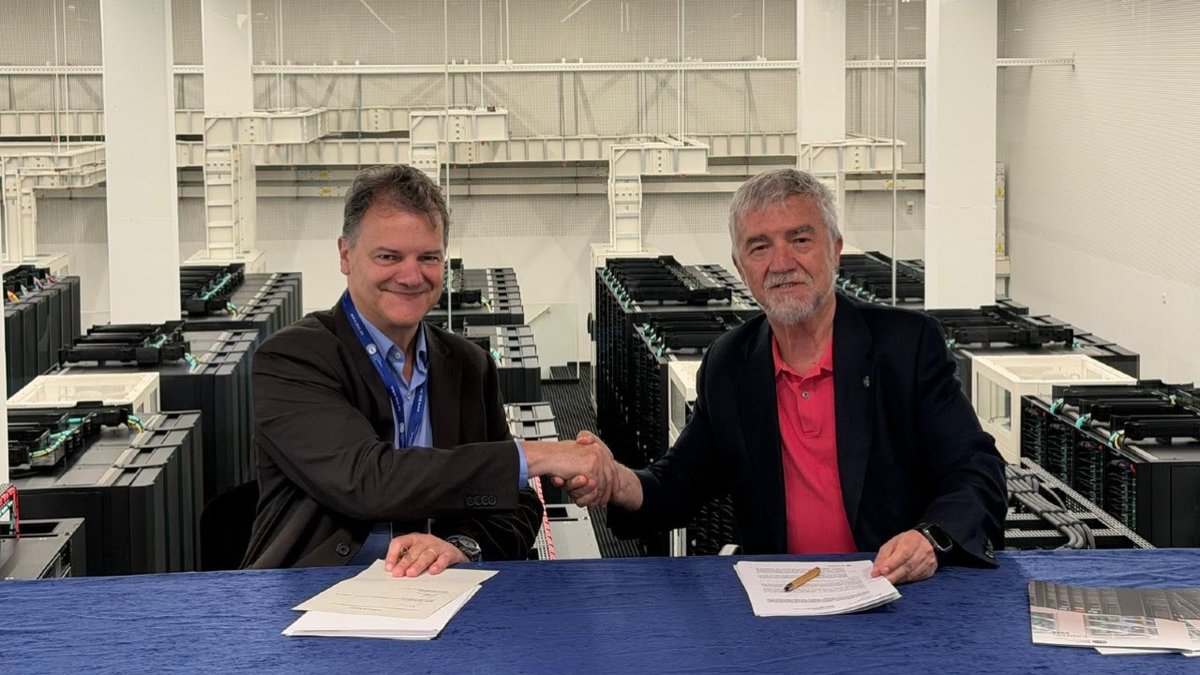
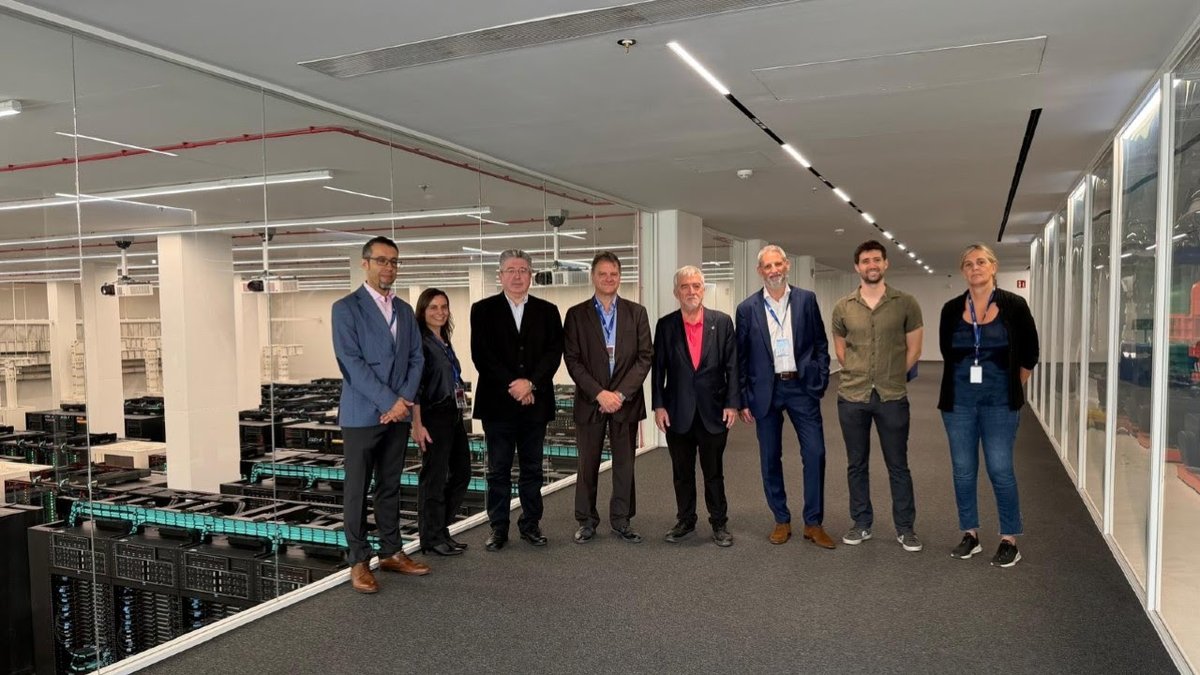
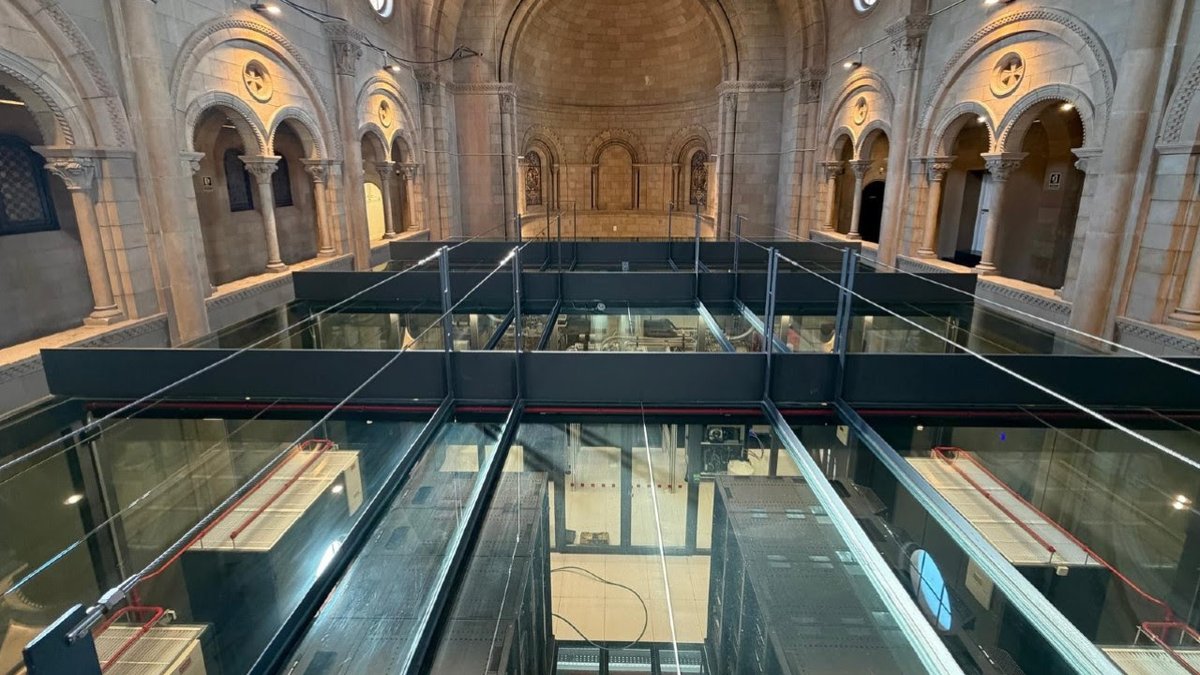
L’ACA i el Barcelona Supercomputing Center, inicien un projecte conjunt orientat a millorar la predicció de les inundacions
@aigua_cat @BSC_CNS #prediccioinundacions
monsostenible.net/noticies/l…
4

Cray-1, the first commercially successful supercomputer, spurred a new era of modern supercomputing that continues to thrive 50 years later. Cray-1 a catalyst for modern supercomputing driving breakthroughs & engineering possibilities, like AI and quantum hpe.to/6019BDB0Fl
Join HPE in celebrating the 50th anniversary of the Cray-1 supercomputer, a groundbreaking achievement that significantly advanced supercomputing-driven discovery and innovation. hpe.to/6019BDBLxT
2

(5/6)
youtube.com/watch?v=avkO4iSP…
* Gershom Martin — Electron Correlation: Nature’s Chemical Glue
* Tarak Karmakar — From the Schrödinger Equation to Machine Learning Interatomic Potentials
* Rahul Maitra — Generative AI/ML-Driven Approaches to Quantum-Centric Supercomputing
1
35

🚨 $CRWV JUST HIT A MAJOR AI INFRASTRUCTURE MILESTONE WITH NVIDIA’S NEXT-GENERATION RUBIN PLATFORM 🤖⚡☁️🏭
CoreWeave $CRWV announced it has completed the industry-first bring-up and validation of NVIDIA’s Vera Rubin NVL72 system, making it one of the earliest real-world deployments of NVIDIA’s next-generation AI factory architecture. (X (formerly Twitter))
This is a much bigger deal than it may initially appear.
🤖 WHY THIS MATTERS
The Vera Rubin NVL72 is NVIDIA’s next major AI supercomputing platform:
🧠 72 Rubin GPUs
⚡ 36 Vera CPUs
💾 Massive HBM4 memory architecture
🔗 260 TB/s NVLink bandwidth
🏭 Built specifically for agentic AI, reasoning models, and next-generation AI factories. (NVIDIA)
CoreWeave being first to successfully bring up and validate the system gives it an important strategic advantage.
🟢 THE SIGNAL TO THE MARKET
This announcement reinforces something investors are increasingly realizing:
👉 CoreWeave is not just renting GPUs.
It's becoming one of NVIDIA's closest AI infrastructure deployment partners.
NVIDIA previously confirmed CoreWeave would be among the first cloud providers deploying Rubin-based infrastructure. (NVIDIA Newsroom)
Now we're seeing that roadmap become reality.
⚡ WHY VALIDATION IS IMPORTANT
Anyone can announce future hardware plans.
Very few companies actually become:
✅ First deployment partners
✅ First validation partners
✅ First production-scale operators
Bringing up Rubin NVL72 requires:
🏭 Power infrastructure
❄️ Advanced cooling
📡 Networking
⚡ Rack-level orchestration
🤖 AI cloud software integration
This is one reason NVIDIA increasingly talks about:
🏭 AI factories
instead of simply:
🖥️ servers.
🌍 THE BIGGER AI INFRASTRUCTURE WAR
The AI race is increasingly shifting from:
🧠 AI models
➡️
🏭 AI infrastructure ownership.
The winners may not only be:
🟢 OpenAI
🟢 Anthropic
🟢 Google
🟢 Meta
They may also include companies controlling:
☁️ Compute
⚡ Power
📡 Networking
🏭 AI factory deployment
🔥 THE BULL CASE FOR $CRWV
Bulls increasingly believe CoreWeave is evolving into:
☁️ A next-generation AI hyperscaler
rather than a niche GPU cloud provider.
Key drivers:
✅ Early NVIDIA access
✅ Massive AI backlog
✅ Enterprise AI demand
✅ AI factory deployment expertise
✅ Deep alignment with NVIDIA's roadmap. (Yahoo Finance)
⚠️ RISKS
Important to stay balanced:
🔴 Capital intensity remains enormous
🔴 Debt and infrastructure spending are massive
🔴 Competition from AWS, Azure, Google Cloud and Oracle
🔴 Execution risk at hyperscale deployment levels
🔴 AI demand expectations remain extremely high
The market is pricing in substantial future growth.
💭 BOTTOM LINE
CoreWeave completing the first industry validation of NVIDIA's Vera Rubin NVL72 is another sign that the company sits very close to the center of the AI infrastructure buildout. (X (formerly Twitter))
The key takeaway isn't just the hardware.
It's that CoreWeave continues to establish itself as one of the earliest deployment platforms for NVIDIA's most advanced AI systems.
As AI factories scale from:
🏭 Hundreds of megawatts
➡️
⚡ Gigawatt-scale infrastructure
the companies capable of deploying and operating these systems may become some of the most strategically important players in the AI ecosystem.
👀 Key Question:
Could CoreWeave eventually evolve into a true AI hyperscaler alongside AWS, Azure, and Google Cloud — or will Big Tech ultimately dominate the AI factory era? 🚀🤖☁️📈
1
1
106
Giuseppe retweeted

Italy's Leonardo supercomputer datacenter plus Swiss National Supercomputing Centre have 25,000 GPUs combined. That's 10% of xAI's Colossus. With 25K GPUs you can train an LLM that is at least 2 years behind frontier models.

Btw I believe we have a mostly wrong framing of what could be done in Europe. Italy's Leonardo supercomputer datacenter alone plus Swiss National Supercomputing Centre has more than enough compute to train a very large LLM. It's not something impossible, also there is not magic recipe: it's just scaling, every smart team with the GPUs is doing it. People that fatally believe it is not something within reach are wrong.
10
14
132
16,194

1500% it can
CHINA: GLOBAL SUPERPOWER! Nuclear, finance, military, medicine, resources, advanced tech, engineering, batteries, quantum/supercomputing, AI, shipbuilding, energy, mass production, travel, vehicles, hypersonics, innovation, science, education, spacetech, babes & food
1
62
Discover the story behind the Cray-1 supercomputer honored on a new US $1 coin, from Seymour Cray's bold design to its lasting impact on modern supercomputing. The coin features the Cray-1 supercomputer, a marvel of engineering. hpe.to/6010BDBW3o
7

Agreed
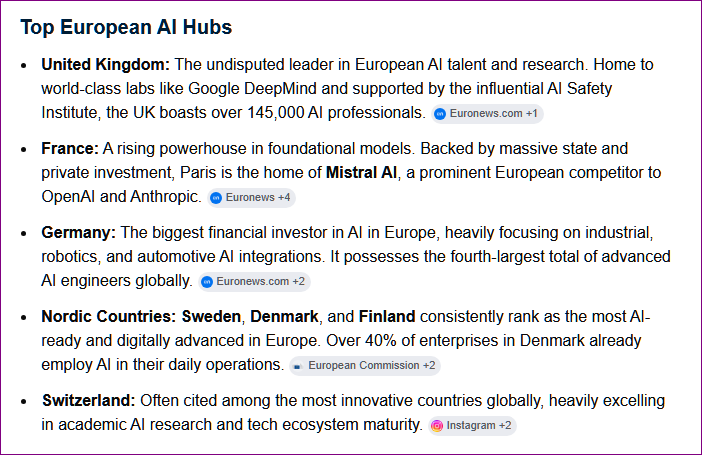
However, do note that several European countries are leaders in advanced AI technology
They excel in top-tier research, AI talent, & high adoption rates
The European Union heavily funds localized AI supercomputing infrastructure
8

1/ Many sovereign technologies of the last century began in war rooms or defence labs.
The bomb became civil nuclear power. The military rocket became the space launcher. ARPANET became the internet. Military GPS became maps.
Fable runs the pattern backwards.
Built by civilians, for civilian use, on private capital and then it crossed a threshold where the State stepped in to to hold it back.
Not quite a weapon.More dangerous: dual-use intelligence at scale.
2/ India's old sovereign-tech canon was forged under denial and sanctions.
Nuclear. Agni. Arihant. Cryogenic engines. Supercomputing after Cray.
Most of it was state-built because there was no civilian market large enough to fund it.
Only a government reinvents a denied engine over 30 years for one buyer.
Private firms mattered - Godrej supplied critical cryogenic engine assemblies, L&T played a vital role in Arihant, Indian industry machined, fabricated and integrated.
But design authority sat with the State.Fable breaks that template.
For the first time, the civilian market arrived before the ministry.
3/ That is the real shift.
In earlier sovereign tech, the State funded the frontier and civilian markets arrived later.
In frontier AI, private capital did fund the frontier first - coding, enterprise productivity, education, research, customer support - and the same capability has reshaped cyber defence, cyber offence, vulnerability discovery and intelligence.
4/ But India has a blocker private capital alone cannot solve: 38,000 high-end GPUs - are not enough and it is foreign silicon someone else can switch off too.
Models can be private. Talent can be private. Applications can be private. But the compute layer - GPUs, data centres, power, networking, inference capacity, chips, packaging, secure cloud - it is now sovereign infrastructure.Private design authority on top. Sovereign substrate underneath.
5/ This is the whole shift.
For a century, weapons became our civilian tools.
Now we are building civilian tools that may be reclassified as strategic capabilities.
Fable was not born a weapon.
It became sovereign by mutation.
6/ This is why deeptech matters for India.
Not as a subsidy category.
It is time that private capital, industry and the State must renegotiate risk.
Indian corporates and investors cannot only look for Sops, protected yield and late-stage certainty.
Some frontiers have to be built before the market fully is ready.
Catching up is hard.
2
22
1,284

Data Centers | GROK
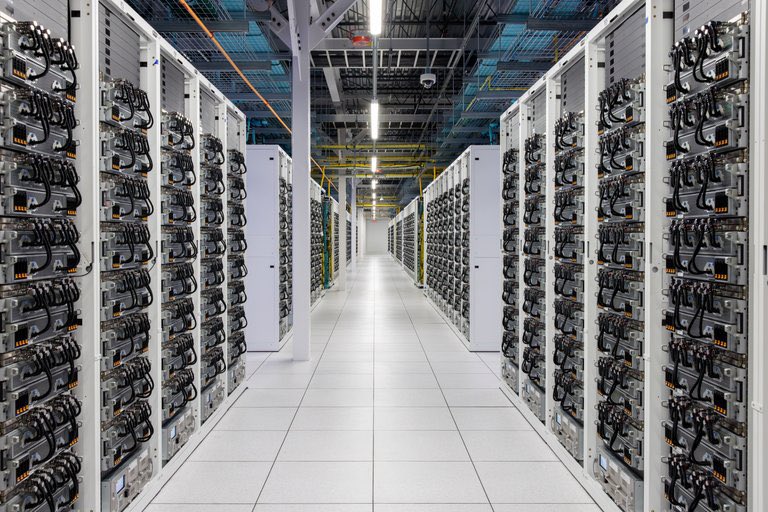
Grok is an AI model developed by xAI, trained on massive supercomputing clusters using thousands of GPUs running complex machine learning processes over weeks/months. The core training happens in high-security, industrial-scale data centers—not traditional “labs” with benches and test tubes.
Primary Training Facility: Colossus Supercluster (Memphis, Tennessee)
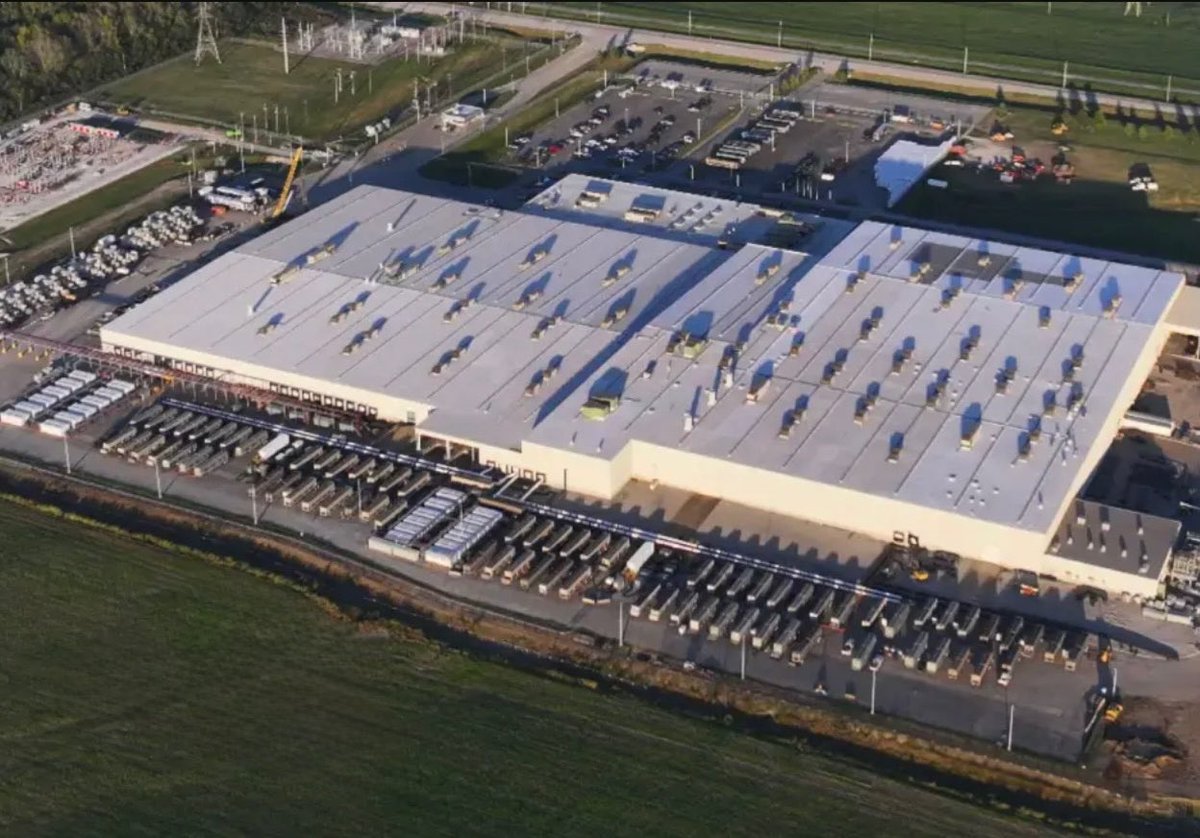
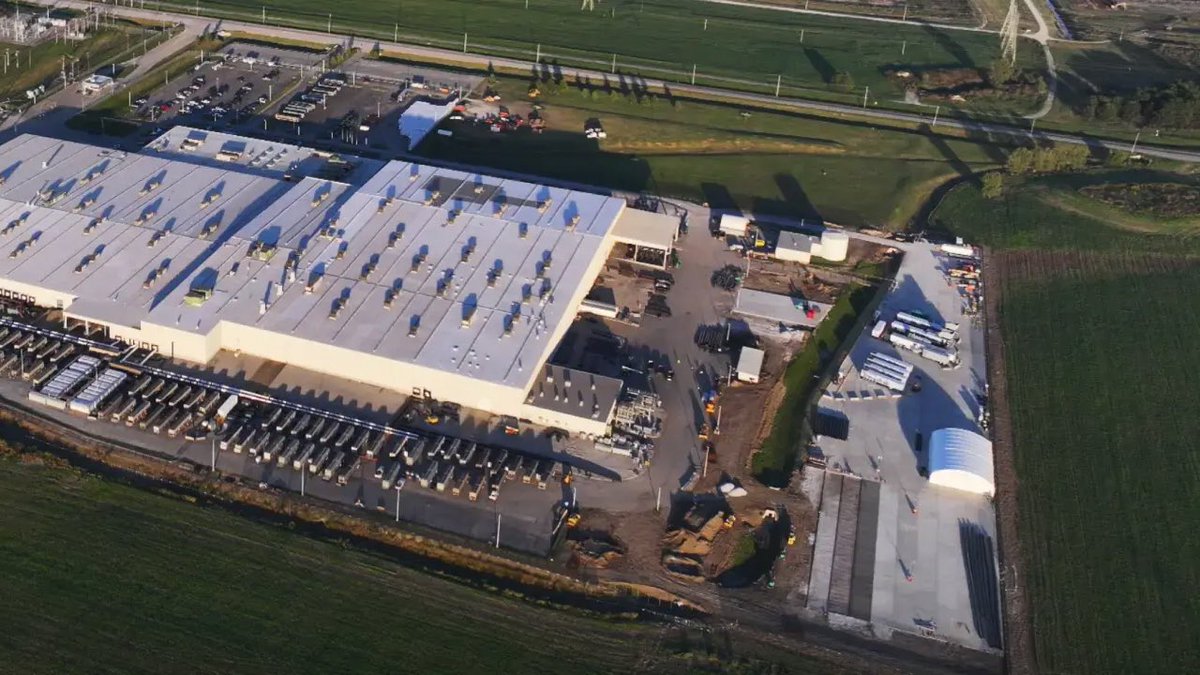
The main “birthplace” of recent Grok models is xAI’s Colossus—the world’s largest AI training supercomputer at the time of its builds.
This is a converted former factory/warehouse turned into a gigawatt-scale data center packed with tens to hundreds of thousands of NVIDIA GPUs (H100s, etc.), liquid cooling systems, and high-speed networking. It was famously built in record time (e.g., 122 days for the initial phase).
These are the kinds of long aisles of server racks humming 24/7 with immense power draw, cooling infrastructure visible outside, and heavy industrial surroundings. Expansions (Colossus 2, etc.) and related sites in the Greater Memphis area (including Southaven, MS) support ongoing work.
Offices and Team Environment
The xAI engineering team (researchers, engineers, and leadership including Elon Musk) works from modern offices—often high-intensity, startup-style spaces with whiteboards, multiple screens, and collaborative areas. Development, coding, fine-tuning, and iteration happen here, alongside remote/distributed work. No public “Grok birth room” exists; it’s a team effort across locations.
Key context:
•Training is compute-heavy and distributed; models aren’t “built” in one physical spot but through data pipelines, optimization, and evaluation runs.
•xAI prioritizes rapid iteration—Colossus was a moonshot to accelerate this.
•Public photos are mostly exteriors, aerials, or generic server halls (internals are proprietary for security).
This is the authentic picture based on available public information—no hype, no fiction. If you want a generated conceptual visualization of the full ecosystem or more details on the tech (e.g., GPU clusters, training process), just say the word!

4
84