
I'm not going to spend my time defending Harry Potter on here beyond what I've already said, but I want to point out that (a) you seem shaky on what a "supernormal stimulus" is supposed to be, (b) you've replied to me twice today, once to say this and once to say something truly idiotic about the common descent of the Egyptian, Chinese, and Aztec writing systems, and (c) in that same 24-hour period you've replied twice to posts concerning swimsuit photography of Emma Watson.
1
17

It's one of the most boring stories ever, and the fact it's popular tells you exactly what supernormal stimulus looks like for humans.
1
16



Verdade, até porque é supernormal 3 jogadores no meio demorar uma vida pra pressionar o cara da bola e o zagueiro ter que pedir um Uber pra acompanhar o jogador
20

The size of Ideal Milk to 160g and the carton is 220gh, which mean a tin of milk is 9.16. So selling it for 15gh is a supernormal profit
2
1
1,275

A voz dele conversando é supernormal, narrando parece que ele incorpora e a voz se transforma kkkkkk
6
74

The vasocomputation perspective on imagination is that it depends locally on fine (vaso)muscular control, which is very much “use it or lose it”
Ie if you don’t regularly practice stabilizing & manipulating the sensations flowing through some neural circuit, you’ll slowly lose the capacity to intervene counterfactually (via vasocomputation) on that circuit. Which leaves one a passive consumer of whatever information flows through that circuit and/or dependent on finding an external hyperstimulus to reach certain states
Stunted imagination, PIED, & aphantasia as examples of such deficits, jhana access as an example of supernormal capacity
2
1
25
732

Jun 13
#Day 9 of Daily Reading Habits
Book:Atomic Habits
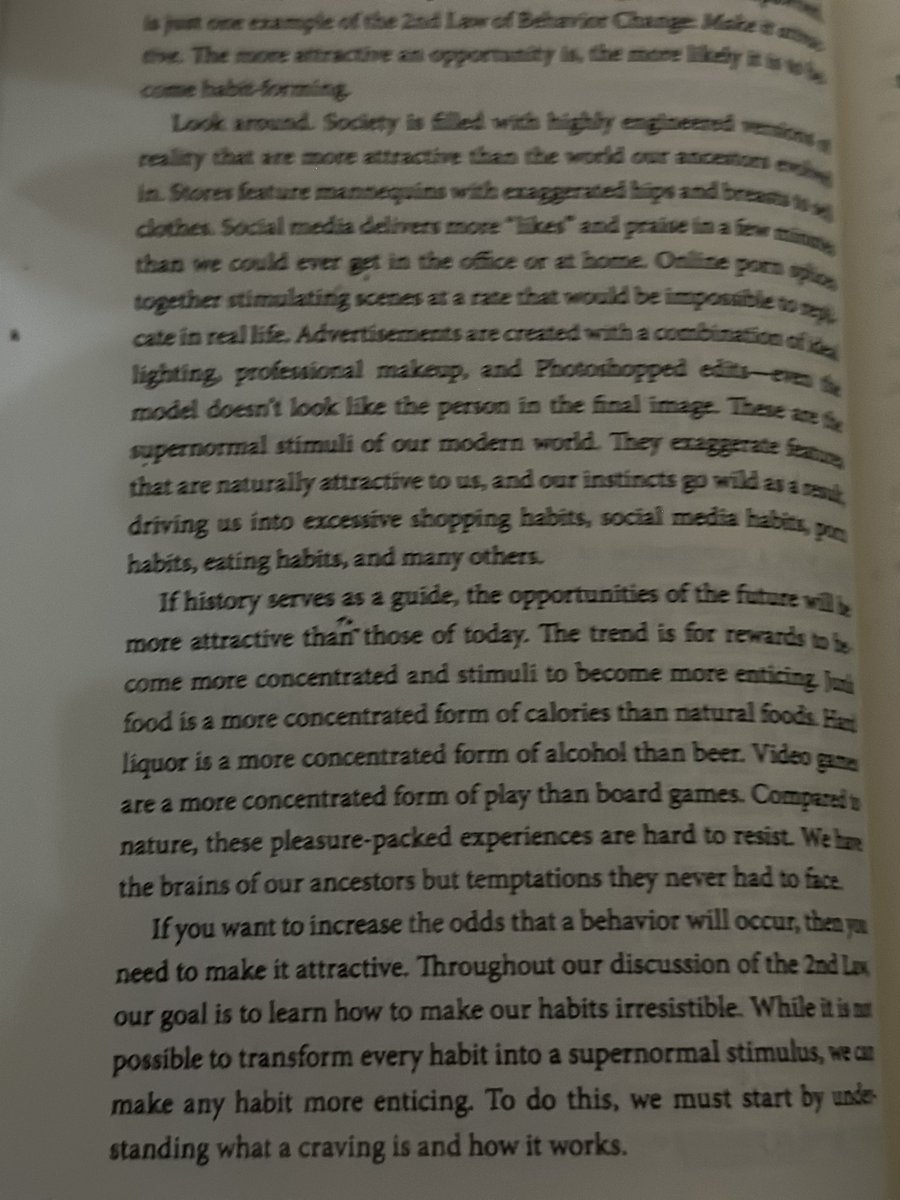
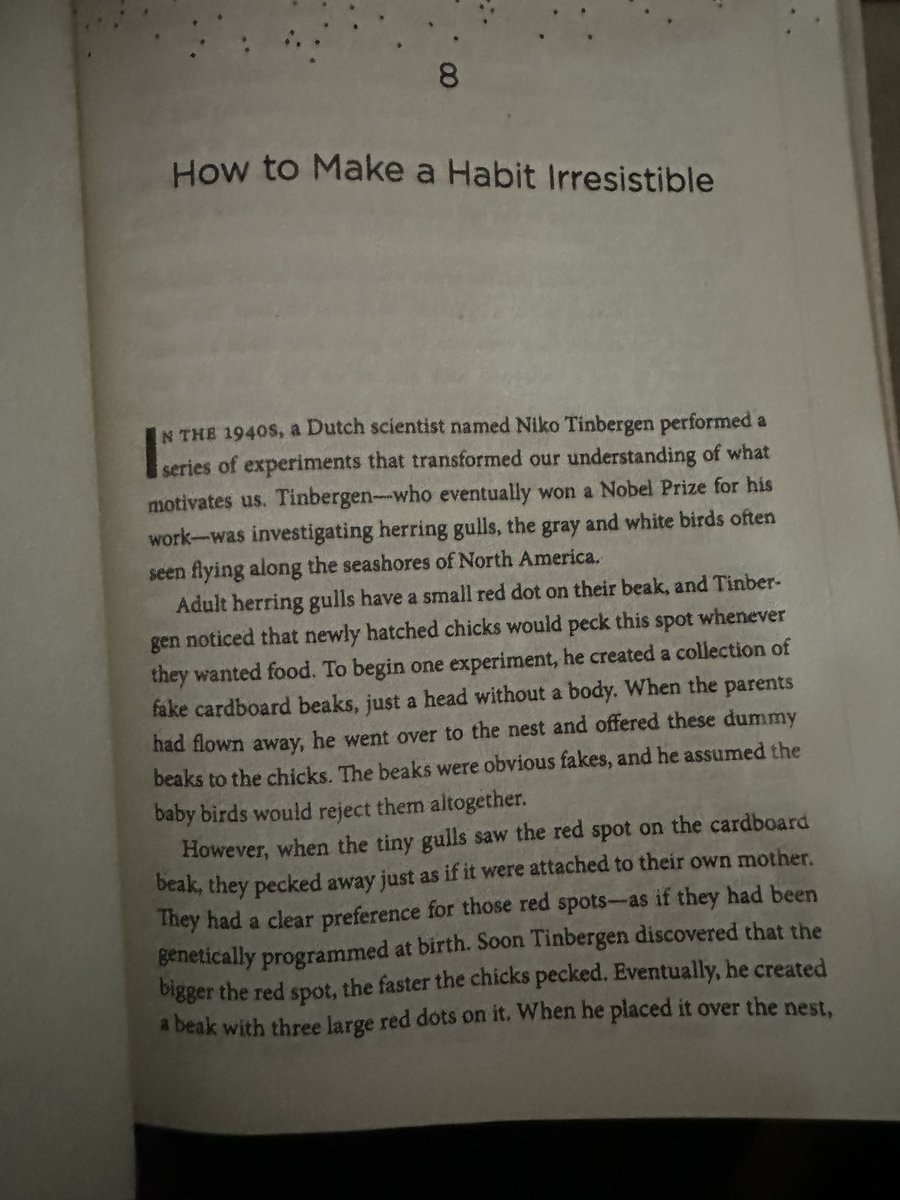
I learnt today that one of the way to develop Good habits is to make the habits attractive
I learnt about what we called a supernormal stimulus and it has do with how our society is filled with engineered and heightened version of reality and that is why you will see that in advertisements,billboard most of the things there seems to be very exaggerated but there is something that does to the brain there is a dopamine spike(that is your motivation to act on the stuff increase) as that advertisements have bring to you an expectation And It is the anticipation of a reward of an habit not the fulfillment of it that get us to take action
Without desire , action dies
If history serve as guide the opportunity of the future will be much more attractive than that of today
Jun 12

#Day 8 of Daily Reading Habits
Book:Atomic Habits
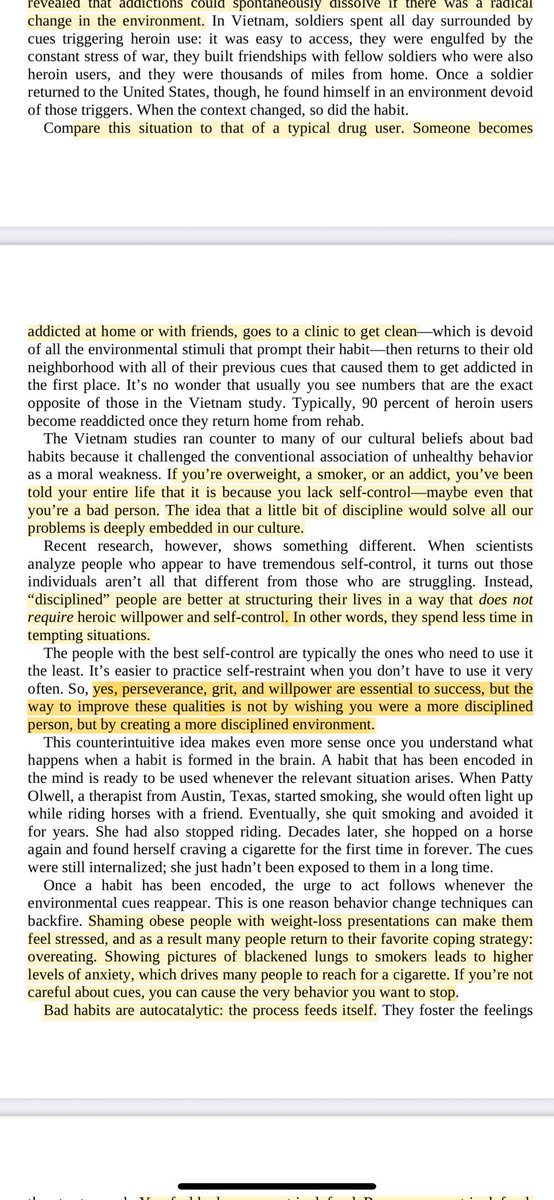
I learnt today how that you cant develop a positive habit in a negative environment “.
And you can’t do away with a bad habit when you constantly keeps around you the stuff that can always triggers the habits.
Also, i learnt that most time when we say someone has self control it is not like they have a special unique power against temptation it is just that they have kept far away from them the trigger of such to the point they won’t need much willpower to resist it again
1
3
166

Hardly a dodge. You asked for a percentage & I pointed out the rent-seeking lit as the relevant body of work that tries to quantify unproductive transfers &associated social costs/waste. You seem unfamiliar with it as your def appears from Schumpeter's supernormal profits not rs.
3
16

RainyOrangeผู้ฝันฟอร์ดเรนเจอร์☁🏮 retweeted

Jun 13
🧿คืน 13 สยองขวัญ คืนที่ 1 🪲🔮[ Supernormal ]
13✧06✧2026✧21:30 (GMT 7)
youtube.com/live/y2cKtQ1bz9U…
#VtuberTH #vtuber #วีทูปเบอร์ #Liviana_ET_Live #vtuberthailand #สตรีมเมอร์ #วีทูปเบอร์ไทย #เกมส์ผี

1
3
24
3,968

Jun 13
It stands half-ungainly, half and mostly impressed. It's not used to having someone else take care of the little details for him, — with such supernormal agility either; Chin lifted, LED flickering, watching closely.
˝ That's a way of wording it. I like it. — Thank you. ˝
May 24

ᅠ
👗: @rk800_exe
careful hands settle at the knot in the other’s tie , gently tightening it for it .
“ gotta make sure they know y’mean business . look spiffy and all that ,”
ᅠ
1
90

Jun 13
Shall I move into evolutionary mismatch theory?
Selection distortion theory posits that widespread access to internet pornography functions as a supernormal stimulus, hijacking evolved visual mate-selection mechanisms—particularly in men—and systematically distorting preferences toward hyper-idealized, novel, and non-committal sexual cues, thereby competing with real-world pair-bonding, reducing relationship quality, impairing sexual function, and contributing measurably to fertility declines.
Empirical support includes the 2021 National Couples and Pornography Survey, which found that couples with no porn use reported over 90% high stability, commitment, and satisfaction, while male or joint use correlated with 18–45% drops in these metrics, one in five couples experiencing conflict, and porn initiation nearly doubling divorce odds. Frequent porn consumption links to higher erectile dysfunction prevalence in young men (up to 34–50% in high-use groups versus 13% in low-use), lower arousal to real partners, and, per the MARHCS study, earlier/frequent use with masturbation during viewing associated with reduced sperm concentration, total count, and altered reproductive hormones. Critically, the 2007 iPhone/smartphone rollout—enabling ubiquitous porn access—accounts for 33–52% of the U.S. fertility drop from 2007–2011 (teen births down 4.5–8%, young adults 3.2–6.6%), via mechanisms including reduced in-person socializing, less sex, and porn substitution, with parallel global patterns post-broadband diffusion.
Thus, while economic and cultural factors predominate, pornography-driven selection distortion operates as a potent technological amplifier of evolutionary mismatch, eroding the incentives and capacities for committed reproduction in modern environments.
1
41

Claro, yo en ningún momento hablo de fracaso; de hecho, me parece supernormal y coherente, dadas las circunstancias. Yo en todo momento hablo por mí.
1
16
Nusu retweeted

Pornography acts as a "supernormal stimulus" that triggers unnaturally high & sustained dopamine spikes in the brain. Over time, this intense overstimulation leads to dopamine receptor desensitization.
6
155
2,338
67,718

Jun 13
“A person who expects this body to be always supernormal in its dealings with the world, will be disappointed, for this little girl acts according to her ‘kheyala’ - whatever it be at any time.”
~ Anandamayi Ma #Kheyala #Anandamayi
actualized.org/forum/topic/9…

20

laparisiennelife.com/2026/06…
#Interview
Rencontre avec Supernormal !
14