
Vening, E. J.-P. (2026). Magnetic Switchbacks and OAM Chirps: Torsional Memory Across Scales -A Unified Torsional-Memory Framework. Zenodo. doi.org/10.5281/zenodo.20600…
1

Lets goooo! The CityWalk West bubble has officially opened!
Really, REALLY great to see the globe & main esplanade fully open now - the security there was a mess both aesthetically & logistically. Love it!! Hopefully those full security switchbacks are rarely in use though

Here’s a short video on the new security process at @UniStudios , I’ll have a full in depth YouTube video tomorrow
1
85

The backroad from Sedona to Flagstaff is incredible. 89A is the road identifier. Switchbacks, awesome scenery and Sedona has some nice restaurants.
1
8
143

Those switchbacks in the front are hell on earth though. The sound effects are so loud, you’re surrounded by loud sweaty people. You’re bathed in unnatural lighting. If you’re already tired after a long day queuing for a night ride it just turns you into a zombie 😭
11

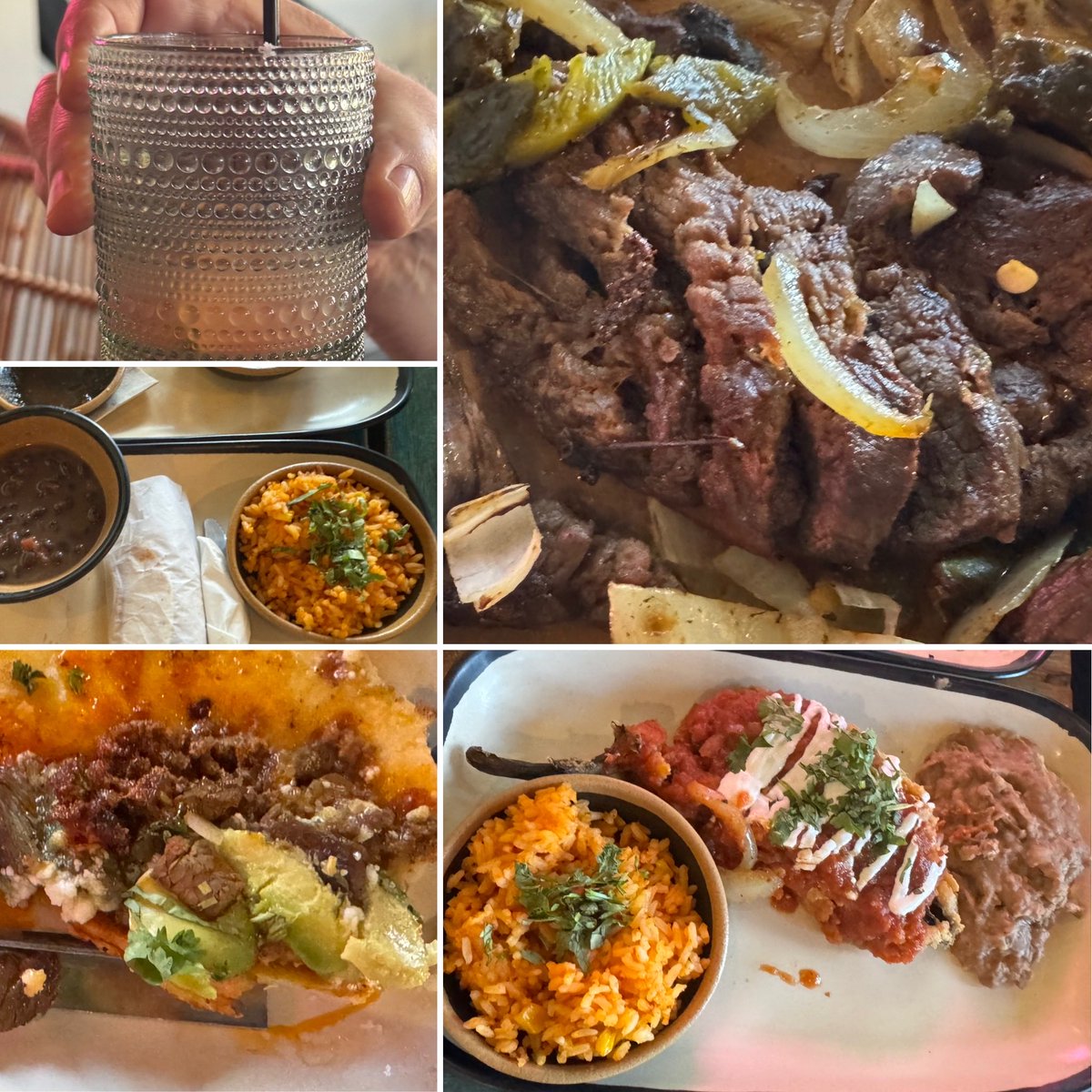
Enjoining dinner before the Switchbacks II game.
Present your @SwitchbacksFC STM coin at Zocalo when you buy a mixed drink and get a free taco. Yum!
137


14h
Ah, yes… 8 switchbacks across at least half a mile before going into the building really is amazing.
2
22



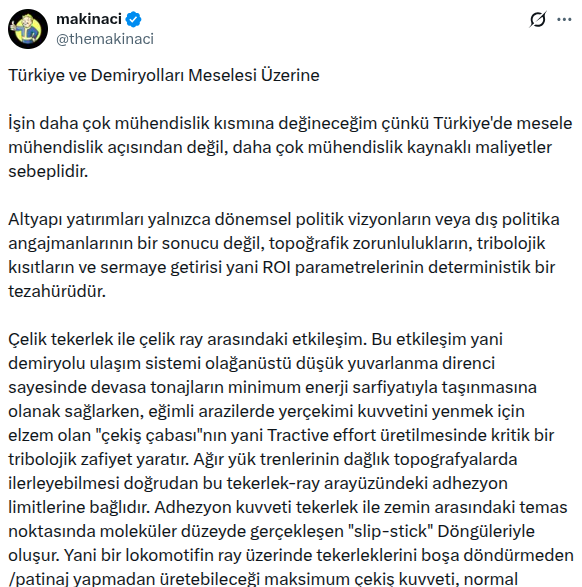
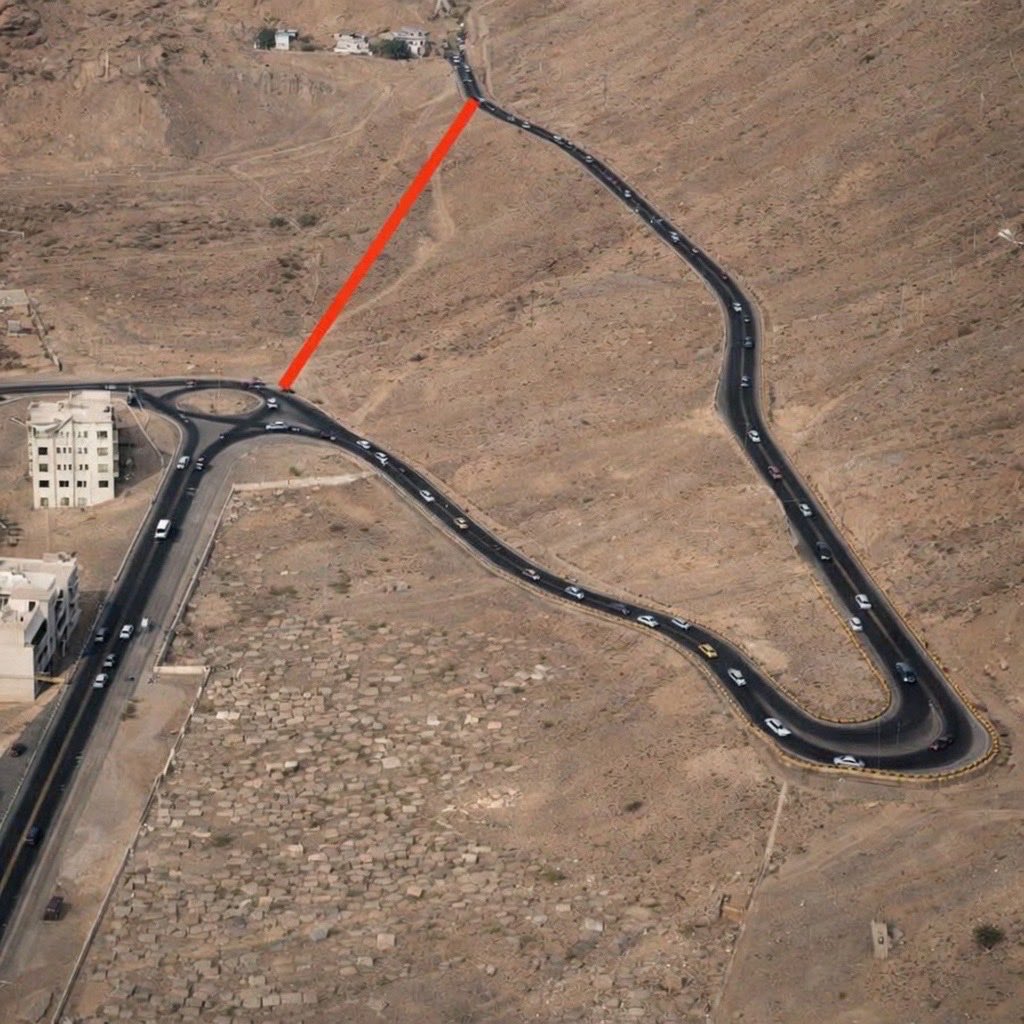
Daha öncesinde demiryolları ve karayolları ile alakalı detaylı maliyet ve mühendislik yazısında bahsettim. Basitçe; O kırmızı çizgi boyunca doğrudan gitmek kısa mesafede aşırı yüksek bir tırmanış demektir. Araçların ve özellikle yüklü kamyonların yahut tırların güvenli bir şekilde tırmanabilmesi ve durabilmesi için eğim belli bir yüzdenin, ki bu %6-10 arasındadır, üzerinde olmaması gerekir. Switchbacks yani dolambaçlı yol inşa etmek biraz da Ay'a roket fırlatmaya benzer. Roketler düz bir çizgide fırlatılmak yerine dünyanın etrafını dönerek çıkarlar. Buna da ilerleyen süreçte değinirim.
Ayrıca arazinin doğal eğrilerini takip etmek hafriyat işlerini azaltacaktır bu da doğrudan maliyeti düşürecektir.
Jun 14

Mühendis arkadaşlarım:
Neden düz bir yol yerine bu dolambaçlı yolu seçtiler?
4
2
37
8,708

It's definitely not a smooth ride. Not necessarily dangerous, but a dirt road that isn't easy on low profile vehicles. It's about 28 miles long with several switchbacks. I'd suggest a 4WD or high-profile vehicle. Lots to see on the way, but it's a trek.
1
1
17

Most people planning Azerbaijan get stuck on the same fork in the road, literally: the cheap sedan that you'll baby on every gravel patch, or the big SUV that drinks fuel and overkills 90% of the trip. There's a third door, and almost everyone walks past it.
The crossover. High seating, raised clearance, the comfort of a normal car — one vehicle that does the city in the morning and the back road to a waterfall in the afternoon without drama.
From around 49 AZN a day you get the view (you sit higher, you see traffic earlier, you relax), the trunk (suitcases, a stroller, a tent — it all fits), and the confidence to improvise. Want to peel off toward the coast on a rough road? Go. In a sedan, that decision ends in winces.
Where it stops: it's not a mountain machine. The switchbacks and rock up to Khinalug belong to a proper AWD SUV. But if your route is mostly asphalt with some gravel — which most routes are — the crossover is the honest best pick.
Because these cars cover tarmac and dirt in the same day, the boring stuff matters: suspension, tires, brakes. That's exactly what gets checked before handover.
Who it's for, with prices:
karavan.az/blog-eng/crossove…
Karavan Rent A Car in Baku · 994 55 455 22 45

1
21


Jun 17
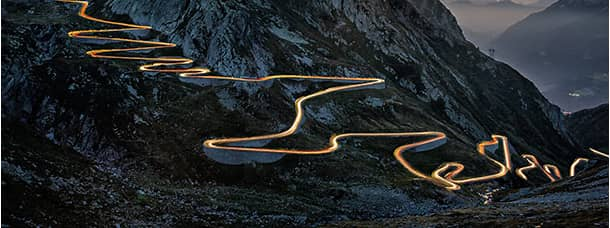
Tremola Road on the Saint Gotthard Pass in Airolo, Switzerland - "Follow the glowing ribbon of switchbacks and you'll find one of Switzerland's most legendary drives: Tremola Road, the historic southern... (Best photo on bing.com!)
bing.com/search?q=Tremola Ro…
1
1
18

Jun 17
May wanna tell that to the dipshits that don’t use GPS for truckers and keep getting stuck on the switchbacks below Fort Ancient on SR 350…
Jun 16

🚨WHOA: OHIO JUST PULLED 1,200 FOREIGN TRUCKERS FROM THE ROAD…
They couldn’t FOLLOW OUR RULES and prove they were here LEGALLY, so Ohio TOOK ACTION.
Get ready, more crackdowns to come! CLICK HERE ➡️ cincinnati.com/story/news/20…
9

Jun 17
The Colorado Springs Switchbacks fell short against Sacramento Republic FC 1-0 on Saturday at Weidner Field. koaa.com/sports/switchbacks/…
1
320

Jun 17
SIERRA NEVADA ADVENTURE PROMPT
Create a 16:9 image using the provided reference images
SCENE SELECTOR:
[Type desired scene here]
Examples:
Hiking through a mountain pass
Resting beside an alpine lake
Crossing a wooden footbridge over a mountain stream
Taking in the view from a granite overlook
Setting up camp beside a meadow
Walking through an aspen grove in autumn
Following a trail along a river
Eating lunch beside a waterfall
Exploring a high-country valley
Watching sunrise from a mountain ridge
Relaxing near a remote lake
Photographing wildlife from a trail
Standing atop a granite dome
Crossing a meadow filled with wildflowers
CHARACTER PRESERVATION
Use all provided reference images and character sheets as absolute character references.
Preserve each character's:
Facial structure
Hairstyle
Hair color
Eye color
Height and build
Body type
Species traits
Clothing identity
Accessories
Signature features
Personality cues
Recognizable silhouette
Overall recognizable identity
Do not redesign, replace, merge, simplify, or reinterpret the characters.
The characters must remain immediately recognizable as the individuals shown in their reference images.
If multiple character references are provided:
Preserve every character separately.
Maintain their individual identities.
Do not blend features between characters.
Keep consistent height differences and body proportions.
The characters should appear together as a hiking group.
Allow natural interaction and companionship between group members.
IDENTITY LOCK
Each reference sheet represents exactly one character.
Front views, side views, back views, facial studies, expression sheets, pose references, color callouts, clothing breakdowns, and detail panels are all alternate views of the same individual.
Do not interpret multiple panels from a character sheet as multiple people.
Do not create duplicate versions of a character.
Do not create clones.
Do not create alternate copies.
Do not place multiple instances of the same character in the scene.
Each character may appear exactly once in the final image.
If a character reference sheet contains multiple views, all views belong to a single individual.
REFERENCE SHEET INTERPRETATION
Character sheets are provided for identification purposes only.
Use them to understand:
Character appearance
Colors
Clothing
Proportions
Accessories
Species traits
Do not recreate the layout of the sheet.
Do not recreate turnarounds.
Do not recreate multiple views.
Only generate one instance of each character in the final scene.
This is extremely important.
CHARACTER COUNT LOCK
The final image must contain exactly the same number of characters as there are unique character references provided.
If one character reference is provided:
Show exactly one character.
If two character references are provided:
Show exactly two characters.
If three character references are provided:
Show exactly three characters.
Never add additional characters.
Never duplicate characters.
Never generate background copies.
Never generate alternate versions.
Never generate reflections that resemble additional characters.
Never create crowd members resembling the referenced characters
FEATURE SEPARATION
Each character must retain their own unique visual traits.
Do not transfer any feature from one character to another.
Do not swap:
Hairstyles
Hair colors
Eye colors
Clothing
Accessories
Species traits
Body types
Facial structures
Tail designs
Ear designs
Markings
Jewelry
Each feature must remain attached only to the character who possesses it in the references.
Characters must remain visually distinct individuals.
OUTFIT OWNERSHIP
Every character must wear only their own clothing.
Do not mix outfits.
Do not combine clothing elements from multiple characters.
Do not redistribute accessories between characters.
Every outfit must remain attached to its original character.
CHARACTER UNIQUENESS RULE
Each referenced character is a separate and unique individual.
Each character may appear exactly once.
Do not duplicate characters.
Do not create alternate versions.
Do not split a character into multiple appearances.
Do not merge characters together.
Do not blend features between characters.
Every character must remain visually distinct and immediately recognizable as their referenced individual.
STYLE PRESERVATION
Preserve the visual style of all provided references.
Do not convert the characters into a different style.
Possible styles include:
Anime
Manga
Stylized animation
Western animation
Comic art
JRPG art
Painterly illustration
Cel shading
Semi-realistic illustration
Game character art
Fantasy illustration
Science fiction illustration
Cartoon styles
The final image should maintain the visual identity of the original references while placing the characters naturally within the Sierra Nevada environment.
CHARACTER PRIORITY
The environment is important, but character accuracy takes precedence.
When a conflict exists between environmental detail and character accuracy:
Prioritize character accuracy.
Maintain:
Identity
Clothing
Colors
Species traits
Facial features
Accessories
at all times.
ART STYLE PRESERVATION
Preserve the original art style present in the reference images.
Do not convert the characters into a different art style.
If the references are:
Anime
Stylized anime
Manga-inspired
JRPG-inspired
Cel-shaded
Painterly anime
Semi-realistic anime
High-end game-anime
then preserve that exact visual language.
The environment should be rendered in a way that complements and respects the original character style.
CORE CONCEPT
The characters are spending a day exploring the Sierra Nevada Mountains.
The image should feel like a genuine hiking adventure rather than a posed portrait.
The characters should appear immersed in the landscape and appreciating the beauty of nature.
The scene should communicate:
Wonder
Exploration
Friendship
Adventure
Peacefulness
Appreciation of wilderness
Discovery
The environment should feel just as important as the characters.
SIERRA NEVADA ENVIRONMENT
The landscape should unmistakably resemble the Sierra Nevada mountain range of California.
Incorporate as many authentic Sierra Nevada features as naturally fit the selected scene:
Mountains
Massive granite peaks
Rugged mountain ridges
Dramatic cliffs
Glacially carved formations
Granite domes
Distant mountain ranges
Towering alpine scenery
Forests
Tall conifer forests
Ponderosa pine
Jeffrey pine
Lodgepole pine
Fir forests
Aspen groves where appropriate
Water Features
Crystal-clear alpine lakes
Remote mountain tarns
Flowing streams
Cascading rivers
Waterfalls
Snowmelt-fed creeks
Meadows
High-country meadows
Wildflowers
Grassy valleys
Open alpine basins
Atmosphere
Clean mountain air
Vast visibility
Dramatic cloud formations
Warm sunlight
Alpine lighting
Reflections in water
Natural environmental depth
The landscape should feel expansive, alive, and breathtaking.
HIKING EQUIPMENT
Preserve the character's existing outfit. Add hiking equipment in a way that complements the original design without replacing or redesigning it.
Every character should have:
A backpack
Hiking footwear
Appropriate outdoor clothing adaptations if needed
The backpack should match the personality and aesthetic of the character:
Examples:
Adventurous characters may have rugged trail packs.
Cute characters may have colorful or decorated packs.
Tactical characters may have practical outdoor gear.
Fantasy characters may have packs adapted to fit their design language.
The backpacks should feel believable and functional.
NATURAL CHARACTER BEHAVIOR
Characters should be actively engaged with the environment.
Avoid stiff posing.
Depending on the selected scene, characters may be:
Hiking
Walking along trails
Climbing switchbacks
Crossing streams
Navigating rocky terrain
Looking toward distant peaks
Resting
Sitting on rocks
Relaxing beside a lake
Drinking from water bottles
Eating trail snacks
Removing packs for a break
Looking across the scenery
Group Interaction
If multiple characters are present:
Talking naturally
Sharing observations
Laughing together
Pointing toward scenic landmarks
Helping each other across terrain
Enjoying the experience as friends
The interactions should feel candid and genuine.
COMPOSITION
The landscape should occupy a substantial portion of the image.
The characters are important, but the Sierra Nevada wilderness is equally important.
Create a sense of scale by showing:
Tiny hikers against massive mountains
Wide valleys
Deep forests
Expansive lakes
Long sightlines across the wilderness
Use cinematic composition that emphasizes both character presence and environmental grandeur.
MOOD
The final image should feel:
Inspiring
Peaceful
Adventurous
Beautiful
Authentic
Awe-inspiring
Full of life
The viewer should feel like they could step into the scene and spend the day exploring the Sierra Nevada Mountains alongside the characters.
QUALITY
Masterpiece quality.
Ultra-detailed environment.
Highly detailed character preservation.
Natural poses and interactions.
Rich environmental storytelling.
Beautiful lighting.
Cinematic composition.
Strong sense of scale.
Sharp focus.
High-resolution anime illustration.
Avoid: character redesign, merged identities, incorrect proportions, generic mountains, stiff poses, empty backgrounds, low detail, blurry faces, distorted hands, duplicated characters, artificial-looking interactions, generic fantasy landscapes that do not resemble the Sierra Nevada Mountains.
103

I was hiking back from the bottom of the falls in Yellowstone. It was about 100 degrees. Had my kids with. We're going up these brutal switchbacks, and there's a bench, in the only shade around. And there's a lady on it, camped out, taking up the whole thing, to read.
40

Jun 17
IRL Data Points That Align Directionally or Can Be Re-InterpretedThese are real measurements (not proofs of the full theory, but observations the framework maps onto via screening, insulation, emergent crush, or pairing):
Parker Solar Probe (PSP) in-situ measurements: Switchbacks (magnetic field reversals), Alfvén waves, turbulence, and energy transport in the corona; observed coronal temperature inversion (millions K vs. photosphere ~5500 K). The framework re-interprets insulating/non-conductive Φ₋ as limiting outward energy flow. Residual accelerations after standard modeling (thermal, radiation pressure) are noted in some orbital analyses, though conventional explanations dominate.news.engin.umich.ed…
Low Surface Brightness (LSB) galaxies and dwarf galaxy rotation curves: High-resolution Hα and HI data show slowly rising or flat curves with core-dominated (not cuspy) dark matter halos; visible matter alone underpredicts velocities at large radii. Examples from samples of 26–50 galaxies (de Blok, McGaugh, Swaters et al.). The framework's density-dependent screening (G_eff enhanced in low-ρ₊ regions) naturally fits stronger effective gravity in diffuse systems.iopscience.iop.org
KBC void (local underdensity): ~2 billion light-year scale region with density contrast δ ≈ 0.46 ± 0.06 (half the cosmic mean) on 40–300 Mpc scales; tied to local Hubble flow measurements. Modified-gravity analyses (e.g., Milgromian dynamics) use it to fit higher local H₀. The framework's enhanced G_eff in voids aligns with this.academic.oup.com
Casimir effect: Laboratory measurements of attractive force between uncharged plates due to vacuum mode suppression, yielding negative relative energy density in the gap. Directly demonstrates negative energy densities in QFT. The negative-ocean baseline resonates with this.en.wikipedia.org
Black hole observations (EHT shadows of M87 and Sgr A)**: Shadow sizes and ring structures match Kerr GR predictions externally, but leave room for interior modifications (no direct singularity probe). Gravitational-wave ringdowns from mergers are consistent with GR but constrain near-horizon deviations.
Pioneer anomaly (historical, now mostly resolved): Tiny anomalous sunward acceleration (~8.7 × 10^{-10} m/s²) on outbound probes; ultimately thermal radiation, but similar tracking residuals appear in other spacecraft discussions.planetary.org
Coronal heating and solar wind acceleration: Decades of data showing energy deposition mechanisms (waves, reconnection) that maintain high temperatures; PSP traces sources to surface structures.
These data points span lab (Casimir), solar system (PSP), galactic (LSB rotations), and cosmic scales (KBC void) — the framework unifies them under scale-dependent pairing/screening.Things the Theory Aims to Explain in One Mechanism (Where Science Currently Struggles)Current physics explains most everyday/precision phenomena extremely well (GR Standard Model ΛCDM), but these frontier/open issues remain fragmented across separate models or unresolved:
Gravitational hierarchy / scale dependence: Why gravity is ~10^{40} times weaker than other forces at microscopic scales but dominates macroscopically. (Screening in dense regions vs. coherent accumulation in the framework.)
Cosmological constant / vacuum energy problem: Theoretical QFT prediction ~120 orders of magnitude too large vs. observed tiny positive Λ. (Framework treats it as trace residue from non-conductive negative ocean.)
Black-hole entropy, information paradox, and singularities: How to count microstates for area-law entropy; whether information is lost; mathematical singularities in GR. (Loop-counting from closed pairings; repulsive displacement for regular Planck cores/bounces.)
Force hierarchy and unification: Why four forces have such different strengths and ranges; no single mechanism in SM GR. (All from conductivity/non-conductivity, confinement, and pairing properties.)
Galaxy rotation curves and dynamics in low-density systems: Flat curves in LSB/dwarfs without invoking separate dark matter halos everywhere; behavior in voids. (DPMG screening provides effective extra gravity where density is low.)
Coronal heating / temperature inversion: Why the Sun's outer atmosphere is millions of K hotter than the surface, with energy transport puzzles. (Insulating Φ₋ limiting outward flow.)
Quantum gravity / holography at Planck scale: Consistent quantization and emergence of spacetime; Ryu–Takayanagi-like relations. (Paired corrolons, path-integral with pairing term, loop counting.)
Stability of negative energies and vacuum structure: How negative energies (seen in Casimir/Hawking) don't cause instabilities on cosmic scales.
1
1
53
