

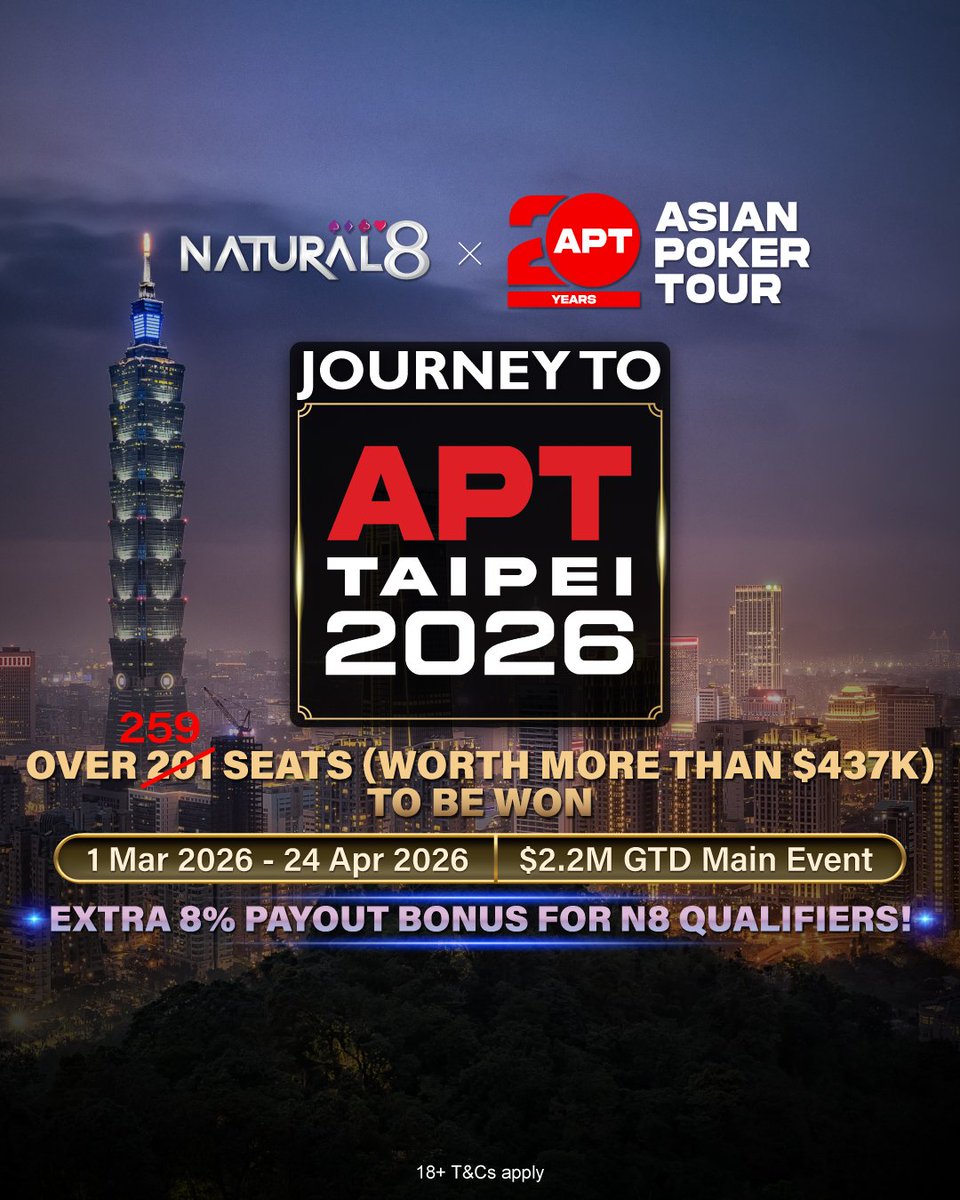
Your road to the @asianpokertour Taipei🇹🇼 2026 Main Event (Apr 22 – May 3) starts now.
Be among the first qualifiers with 259 GTD seats available. Skip the full buy-in and qualify through Natural8 satellites for a fraction of the cost. #apttaipei2026
💰 8% payout bonus for Main Event qualifiers
🎫 $800 APT Online ticket for all trophy winners & Main Event final tablists


1
2
4
2,901

28 Nov 2025
The bubble has burst in the @AsianPokerTour Trams Championship as 9 players remain.
Remarkably, the team of Yung Chung Wang and Chao Chiuan Lin BOTH made the final table! They’ve locked up the Last Team Standing prize of 321,408 TWD/10,300 USD each.
Among the final tablists are @kittykuopoker and Eugene Zhou. Updates at theasianpokertour.com/series…
1
2
1,329

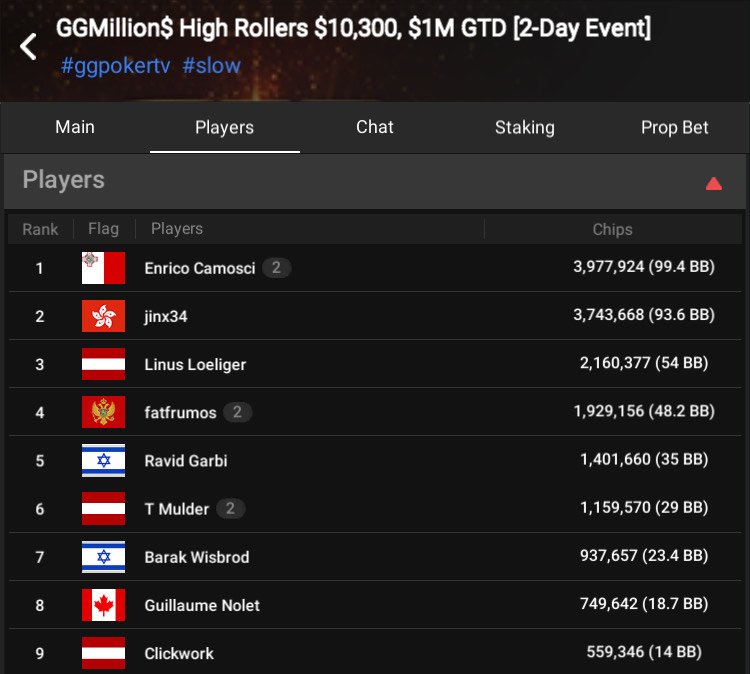
Can you guess the exact total GGPoker lifetime winnings of tonight's #GGMillions final tablists?
29
3
23
8,862

25 Jul 2025
anxous about my time there, when i think back to certain thinks i did or other people did sometimes i even have to cry or get panic attacks when i see certain player names on tablists. The PVP community and in extension also funniewars is a horrible place where young people are
1
4
238

14 Jul 2025
I love these bios @PokerNews and "how they got to the FT" chip counts. It seems none of the final tablists entered on day 2, all started on a day 1!
14 Jul 2025

In seat 2 we have the inimitable@SpaceyFCB 🇧🇪, who has the rare honour of making the WSOP Main Event final table for the second time! 👇
pokernews.com/news/2025/07/2…
3
233

14 Jul 2025
Congrats to all the WSOP ME Final Tablists! 🎉
@LeoMargets, @SpaceyFCB, @dunaway_braxton, John Wasnock, @TheGrinder44, Daehyung Lee, Luka Bojovic, @AdamHendrix10 & Jarod Minghini:
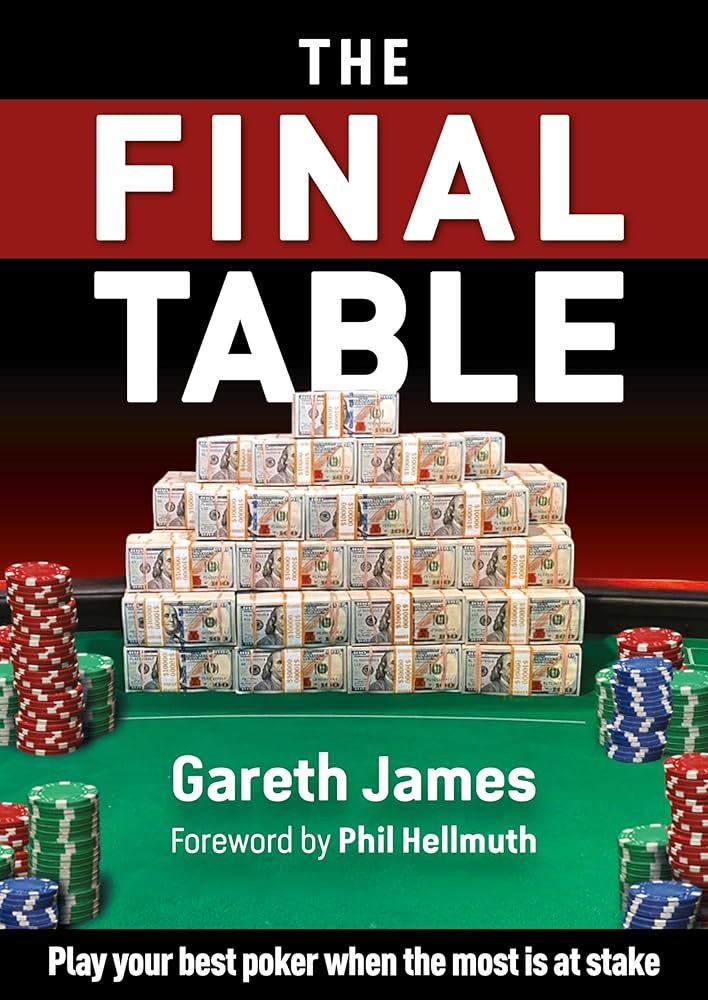
I'd like to gift you all a free copy of my book.
DMs are open, please RT for awareness 🙏
1
7
960

30 Jun 2025
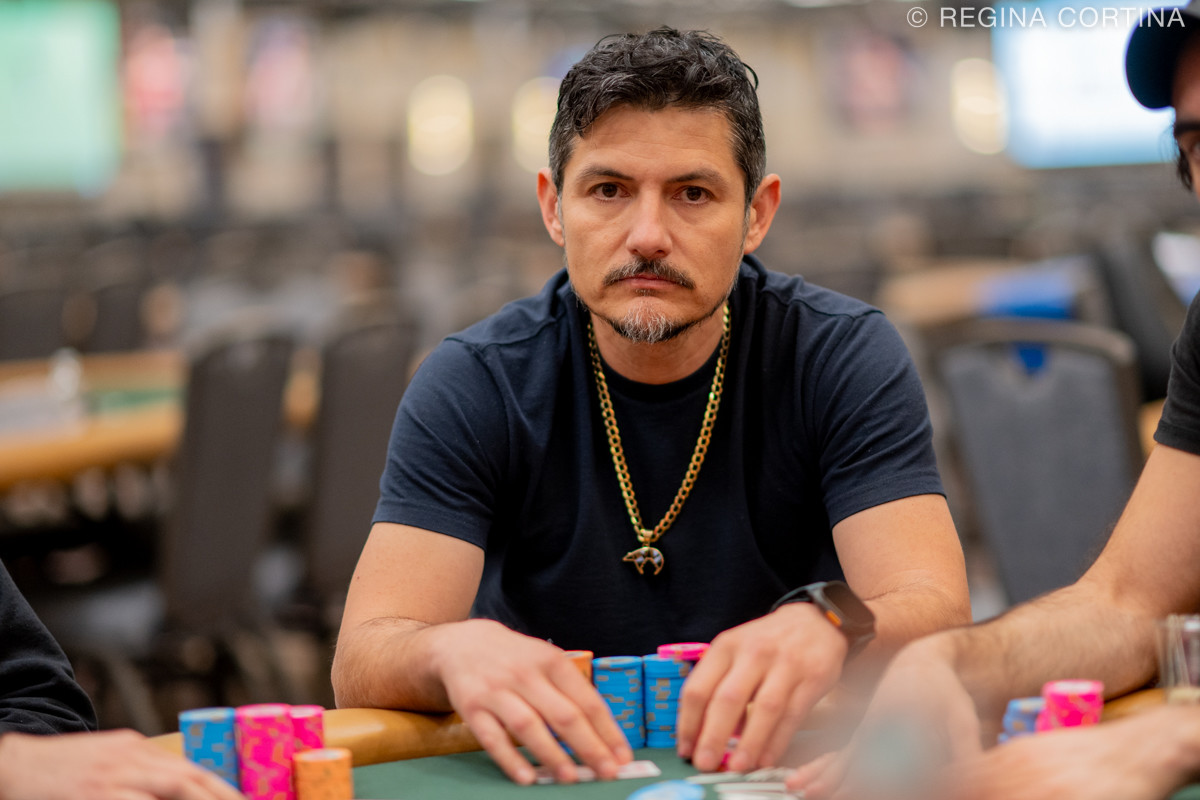
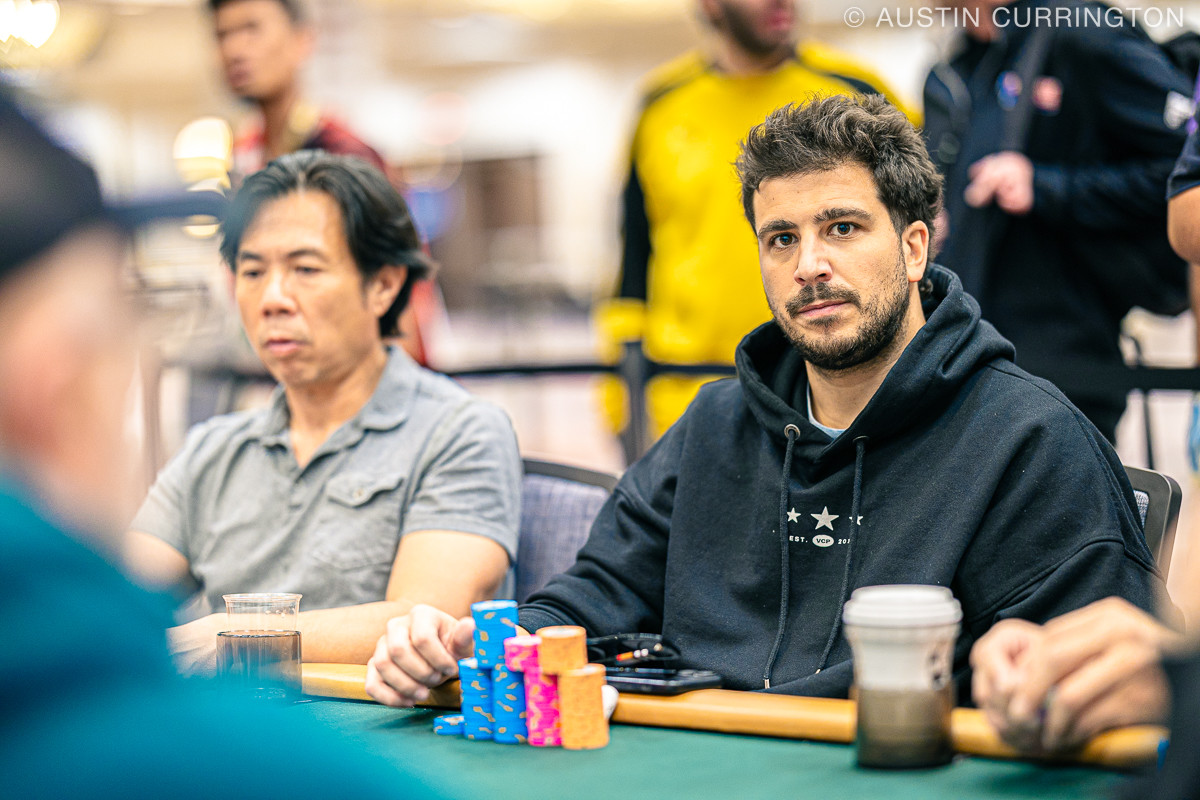
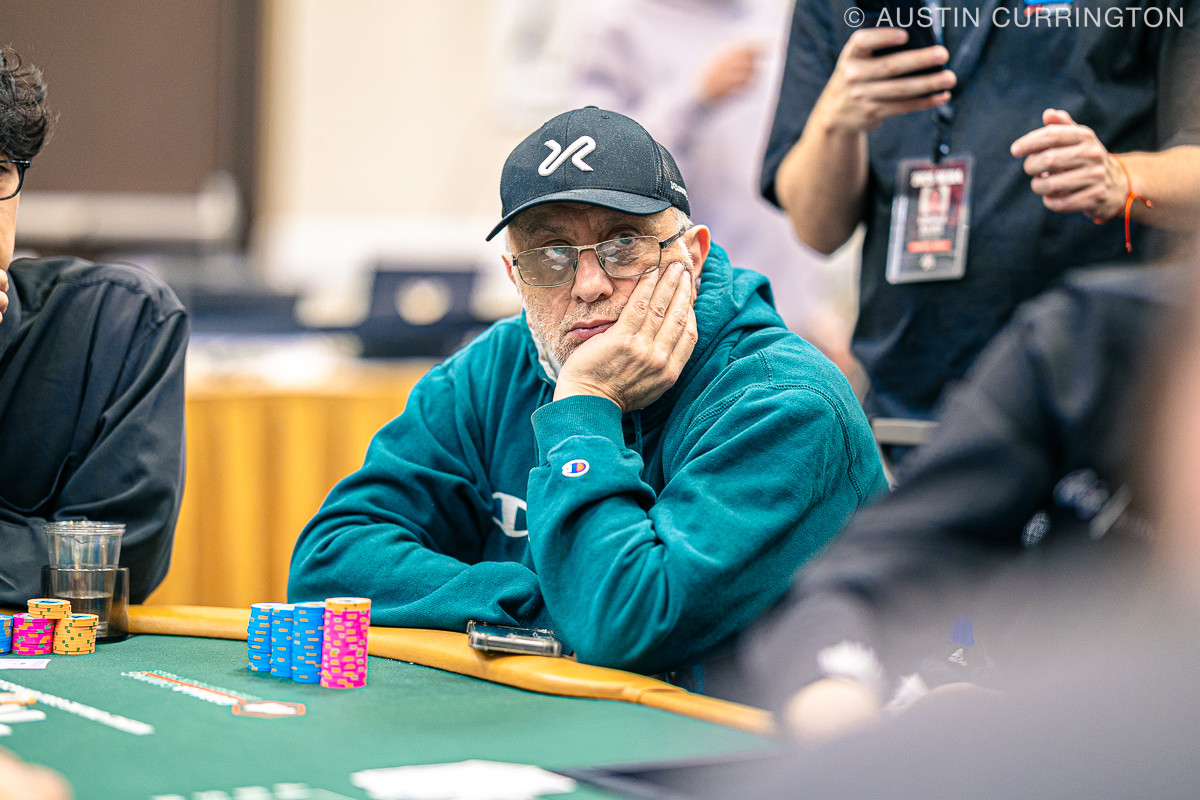
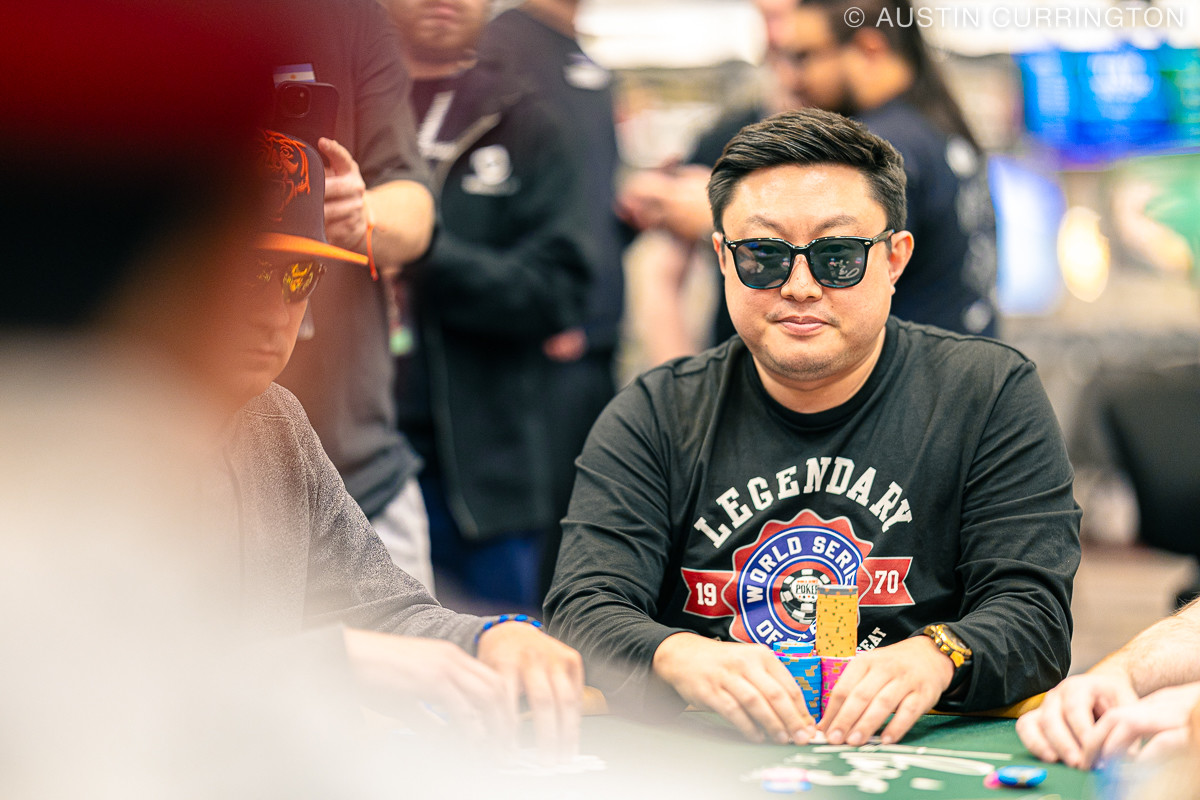
⚔️ | The @WSOP $300 Gladiators of Poker FINAL TABLE has begun!
📉 Final tablists survived a field of 24,629 to be one of just eight remaining
One player will turn their $300 buy in into $420,680 💰
Final Table Updates ⤵️
6
10
14,229

22 Jun 2025
🏆The Discord Exclusive League starts TOMORROW!
Take part in the Discord 5k celebration!
$3,000 in prizes!
5 tourneys.
$2 buy-in.
Final tablists earn points.
Top 7 on the leaderboard get paid.
First place takes $900 and the "Discord League Champion" role.
Only for verified CoinPoker Discord members.
Ready to join the competition? 👇
1
3
13
14,888

25 May 2025
Amen. We started as hip-hop/tablists and now rocking House and other genres. You stated it well. Just be dope and be yourself!
24 May 2025

I think the advice that I’ve given the most to DJ friends who are making their way into the electronic music scene is to ignore ALL the unwritten rules about what you’re allowed / no allowed to do or play or produce in this scene.All the legends that we idolize broke those rules.
6
399


29 Apr 2025
👏 CONGRATS to the final tablists in @MoneymakerTour @MGMNH_Poker Event #11, $186 Women’s $5K GTD!
💃 Helen, Danielle, Valerie, Linda, Minh, Gina, Hannah, August, & Jess
🎁 SPG powered a drawstring pack of merch: hat, tee, card protector, bead bracelets, cards & sunglasses!
1
2
306

11 Apr 2025
Thanks for the thoughtful question and kind words about our work with @Mister_Keating
I've thought deeply about live tour events - especially massive ones like today's Main Event. The unpredictability and scale create fundamental storytelling challenges that didn't exist in 2003. I experienced this firsthand during a separate project we're working on.
I think there's a middle path between attempting to cover everything (which inevitably leads to diluted storytelling) and the highly produced retrospective approach we take with Keating.
The key may be focusing resources on fewer storylines but going deeper. The WSOP currently tries to be both comprehensive (covering all tables) and compelling (focusing on personalities), but ends up succeeding at neither.
What if instead of spreading thin, they identified 10-15 compelling characters early and dedicated resources to following their complete journeys - not just at the table, but in between play, their preparations, saying goodnight to their kids 1000's of miles away after making it through day 1? I call this the American Idol approach. Early on, they identify compelling characters, give them exponentially more screen time, and provide backstory that gives us reasons to root for them.
This would mean accepting that some eventual final tablists might get minimal coverage, but the tradeoff would be much richer storytelling. As those initial characters dwindle, you'd have roving producers scouting for interesting newcomers to refresh the roster.
Case in point: @Liv_Boeree showed up for her first major tournament in years at WSOP Paradise. She wasn't on anyone's initial radar compared to regulars firing $25ks, but quickly became the story of the Super Main. Same with @CMONEYMAKER in that event.
Another detail: 3 tables cycled for change is too small for feature tables. Even 3 more would double our chances of capturing interesting characters. Cycling 6 tables every break would give 216 players elevated coverage per day - that's meaningful.
There's also an argument that as quality cameras continue to come down in price, a third level of coverage could allow more tables to be captured in a Big Brother livestream style. As interesting personalities are discovered, they could graduate from C-tier coverage to B, and so on.
The current system primarily serves hardcore fans while falling short for general audiences. Moneymaker's original run involved tremendous narrative luck we can't count on happening organically every year.
I'd love to see a bold experiment: dedicate 30% of the WSOP broadcast budget to completely different coverage focusing on a limited player pool, with dedicated crews following them from Day 1. Their stories would likely be more compelling than what we currently produce.
Modern casual fans might struggle to name the past 5 World Champions, but they remember "the guy who bemoaned being called with jack high."
Creating a tiered system for production investment should be based 80% on character/story and 20% on skill. While poker needs to be treated like sport, the most apt comparison isn't football but WWE - where matches are secondary to storylines.
I also think the added expense of trying this should come from the same budget used to pay for marketing and creation of new features from the online sites that foot a lot of our bills. Because if we don't do this...then the audience simply won't grow. But if it works...then that growth pays for this added expense without issue. It's a classic chicken and the egg situation...except we never tried cooking the chicken, or the egg
2
6
3,164

8 Apr 2025
Main Event final tablists before they pay their backers and tax
1
60
4,191

4 Mar 2025
RAMAPO'S FIRST ANIME CON
ARCH ANIME PRESENTS SMASH ULTIMATE TOURNAMENT: CRIMSON SMASH!
$200 Pot bonus!
Looking for panelists and art tablists for our anime con!
More details below!
start.gg/tournament/arch-ani…

2
4
14
1,505
1 Mar 2025
🧠 | Sharpen your poker skills with Jaka's live coaching stream! Get insights as Jaka guides final tablists, Caio De Lucca & Ryan Hogan, through big hands.
Don't miss the chance to up your game!👉 pokernews.com/news/promotion…
6,112

22 Feb 2025
🚨 History in the making! 🚨
Tomorrow marks the first-ever RunGood Poker Series online ring event through @ClubWPTGold! 🏆💻
Buy-in: 110SC with 10,000SC GTD!
Tournament begins at 1PM PT/3PM CT.
Final table players will also earn an exclusive ticket to a special event featuring a $12,400 WPT Championship package that is open to only RGPS Event Final Tablists! 🎟️🔥
Sign up now using code RunGood: clubwptgold.com/home?promo=R…
Full schedule of online events: 🔗 rungood.com/pages/2025-missi…
2
2
10
7,802

19 Feb 2025
So far the @wsop main length debate seems to be:
Final tablists - “What’re you talking about it’s a great test of endurance, and that’s why I made it to day 8”
Everyone else - “Yeah it’s fucking exhausting”
Don’t agree w/ @phil_hellmuth - a lot, but appreciate him saying this
3
441

6 Feb 2025
🚨 LIVE NOW: @ACR_POKER Team Online Championships! 🚨
🎥 Watch & play: deckflow.tv
🏆 $1,500 GTD tourney every first 3 Thursdays of the month ($2.20 buy-in!)
💰 Final tablists enter a $1K cash game giveaway!
🔗 Full details: acrpoker.eu/promotions/acr-t…

2
15
397

16 Dec 2024
Kerala’s young tablists recall moments of inspiration from Ustad #ZakirHussain. @mithosh ✍️
thehindu.com/news/national/k…
6
3,876