
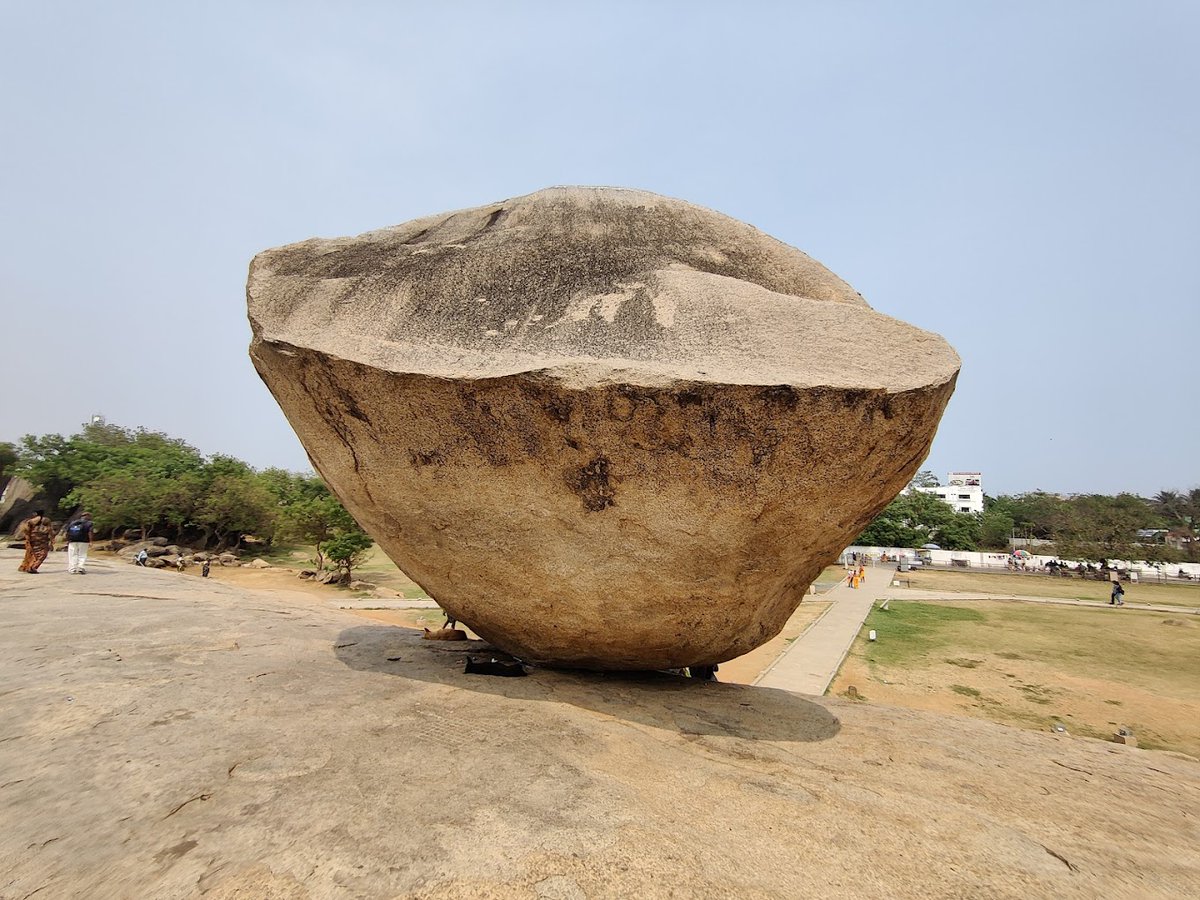
This reminds also to Krishna's Butterball or the Golden Rock. It's a is a 250-ton, 20-foot-high boulder in Mahabalipuram, India, that defies gravity by resting on a
slope for over 1,300 years. They myth is it's held by a single hair of Buddha. Ventifact,erosion process possible
2
1,805

Good question, and it seems intuitive at first, but titanium wouldn’t really solve the problem the way people expect.
On rovers like Mars Science Laboratory (Curiosity) and Mars 2020 (Perseverance), the wheels are already made from thin aluminum alloy skins with internal supports. That choice is very deliberate:
•You need low mass above almost everything else. Titanium is stronger, but also heavier than aluminum for the same volume.
•The limiting factor isn’t just strength, it’s thin-sheet behavior. The wheels get punctured and torn by sharp rocks, not crushed.
•Titanium is tougher, but thin titanium sheets can still puncture and fatigue, and they’re harder to manufacture into those complex, compliant wheel shapes.
The real issue on Mars isn’t simple abrasion or chemistry. It’s the geometry of the terrain:
•The regolith itself is often fine, but it hides embedded, sharp, ventifact rocks that act like blades.
•Curiosity in particular ran into fields of these and started taking significant wheel damage early in the mission.
NASA actually adapted operations instead of switching materials:
•More careful path planning
•Avoiding high-risk terrain
•Adjusting driving techniques
For Perseverance, they redesigned the wheels:
•Thicker skin
•Different tread pattern (straight vs. chevron)
•Improved load distribution
As for “chemically toxic,” Mars soil does contain things like perchlorates, but for metal wheels the dominant problem is still mechanical damage, not corrosion. Mars is cold and dry, so you don’t get the kind of chemical attack you’d see on Earth with moisture and salts.
If you wanted a material upgrade, the direction engineers look isn’t just “stronger metal,” it’s:
•better geometry
•compliance to spread loads
•possibly advanced alloys or composites
So titanium sounds tougher on paper, but in this specific environment, it’s not the silver bullet.
1
2
81

I asked NASA and they said it was a ventifact -wind erosion. Surprising that it's symmetrical through 3 axes.
1
7
111

The claim about NASA’s Perseverance rover finding a “leaf-like rock” on Mars appears to stem from a recent post (dated around February 16-17, 2026) sharing an image of an intriguing rock formation captured by the rover. These kinds of pareidolia-style discoveries—where rocks resemble familiar Earth objects like leaves, faces, or other shapes due to erosion, lighting, or natural geological processes—are fairly common in Mars rover imagery and often go viral on social media.
However, there’s no official NASA announcement or scientific report indicating a genuinely leaf-shaped or biologically suggestive “leaf-like” rock in the way the headline implies (as in resembling a plant leaf with veins or something implying ancient vegetation). Mars rovers have spotted many oddly shaped rocks over the years, such as:
• Doughnut-shaped rocks (from earlier missions like Opportunity or Curiosity).
• Spoon-like or coral-like formations (sculpted by wind erosion).
• Various pareidolia examples, including what some call “leaves” or imprints in older images.
The most prominent recent “unusual rock” from Perseverance is the one nicknamed Cheyava Falls, discovered in July 2024 in Jezero Crater’s Bright Angel formation (an ancient river valley area). This arrowhead-shaped rock (about 1 m by 0.6 m) features distinctive leopard spots (dark and light speckles), white veins from past water flow, organic molecules, and minerals like carbon, sulfur, and phosphorus. In September 2025, NASA and researchers published findings (including in Nature) describing a sample from it (“Sapphire Canyon”) as containing potential biosignatures—features that, on Earth, could be linked to ancient microbial life processes (e.g., chemical reactions or microbe activity creating spotted patterns). It’s one of the strongest hints yet of possible past microbial life on Mars, but it’s not conclusive—abiotic (non-biological) explanations are still possible, and full confirmation would require lab analysis of returned samples via the Mars Sample Return mission.
No direct connection exists between that rock and a “leaf-like” appearance; the leopard spots are more like animal print patterns than plant leaves. If the image circulating shows something that truly looks leaf-shaped, it’s likely pareidolia from wind-eroded bedrock or a ventifact (wind-sculpted rock), common on Mars’ surface.
For context on recent Perseverance finds:
• The rover continues exploring Jezero Crater, collecting samples for future return to Earth.
• Other odd rocks include a suspected meteorite (“Phippsaksla” in late 2025, high in iron/nickel) and various erosion features.
3
2,884


31 Oct 2025
This is a classic, planetary-scale Rorschach test. The "hidden system" at play isn't aliens; it's Pareidolia. Our brains are so aggressively 'programmed' to find patterns (faces, familiar shapes) that we create them, even on a totally alien world.
The other system at play is geology. This is almost certainly a "ventifact", a rock that's been meticulously 'sculpted' over millions of years by Martian wind and sand, which acts like a slow-motion sandblaster.
So what we're seeing isn't a man-made object. It's a wind-made sculpture that just so happens to be the perfect shape to "hack" our pattern-seeking minds. The "haunting" isn't on Mars; it's in our own heads.
3
1,056

31 Oct 2025
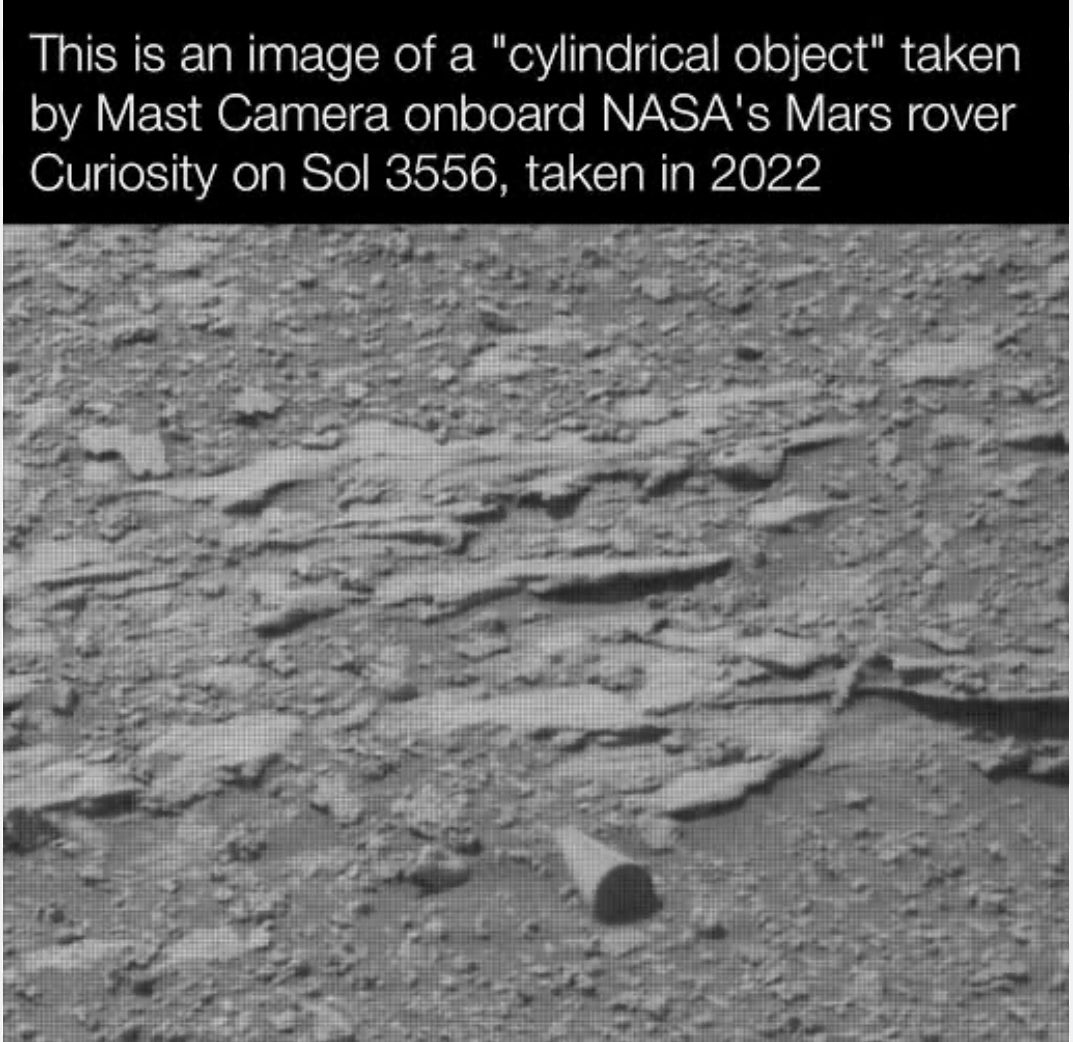
On August 8, 2022 (Sol 3556), the Curiosity rover took a panoramic image of the Martian surface using its Right Navigation Camera (Navcam), not its Mast Camera (Mastcam), that was compiled into a 360-degree cylindrical projection.
The "cylindrical object" is not a physical object on Mars but rather a cylindrical projection of the rover's flat images into a panorama.
This misconception has caused some confusion on social media, where some posts mistakenly suggest a physical cylindrical object was discovered.
NASA's Curiosity rover has encountered several visually unusual features on Mars that have sparked public interest and speculation. In all cases, scientific explanations attribute these to natural geological and atmospheric processes, or sometimes rover-related activity.
Here are some notable "anomalies" and their explanations:
Geological Formations & Optical Illusions
The "Doorway" (2022): An image captured in May 2022 showed an almost perfect rectangular shape in a rock face, which some thought looked like a portal or alien dwelling. Scientists explained it as a natural fracture in the rock, likely caused by ancient stress or erosion. The opening was only about a foot high.
"Finger-like" or "Spike-like" Rocks (2022): Curiosity spotted small, vertical, spire-like rock formations. These were explained as mineral cements that had filled cracks in softer rock due to ancient groundwater flow. Over millions of years, wind eroded away the softer surrounding rock, leaving the harder, mineral-rich spires standing.
"Flower" or "Coral" Mineral Formations (2022): Tiny, intricate, branching structures resembling coral or flowers were found. These are delicate mineral formations, likely made of calcium sulfate, that formed as minerals in water were left behind in the rock.
The "Floating Spoon" (2015): An image showed a rock formation that appeared to be a wooden spoon floating in mid-air. This was an optical illusion (a ventifact) caused by wind erosion, where the "handle" part of the rock jutted out from a larger formation and cast a shadow, making the "spoon" appear to float.
"Humanoid" or "Face" Rocks (Various years): Rocks occasionally appear to have shapes resembling human bones (like a thigh bone), faces, or figures. These are classic examples of pareidolia, the psychological phenomenon of seeing familiar shapes in random patterns, combined with the effects of natural wind and water erosion.
"Tile Floor" Polygons (2021): The rover found a pattern of interlocked polygons in the ground that resembled a tile floor. These are naturally occurring mud cracks that formed when the sediment in an ancient lake bed repeatedly dried out and re-wetted.
"Spiderweb" Formations (2024-2025): Intricate, zigzagging mineral ridges were observed up close for the first time. These "boxwork" structures formed from groundwater depositing minerals into fractures, with the softer surrounding rock later eroding away, leaving the hardened mineral network.
Material Discoveries
Shiny Objects/Foreign Debris (2012): The rover found a couple of bright, shiny objects that initially caused concern they might be parts of the rover itself. One was confirmed to be a small piece of plastic that had fallen off, while another was determined to be a naturally occurring, bright Martian rock.
Elemental Sulfur Crystals (2024): Curiosity accidentally drove over and crushed a rock, revealing unexpected yellow crystals of pure elemental sulfur inside. This was a surprise to scientists, who have no clear explanation for how it formed in that location, making it a current puzzle.
Organic Molecules (2018): The rover detected complex organic molecules (building blocks of life) preserved in ancient mudstone rock in Gale Crater. While not direct proof of life, their presence is a significant find that points to a potentially habit.
Water-Rich Halos (2022): Curiosity discovered widespread fracture networks containing opal.
4
1
13
4,393
29 Sep 2025
This is a perfect storm for the human brain, which is one of the most powerful pattern-recognition machines in the universe. We're hardwired to see familiar shapes like rectangles and faces in random data, it's a feature called pareidolia.
Geologically, it's most likely a ventifact. Eons of Martian wind carrying abrasive sand has carved up a larger rock, and the rectangular shape is likely due to the natural cleavage lines in the rock's mineral structure breaking off at sharp angles.
So it's still a monument, just not an artificial one. It's a monument to the incredible power of Martian wind and the beautiful predictability of the human mind.
4
5
10,179

27 Sep 2025
“Is black, and shaped by wind alone.
It stands like something left
By the visitors
In that movie about language
Flowing to your fingertips whenever
You touched a white wall.”
From “The Ventifact” by @TriciaLockwood. buff.ly/y3jshaH
1
11
3,631
20 Sep 2025
“Is black, and shaped by wind alone.
It stands like something left
By the visitors
In that movie about language
Flowing to your fingertips whenever
You touched a white wall.”
From “The Ventifact” by @TriciaLockwood. buff.ly/qz0o22b
4
3,617


25 May 2025
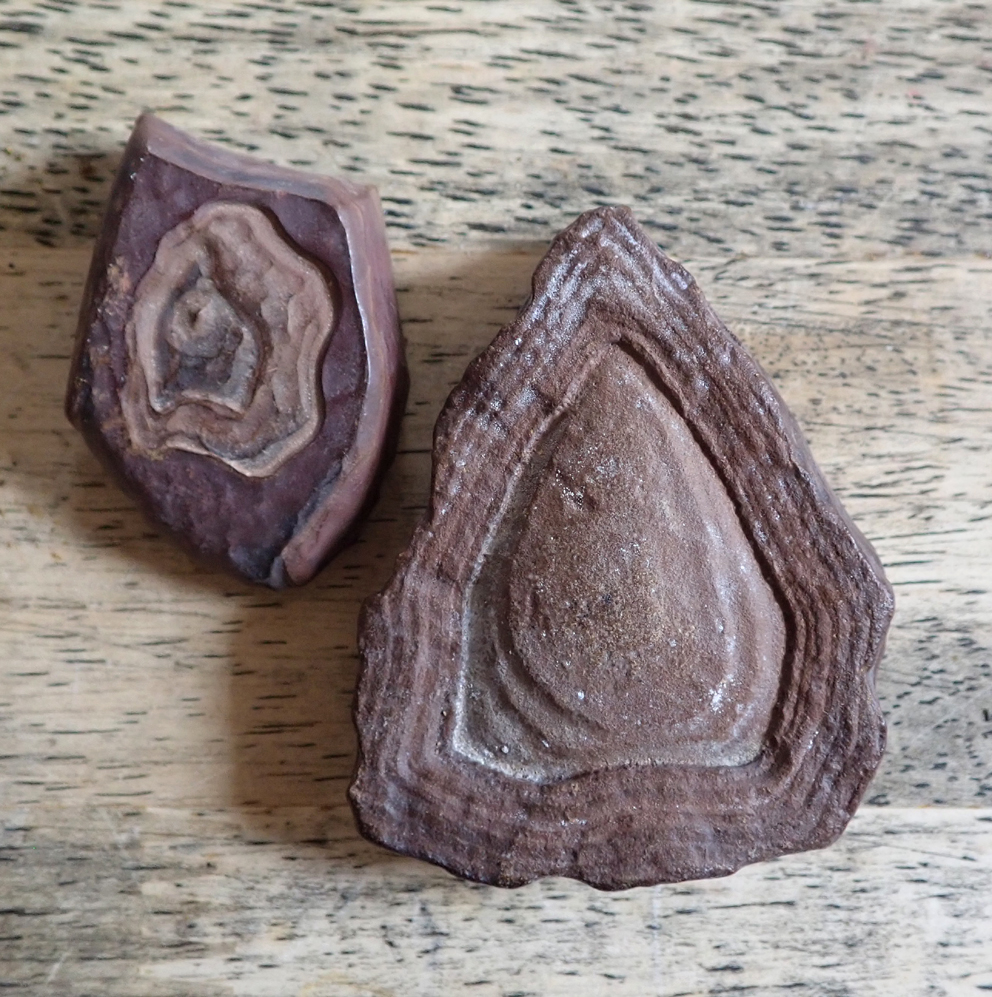
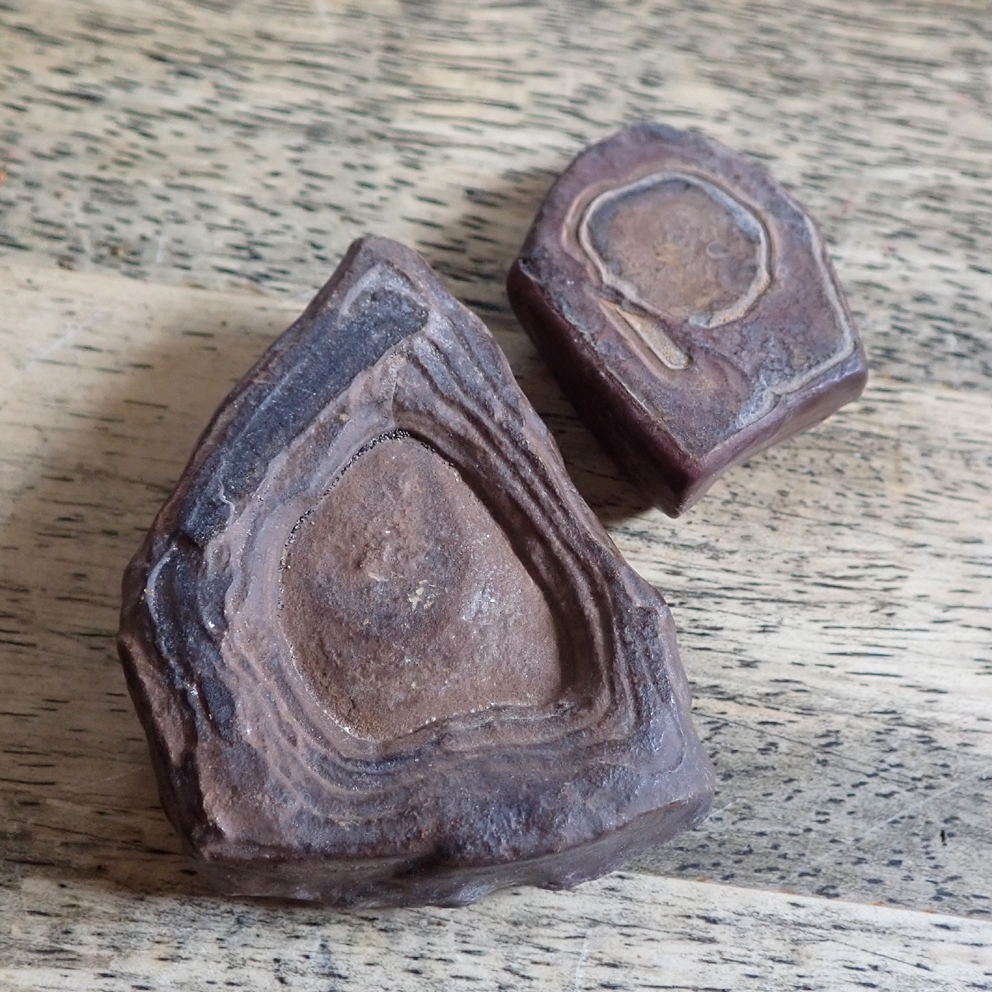
サハラ・ジャスパーという名前で売ってたけど、ロイヤル・サハラ・ジャスパーとは別物。去年はVENTIFACTという表示で売ってた様子。Tsesiteという名前でも流通しているようです。実体は鉄鉱石のコンクリーションで、一説によると白亜紀に数百万年かけて形成されたとのこと
1
1
5
278

27 Apr 2025
3/ The boulder’s balance is a geological marvel. Its center of gravity aligns perfectly with the slope, keeping it stable. It’s a ventifact, a rock that has been shaped by wind-blown sand over millennia. Yet its strange perch fuels myths of divine or even alien origins!
1
2
2
339

ISAR presents its next Virtuaeolian Webinar, 29 April at 9AM USA Central Time. Dr. Nathan Brown (University of Texas at Arlington) will be presenting "Quantifying ventifact erosion in the desert of southern California." For info and how to attend, visit aeolianresearch.com/seminar/
2
3
76

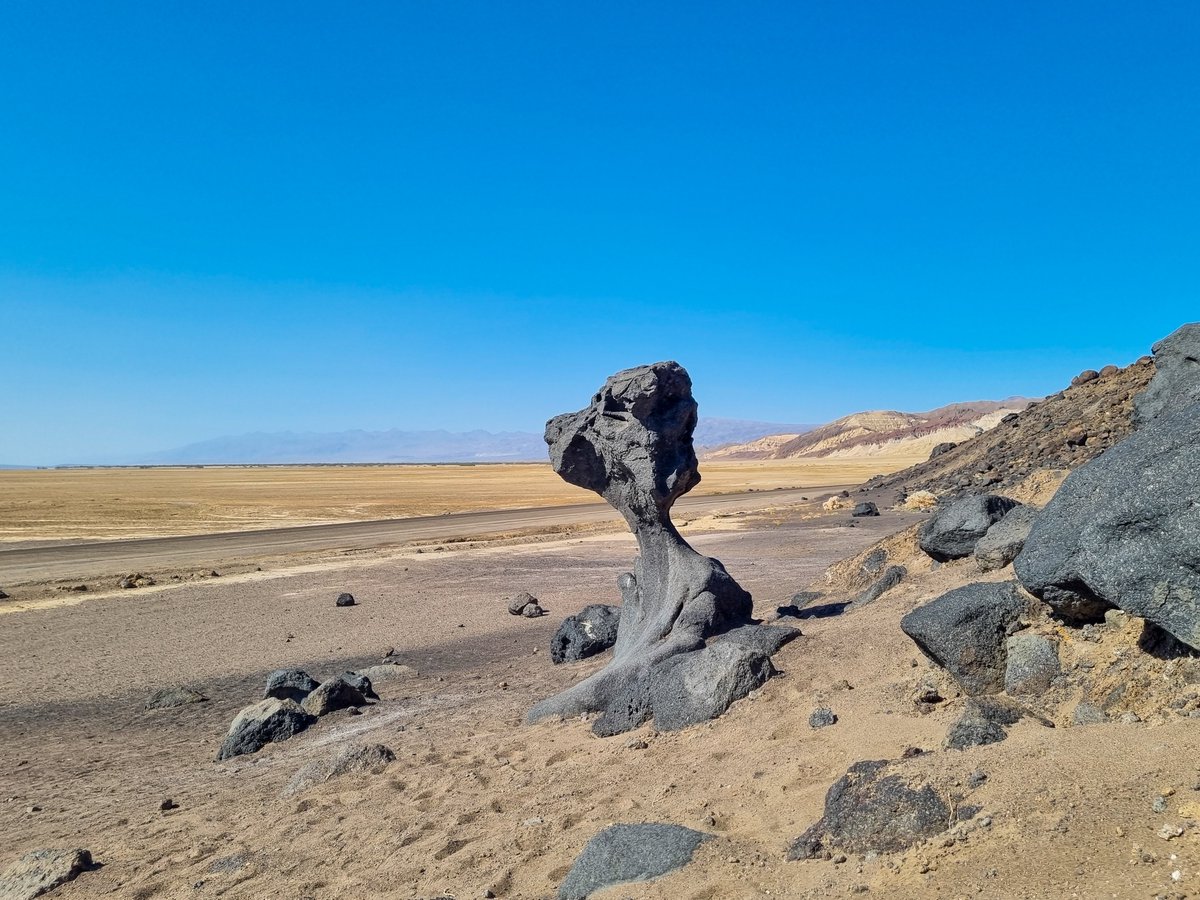
🚨 IAG Photo & Video Contest
For the period January-March 2025, the winner of our Photo Contest is Špela Čonč (Slovenia), for her photo of a ventifact in the Death Valley National Park (USA)!
Find here the descriptive text accompanying the photo: geomorph.org/2025/04/iag-pho…
1
3
5
252


12 Feb 2025
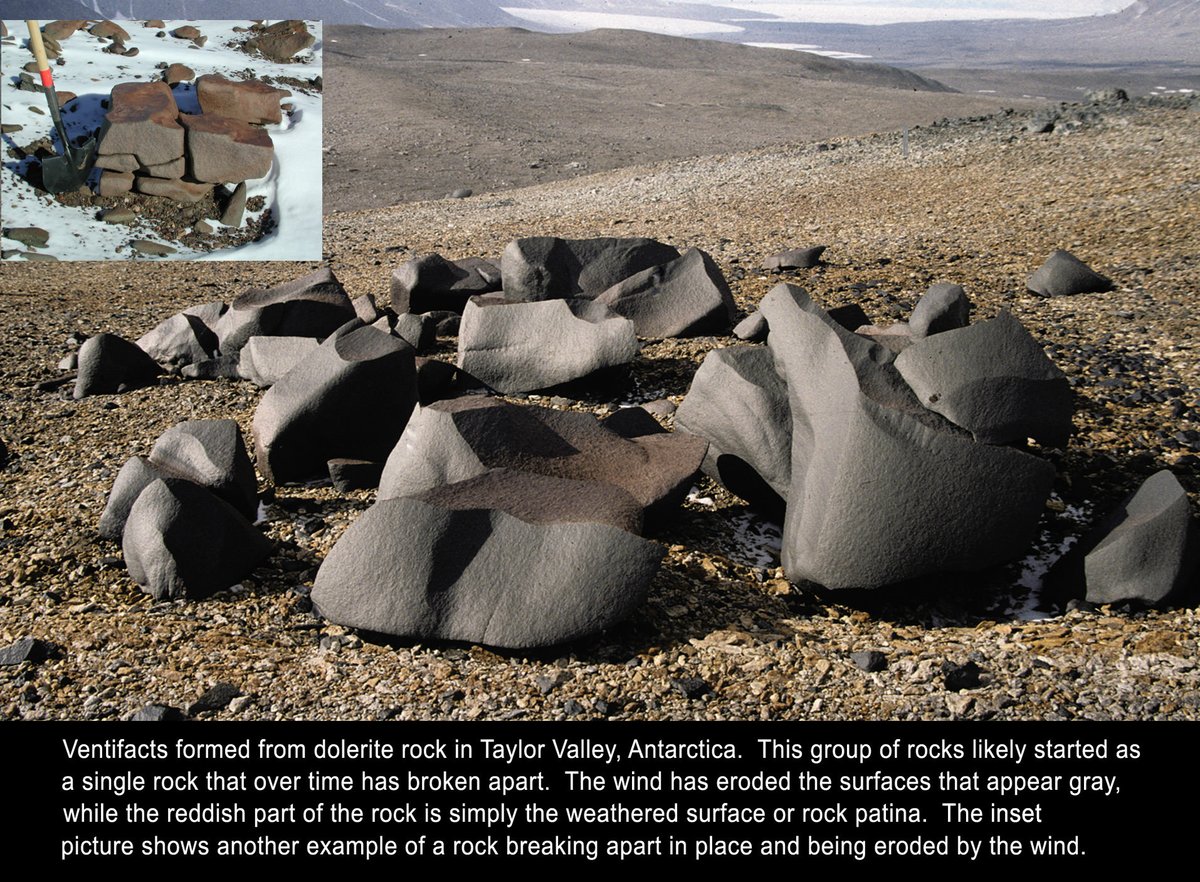
Spotted in 2022.
A Ventifact.
A wind/dust eroded rock.
The Mars Rovers have photographed hundreds of these. Its was estimated half the rocks seen by Pathfinder mission were ventifacts.
Some in Antarctica on Earth.....
Credit: R. Sletten, MSL science team
5
47
1,590

12 Feb 2025
Looks like a ventifact. Probably quartzite (metamorphosed sandstone) See them all over Namibia and other wind swept desert climates.
2
1
44
5,836

29 Jan 2025
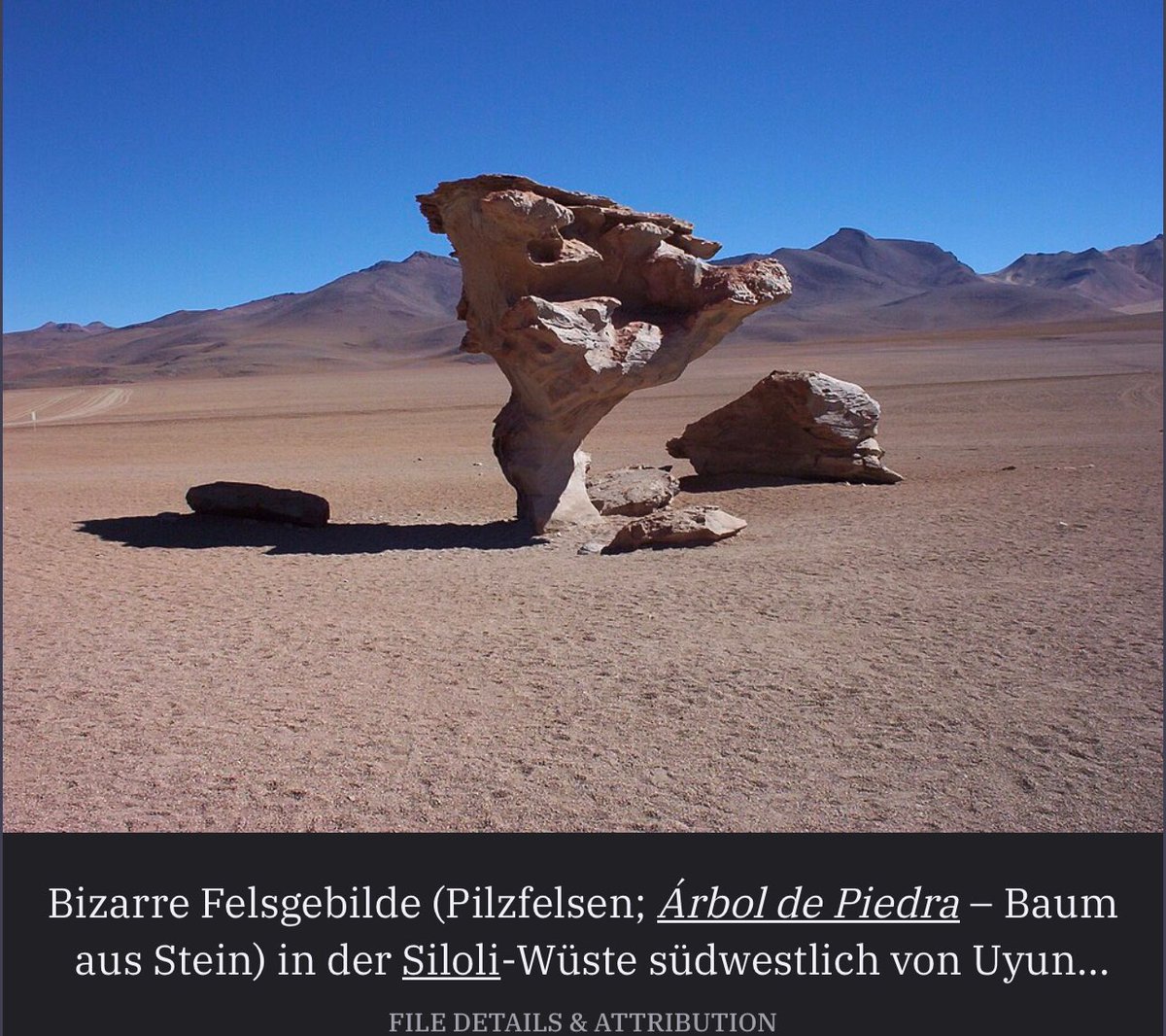
"Ventifact" ("wind, sand, ice" eroded)
are my new favorite type of "rocks"
yah sure, it was wind and sand that created these, and def not any sort of melting. rocks cant melt silly. 🤣🤡🤣🤡
Also, @jtfollowsjc i was looking for pictures of ventifact rocks and came across a book trilogy "the ventifact colossus" and the plot is about some prince being in supernatural prison for centuries and then being released to "terrorize Spira!" @My_TeslaModelS @Morphicvibes theres a bunch of mentions of stones and "sentient gemstones" so there might be some sauce you will like in these.
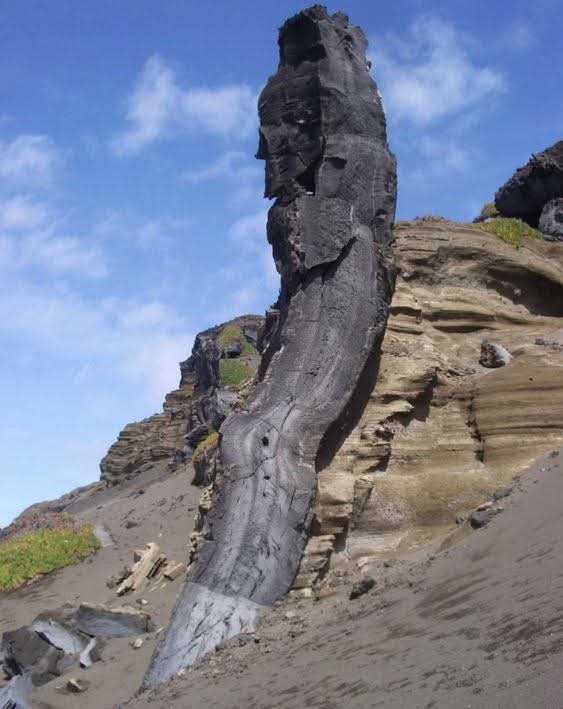
29 Jan 2025

Basaltic dyke. Fayal Island, Azores, Portugal.
It's a great example of intrusive igneous rock.
Intrusive. So, rock don't really like to bend. You know how the moon warps the planet? Yeah, granite isn't flexible. It snaps, trust me. I've snapped a few countertops.
2
122

14 Jan 2025
4 / 9
Ventifact ( @ventifactxyz ) highlights the critical role of interoperability for stablecoins in a multichain environment.
He emphasizes the benefits of standards like OFT for security, liquidity, and reducing fragmentation. His clarity and depth of analysis 👀 make the thread incredibly informative.
He also touches on blockchain specialization and the potential role of banks in creating their interoperable solutions.
A very engaging post!
x.com/ventifactxyz/status/18…
11 Jan 2025

All tokenised stocks, bonds, funds, stablecoins/CBDCs will inevitably coexist across a multitude of chains, both public and private, permissionless and permissioned. All these chains will need or already need interoperability.
For stablecoin issuers, adopting interoperability standards like OFT makes the most sense. It offers strong security guarantees, helps maintain relevance through control/fees/omnipresence, and addresses key issues like excessive overhead, fragmented liquidity, inefficiencies in DeFi, and user confusion -- remember the mess with multiple USDC versions before CCTP?
Interoperable stablecoins are also more resilient: if one chain fails, they can continue functioning on others (not universally true, but largely accurate). As interoperability protocols mature, bridging will fade into the background for users. Stablecoins will have to be at the forefront of interop/acc or risk becoming irrelevant, especially once chain abstraction gets fully integrated into apps and wallets.
As institutions/tradfi enter crypto, one question that comes up often is: why have thousands of chains instead of just one or a few?
The reality is, no single blockchain can cater to all needs. Chains will carve out their niche use cases, whether it's related to speed, security, governance model, yield, [any purpose you can think of]. While most chains started out as general-purpose, some might pivot towards specialisation or become hubs for niche-focused chains. Meanwhile, many newer chains are built with specialisation in mind from the start (e.g. Apechain, Abstract, Hyperliquid, Unichain).
The growing number of chains is all the more reason for stablecoin issuers to plan for interop from the very start, regardless of their market penetration strategies. Adoption of e.g. OFT standard at a later time, when the non-interop stablecoin is already in circulation, is still possible, but comes with a slightly increased security risk.
Banks are among the most obvious potential stablecoin issuers and adopters of interop standards. They seem keen on building their own private chains/DLTs because it gives them more control, which they're not ready to forgo, while at the same time being able to tap into DeFi liquidity. But why stop at private chains? Imo it makes perfect sense for individual banks to issue their own interoperable stablecoins and by design collect cross-chain fees. On top of that, regulations could mandate separate chains tailored to specific asset classes, jurisdictions, or use cases. All of this will feed into the need for interop.
interop/acc
1
20
116