Bisexual ⚧️ retweeted

Jun 13
Say hi for a 📸 (serious)
💦You’ve been warned…
onlyfans.com/rubyblue.702
13
112
88
4,339
Breaking Out in Brazil retweeted

🚨 JUST IN: The Attorney General of Florida is now launching an investigation into the MLB after they WARNED 3 Giants pitchers simply because they wore BIBLE VERSES on their "Pride Night" caps
GOOD!
JD VANCE: "Trump won we don’t have to do this anymore."
AG UTHMEIER: "Do you practice religious discrimination in Florida, MLB? You’ll be hearing from my office soon."
The verse says that the rainbow is a symbol of a covenant between God and all living creatures.
WHY would they discipline that? Cut the BS! Christians can be Christians!
669
5,505
25,210
804,856
QuitePixel retweeted

LADIES BECAREFUL WHEN YOU TRAVEL INDIA. YOU WERE WARNED 🚨👇🏼
This might happen with you as well.
A foreigner expressing her emotion filled opinion on how Indians are helpful by nature and how she fell in love with Indians more and more. Now she dont want to leave India.
Dust is settling down faster than we think.
Jun 16

INDIANS ARE POOR
Look what this UK woman has to say about India ? Must be the wind 🌬️
2
11
24
288
silent reader retweeted

Germany's intelligence chief just warned a closed Bundestag meeting.
The Muslim Brotherhood is infiltrating German political institutions. Strategic. Patient. Non-violent. Building relationships, influencing legislation, embedding through civic organisations funded by German taxpayers.
His most alarming finding: left-wing parties are the most vulnerable.
The SPD. The Greens. The Left Party. "More open and susceptible" due to what he called "a poorly understood concept of tolerance."
A German political scientist confirmed it in blunter terms. Left-wing allies "possess no argumentative resistance to the Brotherhood. They are discursively co-opted and subordinate themselves."
The Brotherhood does not confront the left.
It cultivates it.
meforum.org/fwi/fwi-news/ger…
117
1,439
3,292
107,545
Daddy retweeted

Applied for a modeling agency 📸
Thought I'd be practicing poses all day.
Nobody warned me the opportunity was something completely different. 👀
1
71
30
2,840
realmrecon retweeted

Jun 16
🚨: REMINDER‼️
The leaked video of Mark Zuckerberg where he warned his Facebook executives NOT TO GET VACCINATED with the mRNA (COVID) vaccines because "we don't know the long-term side effects of modifying people's DNA and RNA" 😳
Then he censored doctors, scientists, and sick people who denounced the GENOCIDAL "Vaccines" 🔥🔥🔥
200
6,702
11,335
127,300
Liv_Laf_Lov retweeted

SHOCKING:
Expert after expert after expert warned Parliament: Liberal Bill C-22 means a surveillance state with MORE control and ZERO accountability.
Tell Big Brother to BUTT OUT.
30
316
775
16,086

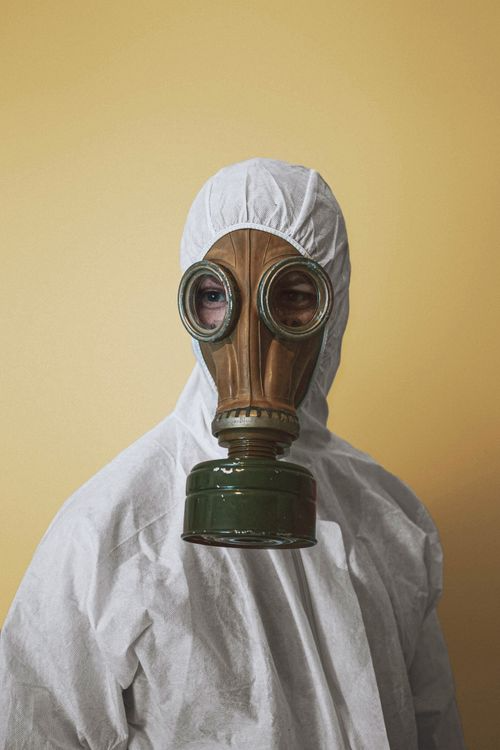
The head of Ireland's Centres for Disease Control and Prevention warned that the Ebola outbreak in Leitrim could be the worst ever, saying that it could cost billions of dollars to contain later if critical weaknesses in the response are not addressed quickly.
Fact Check: True!
4
Sapphire retweeted

President Trump warned us numerous times in 2016 that democrat and republican donors wanted to stop him from getting elected at all cost, because the uniparty swamp has the same Big Corporation donors in Wall Street.
We watched them rig the 2020 election from Donald Trump and now we're watching them purposefully neglect to pass the Save America Act to keep illegals from voting and keep our elections secure.
"Powerful forces want American elections to be NOT secure... the powers that be who are pulling the levers are dead set against it!"
"If you're in office, you're already there... You don't want to change the method... grassroots candidates have no chance. Big money donors run and control this!"
6
145
220
5,675

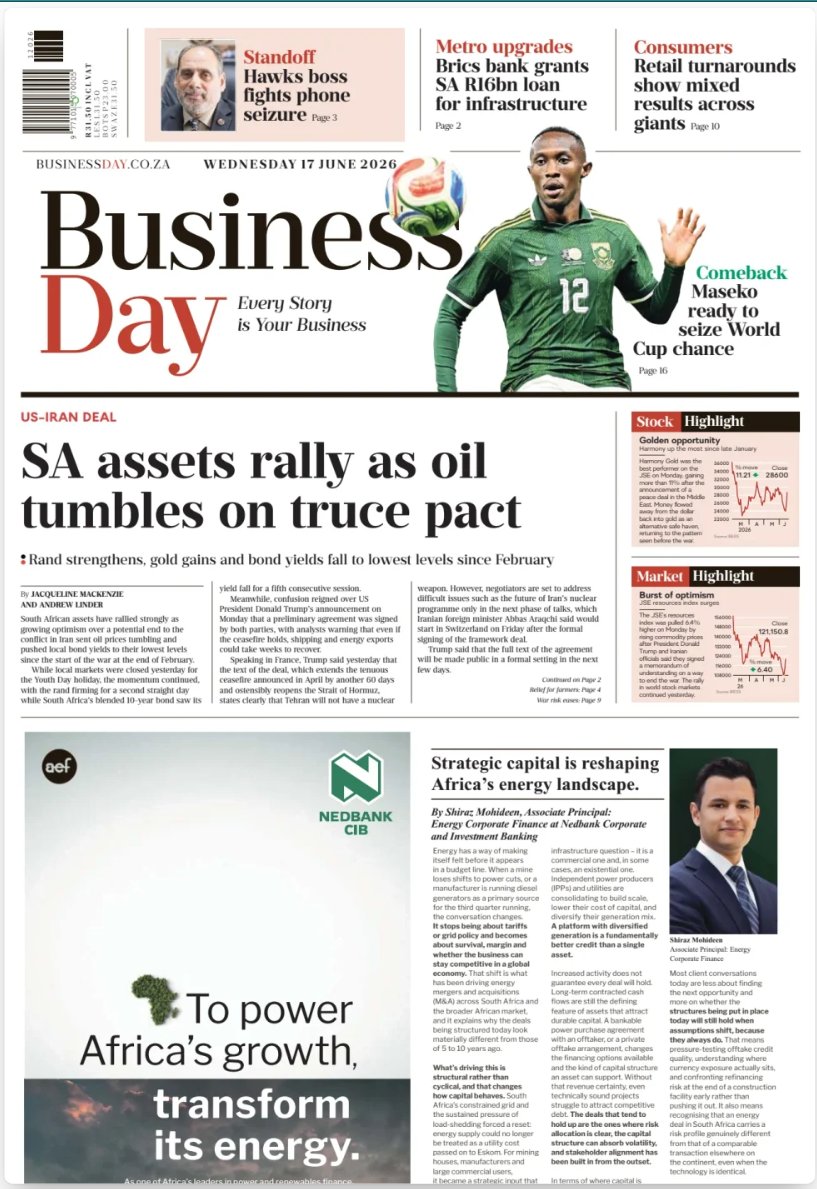
South African assets have rallied as optimism over a possible end to the Iran conflict pushed oil prices lower, strengthened the rand and drove local bond yields to their lowest levels since the war began at the end of February. The rand firmed for a second straight day while South Africa’s blended 10-year bond yield fell for a fifth consecutive session, even as local markets were closed for the Youth Day holiday. The government’s borrowing rate has dropped to 8.34%, from a peak of 9.27% a month into the conflict, though it remains above the 7.9% level seen just before the first strikes. The rand has gained about 1% over two days and traded at a best rate of R16.13/$ on Monday, while gold rose on safe-haven demand and oil prices fell on hopes that supply disruptions will ease. Lower oil prices could reduce inflation pressure after the Reserve Bank raised interest rates last month in response to the war’s knock-on effects. The market rally came despite uncertainty over US President Donald Trump’s claim that a preliminary agreement had been signed, extending the fragile April ceasefire by 60 days and ostensibly reopening the Strait of Hormuz. Trump said the deal was “a wall to a nuclear weapon” for Iran, while Iranian President Masoud Pezeshkian called it an “important step” towards ending the fighting but said a final truce “has yet to take shape”. Negotiators are due to begin the next phase of talks in Switzerland on Friday, with the future of Iran’s nuclear programme still unresolved and questions over its support for armed proxies and missile programme not thought to be on the agenda. The conflict has killed at least 7,000 people, mostly in Iran and Lebanon, and disrupted global energy markets. The Strait of Hormuz, which normally carries about a fifth of global oil and liquefied natural gas trade, is expected to reopen from Friday, but shippers warned traffic may recover only gradually because of possible mines and the need for co-ordination with Iran’s Revolutionary Guards.
12

Alex isn’t creepy looking. I mean I personally would never get a facial tattoo but then again I don’t have any tattoos 😉
I don’t think any of these guys meant to do anything against the law but I do have to say I think the continued activity in the neighborhood was too much.
There seems to be a misconception that the easement beside the road is a place that can be used by anyone for any reason. In reality it’s owned by the person who owns the lot and is meant for road service crews, power companies, maintenance crews etc. but it’s still owned by the home/lot owner. The owner has the right to ask you to leave and if you don’t they can call law enforcement.
In the case of NG the homeowners gave a lot of leeway allowing people to access and stream from their easements. They then got fed up and decided enough was enough.
From what I can tell the sheriff agreed that enough was enough.
The sheriff deputies had been out numerous times giving verbal warnings about trespassing and harassing community members. Whether the allegations were true or false (a lot were false such as throwing trash all over, starting fires, throwing traffic cones or cactus at people) the fact is each time deputies had to respond took them away from other activities they could have been doing. Additionally with the community members stating they didn’t feel safe staying at their homes at night or walking their dogs - this then turns into being a public nuisance.
Again there were verbal warnings and then the citations started. I know that when Daa Juice was cited nobody explicitly stated he shouldn’t return - the problem is that when a person gets a citation for anything even driving, it’s understood that the action they are cited for is not to be repeated or the consequences will increase.
The citations have nothing to do with 1st amendment as nobody ever said people can’t report on NG or report on how the investigation was handled. They were told they can’t cause or be a public nuisance while doing their reporting.
They were also told they cannot block a public thoroughfare or road. I know many say that they weren’t blocking anything but I ask you to then think back to before crime con when all the crew was set up in the road, having their food, socializing, etc., even after dark and all of the guys know how dark that area gets.
I admit I didn’t see anything wrong at the time. Nobody was around and they cleaned up after themselves.
However the sheriff deputies had to come out there again. The community claimed they were disturbing the peace and being nuisances. Look at all the delivery vehicles in and out of the neighborhood (some requested and some sent by nefarious people). Nobody was cited but they were all “warned” - each of these warnings was likely documented in the system.
Essentially the deputies built a case and then they were directed to start citing and escalate to arrests to get the guys to stop.
JLR stopped going out there. The Pima County Deputy union stated that Nanos was ordering a crackdown.
Now that I look back I can clearly see the progression. I think, not sure, but it appears that Alex’s privacy tent may have been a tipping point.
Even with all this the 1st Amendment has not been impeded as everyone is free to report outside of the neighborhood.
Just my observation & opinion.
1
8

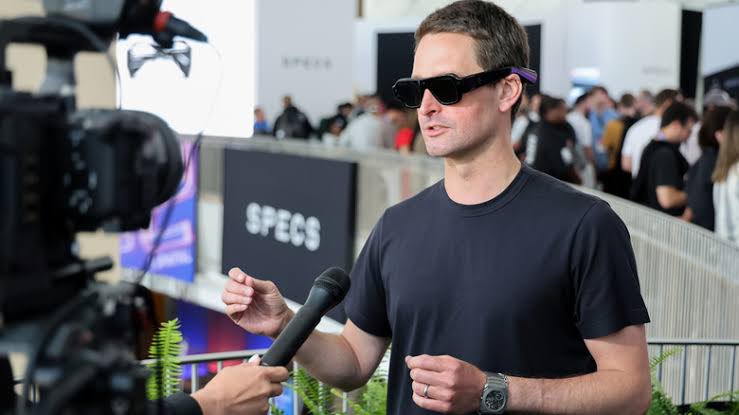
I hope not a single one of you following me bought $SNAP
What’s he doing ?
Funnily I saw bullish videos on YouTube a few months ago.
Absolute rubbish. I had warned people.
May 2

$SNAP is one of the worst businesses you could ever invest in. I wouldn’t touch that stock.
Daily Active Users (DAUs) are declining in the US & Canada. It is losing market share to Meta & TikTok.
The company is unprofitable and spending heavily on infrastructure costs for its video-heavy platform (useless). It is also debt-heavy incase you wanted to check financial health.
This business is heavily spending on AI video features that require huge compute costs (waste of money, totally), all while losing users and investing in AR glasses that simply aren’t worth it.
Where’s the X-factor for growth long-term? What are they doing!?
Stock-based compensation is diluting shareholders, clearly showing they don’t prioritize investors and can’t even properly pay their employees through normal cash.
Unbelievable!
53


よう retweeted

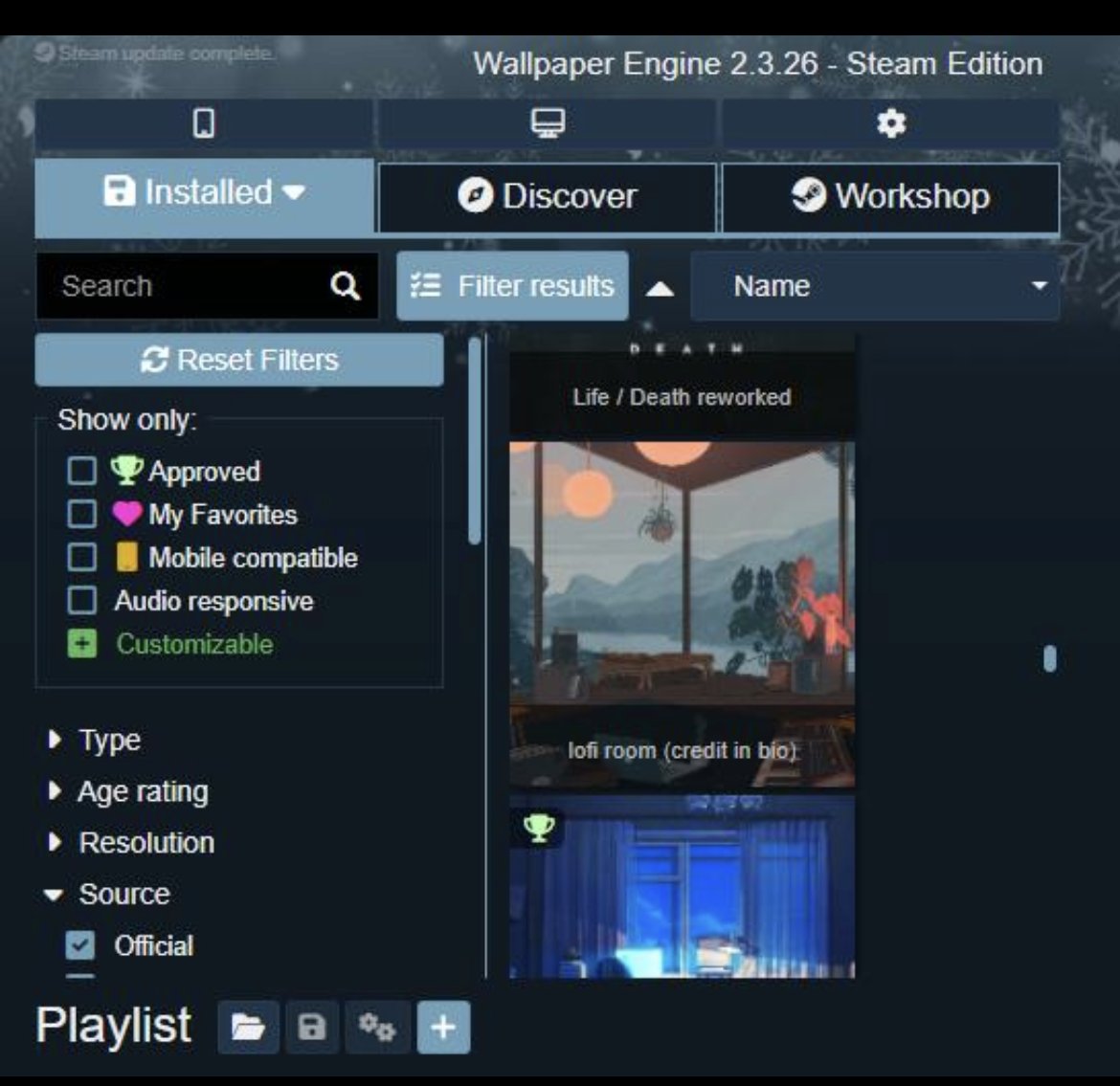
Security researchers have warned that attackers are using Steam Workshop to spread malware through Wallpaper Engine wallpapers.
Some fake wallpapers are uploaded as “Application” wallpapers, which can run programs on your PC.
These files have been used to install malware, steal Steam accounts, collect personal information, and even mine cryptocurrency.
Some of the malicious wallpapers were downloaded thousands of times before being removed.
To stay safe:
>Download wallpapers only from creators you trust.
>Be extra careful with “Application” wallpapers.
>Scan Workshop files with up-to-date antivirus software.

108
1,084
9,861
663,955