How to Build an AI Agent to Generate Selenium WebDriver Tests in Java: A Practical Guide for Test Automation Engineers
A Step-by-step guide using OpenAI and Ollama to build an AI agent to generate Selenium Java tests from plain English scenarios.
medium.com/@iamfaisalkhatri/…
31

Jun 13
Web automation in one Python repo:
• Playwright: human-like mouse curves, hovers, random timing
• read-only GraphQL via CDP on your Chrome (webdriver=false)
• pure-HTTP replay, Chrome TLS/JA3 (curl_cffi)
MIT, own-account only.
github.com/apoorvdarshan/wel…
34


Jun 12
white peopl ok no actually who the fuck is fapping to webdriver torso
39


Dude I think you’re the first person to ever draw webdriver torso suggestive art
1
165


Jun 11
In 2014 internet users stumbled onto a YouTube channel called Webdriver Torso that had quietly uploaded more than seventy thousand videos. Every one was identical: eleven seconds long, a blue rectangle and a red rectangle blinking on a white screen, each frame marked by a flat electronic beep. The videos carried no titles or descriptions, and the account behind them was anonymous.
The internet went hunting for meaning. To some, it looked like a numbers station, the coded shortwave broadcasts spies use. Others were sure it was a signal meant for extraterrestrials, or a hidden piece of Cicada 3301. Still the videos kept coming, thousands of them, day after day.
The answer came from YouTube itself. Webdriver Torso was its own creation, a robot account that uploaded the rectangles by the thousand and measured how badly the shapes and colors degraded after compression, a quality test running in the background of the world's biggest video site. Its makers had even hidden a joke inside: among the identical clips sits one where the red rectangle flickers, for a second, into the silhouette of Rick Astley.
1
44

why are they colored like webdriver torso
no hate this is cute
1
2
33

Jun 9
飛び入り参加ですみません。Pythonは使用せずExcelVBAだけ(インストール不要)でSeleniumを扱うツールもあります。もちろんExcelとの相性は言うまでもありません。WebDriverの自動更新も標準装備で、提供側のURL変更以外で不具合に遭遇したことはありません。デモコードも豊富にあります。
1
63

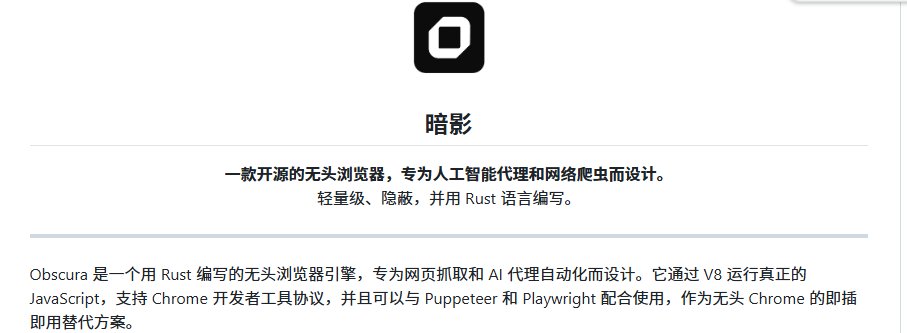
用Rust造的这款浏览器引擎,摆明了要挑战Chrome的统治地位,专门为AI Agent和反爬场景量身打造。
Obscura与Headless Chrome的核心差距一目了然:
① 内存占用:30MB vs 200MB
② 二进制大小:70MB vs 300MB
③ 页面加载:85ms vs 500ms
④ 启动耗时:瞬间响应 vs 约2秒
架构上复用Servo的DOM和V8引擎,没重复造轮子,策略很务实。
反检测机制直接硬编码进内核:GPU/Canvas/Audio指纹随机抖动,webdriver属性设为undefined,顺手拦截3520个追踪域名,连Cloudflare Turnstile都能轻松绕过。
CDP兼容层更贴心,browserWSEndpoint指向本地就能跑,Puppeteer脚本原封不动直接迁移。
针对AI Agent场景还额外加了DOM转Markdown功能,LLM拿来就能用,这步棋确实走得准。
🔗 github.com/h4ckf0r0day/obscu…
3
4
219

Jun 9
Published my latest article - "How to Build an AI Agent to Generate Selenium WebDriver Tests in Java."
AI is becoming a practical tool for test automation, and I wanted to explore how it can help generate Selenium tests from simple requirements.
In this article, you'll learn:
- How an AI agent can generate Selenium WebDriver tests in Java
- The tools and architecture behind the solution
- A practical example you can try yourself
- Best Practices to be followed while using AI Agents to generate automation code
- Limitations and Challenges
If you're a QA Engineer, SDET, or Automation Tester interested in AI and testing, this might be worth a read:
🔗 medium.com/@iamfaisalkhatri/…
Have you started using AI in your test automation projects?
I'd love to hear about your experience.
#TestAutomation #Selenium #Java #AI #AIAgents #SoftwareTesting #QA #SDET
1
68

The firmware has been fixed only for retailed units which started on sale in China since mid march. The firmware has been frequently been updated since march 18th (V1606) until may 22nd (V1610). U can look at the update logs on the china's webdriver ninjaforce.ninjutso.cn
2
4
109

Jun 8
Nobody's first Selenium test actually tests anything.
It's a fight with ChromeDriver.
→ Install the matching WebDriver
→ Pin it to your exact Chrome build
→ Add waits so it stops flaking
→ Then write Java just to click one button
TestBooster's first test is one sentence of plain English.
No drivers. No version roulette. No code.
testbooster.ai/selenium-vs-t…
14