
KATH CEO suspension: The CEO himself admitted wrongdoing and apologised to me and other officers. I suspended him to serve as a deterrent - Akandoh.
#JoyNews
1
158

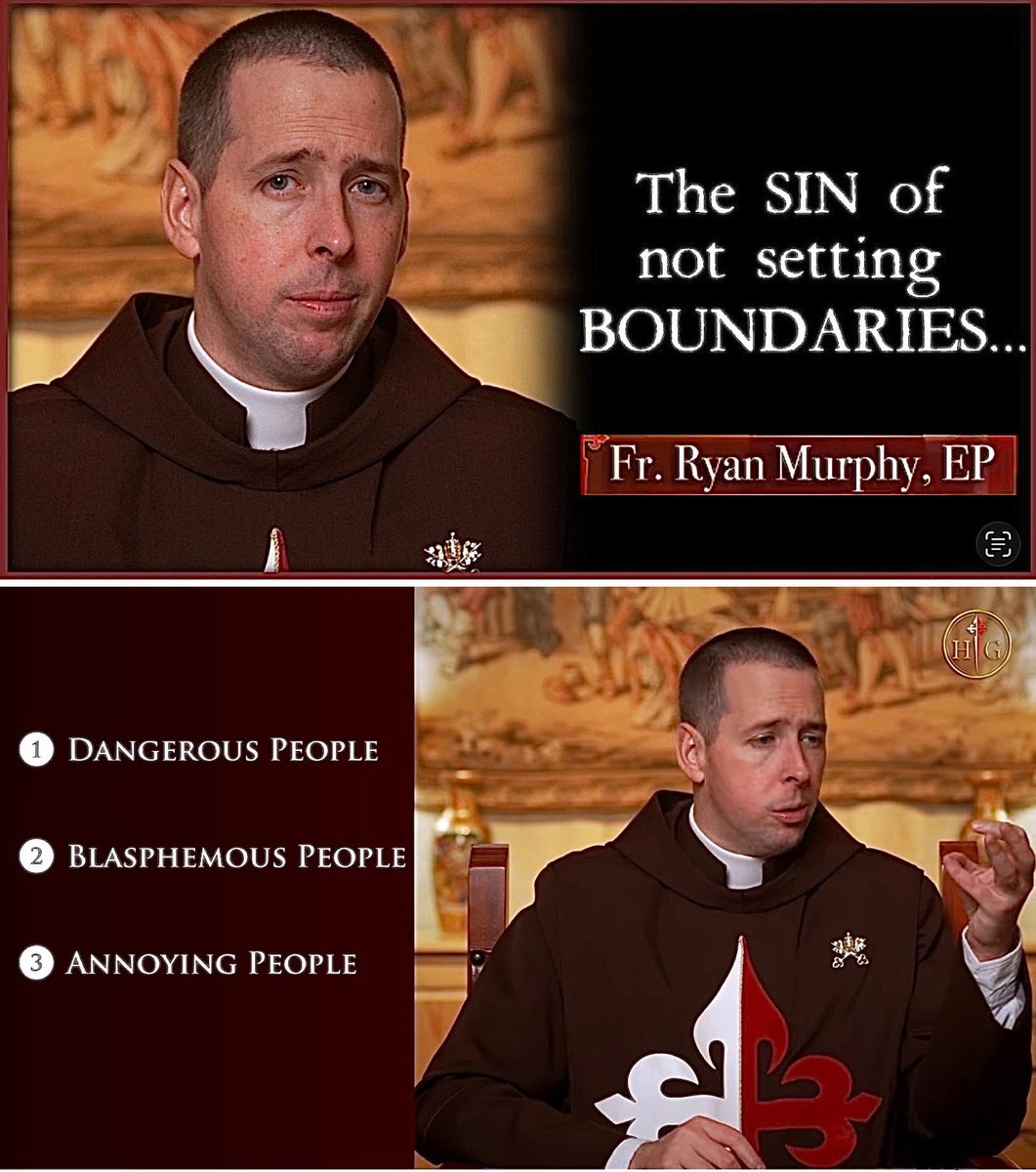
The Devil Uses Toxic People to Lead You to Sin: How to Set Boundaries and Stay Charitable. With Fr Ryan Murphy, Heralds of the Gospel.
———————————————-
➡️ "Catherine of Sienna said that we can’t develop virtue without facing the challenges that tough people bring. In a way we should be grateful for them because without them we’d never become saints ... The devil loves to use annoying people to provoke us into unkind words or actions or to drive us away from good things. We have to be on guard, ready to respond with charity and patience. Avoiding sin always comes first."
———————————————-
Father Ryan Murphy teaches that toxic people fall into three categories, each demanding a distinct Christian response to avoid sin.
The first type endangers life, health, or soul—such as violent individuals or those pressuring others into wrongdoing. Protection of oneself and dependents is a moral obligation. This requires firm boundaries, including rebuke or departure, as tolerance in these situations constitutes sin.
The second type attacks God or the Church through blasphemy. Silence or false tolerance is never acceptable. One must defend the faith according to one’s circumstances and abilities. Examples from Christ’s Passion illustrate this: St. Veronica’s compassionate gesture, Joseph of Arimathea’s eventual action, and especially Our Lady’s steadfast presence at the Cross. True charity corrects offenders rather than ignoring offenses against God.
The third and most common type involves merely irritating or difficult people met in daily life—rude colleagues, stubborn family members, or grumpy neighbors—who pose no grave threat. These encounters serve as opportunities for holiness. God uses them to refine virtue, as saints such as St. Catherine of Siena and St. Therese of Lisieux explained. Practical charity includes thanking God for any good in the person, performing small kindnesses even without warm feelings, avoiding gossip, and stepping away temporarily when patience frays. The chief danger lies in one’s own angry or uncharitable reaction, which the devil exploits to provoke sin.
Correctly identifying the category enables the appropriate response while keeping the priority of avoiding personal sin.
➡️ Watch 13:16 min Video link 👇👇👇
youtu.be/X07t52EEp_0
———————————————-
Reposted from @infidel_cracka & @HeraldsoftheGospel_OFFICIAL (YouTube)
FULL TRANSCRIPT
The Devil Uses Toxic People to Lead You to Sin: How to Set Boundaries and Stay Charitablewith With Father Ryan Murphy, Heralds of the Gospel
[0:00] The Problem of Toxic People
They can ruin relationships, jobs, friendships, and families. Or at the very least, they know how to make everyone around them miserable. The real question is what should we do about these people?
Sometimes we think the best thing is to ignore them. Other times we confront them. We try arguing or fighting hoping that that will fix things.
Sometimes we just try to be nice even if the other person never appreciates it. After all, Jesus told us to love our enemies.
But have you ever stopped to think that there are actually three different kinds of toxic people? And each type needs a completely different strategy. That’s where most people make a mistake. If you use the wrong strategy, not only will it fail, but you could even fall into sin. So, in this video, I’ll break down the three kinds of toxic people and how to handle each one. Every Catholic should know this.
[3:05] The Three Kinds of Toxic People – Overview
The first kind of people are the ones who are a real danger to your life, your health, or even your soul. This could be someone threatening to harm you, an out-of-control driver, an angry family member with a history of violence, or so-called friends who encourage you to sin.
In these cases, it’s actually a sin not to protect yourself and anyone under your care, like your kids. Of course, sometimes you try your best to protect yourself, but just aren’t strong enough. It’s not your fault, but it’s a sin not to try. For example, letting your children play near a dangerous place, allowing a dangerous person into your home when you know that they can become violent, or continue to spend time with people who pressure you into bad choices.
Sometimes we try to be nice and tolerant even when it puts us or others in real danger. And that’s not what God wants.
So with this type of toxic person, you have to set clear boundaries to protect yourself and those you care for. That might mean rebuking them, sending them away, or leaving their presence. If you don’t draw the line to protect your life, your health, or your soul, that’s actually a sin.
We should never be nice with evildoers just to keep the peace. The world may tell us it’s better to be nice and to get along, but that’s not true. Sure, we can hope and pray for their conversion, but we can never compromise our own safety, physical or spiritual.
[5:02] Second Kind: Those Who Attack God or the Church
The second kind of toxic person is someone who attacks God or the church. We should never just sit back and tolerate that. We should always stand up for God and the church.
How we do that depends on our strengths and the situation. But what matters is that we try. So let’s look at some examples from our Lord’s passion.
Take Joseph of Arimathea as another example. He asked Pilate for Jesus’s body and provided a tomb, but he was also a member of the Sanhedrin. Maybe he could have done more to protect Jesus or speak out, but he kept his faith a secret. Sometimes we’re tempted to hide our faith to protect our reputation.
It’s not real charity to be nice or tolerant of blasphemy. True charity is correcting someone who offends God or helping someone avoid sin. That’s what it means to truly care for others.
Of course, the perfect example is Our Lady. She stood by Jesus through all of his suffering, staying at the foot of the cross even after almost everyone had left. She stayed faithful to him even when others doubted. Our Lady can be our comfort and our strength when our faith is under attack. We should always ask her to help us to do everything we can to defend the church.
In every situation, we have to honestly consider what we can say or do. But going along with attacks on God or the church is never right. Ignoring or tolerating blasphemy is a sin. Never do it.
[7:40] Third Kind: The Most Common – Daily Annoying or Difficult People
Finally, we come to the third kind of toxic people. The most common kind. These are the ones who drive us crazy day after day. They annoy us and frustrate us and seem to have all the wrong opinions. Maybe they’re rude or they’re boring. They’re stubborn or maybe just plain grumpy. Sometimes we wish they would just disappear.
Unfortunately, these people may seem toxic, but they pose no real danger to life or limb. They do not threaten our health or try to get us to sin. They do not insult our faith. In some cases, it’s difficult to create boundaries with them because there are people we work with or we go to school with or see every day or maybe even in our own family or at church. They might be our boss, our teacher, our brother, our teammate, our neighbor.
So as much as we might not like it, these are the people who give us a chance to practice charity and patience. Many saints have said that dealing with difficult people is how we grow in holiness. God uses them like a sculptor uses a chisel, cutting away our rough edges so we can become the masterpiece he wants us to be.
St. Catherine of Siena and St. Therese of Lisieux are just two of the many great saints who wrote about this. St. Catherine said that we can’t develop virtue without facing the challenges that tough people bring. In a way we should be grateful for them because without them we’d never become saints.
So how do we actually practice patience and charity? St. Therese of Lisieux offers simple tips for practicing patience and charity. Even in the convent, which you would think is a holy place, she faced plenty of annoyances. The devil knows how to stir things up even within a convent. St. Therese talked about sisters in the chapel making annoying noises when they were supposed to be silent. One sister kept rattling her rosary beads, making it hard for St. Therese to concentrate. She wanted to turn around and glare at her, but instead she practiced charity by imagining the sounds as beautiful music.
In another case, she had to care for an elderly nun who did nothing but criticize and complain. St. Therese made it her mission to treat her with extra patience and kindness no matter what.
So, here are a few more practical ideas from little St. Therese that we can try. First, if someone seems unbearable, remind yourself that God made them. Try to thank God for at least one good thing about that person, even if it’s hard to find.
So, here are a few more practical ideas from little St. Therese that we can try. First, if someone seems unbearable, remind yourself that God made them. Try to thank God for at least one good thing about that person, even if it’s hard to find.
Third, if others start gossiping or complaining about this person, either walk away or say something positive instead. And if you feel overwhelmed and can’t keep your patience, just step away for a moment. It’s better to take a break than to say or do something you’ll regret.
With these less dangerous toxic people, the real risk is letting our anger and impatience get out of control. And if we don’t address it, we might end up speaking harshly, gossiping, hurting their reputation, or even wishing them harm. And that’s when we fall into sin ourselves. The devil loves to use annoying people to provoke us into unkind words or actions or to drive us away from good things. We have to be on guard, ready to respond with charity and patience. Avoiding sin always comes first.
[12:00] Conclusion on Responding Correctly
So, as you can see, each type of toxic person needs a different approach. We have to be clear about who we’re dealing with so we can respond in the right way and stay committed to that. Using the wrong strategy can lead us into sin. And that’s what we always want to avoid.
This completes the core spoken teaching presentation (approximately 13 minutes of content after omitting promotional segments).
➡️ Watch 13:16 min Video link 👇👇👇
youtu.be/X07t52EEp_0
———————————————-
Reposted from @infidel_cracka & @HeraldsoftheGospel_OFFICIAL (YouTube
5
NavyVet1972 🇺🇦🟧 retweeted

Jun 15
DO IT.
If there’s evidence of wrongdoing, do it.
2
9
507

Have you ever questioned if God holds the powerful accountable for their injustices.
Can a moment of humility really alter the path of impending judgment in our lives.
What role does repentance play when sin has caused deep harm to others.
Dive into Elijah from the First Book of Kings chapter twenty one where a kings humbled heart delays the fulfillment of a severe prophecy.
Discovering Divine Mercy Through Humility in 1 Kings 21
In the story from the first book of kings we encounter a powerful account of divine justice tempered by compassion. This narrative reminds us that even when we fall short our sincere efforts toward goodness can open the door to unexpected grace. The reading highlights how God notices the steps we take toward humility and responds with understanding rather than immediate condemnation. As faithful individuals striving to live well we find encouragement in seeing that mercy can interrupt the consequences we might otherwise face.
What Happens When Elijah Delivers Gods Message to Ahab
The prophet Elijah receives instructions from the Lord to confront King Ahab after the unjust seizure of Naboths vineyard. Elijah meets Ahab in the vineyard itself and declares that the king has acted wickedly by murdering an innocent man and taking his property. This direct encounter shows how God holds leaders accountable for their actions while still offering a path forward through recognition of wrongdoing. The words spoken emphasize that violence and greed lead to personal downfall yet the focus remains on the opportunity for change rather than endless punishment. Ahab hears the full weight of the prophecy including the prediction that his house will face ruin similar to previous dynasties. Through this section we see that accountability serves as a starting point for reflection and potential renewal in our own daily choices.
How Does Ahab Respond and What Follows Next
Upon hearing the harsh words Ahab tears his clothes puts on sackcloth and fasts in a display of deep remorse. This act of humbling himself before the divine presence shifts the entire direction of the events that follow. The Lord then speaks to Elijah again noting the kings changed attitude and deciding to delay the foretold disaster until a later time. Such a response illustrates that genuine sorrow can alter the immediate course of events allowing space for growth and further opportunities to do good. We learn here that even those in positions of power who have made grave mistakes receive consideration when they turn inward with sincerity. This part of the reading encourages anyone who has tried and failed repeatedly because it shows mercy as a consistent divine quality.
What Does the Quote Reveal About Gods Compassion
Since he has humbled himself before me I will not bring the evil in his time stands as a key expression of understanding in the narrative. This statement underscores how personal humility catches the attention of the divine and leads to a postponement of hardship. It highlights the benefit of acknowledging our limitations and seeking to realign our hearts rather than persisting in error. For those of us working to live faithfully this quote offers reassurance that our imperfect attempts at goodness do not go unnoticed. The delay in consequences provides time for continued striving and deeper conversion in daily life. Ultimately it points to a compassionate stance that values the inner disposition over rigid enforcement of penalties.
How Can We Apply These Insights to Our Modern Struggles
The themes from this ancient account translate directly to our efforts in balancing responsibilities family and personal faith amid everyday pressures. When we face moments of failure or regret we can draw strength from Ahab's example by pausing to reflect and humble ourselves in prayer or quiet contemplation. This approach fosters resilience because it reminds us that progress comes through small sincere gestures rather than perfection from the start. Communities of believers benefit too as they support one another in recognizing shared humanity and extending patience during times of lapse. By focusing on the positive outcome of humility we build habits that sustain long term spiritual health and interpersonal kindness. The reading thus serves as a guide for navigating challenges with hope and renewed commitment.
In reflecting on this passage we see an overarching invitation to trust in the possibility of renewal no matter our past actions.
🙏 @RCatholicPrayer
5

They also do this for protection to the agencies involved, either to accuse you of wrongdoing or other charges to vindicate them selves. It’s a Freemason trait!
3

Our Local Gov leaders at many levels incl @MayorofLondon turned a blind eye to wrongdoing of which they told and warned. They decided to crush those who brought them the evidence. @TheBritLad "We need new Nuremberg trials". Yes. We do. Thank you @rapeganginquiry

🚨WOW: Sadiq Khan personally READ reports on young girls gang-raped in London hotels by Muslims plied with drugs, threatened & abused.
YET on multiple occasions, he publicly denied grooming gangs exist in the capital.
This denial has enabled abuse.
Accountability is overdue.

8
Solidus Nova retweeted

42m
I've lost track of how much info I've obtained and released about nova that is incriminating or shows wrongdoing. I mean his local law enforcement literally called me. Ask yourself, what has he ever done to help? What has he done about any problematic individuals he covers besides fence ride and defend them because we say mean things?
Check any video he's made, No links or resources to report anyone. Dude makes TENS OF THOUSANDS OF DOLLARS MONTHLY doing the same shit we do except he doesn't make as many jokes about weight or appearance.
Am I a good person because I release certain things about nova? No, and I've never claimed that. Is there an argument to be made that we shouldn't be making fun of appearences? Sure, but it's extremely disingenuous to make insane amounts of money off of pedophiles and mentally ill individuals just to act morally superior because I do the same thing while making offhanded jokes about peoples looks on occasion.

Dankyjabo just mentioned you on stream again saying that you care more about the greasy hair or his weight than the stuff novas done

2
9
72
1,990
Kristen🌻AbortThePatriarchy retweeted

The church teaches that once an abuser is forgiven, anyone who speaks about the wrongdoing can be accused of having an unforgiving heart.
The burden of sin would shift from the person who committed the act to the person who won’t let the matter rest.
propublica.org/article/old-a…
16
119
226
10,715

A civil settlement of $22 million ended a potentially damaging investigation in 1994. Despite extensive questioning of over 200 children, no accusations of wrongdoing were made. The criminal inquiry concluded due to insufficient evidence. #LegalCase #Justice

Your Courage & Bravery is Needed in Your Country.
You Have Overcome The Fear of Your Weak Governments Failure to admit its wrongdoing.
You’re a Courageous Woman for doing so & by doing so you will Inspire others not only in your Country but in all of Western Society.
For You 🙏🏻..
1
17


Keep the lies coming. Every time you post this garbage you look more and more guilty.
The investigation began in 2022 under the Biden DOJ, there must be sufficient evidence of wrongdoing for the case to escalate.

You literally edited and took those pics out of context, none of those girls were underaged nor abused by Trump and they were from a Hawaii beauty contest, is that all it takes to make a normal photo into morbid evidence of wrongdoing, BLACK BOXES? Also Trump didn't like Epstein
9

As funny as some of this stuff is, it is of course using the white folky subgenres of indie culture as a scapegoat to alleviate themselves of any wrongdoing. Incorporating rap into indie did far more damage to the scene than quirky guys playing banjo and wearing iron rangers.

1
1
2
170

Boy are you an idiot. He was cleared from any wrongdoing. After he sues your nigger ass you'll be hustling Kool Aid pineapple.
1
1
63

Former prime minister Najib Razak showed no remorse for wrongdoing that caused massive financial losses to Malaysia, the High Court said in its 1MDB ruling, justifying the 15 year jail term and RM11 billion fine.
"The financial scandal was described as the world’s largest kleptocracy.
"The scale of the plunder made Attila the Hun look like a choirboy in comparison," said Judge Collin Sequerah.
🧵1


🚨BREAKING: Najib Razak has been sentenced to 15 years' imprisonment and fined at least RM11.4 billion in the 1MDB-Tanore case.
The sentence will commence after the former prime minister completes his six-year jail term for the SRC case.
🧵1

24
261
567
70,958