Joined June 2024
- Tweets 93
- Following 70
- Followers 501
- Likes 463
56 Photos and videos


Pinned Tweet

8 Nov 2025
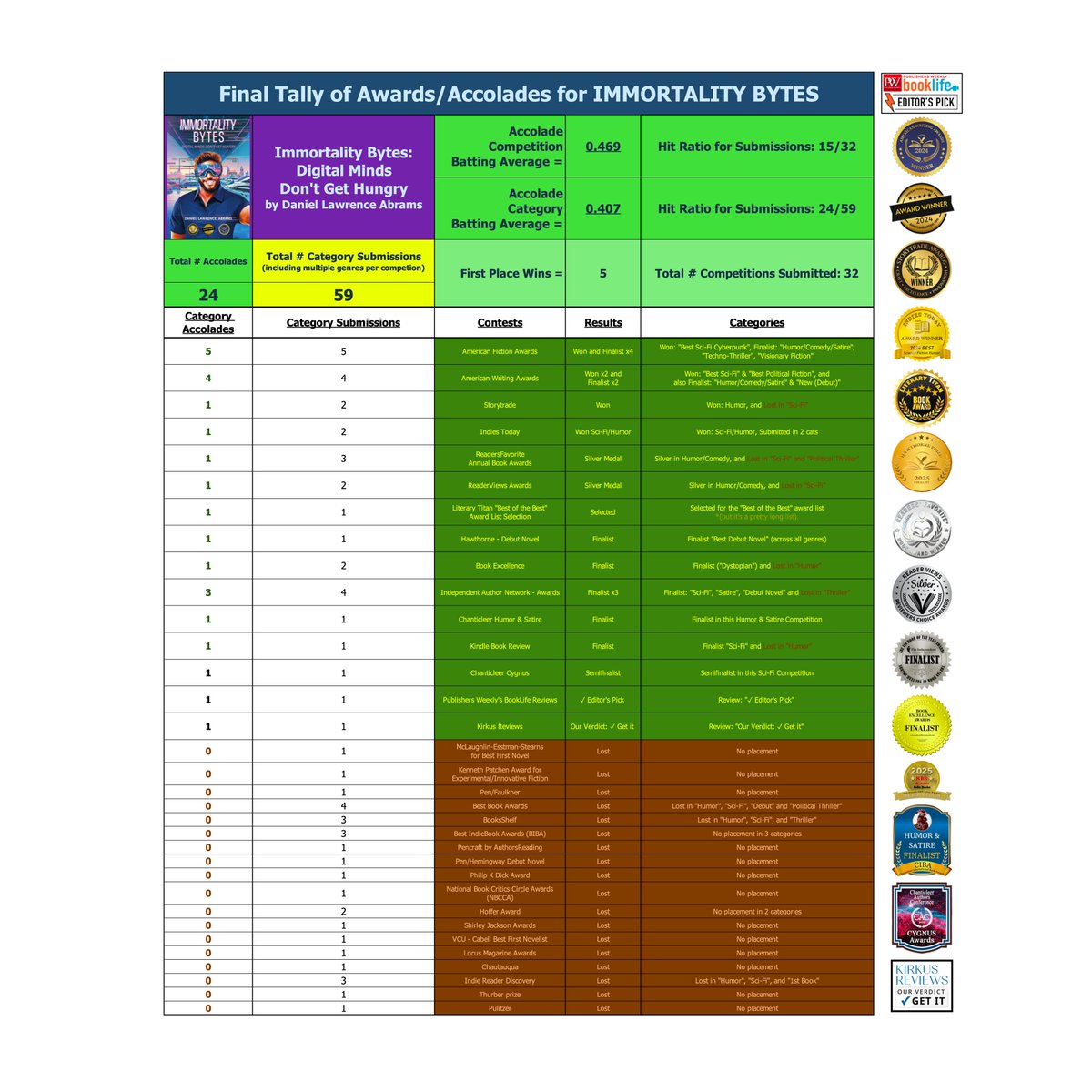
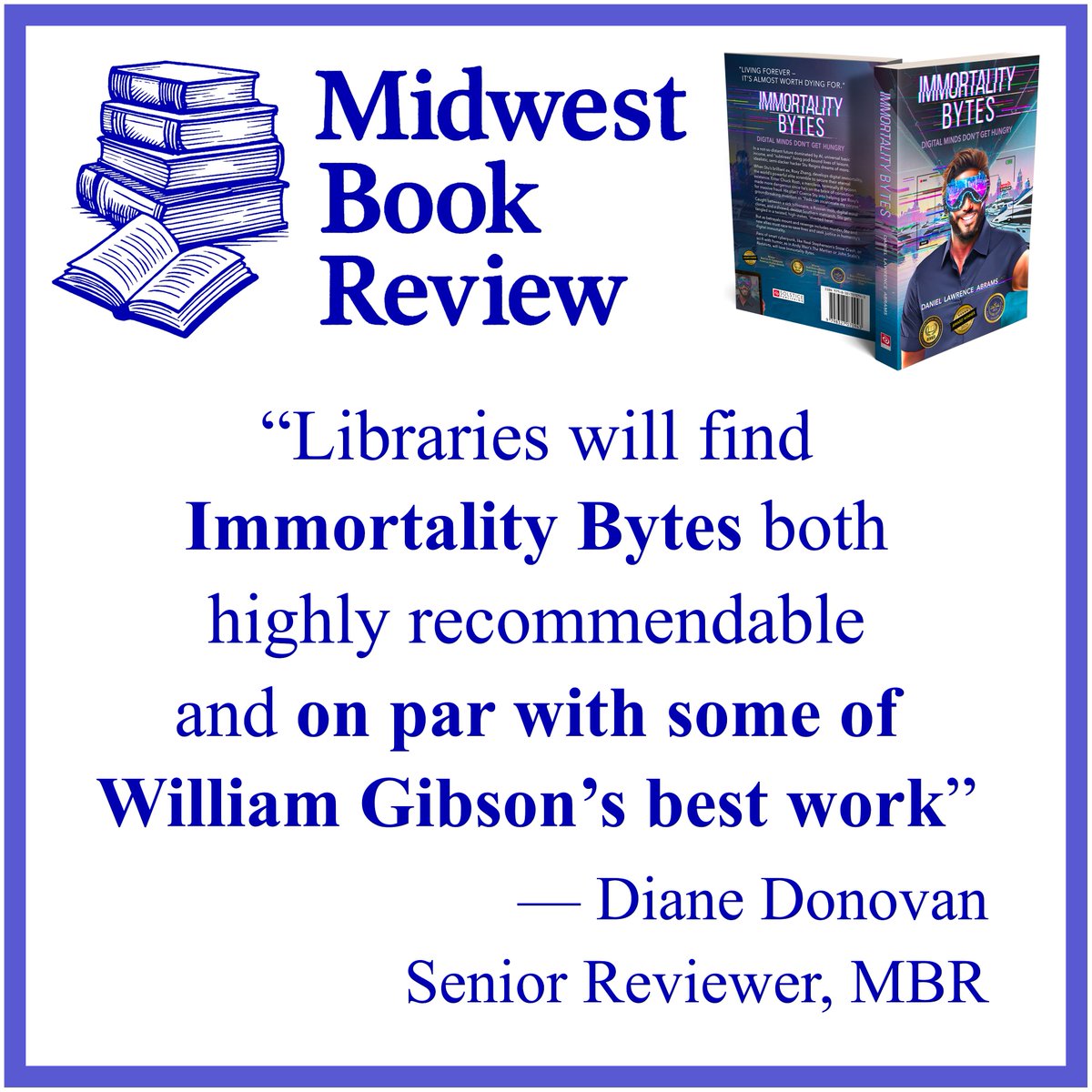
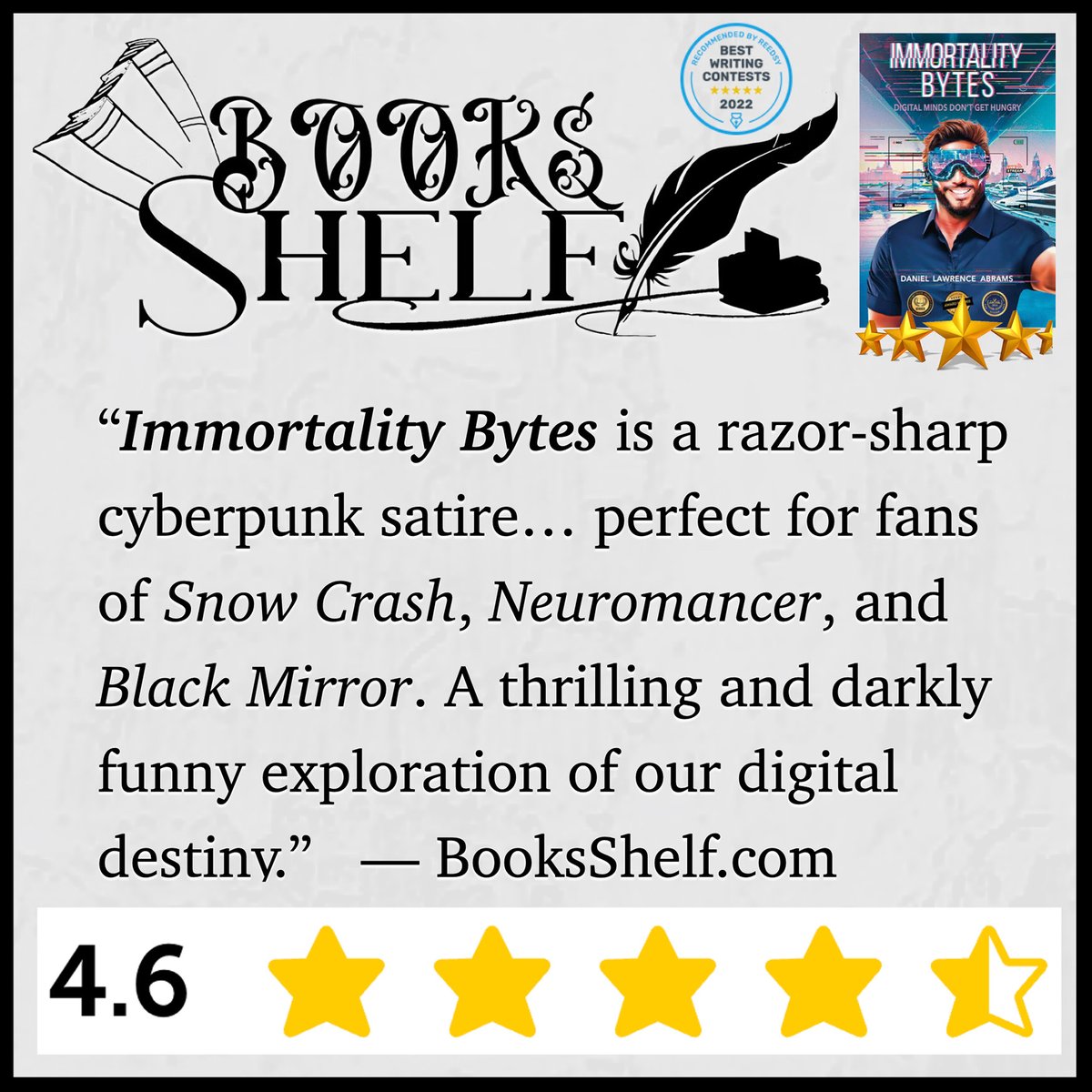
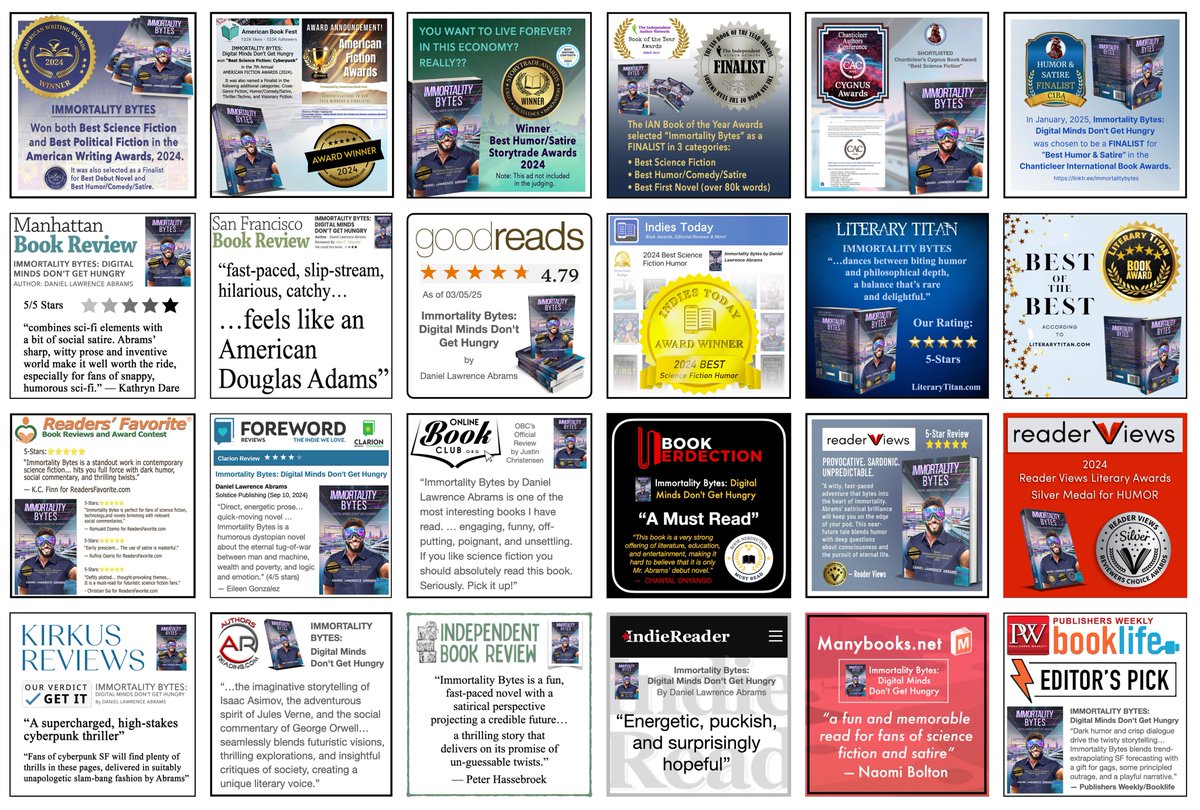
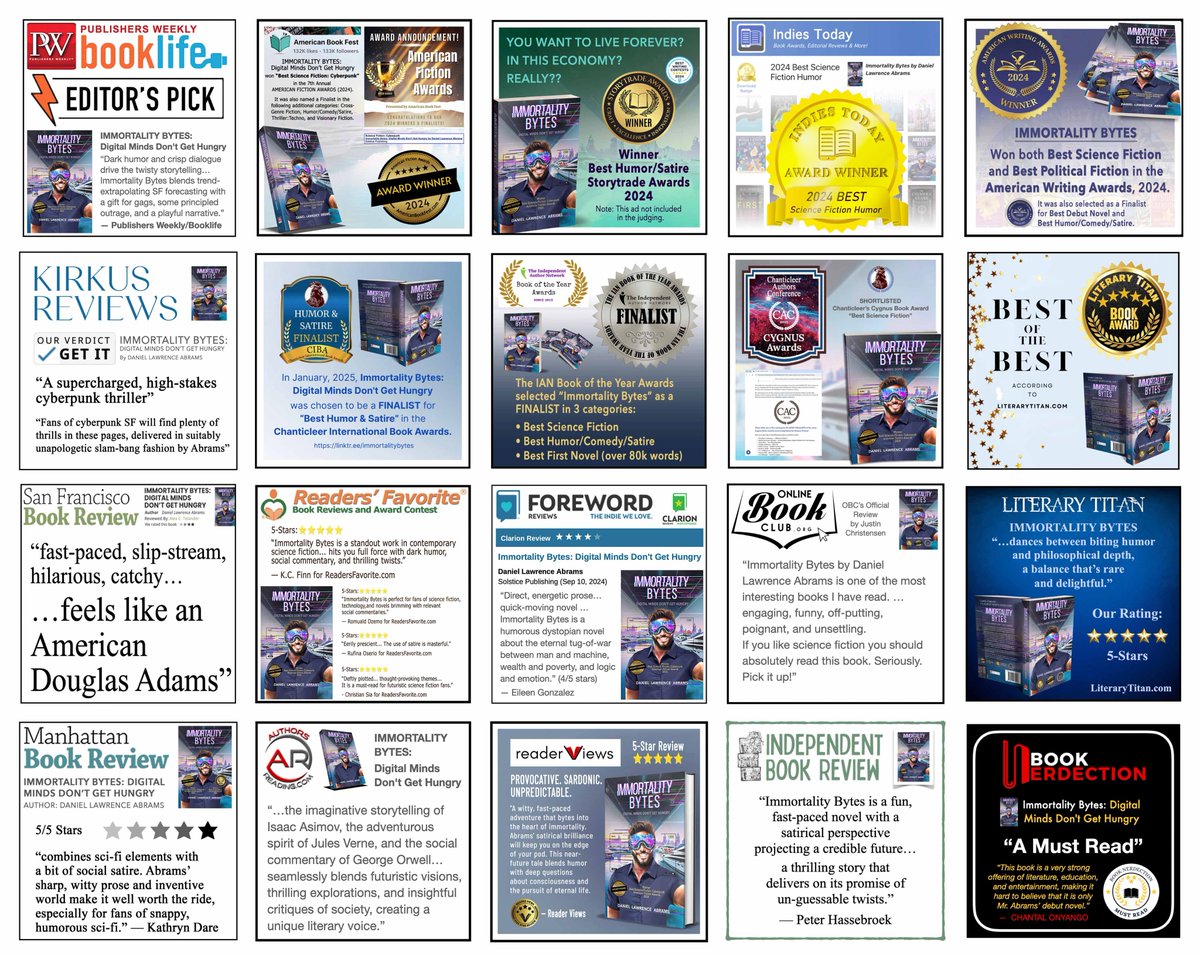
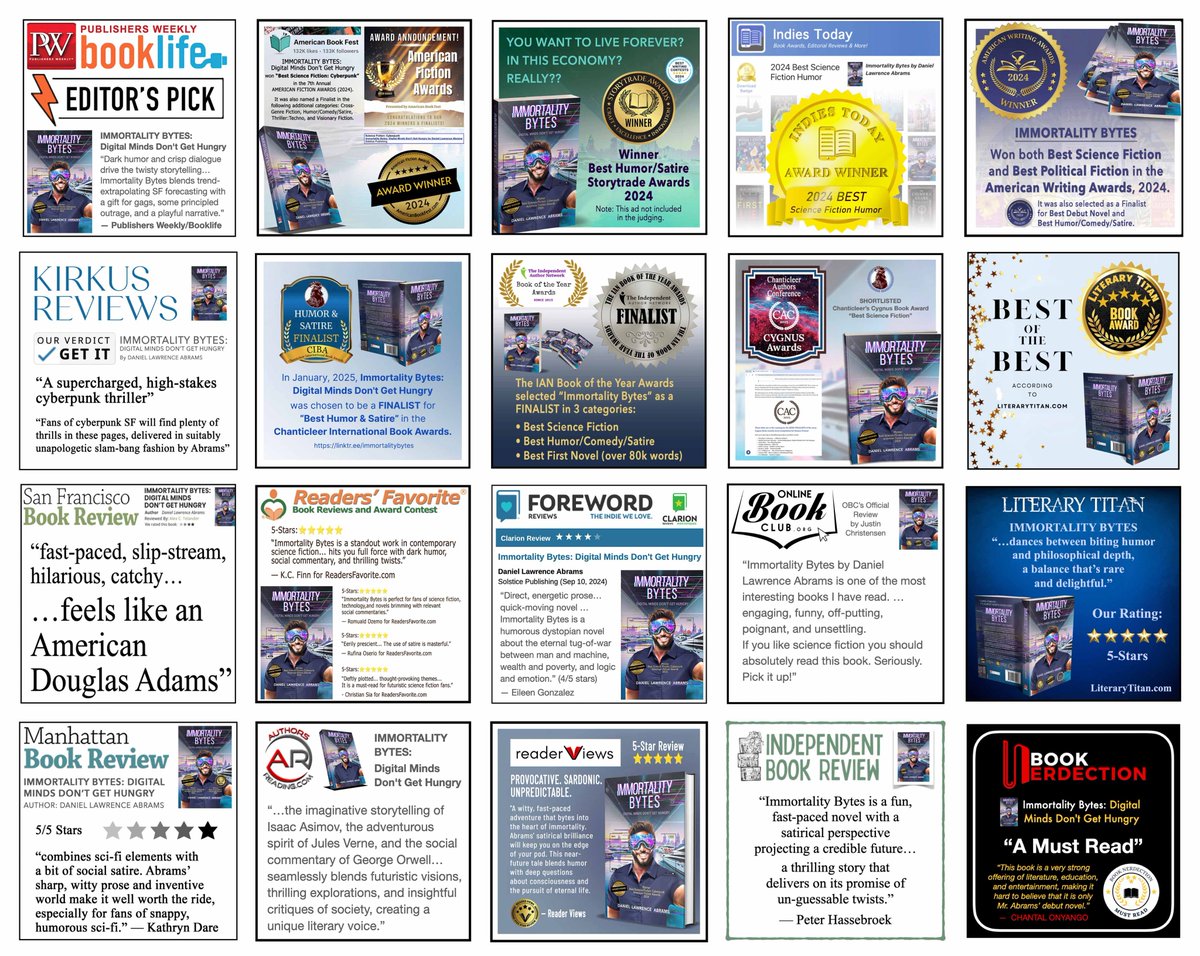
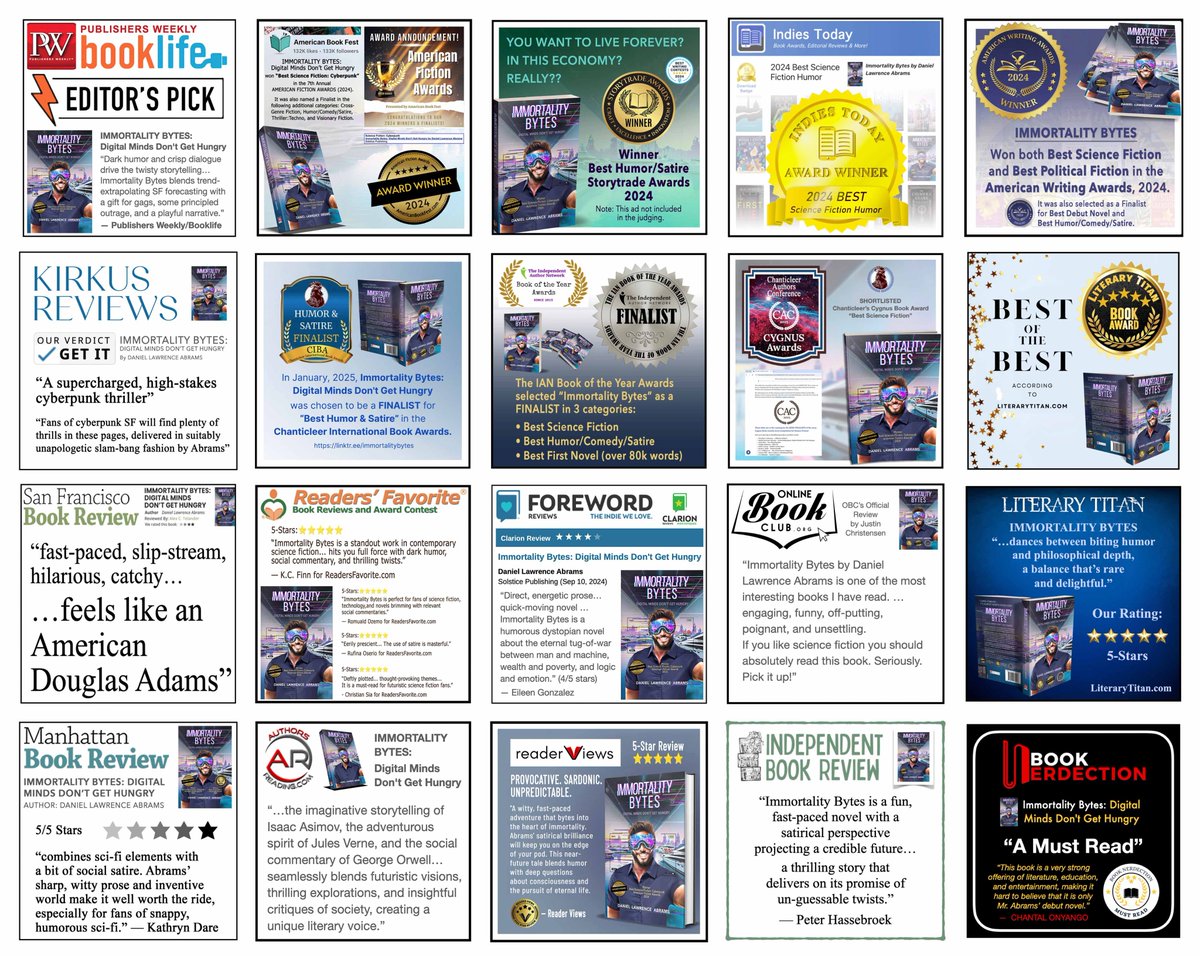
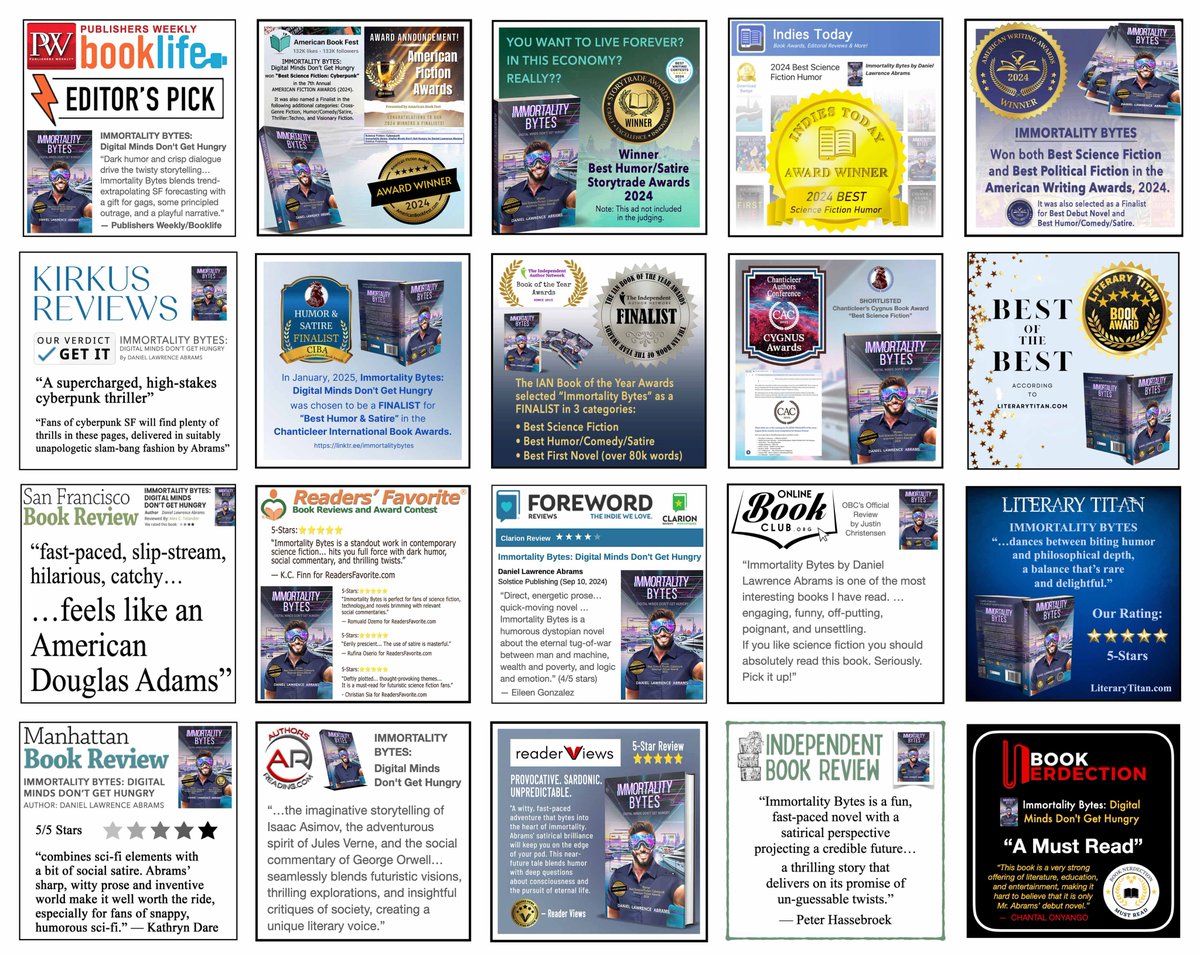
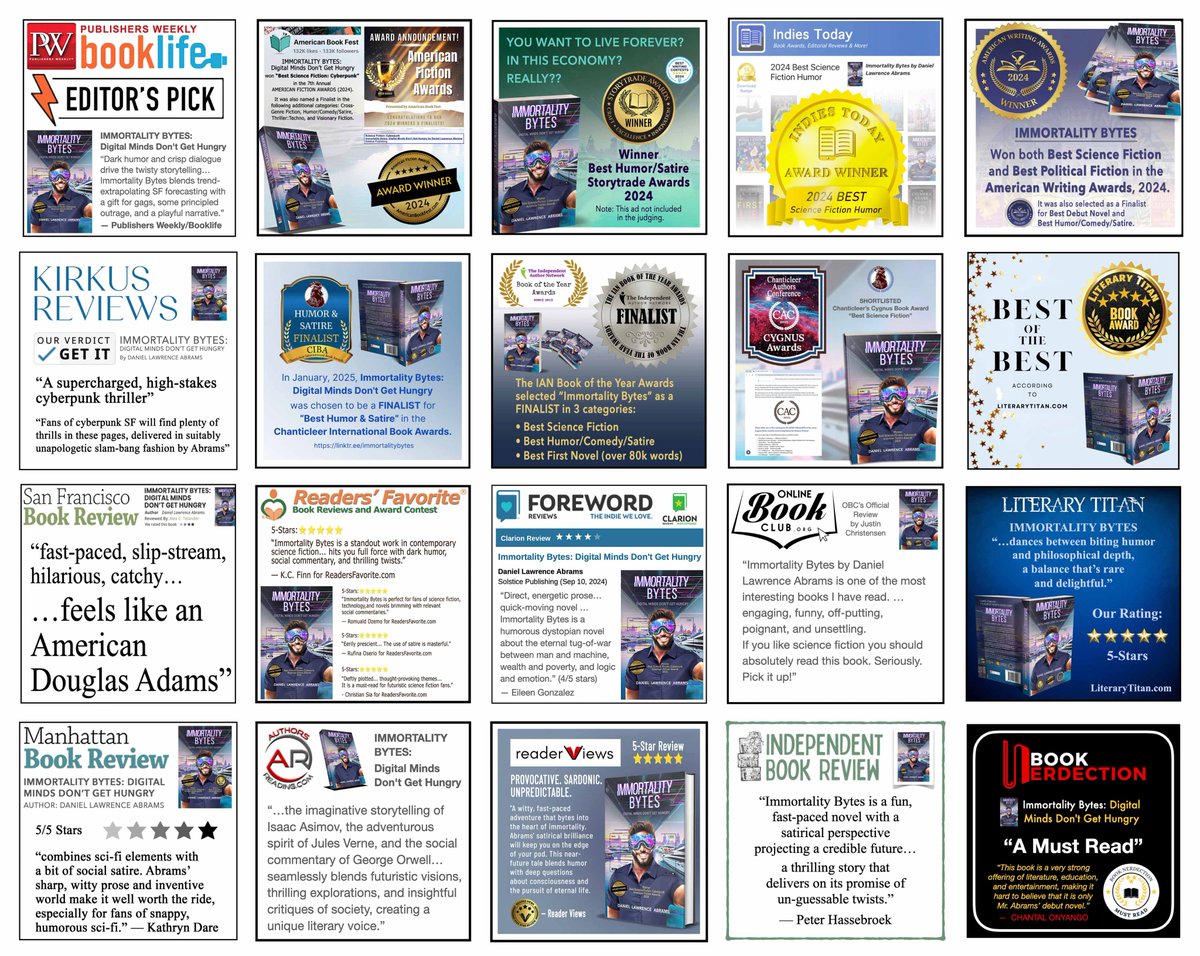
Here's the final tally for #immortalityBytes: 24 accolades out of 59 category submissions —
(batting average 0.407), including 5 First Place Wins, Finalist for the Hawthorne Prize for Best Debut Novel (across all genres), and "Editor's Pick" in Publishers Weekly's @BookLifeReviews. ALSO...
In 15 of the 32 competitions to which it was submitted, my book earned at least 1 accolade (batting avg. 0.469).
I'm profoundly grateful and appreciate all the support and encouragement from friends & family and kind fans.
Be well & good karma to y'all!
1
5
52
19 Nov 2025
Problem: partisan split of districts that's grossly disproportionate (not representing the will of the voters). #SolutionToGerrymandering: A state's total vote split can't be more than 1 congressional district disproportionate. If so, one of the "wrongly" flipped districts "flips back" in order by whichever district had the closest vote. EXAMPLE:
In North Carolina in 2024, statewide votes for its 14 seats went 43% Democrat vs. 53% Republican in congressional elections (48% Harris vs. 51% Trump), so a 6-8 split (2 vote difference) would be a reasonable congressional result (though rounded to Republicans’ favor).
Unfortunately, it's so grossly gerrymandered that it's actually currently 4-10 (28% to 72%), resulting in a massively unfair swing of 4 seats (28% off to a 6-vote difference).
How the votes went in 2024:
District#1: 46% D to 54% R
District#2: 66% D to 32% R
District#3: 22% D to 78% R
District#4: 72% D to 26% R
District#5: 40% D to 60% R
District#6: 30% D to 70% R
District#7: 41% D to 59% R
District#8: 40% D to 60% R
District#9: 38% D to 57% R to 6% I
District#10: 38% D to 58% R
District#11: 43% D to 57% R
District#12: 72% D to 26% R
District#13: 41% D to 59% R
District#14: 42% D to 58% R
REAL WORLD RESULT: Republicans got 10 seats, when they should’ve gotten no more than 8 (Democrats got 4 seats when they should’ve gotten 6).
Consequently, 2 seats would need to “flip back” to Democrats to be fair and representative of the will of the voters.
HOW THIS NEW PLAN WOULD WORK:
The Districts with the closest votes where Republicans win (Districts #1 and #11) would then switch to Democratic wins.
THIS SOLUTION’S RESULTS: Republicans win 53% of the votes and get 57% of the congressional representatives.
Democrats win 43% of the vote and 43% of the seats in Congress.
Even with this solution, Democrats are still at a net loss of 2 seats, which should be the worst possible situation (not a difference of 6 seats as it is with current gerrymandering).
CONSEQUENCES/IMPACTS:
1.) This would moderate candidates in swing districts so that there would less likely be such a disproportionate impact (with gerrymandering resulting in so many ardent extremists in purple districts).
2.) This would limit the iron grip of parties (lock-step tribalism) and thus encourage more bipartisanship.
and, most importantly...
3.) The Congress would most closely be representative of their voters.
REGARDING LEGAL/CONSTITUTIONAL CHALLENGES: It is foundationally true (axiomatic) that government is only legitimate when it represents the will of the people. A reasonably accurate proportionality of representation that most closely resembles voter preferences must therefore be the goal. “The Constitution is not a $uicide-pact.”
The Constitution (ArtI.S4.C1) says Congress "may at any time by Law make or alter such (election) Regulations." So this plan should be constitutional.
It all comes down to American voters deciding which is worse: extremely disproportionate representation (thus nullifying the very concept of a republic) or stare decisis (when many other longstanding precedents are being reversed all over the place). If an amendment is necessary, let’s do it.
• Hat Tip to #IronSeagull on Reddit:
reddit.com/r/newjersey/comme…
ejournalofpublicaffairs.org/…
1
34
19 Oct 2025
#Neededinvention: User-set #Boolean gate catches results that directly #disobey or obviously #hallucinate (auto-orders redos before presenting anything to users). Maybe 3-rounds, then show with warnings. @grok @claudeai @openai @cursor_ai 👨🏫FOR EXAMPLE: it's easy to set such Boolean parameters...
(e.g., "check if link is live", "check if referred to code file exists", "check if user's orders for exclusions are actually excluded"). #Vibecoding #ChatGPT #Gemini #yourewelcome
2
1
43
20 Oct 2025
Another #Aitip that often helps against AI #hallucinations: Follow-up prompting, "#BonusPoints for catching your own errors" or
"Prove you were wrong, and you'll get bonus points, but falsely claiming you were lying/hallucinating gets you double-#demerits." #CreateRewardSystem
1
44
12 Sep 2025
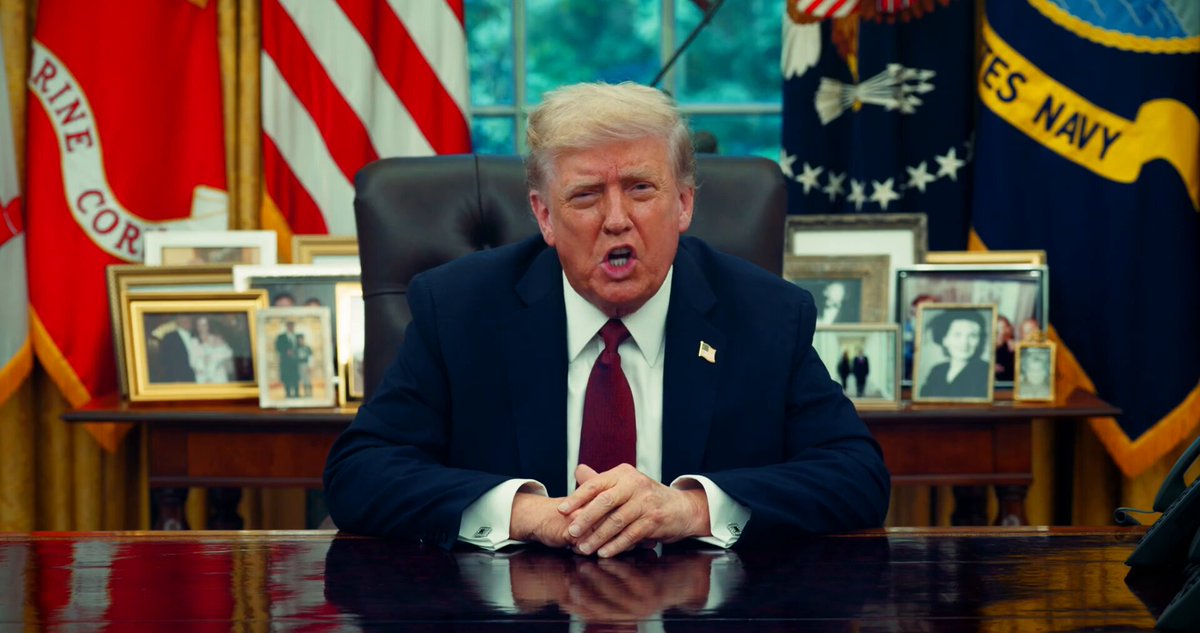
This is from the ACTUAL #WhiteHouse YouTube channel. Watch #Trump's pinky *DISAPPEAR* at 0m18s.
You can debate if it's AI or other VFX, but the video has undeniably been manipulated, and yet the White House shamelessly claims it's totally real.
You can even dismiss it as "who cares if it's #pinky #vfx video?"
But, IMO, that's scary line-crossing when the evidence is this dispositive.
Have the decency to lie to us with ambiguous evidence, like a normal politician.
Though maybe we should be grateful that they're "D-" students.
#PinkyGate #aipropaganda
#TheRunningMan is a documentary #BenRichardsWasFramed
SERIOUSLY — Watch this or the YouTube link at 0.25x speed when he says "Charlie was a patriot." The video is at least partially faked. This is inarguable.
youtu.be/-q1N6Akpz9c?si=keVP…
1
4
74
12 Sep 2025
Watch Trump's disappearing pinky frame-by-frame on the #TheWhiteHouse YouTube video -- see link: youtu.be/-q1N6Akpz9c?si=keVP…
#pinkygate #BenRichardsWasFramed
1
41
9 Aug 2025
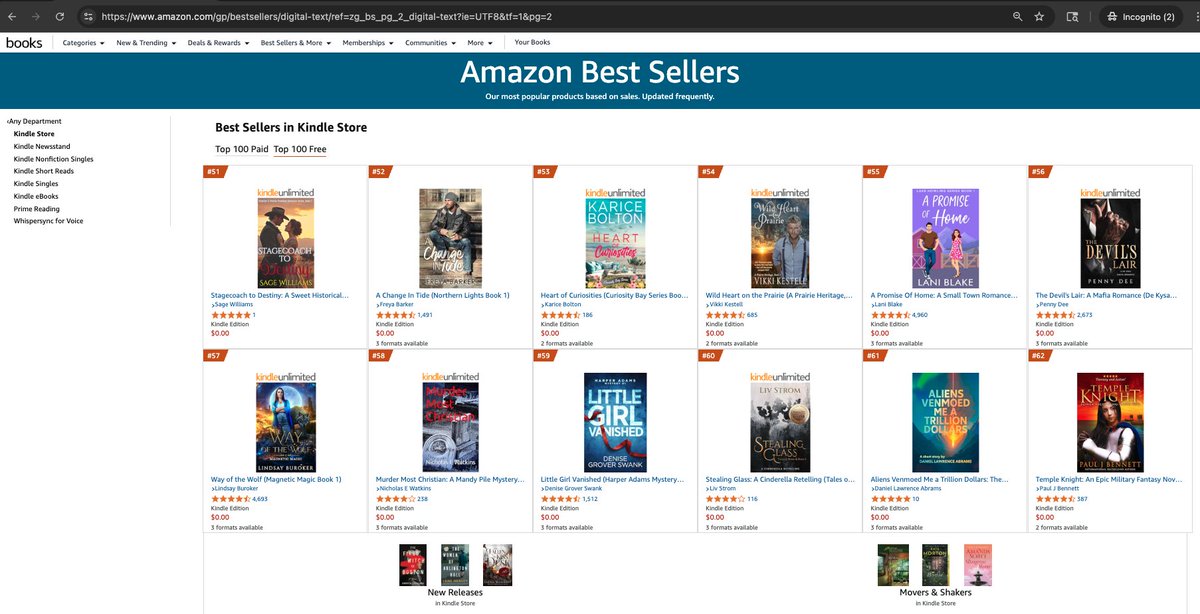
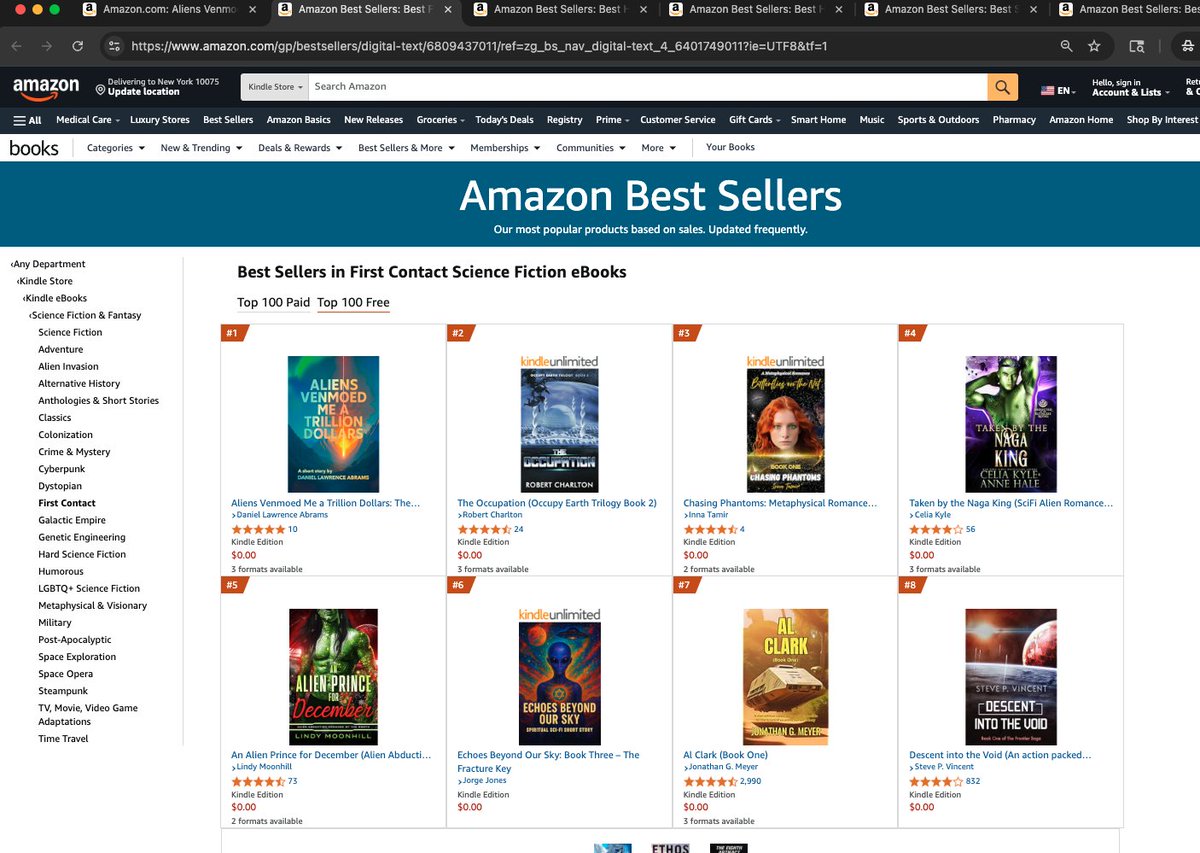
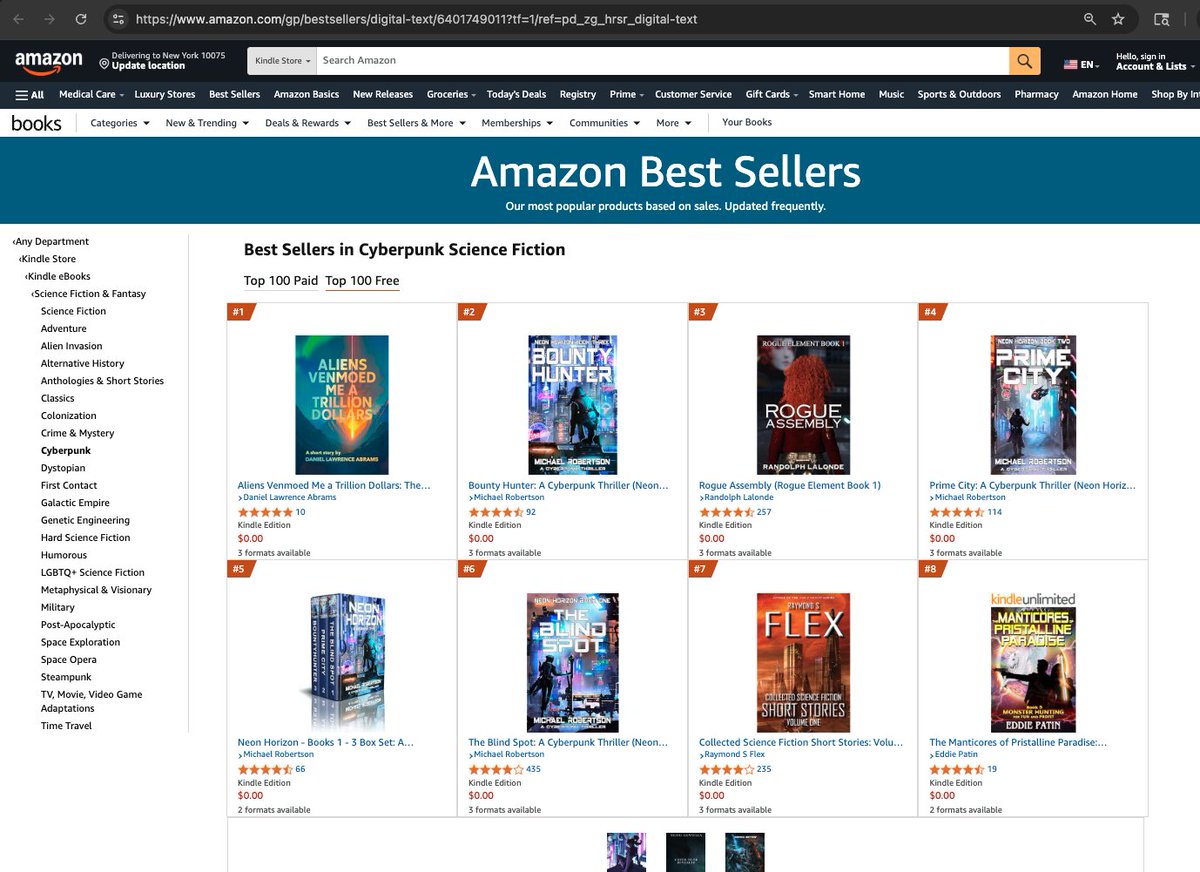
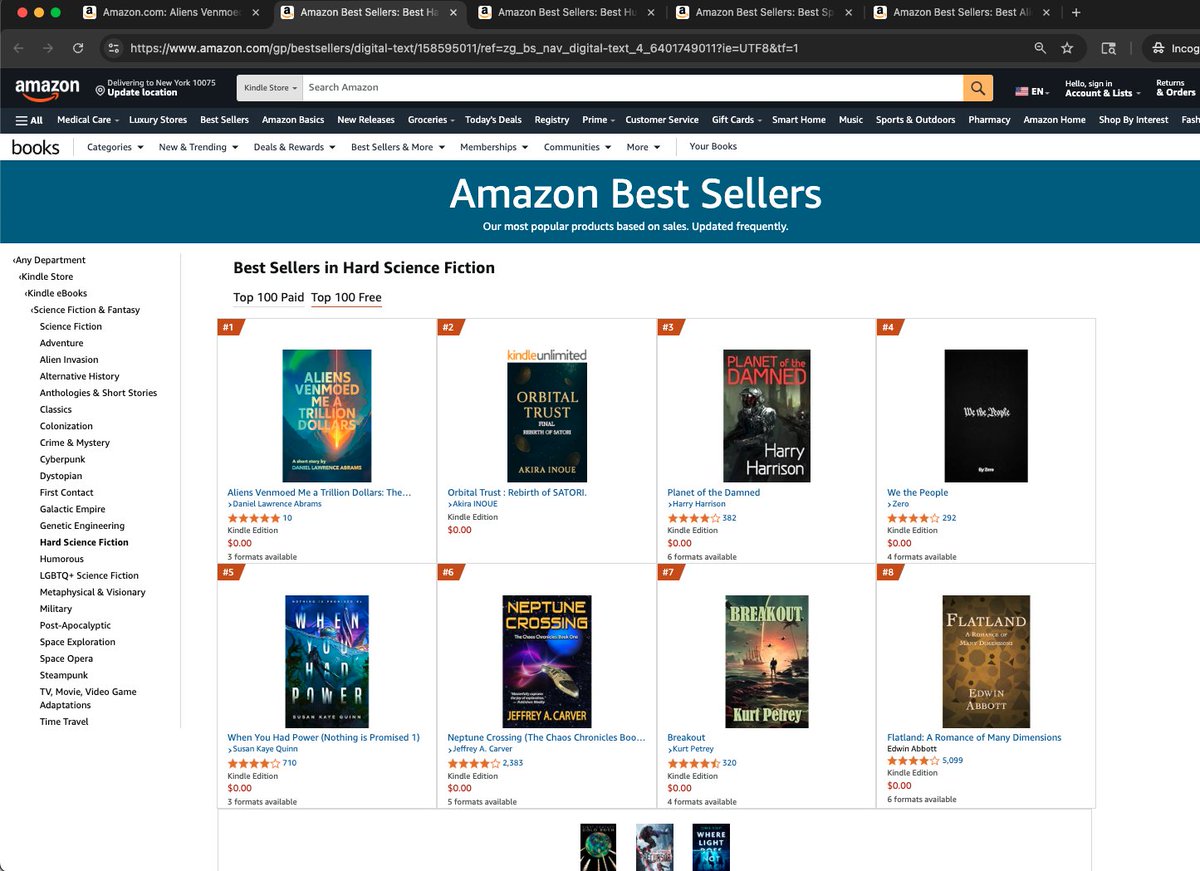
Holy Crap! My new book is an Amazon #1 Bestseller!🤯🤗😊 *(with a bunch of caveats) #AliensVenmoedMeaTrillionDollars
#1 in First Contact
#1 in Cyberpunk
#1 in Hard Sci-Fi
#1 in Short Reads
#2 in all of Sci-Fi
#61 in all eBooks for
Now for the caveats: These are all in the "Free Books" rankings, and it's only a short story. Plus, I have no idea how fleeting this joyous time will be (rankings can change every hour). But since yesterday afternoon (when it hit #1 in those subcategories, #2 in Sci-Fi, and made the Top-100 in all ebooks), I'm high on life (and maybe other stuff).😜
FYI — The free promotion lasts a few more days, if you want to get it and review it! Thanks, be well, and rock on!

1
2
5
62
2 Aug 2025
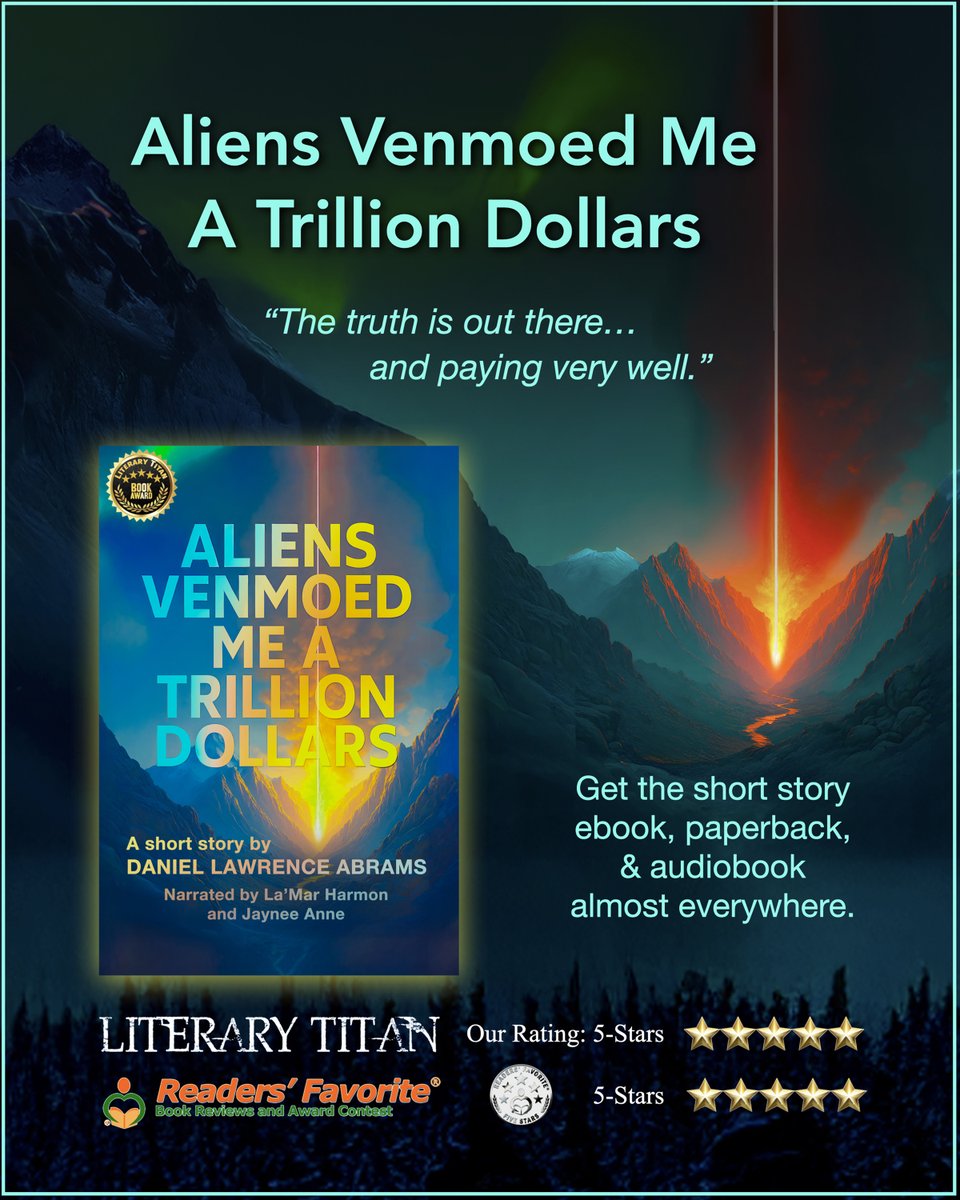
My new short story #AliensVenmoedMeaTrillionDollars (audiobook and ebook) is available now! 📢TAGLINE: "The truth is out there... and paying very well."
• 📖 #eBook is only $1. It's super short (but includes a chapter from my novel as a micro-bonus).
• 🔊 #audiobook (I don't have control over the price, but it should be ~$3).
Should be available almost everywhere between now and August 5th (which is the ideal day to rate it, no review necessary, just need a few dozen ratings, please, please). ➡Only takes 46 seconds (I timed it).
Grateful for your support!🤗
BTW — My short story already got a few 5-Star reviews from pro reviewers: @ReadersFavorite and @LiteraryTitan.👍
1
4
6
105
2 Aug 2025
Great thanks to narrators La'Mar Harmon and Jaynee Anne.🙏
audible.com/pd/Aliens-Venmoe…
1
11
IMMORTALITY BYTES retweeted

24 Jul 2025
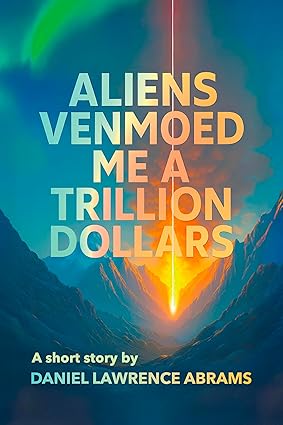
When a YouTuber receives a call from his dead dad, he thinks it is a hacker, only to wind up in a first contact scenario. Aliens Venmoed Me a Trillion Dollars is a #satirical #SciFi #ShortStory that fuses conspiracy theory, government paranoia, & #aliens. amzn.to/46mrk4o?utm_campaign…
1
3
94
IMMORTALITY BYTES retweeted

23 Jul 2025
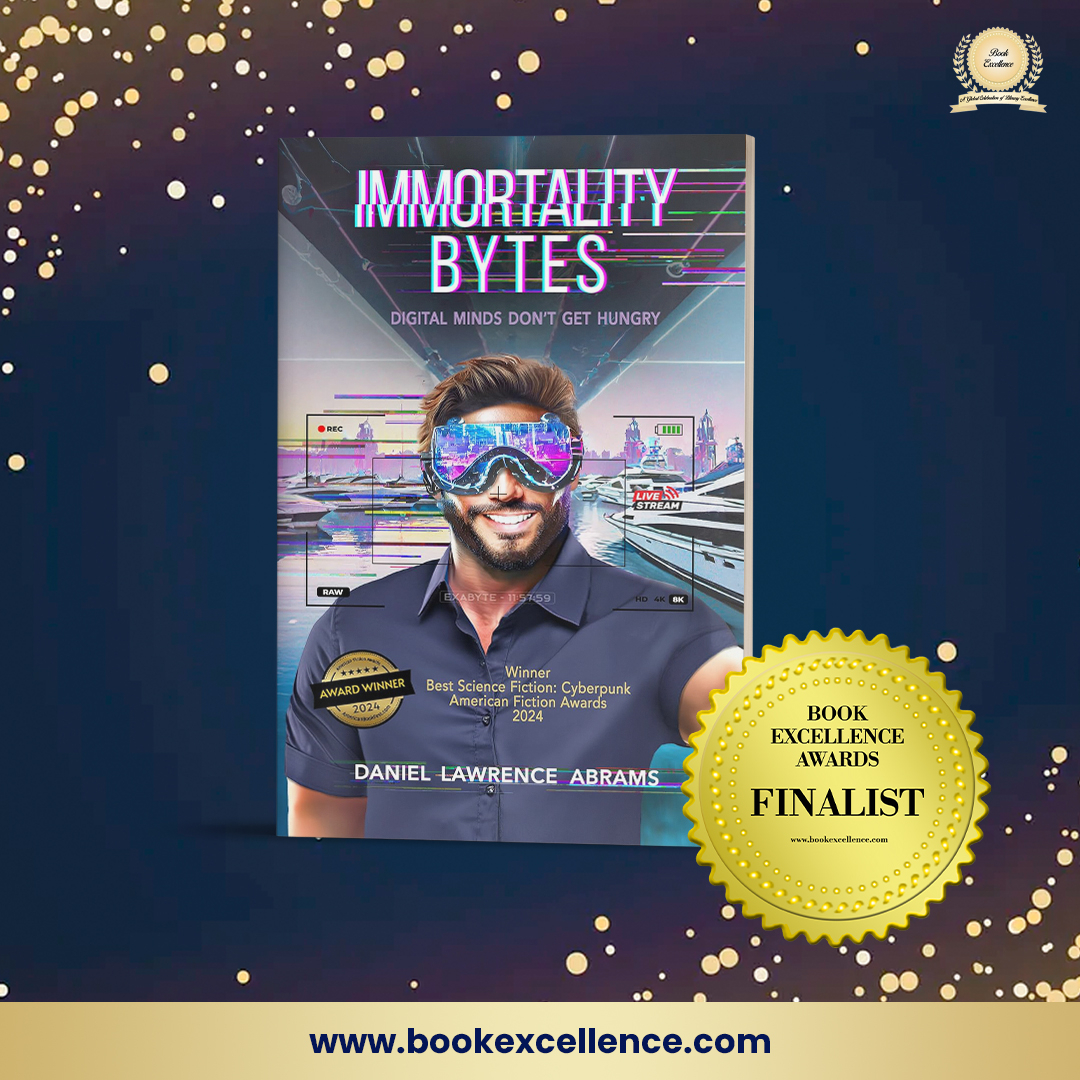
Congrats Daniel Lawrence Abrams on receiving a #BookExcellenceAward for IMMORTALITY BYTES: Digital Minds Don't Get Hungry . Learn more here: honorees.bookexcellenceaward…
@IMMORTALITYBYTE
1
1
3
44
20 Jul 2025
One of my favorite #WritingTips is that scenes should be #ConsequentialNotSubsequential. 🧑💻
Trey Parker & Matt Stone efficiently say that story beats should be connected with either the word "therefore" or "but" 🔗
(not merely "and then"😴).
youtube.com/watch?v=vGUNqq3j…
#southpark
🏛️ 📜 Though Aristotle should get credit for it (see my post from 2019 for more about that).
facebook.com/share/p/1FZwQHH…
1
3
74
18 Jul 2025
I just cancelled my #ParamountPlus subscription because they just cancelled #StephenColbert, after Paramount recently bribed Trump in the form of a $16MM payoff to settle a meritless lawsuit against #60Minutes. If enough people #CancelParamount immediately, maybe they'll get the message. Acquiescing to fascism only accelerates and worsens the decline of humanity.
Each proactive action to fight tyranny helps, and even small actions can catalyze others.
And I love all #StarTrek, #TaylorSheridan shows, and #Dexter.
youtube.com/watch?v=cXR5HLod…
1
3
76
15 Jul 2025
You're always shaping the future. Whether you like it or not. Do good and do well.
3
16
28 Jun 2025
Ever change your mind mid-sentence? #Ai Hypothesis: I suspect ever more research will prove that thinking isn't an "order of operations" (since your brain's neurons don't fire in a direct-line sequence from A➡Z). Consequently...
AI would benefit from a greater focus on #ConvergenceOfThoughtElements.
I maintain, for higher-level tasks, rival AIs should #RedTeam each other, challenging assumptions and vetting conclusions.
#AGI @IMMORTALITYBYTE #immortalityBytes
#ASI
2
6
38
18 May 2025
#Neededinvention: Since AI often acts like a counterproductive #NepobabyIntern, AI systems like #Grok, #ChatGPT, and #Claudeai should have an optional #AiRedTeamMode; results it's about to present get tested by the AI describing the result and comparing it to the prompt. And…
if they don't match (as they often don't) the "Red Team" AI gives suggested prompts to improve the results.
➡️ You could set this #AiRedTeamMode to 5 iterations (or however many) to better encourage usable results. #SecondaryBenefitToAI: Those red team results, new prompts, and iterations have to be useful data to better shape future results.
1
5
64