
Joined February 2015
- Tweets 9,020
- Following 1,251
- Followers 62,682
- Likes 3,713
4,943 Photos and videos




Pinned Tweet

12 Dec 2025
For decades, institutional finance operated behind closed doors. The new Corda protocol opens the vault, bringing real-world financial strategies directly onto @Solana. Our vision is an open financial system where everyone can build resilient, diversified portfolios, putting the tools once reserved for Wall Street into the hands of DeFi users. Be part of what comes next: corda.xyz/
94
475
1,007
111,103
Jun 11
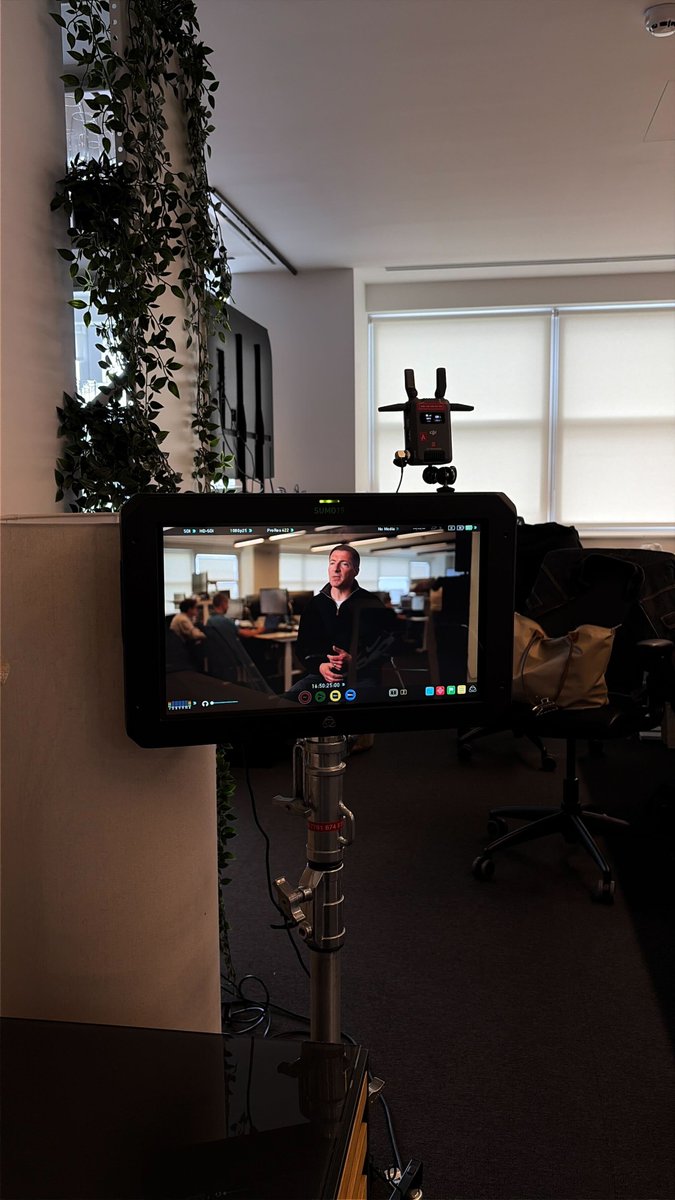
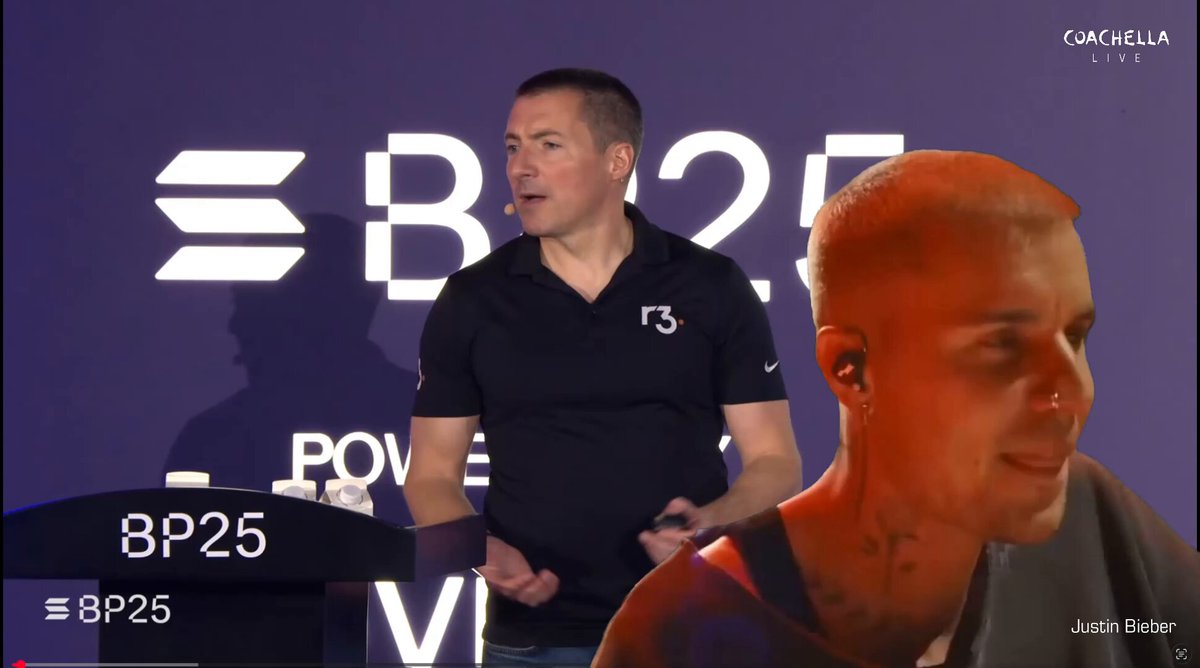
R3 CEO - "There's a brand new pool of capital sitting onchain, ready to invest in real-world assets. And we have the opportunity to show them something better than what TradFi investors are forced to put up with".
Corda protocol.

2
1
13
1,609
Jun 2
"If all you have done is recreate what already exists, what will you have achieved? Something new that does the same things as the current systems will, without exception, be worse."
The oldest and most significant permissioned blockchain firm, owned by the who's who of banking, has gone all in on @solana
"Permissionless innovation drives growth, including for the incumbents… if only they can get out of their own way."
18
7
28
20,980
May 29
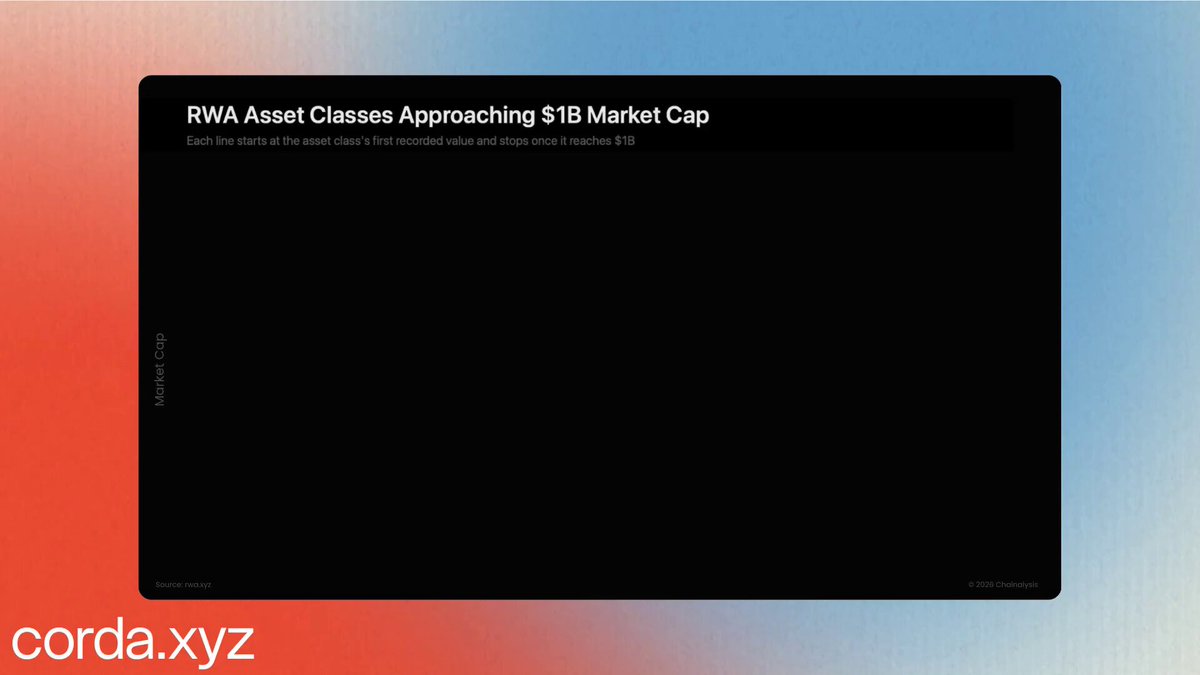
5 RWA asset classes have crossed $1B on-chain.
The fastest did it in under 6 months. More are closing in right now.
Bullish yet?
3
13
16
2,028
May 29
After regulatory frameworks were passed in late 2025, the market accelerated.
Treasuries hot $1b in 918 days. Speciality finance in 654.
Asset-backed credit hit $1B in just 185 days.
1
1
4
1,275
May 27
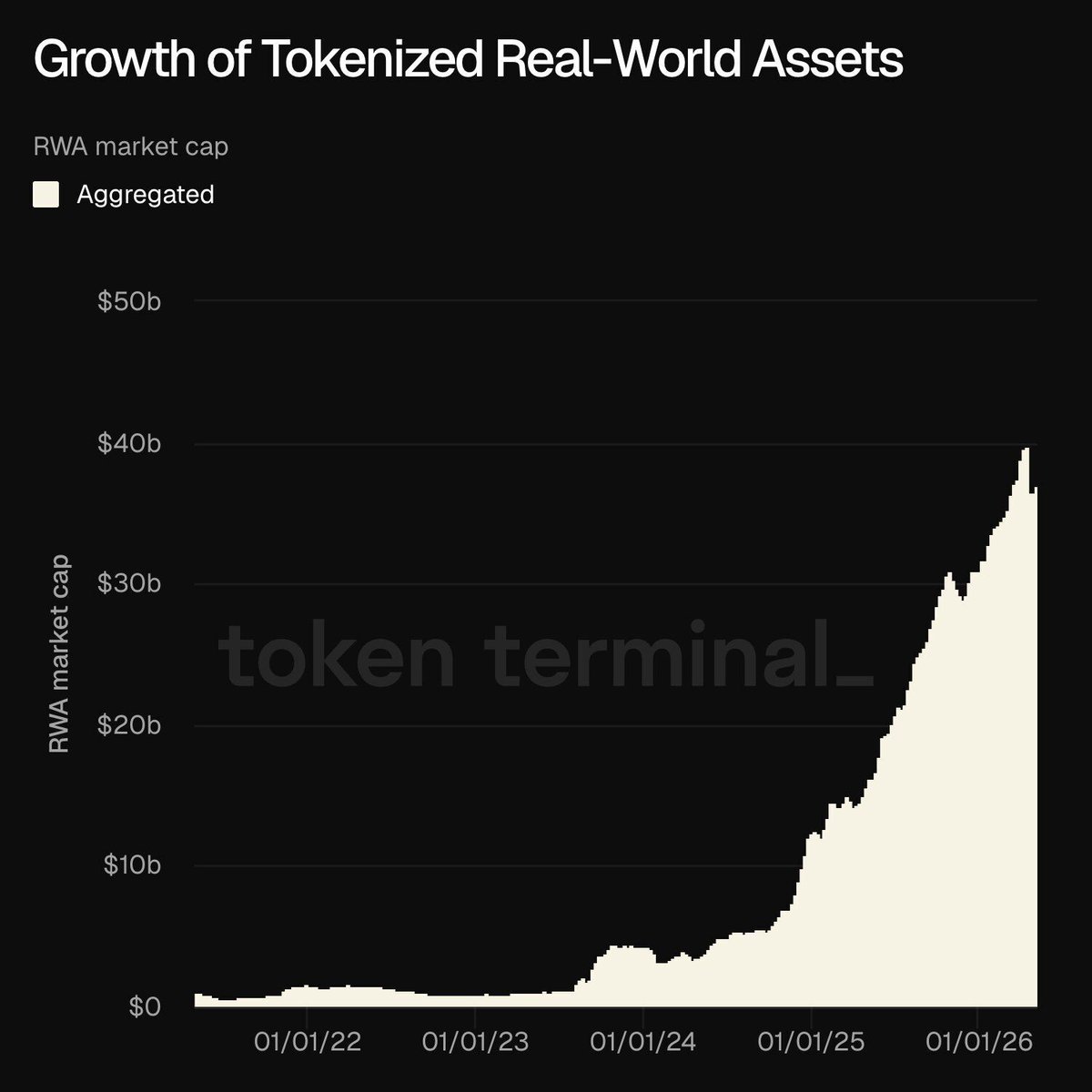
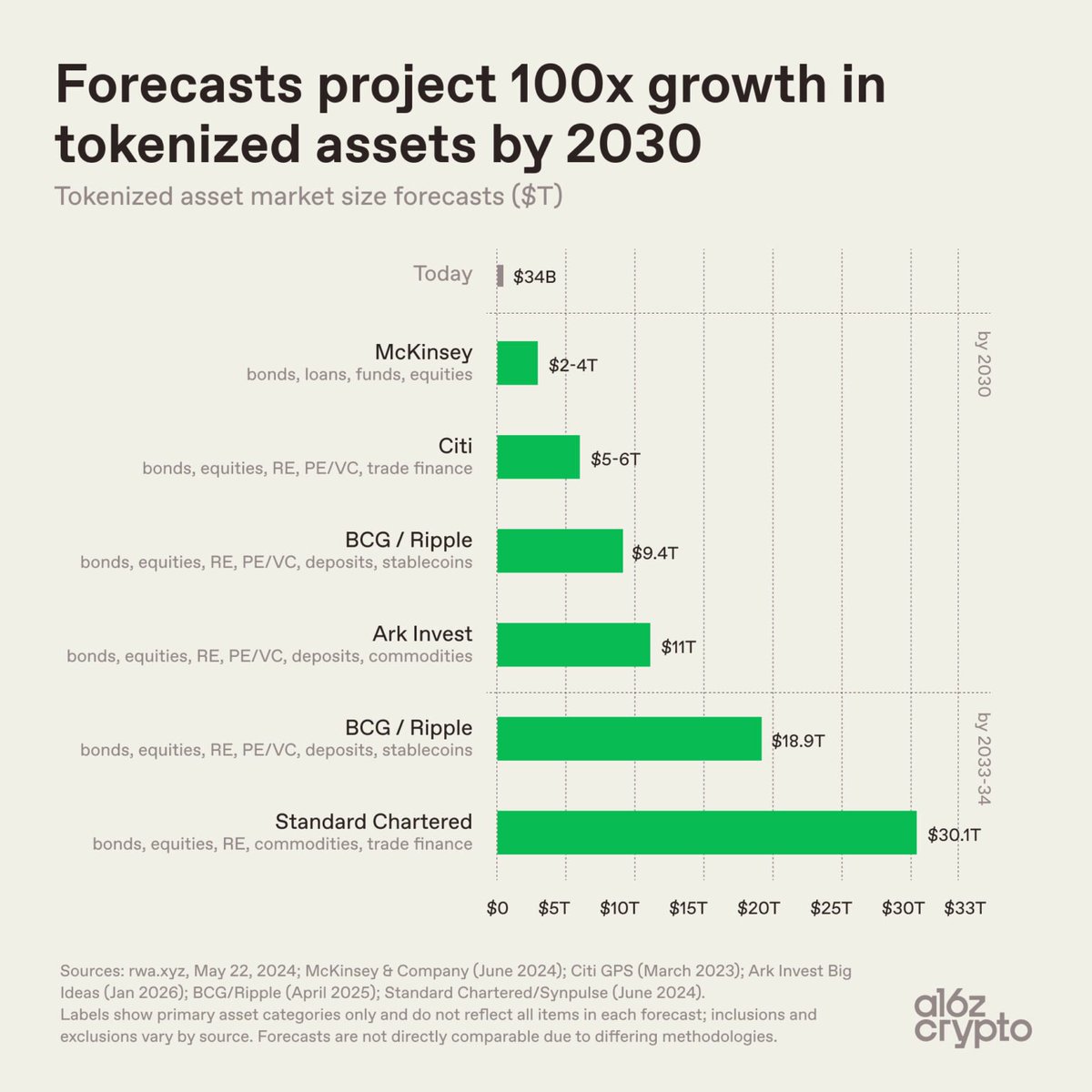
$34B today. Up to $30T by 2034. Every forecast points in the same direction.
Asset tokenisation is expected to expand. Are you bullish enough
May 26

Looking ahead, forecasts for tokenized assets vary a lot but they all point in the same direction: growth.
McKinsey: $2–4T by 2030.
Ark Invest: $11T by 2030.
BCG/Ripple: $9.4T by 2030, $18.9T by 2033.
Standard Chartered: $30T by 2034.
The gap between $2 trillion and $30 trillion is more about definitions than adoption.
Different institutions are measuring different things. McKinsey focuses mostly on bonds, loans, funds, and equities. Standard Chartered adds commodities and trade finance. BCG and Ripple include deposits and stablecoins alongside more traditional asset categories.
Despite these differences, the broader trend is consistent: Asset tokenization is expected to expand.
2
21
2,297
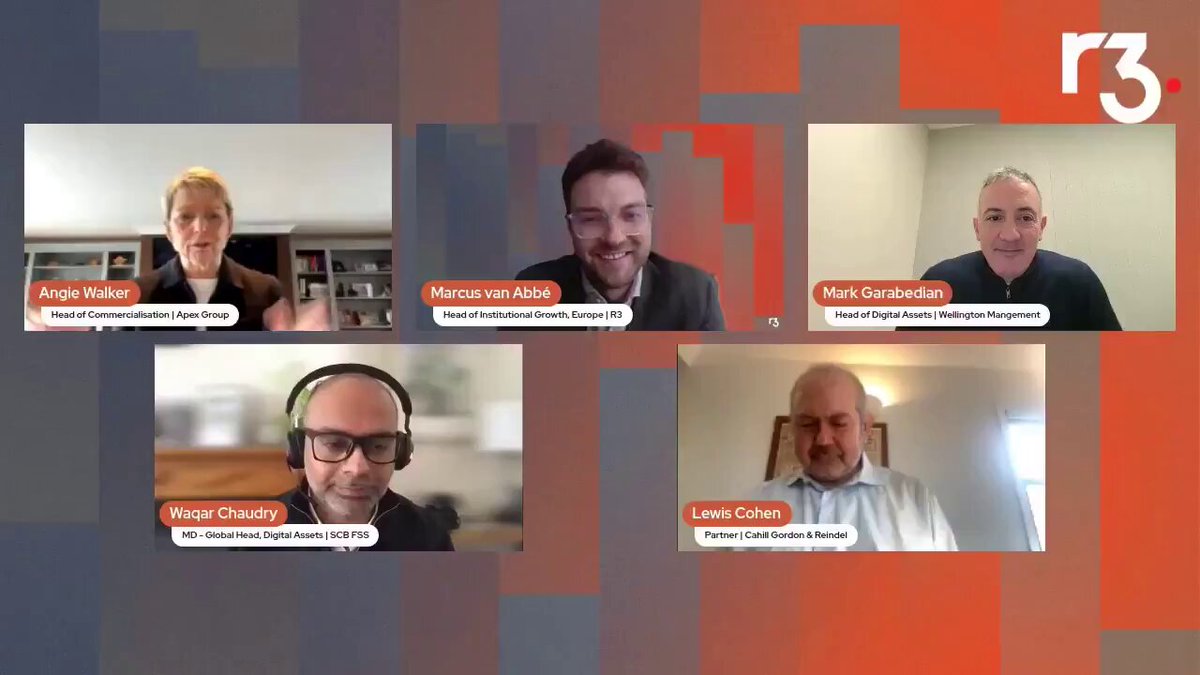
May 26
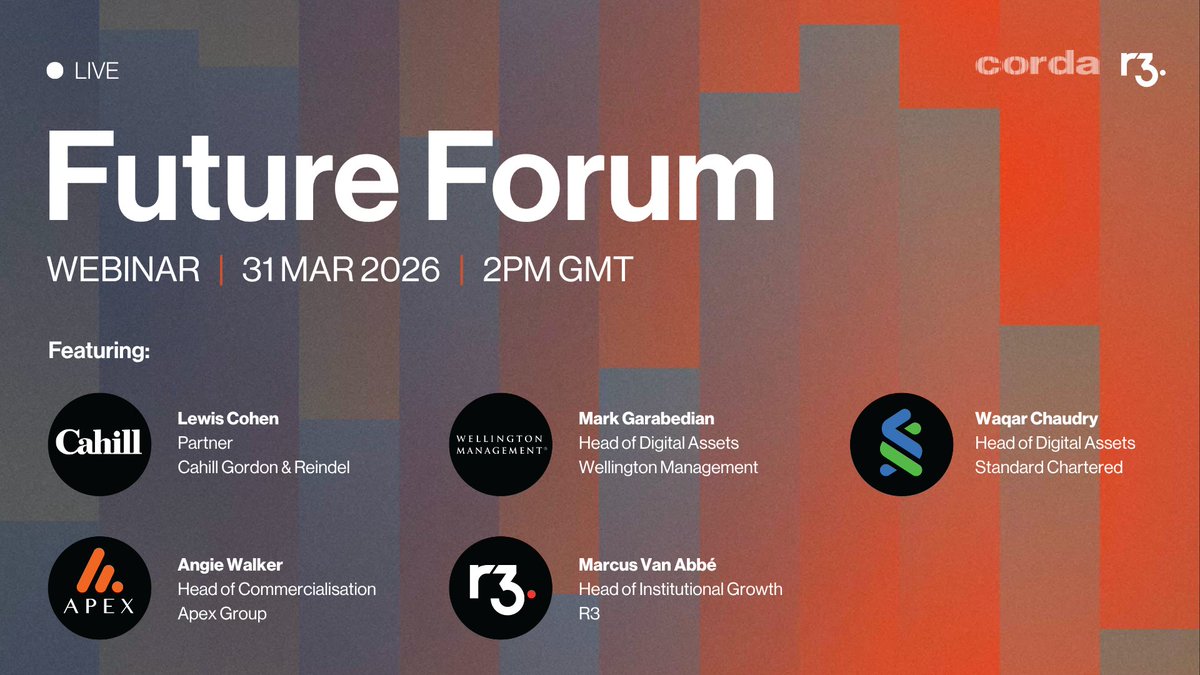
Future Forum | The On-Chain Yield Stack: How Products Are Maturing for Institutional Capital x.com/i/broadcasts/1pKdRRDAm…
6
19
927
R3 retweeted

May 22
We’re heads down at @inside_r3 getting the Corda RWA Protocol ready for launch. I’ve been doing a few podcasts to explain where we’re going, and @arifkazi_ has a nice take below. In my own words:
The needs - and demands - of DeFi allocators are fundamentally different to those of traditional investors: demand for higher yield, bigger risk appetites. The median DeFi allocator does not look like the median TradFi investor.
But it goes further.
Think about the onchain experience you get with non-RWA tokens in DeFi. It’s easy to forget just how nice it is:
* Easy entry and exit of positions
* Commonality of experience - the ERC-20, SPL, etc., standards have no TradFi equivalent
* Services operated by different parties are compatible with each other, everything plugs together nicely (aka ‘composability’)
* Everything’s in one place (your wallet) - no endless logging in and out of different vendors’ clunky websites
* And it’s surprisingly meritocratic: the asset either performs or it doesn’t. A fancy brand name on the token counts for nothing if it’s a dog.
Yes… it’s also still highly imperfect… contract hacks, oracle failures, bad actors under every rock... But anybody who has used it in anger knows how much better the user experience - the overall product - can actually be.
This is why I say tokenisation has to be about more than simply taking an off-the-shelf TradFi asset and distributing it as a token. The target market expects a far superior product experience.
But they do of course also really want higher quality yield. Yield that is backed by actual real-world cash-flows, and which works natively with DeFi.
That’s what my team is building - Wall Street yield, packaged so it works smoothly with DeFi… bending the product to meet the customers’ needs, not the other way round.
May 22

every rwa on solana gets judged against a 6-7% risk free rate. tradfi can't compete with that
richard, ceo of r3, was explaining how tradfi isn't going to tokenize everything & drag capital back to legacy rails.
capital onchain wants to stay onchain.
they're the customer now. so the assets come to them
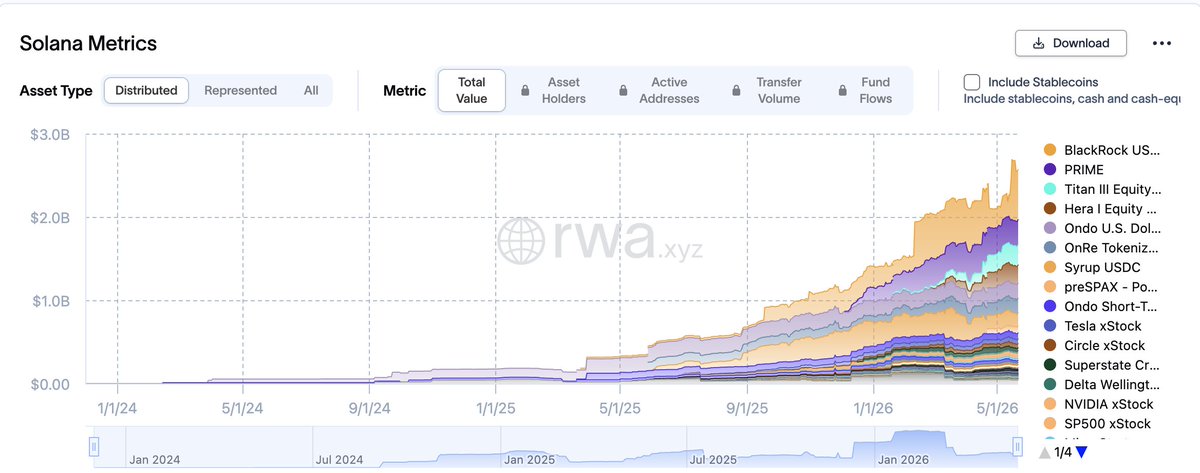
solana just crossed $2.8b in rwa value
still behind eth on total, but holds ~98% of tokenized stock volume
growth rate is the metric that matters. not absolute lead
risk free rate onchain isn't 4% treasuries. it's 6-7% staked sol
so the bar for any rwa on solana is structurally higher than anything tradfi ships
bringing a bond onchain & calling it done won't work. it needs packaging. yield, liquidity, collateral eligibility, lending integration
product problem, not tokenization
solana compounds a second edge: second-gen apps
kamino learned from aave. lending, dex & rwa infra on sol got to look at what broke on eth & leapfrog
the curator layer is where the real game is
doesn't matter who issues the asset. who packages & distributes it
30 options on the shelf is worse than 3 good ones. whoever solves curation on sol owns rwa distribution
the interesting bit he wouldn't say outright:
heritage tradfi brands may be actively repellent to onchain capital
defi-native rwa brands are outperforming brand name managers in actual distribution
customer doesn't want your logo. they want the cashflow in a form their wallet understands
if you're building rwas on sol right now, the stack (issuance, curation, distribution, collateralization, liquidation) is the most underbuilt high-value surface in crypto
every layer is a business
sol isn't winning rwas by being first. solana is winning by being where curators, liquidity & regulatory clarity converge
already happening
4
4
15
2,258
May 21
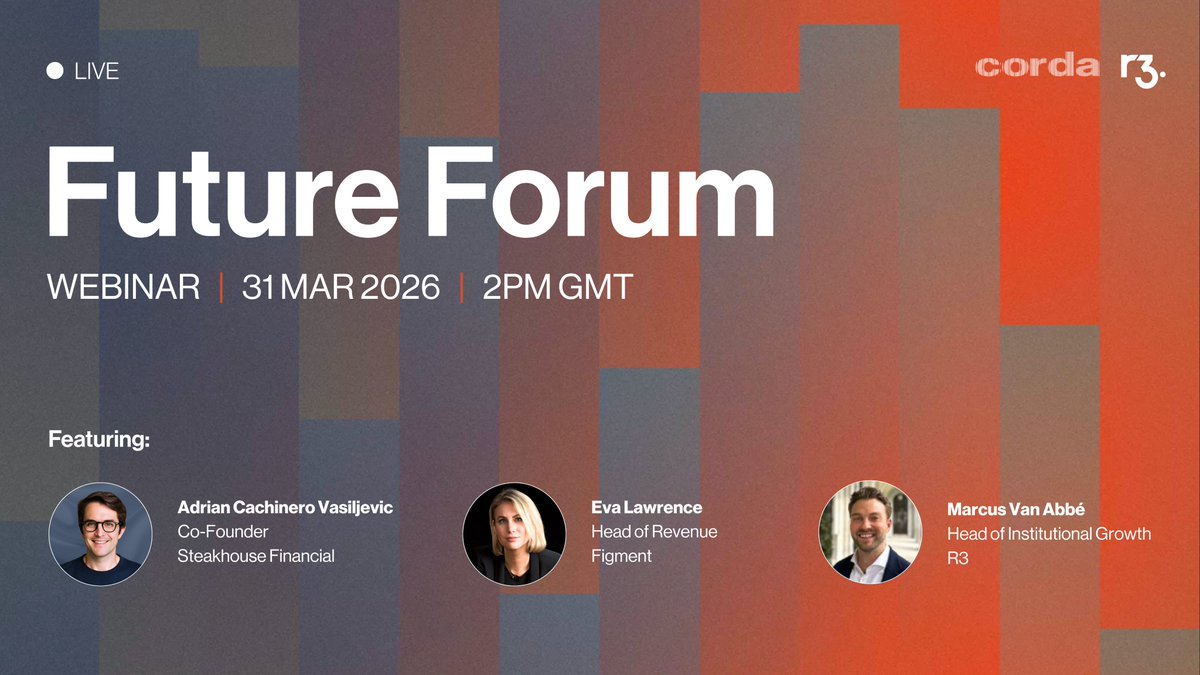
Where is institutional capital going on-chain and what's it being paid for?
Next week on R3's Future Forum...
The On-Chain Yield Stack: How Products Are Maturing for Institutional Capital
Joined by:
- @Figment_io - Eva Lawrence, Head of Revenue
- @SteakhouseFi - Adrian Cachinero, Co-Founder
Staking, restaking, vaults, on-chain credit... What they mean in practice and what it actually takes for institutions to participate.
Register now: streamyard.com/watch/C3bYuHT…
3
8
20
1,713
May 20
Wake up today, asking yourself how is @solana going to win the RWA race?
Why is curated distribution more powerful than choice?
Or how TradFi has to come to on-chain investors?
@gendal sat down with @msjemmagreen for Unblocked @Powerledger_io to dicuss all!
Link Below:
2
5
19
2,203
May 13
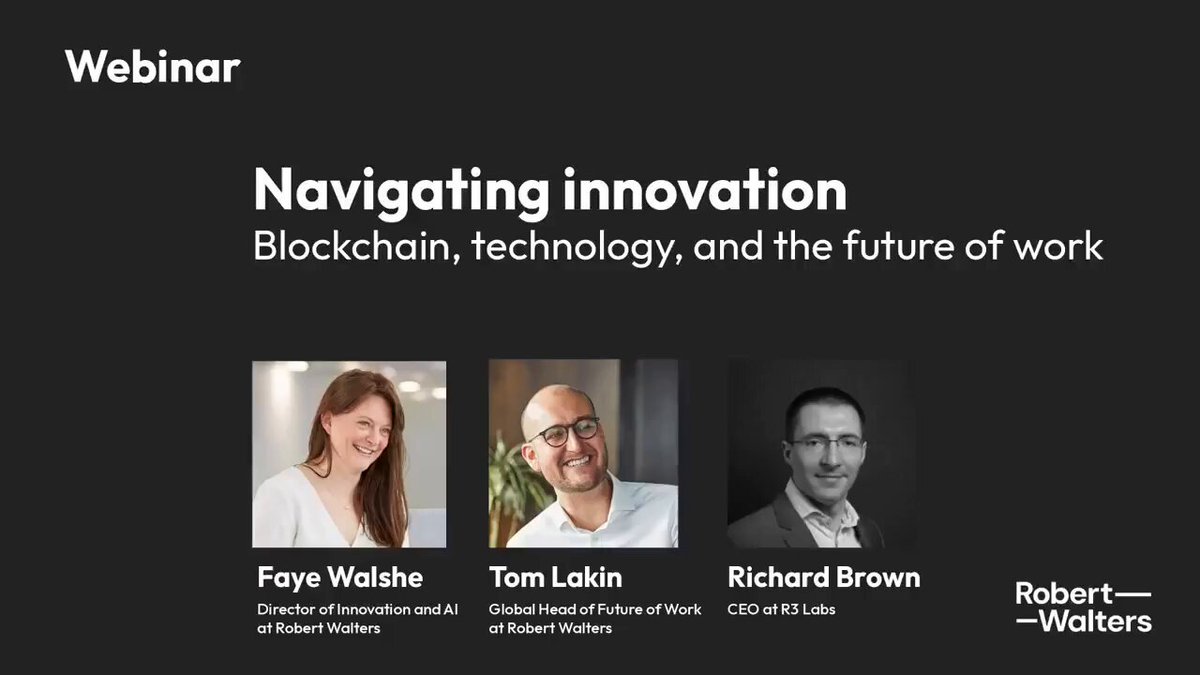
The institutions setting the standard aren't waiting for consensus.
They're building on blockchain, deploying AI and tokenizing assets at scale.
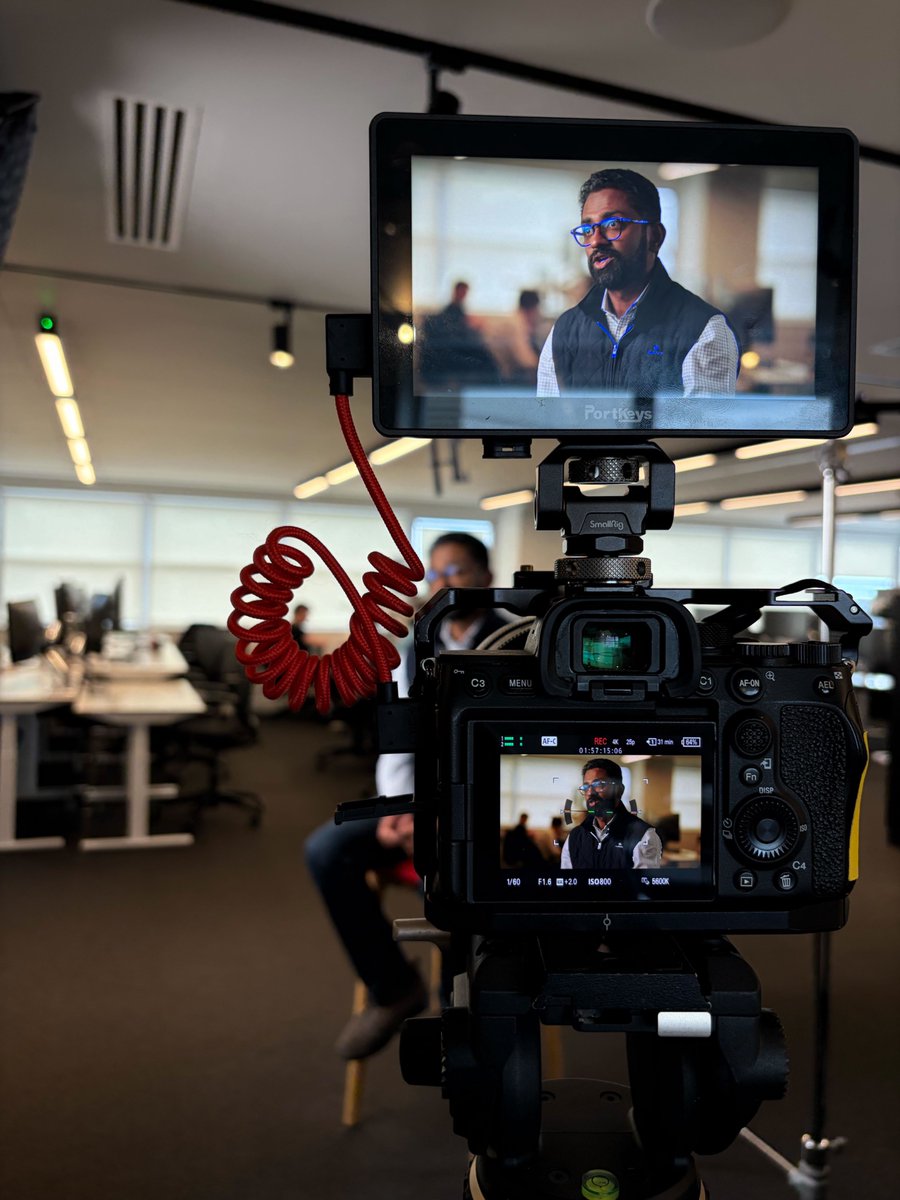
Our CEO @gendal recently joined @RobertWaltersPR’s Tom Lakin and Faye Walshe to unpack how.
Watch here ↓
orlo.uk/syHSo
2
14
1,174
May 11
The $124T generational wealth transfer is ultimately a story about behavioural change.
Capital is moving to investors who expect finance to feel radically different from the systems built before them.
3
21
1,561
May 7
$36B already onchain
The trajectory from here is the story worth watching.
4
2
27
1,324
May 6
Wouldn't want to be anywhere else 🤝
Excited to join the @Solana_SRI alongside the teams building the next generation of finance on @solana.

R3 joins the Solana Research Institute (SRI) as a founding member.
@inside_r3 is the bank-owned software company behind Corda, the private distributed ledger used by SDX (Swiss Stock Exchange) and Spunta (Italian interbank reconciliation).
Its software powers over $10bn of tokenised assets across regulated networks. R3 and Solana's 2025 alliance brought that institutional infrastructure into onchain finance.

3
3
16
2,031
Apr 30
The future of Internet Capital Markets starts here.
R3 is proud to back @Solana_SRI on their comprehensive institutional guide to @Solana
Proud to back this work as a Founding Member.
A Financial Institution's Guide to Solana.
New from the Solana Research Institute. Seven chapters covering protocol, economics, governance, ecosystem, regulation, and live product, written for analysts at FIs being asked to evaluate it.
Some of what's in it 🧵

2
12
27
3,223
Apr 30
In partnership with with the best in the ecosystem — @jito_sol @solflare @helius @Figment_io @Alchemy @triton_one @solsticefi @LayerZero_Core @SolanaCompass @builderio @TVLCap.
Check out the guide here: bit.ly/3OzLIZt
1
5
658