
Joined August 2009
- Tweets 46,575
- Following 641
- Followers 203,470
- Likes 48,259
6,925 Photos and videos



Pinned Tweet

Jun 15
🤝🏽STAY CALM, WE ARE ADC.🤝🏽
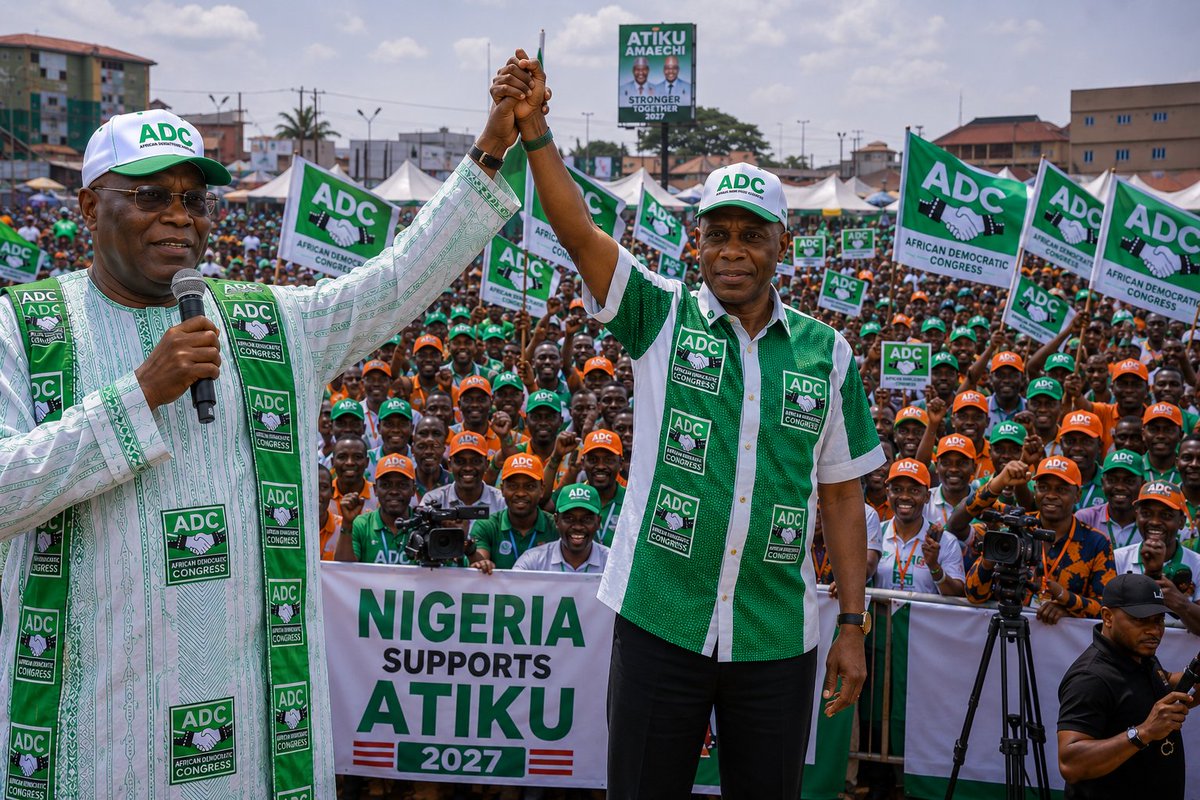
They panicked at the emergence of Atiku Abubakar/R Amaechi joint ticket. They know it's over for them.
The laws and the constitution of the Federal Republic of Nigeria are clear as to why a party should be derigistered.
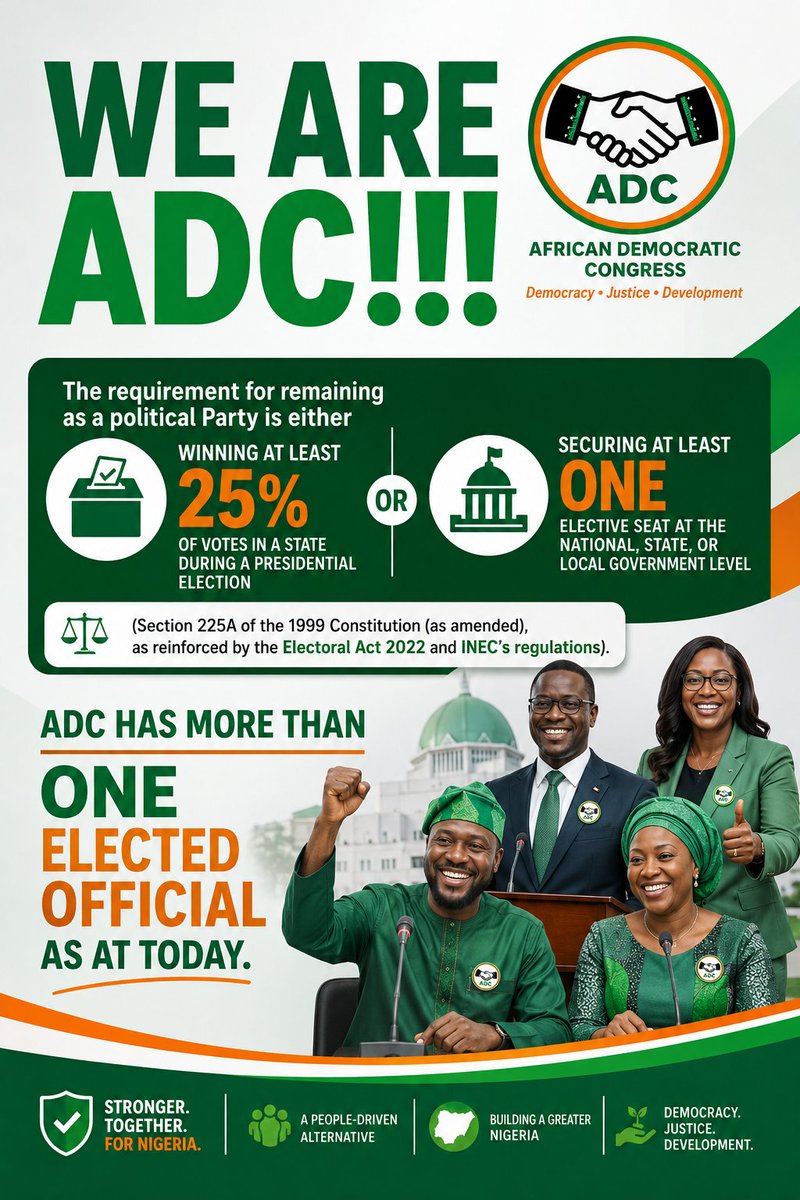
Section 225A of the 1999 Constitution (as amended), as reinforced by the Electoral Act 2022 and INEC’s regulation states that the requirement for remaining as a political party, is either:
1. Winning at least 25 per cent of votes in a state during a presidential election OR
2. Securing at least one elective seat at the national, state, or local government level.
ADC has more than one elected official.
The @NigBarAssoc should begin to de-bar Judges who make rulings that are contrary to the laws of our land, to please their paymasters.
cc. @afamosigwe
We are ADC.
God bless Nigeria
Lauretta Onochie
@Laurestar
@raufaregbesola @atiku @ChibuikeAmaechi @aamalamiSAN @AWTambuwal
71
122
225
10,455
Lauretta Onochie retweeted

Jun 15
The so-called deregistration of the African Democratic Congress (ADC) @ADCNig along with other parties by Justice Peter Lifu may yet be the biggest manifestation of Tinubu’s hell-bent bid to undermine the opposition and entrench a defacto one-party state. The judgment is the height of judicial rascality.
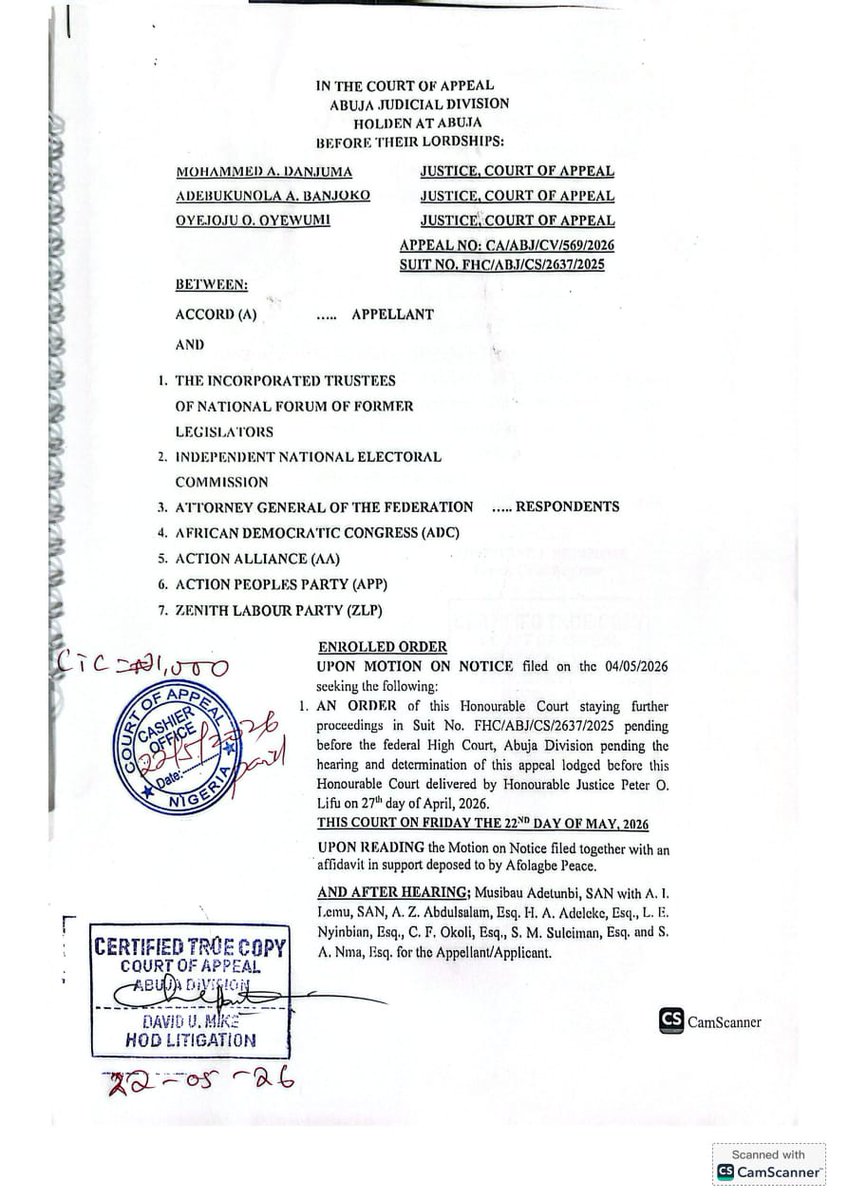
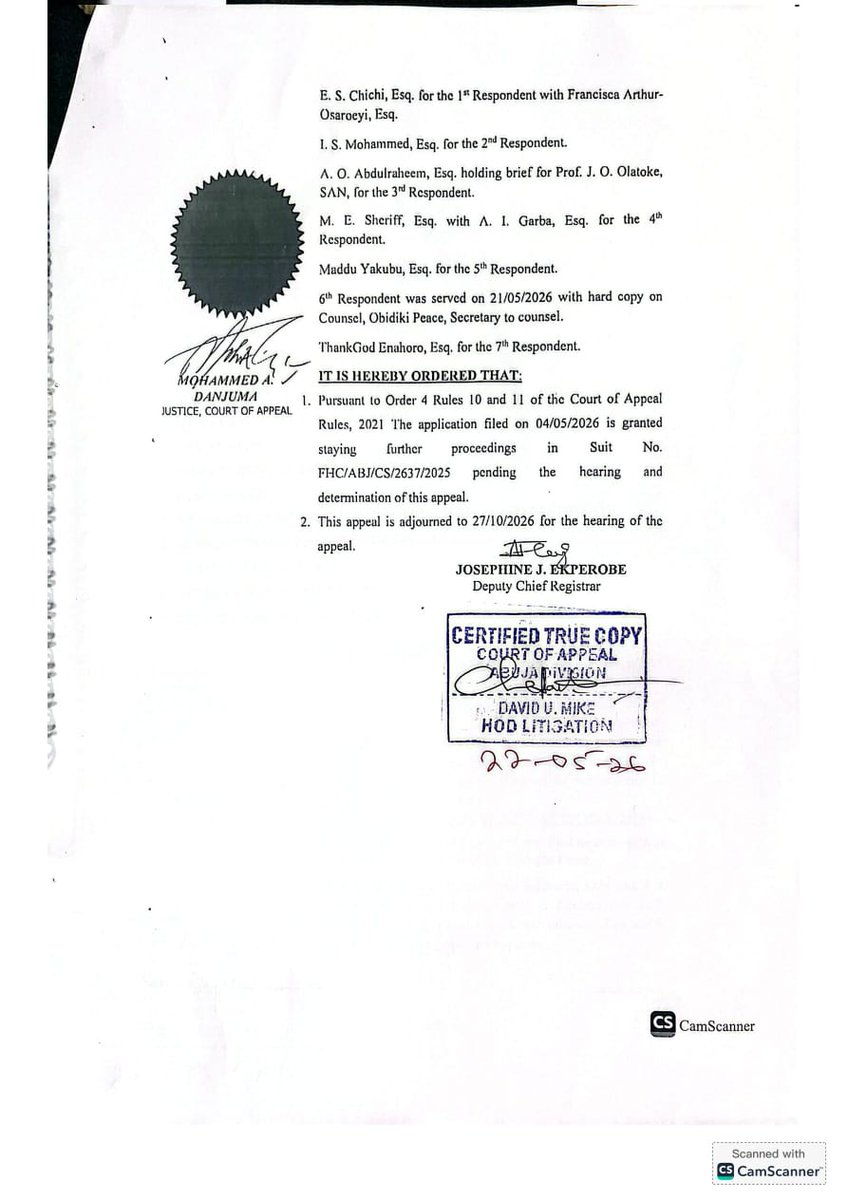
The Court of Appeal presided over by Justices Mohammed A. Danjuma, Adebunkunola A. Banjoko, Oyejoju O. Oyewumi had in Appeal CA/ABJ/CV/569/2026 and suit No. FHC/ABJ/CS/2637/2025 ordered Justice Peter Lifu to stay further action on the matter until the hearing and determination of the Appeal before it. The hearing for the appeal was scheduled for the 27th of October 2026. That order was dated 22nd of May 2026.
Nigerians and the international community can see the level of desperation of government of the ruling party to either have their way in the 2027 elections or destroy our democracy that was purchased at a huge cost.
104
243
369
157,405
Lauretta Onochie retweeted

15h
#DaysCount
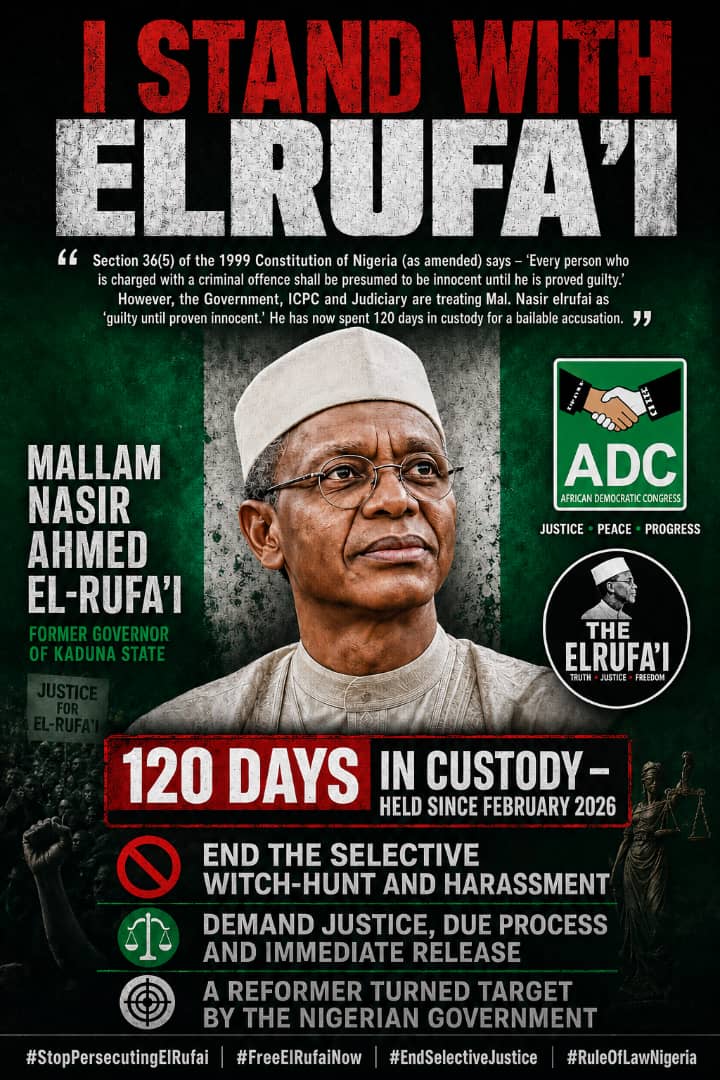
120 DAYS .
120 DAYS ..
120 DAYS ...
120 DAYS ....
And Still Counting ...
#IStandWithElrufai
#NoRetreatNoSurrender
#EyesOnTheBall
#TheElrufaists
#ESG
5
82
91
1,112
Lauretta Onochie retweeted
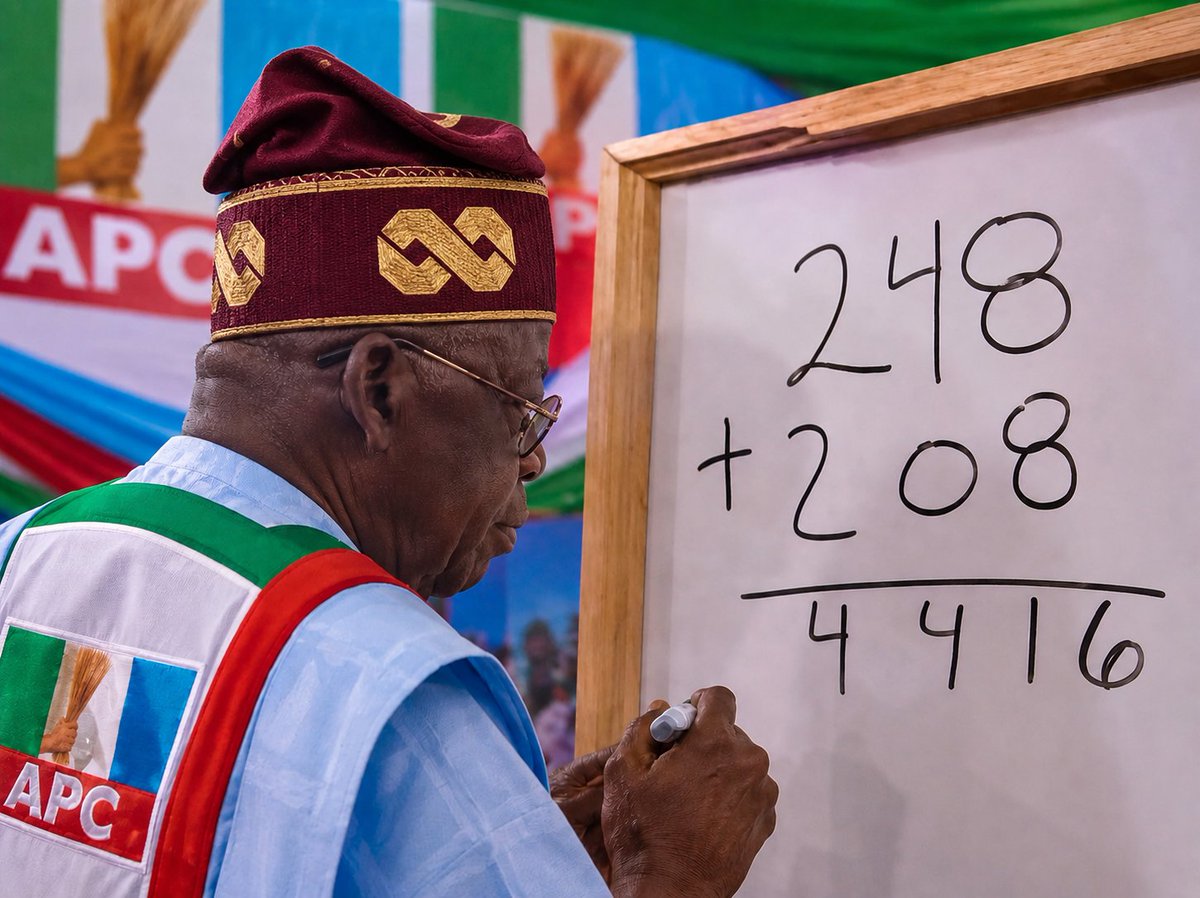
Who will give them the capacity to forge results? They wrote the results for the primary he was the only contestant and the numbers didn't add up. Akiko....
Jun 15

I know you've already probably written the result, but wait first.
11
17
36
3,652
Lauretta Onochie retweeted
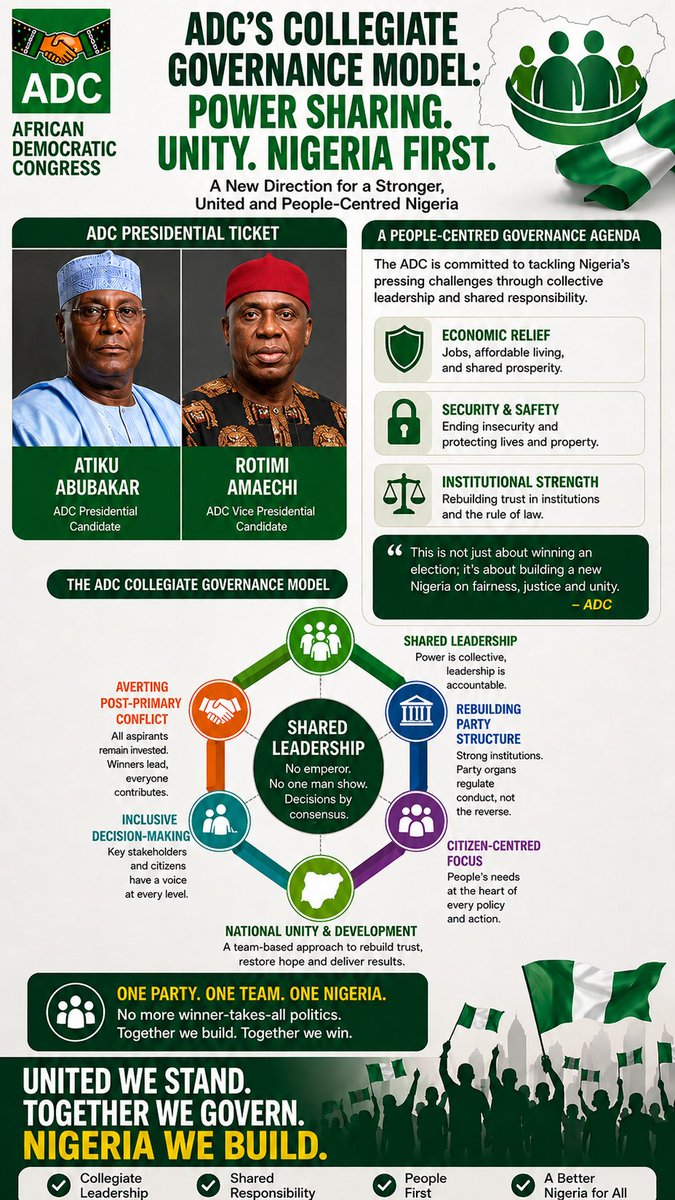
ADC Is Coming.....
We are bringing a vision of government where
✅️Power is shared among competent leaders,
✅️Decisions are made collectively, and
✅️The focus is on solving Nigeria's problems through cooperation rather than individual dominance. #𝑁𝑜𝑂𝑛𝑒𝐿𝑒𝑓𝑡𝐵𝑒ℎ𝑖𝑛𝑑
✅ Teamwork instead of political rivalry.
✅ Consensus instead of one-man rule.
✅ Strong institutions instead of personality-driven politics.
✅ National unity instead of division.
#NoDictatorship
We have the best pair of candidates for the 2027 General Election in @atiku Abubakar and Rt Hon @ChibuikeAmaechi.
#ProvenTrackRecord
One Party. One Team. One Nigeria.
United We Stand.
Together We Govern.
Nigeria We Build.
#OneNigeria
God bless Nigeria.
Lauretta Onochie
@Laurestar.
#AdaAnioma
17
71
120
1,928
Lauretta Onochie retweeted
Jun 15
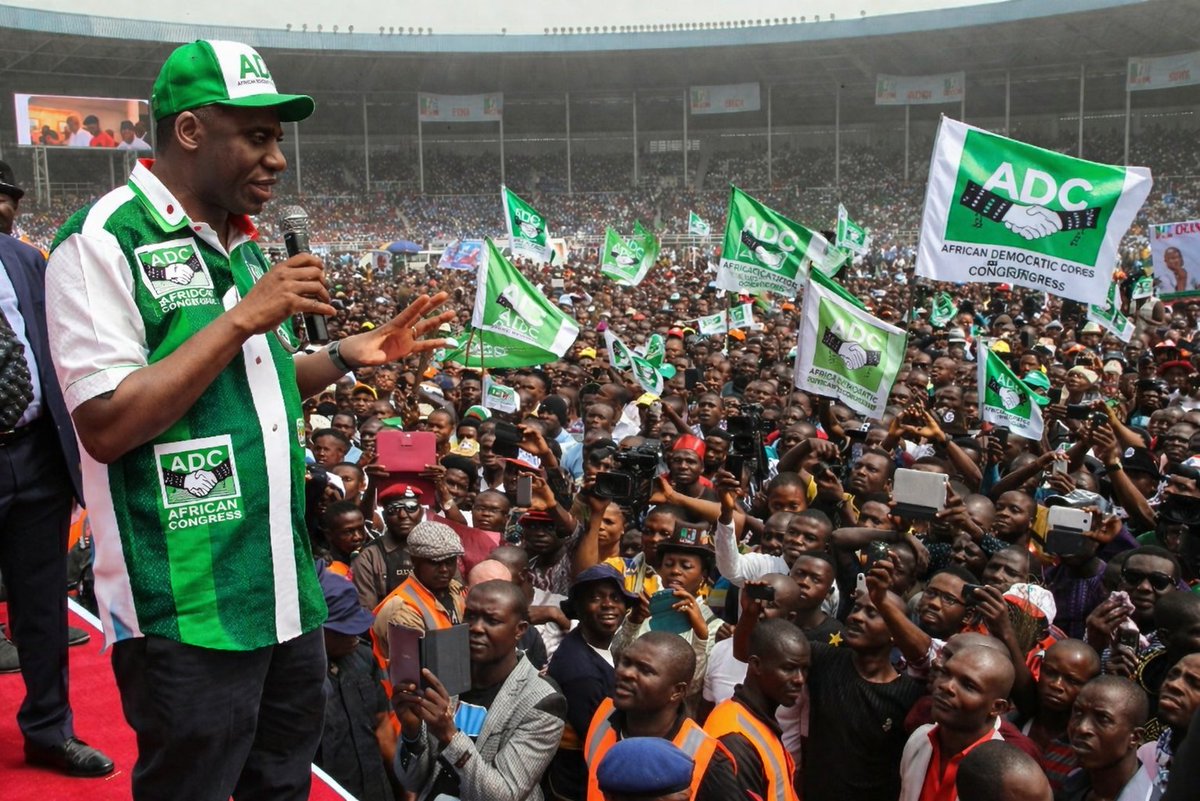
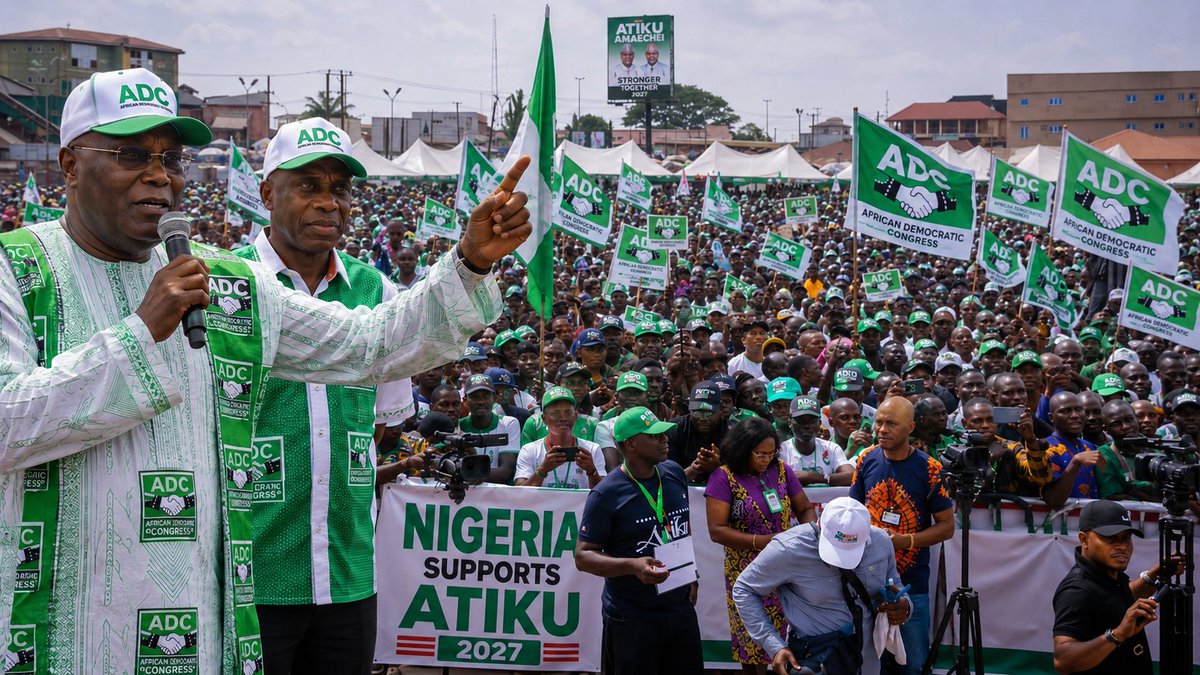
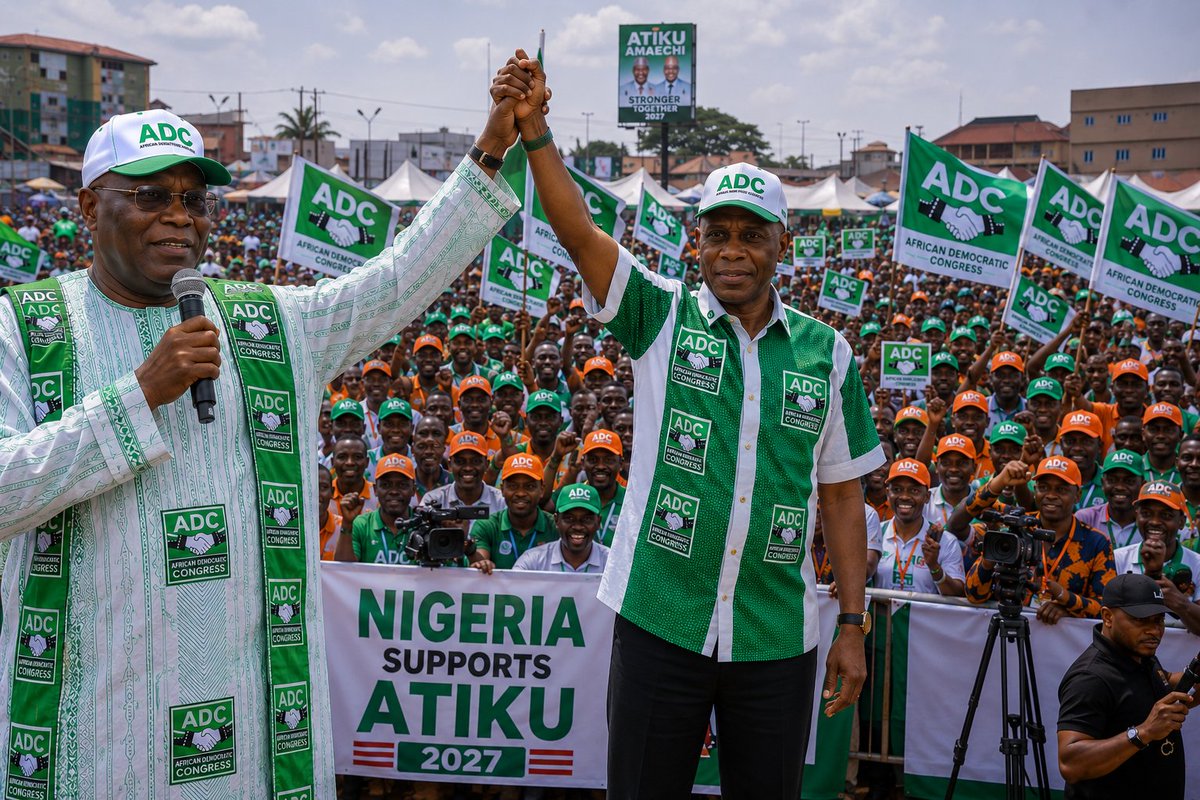
"ADC deregistration bid fails legal requirements – INEC"
punchng.com/adc-deregistrati…
Jun 15

They want to engage you in court cases until the very end
16
45
87
8,433
Lauretta Onochie retweeted
Jun 15
They can only try, but they are just wasting their time.
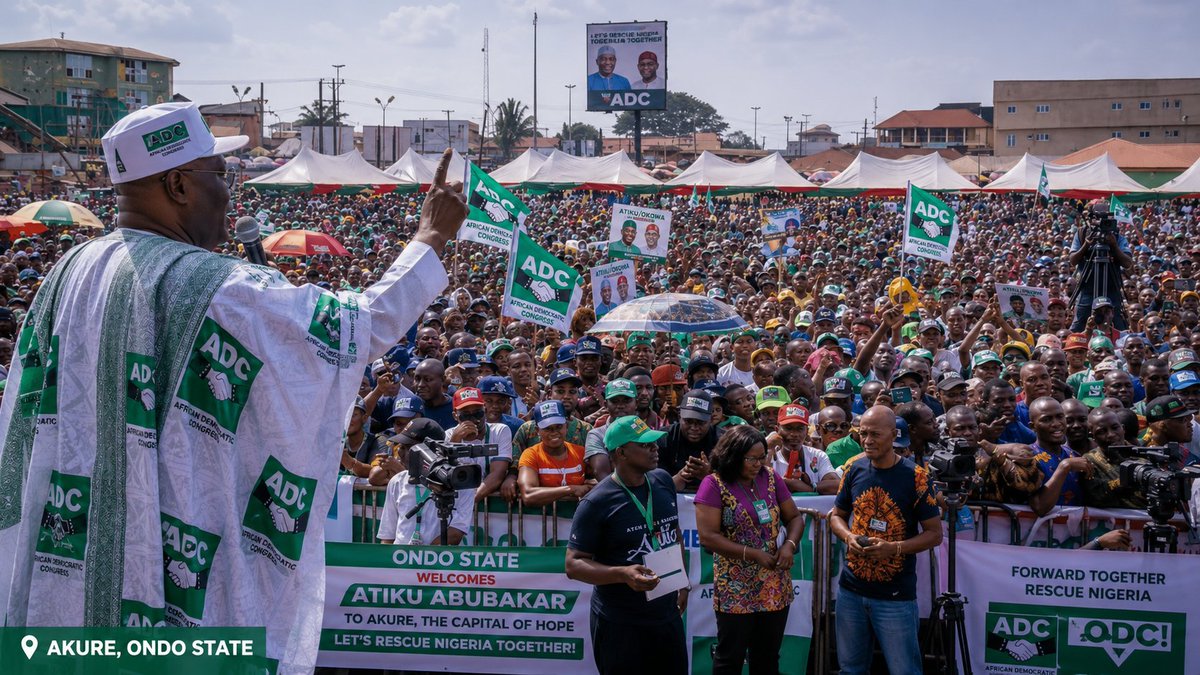
I have said it severally before and I say it again - no Jupiter can stop ADC from being on the ballot in 2027.
I don't have time and energy for fruitless arguments.
#EyesOnTheBall
#TheGuyIsGone
1
6
17
480
Lauretta Onochie retweeted

Jun 15
Fear of ADC is the begining of calamitous Tinubu failure come 27
Jun 15

🤝🏽STAY CALM, WE ARE ADC.🤝🏽
They panicked at the emergence of Atiku Abubakar/R Amaechi joint ticket. They know it's over for them.
The laws and the constitution of the Federal Republic of Nigeria are clear as to why a party should be derigistered.
Section 225A of the 1999 Constitution (as amended), as reinforced by the Electoral Act 2022 and INEC’s regulation states that the requirement for remaining as a political party, is either:
1. Winning at least 25 per cent of votes in a state during a presidential election OR
2. Securing at least one elective seat at the national, state, or local government level.
ADC has more than one elected official.
The @NigBarAssoc should begin to de-bar Judges who make rulings that are contrary to the laws of our land, to please their paymasters.
cc. @afamosigwe
We are ADC.
God bless Nigeria
Lauretta Onochie
@Laurestar
@raufaregbesola @atiku @ChibuikeAmaechi @aamalamiSAN @AWTambuwal
4
4
120
Lauretta Onochie retweeted

Jun 15
Any judge who tries such , we shall go after all of them nationwide . Nigeria must move forward . Nigeria was not created for Tinubu and APC alone . We are all Nigerians and democracy must be allowed as a freedom of choice . Nobody should beg any judge or justice .. they will know that we are not playing or joking
Jun 15
🤝🏽STAY CALM, WE ARE ADC.🤝🏽
They panicked at the emergence of Atiku Abubakar/R Amaechi joint ticket. They know it's over for them.
The laws and the constitution of the Federal Republic of Nigeria are clear as to why a party should be derigistered.
Section 225A of the 1999 Constitution (as amended), as reinforced by the Electoral Act 2022 and INEC’s regulation states that the requirement for remaining as a political party, is either:
1. Winning at least 25 per cent of votes in a state during a presidential election OR
2. Securing at least one elective seat at the national, state, or local government level.
ADC has more than one elected official.
The @NigBarAssoc should begin to de-bar Judges who make rulings that are contrary to the laws of our land, to please their paymasters.
cc. @afamosigwe
We are ADC.
God bless Nigeria
Lauretta Onochie
@Laurestar
@raufaregbesola @atiku @ChibuikeAmaechi @aamalamiSAN @AWTambuwal
1
2
2
141
Lauretta Onochie retweeted

Jun 15
📌📌📌📌📌📌
Chicago mode has been activated
But these rogue judges must be weeded out of our judicial system before they plunge Nigeria into another major political crisis
I said it, NADECO knows he is going home
Jun 15
🤝🏽STAY CALM, WE ARE ADC.🤝🏽
They panicked at the emergence of Atiku Abubakar/R Amaechi joint ticket. They know it's over for them.
The laws and the constitution of the Federal Republic of Nigeria are clear as to why a party should be derigistered.
Section 225A of the 1999 Constitution (as amended), as reinforced by the Electoral Act 2022 and INEC’s regulation states that the requirement for remaining as a political party, is either:
1. Winning at least 25 per cent of votes in a state during a presidential election OR
2. Securing at least one elective seat at the national, state, or local government level.
ADC has more than one elected official.
The @NigBarAssoc should begin to de-bar Judges who make rulings that are contrary to the laws of our land, to please their paymasters.
cc. @afamosigwe
We are ADC.
God bless Nigeria
Lauretta Onochie
@Laurestar
@raufaregbesola @atiku @ChibuikeAmaechi @aamalamiSAN @AWTambuwal
4
19
39
959
Lauretta Onochie retweeted
Jun 15
🤝🏽STAY CALM, WE ARE ADC.🤝🏽
They panicked at the emergence of Atiku Abubakar/R Amaechi joint ticket. They know it's over for them.
The laws and the constitution of the Federal Republic of Nigeria are clear as to why a party should be derigistered.
Section 225A of the 1999 Constitution (as amended), as reinforced by the Electoral Act 2022 and INEC’s regulation states that the requirement for remaining as a political party, is either:
1. Winning at least 25 per cent of votes in a state during a presidential election OR
2. Securing at least one elective seat at the national, state, or local government level.
ADC has more than one elected official.
The @NigBarAssoc should begin to de-bar Judges who make rulings that are contrary to the laws of our land, to please their paymasters.
cc. @afamosigwe
We are ADC.
God bless Nigeria
Lauretta Onochie
@Laurestar
@raufaregbesola @atiku @ChibuikeAmaechi @aamalamiSAN @AWTambuwal
71
122
225
10,455
Lauretta Onochie retweeted
Jun 15
💥It's official.💥
JOY, AS ADC PICKS RT. HON. @ChibuikeAmaechi AS H.E @atiku’S RUNNING MATE.
Let's Go!
79
62
265
9,092
Lauretta Onochie retweeted
Jun 15
ADC Presidential Candidate and incoming President of the Federal Republic of Nigeria, HE. Atiku Abubakar called it a "Racket". I call it "FourOneNine". Same thing.
God save Nigeria from #Racketeers who are running our nation.
@atiku @raufaregbesola @ChibuikeAmaechi @AWTambuwal @aamalamiSAN @BolajiADC @jrnaib2 @dawisu
13
45
94
7,336
Lauretta Onochie retweeted
Jun 15
Those running a criminal empire in Nigeria are determined to wipe the smiles off the faces of Nigerians. But Nigerians are creating laughter by making a mockery of Tinubu and his gang. Join in the #LaughterOnMonday.
May your week be filled with Joy.
10
37
66
2,490
Lauretta Onochie retweeted

Jun 14
For clarity, roads are necessary but must be treated like investments. Roads are the central nervous system of an economy if they are carefully planned. The main reason why people move from one place to another is to perform economic activities directly or indirectly. Roads are time decay networks because time is money. Are Nigerian roads tied to the idea of creating the shortest path to meeting economic needs that are urgent? How is urgency determined? Which should come first, the roads or economic activities?
A road linking existing economic activities that are already generating income is a worthy investment. The road is time decay network that catalyses growth that is already visible and measurable. Spending 100B to build roads that could generate 100B returns within the road lifetime without requiring additional repairs is what Nigeria needs.
Conversely, building roads on speculative assumptions that they will "open up" growth opportunities in places where very little economic activities are happening is a gamble. The data to justify that speculation is always missing. People put roads to their hometowns, businesses, residential areas, and state capitals to beautify them. The ROI is almost zero in quantifiable terms. This has been the bane of Nigerian roads construction. It is a wasteful venture that needs constant maintenance to justify another wasteful capital allocation. A vicious cycle.
If Nigerian roads are truly useful, where is the data to prove that? Why are places with beautiful roads not economic growth points? Where is the revenue, jobs, associated infrastructure, and growth data that are exclusively attributable to our aggregate spending on roads across the country?
Until road construction is data driven. Until they have clear and measurable ROI before maintenance. Until roads are accurately built without inflating the actual construction costs, they will continue to be useless investments. Roads are the most dangerous money pits that politicians have identified in Nigeria while cars are increasingly becoming unaffordable. This is the Nigerian development paradox.
2
8
20
646