
Wife, mother, homeschool teacher. I love my land, I know what I know, and nothing more. An ever evolving version of self. TV show- Overlooked Critical Matters
Joined November 2024
- Tweets 7,822
- Following 1,032
- Followers 2,029
- Likes 9,257
1,216 Photos and videos













Nancy4Thinking 🤔🧠 retweeted

Jun 12
May God grant just laws to this nation again.
1
8
74
Nancy4Thinking 🤔🧠 retweeted

Jun 12
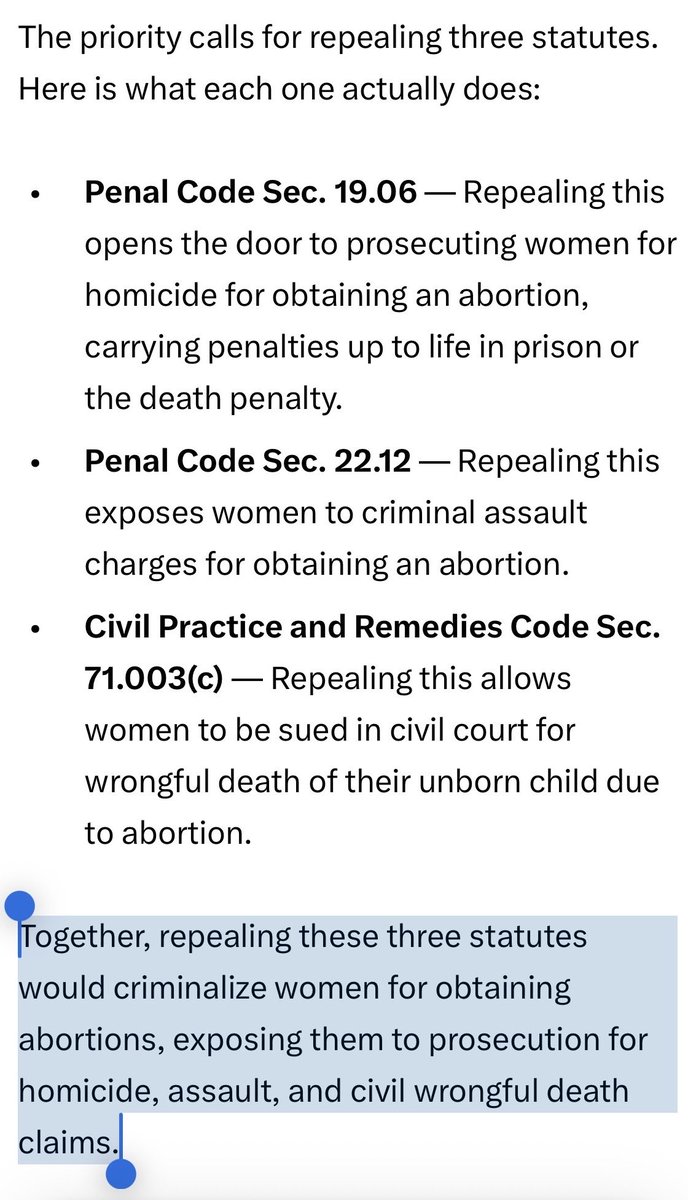
🚨 BREAKING: Pro-Life establishment group @TXAlliance4Life wants Republican Party of Texas delegates to keep abortion LEGAL for women in our state.
The current “Protect Life” legislative priority rightly asks lawmakers to remove three loopholes in Texas law ensuring that women can NEVER be prosecuted for willfully murdering their own preborn babies.
But @TXAlliance4Life wants delegates to GUT the legislative priority of this key effort to save preborn image-bearers of God from abortion.
If we want to actually abolish in Texas, we have to CLOSE these loopholes, which are allowing 30,000 preborn babies to be murdered with abortion pills every year in our state.
The efforts of @TXAlliance4Life to WEAKEN our Platform were already REJECTED unanimously in Committee.
If you are a delegate, please vote in FAVOR of keeping the “Protect Life” legislative priority intact and AGAINST any attempt to weaken the language.
2
7
39
3,365

Jun 10
Safeguard State Infrastructure‼️
This is the one we must push hard.
If you’re concerned about Texas’ electric grid reliability, water security, the massive data center buildout, or any other critical infrastructure vulnerabilities, then as a delegate you need to support “Safeguard State Infrastructure” with everything you’ve got. This isn’t just another priority; it’s the one that protects our power, our water, our economy, and our future. The conversations happening right now in Texas make this the exact right time to lock it in.
I’m already all-in. Tuesday I was up at 5 after just 4 hours of sleep, at the convention center by 7:30 a.m., and didn’t leave until 11:30 p.m. Back at the house by midnight, up again at 5 a.m., and right back at it by 7:30 this morning. We’re almost halfway through the week and there’s still a mountain of work left.
I can’t carry this alone.
I need you and every delegate who cares about a strong, resilient Texas to step up right now. Talk to your delegation. Rally your friends on the floor. Make the case.
We have to get Safeguard State Infrastructure into the Top 8 priorities so we can take it straight into the 90th Legislative Session in 2027 and turn it into real protections.
This is winnable, but only if we move together with urgency.
Secure the Texas Grid 🔒⚡️🫡💪
1
1
1
33
A few weeks back I mentioned in the game two truths and a lie that I had not published a book... yet!
The Ebook is now available for pre-order. The Ebook will go live on June 27th and the paperback will be available JULY 4TH!
I personally like to hold my books when I read them. If you are also like me and like to have signed versions, let me know! I will be getting some to sign for those interested. We can figure out those details later!
I am really excited for this book. I was adamant that I wanted it released JULY 4th for the 250th anniversary of America. I love this country and there is much work to be done!
Would love your feedback if you do take the time to read along. I have always wanted to write a book. This was a dream come true for me and I sincerely hope you all enjoy the journey as well!
Nancy's Letter of Joy:: How one person can make a difference! a.co/d/07KsF63c
1
1
42
Nancy4Thinking 🤔🧠 retweeted

@trentloos fyi

Well this was an interesting read:
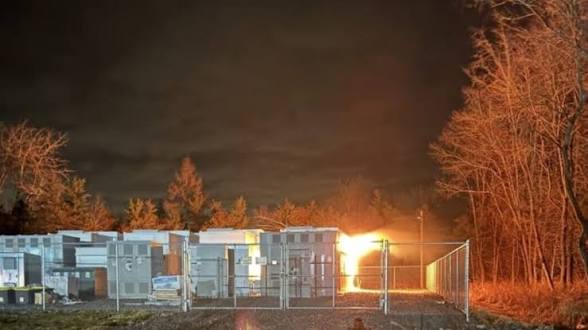
Federal lawsuit from a Water company in New York against a battery energy storage company over contamination after a fire. For over a year I have expressed this very concern. Concern that if the battery storage units near water sources caught fire, the potential contamination to a critical resource such as water. In van zandt county we have at least 3 major water resources that would be impacted if this were to occur.
1. Carrizo Wilcox
2. Lake Tawakini
3. Cedar Creek Lake
All of which are used for drinking water and would impact MILLIONS at a catastrophic scale. This is EXACTLY what I've been saying and this is just the first FEDERAL case to come forward. We are rushing industrial scale projects without knowing what the potential longterm implications will be. Once water is gone, we cannot create more. Citizen safety and welfare are prudent and must be taken seriously. Confirmed contamination in Missouri, California, and New York. Will Texas be next?
Case 2:26-cv-03246-ARL
Document 1 Filed 05/29/26
Page 1 of 29 Page
SUFFOLK COUNTY WATER
AUTHORITY,
Plaintiff,
-against-
EAST HAMPTON ENERGY STORAGE
CENTER, LLC; LG CHEM, LTD.; and LG
ENERGY SOLUTION, LTD.,
Defendants.
Plaintiff Suffolk County Water Authority (“the Authority,” or “Plaintiff”) is a
public drinking water provider serving approximately 1.2 million residents and businesses in Suffolk County, New York. The Authority brings this action to recover the substantial costs
necessary to protect the public and restore its damaged drinking water supply wells, which are
contaminated with the chemical perfluoropropionic acid (“PFPrA”), among potentially other chemicals, which were released during a fire at the East Hampton Energy Storage Center
(“EHESC”).
2. EHESC is a lithium-ion battery energy storage system (“BESS”) that provides
energy supply to the Long Island Power Authority (“LIPA”). On May 31, 2023, a thermal runaway
event in battery cells at EHESC caused a fire (the “EHESC Fire”). During the EHESC Fire, battery
casings opened and released their contents. Large amounts of water applied to fight the EHESC
Fire ran off of the facility and onto the dirt road and undeveloped area south of EHESC, conveying
chemicals from the batteries (“EHESC Contaminants”) along with it. The contaminated fire suppression water percolated into the ground and transported EHESC Contaminants to the
groundwater, through which EHESC Contaminants migrated to wells in the Authority’s
Bridgehampton Road wellfield (“Bridgehampton”).
3. The Authority has detected EHESC Contaminants in its Bridgehampton wells,
including PFPrA, an ultrashort-chain per- and polyfluorinated alkyl substance (“PFAS”), at levels
that exceed the 50 parts per billion (“ppb”) New York State maximum contaminant level (“MCL”)
for unspecified organic contaminants (“UOC MCL”). 1 An MCL is the maximum level of a contaminant allowed in public drinking water which, once established, creates a standard that
requires water systems to monitor contaminant levels, keep contaminant levels below the MCL,
and report exceedances to customers.
4. The EHESC Contaminants include ultrashort-chain PFAS, which are known
components of lithium-ion battery cells and/or environmental breakdown products of such
components. “Ultrashort-chain PFAS” refers to PFAS molecules with two or three carbon atoms.
There is a growing body of evidence of the toxicity of ultrashort-chain PFAS, including those
detected in the Bridgehampton wells.
5. Additional EHESC Contaminants may have already or will soon arrive at the
Bridgehampton wells. The Authority’s sampling, monitoring, and testing for EHESC Fire impacts
is ongoing.
6. To prevent exposing its customers to elevated levels of EHESC Contaminants, and
in response to the exceedances of the UOC MCL, the Authority has removed two Bridgehampton
wells from service and restricted its use of the two other Bridgehampton wells.
1
2
111
Nancy4Thinking 🤔🧠 retweeted

Jun 2
The question is not "if"...it's when, and how bad.
1
1
36
Well this was an interesting read:
Federal lawsuit from a Water company in New York against a battery energy storage company over contamination after a fire. For over a year I have expressed this very concern. Concern that if the battery storage units near water sources caught fire, the potential contamination to a critical resource such as water. In van zandt county we have at least 3 major water resources that would be impacted if this were to occur.
1. Carrizo Wilcox
2. Lake Tawakini
3. Cedar Creek Lake
All of which are used for drinking water and would impact MILLIONS at a catastrophic scale. This is EXACTLY what I've been saying and this is just the first FEDERAL case to come forward. We are rushing industrial scale projects without knowing what the potential longterm implications will be. Once water is gone, we cannot create more. Citizen safety and welfare are prudent and must be taken seriously. Confirmed contamination in Missouri, California, and New York. Will Texas be next?
Case 2:26-cv-03246-ARL
Document 1 Filed 05/29/26
Page 1 of 29 Page
SUFFOLK COUNTY WATER
AUTHORITY,
Plaintiff,
-against-
EAST HAMPTON ENERGY STORAGE
CENTER, LLC; LG CHEM, LTD.; and LG
ENERGY SOLUTION, LTD.,
Defendants.
Plaintiff Suffolk County Water Authority (“the Authority,” or “Plaintiff”) is a
public drinking water provider serving approximately 1.2 million residents and businesses in Suffolk County, New York. The Authority brings this action to recover the substantial costs
necessary to protect the public and restore its damaged drinking water supply wells, which are
contaminated with the chemical perfluoropropionic acid (“PFPrA”), among potentially other chemicals, which were released during a fire at the East Hampton Energy Storage Center
(“EHESC”).
2. EHESC is a lithium-ion battery energy storage system (“BESS”) that provides
energy supply to the Long Island Power Authority (“LIPA”). On May 31, 2023, a thermal runaway
event in battery cells at EHESC caused a fire (the “EHESC Fire”). During the EHESC Fire, battery
casings opened and released their contents. Large amounts of water applied to fight the EHESC
Fire ran off of the facility and onto the dirt road and undeveloped area south of EHESC, conveying
chemicals from the batteries (“EHESC Contaminants”) along with it. The contaminated fire suppression water percolated into the ground and transported EHESC Contaminants to the
groundwater, through which EHESC Contaminants migrated to wells in the Authority’s
Bridgehampton Road wellfield (“Bridgehampton”).
3. The Authority has detected EHESC Contaminants in its Bridgehampton wells,
including PFPrA, an ultrashort-chain per- and polyfluorinated alkyl substance (“PFAS”), at levels
that exceed the 50 parts per billion (“ppb”) New York State maximum contaminant level (“MCL”)
for unspecified organic contaminants (“UOC MCL”). 1 An MCL is the maximum level of a contaminant allowed in public drinking water which, once established, creates a standard that
requires water systems to monitor contaminant levels, keep contaminant levels below the MCL,
and report exceedances to customers.
4. The EHESC Contaminants include ultrashort-chain PFAS, which are known
components of lithium-ion battery cells and/or environmental breakdown products of such
components. “Ultrashort-chain PFAS” refers to PFAS molecules with two or three carbon atoms.
There is a growing body of evidence of the toxicity of ultrashort-chain PFAS, including those
detected in the Bridgehampton wells.
5. Additional EHESC Contaminants may have already or will soon arrive at the
Bridgehampton wells. The Authority’s sampling, monitoring, and testing for EHESC Fire impacts
is ongoing.
6. To prevent exposing its customers to elevated levels of EHESC Contaminants, and
in response to the exceedances of the UOC MCL, the Authority has removed two Bridgehampton
wells from service and restricted its use of the two other Bridgehampton wells.
1
6
9
425

Nancy4Thinking 🤔🧠 retweeted

I will definitely be stopping by.
1
1
2
43
If you are going to the State Convention in Houston next week, come by our booth and talk to us. Our booth number is 325 from June 11th-13th. Learn the facts about our infrastructure and above all of them, SECURING THE GRID!
This is a matter of Urgency and we NEED to fix the issues in our grid before it is too late.
Secure the Texas Grid 🔒⚡️
youtu.be/T6ZdiTjgppc?si=LqPJ…
4
6
14
505
Nancy4Thinking 🤔🧠 retweeted

May 30
Sorry I had to jump off the ending of the X space hosted by @_TheYoungBlood @BrocaSpeaks
@Nancy4Thinking
My youngest kiddo urgently needed me, but I want to remind everyone the fight against hyperscale data centers has no political party affiliation. This is about human and environmental health issues, with another angle in Constitutional protections.
💛🇺🇸
1
3
17
639
Nancy4Thinking 🤔🧠 retweeted

May 29
1
1
64
Nancy4Thinking 🤔🧠 retweeted
May 29
1
1
1
43

I appreciate the work you are doing, please keep it coming. The reality is that we the people will not standup to calling out their corrupt policies. If it doesn’t affect your job, home, family, friends or your wallet. You continue to be complacent with their corruption. It’s the out of sight out of mind type scenario. This will affect your children and your grandchildren in the future. Get involved in your local community, city councils, school boards now! . I’m going to fight like Hell! 🔥🔥🔥
2
3
74
Nancy4Thinking 🤔🧠 retweeted

May 29
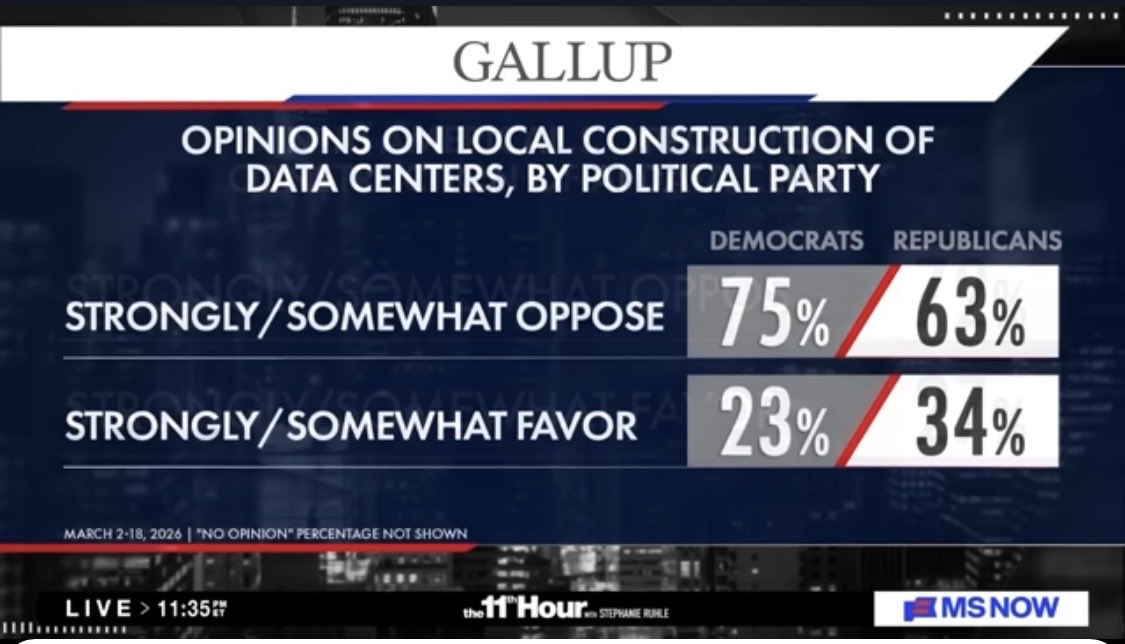
Texans please research the utility and implications of AI Data Centers, especially leading up to the Republican State Convention. Don’t be gaslit by talking heads blurting statements such as, “China’s kicking our butts in space!” Our children and next generations depend on you at the local level, long-range. Texas should be leading —for the goodness of every man, woman and child.
(See VA, NJ, PA)
May 29
Industrial growth is proving that our government has become tyrannical.
5
12
321
Nancy4Thinking 🤔🧠 retweeted

May 29
And it's NOT right that they are NOT being upfront with the people who live in these cities. There should be a Town Hall where we can voice our concerns and ask questions. I'm tired of getting the boot with the backdoor.
They are going to keep on and keep on and keep on abusing the citizens of this country and state, to the point it will not be pretty, and they will have nobody to blame but themselves.
2
1
115
May 29
🤦♀️🤦♀️🤦♀️🤦♀️👋
I am sure there will be nothing bad that comes from a CCP military company simulating disasters for "testing" with toxic and unmitgateable lithium fires.
I am officially done with this week!
CATL opens $440m battery storage test site that simulates severe conditions
asia.nikkei.com/business/com… via @NikkeiAsia
1
2
49
Nancy4Thinking 🤔🧠 retweeted
May 29
Thank you for continuing to address the implications.
2
2
160
May 29

This is an important primer on what I call, “Government outrunning its headlights” looks like.
Well done Nancy!
You don’t lack for perseverance I’d say!
🫡
1
1
43