
Nerd, computer scientist (noahsd.com), Cornell CS prof. I spend a lot of time thinking about lattices and sometimes other things.
Joined February 2009
- Tweets 8,620
- Following 1,871
- Followers 3,171
- Likes 12,821
Photos and videos
I wrote up a little blog post proposing a slightly different way to write asymptotic notation. solipsistslog.com/a-simple-a… In short, I think asymptotic notation should often be written with an INequality. E.g., f(n) <= O(n^2), f(n) < o(log n), f(n) > 2^{-o(n)}, f(n) >= n^{-O(1)}.
1
4
281
And, using these conventions means that authors must think a bit about what they actually mean when they use asymptotic notation, which is a good thing.
1
148
I know that this is not an original idea. It seems that many authors use this notation already, at least in some contexts. I have not seen anyone advocate for its widespread adoption, so I thought I would.
1
141
Noah Stephens-Davidowitz retweeted

6 Feb 2025
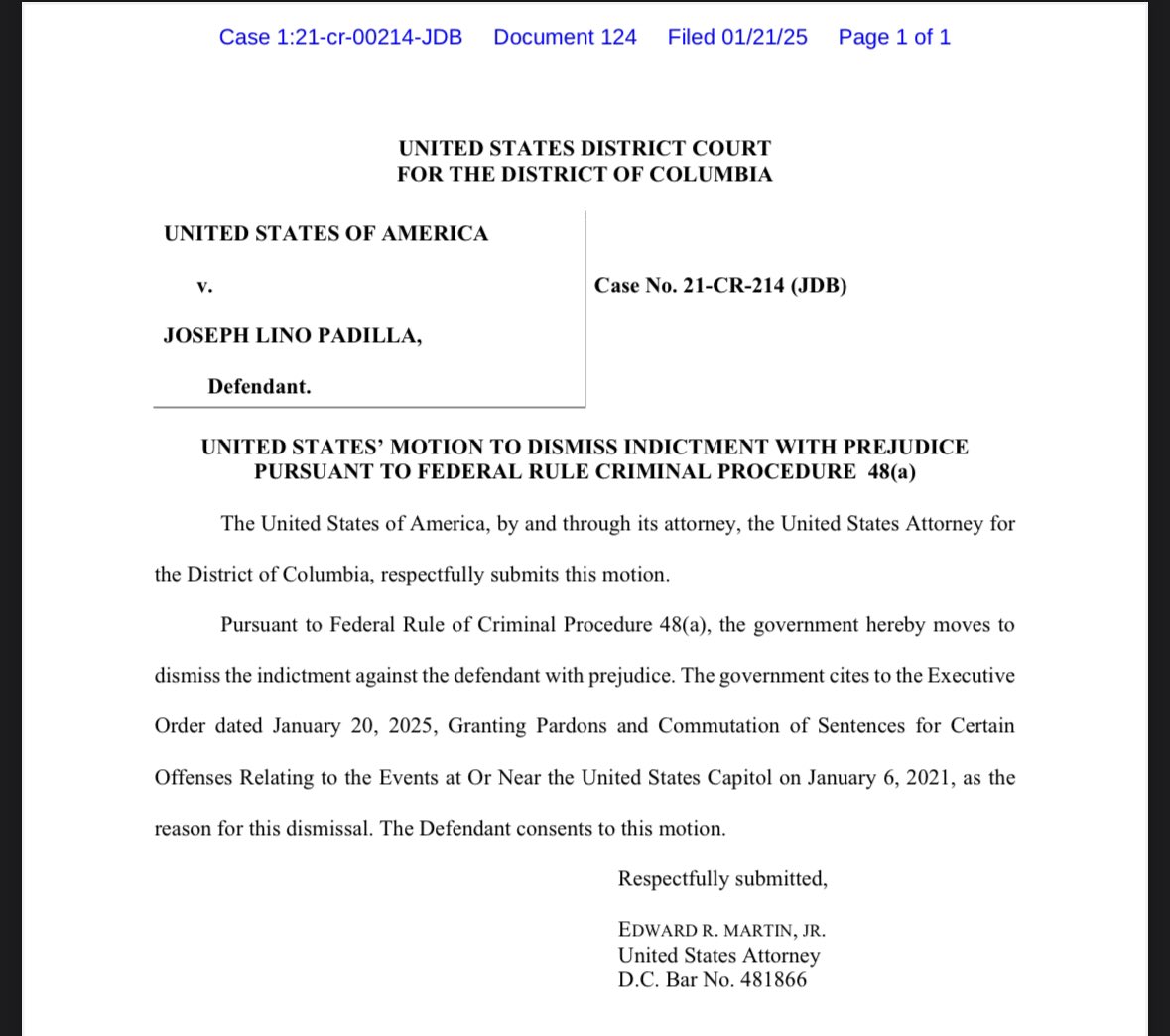
Left: Interim U.S. Attorney Ed Martin dismisses Jan. 6 case of Jose Padilla on Jan. 21, 2025
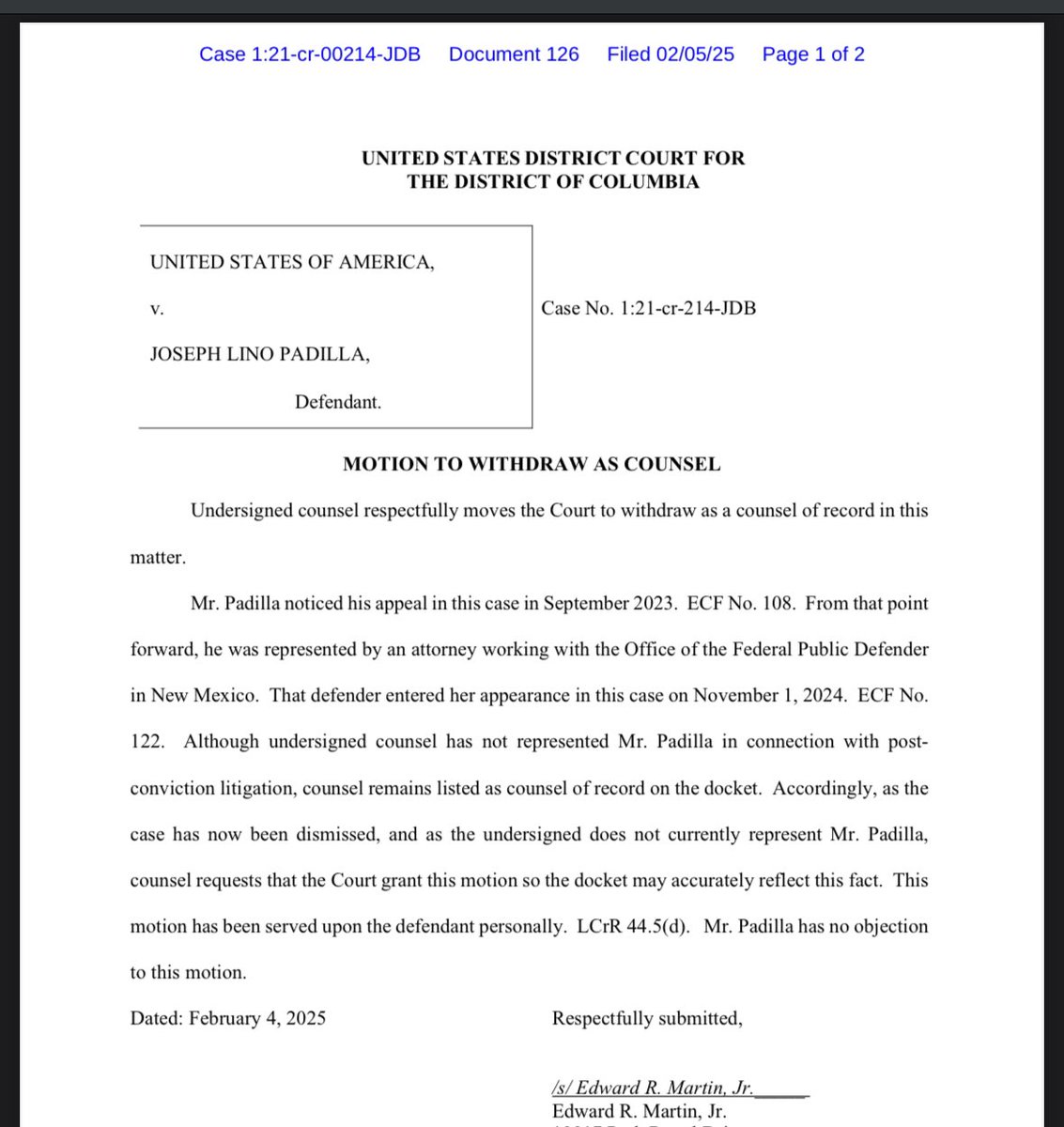
Right: Interim US Attorney Ed Martin seeks to withdraw as Padilla’s counsel of record on Feb. 5, 2025
He signed a dismissal for a client he was still recorded as representing.
96
628
1,393
146,412

24 Jan 2022
Dumb question that's bugging me: What's a really nice clean proof that 2^n grows faster than any polynomial?
(Clean is obviously ill-defined here, but I mean short, intuitive, and using as little fancy math as possible.)
25
1
48
15 Nov 2024
Almost three years later, I found a proof that I really like and wrote it up formally: noahsd.com/exponential_is_su… .
11
461
Noah Stephens-Davidowitz retweeted

14 May 2024
A look back at The Future of Publishing: A festival in New York City. @SethS_D discusses writing a book in 30 days with the help of AI.
1
8
20
4,345
Noah Stephens-Davidowitz retweeted

24 Jan 2024
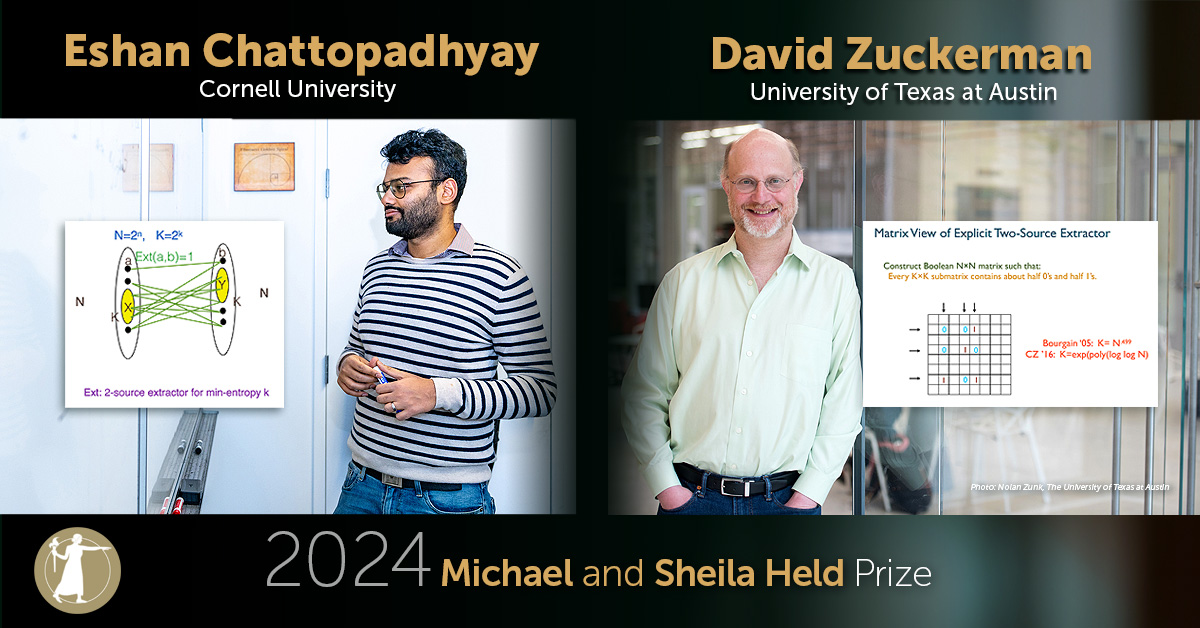
Congratulations to @Eshan_chattopad and David Zuckerman on winning the Held Prize! For their groundbreaking work on randomness extraction.
22 Jan 2024

Eshan Chattopadhyay of @Cornell and David Zuckerman of @UTAustin are the recipients of the 2024 Michael and Sheila Held Prize for their novel work on randomized algorithms, which you can learn more about here: bit.ly/held-prize-2024 #NASaward #ComputerScience
4
41
10,111
Noah Stephens-Davidowitz retweeted

8 Jan 2024
Day 1 of professing at CU Boulder.

2
3
100
8,848
Noah Stephens-Davidowitz retweeted

18 Dec 2023
A great preprint appeared on arXiv this morning by Marcelo Campos, Marcus Michelen, Julian Sahasrabudhe and Matthew Jensen -- the first improvement by more than a constant factor to the lower bound for sphere packing in large dimensions since 1947. 1/10
arxiv.org/abs/2312.10026
3
93
485
117,908
Noah Stephens-Davidowitz retweeted

12 Dec 2023
First review of Who Makes the NBA, from one of my heroes @tylercowen, who says "It's quite good!" and "I really liked this book." marginalrevolution.com/margi…
1
2
8
1,755
Noah Stephens-Davidowitz retweeted
11 Dec 2023
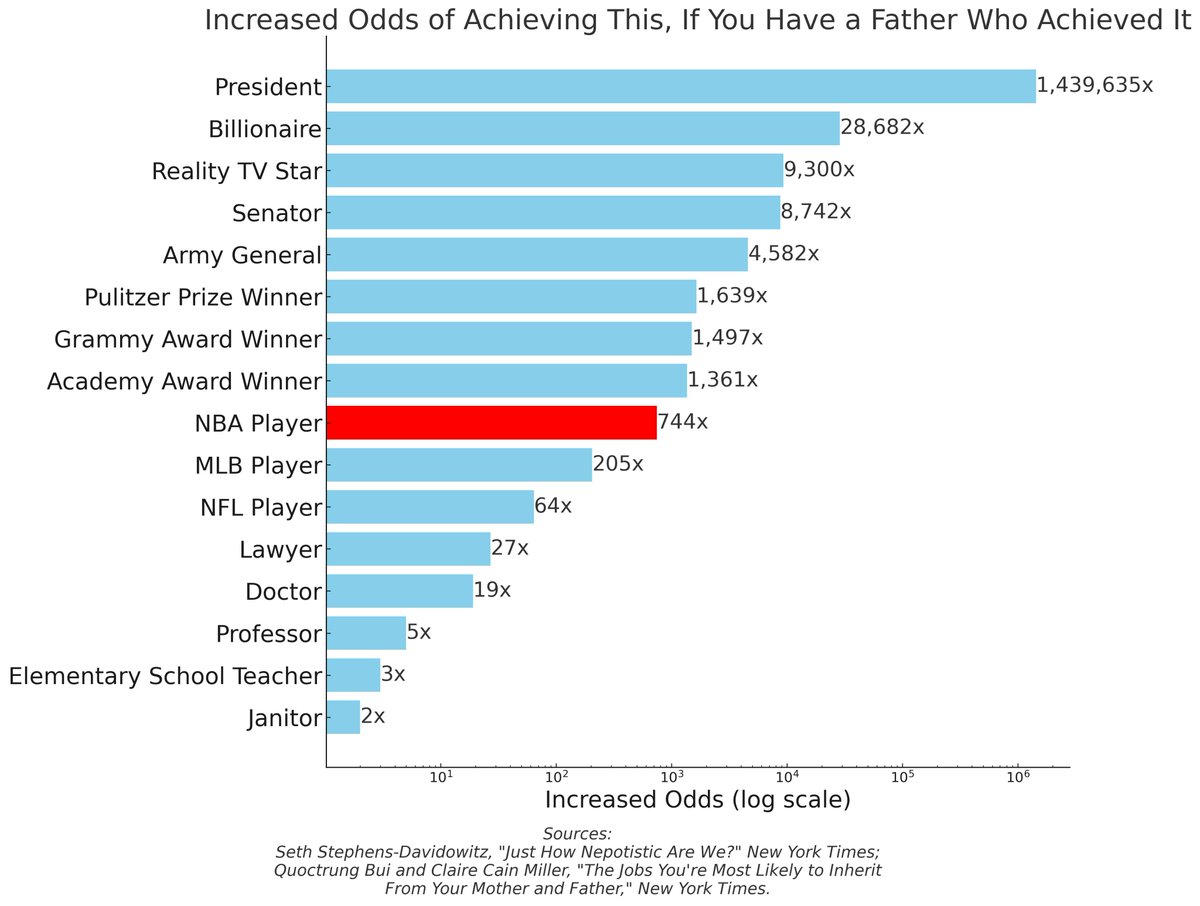
My new book, Who Makes the NBA, is out today!!!! This is one of my favorite charts from the book: the advantage fathers pass to their sons in various fields. I expanded it based on twitter comments. bit.ly/41f0JBy
7
36
151
28,051
Noah Stephens-Davidowitz retweeted
11 Dec 2023
My 3rd favorite chart from Who Makes the NBA (out today!!!) amazon.com/Who-Makes-NBA-Dat…
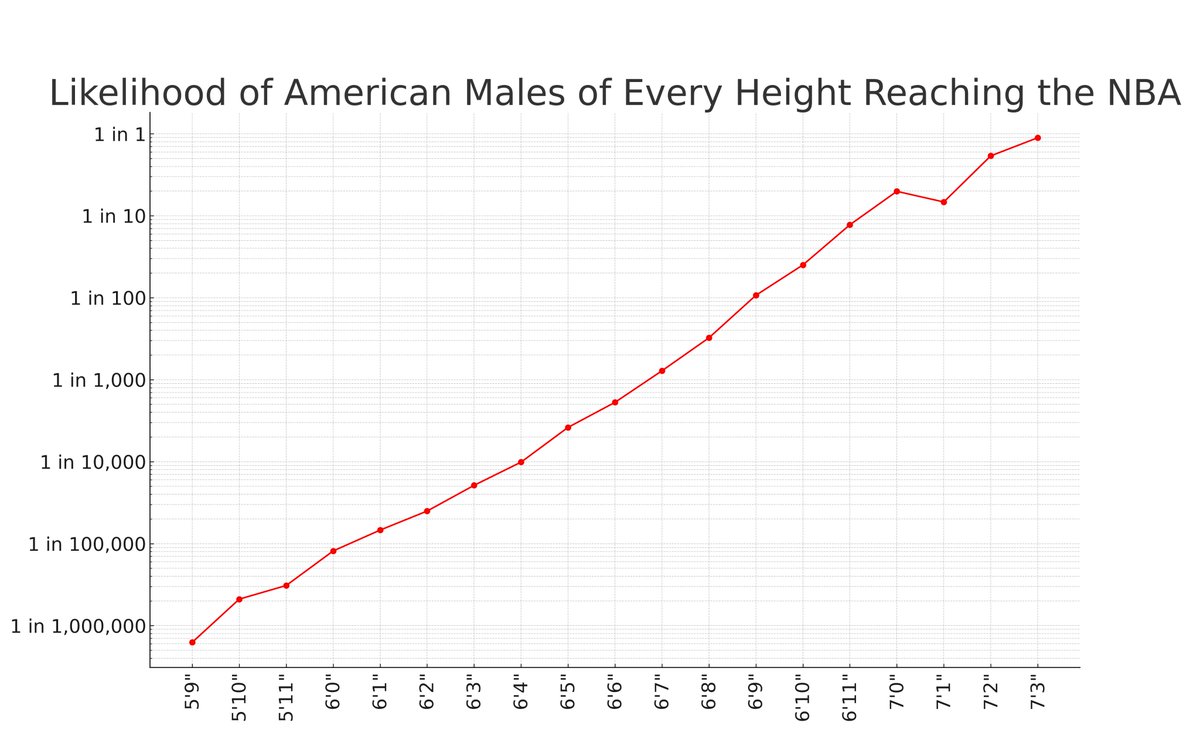
1
3
11
3,817
Noah Stephens-Davidowitz retweeted
10 Nov 2023
DAY 3 OF MY CHALLENGE TO WRITE A (GOOD) BOOK ON THE NBA IN 30 DAYS, THANKS TO AI's DATA ANALYSIS TOOLS. Have you ever wondered: Who would be the best basketball player of all time if everybody were the same height? 🧵
2
1
13
6,092
Noah Stephens-Davidowitz retweeted

1 Nov 2023
Amazing: Zeyong Li showed that the complexity class S_2 E requires near-maximum circuit size on 𝐚𝐥𝐦𝐨𝐬𝐭 𝐞𝐯𝐞𝐫𝐲 input length, as well as a "genuine" (no infty often caveats) pseudodeterministic ZPP^NP algorithm for range avoidance!
eccc.weizmann.ac.il/report/2…
(1/4)
3
7
54
8,851
Noah Stephens-Davidowitz retweeted
6 Oct 2023
I'm looking to hire one or two Ph.D. students for Fall '24 to work on problems related to lattices, error-correcting codes, and theoretical CS more broadly. If you're interested, please apply to Colorado *this fall*! Deadline: 12/15/2023, link: colorado.edu/cs/admissions/g… 2/
1
11
45
8,652
Noah Stephens-Davidowitz retweeted
6 Oct 2023
An update: I'm very excited that in January 2024 I will move to the University of Colorado - Boulder and join @bouldertheory! Colorado is my home, and, as anyone who's talked to me for 5 minutes knows, I'm liable to rant at length about how incredible a place it is! 1/
5
6
81
17,322