Joined September 2022
- Tweets 2,839
- Following 2,207
- Followers 978
- Likes 8,989
284 Photos and videos



Pinned Tweet

3 Jan 2023
For those of you asking about @ocmmonkeymisfit here's a little background and how you can get involved (whether you're in @OnChainMonkey or not).
Although holders that signup do receive banana rewards.
7
14
44
3,643
ocmjayb.eth ❤️ Memecoin retweeted

31 Oct 2023
Remember in February we did something that's never been done before by inscribing 10k Genesis on Bitcoin?
Then later we did more firsts with OCM Dimensions?
Now we're about to do several things that have never been done before for OCM Genesis.
Stay tuned! - @huuep
28
58
219
8,107
19 Oct 2023
Hi, my name is @OcmJayb, and I’m a $MEME (@Memecoin) farmer at @Memeland.
On my honor, I promise that I will do my best to do my duty to my own bag, and to farm #MEMEPOINTS at all times.
It ain’t much, but it’s honest work. 🧑🌾
1
5
188
ocmjayb.eth ❤️ Memecoin retweeted

18 Oct 2023
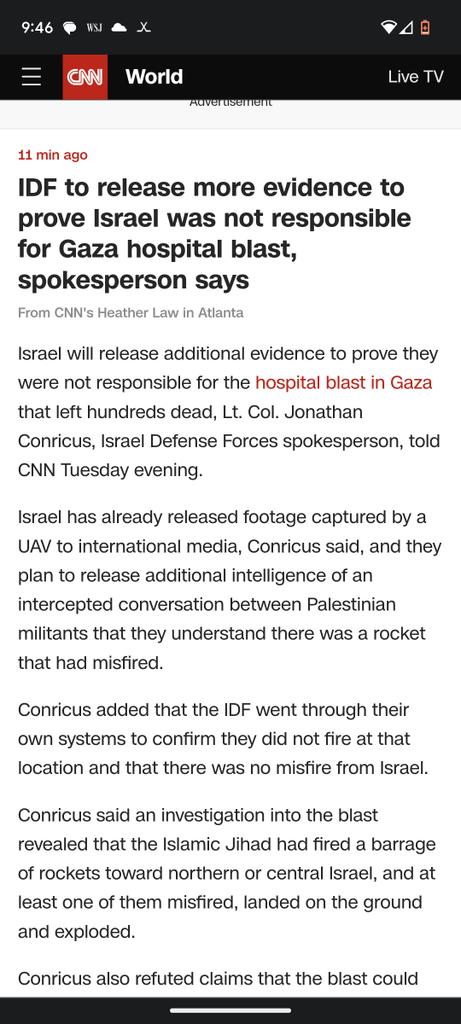
There is drone footage from before and after that shows the same as above. Also inconsistent with an airstrike.
18 Oct 2023

The IDF released drone footage showing the Ahli Hospital in Gaza both before and after the explosion overnight.
The IDF points out the absence of a crater and the lack of damage to surrounding buildings.
25
278
1,556
187,321
ocmjayb.eth ❤️ Memecoin retweeted

18 Oct 2023
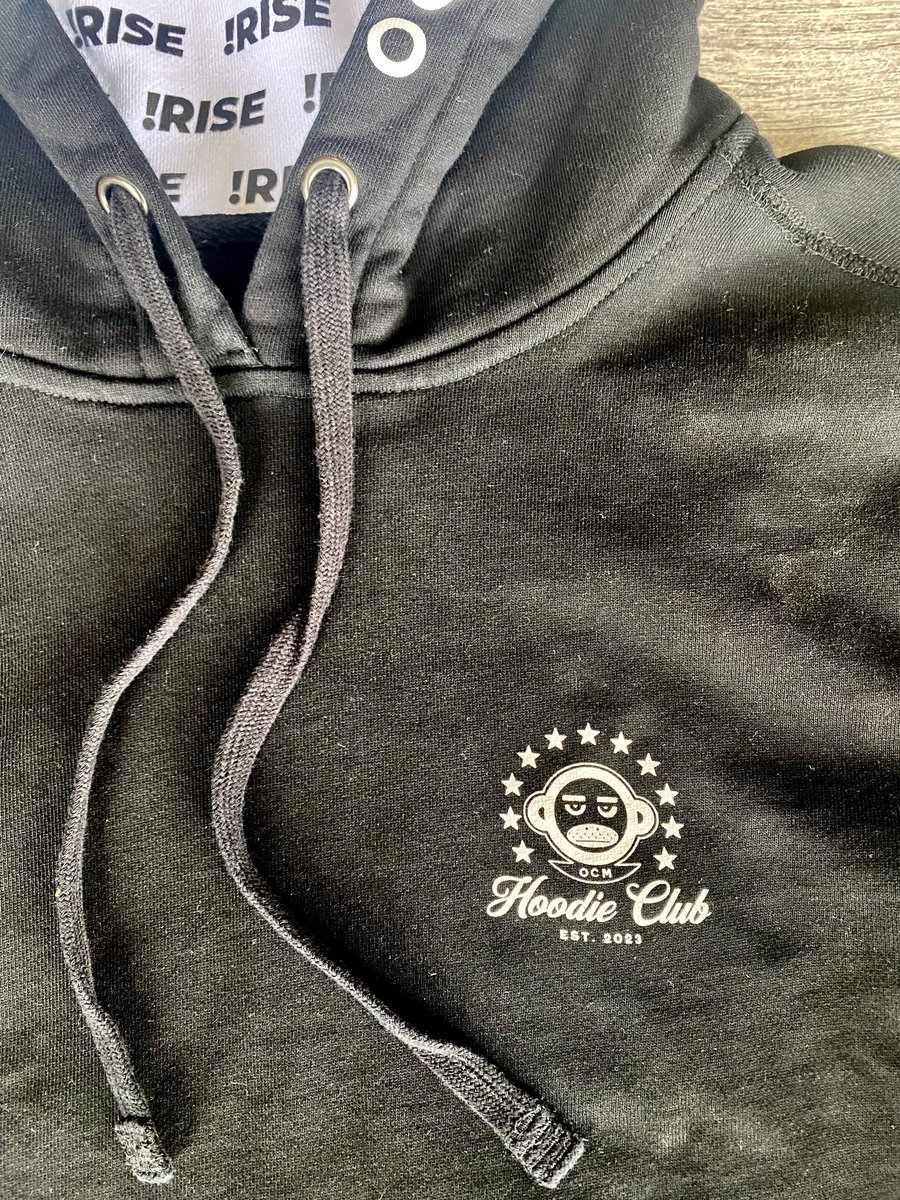
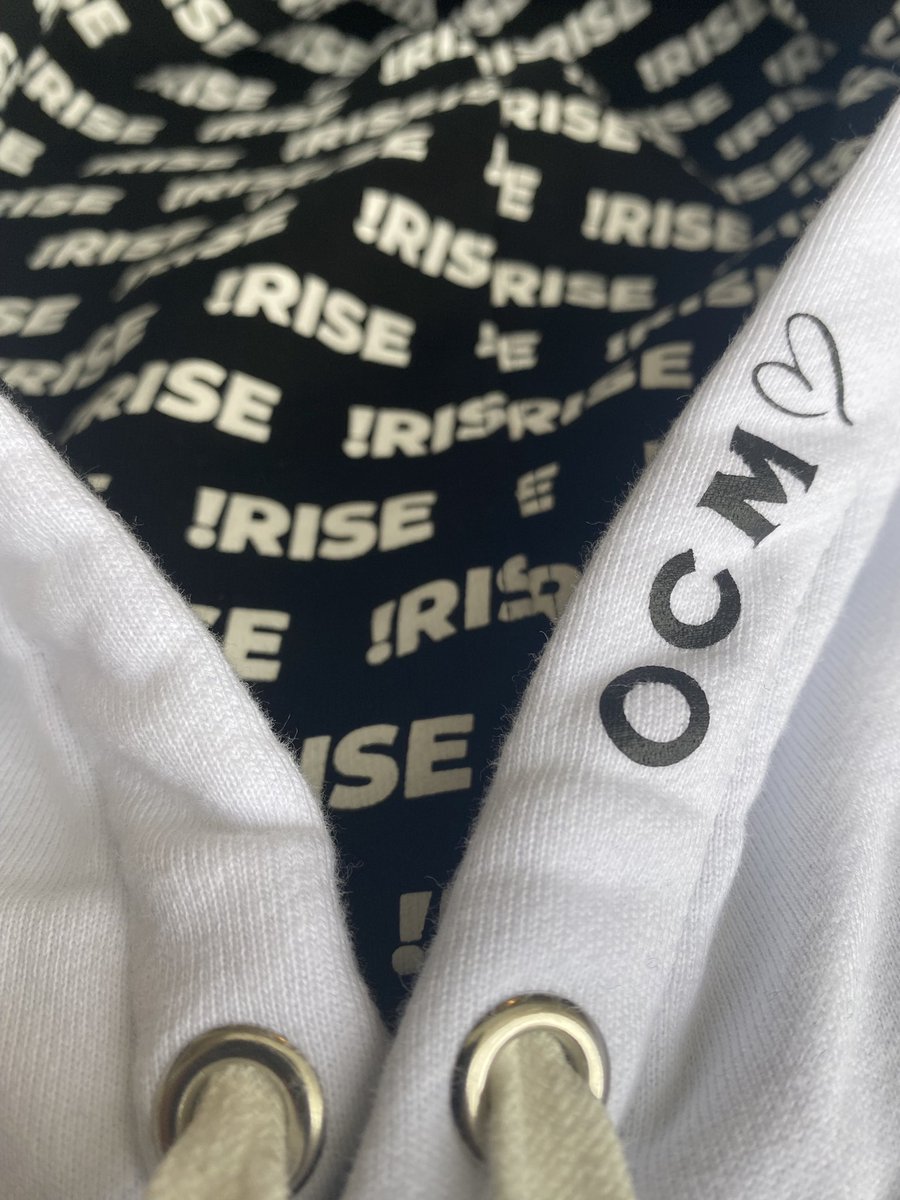
📢Attention OCM Hoodie Club🚨
Presale Orders are now open for our @OCMHoodieClub X @ClubhouseArcNFT Hoodie! Follow instructions in the next tweet to place your order 🔥🍌
Hoodies will ship in about 6 weeks. In the meantime join our Discord and check out hoodieclub.xyz
11
8
28
1,267
ocmjayb.eth ❤️ Memecoin retweeted

13 Oct 2023
Now adjust the numbers to reflect our 35.5 times larger population:
What if 42,600 Americans were killed and 5,325 were kidnapped? How would we respond?
13 Oct 2023

For context on what is to come, ask yourself how the U.S. would respond if 2,500 Mexican terrorists invaded Texas, brutally killed 1,200 of our citizens including women, children and babies — raping decapitating and burning them alive — and kidnapped 150 more, including infants.
1,689
2,054
11,015
1,856,900
ocmjayb.eth ❤️ Memecoin retweeted
13 Oct 2023
A must watch
12 Oct 2023

Hamas is openly boasting that it tricked Israel into thinking it was interested in improving humanitarian conditions in Gaza, as a cover for preparing the world’s deadliest terror attack after 9/11.
Don’t let Hamas manipulate your good conscience too.
267
1,207
4,804
1,030,013
ocmjayb.eth ❤️ Memecoin retweeted

12 Oct 2023
Edward Snowden just said he thought Ordinals is one of the most interesting new thing on Bitcoin at Bitcoin Amsterdam 🔥
61
138
536
35,488
ocmjayb.eth ❤️ Memecoin retweeted

11 Oct 2023
Thank you to each and every one of you for standing with us in our darkest times.
We feel your love and it means the world.
Share your support by reposting this with your country’s flag and #IStandWithIsrael.
1,566
2,994
11,619
555,106

ocmjayb.eth ❤️ Memecoin retweeted

25 Sep 2023
Bitcoin Ordinals and the The Great Renumbering: Engineers vs Collectors?
Still plenty of debate around the Great Renumbering, and understandably so!
When you're dealing with protocol-level changes, there should be hearty debate. By any measure, the Ordinals community has shown its veracity in the level of engagement and discussion around The Great Renumbering, a proposal by @rodarmor to upgrade the Ordinals Protocol in a way that would change the ordering of many existing Ordinals inscriptions. Indeed, the Ordinals community has shown that it cares deeply about the future of this very young ecosystem for digital assets on the greatest blockchain, a healthy sign for what's to come.
Over the past week, we've heard multiple arguments around The Great Renumbering. Much of the debate is centered around protecting the integrity of the Ordinals market and its participants by not going back on promises made by Casey and the Ordinals team, mostly around the sequence-labeling (i.e. inscription number) of all existing Ordinals. I.e. if we couldn't trust that things wouldn't change up until now, how can we trust that they won't change in the future?
To be clear, many of the concerns are valid as it sucks to create something or acquire an asset only to find out some of your assumptions are now invalidated without your control. And the nature of governance over the Ordinals Protocol brings up a a very important question, but nevertheless it largely ignores the most important issue at-hand, which is very much about integrity, but not of the Ordinals Market alone. The integrity we should be focused on is the system's integrity, that is to say the long-term viability of Ordinals as a protocol, as code. The integrity of the Ordinals Market very much depends on the protocol itself, not the other way around.
Before we get too deep into the arguments, let's define some terms 🔽
The Ordinals Protocol
Anytime you see "protocol," just substitute it with software or code. If that doesn't work, substitute it with app. Think of Ordinals as an app just like X is an app. Users of the Ordinals App are able to create digital artifacts on Bitcoin, a revolutionary use-case for the greatest blockchain and a huge leap for digital ownership. We are truly living in an exciting inflection point in crypto and digital assets thanks to this code. Shout-out to the Ord Team.
Inscription Numbers
An inscription number is the number associated with an ordinal when the data for that ordinal is inscribed on Bitcoin. It's assigned by the Ordinals Protocol and is viewed largely as the time-state of record for a given ordinal. These numbers are the focus of much of the current debate.
Cursed Inscriptions
A cursed inscription is any inscription that is inscribed in a way that the specification (the code) of the Ord protocol doesn't recognize. Prior to upgrades made in June by the Ord team, these inscriptions were not recognized by the Ord protocol and thus could not be indexed (i.e. used) by marketplaces, wallets, collectors. Once they were officially inscribed, all cursed inscriptions were simply assigned negative inscription numbers, so that they didn't mess with the existing ordering of "blessed" inscriptions, those inscriptions that follow the rules of inscribing recognized by the Ord Protocol.
Indexing Inscriptions
Indexing is the act of iterating through all existing Ordinals Inscriptions and making them available for other software applications to do their tasks such as listing on marketplaces, enabling visibility and tranfersability in wallets, and many other very important tasks. Indexers are the apps that keep track of all ordinals inscriptions, used by marketplaces, wallets, and any app that wants to build something off the history of all ordinals. Without indexers, the Ordinals ecosystem would grind to a halt.
Upgrades to the Ordinals Protocol
As many of us are aware, Ordinals was launched in January of this year as a very experimental release with no intention on behalf of Casey and the team for it to be ready for mass adoption. That said, with the help of an open-source community of engineers, including our team @OnChainMonkey led by @huuep, the Ordinals protocol has seen multiple releases with significant upgrades.
Upgrades are changes to the Ord codebase, the code that determines all of the rules around inscribing Ordinals. These changes either add new features enabling new capabilities for users of Ord (aka inscribooors) or improve some critical aspect of the codebase making it easier and more efficient for the engineers working on the Ord code to add new features in the future.
Three of the most impactful upgrades to Ord so far:
Cursed Inscriptions (Release 0.6.0 - Jun 4, 2023)
Recursive Endpoints (Release 0.6.2 - Jun 15, 2023)
Parent-Child Collection Provenance (Release 0.9.0 - Sept 6, 2023)
Edge Cases
A term used in software engineering to describe unlikely scenarios. Importantly, edge-cases are often not accounted for when building software, because they occur in extreme situations. Software is often built as quickly as possible. Accounting for every edge case is near impossible. Cursed inscriptions occur because users of Ord have found edge cases in the way they inscribe. Our @onchainmonkey Genesis and OCM Dimensions collections are two examples of edge cases. We inscribed both collections with parent-child collection provenance and recursion in mind prior to the Ord protocol recognizing them. In fact, we launched OCM Dimensions on the date that Recursive Endpoints launched (Jun 15, 2023) and the entire collection is still rendered a cursed collection because parent-child collectin provenance was not yet recognized by the Ord code at the time.
OK, so back to The Great Renumbering and what's at stake
Up to this point, Cursed Inscriptions have been the solution (some might call a band-aid) to include inscriptions that the Ord Protocol doesn't recognize. In fact, cursed inscriptions have existed since the very beginning of when inscribors began using the protocol. Because there are so many ways in which one can inscribe, users of Ord have been finding edge cases accidentally and intentionally, creating a very complex problem of how to handle each case.
On the engineering side, this creates an absolute mess for building-out the protocol. Every time a new edge case is discovered, the engineers building the Ord Protocol have to account for this. This ends up slowing down development of other upgrades significantly as we have seen with many of the upgrades so far.
On the market side, every time the Ord Protocol makes a change in how they handle edge cases, the marketplaces and wallets have to re-index and re-jigger their platforms to account for the changes. This is why our OCM Dimensions holders could not see their asset in their wallet for many weeks after they minted the asset.
As a result of both the engineering and market effects of having to deal with , the impediment to progress compounds across the Ordinals ecosystem.
If Ordinals is to scale as an ecosystem, then the software development side of things should be as simple as possible and proceed as quickly as possible. The code as it stands today is at odds with rapid development and the further along we go without making necessary upgrades and simplifications, the more unstable things get.
So, you're saying that everyone who loves their Ordinals inscription number is SOL?
Not at all. In fact, @huuep put forth an elegant solution that essentially says we should take a snapshot of all existing inscription numbers up to a certain block height (a point in time) and record the ordering by inscribing it permanently and immutably and open to all on Bitcoin. After the block height of this snapshot, the necessary upgrades are made and we get both the permanence of the numbers as well as the necessary upgrades to the protocol.
Seeing the passion for Ordinals from the community has been amazing. This is what a true builder community looks like. I'm confident the community of inscriboors and digital artifact enjoyoors will come together and fix this problem. The future of Ordinals depends on it 🟧⚡️
16
15
67
9,137
ocmjayb.eth ❤️ Memecoin retweeted

1 Sep 2023
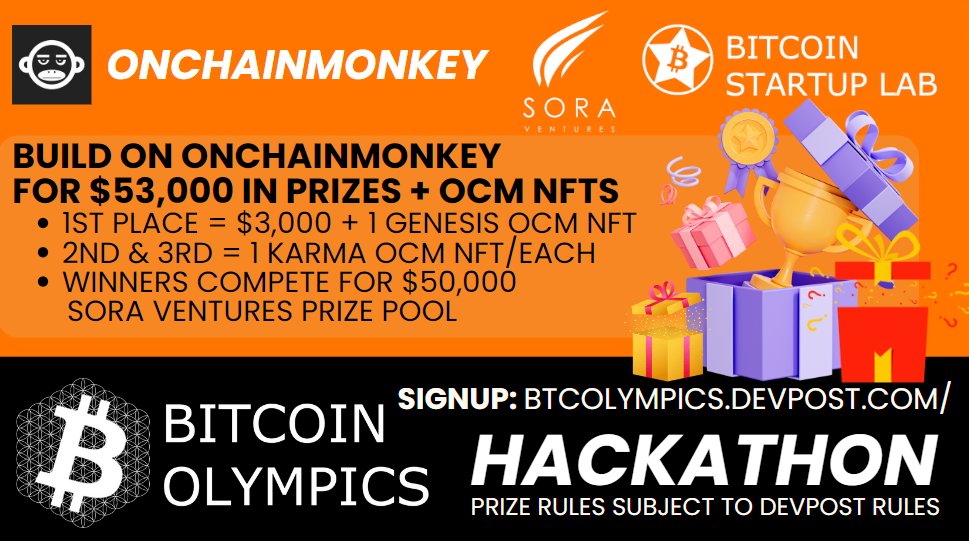
Excited to announce our Bitcoin Olympics Hackathon partnership with @OnChainMonkey (Metagood)🐒🤝
Enter for your chance to win $75K in prizes: btcstartuplab.info/BTCOlympi…
5
12
34
2,729
ocmjayb.eth ❤️ Memecoin retweeted
20 Sep 2023
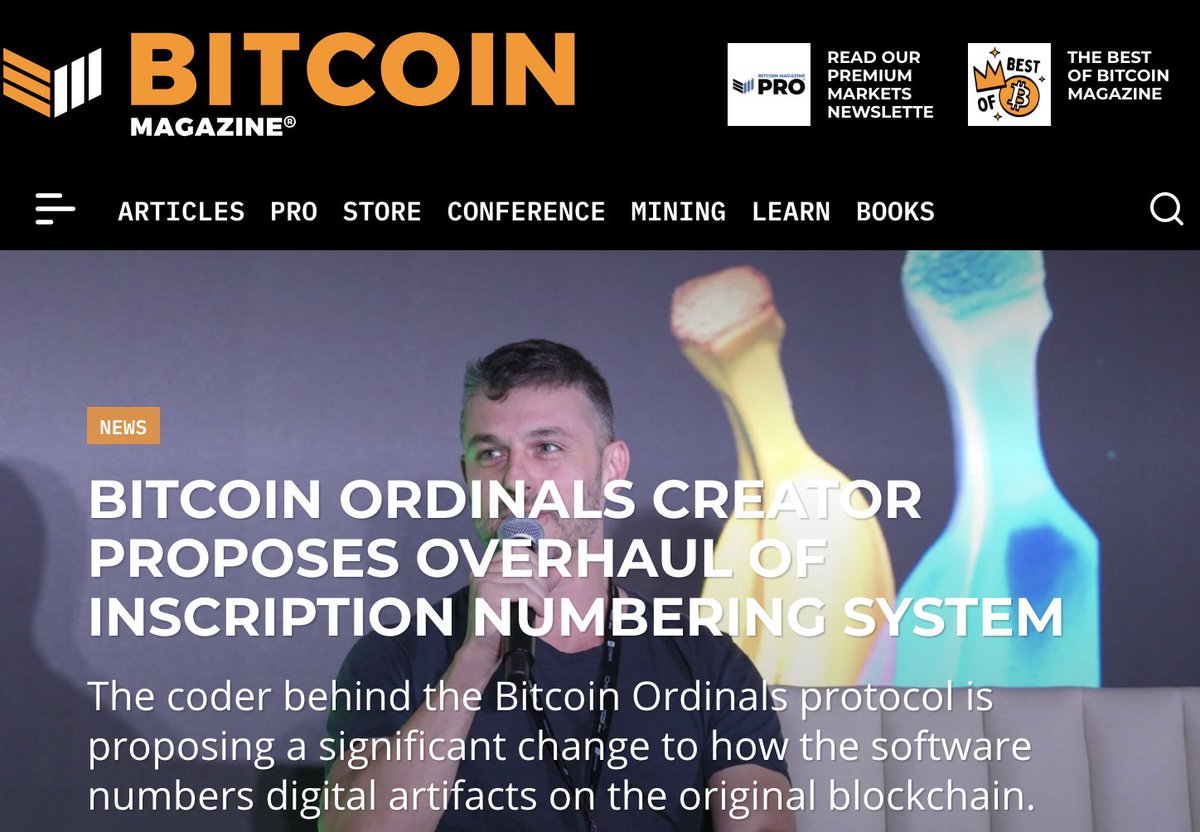
Heard about some drama in the Ordinals community and trying to catch up? Let's get to the heart of @rodarmor's "Great Renumbering," a proposal to "destabilize" Ordinals Inscription numbers.
First, what is an Ordinals inscription number?
It's the number associated with an ordinal when the data for that ordinal is inscribed on Bitcoin. It's assigned by the Ordinals Protocol and is viewed largely as the time-state of record for a given ordinal.
Cool, but what does destabilizing inscription numbers mean?
It means the current ordering of inscription numbers, under Casey's proposal, will change. You might have an inscription number you really like, say #42690, that gets reassigned a new inscription number if your inscription falls in the scope of the changes proposed.
Why do we care about inscription numbers?
Collectors care for a variety of reasons. "Low" and other vanity inscription numbers can be seen as adding rarity and value to specific inscriptions. Our team @onchainmonkey chose our inscription number #20219 to inscribe our OCM Genesis collection on to reflect the birthdate of our beloved collection on Ethereum back in September of 2021 (2021-9). Under Casey's proposal we would lose this inscription number. Are we sad about this? Yes. Are we thinking our work is meaningless if we lose the inscription number? Definitely not, which brings us to the next question.
Why is Casey proposing to destabilize what's viewed by the Ordinals community as a central feature of the entire protocol?
The succinct answer is that Ordinals is a young protocol and anticipating all possible technical architecture decisions is very difficult, especially with the amount of users Ordinals saw suddenly when the protocol launched publicly in Jan of this year.
The longer answer is that there are significant upgrades to the Ordinals protocol that Casey and others like @huuep have in mind that are hindered by the current system (e.g. multiple inscriptions per transaction)
Great, so bye-bye inscription numbers?
Not exactly. @huuep has proposed an elegant solution in which a snapshot would be taken of all existing inscription numbers up to certain point in time (block height) and have this snapshot inscribed in an html file. Effectively, this would create a single source of truth for these inscription numbers, immutably stored on Bitcoin forever. Importantly, this preserves the original ordering, pleasing collectors and number lovers alike, and the Ord protocol gets the needed updates. Win-win.
Bitcoin Ordinals is a very big deal and this time we're living through is critical to the long-term success of the protocol, the market, and Bitcoin itself. It's important that social consensus is reached quickly and orderly. We have the opportunity to show the greater crypto community that Ordinals as a community can evolve and work together in a positive way. I believe that's exactly what we'll do and Danny's proposed solution is a great step toward that goal.
16
24
62
6,101
ocmjayb.eth ❤️ Memecoin retweeted
12 Sep 2023
2009: BTC is the future of digital money.
2023: Ordinals is the future of digital artifacts.
41
44
229
5,199
ocmjayb.eth ❤️ Memecoin retweeted

6 Sep 2023
Green & White Day is here & prizes are gonna be flowin'!!!
Up First: a SIGNED @GarrettWilson_V legacy jersey 👀
Follow and retweet for a chance to win!
Rules: nyj.social/3PqubjL
#GreenandWhiteSweepstakes
729
5,330
3,069
355,190
ocmjayb.eth ❤️ Memecoin retweeted
4 Sep 2023
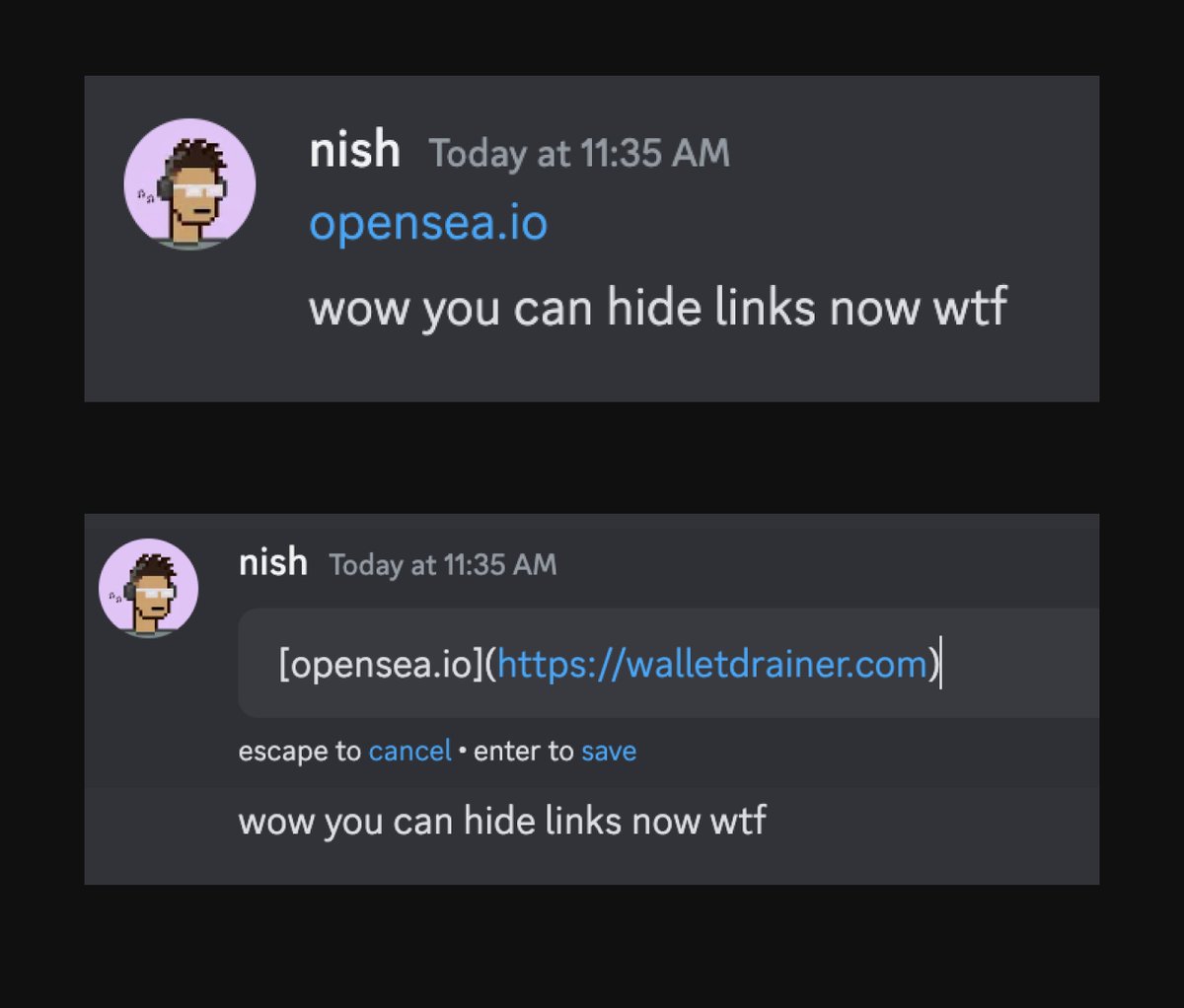
🚨 Security PSA 🚨
Masked links are now enabled on @discord servers.
Masked links enable the concealing / obfuscating of a URL (i.e. a website) to make it appear differently from its actual destination, making it easier for malicious actors to create convincing phishing attacks..you're likely to click on a link that looks legitimate.
To stay safe:
1) Never click links posted in a Discord.
2) If you must click, copy the link and paste it into a URL Checker prior to visiting the URL.
4 Sep 2023

Scammers can now hide links in any discord text ☠️
Watch out for hidden wallet drainer links
e.g. 👇
6
10
30
5,485
ocmjayb.eth ❤️ Memecoin retweeted
2 Sep 2023
At over 27 million inscriptions so far this year, I'd say the social consensus around owning digital assets, or digital artifacts, on Bitcoin is getting firmly established. To put it in perspective, many more people own digital artifacts on Bitcoin than own CryptoPunks, the OG 10k collection, with their own unique social consensus around digital ownership.
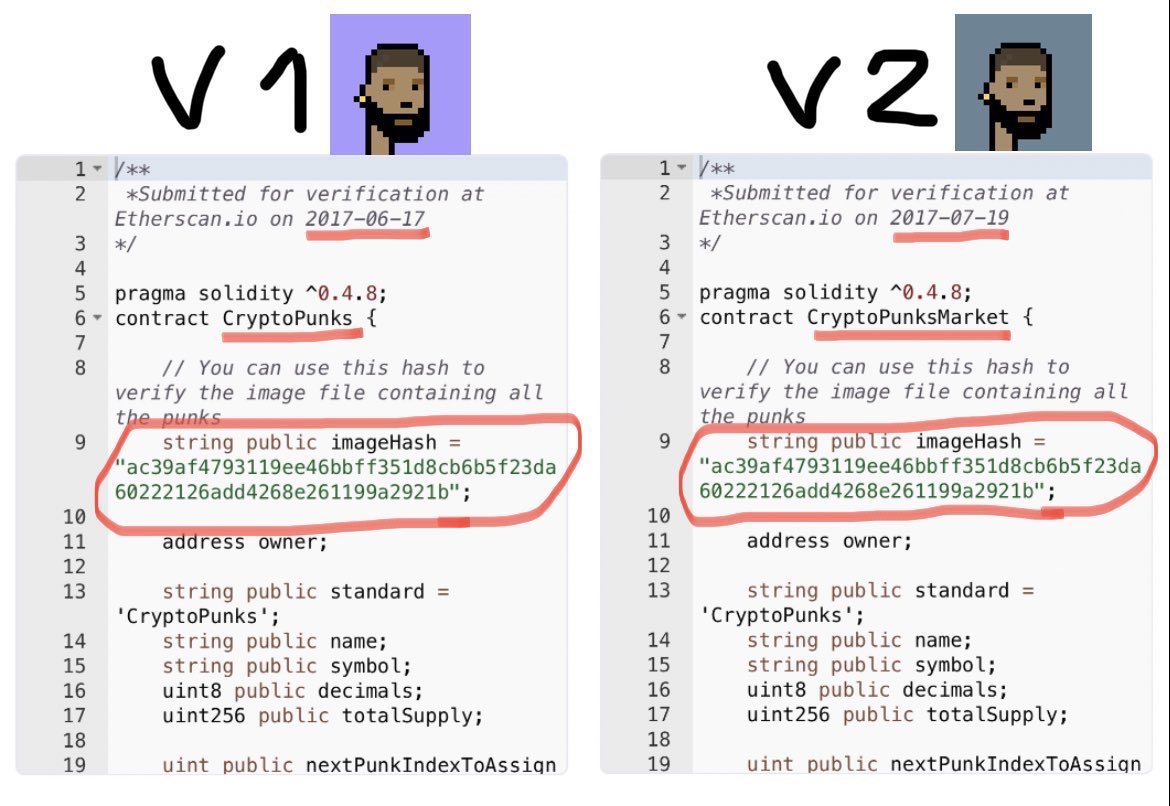
Like Ordinals, CryptoPunks are innovative digital assets. It was launched before the erc-721 NFT standard on Ethereum. On June 9th 2017, Larva Labs launched the original (v1) CryptoPunks smart contract. The 10,000 images were represented by a single imageHash, the images were stored off-chain, and the actual "punk" owned in the smart contract is a number, ie someone owned the number 6529 (for @punk6529's v1 punk).
Then on June 22nd 2017, Larva Labs launched a second CryptoPunks smart contract with the exact same imageHash (to fix an earlier bug in the contract). The ownership model was the same - the images were hosted off-chain, and the owners of a punk "owned" a number recorded in the smart contract. Now you have two collections with the same imageHash, so two groups of people could own the same number in the same imageHash.
Ownership of digital assets is a new thing, and one that many have not wrapped their head around. Many still think that you cannot own a digital item that anyone can copy, or "right-click save." CryptoPunks showed that you can definitely own the digital asset. Even in its particular form where the ownership is of a number referencing an imageHash that was actually a copy of an earlier one!
Interesting enough, four years later, in August of 2021, Larva Labs put the 10k punk images on-chain on Ethereum. This doesn't change the original smart contracts or ownership model of the punks, but does allow the punk images to be viewable by everyone in the world with access to Ethereum.
Punks are a historic collection that explores the concepts of digital assets and ownership. "Digital artifacts" are a further refinement in the understanding of digital assets. Earlier this year, @rodarmor (who created the Ordinals protocol for digital artifacts on Bitcoin), defined five important properties for digital artifacts: ownable, complete, permissionless, uncensorable, and immutable.
I created the @OnChainMonkey (OCM) Genesis collection in September 2021 before Ordinals existed. My goal was to create a 10k collection where each image was completely on-chain and unique, and the distribution of the whole collection was rich and interesting for collectors. And I had the added constraint that the whole collection had to be created at once in a single transaction to minimize the footprint on-chain. This was the art of OCM Genesis, and the way I created the OCM art also satisified the five properties of digital artifacts.
In February 2023, I created Inscription 20219, the first complete collection of 10k images to be put on Bitcoin. These were the 10k images of the OCM Genesis collection. The whole collection was inscribed in a single transaction to minimize the footprint on Bitcoin. Now we're in the process of distributing each OCM Genesis to holders. I inscribed a 10k collection in a single inscription, and challenged the social consensus of digital ownership on Bitcoin at the time. Now that parent-child collection provenance for Ordinals is coming out soon, we'll see even more adoption of Ordinals. The social consensus of ownership of digital assets and digital artifacts continues to evolve and grow, and I'm excited for the many new innovations! We live in a digital world, and digital assets are the future.
2 Sep 2023

I will make this even easier for you all.
👇
CRYPTOPUNKS.
Launched in June 2017 by Larva Labs, Cryptopunks were originally free for anyone with an Ethereum wallet to claim ( gas). The Punks were a huge hit at launch and all of them were claimed incredibly fast. In the original Cryptopunks smart contract, there was a code error that caused Ethereum to be allocated to the buyer instead of the seller when a purchase was made. In other words, a buyer was immediately refunded for their purchase and was able to keep the Punk.
Not long after the bug was found a newer version of the Punks contract (Version 2, V2) was released and Punks were airdropped to this new contract. V1 Punk owners are now able to wrap their Punks into an ERC-721 contract (another kind of standardized smart contract) and patch over the bug. This recovery of the original Punks smart contract is a community led and rapidly growing phenomenon consisting of original Punk claimant’s, NFT historians, digital archeologists and extremely talented developers. There is no clear leader and all important decisions are voted on by community members.
V1 Punks exist just as V2s do. This cannot be changed or undone since the V1 Punks are a permanent part of the blockchain. The new wrappers impart a slight change to the image in the form of a new background While this is a very modest change in the image, the core Punk remains the same.
While the V1 Punks still exist in their original form, so does the existing bug in the V1 contract so NEVER put an unwrapped V1 on sale as you will most likely loose it. V1 Punks are not a derivative but are in fact the "original/classic" Cryptopunks. This is verified on the Ethereum blockchain and is immutable.
63
86
274
58,441
ocmjayb.eth ❤️ Memecoin retweeted

31 Aug 2023
Revisionist History is BACK! The first of seven straight weeks of some of the best work we’ve ever done. apple.co/3svw4ml
21
29
379
99,871