
Official account of Ray Dalio, founder of Bridgewater Associates, author of #1 New York Times bestseller 'Principles,' professional mistake maker
Joined August 2009
- Tweets 7,397
- Following 93
- Followers 2,225,568
- Likes 217
3,428 Photos and videos








For example, when choosing which movie to watch or what book to read, are you drawn to proven classics or the newest big thing? In my opinion, it is smarter to choose the great over the new. #principleoftheday
69
44
521
55,441
Pay people enough so that they're not under financial stress, but not so much that they become fat and happy. You want your people to be motivated to perform so they can realize their dreams. You don't want people to accept a job for the security of making a lot more money-- you want them to come for the opportunity to earn it through hard and creative work. #principleoftheday
94
68
529
63,547
In all aspects of life, what's happening today seems like a much bigger deal than it will appear in retrospect. That's why it helps to step back to gain perspective and sometimes defer a decision until some time passes. #principleoftheday
65
68
573
55,094
Make sure you're following the suggestions made earlier, like building meaningful relationships and constantly getting in sync. Most importantly, you have to encourage people to speak up about how things are going for them. Ensuring that their personal development is proceeding appropriately is important too. Close advice from an active mentor should last at least one year. #principleoftheday
44
90
600
53,898
Opinions are a dime a dozen and nearly everyone will share theirs with you. Many will state them as if they are facts. Don't mistake opinions for facts. #principleoftheday
81
90
573
53,972
The credit system functions like a circulatory system that delivers nutrients and buying power to various parts of the economy. A system is considered healthy when borrowed money is used to generate productivity, which in turn produces income. However, it becomes unhealthy when debts and debt service costs increase relative to income. This debt service acts like plaque in the circulatory system, squeezing out spending. Because one individual's debt represents another individual's asset, with holders expecting a good return, increased selling leads to supply and demand issues. When combined with high debt service, it ultimately impairs the system's mechanics.
@edels0n
61
132
801
104,932
No one is exempt from this process. Having it go well depends on people's abilities to make frank assessments of strengths and weaknesses (most importantly weaknesses). While it's generally as difficult for managers to give this feedback as it is for their subordinates to hear it, in the long run it makes people happier and the organization more successful.
#principleoftheday
45
43
366
52,464
Make sure they're fully informed and believable. Find out who is responsible for whatever you are seeking to understand and then ask them. Listening to uninformed people is worse than having no answers at all.
#principleoftheday
62
85
587
70,600
You need people who share your tastes and style but who can also push and challenge each other. The best teams, whether in music, in sports, or in business, do all those things at the same time.
#principleoftheday
34
82
527
69,999
Every day you are faced with an infinite number of things that come at you. Let’s call them “dots.” To be effective, you need to be able to tell which dots are important and which dots are not. Some people go through life collecting all kinds of observations and opinions like pocket lint, instead of just keeping what they need. They have “detail anxiety,” worrying about unimportant things.
Sometimes small things can be important—for example, that little rattle in your car’s engine could just be a loose piece of plastic or it could be a sign your timing belt is about to snap. The key is having the higher-level perspective to make fast and accurate judgments on what the real risks are without getting bogged down in details. #principleoftheday
72
73
479
54,243
Smart people are the ones who ask the most thoughtful questions, as opposed to thinking they have all the answers. Great questions are a much better indicator of future success than great answers. #principleoftheday
51
78
667
57,727
Own your life and take responsibility to make it great. When life doesn't give you what you want, don't be angry—learn how reality works and develop principles to get you where you want to be. Be radically open-minded, and recognize that if you want to be really successful, you have to work really hard.
Continue the graduation conversation with my AI Twin, Digital Ray in Beta: tr.ee/m7nH56
39
226
1,298
106,979
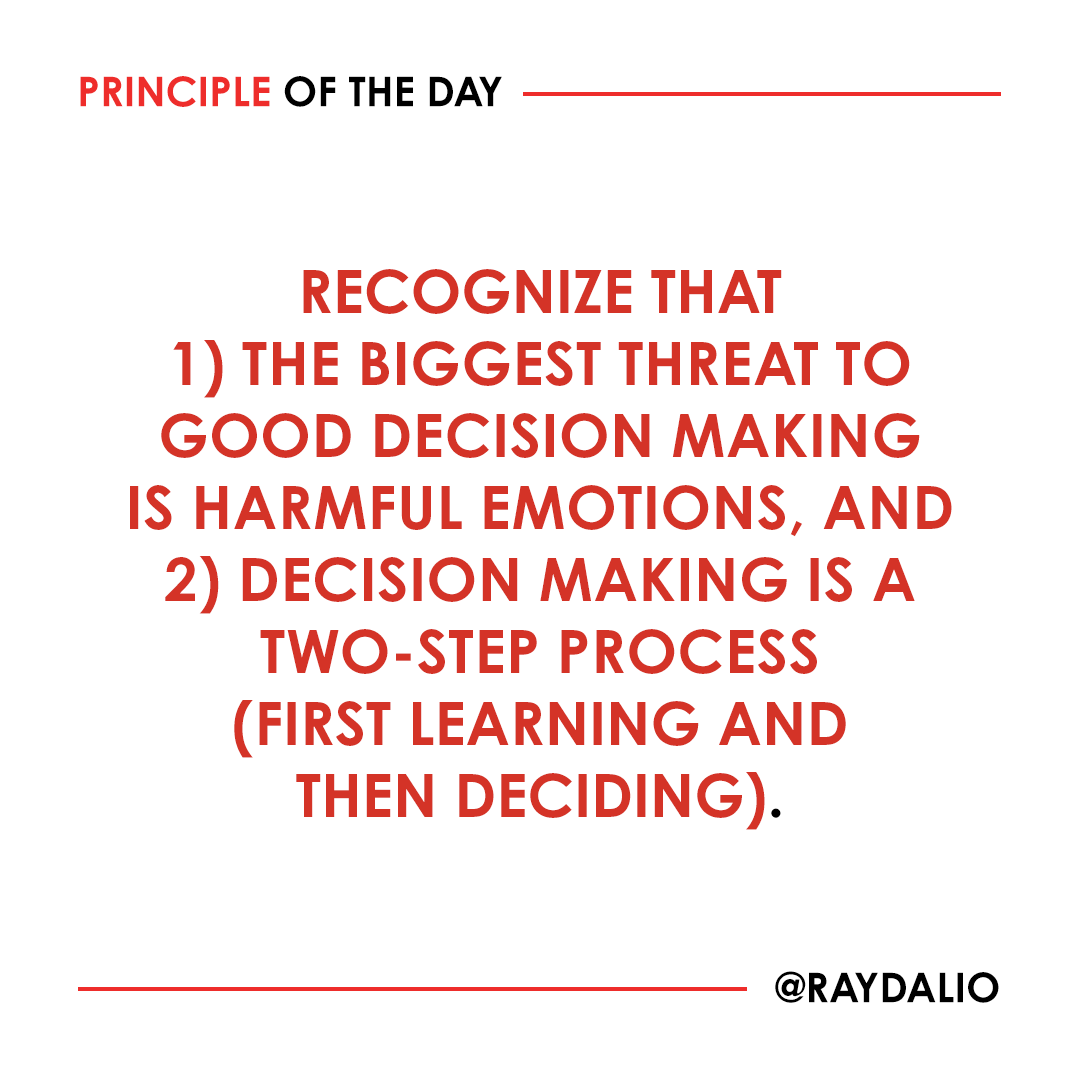
Learning must come before deciding. As explained in Chapter One, your brain stores different types of learning in your subconscious, your rote memory bank, and your habits. But no matter how you acquire your knowledge or where you store it, what’s most important is that what you know paints a true and rich picture of the realities that will affect your decision. That’s why it always pays to be radically openminded and seek out believable others as you do your learning. Many people have emotional trouble doing this and block the learning that could help them make better decisions. Remind yourself that it’s never harmful to at least hear an opposing point of view.
Deciding is the process of choosing which knowledge should be drawn upon—both the facts of this particular “what is” and your broader understanding of the cause-effect machinery that underlies it—and then weighing them to determine a course of action, the “what to do about it.” This involves playing different scenarios through time to visualize how to get an outcome consistent with what you want. To do this well, you need to weigh first-order consequences against second- and third-order consequences, and base your decisions not just on near-term results but on results over time.
Failing to consider second- and third-order consequences is the cause of a lot of painfully bad decisions, and it is especially deadly when the first inferior option confirms your own biases. Never seize on the first available option, no matter how good it seems, before you’ve asked questions and explored. To prevent myself from falling into this trap, I used to literally ask myself questions: Am I learning? Have I learned enough yet that it’s time for deciding? After a while, you will just naturally and open-mindedly gather all the relevant info, but in doing so you will have avoided the first pitfall of bad decision making, which is to subconsciously make the decision first and then cherry-pick the data that supports it.
But how does one learn well? #principleoftheday
52
108
571
55,064
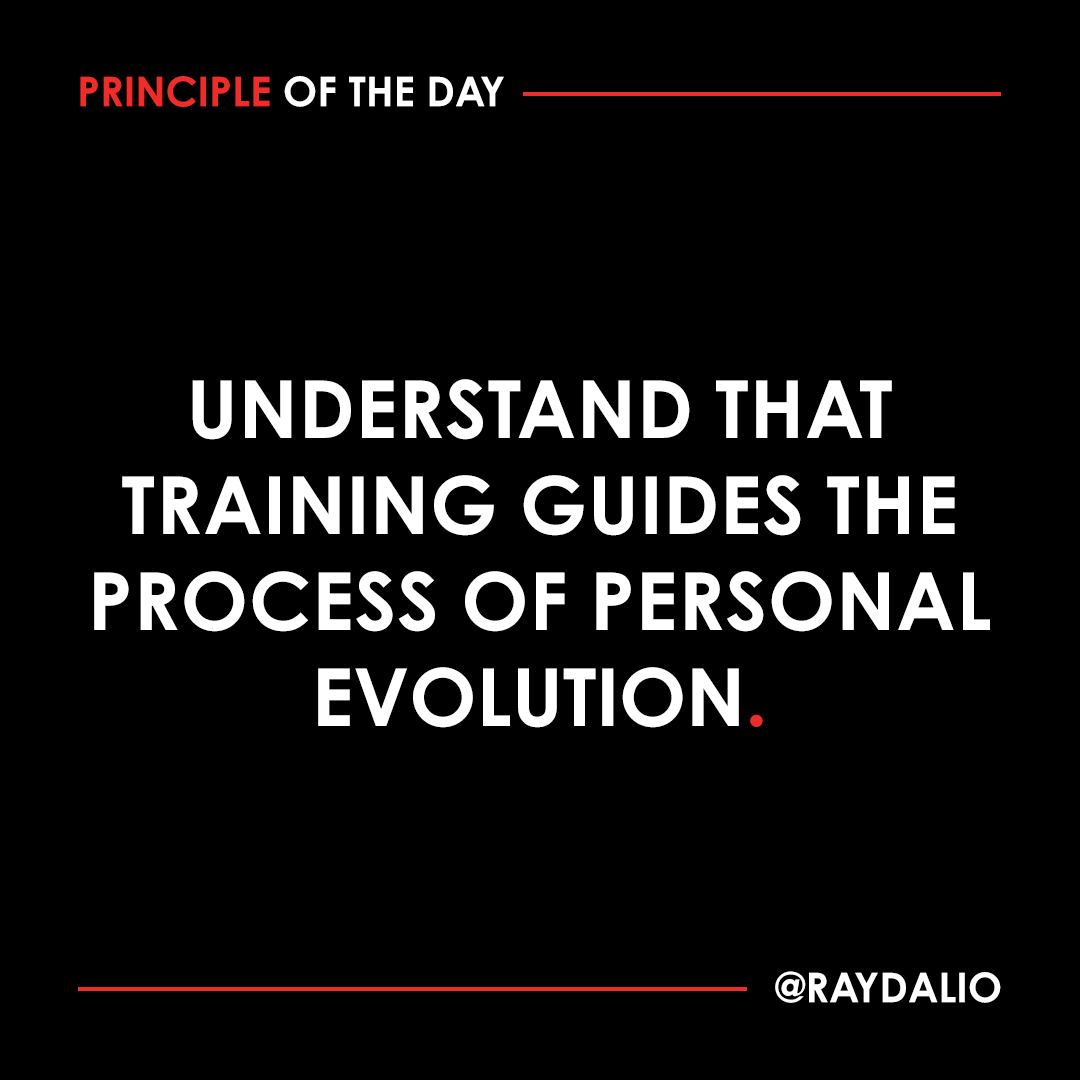
Trainees must be open-minded; the process requires them to suspend their egos while they discover what they are doing well and what they are doing poorly and decide what to do about it. The trainer must be open-minded as well, and it's best if at least two believable trainers work with each trainee in order to triangulate their views about what the trainee is like. This training is an apprentice relationship; it occurs as the trainer and trainee share experiences, much like when a ski instructor skis alongside his student. The process promotes growth, development, and transparency around where people stand, why they stand where they stand, and what they can do about improving it. It hastens not just their own personal evolution but the evolution of the organization. #principleoftheday
27
39
298
51,517
The foundations of a successful country are simpler than most people think–productive citizens, a civil environment, and peace. If you understand that framework, you should be able to understand where we are in the big cycle of political and social order and disorder.
History shows us that when the causes people are willing to fight for are more important to them than the system, the system is in jeopardy.
55
131
754
124,248
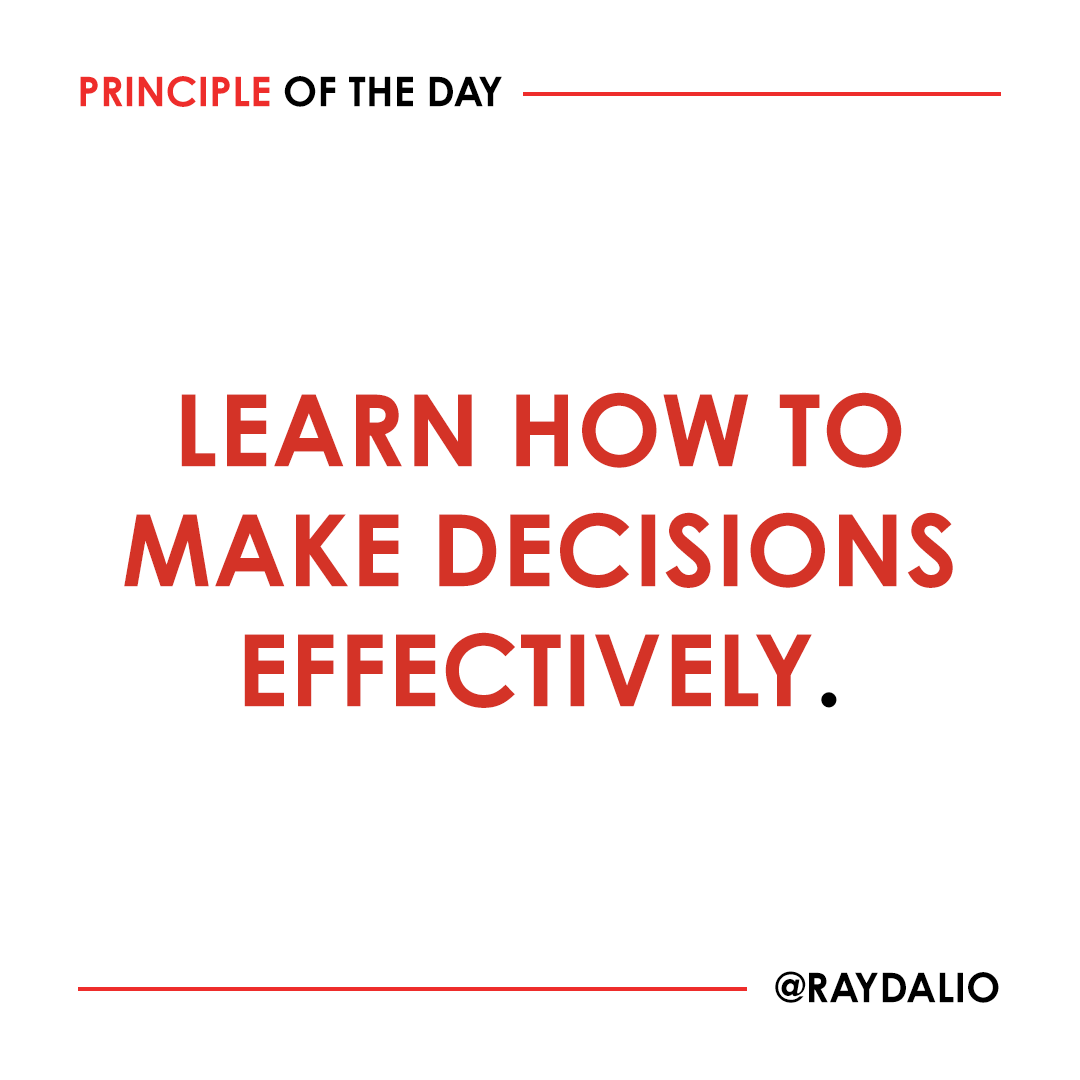
As a professional decision maker, I have spent my life studying how to make decisions effectively and have constantly looked for rules and systems that will improve my odds of being right and ending up with more of whatever it is that I am after.
One of the most important things I've come to understand is that most of the processes that go into everyday decision making are subconscious and more complex than is widely understood. For example, think about how you choose and maintain a safe distance behind the car in front of you when you are driving. Now describe the process in enough detail that someone who has never driven a car before can do it as well as you can, or so that it can be programmed into the computer that controls an autonomous car. I bet you can't.
Now think about the challenge of making all of your decisions well, in a systematic, repeatable way, and then being able to describe the processes so clearly and precisely that anyone else can make the same quality decisions under the same circumstances. That is what I aspire to do and have found to be invaluable, even when highly imperfect.
While there is no one best way to make decisions, there are some universal rules for good decision making. #principleoftheday
55
84
598
69,416
Personality assessments are valuable tools for getting a quick picture of what people are like in terms of their abilities, preferences, and style. They are often more objective and reliable than interviews. #principleoftheday

28
26
299
64,980
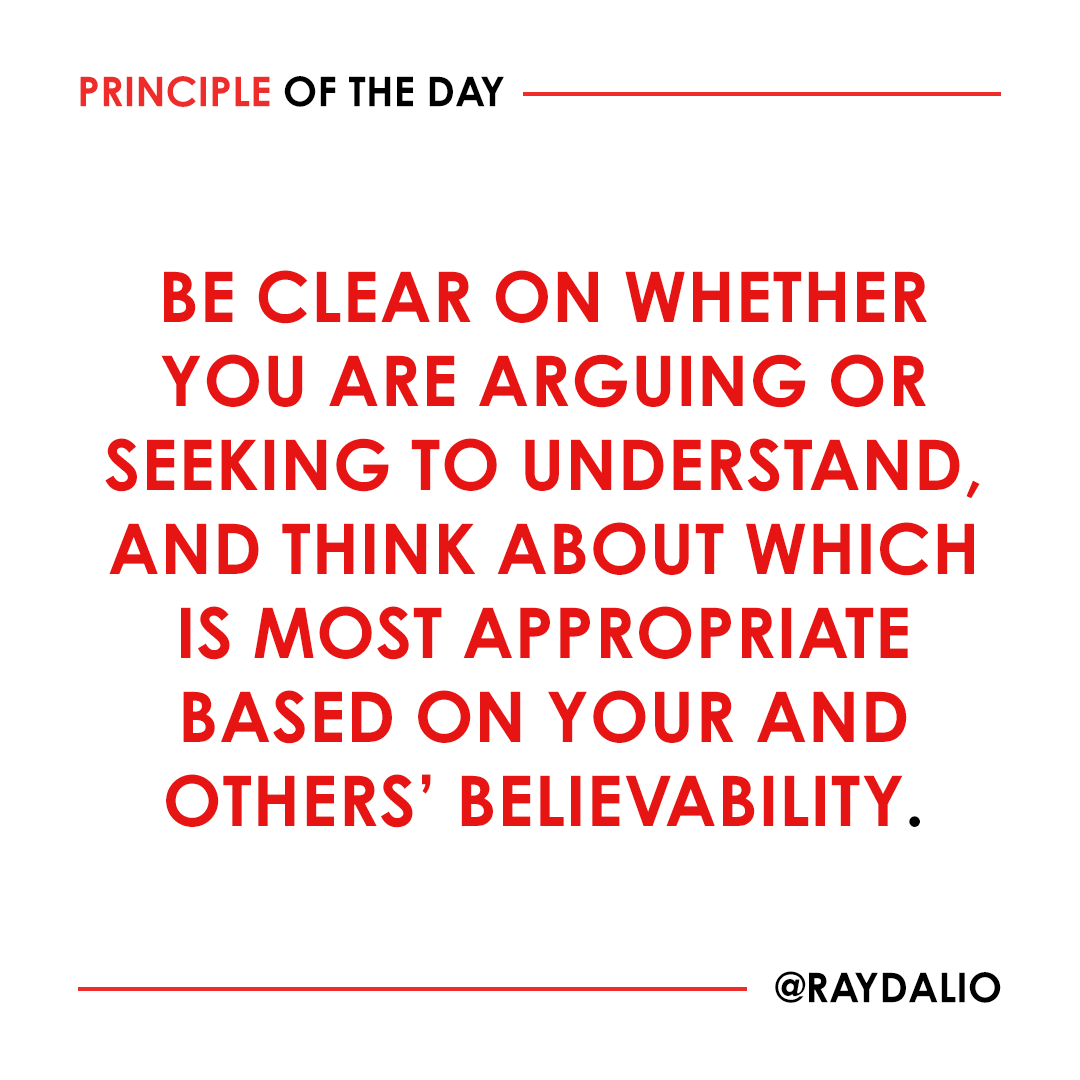
If both parties are peers, it's appropriate to argue. But if one person is clearly more knowledgeable than the other, it is preferable for the less knowledgeable person to approach the more knowledgeable one as a student and for the more knowledgeable one to act as a teacher. Doing this well requires you to understand the concept of believability. I define believable people as those who have repeatedly and successfully accomplished the thing in question--who have a strong track record with at least three successes--and have great explanations of their approach when probed.
If you have a different view than someone who is believable on the topic at hand--or at least more believable than you are (if, say, you are in a discussion with your doctor about your health)--you should make it clear that you are asking questions because you are seeking to understand their perspective. Conversely, if you are clearly the more believable person, you might politely remind the other of that and suggest that they ask you questions.
All these strategies come together in two practices that, if you seek to become radically open-minded, you must master. #principleoftheday
73
61
498
63,253