
The world's largest flying observatory: a 2.7-meter telescope in a Boeing 747SP. Joint project of @NASA and @DLR_SpaceAgency. Verification: nasa.gov/socialmedia
- Tweets 5,524
- Following 162
- Followers 111,246
- Likes 2,254


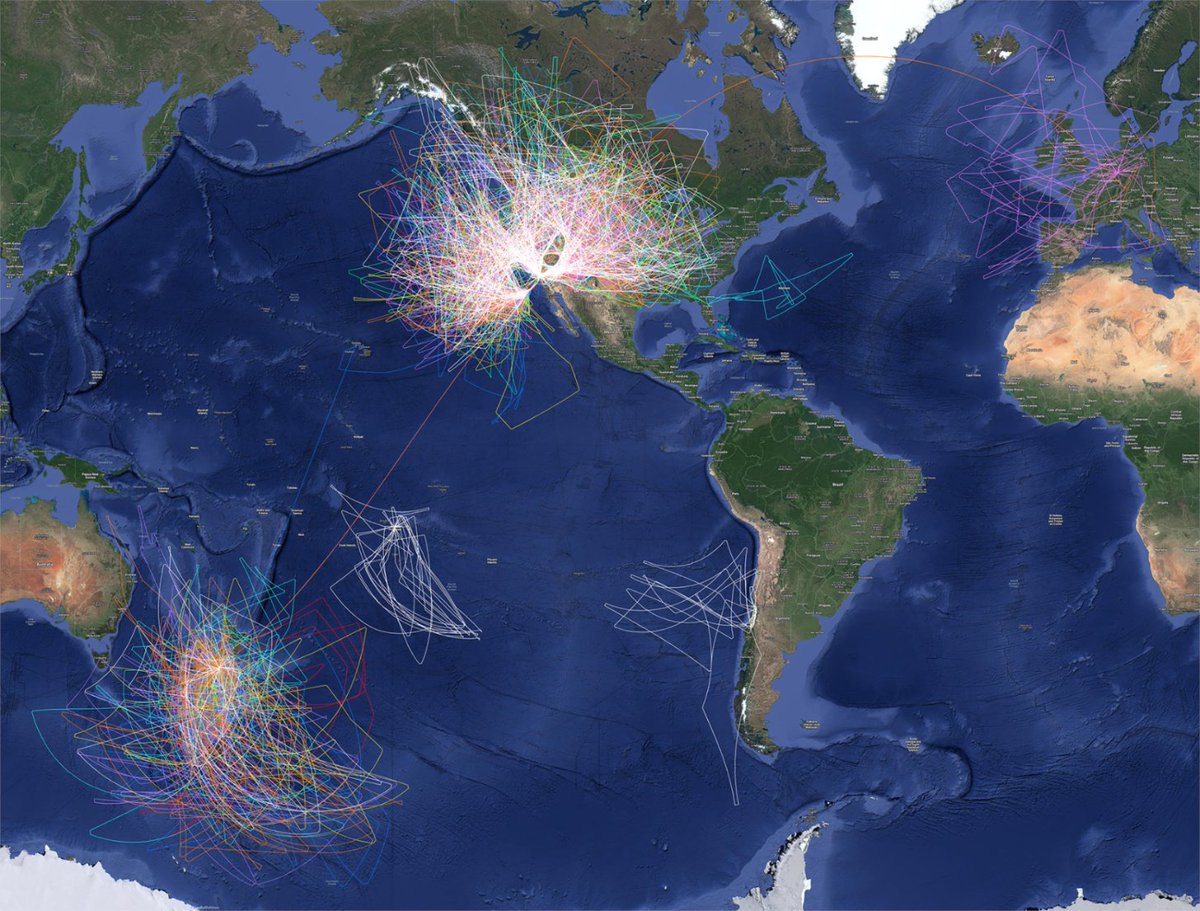
ALT This image is of a map of the world centered around the Americas. Colorful scribbles are shown all over the map, concentrated mainly around the West Coast of the United States toward the center top, and New Zealand toward the bottom left. These lines indicate all of SOFIA's science flights from 2013 to 2022, color coded by observation cycle.
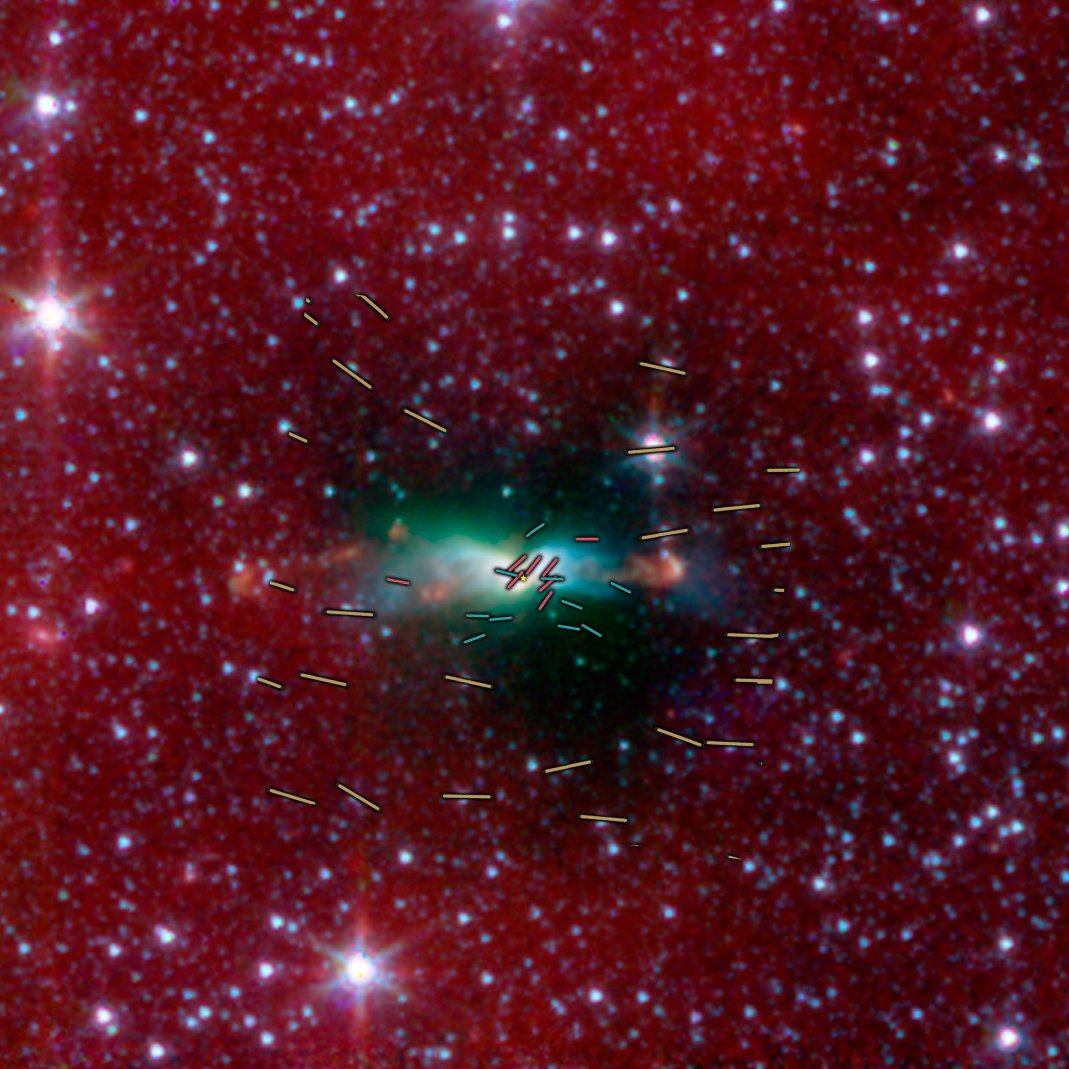
ALT The image shows a red background splattered with white specks, and a green blob in the center. Within the green blob is a small yellow dot, indicating the location of the protobinary system L483, and the green blob is the protostellar envelope. Dashes in red, orange, and green show the directions of magnetic fields as measured by SOFIA, the Pico dos Dias Observatory, and the Caltech Submillimeter Observatory, respectively. The combined fields show a twist as they approach the protostellar envelope, though they are parallel on larger scales. Credit: L483: NASA/JPL-Caltech/J. Tobin; Vectors: Cox et al. 2022, Chapman et al. 2013
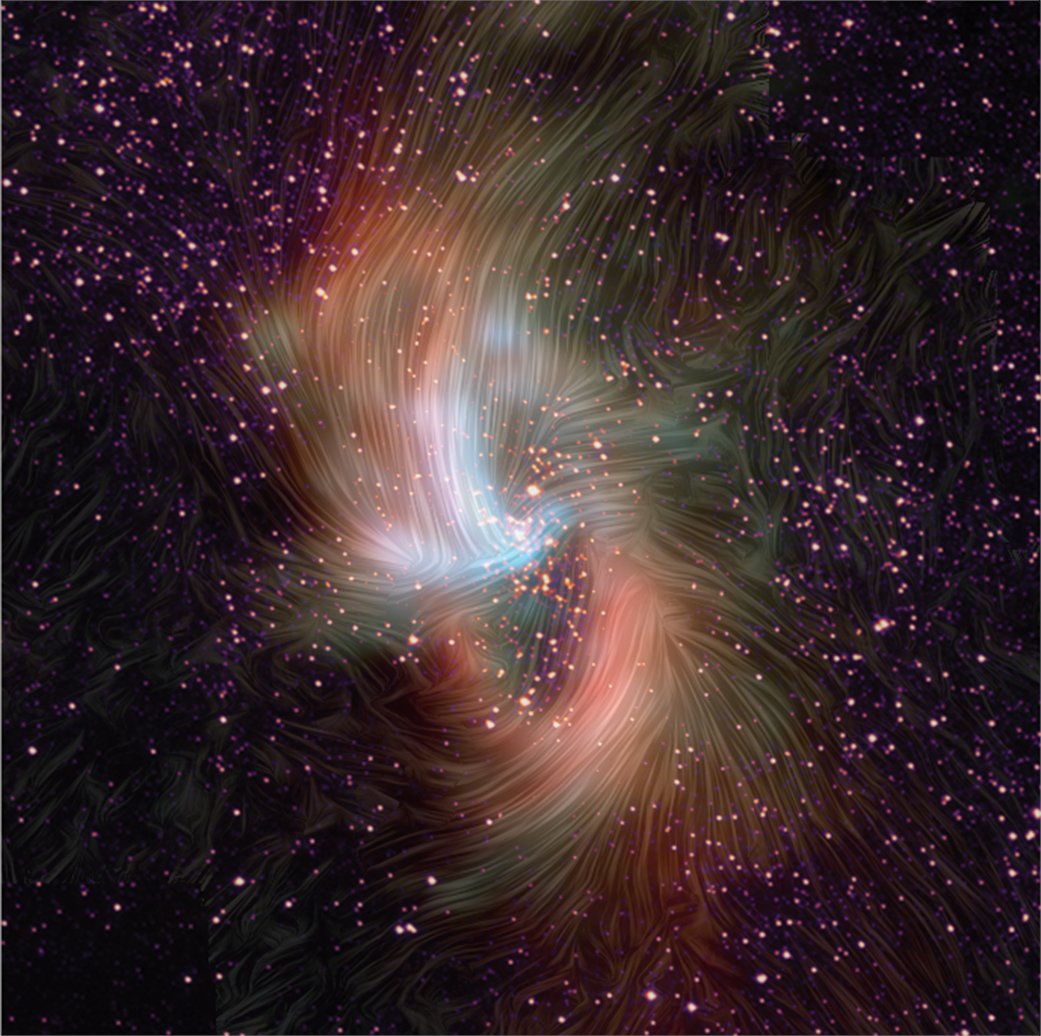
ALT Streamlines showing magnetic fields layered over a color image of the dusty ring around the Milky Way’s massive black hole. The magnetic field may be keeping the black hole quiet. The Y-shaped structure is warm material falling toward the black hole, which is located near where the two arms of the Y-intersect. The streamlines reveal that the magnetic field closely follows the shape of the dusty structure. Each of the blue arms has its own field that is totally distinct from the rest of the ring, shown in pink.
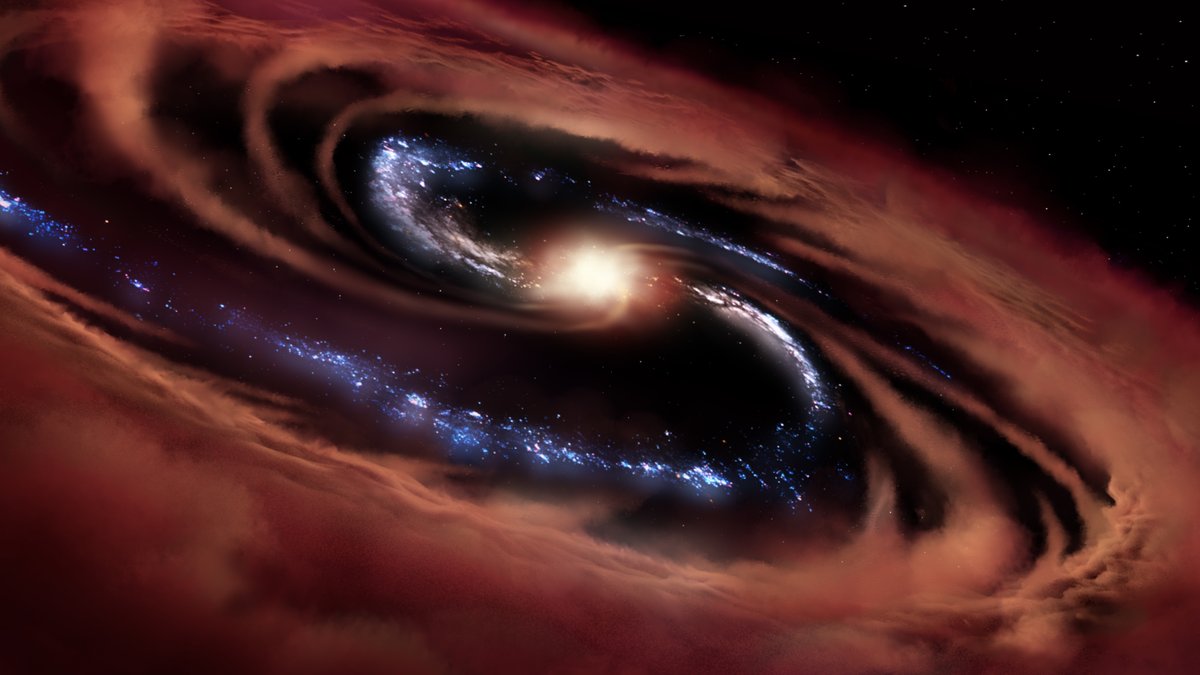
ALT Illustration of the galaxy called CQ4479. The extremely active black hole at the galaxy’s center is consuming material so fast that the material is glowing as it spins into the black hole’s center, forming a luminous quasar. Quasars create intense energy that was thought to halt all star birth and drive a lethal blow to a galaxy’s growth. But SOFIA found that the galaxy CQ4479 is surviving these monstrous forces, holding on to enough cold gas, shown around the edges in brown, to birth about 100 Sun-sized stars a year, shown in blue. The discovery is causing scientists to re-think their theories of galactic evolution.
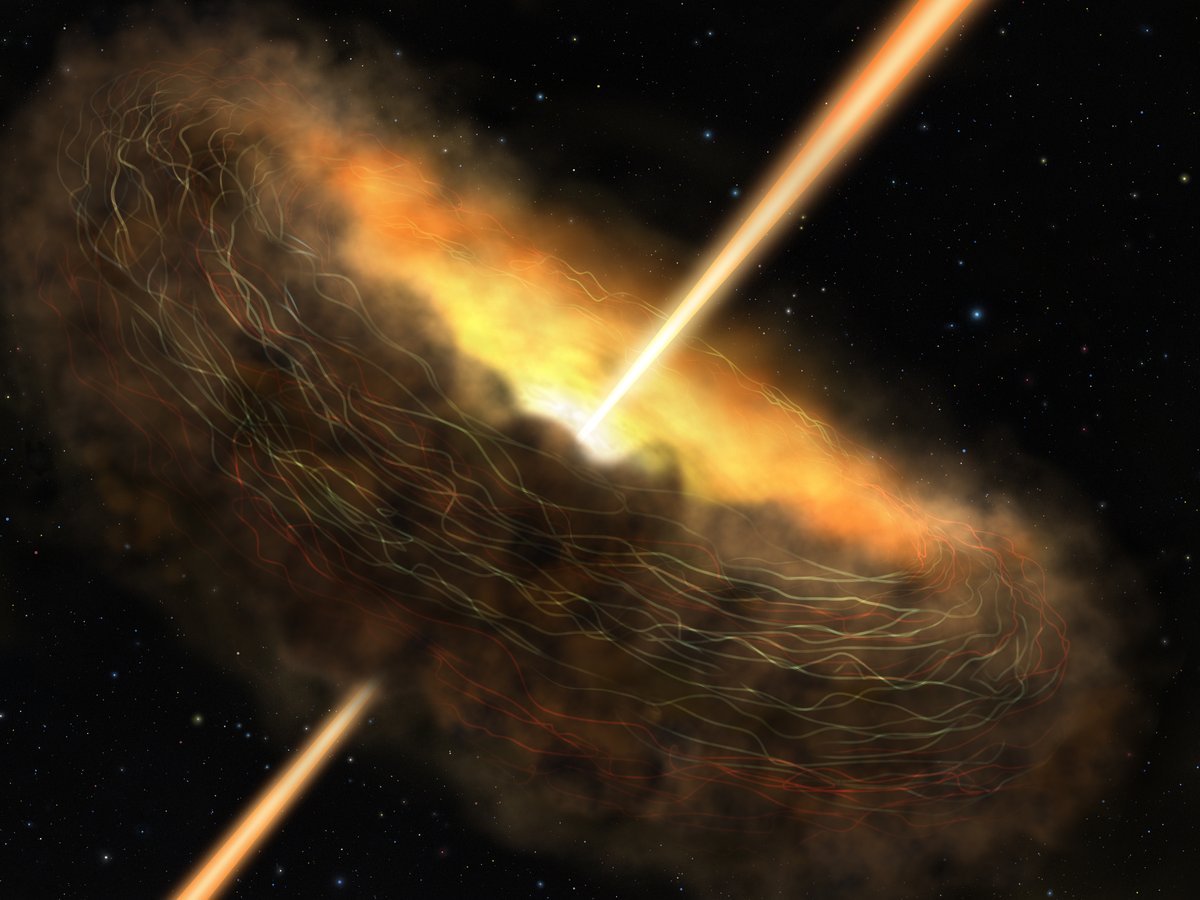
ALT Artist’s conception of the core of Cygnus A, including the dusty donut-shaped surroundings, called a torus, and jets launching from its center. Magnetic fields are illustrated trapping the dust in the torus. Observations from SOFIA reveal that these magnetic fields could be helping power the black hole hidden in the galaxy’s core by keeping the dust in the torus close enough to be gobbled up by the hungry black hole.
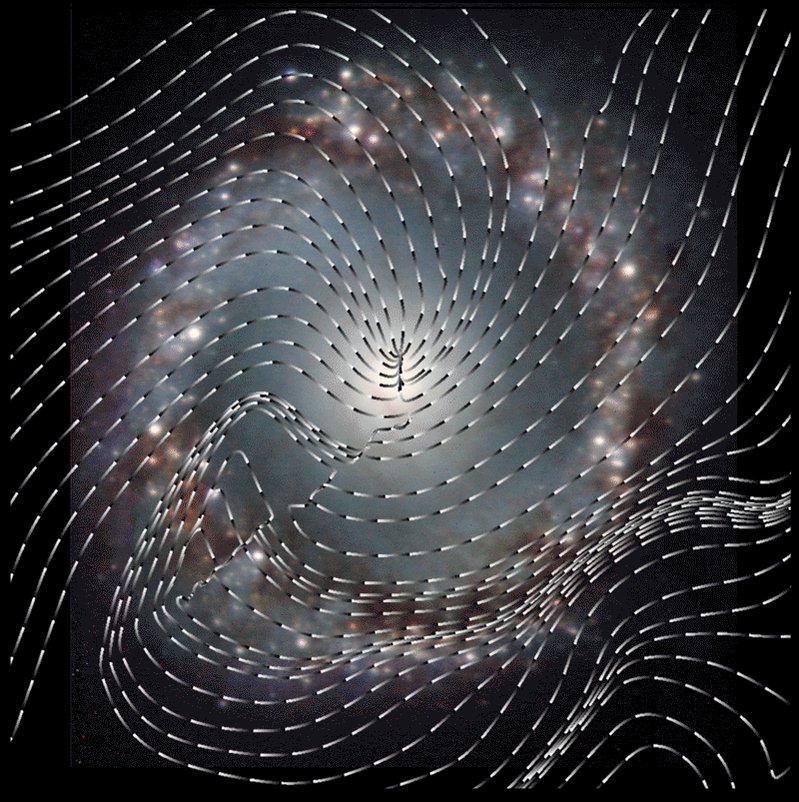
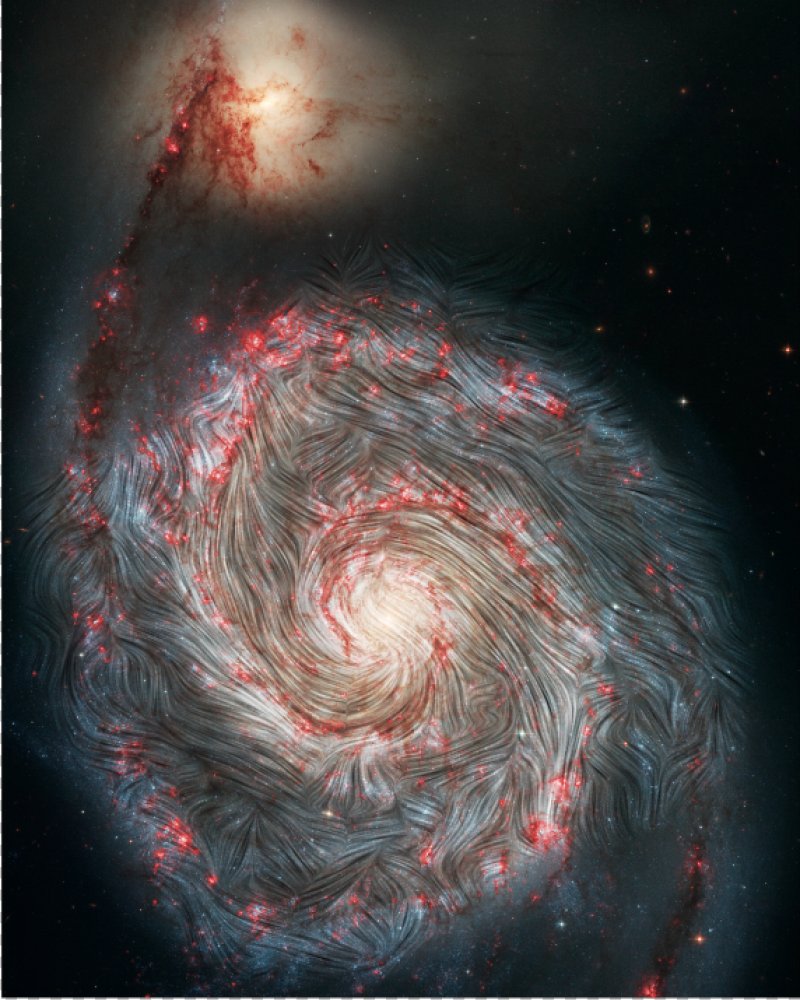
ALT Our face-on view of the Whirlpool Galaxy (M51) allows a spectacularly clear view of the spiral wave pattern in a disk-shaped galaxy. Magnetic field streamlines detected by SOFIA are shown over an image of M61 from NASA's Hubble Space Telescope. The magnetic field at the outer edge of M51's disk appears to weave across the arms, showing, for the first time, that the magnetic fields in the outer arms do not follow the galaxy's spiral shape and are instead distorted.
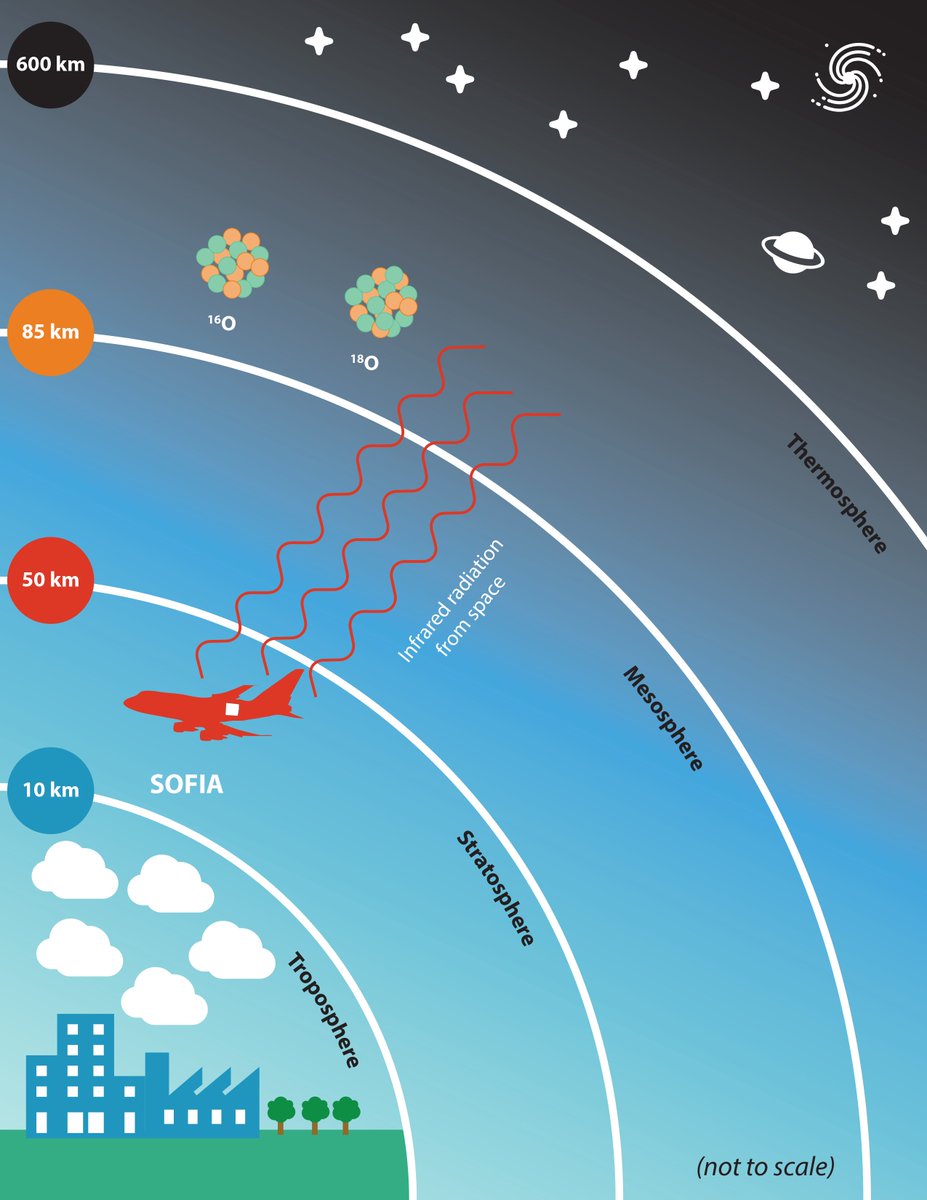
ALT This schematic cartoon shows the layers of Earth's atmosphere, indicating where SOFIA flies and where the observation of heavy and main oxygen took place. The troposphere is on the bottom left near the ground; the stratosphere, where SOFIA flies, is the next layer; the mesosphere is the third layer, through which infrared radiation travels to reach SOFIA; and the thermosphere, the outermost layer, is where the ratio of main oxygen to heavy oxygen was studied, up to an altitude of 200 kilometers.
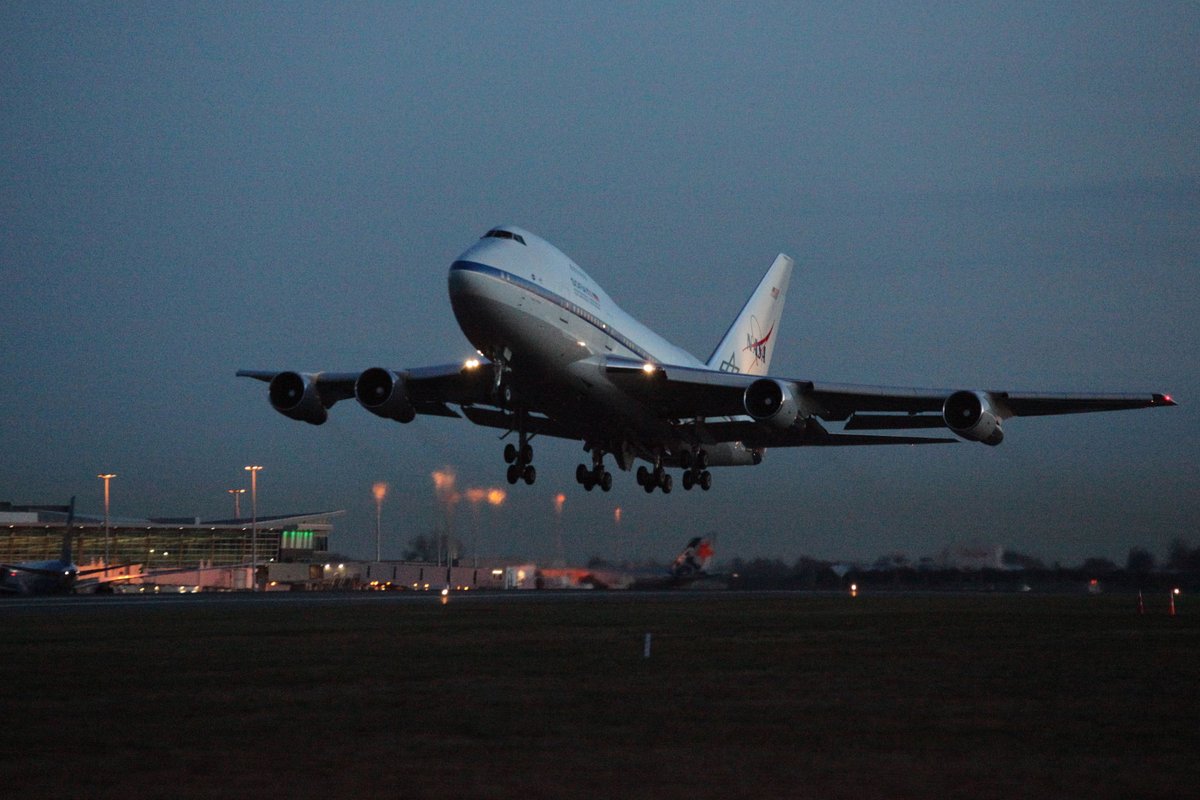
ALT SOFIA takes off from Christchurch International Airport to study the southern skies.
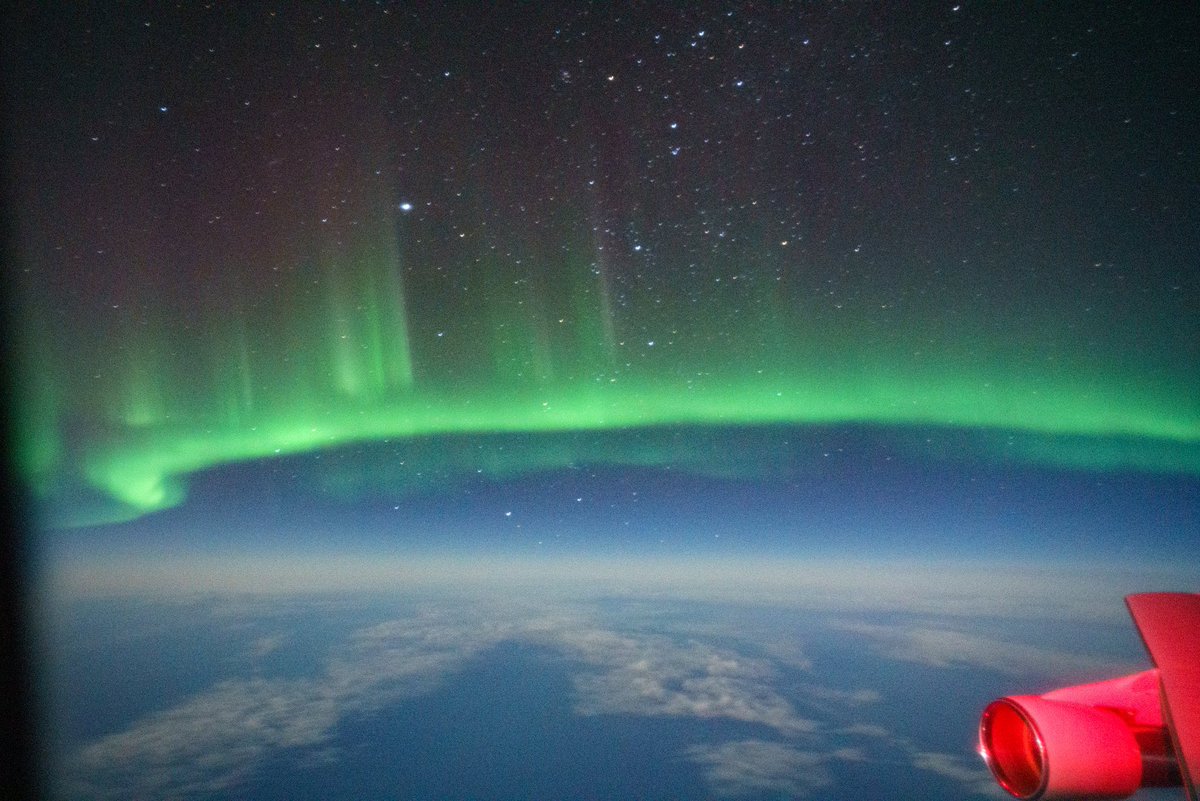
ALT A view of aurora australis from SOFIA during the 2022 New Zealand deployment. A neon green glow goes across the image near its center, with rays of green pointing upward. Above it is a black, star-speckled sky, and below it, in the bottom third of the image, is the Earth's horizon. Image taken by Ian Griffin.

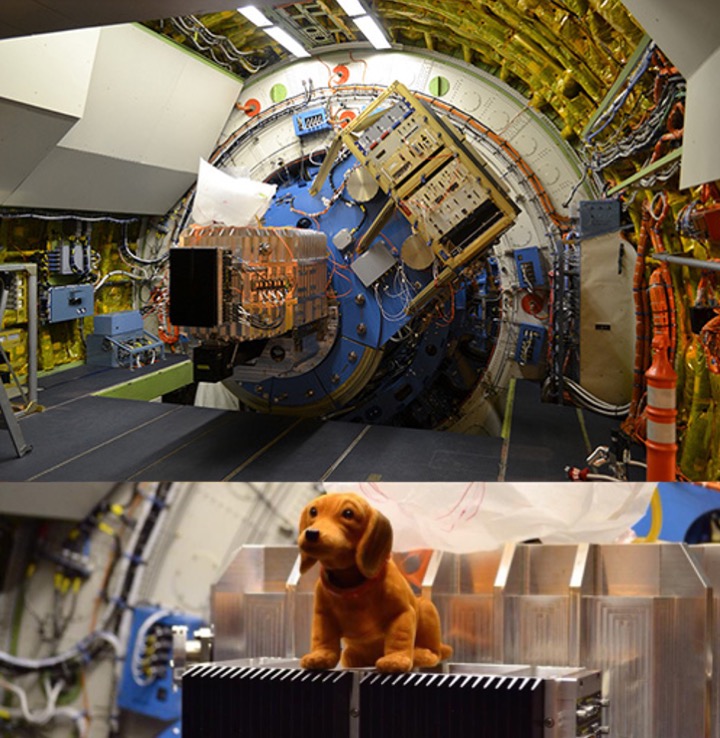
ALT The top panel of this image shows SOFIA's FIFI-LS spectrometer. The bottom panel shows a toy dog sitting on FIFI-LS.
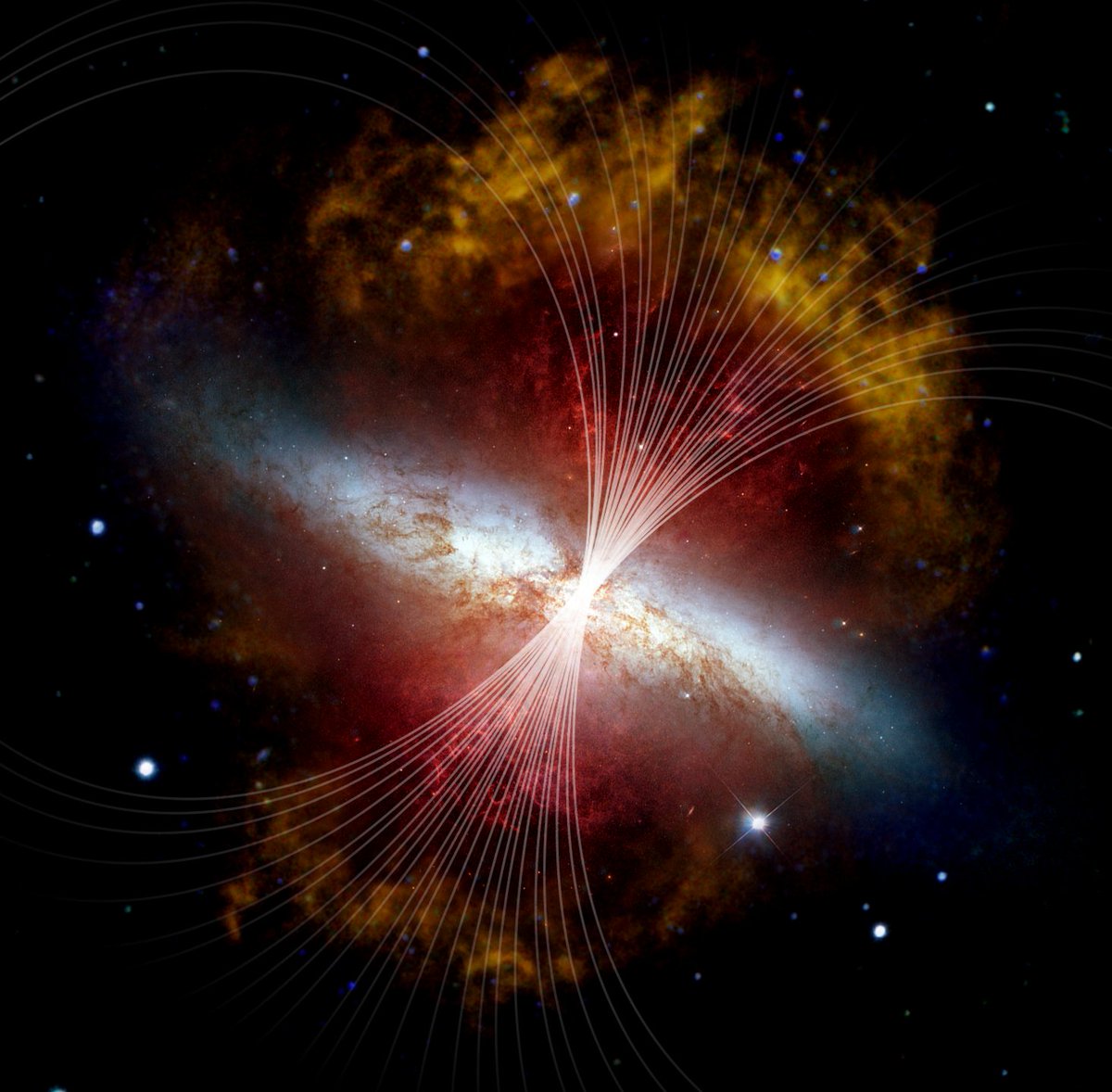
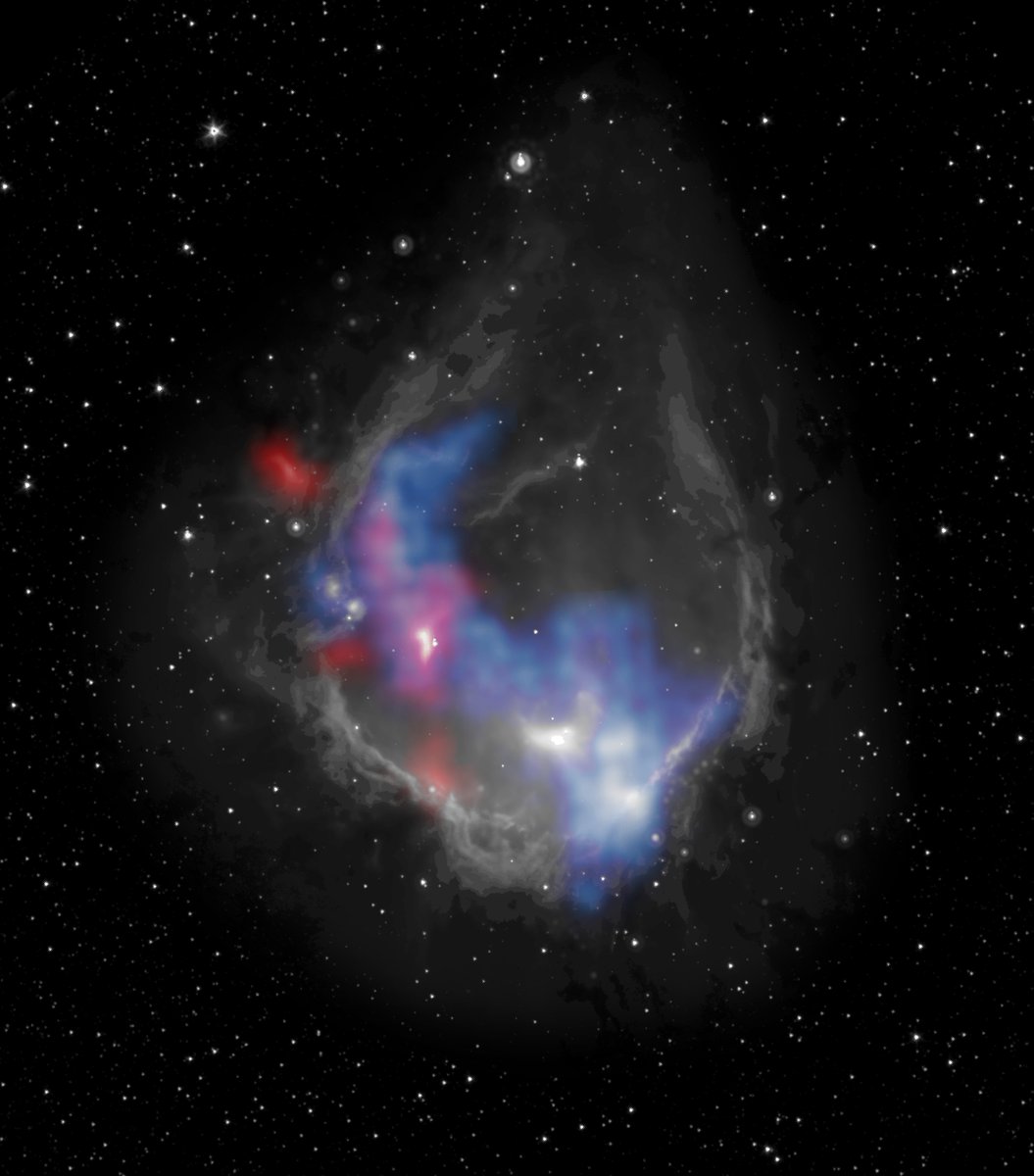
ALT Magnetic fields in Messier 82, or the Cigar galaxy, are shown as lines over a visible light and infrared composite image of the galaxy from the Hubble Space Telescope and the Spitzer Space Telescope. Stellar winds streaming from hot new stars form a galactic super wind that is blasting out plumes of hot gas (red) and a huge halo of smoky dust (yellow/orange) perpendicular to the narrow galaxy (white). Researchers used the Stratospheric Observatory for Infrared Astronomy magnetic field data and tools that have been used extensively to study the physics around the Sun to extrapolate the magnetic field’s strength 20,000 lights-years around the galaxy. They appear to extend indefinitely into intergalactic space, like the Sun’s solar wind, and may help explain how the gas and dust have traveled so far away from the galaxy.
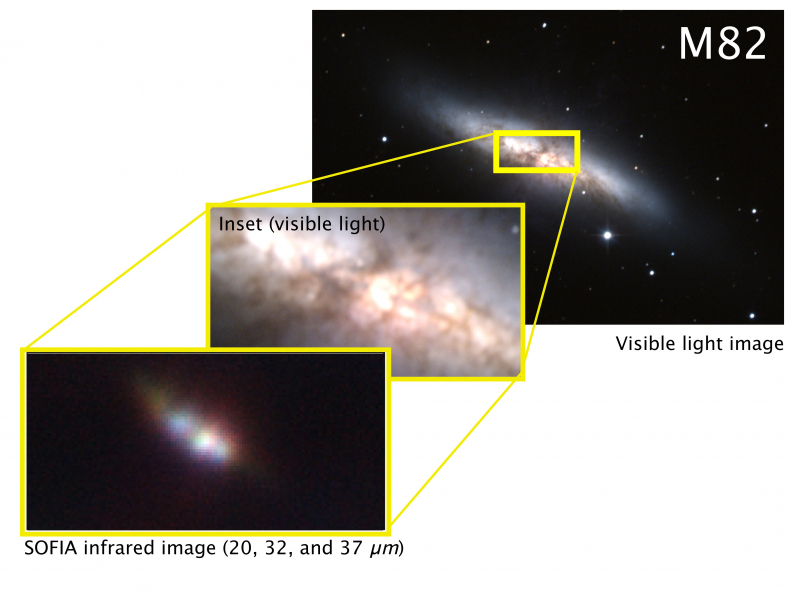
ALT A visible light image of Messier 82 is at the top right, with two insets. The middle inset image shows the central portion of the galaxy at visual wavelengths. The bottom left inset image is a composite infrared image of the central portion of galaxy M82 (the same region as the middle inset), from SOFIA’s First Light flight, at wavelengths of 20 (blue), 32 (green) and 37 microns (red).
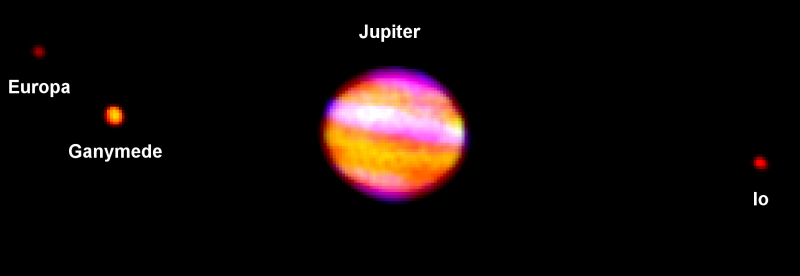
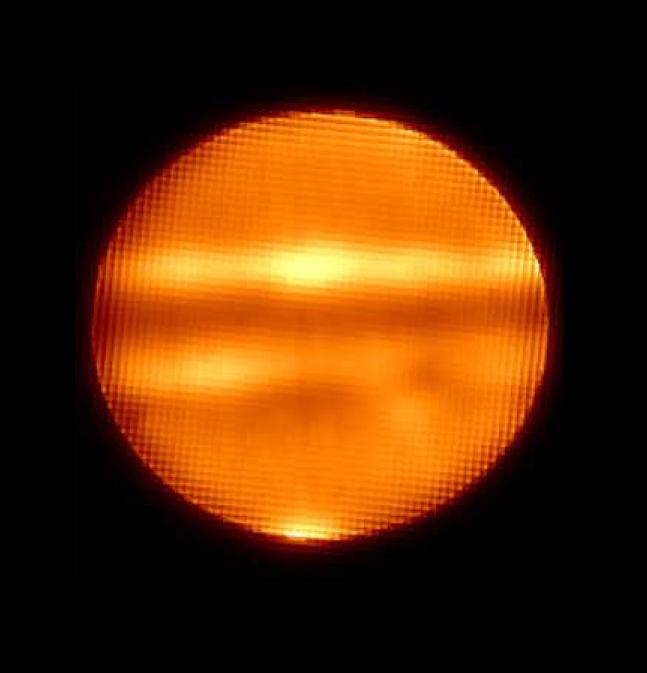
ALT Jupiter appears as a pixelated blob of pink and orange against a black background. Its moons Ganymede, Europa, and Io are also in the image as orange and red dots, Ganymede and Europa on Jupiter's left, and Io on the right.


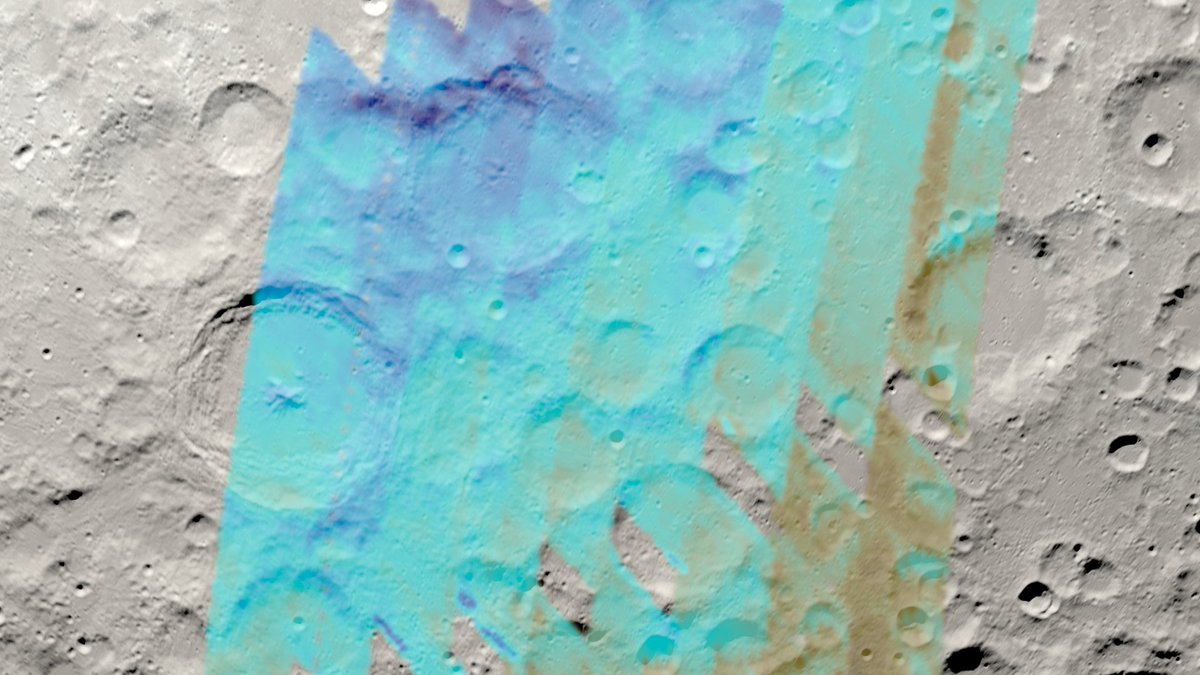
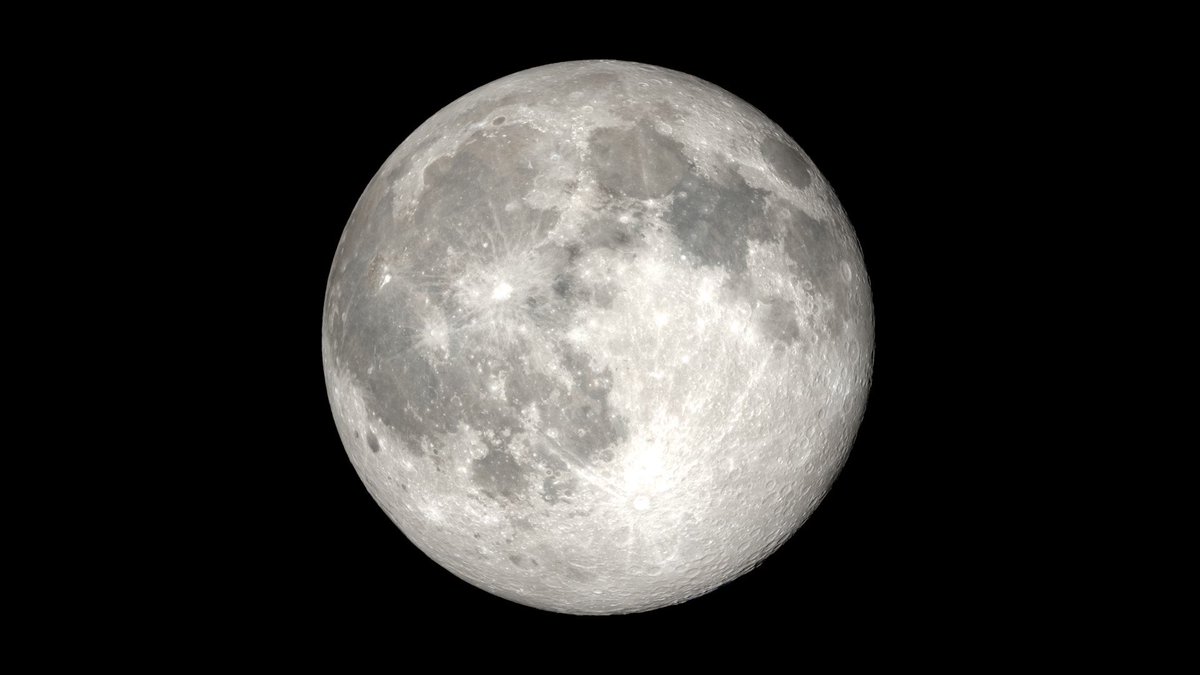
ALT A visualization of the Moon with the region of SOFIA’s lunar water observations indicated in blue. The visualization of SOFIA data of a “light signature” of water overlaid on a visualization of the Moon as it appeared at the time of the observations in Feb. 2022. Darker blue indicates a higher concentration of water. Near the top left of the studied region, a “wet ridge” is visible in dark blue, where the water is particularly concentrated on the shady side of a steep lunar feature. Halfway down the left side of the region is Moretus Crater. The inner wall on the crater’s upper half is clearly delineated in dark blue, indicating a greater presence of water on this shady surface. Although the right side of the region is drier overall, water can still be seen tracing the insides of craters in light blue.