crypto x ai native designer engineer | building in ai → mainarc.xyz | creative technologist | alt ac @0xDragoon | one exit | 2x founder | Early @0xPolygon
Joined November 2016
- Tweets 466
- Following 5,070
- Followers 3,485
- Likes 73,077
82 Photos and videos
Pinned Tweet

May 7
i'm building a creative intelligence lab on the side, and after 6 years working with 10 teams and co-founding 2 companies, I'm searching for a full-time role and figuring out what's next. open to relocate/remote. help me w/ leads or dm me if you're hiring :)
read the full announcement ↘︎
12 May 2026. tuesday. mark it.
from a small room with a closed door, to whatever this is about to become.
MainArc launches soon.
and i'm not gonna pretend this was easy.
the last few months have been a full rollercoaster. ups, downs, self-doubt loud enough to drown the screen, days where nothing felt like it was working and i questioned everything i was building.
i kept going anyway. focused. prayed. meditated. then went back to the keyboard and shipped one more thing.
locked in. lights on at weird hours. phone face down. just grinding.
while the timeline argued about ai killing design, killing creativity, killing taste, or somehow saving all of it... i was somewhere else entirely.
late night calls. half-broken builds at 3am. errors i had no business solving but solved anyway. weeks of researching, reading, dm'ing strangers, learning patterns, then unlearning them the next week. reviewing ai work with extreme taste, judgment, and care.
that's the part nobody talks about. you don't just learn with ai. you unlearn. unlearn how you used to work. unlearn how you used to think. unlearn what design even meant to you a year ago.
so what is MainArc?
not a studio. a creative intelligence layer for modern companies. MainArc researches ai-native creativity and turns it into how teams actually think, design, and build.
i've already dropped 3 reports under the MainArc name. those were just the surface. there's a lot more i've quietly built that hasn't made it out yet.
so i'm refining the whole thing. what MainArc actually is now. how it started. where it's headed. all of it, right here, soon.
MainArc is solely run by me and my ai agent. no team. no investors. no office. just me, a screen, an agent, and a stupid amount of conviction.
and here's the part i actually want you to hear.
i gave this 100%. not the linkedin kind. the real kind. every pixel, every line, every decision ran through human taste, human judgment, and a real amount of care. ai helped me move. it didn't get to drive.
i'm not chasing virality. i'm not chasing the algorithm. i'm not building this to win the week. i'm building it to solve real problems, bring clarity, and actually help people and teams who are tired of the noise.
i'm not here to argue. not here to debate. not here to reply to every spicy take in the quotes. i'm here to build. that's the whole job.
also, small disclaimer for the lazy readers in the back.
everything you've seen from MainArc so far, and everything you're about to see, came from real experience, real work, and a real obsession with design, tech, and creativity. it took human hours. it took human hard work. it took rough patches with my mental health, weeks of creative block, life punching me in the face on random tuesdays, and me showing up anyway.
this isn't a one-shot prompt with a logo slapped on top. this isn't ai slop with good fonts. nothing here came easy, without a base, or in a single sitting. you can feel the difference. that's the whole point.
quick truth before we go further. humans make mistakes. ai makes mistakes. nobody in this room is perfect, including me. if something here doesn't land for you, doesn't feel useful, or reads like ai slop in your eyes, that's fine. just close the tab and keep walking. don't dump hate on the way out. i genuinely don't care what you think. i'm doing what i'm doing. respect your own boundaries, your own limits, and your own words. that's all i ask.
so here's the date on the wall. MainArc. tuesday, 12 may 2026. set the reminder. show up. you'll see what i mean.
one rule though. hate, trolling, drive-by takes don't belong here. good vibes only.
dms open. show me what you're working on, i'll show you mine.
2
2
9
968
Deep | Dragoon retweeted

How to Earn a Billion Dollars: paulgraham.com/earn.html
219
452
3,955
437,113
Jun 13
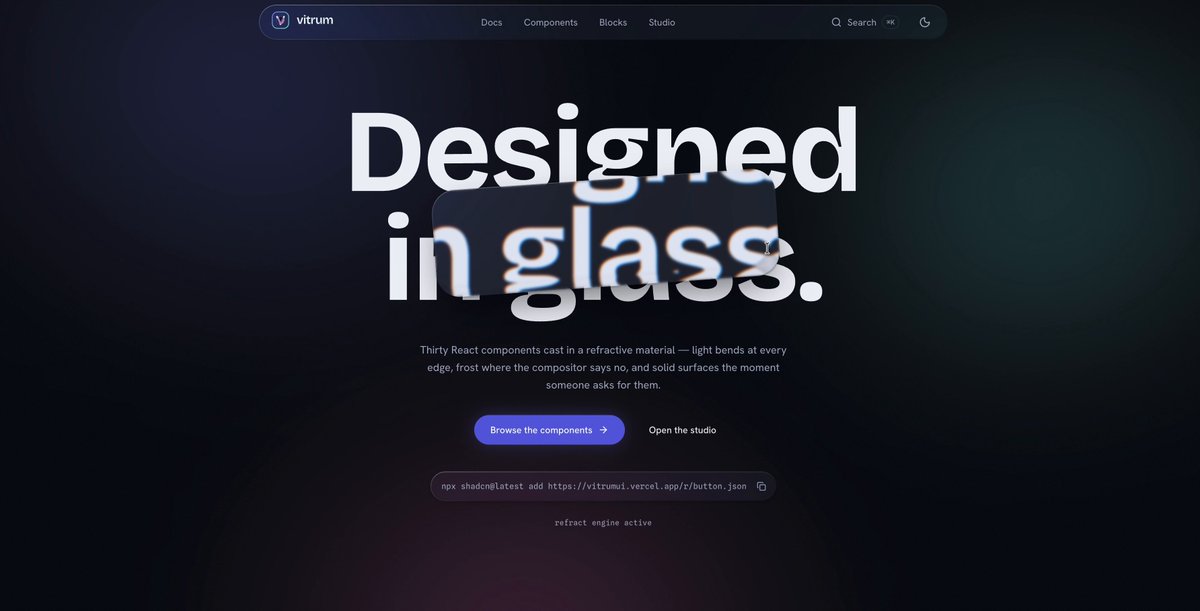
#99 i built vitrum: a react ui library with real glass, not a blur.
every surface bends the light behind it. the refraction is computed from each component's actual shape, so it warps correctly at every corner, splits into color at the edges, and a highlight follows your cursor.
slider handles swell into a magnifying lens while you drag. switches go liquid when you hold them. where a browser can't bend light, it drops to a clean frost instead. reduced motion and reduced transparency are respected.
30 components. install any of them with one command. they land as source files you own. tune frost, depth, and tint live in the studio, then export your own preset.
dark-first, accessible, zero config.
try it: vitrumui.vercel.app
1
3
237
Jun 12
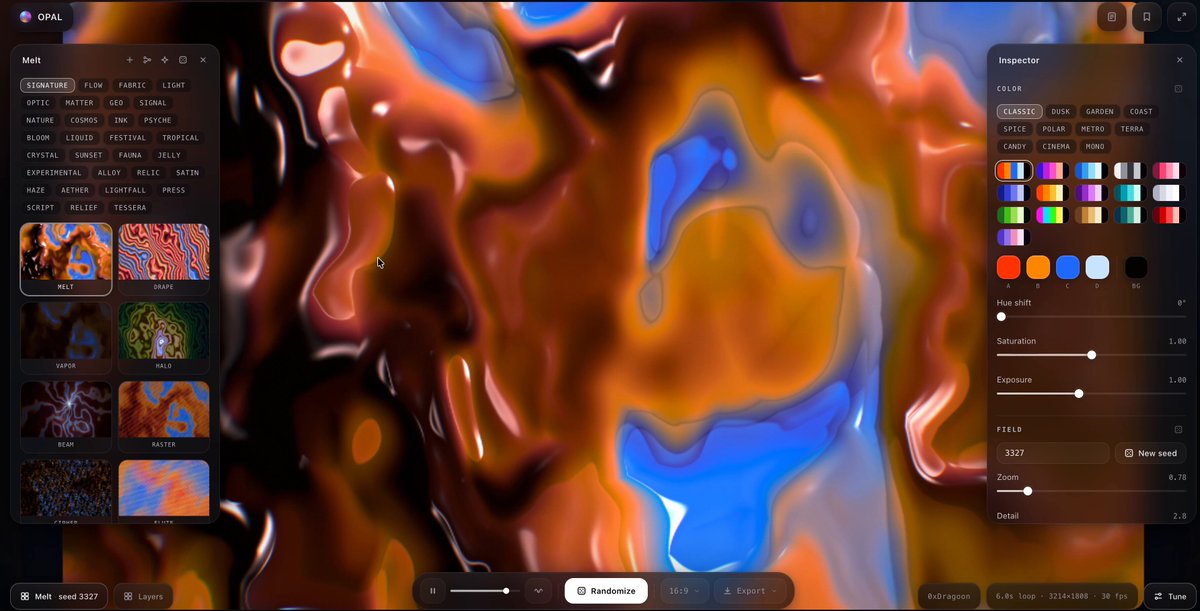
#98 i built opal: a generative art studio that runs entirely in your browser.
300 animated gradient styles. 110 curated palettes. every design loops perfectly. the last frame lands exactly on the first by construction, so your videos and gifs repeat forever without a stutter.
what you can do:
• stack styles with 10 blend modes
• keyframe any slider on a timeline that wraps around the loop
• write your own glsl shaders, or describe one and let ai write it (your key, your call)
• patch shaders from nodes. no code.
• one-click materials: liquid chrome, frosted glass, velvet noir
• export 4k png, 4k video, looping gifs, and full wallpaper sets
every design is a link. paste a code, get the exact piece back. nothing you make ever leaves your machine. no accounts, no uploads. your gpu does all the work.
dm for the link
1
2
146
Jun 12
paul rand was right, and the people who quote him usually still don't believe him.
originality is the wrong thing to aim for. it pulls your attention toward yourself, your portfolio, your need to be noticed. good pulls your attention toward the work, the audience, the problem. one of these reliably produces interesting things. the other reliably produces stunts.
watch what happens when a designer or writer or founder starts chasing original. they reach for weird color palettes. they invent rules nobody asked for. they name their startup something unpronounceable so it can't be googled by anyone else. they wrap a normal idea in three layers of irony so it can't be accused of being obvious. the output looks distinctive in the way a bad haircut is distinctive. you remember it. you don't want one.
good is harder because good has a standard. you can fail at good in a way you can't really fail at original. if someone says your work isn't original, you can argue about it. if someone says it isn't good, you have nowhere to go. the whole rubric is sitting right there on the page. either the thing works or it doesn't.
the trick is that the people who actually become original almost never tried to be. they tried to make something that was clear, that was useful, that held up under attention. they cared about the small decisions. they sweated the parts nobody was going to notice. they did this for years, often before anyone was paying attention. then somebody looked at the body of work and called it original on their behalf.
aiming at original gets you nothing on the way and an empty thing at the end. aiming at good gets you a body of work, a reputation, and, occasionally, by accident, the thing you were never supposed to be reaching for.
1
2
73
Jun 11
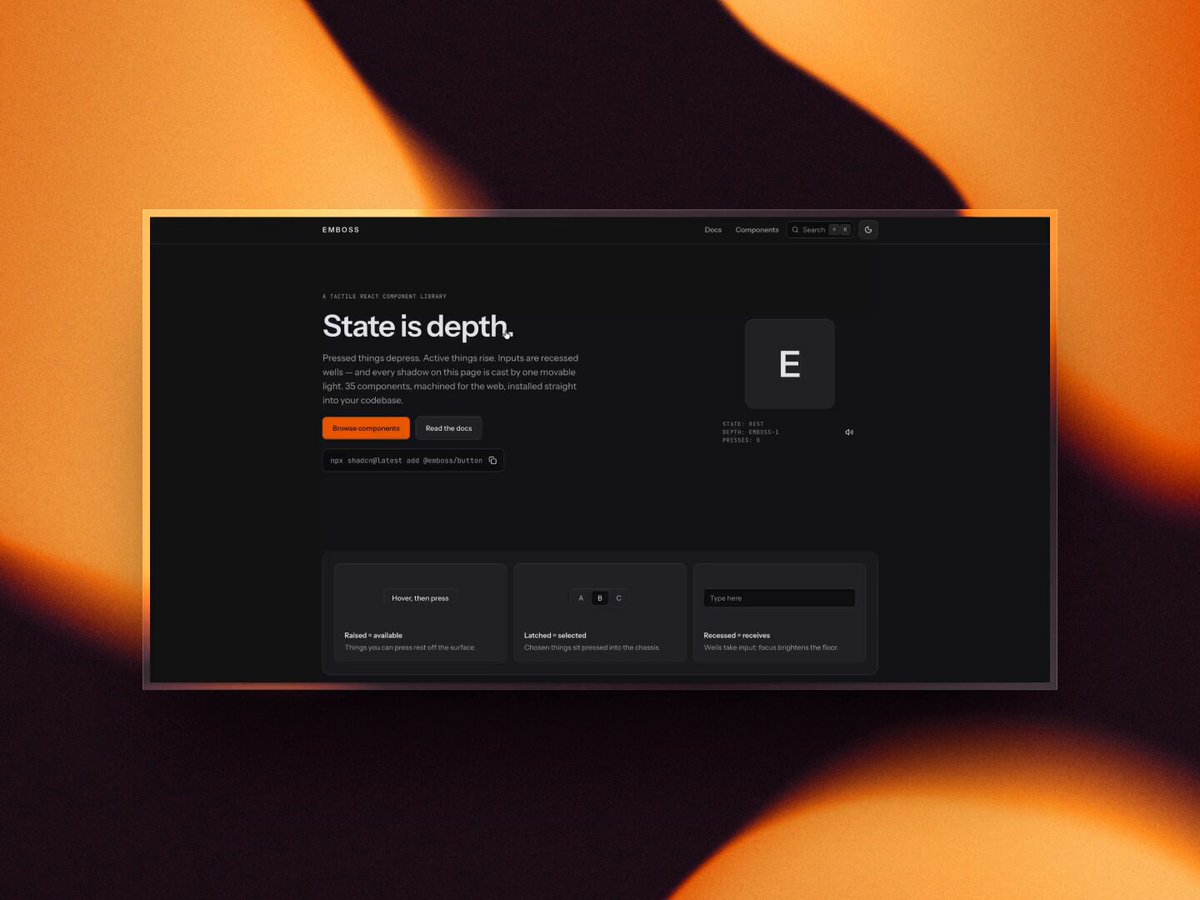
#97 i built a component library you can feel.
emboss - state is depth.
every state is physical: buttons rest raised and depress flush under your pointer. inputs are wells milled into the surface. selected things latch into the chassis. overlays float with real penumbra.
the trick underneath: one movable light casts every shadow on the page. two css variables. drag the bulb and the entire ui re-lights - no canvas, no js, pure css.
35 components with a hardware soul - rotary knobs, steppers, vu meters, sliding segment banks - plus streaming-native ai primitives. crisp machined edges, contrast locked by automated wcag tests in both schemes. this is not 2020's neumorphism.
no npm package. no version to chase. the typescript lands in your repo:
npx shadcn@latest add @emboss/button
free. mit. go press something:
embossui.vercel.app
1
3
99
Jun 10
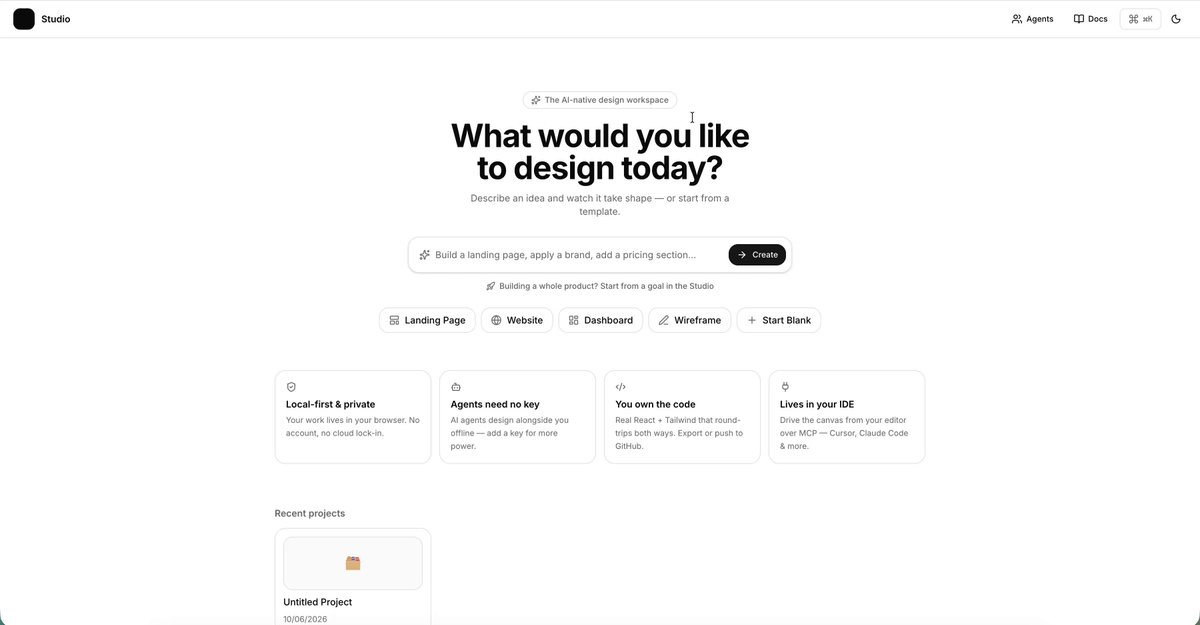
#96 built an ai-native design workspace for internal use, sharing a small glimpse here.
was curious about what a truly ai-first design experience could feel like, so i started building it.
i'm shipping updates daily, improving workflows, fixing rough edges, and making the experience better with every iteration.
if you'd like to try it out and share feedback, drop a dm me and i'll send over the link.
1
3
165
Deep | Dragoon retweeted

Jun 7
Kids don't get confident from being told they're great. They get confident from doing hard things and finding out they can.
81
902
6,869
217,832
Jun 8
5/13
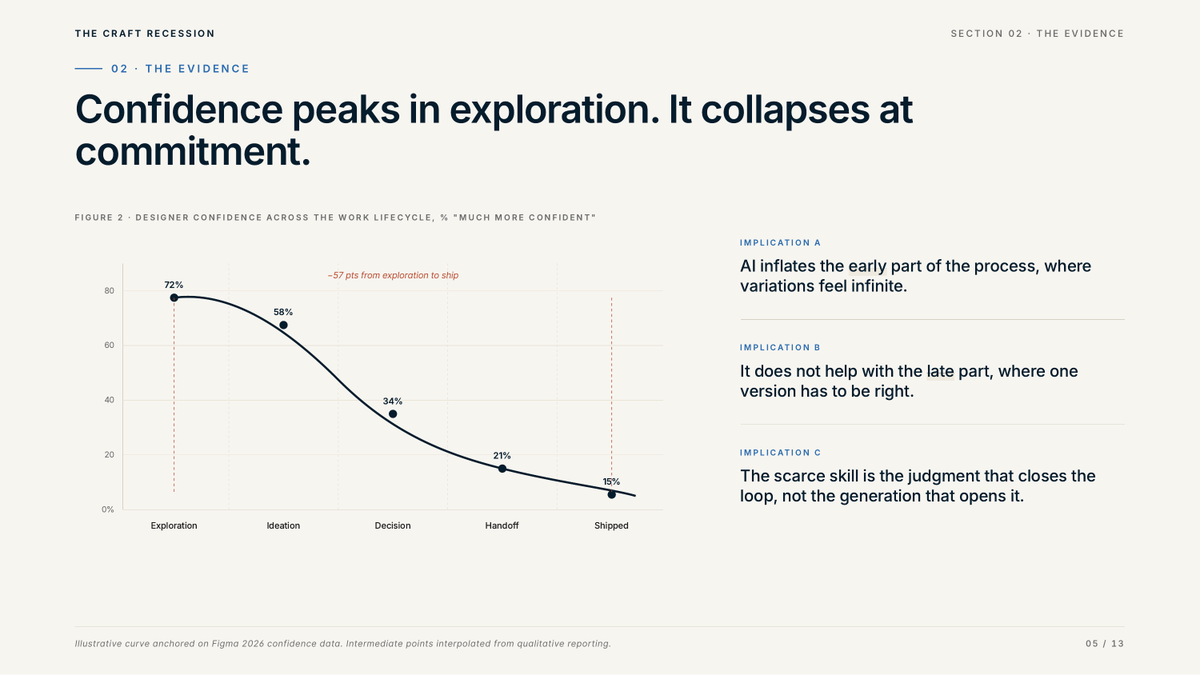
confidence peaks in exploration and collapses at commitment. 57 points lost from first idea to ship.
ai inflates the part where options feel infinite. it does nothing for the part where one version has to be right.
2
1
88
Jun 8
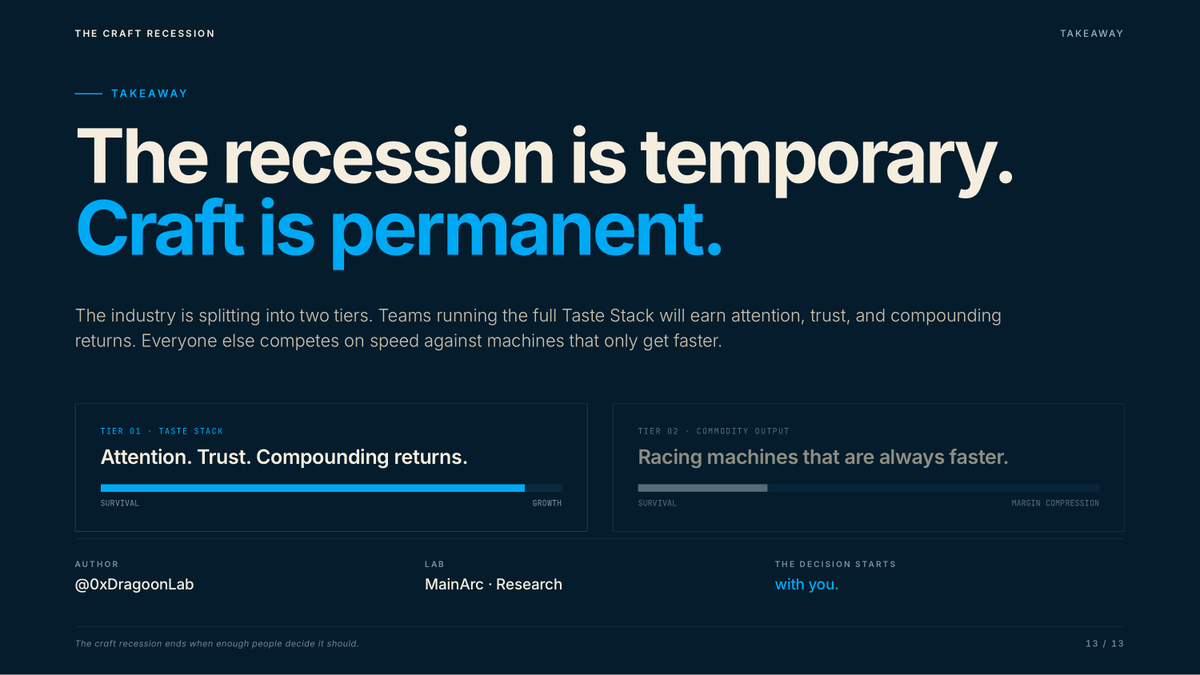
13/13
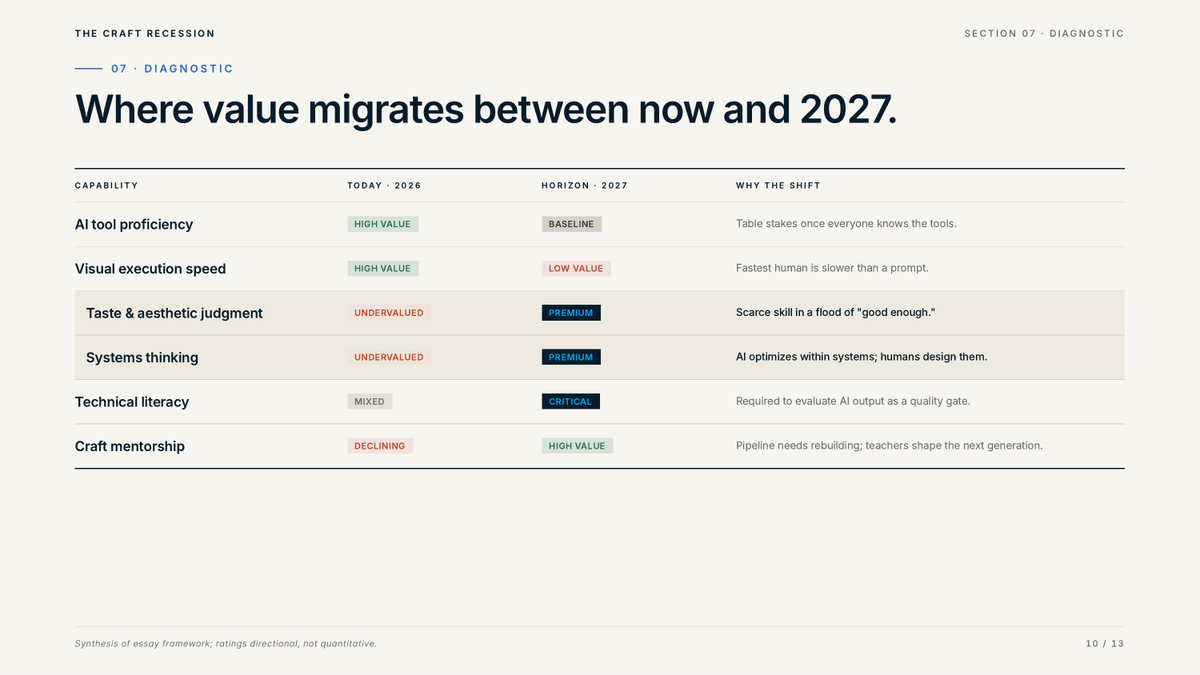
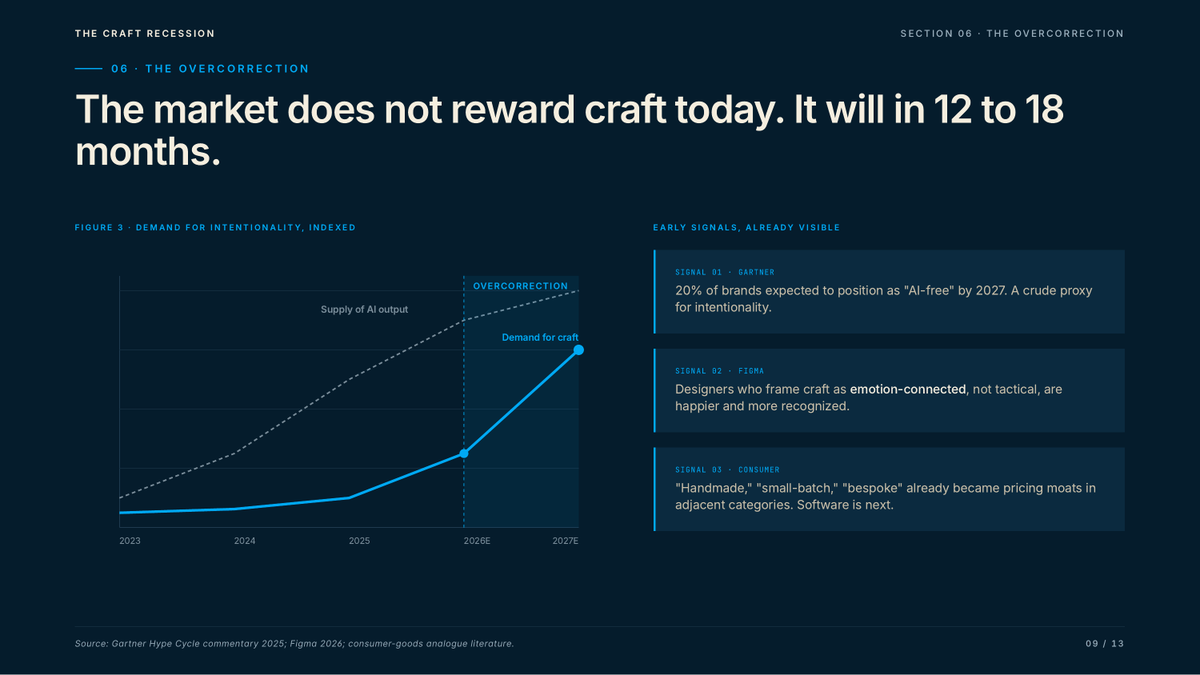
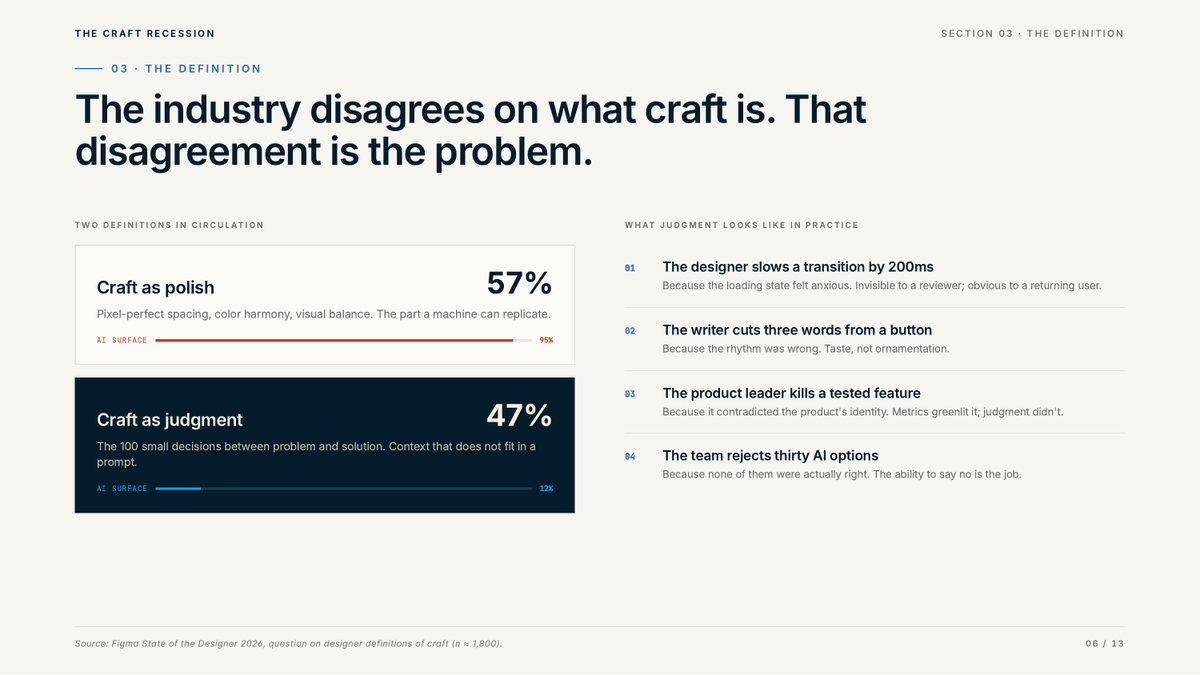
the recession is temporary. craft is permanent.
the industry is splitting in two. one tier earns attention, trust and compounding returns. the other races machines that only get faster.
mainarc builds for the first tier. audits, systems and advisory for teams that sell judgment, not volume.
work with us: mainarc.xyz
1
55
Jun 8
disclaimer:
this report is for dicussion, not advice.
figures are drawn from figma, gartner, usertesting and uxpin. projections are estimates, directional, and ours. nothing here is a guarantee of any outcome.
do your own research. decisions and results are your own. mainarc and the author accept no liability for them.
63
Jun 8
📌 mainarc / research report
1/13
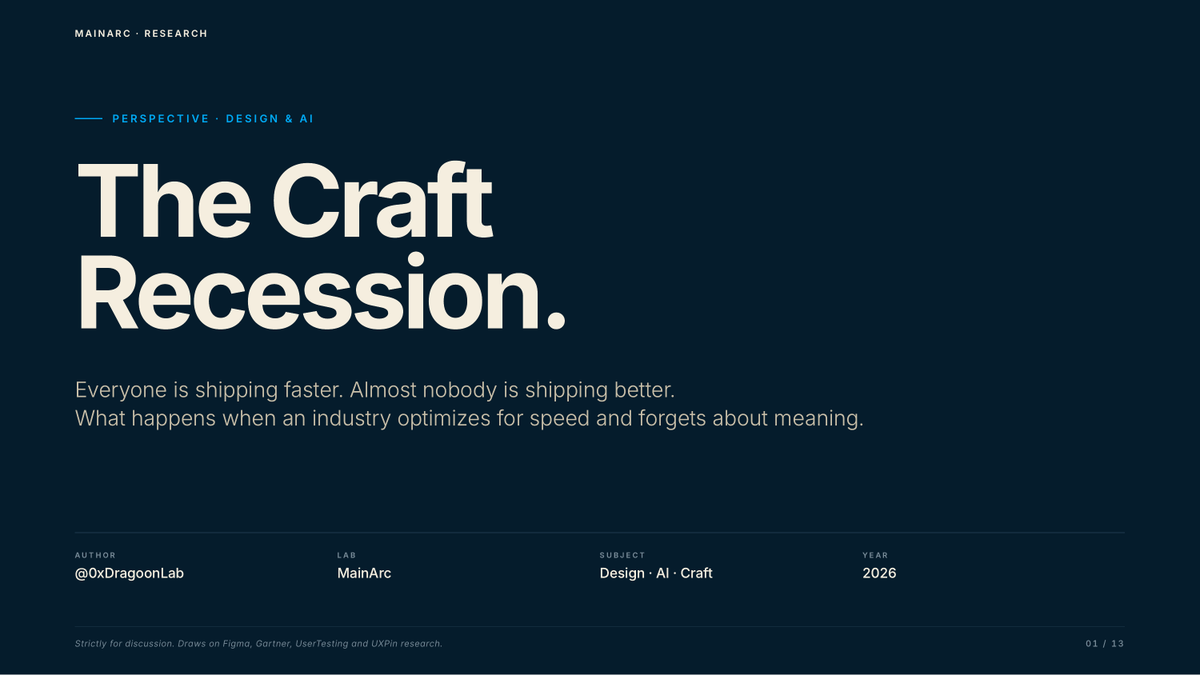
the craft recession.
everyone is shipping faster. almost nobody is shipping better. what happens when an industry optimises for speed and forgets about meaning.
1
2
202
Jun 8
4/13
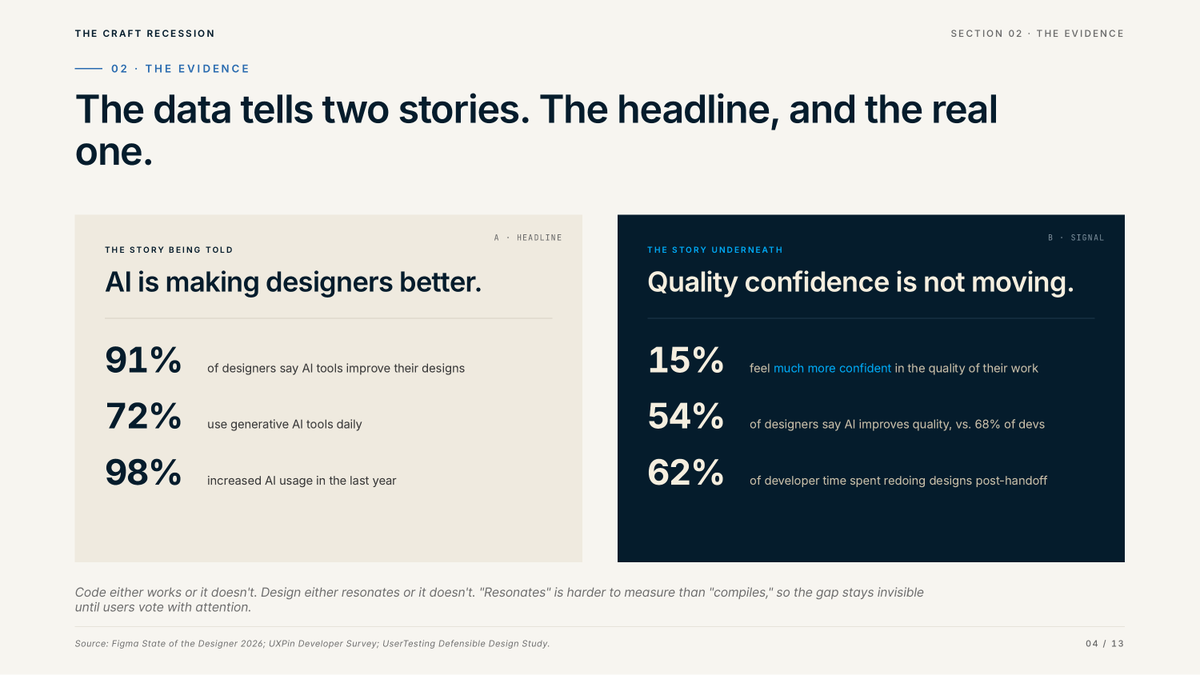
the data tells two stories.
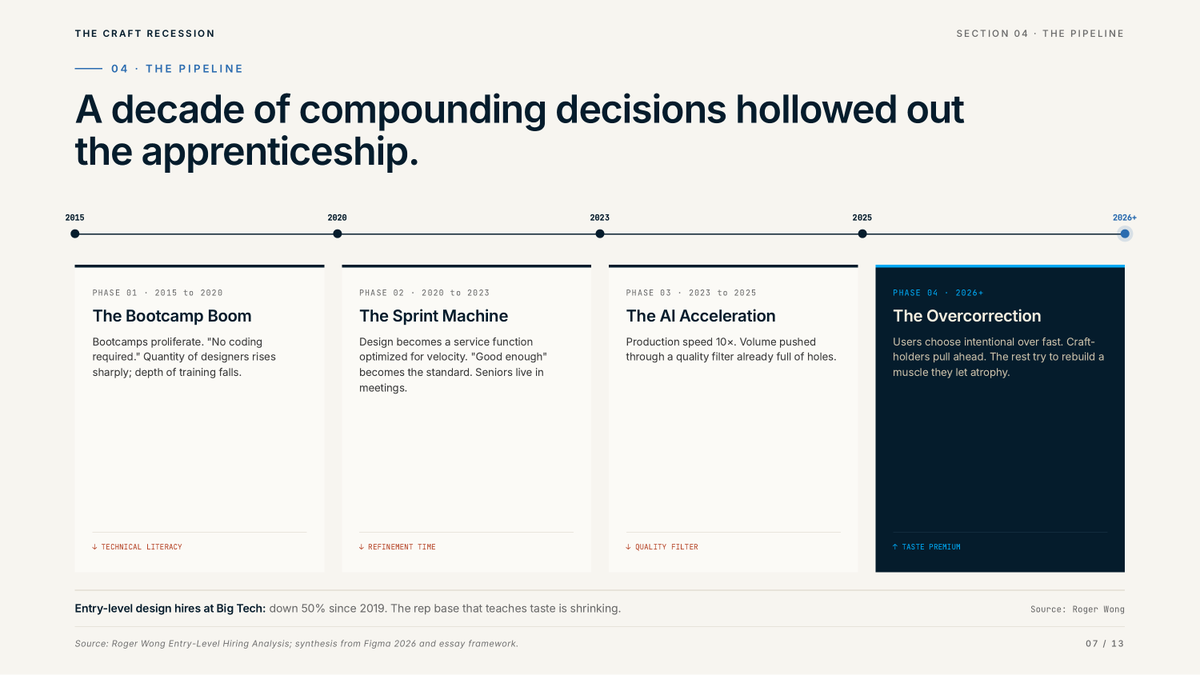
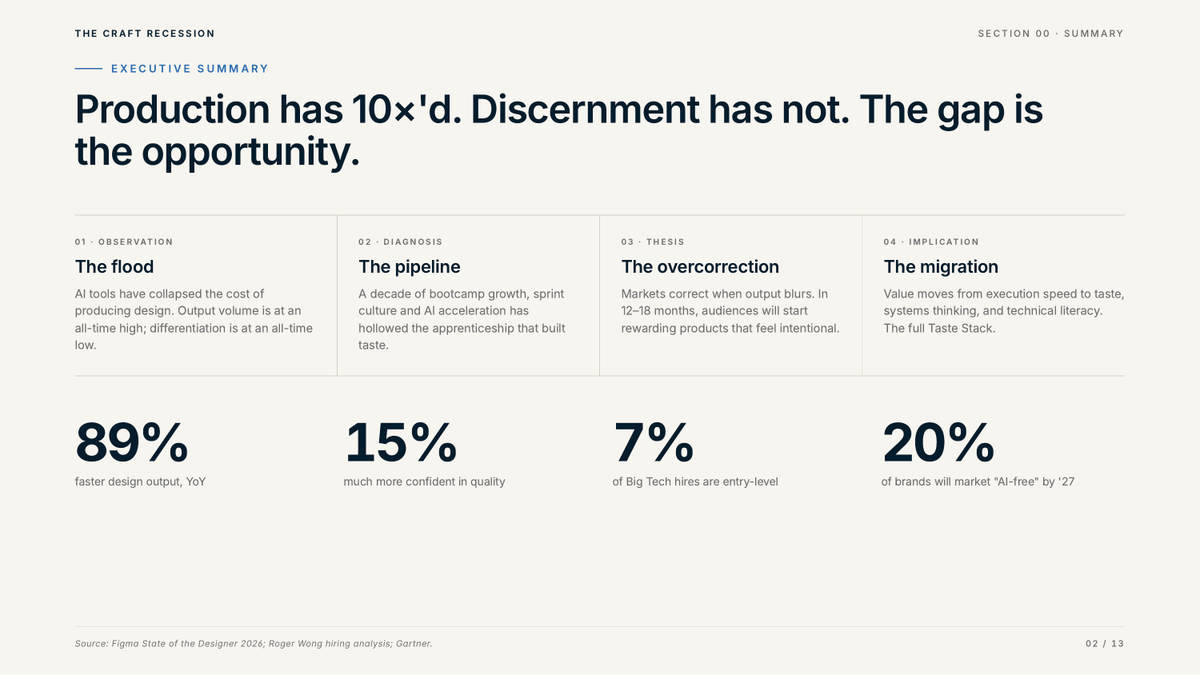
headline: 91% say ai improves their work. 72% use it daily.
underneath: quality confidence stuck at 15%. devs still burn 62% of their time redoing designs after handoff.
1
46
Jun 8
3/13
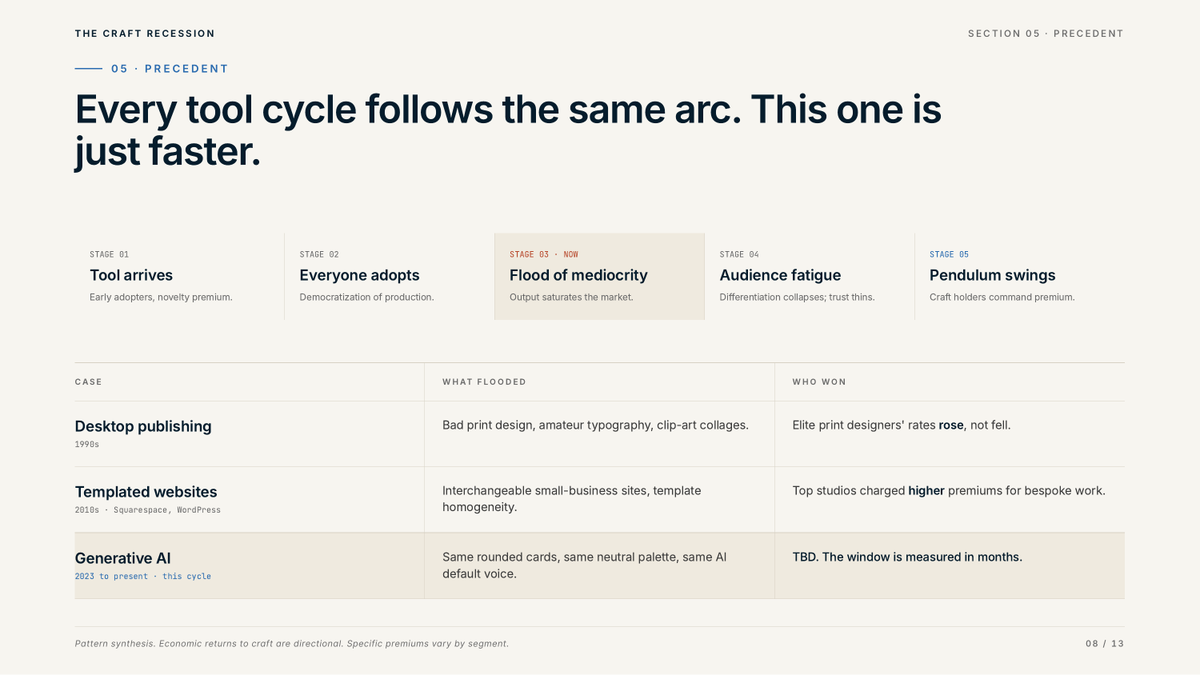
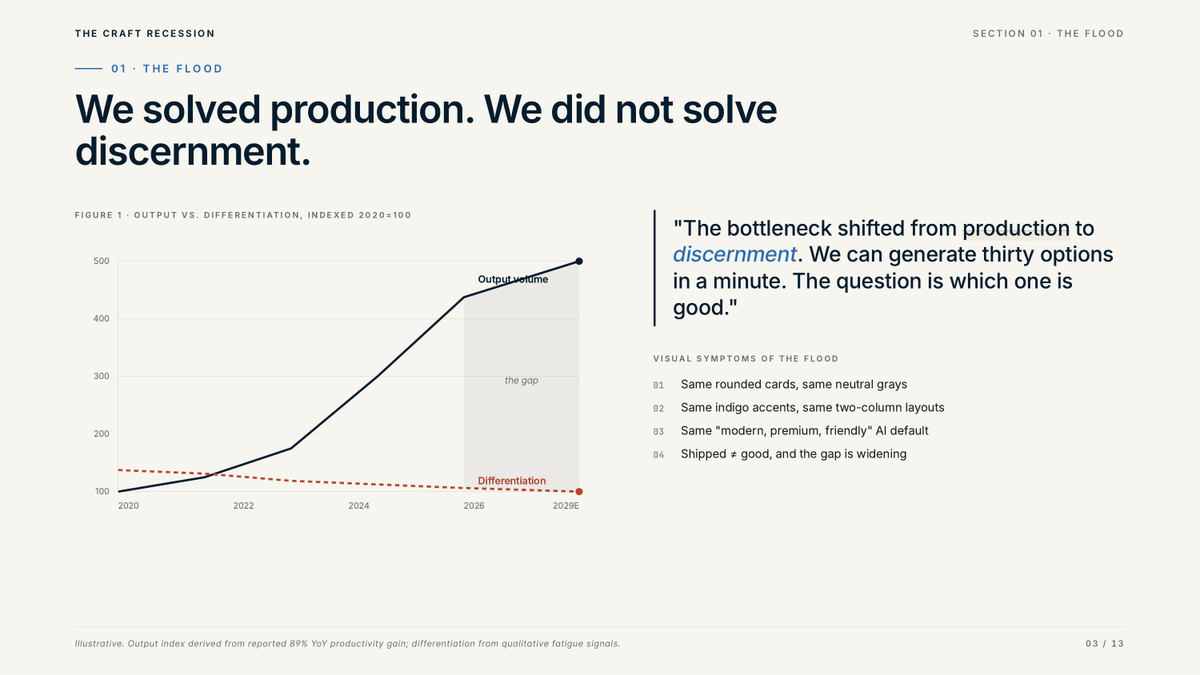
we solved production. we did not solve discernment.
same rounded cards. same neutral greys. same indigo accent. same modern-premium-friendly default.
the bottleneck moved from making things to knowing which one is good.
1
56
Jun 8
2/13
the whole report in one line. production has 10x'd. discernment has not. 89% faster output. 15% more confident in the quality. that gap is the entire opportunity.
1
94